
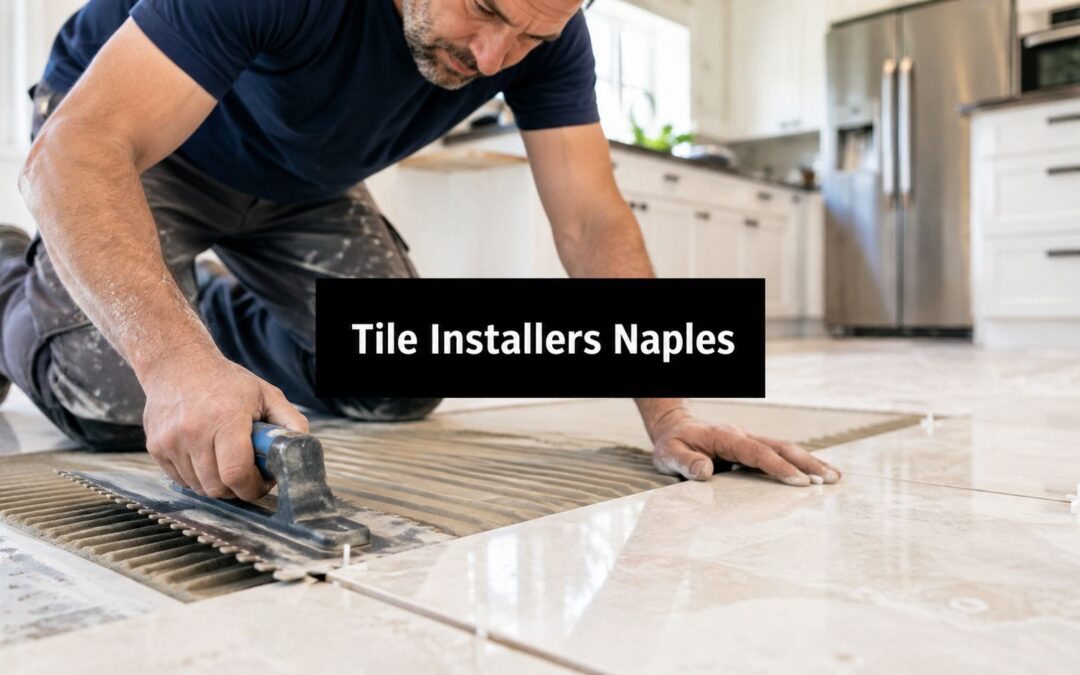
Most advice about tile installers in Naples starts with the wrong question. Homeowners obsess over style, price, and how fast the crew can start, then act surprised when grout cracks, edges lift, or a shower leaks behind a pretty finish. Tile is not a paint color. It's a built system, and in Southwest Florida that system lives or dies on what you can't see.
The best installers don't just set tile. They build a stable assembly under it, manage water, control movement, and coordinate the work so the finish isn't fighting the rest of the remodel. That matters in Naples, where bathrooms, lanais, pool decks, and open-plan kitchens are all asking more from the installation than a basic surface-only job can handle.
Why Tile Installation Is More Than a Surface Job
Tile looks simple from the showroom. You pick a color, choose a size, and assume the rest is labor. That mindset is how homeowners end up paying twice, first for the install, then for the tear-out when the hidden layers fail.

The tile is only as good as the structure under it
The actual job starts with the substrate. If the floor isn't flat, stable, and properly prepared, the tile will telegraph every flaw. That's why professional crews spend time on backer board, underlayment, and correction before a single tile goes down, especially in remodels where old framing, patched subfloors, or previous damage are part of the picture.
Wet rooms raise the stakes fast. TCNA's ANSI standards page points installers to current ANSI A108/A118/A136.1 standards for substrate preparation and workmanship, and industry guidance tied to those standards calls for at least 95% mortar coverage in wet areas and 80% in dry areas because gaps invite hollow spots, bond failure, and crack propagation under moisture and load (TCNA standards resource). That's not a cosmetic detail. That's the difference between a shower that lasts and one that starts breaking apart.
Practical rule: if a contractor talks only about tile style and never about the substrate, waterproofing, or movement joints, you're buying a finish, not a system.
Naples homeowners should care even more because bathrooms, lanais, and pool-adjacent spaces deal with moisture, temperature swings, and outdoor exposure. Tile in those settings has to move with the building, shed water correctly, and stay bonded through all of it. A pretty floor that ignores those realities is just an expensive repair waiting to happen.
Why Naples punishes shortcut installs
Coastal humidity doesn't forgive sloppy prep. Neither do shower pans, laundry rooms, or exterior-rated assemblies where water gets into corners, transitions, and penetrations. The installer who skips membrane work or treats waterproofing as optional is betting your remodel against Florida weather.
The trade has enough qualified labor to do it right. IBISWorld estimates the U.S. Tile Installers industry at $16.8 billion in 2026, with 62,904 businesses nationwide, while the Bureau of Labor Statistics reports 112,300 jobs for flooring installers and tile and stone setters and 6% projected employment growth from 2024 to 2034 (IBISWorld tile installers industry). In other words, there's no excuse for treating tile like a throwaway trade. Good crews know the hidden work is the product.
Naples Tile Installation Costs and Timelines
Naples tile pricing makes more sense once you stop comparing it to material cost alone. The tile itself is only part of the ticket. Labor, prep, waterproofing, layout complexity, demolition, and the room's condition all move the number, and in a coastal market those line items matter more than homeowners usually expect.
| Project Type | Typical Cost Range | Key Cost Drivers |
|---|---|---|
| Tile installation project, national average | $490-$750 | Scope, room size, and labor time |
| Standard 6-by-8-foot shower | $1,200-$1,600 | Waterproofing, slope, corners, and labor |
| Labor pricing | $10-$40 per square foot | Tile size, prep, pattern, and access |
| Small-job minimum | $350 day rate | Mobilization and setup for limited scope |
| Tile flooring project in Naples | $6-$9 per square foot | Prep, room condition, and material class |
| Representative Naples job | $7,580-$11,297 for a 1,282-square-foot project | Scale, layout, and installation detail |
Those benchmarks come from Thumbtack's pricing guidance and a separate Naples cost guide, which together show how quickly a quote can rise once a project moves past a basic square room (Naples tile contractor directory and cost benchmarks). The takeaway is blunt. A low bid often means somebody isn't counting prep, waterproofing, or the labor involved in a proper finish.
What the quote should reflect
If two bids are far apart, ask what each one includes. One contractor may be pricing a surface install only, while the other is accounting for leveling, membrane work, and proper layout. The expensive quote isn't automatically inflated. Sometimes it's the one that actually covers the job.
The national labor market also helps explain why skilled installation doesn't behave like a commodity. The BLS reports a median annual wage of $52,000 for flooring installers and tile and stone setters in May 2024 (BLS occupational outlook). That wage level tells you skilled labor has value, and that value shows up in the quote. If a contractor is dramatically below the market, ask what they're leaving out.
Use the quote as a checklist, not a verdict. If substrate prep, membrane work, grout, movement joints, or demolition aren't listed, the bid probably isn't complete.
Timelines are just as important as price. Small jobs can move quickly, but projects with demo, repairs, and waterproofing need cure time and trade sequencing. Ask how long the crew expects the room to be out of service, and don't let anyone rush curing just to finish early. A shortcut on timing usually becomes a callback later.
For homeowners comparing surface work with a broader remodel plan, the numbers also help frame expectations around scope. If you're coordinating tile with cabinetry and other finishes, review Sinclair's tile flooring and remodel planning page before you sign anything. It's easier to avoid expensive overlap when the sequence is clear from the start.
Technical Standards That Separate Pros From Shortcuts
Good tile work has a look. Great tile work has tolerances, inspection points, and a crew that knows how to prove them. Most homeowners never ask about those details, which is exactly how a weak installer can hide behind a pretty photo gallery.

Coverage, joints, and offset are not optional details
Per TCNA ANSI standards, wet-area tile installations should achieve at least 95% mortar coverage, and dry areas 80%. The standard matters because hollow spots become weak points. Under load or moisture cycling, those voids lead to bond failure, cracked grout, and tile that sounds dead when you walk on it.
Do not stop at the written spec. When you are inspecting a job, ask to see a coverage test report that confirms the wet-area threshold instead of accepting a verbal assurance. A real pro can show how the mortar transferred, where the weak spots were corrected, and how the crew verified coverage before the tile was locked in.
Large-format tile has its own rules. ANSI-based guidance says running-bond layouts with tiles over 15 inches on a side need an average grout joint of 1/8 inch for rectified tile or 3/16 inch for calibrated tile, and offsets over 33% are generally not allowed unless the manufacturer says otherwise. That rule exists because tile warpage and size variation can create lippage fast. The bigger the tile, the more discipline the installer needs.
Look for control, not excuses. A pro talks about joint width, offset, mortar transfer, and movement joints before the first tile is set.
What to inspect on site
Watch the crew's setup. If they are dry-fitting only by eye, ignoring layout lines, or brushing off questions about mortar coverage, that is a warning. Good installers back-butter when needed, check coverage, and adjust technique for the room instead of forcing every space into the same process.
The inspection does not stop at the floor. In showers and bathrooms, ask how they are handling waterproofing transitions, niches, corners, and drain areas. A polished tile face means little if the assembly behind it is compromised. The hidden work is what keeps water where it belongs, and that is the part cheapest bids usually skip.
For backsplash projects and tighter interior work, the same precision still matters, even if the risk is smaller than in a shower. If you want a plain-language reference for that kind of work, see this backsplash tile guide.
Choosing the Right Tile for Naples Kitchens and Baths
Naples homes reward the wrong tile selection fast. What looks elegant in a dry guest bath can turn into constant maintenance in a shower or lanai. The right material depends on water exposure, cleaning habits, and how much upkeep you're willing to live with.

Porcelain earns the default vote
Porcelain is the material I'd choose first for most Naples kitchens, baths, and outdoor-adjacent spaces because it handles water and wear better than the softer options. It's the practical choice where cleaning, moisture, and traffic all matter. In rooms that get wet often, the less porous material usually makes the better long-term bet.
Ceramic still has a place. It works well for lighter-duty wall applications and some low-traffic interior uses, especially where budget or design flexibility matters more than brute durability. Just don't confuse a nice look with a hard-wearing assembly in a shower or exterior space.
Natural stone demands commitment
Natural stone can look exceptional, but it asks for more from the homeowner. Sealing, upkeep, and sensitivity to staining or moisture all come with the territory. If a client wants the movement and character of stone, I'll recommend it only when they understand the maintenance trade-off and the room justifies it.
Exterior-rated assemblies are a separate category, not an afterthought. Lanais, pool decks, and outdoor showers need products and installation methods chosen for exposure, not just style. A tile that performs inside can be the wrong answer outside, even if it looks perfect in the showroom.
The cleanest projects happen when tile choice is made with cabinets and counters in mind, not after them. A kitchen floor, backsplash, and cabinet finish should work as one composition, especially in a remodel where sightlines run through the whole room. If you're comparing backsplash materials alongside cabinetry planning, this tile type guide is worth a look.
Match the room to the material
- Bathrooms and showers: Porcelain is usually the safest choice because moisture exposure is constant.
- Kitchens: Porcelain or ceramic can work, but the installer still has to handle substrate flatness and layout cleanly.
- Lanais and pool decks: Use exterior-rated systems and don't cut corners on slip and water management.
- Natural-stone feature areas: Use stone when the look matters enough to justify the care it requires.
The point isn't to chase the most expensive tile. It's to match the material to the room so the finish doesn't become a maintenance problem six months later.
How to Vet a Naples Tile Installer
Most homeowners vet tile contractors backwards. They read reviews, glance at photos, and stop there. That misses the questions that expose whether the installer understands the job or just knows how to sell it.

Ask what they do before tile ever touches the floor
Start with the substrate. Ask how they check flatness, what they do if the floor is out, and whether they're planning backer board, membrane work, or another underlayment strategy. If the answer is vague, keep walking. A serious installer can explain prep in plain English.
Then ask about waterproofing in showers, bathrooms, and any outdoor or semi-outdoor area. You want specifics, not general confidence. Ask how they handle corners, transitions, seams, and flood testing when the scope calls for it. If they can't explain those steps, they're not the right crew for a wet-area project.
Verify the business, not just the Instagram page
In Florida, you should confirm the contractor's license and insurance before work starts. You also want to know who is doing the installation, because the person selling the job isn't always the person on site. Request references from recent local projects, and ask to see work in person if possible.
Red flags show up in the bid language too. A quote that's unusually low, missing prep details, or full of vague allowances usually means the contractor is planning to improvise later. That's how homeowners get hit with change orders after demolition begins.
Here's the kind of checklist I trust on a real project:
- License and insurance: Verify the contractor is properly covered before any deposit changes hands.
- Prep plan: Get a written explanation of substrate leveling, membrane use, and surface repair.
- Crew knowledge: Ask who will be on-site and whether they've handled similar kitchens, baths, or lanais.
- Scope clarity: Make sure demolition, disposal, waterproofing, grout, and cleanup are included.
- Recent work: Ask for local references and inspect finished jobs when you can.
For Naples homeowners looking for a contractor who handles the whole scope, including cabinetry work tied to the remodel, Sinclair Cabinetry's Naples cabinetry page shows how an integrated team frames the project.
Coordinating Tile Work With Your Full Remodel
Tile work doesn't happen on its own schedule. It sits in the middle of a remodel, after rough-ins and repairs, before final fixtures and finishes. If the sequence is wrong, the tile crew gets boxed in, the cabinet installer loses room to work, and the whole job starts dragging.
Tile follows the rough work, not the other way around
Demolition comes first. Plumbing and electrical rough-in come next, then subfloor repair and waterproofing, then tile installation and curing, then grout, sealing, and final fixture installation. That sequence sounds basic, but people still get it wrong when they book each trade separately without a clear manager.
When tile is installed too early, other trades can damage it. When it goes in too late, cabinets, counters, and trim can hold up the room. The result is avoidable delay and avoidable expense, both of which hit harder in premium Naples projects where every finish has to land cleanly.
Why lead time and coordination matter
In a market with many contractors covering kitchens, baths, pool decks, and whole-home remodels, scheduling becomes part of the quality equation. The crew that understands sequencing saves you from fighting the cabinet installer, the plumber, and the tile setter over access and tolerance. That's a project-management issue, not just a craft issue.
A remodel runs smoother when one team owns the handoff between trades.
Integrated remodeling teams have an advantage. They can coordinate measurements, material delivery, and install order without making the homeowner play traffic cop. If your project includes cabinets, counters, and tile together, the risk isn't just a bad install. It's a bad sequence.
The cleanest result comes from treating the room as one system. That means the tile, cabinetry, and finish carpentry all need to be planned together before anyone starts cutting material.
Sinclair Cabinetry and Your Naples Remodel
If you want tile, cabinetry, and room coordination handled as one job instead of three disconnected ones, Sinclair Cabinetry fits that model. The company offers custom cabinetry in Naples with design, material selection, fabrication, finishing, and installation under one service umbrella, which matters when tile lines, cabinet bases, and countertop edges all have to meet cleanly.
That integrated approach reduces the handoff problems that usually create delays in kitchen and bath projects. It also helps when your remodel needs tile decisions to match cabinet height, appliance placement, or vanity layout. In a high-value Naples home, those details aren't extras. They're the parts that determine whether the room feels planned or patched together.
If you're gathering bids, compare who owns the full scope and who's only selling a single trade. A tile-only contractor can do great work and still leave you juggling the rest of the remodel. A coordinated team is often the smarter move when the project includes custom cabinets, bathroom updates, or a kitchen that has to look finished from every angle.
For homeowners planning a remodel, the next step is simple. Collect your room measurements, think through how tile, cabinets, and counters need to line up, and speak with a team that can coordinate the whole sequence before demolition starts.
If you're planning a kitchen or bath remodel in Naples, talk with Sinclair Cabinetry inc about how tile, cabinetry, and installation should work together from the start. Visit Sinclair Cabinetry inc to review your options, ask about coordinated remodeling, and start with a consultation that treats the hidden work as seriously as the finish.