
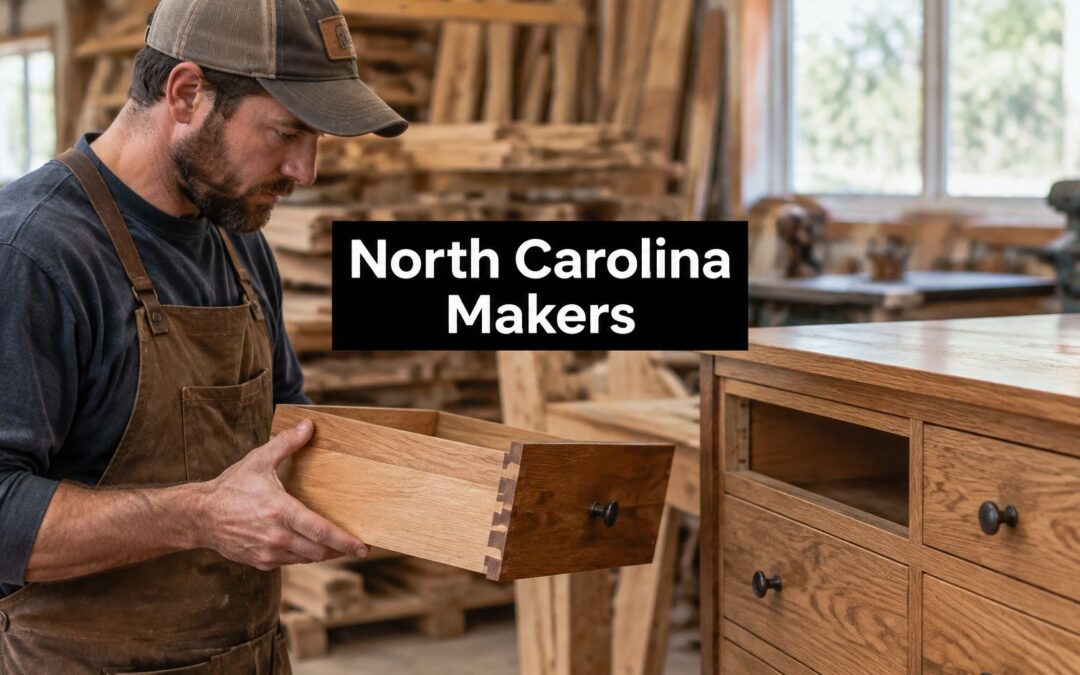
The most popular advice about buying from solid wood furniture manufacturers in North Carolina is to start with a list: find a directory, sort by reputation, work down it. That's backwards. A list tells you who markets well. It tells you nothing about where the lumber was dried, who cut the joinery, or whether the drawer bottom is a sheet of quarter-inch plywood hiding behind a solid maple front.
Start with a component map instead. Decide which parts have to be solid wood and which can be engineered, then find the shops that can document each one. North Carolina is a productive place to run that search because the supplier base is dense enough that a serious shop can source, machine, finish, and repair within a few hours' drive. That same density is why the marketing reads so confidently, and why the claims need testing rather than trusting.
Search for solid wood furniture manufacturers, North Carolina fills the first page with brands that have real factories and brands that have real showrooms. The two aren't the same business. The route below gets you to the ones with sawdust on the floor.
Your North Carolina Sourcing Route at a Glance
You don't need every shop in the state. You need about a dozen, filtered by project type. North Carolina's furniture value chain runs to roughly 3,000 establishments and more than 35,000 employees, and its furniture-manufacturing concentration is reported at more than three times the national average, according to the North Carolina Department of Commerce furniture industry page. That's too many names to call cold and too few to ignore.
The route that works is a fixed mix: one trade show, one state resource, two regional clusters, and referrals from people who have already lived with the finished work. High Point Market ranks first because it's the only place you can put your hands on the joinery, the finish, and the drawer box in the same afternoon. Book showroom appointments four to six weeks before the spring or fall market and arrive with a written question list, not a shopping mood.
| Channel | Best for | How to use it | What to verify |
|---|---|---|---|
| High Point Market | Inspecting joinery, finishes and drawer boxes in person | Book showroom appointments four to six weeks before the spring or fall market | Whether the line is made in North Carolina or imported; ask for the factory address |
| North Carolina Department of Commerce industry resources | Mapping the statewide ecosystem and county-level contacts | Start with the furniture industry page, then request regional manufacturer lists | Establishment type and whether machining and finishing are in-state |
| Regional trade and woodworking associations | Reaching custom shops that do not exhibit nationally | Ask for member lists filtered by solid-wood case goods, seating and cabinetry | Membership is not a quality rating; request a shop tour and samples |
| Custom shops in Hickory, High Point, Thomasville and Lexington | One-off pieces, built-ins and small production runs | Search by city plus solid wood, then call and ask about current capacity | Species, moisture content, in-house joinery and finishing |
| Designer and builder referral networks | Vetting makers with installed-project evidence | Ask for two completed projects and the maker's exact role | Who built, who finished and who installed |
| Manufacturer directories and B2B marketplaces | Broad list building before verification | Shortlist 10 to 12 names, then verify by phone and sample | Directory listings can be pay-to-play; confirm the factory location |
The shortlist rule: cap it at 10 to 12 makers, and filter by the work you're actually buying. A shop that excels at dining tables may have no business building a kitchen.
Three questions belong in the first call, before anyone quotes anything. Ask for the factory address, not the showroom. Ask for the species list in writing. Ask whether machining and finishing happen in-house or travel to a regional subcontractor. If you want a reference point for what a fully documented domestic build looks like, this explanation of solid wood furniture made in the USA is a useful baseline before you start comparing.
What North Carolina Manufacturing Means and Which Claims to Test
The reputation is earned and the label is loose. North Carolina built its place in wood furniture over more than a century, and the same name now covers shops that mill and machine their own stock and shops that assemble imported components. Both can put the same three words on a website.
The cluster that built the reputation
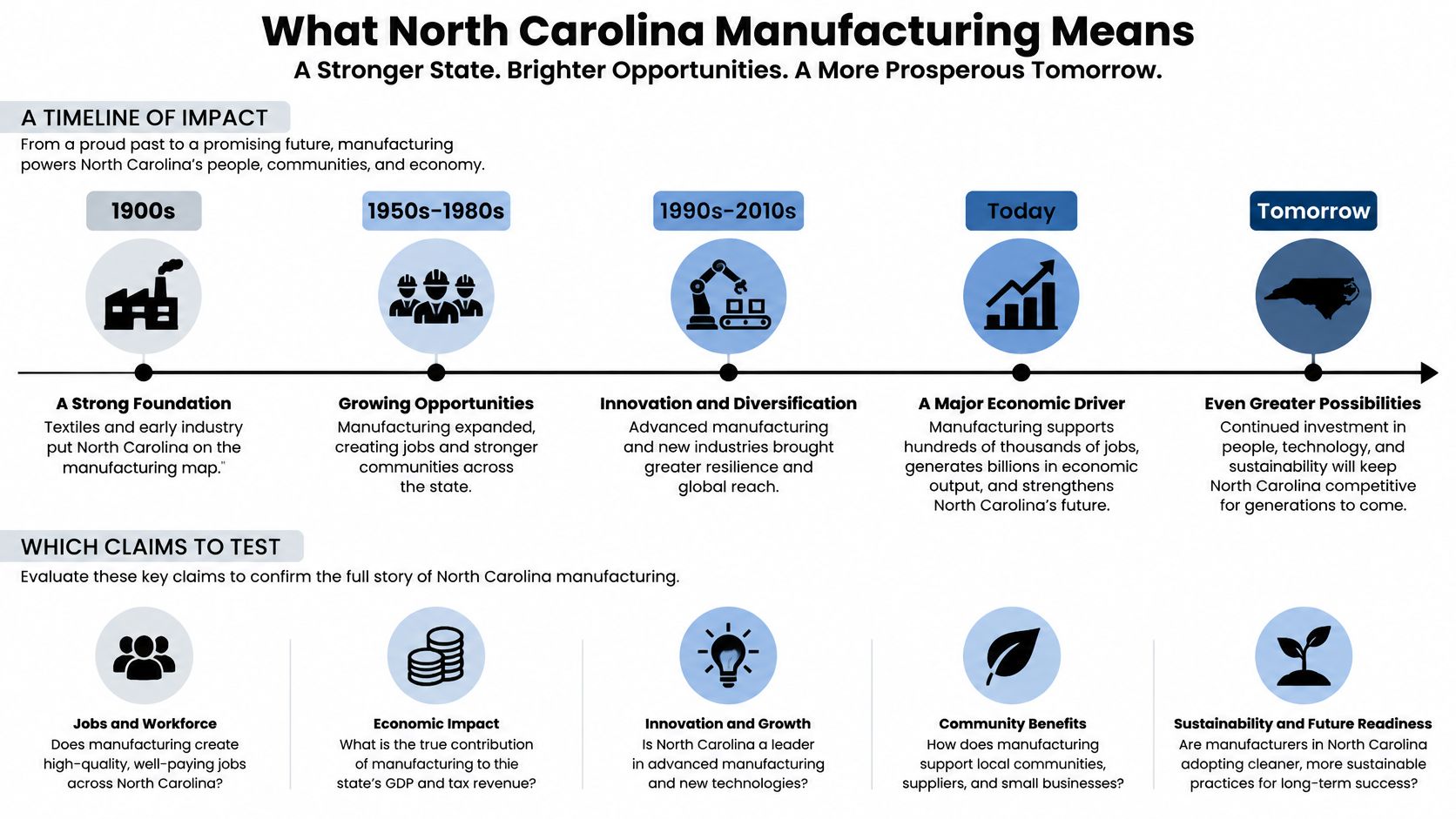
High Point's first furniture factory began operating in the 1880s. By 1900 the city and neighboring communities, among them Thomasville, Lexington, Salem, Marion, Mount Airy, Statesville, Hickory, and Greensboro, held 44 furniture factories producing an estimated $1.5 million in furniture, as the Richmond Fed's economic history of the Piedmont cluster records. The same history puts the postwar peak at an estimated 60% of all furniture made in the United States produced within a 150-mile radius of High Point.
Timber, rail links, and access to national markets built that scale, and institutions locked it in. A market serving furniture makers and retailers opened in High Point in 1909 and was reorganized as the Southern Furniture Exposition in 1921. Design, supplier networks, and wholesale distribution grew up around it. That inherited infrastructure is the reason the state's name still carries weight with buyers long after production spread out geographically.
What the payroll numbers say now
The surviving industry is smaller and more specialized. North Carolina's household furniture segment employed 64,528 workers in 1992 and 25,235 in 2012, a 61% decline over two decades, according to NCpedia's history of the state's furniture companies.
What remains still leads. The same source reports the state at roughly 9.5% of U.S. furniture-manufacturing employment and about 12% of U.S. household-furniture employment, first in that segment. The most recent count puts North Carolina at 21,200 employees in household and institutional furniture and kitchen cabinet manufacturing in 2025, per 2025 industry figures compiled from Bureau of Labor Statistics data. Contraction on that scale tends to produce specialists, not generalists: shops that endured did so because a narrower product line or a specific buyer relationship kept them busy.
A shop that survived a 61% contraction is usually excellent at something narrow. Your job is to find out what that something is before you assume it matches your project.
Five claims to test before you shortlist
- "Solid wood" is a statement about faces, not boxes. Ask what the drawer bottoms, back panels, and dust boards are made of. A solid maple front over a particleboard bottom is a normal build for some shops and a deal-breaker for a kitchen that will see daily load.
- "Made in North Carolina" is a statement about assembly, not origin. Ask where the lumber is harvested, where panels and hardware come from, where cutting and finishing happen, and what share of value is added in-state. The state's furniture sector still depends on foreign-sourced fabric, foam, metal hardware, and cabinet parts, per a 2024 analysis of North Carolina's furniture sector. That analysis also estimated the sector and related industries supported more than 36,000 jobs and generated $8.3 billion in output, which is exactly why component-level disclosure matters more than a state label.
- "Handcrafted" names no joint. Ask to see mortise-and-tenon or dovetail work and the jigs that produced it. A shop proud of its joinery will walk you to the bench.
- "Eco-friendly" needs a document, not an adjective. Ask for the finish product data sheet and any formaldehyde or emissions paperwork for composite components.
- A quoted lead time is an average, not a schedule. Ask what it measures, deposit to ship date or inquiry to delivery, and ask for the current production calendar in writing.
The Manufacturer Vetting Checklist That Separates Real Wood Shops
Wood is only part of the purchase. A North Carolina Department of Transportation economic-impact study reports that the household-goods and furniture sector uses nearly 240 categories of intermediate goods and services, with about $2.8 billion of those inputs sourced inside the state and $3.0 billion from outside it, per the NCDOT research report. Hardware, adhesives, coatings, packaging, freight, and engineering services all feed the finished piece.
That matters when you're comparing quotes. Two shops can build the same cabinet to very different durability standards because of the hinges, the finish, and the glue, none of which show in a photograph. Ask for the origin of non-wood components along with the wood spec, and treat a maker that answers plainly as a better bet than one that answers with a brochure.
Start with the material claim
Ask for a written species list and an NHLA grade, not the words "solid wood." A credible maker names the species, shows a sample with matched grain, and tells you where engineered panels appear: back panels, drawer bottoms, dust boards. Then ask for moisture content at assembly. In North Carolina's humidity I want to see 6% to 8% on a pin meter or in a kiln record, taken from the stock that's about to be machined, not from a sample in the office.
Solid wood moves with the seasons. If the material isn't conditioned and the tolerances aren't held, that movement shows up later as joint stress, panel gaps, or a door that stops closing in July.
Then walk the construction
Frames should be mortise-and-tenon or doweled, not stapled. Drawer boxes should be dovetailed, with sides thick enough to resist racking. Corner blocks belong in chairs and case pieces, and screws driven into end grain are a warning sign rather than a fastening method. If you want to recognize the difference on sight before a shop tour, this breakdown of cabinet joinery techniques shows what a proper frame joint looks like against a stapled butt joint.
Finish questions come next, and they're where vague answers cost the most. Ask for the product data sheet, the number of coats, the sheen, and emissions documentation.
| Specification | What to request | Strong answer | Red flag |
|---|---|---|---|
| Wood species and grade | Written species list, NHLA grade and a sample | One species named, grade stated, sample matches | Mixed hardwoods or "solid wood" with no species |
| Solid versus engineered parts | Component map for doors, frames, drawers, panels and backs | Solid wood where wear matters; engineered panels disclosed | All-solid claim followed by MDF back or particleboard drawer bottom |
| Moisture content | Meter reading or kiln record at assembly | Documented 6-8% and equilibrated to destination | "Kiln dried" with no number or record |
| Frame joinery | Photos or shop tour of mortise-and-tenon, dowel or dovetail | Mortise-and-tenon frames and dovetailed drawers | Staples, screws into end grain or butt joints |
| Drawer construction | Drawer box material, side thickness and joint | Solid wood dovetail with 1/2 to 5/8 inch sides | Stapled or rabbeted box with a thin bottom |
| Finish system | Product data sheet, sheen and number of coats | Catalyzed varnish or waterborne system with documented coats | "Factory finish" with no product name |
| Emissions and formaldehyde | CARB Phase 2, TSCA Title VI or GREENGUARD documentation | Compliance documents for every composite component | Vague eco-friendly claim |
| Hardware | Brand and load rating for hinges and slides | Named brand with rated slides and soft-close hinges | Unbranded hardware with no rating |
| Warranty | Written structural and finish warranty with exclusions | Five to ten years structural; clear finish terms | Verbal-only warranty or short finish exclusion |
| Lead time | Production weeks from deposit and ship date | Written schedule with milestones and escalation contact | A number of weeks with no deposit schedule or milestone dates |
| Local value added | Share of value added in North Carolina and component origins | Clear answer on lumber, hardware, machining and finishing | North Carolina-made claim with undisclosed imports |
| Replacement parts | Policy for matching discontinued doors, drawers and finishes | Written policy and retained specifications | No answer or no parts inventory |
The scoring rule: verbal answers and "we'll have to check on that" are a hold, not a pass. A solid wood piece should still be repairable in year fifteen, which means someone kept the specifications.
How to Judge Finishes and Sustainability Claims
Finish is where a good frame gets protected or ruined. Two shops can build identical mortise-and-tenon boxes and hand you completely different products, because the coating decides how the piece survives a hot mug, a wet glass, and a decade of cleaning sprays. Ask for the finish system by name and a sample panel you can abuse.
The five systems you'll meet
Conversion varnish sits at the top for kitchens and baths, with high resistance to water, heat, and household chemicals. Pre-catalyzed lacquer gives beautiful clarity and depth on dining tables and case goods, with strong off-gassing while it cures. Waterborne polyurethane trades a little toughness for low odor and low VOC, which suits bedrooms and family homes. Hardwax oil leaves a natural, repairable surface that you re-oil rather than refinish. Nitrocellulose lacquer is the reproduction shop's choice and the weakest against heat and water.
| Finish | Durability | Emissions and safety | Best for | Maintenance |
|---|---|---|---|---|
| Conversion varnish | Very high; resistant to water, heat and household chemicals | Solvent VOC during application; cured film low emission | Kitchen and bath cabinets | Damp cloth; avoid abrasives |
| Pre-catalyzed lacquer | High; good clarity and depth | Solvent-based with strong off-gassing during cure | Dining tables and case goods | Occasional wax |
| Waterborne polyurethane | Moderate to high; clear and flexible | Low VOC and low odor | Bedrooms and family homes | Mild soap; recoat every five to seven years |
| Hardwax oil | Moderate; repairable and natural in feel | Low VOC; no plastic film | Walnut and oak tables | Re-oil yearly |
| Nitrocellulose lacquer | Moderate; less resistant to heat and water | High solvent VOC | Reproduction furniture and low-traffic pieces | Wax; avoid heat |
What certifications do and don't tell you
Match the certificate to the question. FSC chain-of-custody answers where the wood came from. GREENGUARD Gold and SCS Indoor Advantage address indoor emissions from the finished product. CARB Phase 2 and TSCA Title VI paperwork sets formaldehyde limits for composite wood, which still matters on a solid wood piece that carries a plywood or MDF component somewhere. None of these is a durability rating. A certified finish can be three coats thin, and a certified table can have sloppy joinery.
If sustainability is driving the purchase rather than price, this guide to sustainable kitchen cabinets covers how material choice and finish chemistry interact over a cabinet's service life.
Test the sample, don't trust the sheet
Order a finished sample in the exact sheen and species, then put it through a week of real use before you approve the full run. Leave a wet glass on it overnight. Set a hot pan on it. Drag a key across it. Ring out a cloth with dish soap and wipe it daily. What the panel looks like after seven days tells you more than any data sheet, and it costs you one week instead of one kitchen.
How to Quote, Negotiate and Protect the Lead Time
Run the purchase like a project with milestones, not like a furniture order. The procedure below keeps quotes comparable and puts your protection in writing before money moves.
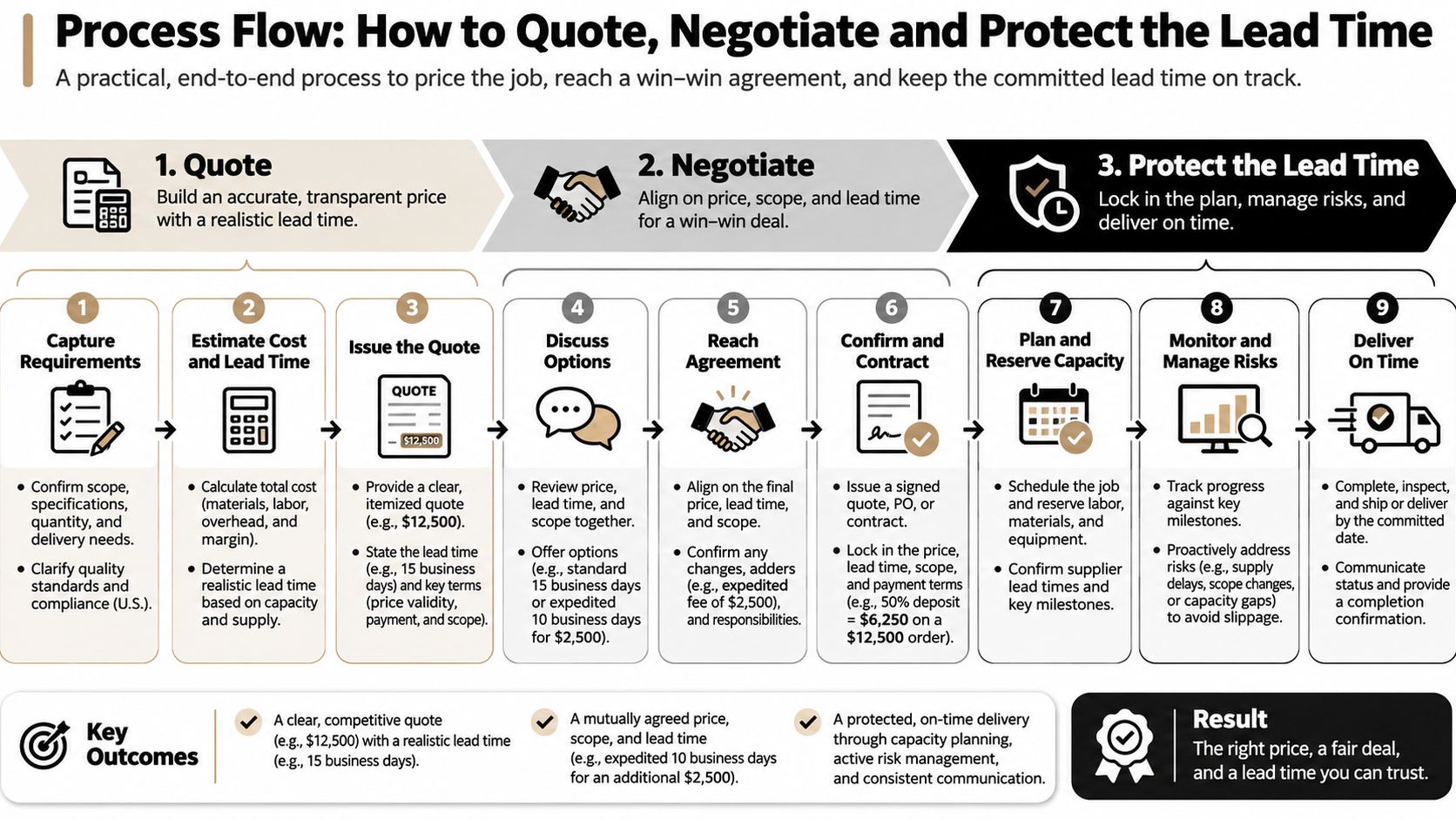
- Write a one-page spec sheet. Dimensions, species, finish, hardware brand, quantity, ship-to address, and who handles installation. Every maker quotes the same document.
- Send it to three to five shops, not ten. Include a request for a shop drawing and a finish sample. Volume of quotes doesn't improve the decision.
- Demand itemized pricing. Material, labor, finishing, freight, and installation quoted separately. A single lump sum hides where the corners were cut.
- Compare clocks, not numbers. Confirm every lead time is measured as production weeks from deposit to ship date. A shop quoting sixteen weeks from deposit and one quoting sixteen weeks from order confirmation aren't quoting the same thing.
- Tie the deposit to milestones. Design approval, raw material release, finish approval, shipping. Staged payments keep you in control and give you natural checkpoints to walk away.
- Put inspection in the contract. A pre-finish photo check, written finish sample approval, and a final inspection before crating. Inspect what you can't see later, while it's still on the bench.
- Settle freight and parts before signing. Ask who owns freight damage and how long a replacement door or drawer front takes to reproduce.
The labor reality behind the schedule
Workforce continuity belongs in the negotiation. North Carolina's furniture employment has fallen far from its peak, and recent reporting found approximately 28,000 sector jobs in the state alongside dozens of unfilled skilled positions at individual firms, according to CNN's coverage of the state's furniture labor market. Rebuilding specialized capabilities such as upholstery and woodworking can take years.
That reshoring or tariff-driven localization won't instantly raise quality or capacity is the part most buyers miss. A domestic shop can carry both imported-component exposure and a shortage of qualified hands. Ask who performs the joinery and finishing, whether apprentices are trained in-house, and what happens if a door, drawer, or finish fails after installation. Then get a named escalation contact in writing.
Here's the kind of conversation that separates a real schedule from a sales promise.
Your Next Move by Buyer Type
Homeowners should shortlist three makers, request two finish samples and one drawer-box sample, and visit a single shop in person. Budget an extra 10% to 15% for freight, installation, and the contingency that always appears once a wall is opened. Compare what you can touch, not what photographs well.
Designers need trade terms, CAD and specification support, a named project manager, and a written replacement-part policy before specifying a whole room. Ask how the shop handles a client change order mid-production, because that's where schedules die. If you're weighing a stock line against a built-to-spec program for a client, this comparison of custom versus stock cabinets sets out the practical trade-offs.
Builders and developers should require shop drawings, a production schedule with inspection hold points, freight terms, and a certificate of insurance, then match the shop's capacity to the project calendar rather than to unit price. A cheap cabinet that lands three weeks late costs more than the premium you avoided.
Everyone ends the same way: send the one-page spec sheet to that shortlist and book one shop tour. On the tour, confirm four things in person. The factory address. A moisture reading taken from stock in production. Joinery being cut in-house. The finish product name. For a benchmark on what a fully documented domestic build includes, Sinclair Cabinetry in Cape Coral, Florida builds real wood custom cabinets with design, manufacturing, installation, and shipping handled as one scope, which is a useful standard to hold North Carolina makers against. It is a benchmark, not a substitute for verifying a specific North Carolina factory.
If you're specifying solid wood cabinetry and want a maker whose material claims you can check line by line, Sinclair Cabinetry inc builds every cabinet box, drawer, face, and set of stairs from 100% real 3/4-inch wood in Cape Coral, Florida, with no press board, laminate, or thermofoil anywhere in the build. The same documentation standard this guide asks of North Carolina shops applies here: species, moisture control, joinery, finish system, and a parts policy you can hold us to. Visit Sinclair Cabinetry inc to see the construction details and start a project conversation.