
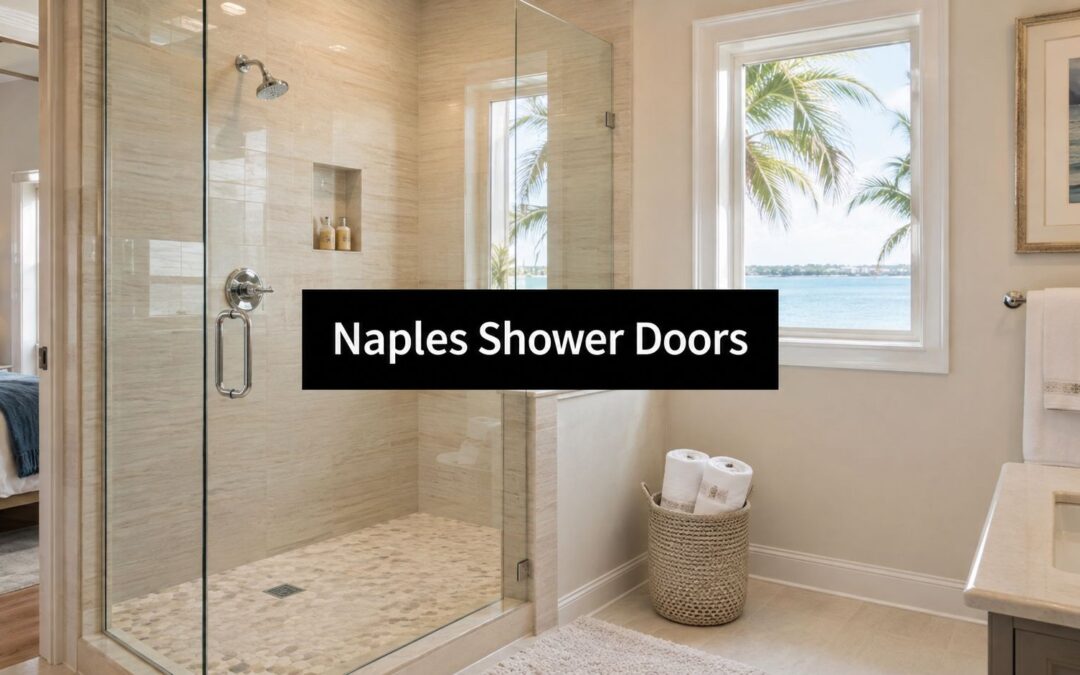
You've reached the frustrating stage of a Naples bathroom remodel where the tile is finished, the waterproofing has passed inspection, and the shower still isn't ready to use because the glass door hasn't been chosen. The showroom may start with finishes and handle shapes. That's not where I'd start.
For shower doors in Naples, FL, the practical order is style and opening layout, safety glass, coastal-rated hardware, permit responsibility, and installer experience. A frameless panel can look exceptional, but it won't correct a crooked wall, weak curb, poor waterproofing, or hardware that can't handle humid salt air. The door is the visible finish of a larger assembly, so buy it with the whole bathroom in mind.
Starting a Shower Door Project in Naples
A condo renovation in Pelican Bay, Park Shore, or inland Collier County can appear finished while the shower door holds up the final inspection and installation schedule. The glass depends on accurate measurements, compliant glazing, salt-air-resistant hardware, and a clear answer about permit responsibility. Treat it as the last part of a code-sensitive bathroom remodel, not an isolated glass purchase.
Start with the finished opening and the room's daily use. A narrow space beside a vanity may eliminate a pivot door. A toilet in the swing path can make a sliding configuration the better choice. A fixed panel suits a spacious walk-in shower only when the layout controls splash and the curb directs water correctly.
Practical rule: Do not order the door until the finished opening, curb, fixtures, tile, and waterproofing are ready for measurement.
The five decisions that control the project
Style and layout. Choose a pivot, sliding door, fixed panel, or combination after checking wall alignment, clearance, curb slope, and nearby fixtures. The showroom display cannot reveal how your finished room will perform.
Glass specification. Florida rules generally require safety glazing where the bottom exposed edge is under 60 inches above a standing or walking surface. The placement-based requirement is covered in the dedicated glass safety guidance, so confirm the specification with the installer before fabrication.
Hardware. Hinges, clamps, pulls, and channels face constant humidity and salt exposure in Naples. Specify finishes and materials suited to the coastal environment. Poorly protected metal can corrode long before the glass needs replacement.
Code and permits. A door-only replacement may follow a different process from a bathroom remodel that changes plumbing, waterproofing, framing, or the shower footprint. Confirm the permit and inspection sequence with the contractor and the applicable local authority before work begins.
Installer. Hire an installer who can evaluate finished tile, curb slope, wall alignment, and backing. A glass-only installer may handle a straightforward replacement, but a remodel-experienced contractor is the safer choice when the door connects to the shower pan, drain, waterproofing, or framing.
If design work is still underway, coordinate the glass opening with cabinetry, storage, vanity depth, and door swing. Sinclair Cabinetry's bathroom renovation planning guide helps keep those decisions in one plan, which reduces late changes and protects the remodel's long-term coastal durability.
Comparing Frameless, Semi-Frameless, Sliding, and Pivot Doors
The right shower door depends on the room's geometry and the amount of hardware you're willing to maintain. Frameless doors provide the cleanest sightline, but they demand a properly prepared opening because the glass and hinges have less tolerance for movement or uneven walls.
Semi-frameless doors add metal around portions of the enclosure while keeping the overall appearance lighter than a fully framed unit. They're a practical choice for older bathrooms where the opening isn't perfectly square or where the installer needs more adjustment at the perimeter.
Sliding doors solve clearance problems. They work well over tubs, in compact bathrooms, and wherever a swinging panel would meet a vanity, toilet, or nearby wall. The trade-off is more moving hardware, including rollers and guides, which makes coastal-grade components especially important.
Pivot doors can create a generous usable opening and a strong architectural look. They need a clear swing path and a side wall capable of supporting the hinge load. Don't select one only because it looks substantial in a showroom.
| Style | Glass Thickness | Hardware Exposure | Price Range | Best For |
|---|---|---|---|---|
| Frameless | Project-specific safety glass, often a heavier panel | Low | Higher | Open walk-in showers and clean sightlines |
| Semi-frameless | Safety glass selected for the enclosure design | Moderate | Mid to higher | Openings with modest irregularities |
| Sliding | Safety glass in overlapping panels | Higher | Mid to higher | Tubs, compact rooms, and restricted swing areas |
| Pivot | Safety glass sized for the hinge system | Moderate | Mid to higher | Clear swing paths and wider usable openings |
The table's price bands are relative, not a substitute for a site estimate. Glass size, cutouts, curb conditions, hardware finish, wall reinforcement, and installation complexity can change the quote substantially.
My Naples recommendation
For a well-built, square opening with strong backing, I generally favor frameless glass with premium stainless or brass hardware. It gives the bathroom the open look many Naples homeowners want and avoids the dirt-trapping profiles found on bulky framed systems.
For a compact bathroom or an older slab home with limited clearance, choose a sliding or semi-frameless system rather than forcing a pivot door into an awkward path. Sinclair Cabinetry's guide to glass shower doors in Fort Myers also addresses the value of coordinating enclosure choices with cabinetry and bathroom storage.
Glass Safety Standards That Govern Every Shower Door
In Naples, the shower door is the final glass decision in a permit-driven, code-sensitive bathroom remodel. Treat it as part of the enclosure, waterproofing, and long-term coastal durability plan, not as a decorative panel ordered after everything else. Human impact, door movement, hardware loads, moisture, and salt air all affect the specification.
Florida treats shower glass as a hazardous location when the bottom exposed edge is below 60 inches from a standing or walking surface. Frameless panels, doors beside tubs, and some fixed side panels therefore require safety glazing because of their placement. The label “frameless” does not change that requirement. Confirm the applicable location requirements before fabrication.

Tempered and laminated glass serve different purposes
Tempered glass is heat-treated so it breaks into a more controlled pattern than ordinary annealed glass. Laminated safety glass holds broken pieces between interlayers. The right selection depends on the enclosure's safety, retention, exposure, and design requirements.
The relevant federal safety-glazing framework is 16 CFR 1201. Larger shower-door panels are commonly evaluated against Category II impact requirements, including the cited benchmark of 400 foot-pounds of impact energy, described in the federal safety glazing regulation. Require product labeling and documentation instead of relying on a verbal assurance.
Ask for documentation before fabrication
Before the glass is ordered, require the written proposal and fabrication drawing to identify:
- Safety glazing identification: Each panel should have an appropriate permanent mark or etching.
- Product classification: Confirm that the enclosure glass meets the applicable safety-glazing category.
- Panel locations: Have the installer identify every hazardous-location panel, including fixed returns.
- Edge and cutout details: Review holes, notches, and hinge cutouts before production.
- Project conditions: Ask whether the bathroom's coastal location, wall construction, or anchoring needs affect the specification.
Verification is easier and less expensive before fabrication than after installation. For a Naples remodel, insist that the installer explain the glass, hardware interface, and documentation in plain language. That record protects the finished enclosure long after the bathroom is complete.
Naples and Collier County Permit Triggers
In Naples, the shower door often arrives at the end of a larger, permit-sensitive bathroom remodel. A replacement that fits the existing finished opening, with no plumbing, framing, waterproofing, or footprint changes, may remain a cosmetic glass project. Have the licensed professional and the authority having jurisdiction confirm that classification before ordering.
The permit question changes as soon as the scope reaches behind the tile or alters building systems. The Collier County Clerk's permit information identifies plumbing alterations or replacements as permit-related work. The City of Naples also requires permits for installations regulated under Florida Building Code Section 105.1, including plumbing remodeling.

Work that can change the permit pathway
Treat the door as part of a remodel-grade project when the work includes:
- A changed shower footprint: Moving walls, curbs, or the enclosure opening can affect framing, waterproofing, and inspection.
- Plumbing relocation: Moving a drain, mixing valve, showerhead, or supply line requires a permit review.
- New pan or waterproofing: Rebuilding the substrate beneath tile connects the glass installation to the inspected shower assembly.
- Framing changes: A new header, modified wall, or added backing can require review before fabrication.
- Electrical work: Lighting, exhaust fans, and GFCI changes belong in the same permit discussion.
Salt air makes this coordination more important. A door installed over disturbed waterproofing or poorly supported framing can develop leaks, movement, and hardware problems long before the glass itself wears out. Review the full Naples bathroom remodeling resource before treating the enclosure as a standalone purchase.
Confirm jurisdiction before filing. North Naples and Golden Gate generally fall under unincorporated Collier County, while properties inside Naples follow city requirements. Condo and HOA approval can add another review layer, particularly when work affects shared walls, insurance documents, construction hours, or building schedules. Get that approval before glass fabrication.
Measuring and Installing a Custom Shower Door
Never measure a shower door with a quick tape-and-hope visit. Custom glass is made for the finished opening, and the finished opening can change after tile, grout, curb caps, sealants, and trim are complete.
Start by confirming that the curb is cured, stable, and properly aligned. Measure the opening at the top, middle, and bottom, then record the wall-to-wall dimensions rather than assuming they match. Check both side walls for plumb, measure the curb height and slope, and note any return panel, notch, hinge, or channel location.

The field checklist
- Verify the finished substrate: Tile, grout, curb cap, and waterproofing must be complete enough for final templating.
- Check three widths: Record measurements at the top, middle, and bottom of every opening.
- Record plumbness: Note how far each wall leans and in which direction.
- Confirm clearance: Open the proposed door path against the vanity, toilet, towel bars, and nearby wall.
- Draw the hardware: Mark hinges, clamps, channels, handles, and fixed-panel joints on a dimensioned sketch.
- Review the order: Have the homeowner and installer approve the drawing before fabrication.
The installer should set channels or hinges accurately, use approved setting blocks, level the glass, and seal the correct seams with compatible silicone. Interior seams typically need mildew-resistant silicone, while exterior seams should use a neutral-cure product that won't attack hardware finishes.
Installation quality shows up in the final walkthrough
A professional crew should operate the door repeatedly before leaving. The panel should swing or slide smoothly, close without binding, and align with the seal or strike area. The installer should explain the cure window before first use and leave care instructions for the glass and metal.
The fabrication schedule depends on the supplier and the enclosure design. Custom glass requires coordination, so don't schedule the final cleaning or move-in around an unconfirmed delivery date.
Coastal Hardware Choices for Salt-Air Longevity
The glass usually gets the attention. In Naples, the hardware deserves equal scrutiny.
Hinges, brackets, pulls, rollers, and channels live in warm, wet air every day. Homes closer to Naples Bay or the Gulf face an even tougher environment, but inland bathrooms can still experience enough humidity and cleaning exposure to punish inferior finishes. Independent glass-industry guidance discusses how humid, salty air can corrode metal components over time and create structural concerns, as described in this tempered glass maintenance reference.
Specify the metal, not just the color
A finish name such as chrome, matte black, or brushed nickel doesn't tell you what's underneath. Ask whether the component is solid brass, marine-grade 316 stainless steel, or anodized heavy aluminum. Be cautious with plated zinc or pot-metal parts, particularly when a supplier can't identify the alloy or explain the finish process.
PVD, or physical vapor deposition, finishes are worth considering where available because they're designed as a more durable surface treatment than a basic decorative coating. They don't eliminate cleaning or poor installation, but they can make a sensible difference in a salt-air bathroom.
| Material | Salt-Air Rating | Typical Lifespan in Naples | Relative Cost |
|---|---|---|---|
| Marine-grade 316 stainless steel | Strong choice for coastal exposure | Dependent on cleaning and installation | Higher |
| Solid brass with a suitable finish | Good when properly finished and maintained | Dependent on finish and care | Mid to higher |
| Anodized heavy aluminum | Practical for selected channels and profiles | Dependent on anodizing quality | Mid |
| Plated zinc or pot metal | Poorer choice where coating failure is likely | Shorter and highly maintenance-dependent | Lower |
The lifespan column is intentionally qualitative. Hardware performance depends on alloy, finish, location, ventilation, cleaning chemicals, water exposure, and whether dissimilar metals were combined.
Coastal specification: Get the alloy grade and finish process in writing. “Marine finish” without a material description isn't enough.
Keep hinges, pulls, channels, and nearby towel hardware compatible. Dissimilar metals can create corrosion problems, and harsh cleaners can damage both finishes and seals. A modest material upgrade is usually more sensible than replacing corroded hinges after the bathroom is finished.
Vetting the Right Installer for Your Remodel
The installer should understand more than glass. They need to connect the opening, safety standard, hardware, waterproofing, and permit scope without leaving responsibility scattered among several trades.
For a standalone replacement, ask for the applicable state-certified glass and glazing license, proof of liability insurance, and workers' compensation coverage. If the shower door belongs to a broader permitted renovation, confirm which licensed contractor is pulling the permit and who is responsible for the final inspection.

Questions that expose weak planning
Ask these before signing:
- Who templates the glass? The person measuring should understand finished tile, curb slope, wall plumb, and hardware placement.
- Who supplies the hardware? Get the manufacturer, alloy, finish process, and component warranty.
- How are coastal failures handled? Ask whether the warranty addresses pitting, finish loss, hinge corrosion, and labor separately.
- What happens at the curb? The installer should explain how the glass, seals, channels, and waterproofed threshold work together.
- Who coordinates permits? Don't assume a glass company or remodeler is handling the same jurisdiction you are.
- What happens if a component is delayed? Backordered hinges or rollers can hold up the installation even when the glass is ready.
A full bathroom remodeling partner can be the better fit when tile, cabinetry, plumbing, waterproofing, and glass need to follow one sequence. A specialist glass shop may be perfectly suitable for a clean door swap, but the scope should determine the contractor, not the lowest line item.
Sinclair Cabinetry inc is one option for homeowners who want bathroom remodeling and custom cabinetry coordinated with the tile-to-glass sequence. Its contractor hiring checklist gives you a practical way to compare licensing, insurance, written scope, and warranty language.
Put these items in the contract:
- Exact glass specification: Include safety-glazing identification and panel locations.
- Hardware description: Name the material, finish, manufacturer, and included accessories.
- Installation scope: State who handles templating, drilling, sealing, cleanup, and adjustments.
- Permit responsibility: Identify the party responsible for applications, inspections, and closeout.
- Warranty terms: Separate glass, hardware finish, and labor coverage.
- Exclusions: List tile repair, framing changes, waterproofing corrections, and electrical work.
Shower Door FAQs for Naples Homeowners
How long does a shower-door project take?
The clock starts after the finished opening is ready to measure, not after your first showroom visit. Tile, curb work, wall backing, approved hardware, and the fabrication slot all need to be in place before installation gets a firm date.
Get separate dates for template, fabrication, delivery, and installation. A permitted bathroom renovation can add inspection timing to the sequence, even when the glass has already been fabricated. In a coastal remodel, rushing that sequence can leave waterproofing corrections or unfinished tile hidden behind a completed enclosure.
What should a Naples shower door cost?
No single price fits every Naples project. Replacing a door in an existing opening differs from building a large frameless enclosure with fixed returns, upgraded hinges, custom cutouts, wall reinforcement, or curb correction.
Read the estimate line by line. It should state whether the price includes measuring, safety glazing, hardware, delivery, installation, sealing, cleanup, and final adjustment. Tile repairs, header changes, plumbing, waterproofing, and electrical work may belong to the broader renovation rather than the glass scope.
The lowest glass quote is not automatically the lowest project cost. A door installed before the opening, curb, or waterproofing is ready can require removal and rework.
Does replacing a door require a permit?
A cosmetic replacement in the same opening may follow a simpler path. Plumbing changes, altered waterproofing, a new pan, framing work, or a changed shower footprint can create permit obligations. Confirm the scope with the applicable building office, and check City of Naples requirements when the property falls within city jurisdiction.
Condo and HOA rules may require architectural approval, insurance documents, construction-hour limits, or specific products. Ask the building manager before fabrication, especially in a high-rise or shared-wall property. A glass shop cannot override building rules or inspection requirements.
What should the warranty cover?
Separate the warranty into glass breakage, hardware finish, and labor or installation. These categories can carry different exclusions and coverage periods.
For a coastal home, the written warranty should address corrosion, pitting, finish discoloration, loose hinges, leaking seals, and adjustment visits. It should also identify homeowner actions that void coverage, such as abrasive cleaners, unapproved modifications, or neglected hardware maintenance.
Is frameless always the best option?
Frameless is the right choice when the opening is square, the walls have adequate backing, and you will maintain the glass and hardware. Choose another configuration when the swing path is blocked, the walls are badly out of alignment, or low maintenance matters more than a minimal frame.
Sliding and semi-frameless doors often suit tighter bathrooms. Textured or privacy glass works well in a guest or shared family bath because it admits light without creating a fully open sightline. Clear glass and reduced hardware remain popular, while textured glass still serves a practical privacy purpose, as reflected in bathroom design coverage.
How do I protect the glass and hardware?
Use a soft microfiber cloth and a soft rubber squeegee. Rinse away loose grit before wiping, avoid abrasive pads and powders, and keep aggressive chemicals off hinges and pulls. Dry the metal after cleaning, and ask whether the glass has a compatible protective coating.
Salt air makes routine drying part of the installation plan. Keep the enclosure clean, inspect hinges and fasteners, and report movement, looseness, pitting, or water escaping at the curb. Early correction protects the finish and prevents a small adjustment from becoming a larger repair.
Sinclair Cabinetry inc can coordinate bathroom remodeling, custom cabinetry, storage, and the tile-to-glass sequence for a Naples renovation. Visit Sinclair Cabinetry inc to discuss your bathroom layout, coastal hardware requirements, permit scope, and shower-door installation plan.