

Your master closet should be more than just a storage space; it should be a personal sanctuary of style and order. For many homeowners, however, it often devolves into a zone of clutter and stress, where finding the right outfit becomes a daily challenge. This guide moves beyond temporary fixes, presenting a comprehensive collection of transformative master closet organization ideas designed to create a functional, elegant, and deeply personalized space that lasts.
We'll delve into powerful methodologies that establish a foundation for lasting order, from the "Spark Joy" philosophy to the streamlined efficiency of a capsule wardrobe. You will discover practical strategies for maximizing every square inch, including the implementation of vertical hanging systems and the art of seasonal wardrobe rotation. This article provides a blueprint for not just tidying up, but completely rethinking your closet's potential.
This is not about generic tips; it's a detailed exploration of actionable solutions. We will cover everything from foundational layout strategies and smart custom cabinetry to specialized storage for every accessory in your collection. For those considering a more permanent and luxurious upgrade, we'll touch upon how expert craftsmanship can be integrated to build a closet that not only holds your wardrobe but actively elevates your daily routine. Prepare to explore a curated list of the most effective master closet organization ideas and turn your vision of a perfectly ordered space into a stunning, functional reality.
1. The KonMari Method (Spark Joy Philosophy)
Revolutionizing the world of organization, the KonMari Method, developed by Japanese consultant Marie Kondo, is less about tidying and more about curating a life filled with joy. This philosophy is one of the most transformative master closet organization ideas because it forces a fundamental shift in your relationship with your belongings. Instead of asking what to discard, you ask what you want to keep, focusing solely on items that “spark joy.”
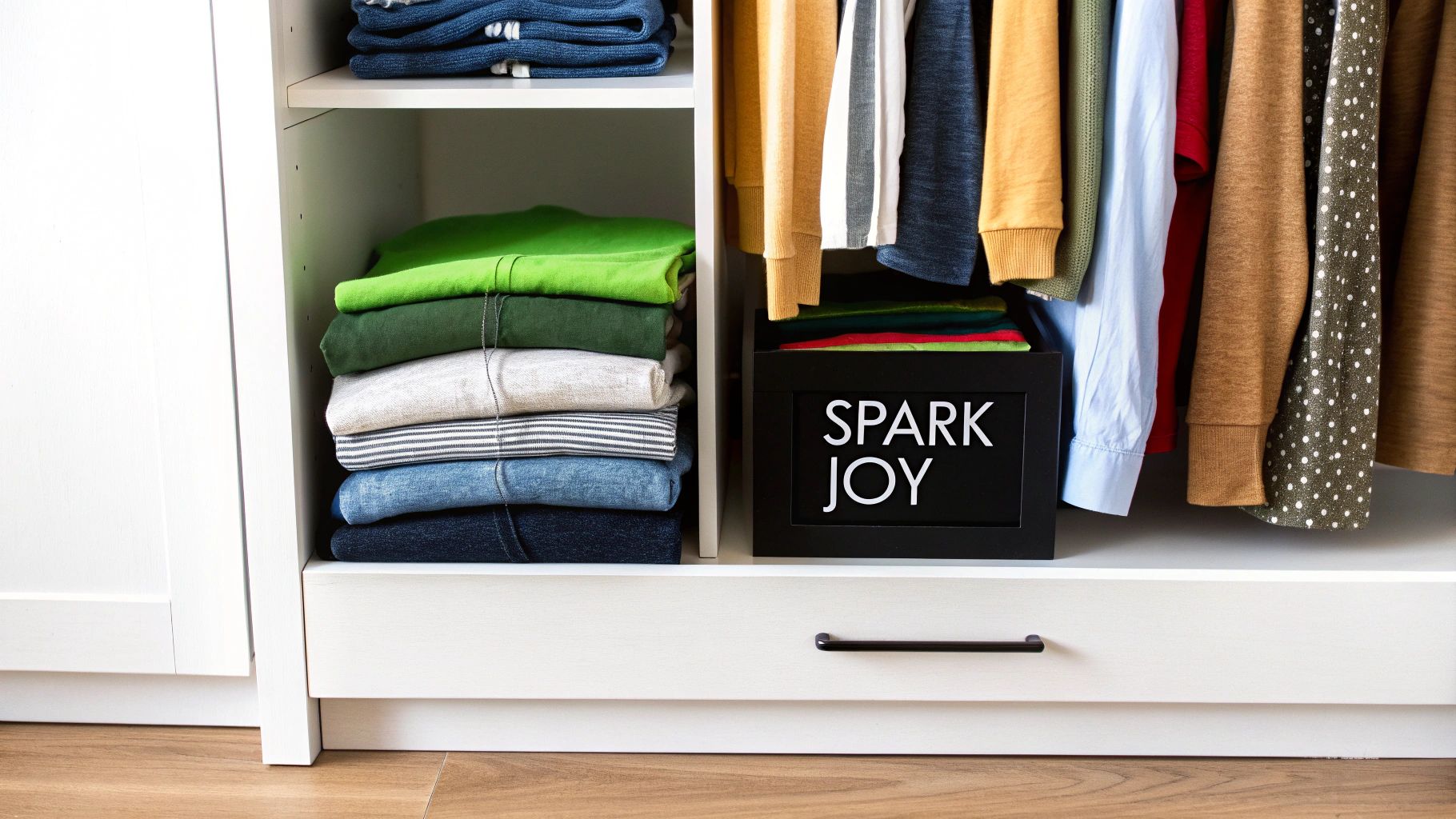
This method is ideal for individuals feeling overwhelmed by clutter or those preparing for a major closet renovation. By decluttering first, you get a precise inventory of what you truly love, ensuring your new custom cabinetry is designed for the wardrobe you want, not just the one you have. The result is a closet that feels intentional, personal, and serene.
How to Apply the KonMari Method to Your Closet
The process is simple yet profound. First, you must commit to the task and gather every single piece of clothing from every corner of your home, placing it all in one central pile. This visual representation of your total volume is often a powerful motivator.
Next, you handle each item one by one and ask yourself a single question: "Does this spark joy?" This is an intuitive, physical reaction. If the answer is a definitive yes, you keep it. If not, you thank the item for its service and place it in a discard pile for donation, recycling, or disposal.
Actionable KonMari Tips for Master Closets
- Organize by Category, Not Location: Tackle all shirts at once, then all pants, then dresses, and so on. This prevents you from shuffling clutter around and provides a clear picture of how much you own in each category.
- Master the Vertical Fold: For items stored in drawers or on shelves, Kondo's signature vertical folding technique is a game-changer. It allows you to see every item at a glance, prevents wrinkles, and maximizes drawer space.
- Hang with Intention: Arrange hanging clothes so they rise to the right, with longer, heavier items on the left and shorter, lighter items on the right. Kondo suggests this creates a more uplifting visual line.
2. Color-Based Organization System
A favorite of celebrity stylists and high-end retail boutiques, the color-based organization system is one of the most visually stunning master closet organization ideas. This method involves arranging your entire wardrobe according to the color spectrum, transforming your closet into an aesthetically pleasing and highly intuitive space. It simplifies the process of creating outfits by allowing you to instantly locate items by hue.
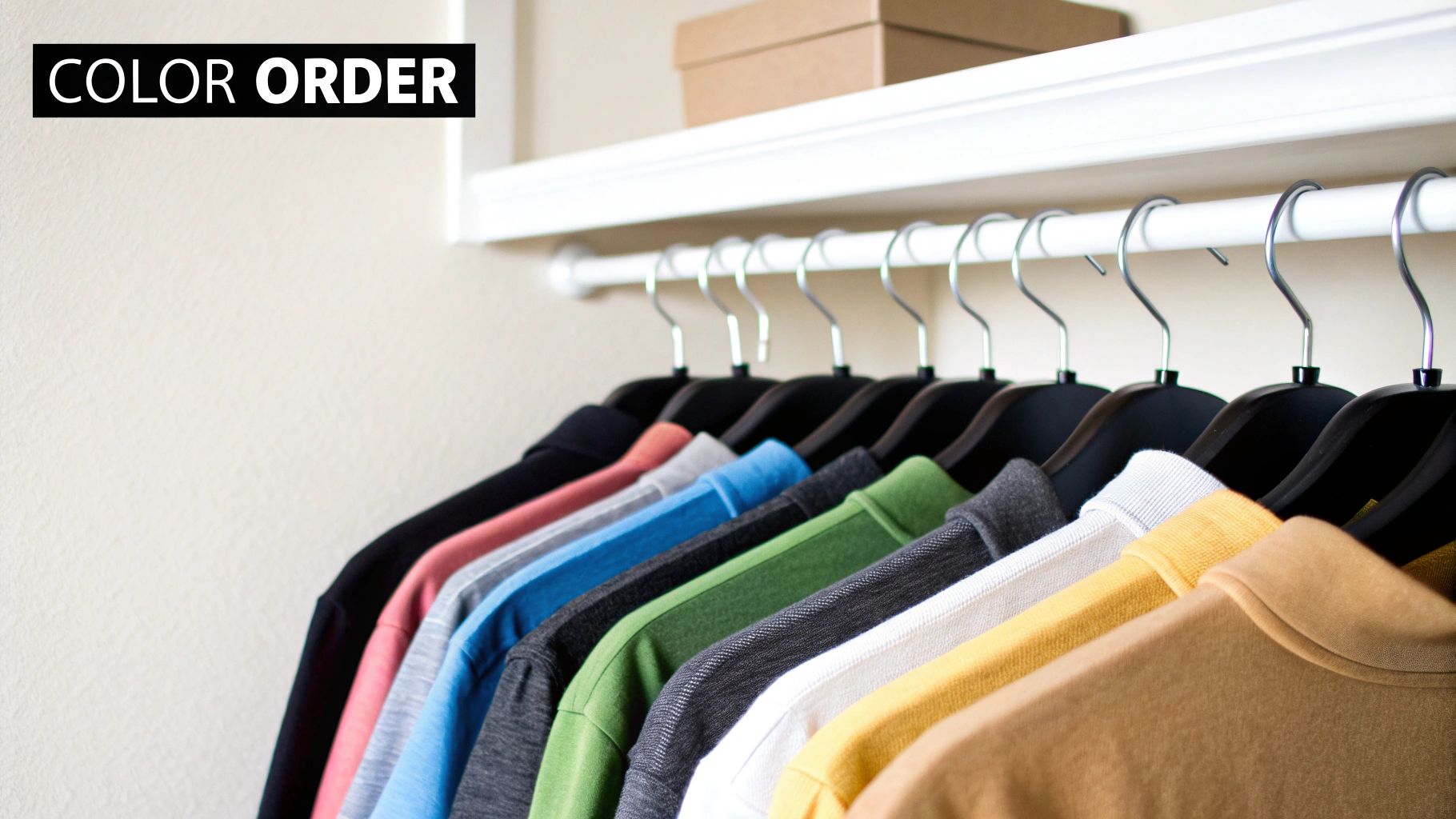
This system is perfect for visual thinkers and fashion enthusiasts who plan outfits based on color palettes. By creating a gradient effect, it not only makes your closet look like a curated boutique but also streamlines your morning routine. When designing custom cabinetry, knowing you'll organize by color can influence decisions on lighting and backing materials to make your clothes the true centerpiece.
How to Apply a Color-Based System to Your Closet
The core principle is to group all clothing items of the same color together and then arrange these groups in a logical order. The most common approach is to follow the sequence of the rainbow (ROYGBIV: Red, Orange, Yellow, Green, Blue, Indigo, Violet). This creates a natural and seamless visual flow that is easy to maintain.
You can begin by pulling everything out and sorting items into distinct color piles. Once sorted, you can decide on the order. A popular method, popularized by organizing experts like The Home Edit, is to start with neutrals (white, beige, gray, black) and then transition into the full color spectrum.
Actionable Color-Coding Tips for Master Closets
- Follow the Rainbow: Arrange your colorful garments in rainbow order for a logical, predictable flow. Start with reds and pinks, moving through orange, yellow, green, blue, and purple.
- Isolate Neutrals: Create a dedicated section for your neutrals. A common order is white, beige, gray, and black. This keeps your everyday staples easily accessible.
- Group Similar Shades: Within each color category, arrange items from lightest to darkest. For example, in the blue section, start with sky blue and move to navy. This adds another layer of sophisticated organization.
- Use Cohesive Hangers: Switch to a single style and color of hanger (like slim velvet or natural wood). This removes visual clutter and allows the colors of your clothing to stand out.
3. Capsule Wardrobe Organization
A capsule wardrobe is a curated approach to fashion that emphasizes quality over quantity. This organization philosophy involves maintaining a limited, versatile collection of clothing pieces that work together harmoniously, allowing you to create numerous outfits from a minimal number of items. This concept is one of the most impactful master closet organization ideas for those who crave simplicity, efficiency, and a clutter-free space.
This method is perfect for busy professionals, frequent travelers, or anyone looking to reduce decision fatigue and embrace a more sustainable lifestyle. By focusing on a core collection of high-quality essentials, you not only simplify your morning routine but also design a closet that is intentionally built for your specific needs, making every piece inside a functional and beloved part of your wardrobe.
How to Apply the Capsule Wardrobe Method to Your Closet
Transitioning to a capsule wardrobe begins with a thorough assessment of your lifestyle and personal style. Unlike broad decluttering methods, this is about strategic curation. The goal is to define a small, powerful collection, often around 30-40 pieces per season (including tops, bottoms, outerwear, and shoes), that can be mixed and matched effortlessly.
The process involves identifying your most-worn, versatile items and building a color palette around them. You start with neutral basics and slowly add complementary accent pieces. Anything that doesn't fit this cohesive collection is stored, donated, or sold. For those interested in a minimalist approach, consider these additional tips for building a lasting capsule wardrobe that truly lasts.
Actionable Capsule Wardrobe Tips for Master Closets
- Start with Neutral Basics: Build your foundation with 5-10 high-quality, neutral items like black trousers, classic blue jeans, a white t-shirt, and a versatile blazer. These form the backbone of your wardrobe.
- Add Cohesive Accent Pieces: Select 3-5 accent pieces in a complementary color palette. These could be patterned blouses, colorful sweaters, or statement accessories that add personality without creating clutter.
- Use the 'Rule of Three': Before purchasing a new item, ask yourself: "Does this work with at least three other pieces I already own?" This simple test ensures every new addition enhances your wardrobe's versatility.
- Plan for Seasonal Swaps: Keep your active wardrobe lean by storing off-season items. Use designated bins or garment bags for seasonal capsules, rotating them in and out as the weather changes.
4. Zone-Based & Lifestyle Organization
Moving beyond simple categorization, zone-based organization is a strategic approach that transforms your master closet into a highly efficient, personalized boutique. This method involves dividing the space into designated zones based on your specific lifestyle, activities, and daily routines. Instead of just grouping all shirts together, you create dedicated areas for work attire, gym clothes, casual weekend wear, and formal outfits, making it one of the most intuitive master closet organization ideas for a busy lifestyle.
This strategy is perfect for professionals, fitness enthusiasts, or anyone with distinct "uniforms" for different parts of their life. For an attorney, this might mean a "courtroom" zone with suits, a "business casual" zone, and a "weekend" zone. By arranging your wardrobe to mirror your life, you streamline your morning routine, eliminate decision fatigue, and ensure you can grab a complete, ready-to-go outfit in seconds.
How to Apply Zone-Based Organization to Your Closet
The first step is to analyze your weekly schedule and lifestyle needs. Map out your primary activities: work, social events, fitness, relaxation, and travel. These activities will become the foundational zones of your closet. The goal is to create a logical flow that makes sense for how you actually live and get dressed each day.
Once you’ve defined your zones, you begin physically arranging your closet. Dedicate specific sections of hanging space, drawers, and shelving to each lifestyle category. For instance, your most frequently accessed zone, like workwear, should be placed in the most prominent, eye-level location. This approach ensures your closet is not just organized, but optimized for your personal rhythm.
Actionable Zone-Based Tips for Master Closets
- Group Complete Outfits: Within each zone, try to group entire outfits together, including accessories and shoes. This creates grab-and-go modules that make getting ready effortless.
- Use Visual Dividers: Employ shelf dividers, different colored hangers, or distinct sections of your closet rods to create clear visual boundaries between zones. Labeling shelves and drawers can further enhance clarity.
- Create a "Transition" Zone: For versatile items like a classic blazer or dark-wash jeans that fit into multiple lifestyle categories (e.g., work and casual), create a small, central transition zone to avoid duplication. Learn more about how to design these specific areas with a closet organization system.
- Prioritize by Frequency: Place your most-used zones, like your work or casual wear, in the most accessible, easy-to-reach parts of the closet. Seasonal or formal wear zones can be stored on higher shelves or in less prominent areas.
5. Vertical Hanging and Double-Rod Systems
One of the most effective master closet organization ideas for instantly doubling your storage capacity is leveraging vertical space. A vertical hanging and double-rod system is a powerful technique that installs additional hanging rods at different heights, creating two or even three tiers of clothing storage. This method allows you to maximize your closet's volume without increasing its physical footprint.
This approach is perfect for homeowners with an abundance of shirts, blouses, skirts, jackets, and folded pants. By creating dedicated zones for shorter garments, you eliminate the vast empty space often found beneath a single, high-hanging rod. It’s a foundational element in many custom closet designs, like those from California Closets or Elfa, because it’s both simple and incredibly efficient.
How to Implement a Double-Rod System
Implementing a double-rod system involves strategically dividing your closet's vertical height. You'll designate at least one wall or section for this setup, reserving another area with a single rod for longer items like dresses, long coats, and jumpsuits.
The key is precise measurement and installation. The upper rod is typically installed high enough to accommodate hanging shirts or jackets, while the lower rod is positioned directly below it, leaving just enough clearance for a second row of similar items. This simple change can make a dramatic difference, turning a standard closet into a high-capacity wardrobe. For more inspiration on how this integrates into a larger plan, you can explore various walk-in closet design ideas.
Actionable Tips for Vertical Hanging
- Follow Standard Measurements: Install the top rod approximately 80-82 inches from the floor and the bottom rod around 40-42 inches. This typically leaves just enough space for two rows of shirts or blouses.
- Divide and Conquer: Dedicate the double-rod section exclusively to shorter garments like shirts, skirts, and blazers. Keep a separate single-rod area for long dresses and coats to avoid bunching.
- Use Slim Hangers: To maximize the newfound space, switch to uniform, slim-profile hangers. This small change can allow you to fit significantly more items on each rod.
- Consider a Pull-Down Rod: For very high ceilings, a pull-down closet rod (or wardrobe lift) can make the upper tier easily accessible without needing a permanent step stool.
6. Drawer Divider and Bin Organization System
Transforming cluttered drawers from catch-all black holes into meticulously organized spaces is the core principle of a drawer divider and bin system. This approach is one of the most effective master closet organization ideas for managing smaller items like socks, undergarments, ties, and accessories. By creating a designated home for everything, you eliminate chaotic jumbles and make finding what you need effortless.
This modular method is perfect for anyone with an abundance of small accessories or those who prefer to store folded items in drawers rather than on shelves. It introduces a grid-like structure that enforces order, similar to how luxury department stores display their accessories. The result is a visually appealing and highly functional system that maintains its neatness long after the initial organization is complete.
How to Apply a Divider and Bin System to Your Closet
The key is to compartmentalize. Start by emptying the drawers you wish to organize and sorting the contents into specific categories. Measure the interior dimensions of your drawers, including height, width, and depth, to ensure you purchase dividers and bins that fit perfectly.
Once you have your organizers, begin placing them inside the drawers to create a custom layout that suits your inventory. Assign each compartment a specific purpose, such as one for black socks, another for belts, and a third for silk scarves. This systematic approach ensures every item has a permanent, easy-to-find home.
Actionable Divider and Bin Tips for Master Closets
- Choose the Right Material: Select dividers that match your closet’s aesthetic. Options range from clear acrylic for a modern look, to bamboo for a warm, natural feel, or velvet-lined inserts for protecting delicate jewelry.
- Embrace Vertical Folding: For items like t-shirts, socks, and undergarments, use the vertical folding technique within each compartment. This allows you to see every item at a glance, maximizing visibility and space.
- Label When Necessary: For opaque bins or deeper drawers, consider using small, discreet labels to identify the contents of each section. This is especially helpful for seasonal items or accessories you don't use daily.
7. Seasonal Rotation and Storage Strategy
One of the most practical master closet organization ideas, a seasonal rotation strategy ensures your active wardrobe is always relevant, accessible, and uncluttered. This approach involves systematically swapping out clothes based on the time of year, storing off-season items elsewhere to maximize prime closet real estate. Instead of digging through bulky sweaters in July, your closet remains a curated collection of what you actually need right now.
This method is essential for those living in climates with distinct seasons, such as a family in Chicago managing heavy winter coats and light summer wear. It's also a go-to for fashion-forward individuals with extensive wardrobes and anyone with limited closet space who needs to make every inch count. By focusing only on current items, you reduce decision fatigue and simplify your daily routine.
How to Implement a Seasonal Rotation Strategy
The core of this strategy is a biannual or quarterly "closet flip." You’ll designate a specific time, usually a few weeks before a major seasonal shift, to reassess your entire wardrobe. Move all out-of-season garments from your master closet into a designated long-term storage area.
Simultaneously, you will retrieve the upcoming season's clothing from storage, reintroducing it into your primary closet space. This is also the perfect opportunity to declutter, identifying items that are worn out, no longer fit, or don't align with your style before you store or display them.
Actionable Seasonal Rotation Tips for Master Closets
- Create a 'Bridge' Wardrobe: Keep a small, accessible collection of transitional pieces, like light jackets, cardigans, and versatile layers, to handle unpredictable weather between major seasonal shifts.
- Choose the Right Storage: Use clear, sturdy, and labeled bins so you can easily identify contents. While vacuum bags save space, avoid them for delicate fabrics like cashmere or silk, which need to breathe.
- Prep Before You Pack: Always wash or dry-clean every item before storing it for several months. This prevents stains from setting and deters pests. Placing cedar blocks or lavender sachets in storage containers offers natural protection.
- Store Smarter, Not Harder: Designate a cool, dry, and dark location for your off-season storage, such as a guest room closet, attic, or under-bed storage containers. This prevents sun damage, mildew, and fabric degradation.
8. Hanger Strategy and Uniform Hanger Systems
One of the most impactful yet simple master closet organization ideas is to implement a strategic and uniform hanger system. This goes beyond just hanging clothes; it’s about creating visual harmony, maximizing space, and preserving the shape of your garments. Adopting a consistent hanger style instantly elevates the look of your closet from chaotic to curated, much like a high-end retail boutique.
This approach is perfect for anyone seeking a quick visual upgrade or those looking to make the most of limited hanging space. By choosing the right hangers for specific garment types and unifying their appearance, you create a streamlined system that is both beautiful and functional. The uniform look reduces visual noise, making it easier to see and access your clothing.
How to Implement a Hanger Strategy
The core principle is to replace your mismatched collection of wire, plastic, and wooden hangers with a single, cohesive system. The first step is to assess your wardrobe. Take note of the types of clothing you own: heavy coats, delicate blouses, structured blazers, skirts, and trousers. This inventory will determine the types of hangers you need within your chosen uniform style.
Next, select a hanger type that best suits your needs and aesthetic. Popularized by professional organizers like The Home Edit, slim velvet hangers are a favorite for maximizing space and preventing slippage. Once you’ve chosen your system, commit to it by replacing all old hangers. The final touch is to hang all garments facing the same direction for a polished, professional finish.
Actionable Tips for a Uniform Hanger System
- Invest in Quality Slim Hangers: To maximize hanging space, opt for thin yet durable hangers. Space-saving designs can often double the amount of clothing you can fit on a single rod.
- Match Hanger Type to Garment: While maintaining a uniform look, use specialized hangers where needed. Use sturdy wooden hangers for heavy coats and suits, non-slip velvet hangers for delicate or wide-neck tops, and clip hangers for skirts and pants to avoid creasing.
- Ensure Visual Consistency: Choose one color and style for all your hangers. A single color, like black, white, or chrome, creates a clean backdrop that makes your clothing the star of the show.
- Hang Everything in the Same Direction: A small but critical detail is to ensure all hanger hooks face inward, toward the back of the closet. This simple habit makes browsing your clothes a smoother, more pleasant experience.
9. Accessory Organization and Styling Station
Transform your master closet from a simple storage space into a personal boutique with a dedicated accessory organization and styling station. This concept elevates daily routines by creating a designated zone for coordinating outfits and elegantly displaying your favorite pieces. It’s one of the most functional master closet organization ideas for those who appreciate the finishing touches, integrating storage for jewelry, bags, scarves, and shoes with a practical area for outfit planning.
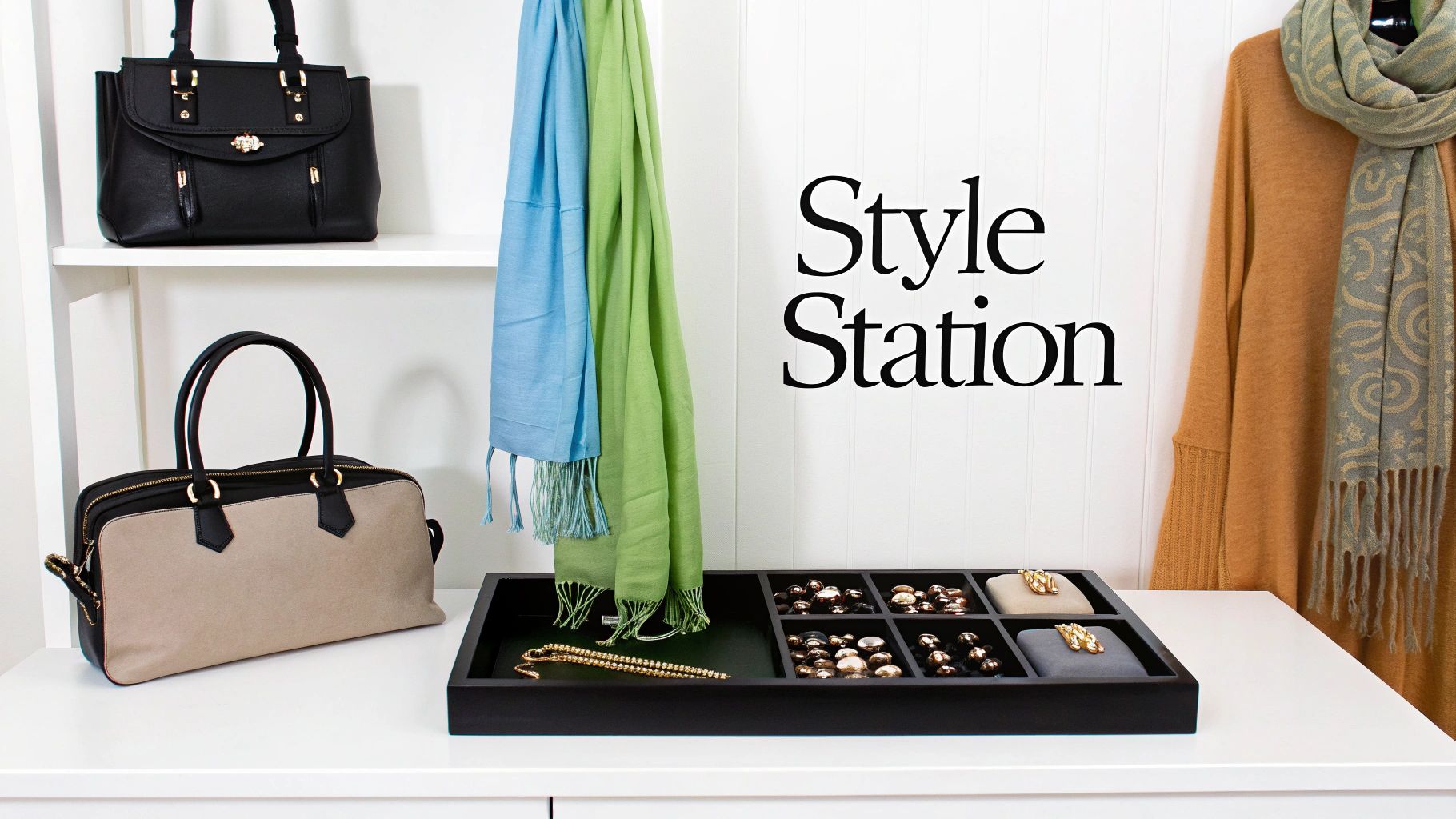
This idea is perfect for fashion enthusiasts or anyone who wants to streamline their morning. By centralizing accessories and providing a surface for assembly, it eliminates the frantic search for the right necklace or belt. The result is a luxurious, highly-organized space that feels like a high-end styling suite, making getting dressed an intentional and enjoyable experience.
How to Create a Styling Station in Your Closet
The key is to combine visibility with accessibility. Start by identifying an underutilized wall or corner in your master closet. This space will become the hub for your station. Install a combination of shelving, drawers, and display hardware tailored to your specific collection of accessories.
A small countertop or a built-in vanity provides a "landing zone" for laying out potential outfits. Pair this with a full-length mirror and excellent lighting to create a functional and inspiring environment. The goal is to see your options clearly and have everything you need to complete a look within arm's reach.
Actionable Tips for Your Accessory Station
- Implement Smart Jewelry Storage: Use velvet-lined drawer inserts for delicate items, clear acrylic stands for statement necklaces, and wall-mounted organizers for earrings and bracelets to prevent tangles and damage.
- Showcase Handbags and Shoes: Designate cubbies or illuminated shelves to display your favorite handbags and shoes. This keeps them in pristine condition while turning them into a design feature. For more shoe storage solutions, you can explore various custom closet design ideas.
- Install Specialized Lighting: Add LED strip lighting within shelves or a stylish sconce above the mirror. Good lighting is crucial for accurately matching colors and appreciating the details of your accessories.
- Create a "Get-Ready" Surface: A simple quartz or wood countertop provides a durable and beautiful surface for placing items, a jewelry box, or even a small decorative tray for your daily essentials like a watch or rings.
10. Smart Labeling and Inventory Management System
For those who appreciate data-driven precision, a smart labeling and inventory system elevates master closet organization ideas from simple tidiness to strategic wardrobe management. This approach involves creating a digital or physical catalog of your clothing, accessories, and footwear, allowing you to track items, plan outfits, and conduct wardrobe audits with unparalleled efficiency. It transforms your closet into a personal boutique where every piece is accounted for.
This method is perfect for individuals with extensive or valuable collections, fashion enthusiasts who love creating new looks, or anyone aiming for a highly optimized capsule wardrobe. By inventorying your items, you gain a clear understanding of what you own, preventing duplicate purchases and making it easier to identify gaps. It’s the ultimate tool for maintaining a curated and functional wardrobe over the long term.
How to Implement a Closet Inventory System
The core principle is to create a detailed record for your wardrobe. This can be as simple as a spreadsheet or as sophisticated as a dedicated app. You begin by documenting each item, capturing key details like category, color, brand, size, purchase date, and its specific location within your new custom closet.
The "smart" component comes from using this data. For example, you can digitally plan your outfits for a trip without pulling everything out, quickly find that one specific sweater, or analyze which items you wear most and least. This system turns your closet into a searchable database.
Actionable Inventory Management Tips for Master Closets
- Choose Your Tool: Start with a simple spreadsheet or use a specialized closet organization app like Stylebook or Cladwell, which offer features for outfit creation and style analytics.
- Use Descriptive Labels: Apply clear, consistent physical labels to bins, boxes, and shelf dividers. Consider using a color-coding system, for example, blue for winter items and yellow for summer essentials.
- Create a Photo Catalog: Take a clear, well-lit photo of each item. This visual reference is invaluable for quick identification and outfit planning, especially within an app.
- Track Key Data: Beyond the basics, include notes on care instructions (e.g., "dry clean only"), the last time an item was worn, and any necessary repairs.
- Maintain the System: The key to success is consistency. Schedule a quick 15-minute update each month to add new purchases and remove items you’ve donated or sold.
Master Closet: 10-Method Comparison
| Approach | Implementation Complexity 🔄 | Resources & Efficiency ⚡ | Expected Outcomes / Quality 📊⭐ | Ideal Use Cases / Tips 💡 |
|---|---|---|---|---|
| The KonMari Method (Spark Joy Philosophy) | High 🔄🔄🔄 — one-time deep process | High time investment (8–16 hrs), low monetary cost | Lasting behavioral change, decluttered space, emotional satisfaction ⭐⭐⭐⭐ | For those seeking mindful decluttering; start by emptying closet and fold vertically |
| Color-Based Organization System | Moderate 🔄🔄 — visual sorting | Low cost, ongoing maintenance to keep order ⚡ | Enhanced aesthetics and faster color-based outfit matching ⭐⭐⭐ | Best for colorful wardrobes and fashion-forward users; begin with neutrals |
| Capsule Wardrobe Organization | High 🔄🔄🔄 — planning + curation | Time and upfront investment in quality pieces; fewer ongoing choices ⚡ | Dramatically reduced decision fatigue, cohesive style, sustainable ⭐⭐⭐⭐ | Ideal for busy professionals and travelers; start with 5–10 neutrals and 3–5 accents |
| Zone-Based & Lifestyle Organization | Moderate–High 🔄🔄🔄 — spatial planning | May require fixtures, labels, moderate cost | Intuitive, activity-focused selection; speeds outfit choice ⭐⭐⭐ | Suits families and varied lifestyles; map daily activities and label zones |
| Vertical Hanging & Double-Rod Systems | Moderate 🔄🔄 — hardware + layout | Requires rods/installation (possible pro), very space-efficient ⚡⚡ | Doubles/triples hanging capacity; better visibility ⭐⭐⭐⭐ | Great for small closets and many short items; use slim hangers and a step stool |
| Drawer Divider & Bin Organization System | Low–Moderate 🔄🔄 — measuring & arranging | Affordable organizers; time to measure and set up ⚡ | Prevents jumbled contents; quick item retrieval ⭐⭐⭐ | Best for socks/underwear/accessories; measure drawers and use vertical filing |
| Seasonal Rotation & Storage Strategy | Moderate 🔄🔄 — ongoing rotation | Needs off-season storage space and proper containers | Maximizes active space; extends garment life; forces wardrobe review ⭐⭐⭐ | Ideal in distinct climates or limited space; rotate 2–4 weeks before season change |
| Hanger Strategy & Uniform Hanger Systems | Low 🔄 — replace and re-hang | Investment in quality uniform hangers; low maintenance ⚡⚡ | Increases usable hanging space and protects garments ⭐⭐⭐⭐ | Universal use; invest in slim velvet for space and wooden for heavy coats |
| Accessory Organization & Styling Station | Moderate 🔄🔄 — custom displays | Higher cost and space for specialized organizers | Boosts outfit creativity, protects accessories, easier retrieval ⭐⭐⭐ | For accessory collectors and stylists; display frequently used items and add lighting |
| Smart Labeling & Inventory Management System | High 🔄🔄🔄 — data-driven upkeep | Time-consuming setup, apps or spreadsheets required | Prevents duplicates, supports audits and resale, aids planning ⭐⭐⭐⭐ | Best for large/valuable wardrobes or stylists; use photos + a simple app or sheet |
Craft Your Perfect Closet with Expert Precision
Embarking on a master closet organization project is more than just a decluttering exercise; it is an investment in your daily peace of mind and personal efficiency. Throughout this guide, we have explored a comprehensive suite of master closet organization ideas, from the philosophical "spark joy" approach of the KonMari Method to the practical, everyday logic of a Zone-Based Layout. We've seen how a simple change, like implementing a uniform hanger system, can instantly create visual harmony, while a more strategic endeavor, such as designing a capsule wardrobe, can fundamentally simplify your life.
The journey from a cluttered space to a functional sanctuary is built on these foundational principles. By combining color-coding with seasonal rotation, you create a system that is not only visually appealing but also highly intuitive. Integrating specialized accessory stations and smart labeling systems elevates your closet from a mere storage unit to a personalized boutique. Each idea, whether it’s leveraging vertical space with double-rod systems or meticulously organizing with drawer dividers, serves as a crucial building block in constructing your ideal wardrobe environment.
Key Takeaways for Lasting Organization
To ensure your efforts yield long-term success, it's vital to internalize the core concepts we've discussed. Remember that the most effective organization system is one that aligns perfectly with your lifestyle, not one that forces you into an unsustainable routine.
- Personalization is Paramount: Your closet should reflect your life. A system designed for a corporate professional will differ greatly from one for a freelance artist. Tailor your zones, storage solutions, and overall layout to how you actually live and dress each day.
- Consistency is the Cornerstone: A beautiful system is only as good as its upkeep. The true magic happens when you commit to the principles you've established, whether it's consistently using your labeling system or performing a quick daily tidy-up.
- Quality Infrastructure Matters: While strategies are essential, the physical structure of your closet provides the foundation. High-quality rods, drawers, and shelving that are thoughtfully placed make maintenance effortless and elevate the entire experience.
Insight: True organization isn't about achieving a one-time state of perfection. It's about creating a dynamic, adaptable system that evolves with your wardrobe and lifestyle, making daily order a natural and effortless part of your routine.
From Ideas to Implementation: Your Actionable Next Steps
Now, it’s time to transform these concepts into reality. Begin by dedicating time to a thorough decluttering session using the method that resonates most with you. Measure your space meticulously, inventory your belongings, and sketch out a plan that incorporates the strategies discussed, from vertical hanging to accessory zones.
This planning phase is the most critical juncture. It is where you decide how to best apply these master closet organization ideas to your unique space and collection. The ultimate expression of this planning is a custom-designed closet, where every shelf, rod, and drawer is crafted to your exact specifications. A bespoke solution ensures that no inch of space is wasted and that the final result is a seamless integration of form and function. By investing in a professionally designed system, you are not just organizing your clothes; you are creating a lasting asset for your home and a daily source of calm and inspiration.
Ready to turn your vision into a stunning reality? The experts at Sinclair Cabinetry inc specialize in crafting high-quality, real wood custom cabinetry solutions that bring sophisticated master closet organization ideas to life. Explore their gallery and schedule a consultation to begin designing the luxurious, perfectly organized closet you deserve. Sinclair Cabinetry inc