

Unlocking Closet Nirvana: Designing Your Dream Walk-In
A well-designed walk-in closet enhances organization, reflects personal style, and streamlines your daily routine. This listicle presents 10 design ideas to maximize space and elevate your closet, regardless of size or budget. From luxurious islands to minimalist aesthetics and smart storage solutions, discover inspiration and expert tips to create a functional and stylish walk-in closet that perfectly suits your needs.
1. Luxury Island-Centered Walk-In Closet
The pinnacle of walk-in closet design, the island-centered layout, transforms your storage space into a luxurious, boutique-inspired haven. This design revolves around a central island, the undisputed focal point of the closet, which serves both functional and aesthetic purposes. The island typically houses drawers for folded items like sweaters and jeans, compartments for accessories and jewelry, and provides a generous surface area ideal for folding clothes, packing, or staging outfits. The perimeter walls are then maximized with hanging rods, shelves, and custom cabinetry to complete the 360-degree storage solution. This layout prioritizes both organization and accessibility, allowing you to see and reach everything with ease. It’s the ultimate expression of personalized luxury.
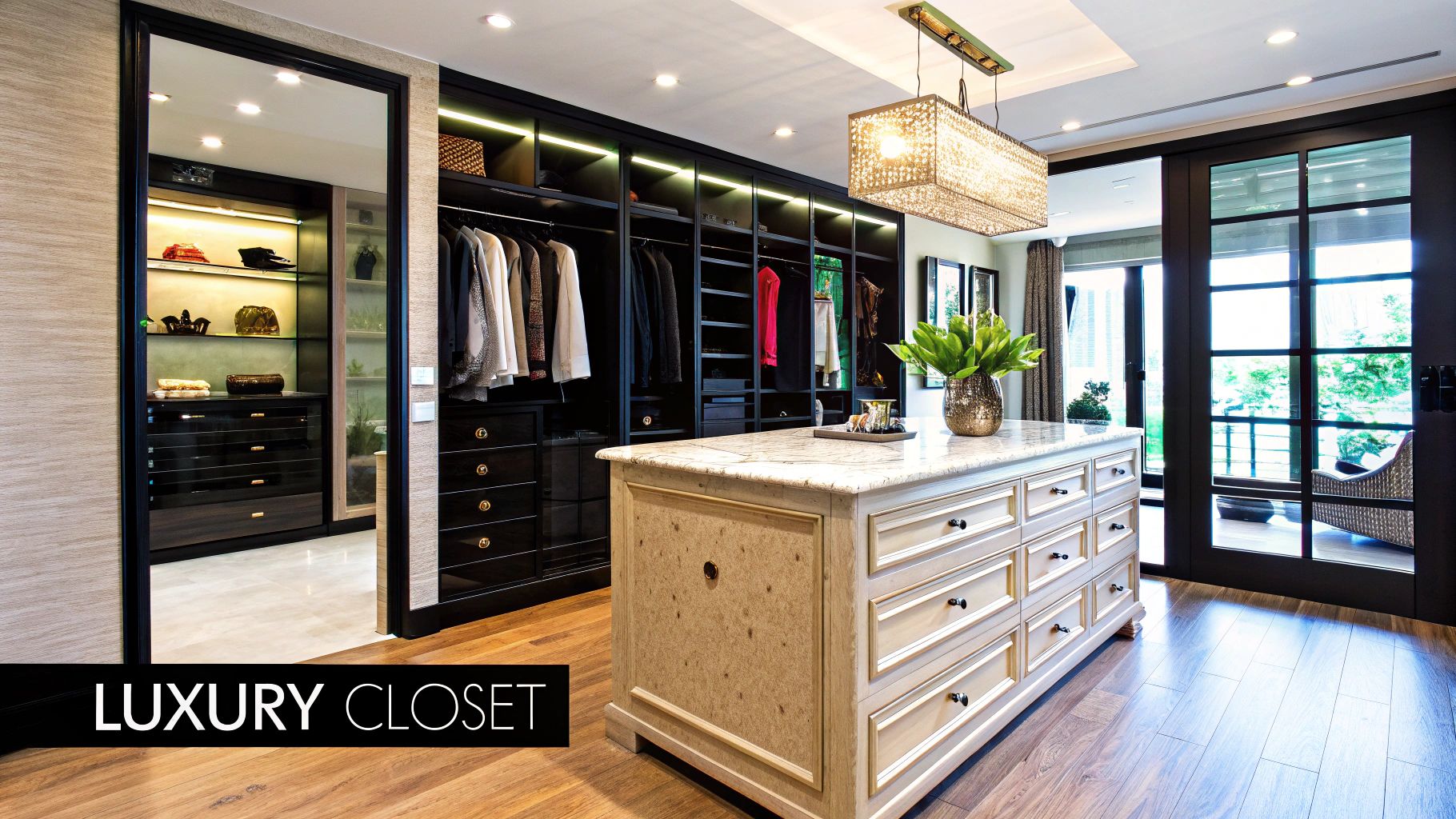
This design is frequently seen in the closets of celebrities and high-end homes, often featuring custom designs by companies like LA Closet Design and California Closets, as showcased in Architectural Digest home tours. These examples illustrate the true potential of the island-centered closet, often incorporating features like integrated seating areas, statement lighting fixtures like chandeliers, and custom finishes that create a truly bespoke experience. For a deeper dive into dimensions and planning considerations, you can learn more about Luxury Island-Centered Walk-In Closets. This type of closet is ideal for those who prioritize organization, accessibility, and a luxurious aesthetic in their dressing routine.
Pros:
- Maximizes Storage Capacity: By utilizing both the central island and perimeter walls, this design offers ample storage space for clothing, accessories, and shoes.
- Luxurious Retail-Inspired Experience: Mimics the feel of a high-end boutique, creating a glamorous and enjoyable dressing experience.
- Clear Organization by Category: The island and surrounding storage solutions allow for easy categorization of items, making it effortless to find what you need.
- Provides Counter Space: The island's surface area offers a practical space for folding, packing, and staging outfits.
- Enhanced Visibility and Accessibility: The 360-degree access path ensures all items are visible and readily accessible.
Cons:
- Requires Significant Square Footage: This layout is best suited for larger walk-in closets, ideally a minimum of 12'x12'.
- Higher Cost: Custom cabinetry and the construction of the island contribute to a higher overall cost.
- Potentially Less Efficient Use of Space: Compared to strictly wall-mounted solutions, the island can sometimes reduce overall hanging space.
- May Require Professional Design Assistance: To maximize the layout and ensure proper integration of all elements, professional design input is often recommended.
Tips for Implementing an Island-Centered Closet:
- Incorporate Electrical Outlets: Include outlets in the island for charging devices or using a steamer.
- Varied Drawer Depths: Design drawers with varying depths to accommodate different items, from shallow trays for jewelry to deeper drawers for sweaters.
- Strategic Mirror Placement: Add a full-length mirror to the end of the closet or incorporate a mirrored panel on the island.
- Glass-Topped Displays: Consider glass-topped drawers or display areas within the island to showcase accessories and jewelry.
- Layered Lighting: Install proper lighting both overhead (a chandelier or statement fixture) and within cabinets to enhance visibility.
This luxurious closet design, popularized by designers like Lisa Adams of LA Closet Design and influenced by the layouts of luxury consignment boutiques like The RealReal, deserves its place on this list because it elevates the everyday act of getting dressed into a luxurious ritual. It’s the perfect choice for homeowners seeking to create a truly personalized and opulent dressing space.
2. U-Shaped Walk-In Closet Configuration
The U-shaped walk-in closet configuration is a highly efficient layout that maximizes storage potential in a rectangular space. By utilizing three walls, this design creates ample hanging space, shelving, and specialized storage areas while maintaining an open central area for dressing. It’s an excellent option for medium-sized walk-in closets where a central island might feel too cramped, offering a balance between storage capacity and comfortable maneuverability. This design typically features hanging rods on the two side walls, with the back wall dedicated to shelving, drawers, and other specialized storage solutions like shoe racks or jewelry organizers. A continuous countertop or shelf running along the perimeter of the "U" adds to the organized feel and provides a practical surface for folding clothes or displaying accessories.
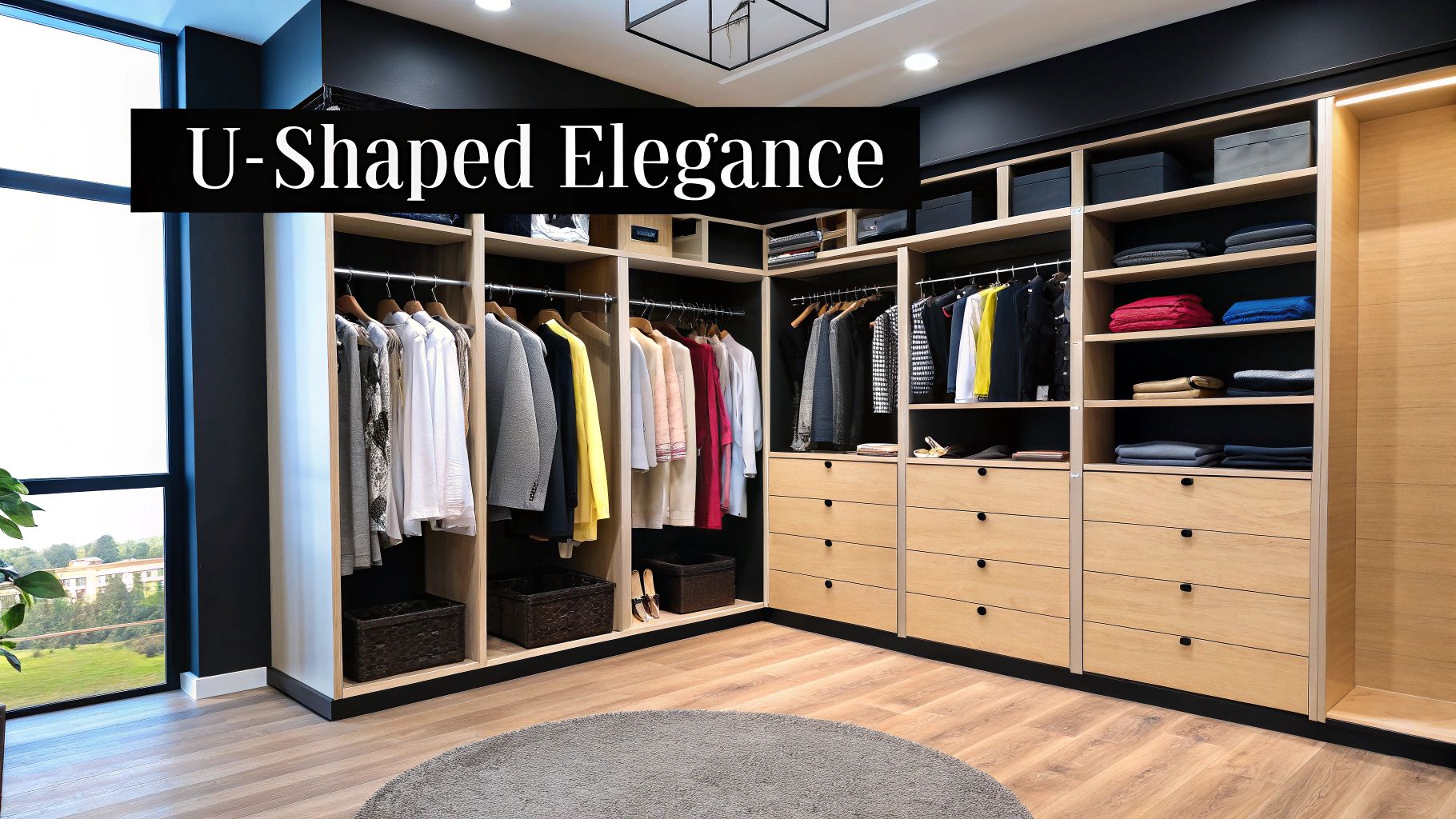
This configuration deserves a spot on this list due to its versatility and practicality. It offers a significant upgrade from standard reach-in closets, providing a dedicated dressing area and significantly more storage. The U-shape naturally creates distinct zones for different types of clothing and accessories, making organization intuitive and easy to maintain. The open central area allows for comfortable movement and outfit selection. Often, one end of the "U" can incorporate a vanity area with a mirror and seating, enhancing the functionality of the closet.
Features and Benefits:
- Three-wall storage system: Maximizes wall space usage for extensive storage capacity.
- Continuous counter or shelf: Provides a practical surface along the perimeter for folding and displaying items.
- Varied storage heights and depths: Accommodates different types of clothing and accessories.
- Open central area for dressing: Offers comfortable space for movement and outfit changes.
- Potential for a vanity or seating area: Adds functionality and convenience.
Pros:
- Maximizes wall space usage.
- Creates natural organization zones.
- Works well in rectangular rooms.
- Maintains open floor space in the center.
- Can be implemented in spaces too small for island designs.
Cons:
- Less suitable for square rooms.
- Back wall storage may be less accessible.
- Can feel cramped if not properly proportioned.
- Requires careful planning to balance different storage needs.
Examples of Successful Implementation:
- The Container Store's Elfa closet systems offer customizable U-shaped configurations with various shelving, drawer, and hanging options.
- IKEA's PAX wardrobe system can be combined to create effective U-shaped closets, providing a more affordable solution.
- For high-end custom solutions, companies like Poliform offer bespoke millwork that perfectly tailors the U-shape to the specific dimensions and needs of the space.
Tips for Implementing a U-Shaped Closet:
- Allocate the back wall for less frequently accessed items: Store seasonal clothing, luggage, or other items you don't use daily on the back wall.
- Install higher hanging rods for seasonal or special occasion items: Maximize vertical space by using double hanging rods or higher rods for longer garments.
- Use the prime eye-level storage for daily essentials: Keep frequently used clothes and accessories within easy reach.
- Consider shoe storage on the lower portions of side walls: Optimize space and keep shoes organized.
- Incorporate a full-length mirror on one end of the U-shape: Complete the dressing area with a mirror for outfit checks.
This configuration is particularly beneficial for homeowners looking to upgrade their closet space and maximize storage without sacrificing functionality. Its adaptability makes it a suitable choice for a range of budgets, from DIY IKEA projects to custom-designed installations. The clear organization zones and dedicated dressing area enhance the overall user experience, making the U-shaped walk-in closet a valuable addition to any home.
3. His & Hers Divided Walk-In Closet
The His & Hers Divided Walk-In Closet is a luxurious and practical design concept ideal for couples sharing a master closet. It addresses the age-old challenge of merging two distinct wardrobes and organizational styles into a single space. This approach divides the closet into two personalized zones, allowing each individual to customize their side according to their specific needs and preferences.
This concept works by effectively splitting the available square footage into two separate but connected areas. The division can be symmetrical, offering equal space to each person, or asymmetrical, allocating space based on individual wardrobe sizes and storage requirements. Each zone is then outfitted with customized storage solutions tailored to the user's clothing, shoes, and accessories. This might include varying heights of hanging rods, specialized shelving for folded items, dedicated shoe racks, and designated drawers for jewelry or other small accessories. A shared central area, often incorporating an island, peninsula, or simply a visual divider, serves as a transition between the two zones and can house shared items or amenities.
Successful implementations of this design can be seen in luxury home designs by builders like Dillard-Jones Builders and are frequently featured in celebrity home tours showcased in Architectural Digest. Custom closet companies like Closet Factory specialize in creating personalized His & Hers closets, showcasing the versatility and high-end appeal of this design.
Tips for Creating the Perfect His & Hers Closet:
- Visual Distinction: Use color-coding, contrasting finishes, or different hardware styles to clearly delineate the two zones.
- Customized Hanging: Consider different heights for hanging rods to accommodate varying garment lengths, such as dresses and suits.
- Shared Storage: Allocate a shared area for seasonal items, luggage, or other belongings used less frequently.
- Centralized Amenities: Install a pull-out ironing board or steamer station in the central area for convenient access.
- Shared Dressing Area: Create a shared space with seating and a full-length mirror for getting ready together.
Pros:
- Personalization: Creates distinct personal spaces within a shared closet, fostering a sense of ownership and order.
- Customization: Allows for tailored storage solutions to accommodate different wardrobe needs and organizational preferences.
- Prevents Wardrobe Mixing: Eliminates confusion and frustration caused by tangled clothes and misplaced items.
- Accommodates Different Styles: Supports varying organizational styles without compromising the other person's system.
- Efficient Routines: Streamlines morning routines by providing dedicated spaces for each individual to dress and prepare.
Cons:
- Space Requirement: Requires a larger overall closet footprint compared to a single, unified design.
- Potential Duplication: May lead to duplicated elements like seating or mirrors, increasing the overall cost.
- Equitable Division: Can be challenging to divide the space fairly, especially if wardrobe sizes differ significantly.
- Higher Cost: Dual custom storage systems can be more expensive than a single, unified system.
This design deserves its place on the list because it offers a highly functional and aesthetically pleasing solution for couples seeking a well-organized and personalized shared closet experience. It moves beyond simple storage and creates individual sanctuaries within the larger space, promoting harmony and efficiency in the daily routine. While it requires ample square footage and careful planning, the benefits of a His & Hers Divided Walk-In Closet make it a worthwhile investment for couples seeking a luxurious and practical storage solution.
4. Boutique-Inspired Glass Display Closet
Transform your walk-in closet from a utilitarian storage space into a glamorous, boutique-inspired showroom. This design philosophy emphasizes the visual appeal of your wardrobe, treating clothing and accessories as curated exhibits. By incorporating glass-fronted cabinets, illuminated shelving, and open display areas, you can create a luxurious retail experience within the comfort of your own home. This approach not only elevates the aesthetic of your closet but also simplifies item selection and encourages meticulous organization. Think of it as your personal fashion gallery where every piece is thoughtfully presented.
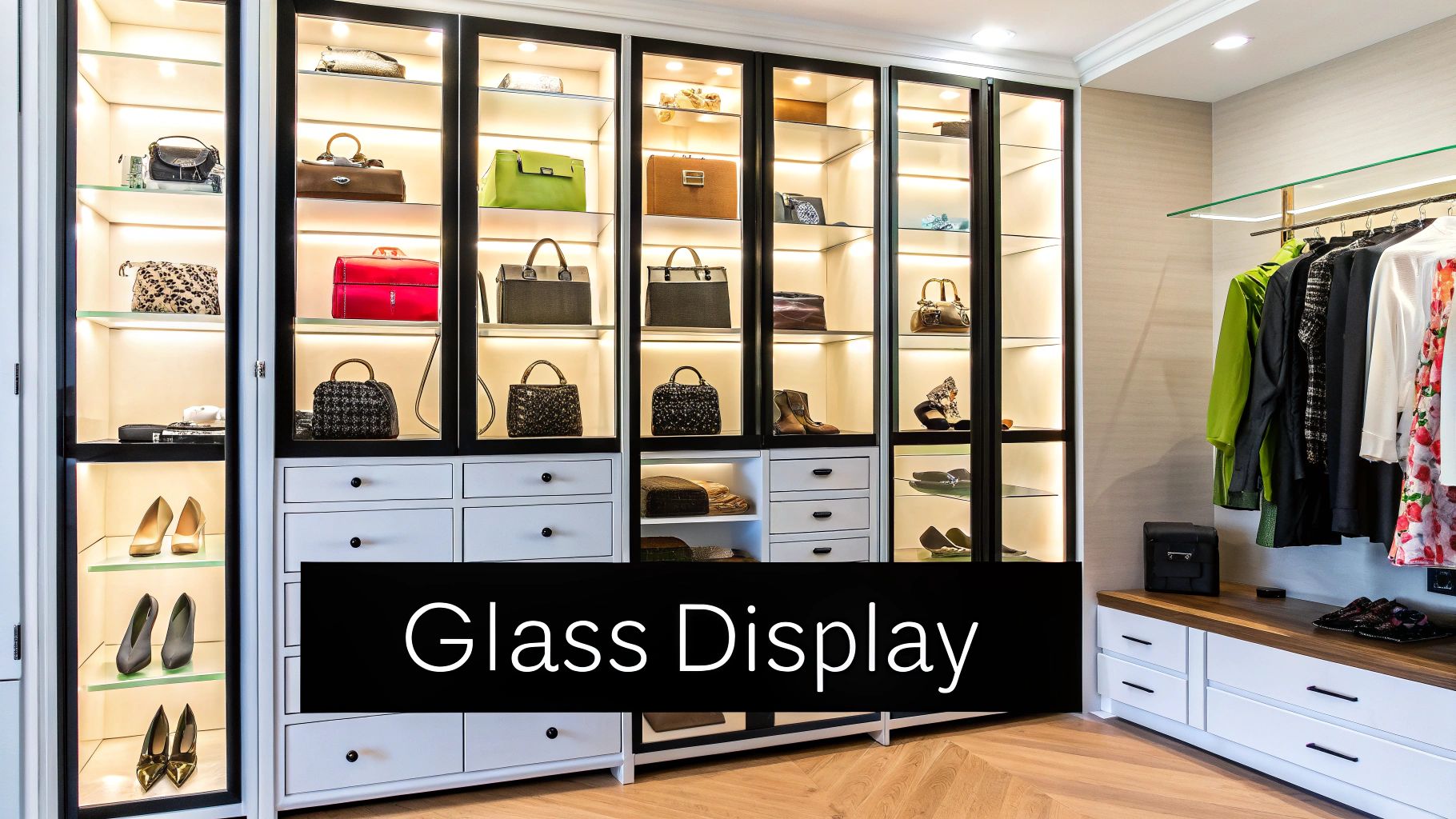
This design style deserves a spot on this list because it offers a unique blend of functionality and high-end aesthetics. The prominent display of clothing and accessories makes getting dressed a more enjoyable experience, while the inherent need for organization keeps the space tidy. Features like glass cabinet doors, LED-illuminated shelving, and open storage areas create a museum-quality display for handbags, shoes, and other treasured items. Specialized lighting further enhances the visual impact, highlighting key pieces within your collection. For more detailed information and inspiration, you can learn more about Boutique-Inspired Glass Display Closet.
Designers like Jamie Drake and Kelly Wearstler have successfully implemented this concept in luxury Manhattan penthouses and custom closet designs, often featured in publications like Elle Decor. These examples showcase how effectively this approach transforms a closet into a showpiece room.
Pros:
- Creates a luxurious, boutique-like experience.
- Encourages maintaining an organized, visually appealing space.
- Makes item selection easier with improved visibility.
- Doubles as a showpiece room in the home.
- Protects valuable items while keeping them visible.
Cons:
- Requires immaculate organization at all times.
- Less efficient use of space than enclosed storage.
- Higher maintenance (regular cleaning of glass surfaces).
- Potentially higher cost for specialty lighting and display features.
- Not ideal for those who prefer concealed storage.
Tips for Implementation:
- Install museum-quality UV protection film on glass cabinets to prevent fading of clothing and accessories.
- Utilize LED lighting strips with color temperature controls to create the desired ambiance and highlight specific items.
- Include dehumidifiers or climate control systems within the closet to protect valuable collections from humidity and temperature fluctuations.
- Incorporate touch-latch mechanisms for seamless opening and closing of glass fronts, enhancing the sleek and modern aesthetic.
- Design open shelving with specific items in mind, such as curved shelves for handbags or angled shelves for shoes, maximizing both display and storage efficiency.
This design is ideal for homeowners who appreciate high-end aesthetics and enjoy showcasing their wardrobe. If you take pride in your clothing and accessories and want to create a truly luxurious and personalized space, the boutique-inspired glass display closet is a perfect choice. It's particularly well-suited for those with extensive collections of handbags, shoes, or jewelry who want to display these items as part of their home decor. However, if you prioritize maximum storage efficiency or prefer concealing your belongings, this style may not be the best fit.
5. Double-Hang Maximizer System
For homeowners seeking to optimize every inch of their walk-in closet, the Double-Hang Maximizer system offers a practical and efficient solution, especially for those with limited space or an extensive wardrobe. This design prioritizes hanging space by incorporating two tiers of hanging rods, effectively doubling the capacity compared to a single-rod setup. This makes it an ideal choice for smaller walk-in closets or for those with a large collection of shirts, blouses, pants, and other shorter garments.
This system works by strategically dividing the vertical space. A lower rod is positioned at a standard height, typically around 42 inches from the floor, while a second rod is installed above it, commonly around 84 inches high. This arrangement allows for two rows of hanging garments, significantly increasing the amount of clothing that can be stored. The system is typically complemented by dedicated shelving above for folded items and a designated area for longer garments like dresses and coats to ensure everything has its place. Systems like ClosetMaid's SuperSlide and Allen + Roth closet systems at Lowe's offer pre-fabricated options, while companies like EasyClosets provide customizable double-hang sections, making it adaptable to diverse closet dimensions and personal preferences. Learn more about Double-Hang Maximizer System for even more inspiration and detailed information.
Features and Benefits:
- Dual hanging rods: The core of the system, maximizing vertical space.
- Long garment zone: A designated area accommodates dresses, coats, and other lengthy items.
- Pull-down rods: For higher accessibility, especially useful when ceiling height exceeds 8 feet.
- Integrated shelving: Provides space for folded items and accessories.
- Adjustable/Modular components: Allows for customization and adaptability to changing wardrobe needs.
Pros:
- Maximizes hanging capacity in a limited footprint – potentially doubling it.
- Cost-effective solution for increasing storage without major renovations.
- Adaptable design caters to evolving wardrobe needs.
- Works exceptionally well in narrower walk-in closets.
Cons:
- Less suitable for wardrobes dominated by long garments.
- Upper rods can present accessibility challenges, although pull-down rods mitigate this issue.
- Can feel visually crowded if overfilled.
- Offers limited counter or display space compared to other closet systems.
Tips for Implementation:
- Optimal Spacing: Install the upper rod at 84" and the lower rod at 42" for standard clothing lengths.
- Maximize Capacity: Utilize slim, uniform hangers to maximize the number of items on each rod.
- Enhance Accessibility: Include pull-down rod mechanisms for upper sections in taller closets (over 8 feet).
- Organize by Category: Designate specific sections for different clothing categories (work clothes, casual wear, etc.).
- Outfit Planning: Incorporate a valet rod that pulls out, offering a convenient space to stage outfits.
The Double-Hang Maximizer system earns its place on this list by providing a remarkably efficient and cost-effective way to maximize hanging storage in walk-in closets. Its adaptability, combined with strategic design features like pull-down rods and integrated shelving, makes it an attractive solution for homeowners seeking a practical and organized closet space. Whether you're renovating, building new, or simply looking to improve your existing closet, this system offers a substantial boost in storage capacity without sacrificing functionality or style. This is a perfect choice for many homeowners, especially those looking for closet information and practical storage solutions.
6. Open Concept Minimalist Walk-In
The Open Concept Minimalist walk-in closet design is a breath of fresh air for those seeking a streamlined and visually calming wardrobe experience. This approach prioritizes functionality and aesthetics through clean lines, visible storage, and a capsule wardrobe philosophy. Instead of hiding clothes away behind closed doors, this design celebrates them as part of the room's decor, turning your closet into a stylish display.
This minimalist approach works by stripping away unnecessary elements and focusing on essential pieces. Floating shelves with minimal brackets, exposed hanging rods (often in brass, matte black, or natural wood), and a limited or complete absence of cabinet doors create an airy and spacious feel. Negative space is a key design element, preventing the closet from feeling overcrowded. Natural materials like wood and a neutral color palette further enhance the minimalist aesthetic.
Examples of Successful Implementation:
- Scandinavian-inspired closets by IKEA: IKEA offers affordable and stylish solutions for achieving this look with their modular shelving systems and minimalist hardware.
- Muji-style organizational systems: Muji's emphasis on simple, functional design translates perfectly to minimalist closet organization, with their clear storage boxes and uniform hangers.
- Celebrity closets designed by John Pawson or Vincent Van Duysen: These renowned architects and designers frequently incorporate minimalist principles into their high-end residential projects, showcasing the elegance and sophistication of this style.
Actionable Tips for Creating Your Own Open Concept Minimalist Walk-In:
- Maintain consistent spacing between items for visual calm: Uniformity creates a sense of order and prevents a cluttered look.
- Use a strict color palette for both the closet structure and the clothing displayed: A cohesive color scheme enhances the minimalist aesthetic and makes it easier to coordinate outfits.
- Implement the 'one in, one out' rule to maintain minimalism: This prevents the closet from becoming overcrowded and encourages conscious consumption.
- Choose high-quality, matching hangers (wood or velvet): Upgrading your hangers instantly elevates the look of your closet and keeps clothes from slipping off.
- Leave at least 20% of space empty for visual breathing room: Negative space is crucial in a minimalist design, preventing the space from feeling cramped.
When and Why to Use This Approach:
This design is ideal for those who:
- Value aesthetics and want their closet to be visually appealing: The open concept turns your wardrobe into a curated display.
- Embrace minimalist principles and a capsule wardrobe: This design encourages mindful consumption and simplifies outfit selection.
- Want a cost-effective alternative to fully custom cabinetry: Open shelving and hanging rods are generally less expensive than built-in closets.
- Prefer easy access to their entire wardrobe: Seeing all your clothing options at a glance simplifies getting dressed.
Pros:
- Creates a spacious, uncluttered aesthetic
- Lower cost than fully custom cabinetry
- Encourages wardrobe editing and conscious consumption
- Easier to see all available options at once
- Simpler to install and modify
Cons:
- Requires consistent organization and curation
- Less protection from dust
- Limited concealed storage for unsightly items
- May appear cluttered without proper spacing
- Not ideal for maximizing storage in small spaces
This design philosophy, popularized by figures like Marie Kondo and publications like Kinfolk magazine, resonates with the current trend towards mindful living and intentional design. The Open Concept Minimalist walk-in closet deserves a place on this list because it offers a stylish, functional, and attainable way to transform a utilitarian space into a personalized sanctuary.
7. Compact Walk-In with Automated Systems
For those with limited space but a desire for maximum storage and a touch of futuristic flair, the compact walk-in with automated systems is a game-changer. This high-tech approach leverages motorized and automated solutions to optimize every inch of your closet. Imagine hanging rods that descend from the ceiling with the touch of a button, rotating carousels that display your shoe collection, and drawers that glide open with a gentle push. This design isn't just about maximizing capacity; it's about transforming the way you interact with your wardrobe.
This type of closet works by incorporating smart technology into traditional storage elements. Motorized components are controlled either through wall-mounted panels, remote controls, or even smartphone apps, allowing you to access items stored high up or tucked away with ease. Push-to-open mechanisms for drawers and cabinets further streamline the experience, while automated lighting illuminates the space as you enter. Some systems even integrate digital inventory systems or smart mirrors, allowing you to virtually try on outfits and manage your wardrobe digitally.
Examples of Successful Implementation:
- Häfele America automated closet systems: Häfele offers a range of motorized and automated solutions, from pull-down hanging rods to rotating shoe carousels, that can be customized to fit individual closet dimensions.
- Ornare's automated closet solutions in luxury condominiums: Ornare is known for integrating high-end automated systems into their luxury closet designs, creating a seamless and sophisticated storage experience.
- Lutron-integrated closet systems with automated lighting: Lutron lighting systems can be integrated into automated closets to provide intelligent lighting control, activating lights upon entry and adjusting brightness levels as needed.
Tips for Implementing an Automated Closet:
- Backup Manual Operation: Ensure essential components have a manual override in case of power outages.
- Power Protection: Install surge protectors and consider backup power options for the motorized systems.
- Quiet Motors: Opt for systems with quiet motors, especially if the closet is adjacent to a bedroom.
- Ventilation: Plan for adequate ventilation to prevent overheating of motorized components.
- Future-Proofing: Consider systems with expandable smart home integration for future upgrades.
Pros:
- Maximizes storage in limited square footage.
- Improves accessibility to high storage areas.
- Creates a luxurious, tech-forward experience.
- Adapts to changing needs through transformable elements.
- Offers an impressive showcase of innovation.
Cons:
- Significantly higher cost than static systems.
- Requires professional installation and occasional maintenance.
- Dependence on electrical systems.
- More complex to repair if mechanisms fail.
- May overwhelm technologically averse users.
When and Why to Use This Approach:
This design is ideal for luxury urban apartments, high-end homes, or any space where maximizing storage within a limited footprint is paramount. It's perfect for homeowners who appreciate cutting-edge technology, prioritize convenience and accessibility, and desire a truly customized and impressive closet experience. This item deserves its place on the list because it represents the future of closet design, offering a unique blend of functionality, luxury, and innovation. It caters to a growing demand for smart home integration and demonstrates how technology can transform even the most traditional storage spaces.
8. Multifunctional Dressing Room Concept
Elevate your walk-in closet from simple storage to a luxurious personal retreat with the multifunctional dressing room concept. This design transforms a utilitarian space into a dedicated area for not only organizing clothes but also for enjoying the entire getting-ready process and carving out personal time. Think of it as a private sanctuary where you can prepare for the day or unwind in peace.
This concept centers around expanding the traditional closet's purpose. It integrates a dedicated vanity area complete with optimized lighting and storage for cosmetics and accessories. Comfortable seating, like an ottoman, bench, or even a plush chair, provides a place to relax while dressing. A full-length triple mirror, or strategically placed multiple mirrors, offers comprehensive views for outfit coordination. Furthermore, integrated laundry solutions like hampers and folding areas streamline clothing care, while personal amenities such as a coffee station, mini-fridge, or sound system create a truly personalized haven.
Examples of successful implementations can be seen in the lavish celebrity dressing rooms designed by Martyn Lawrence Bullard, the multi-functional closets showcased in Architectural Digest, and the opulent dressing suites found in high-end Hamptons and Beverly Hills estates. These examples highlight the transformative power of this approach.
Why choose a multifunctional dressing room?
This design is perfect for those who desire a dedicated space that goes beyond just clothing storage. It streamlines morning routines by centralizing everything you need in one location. It offers a private escape, separate from the bedroom and bathroom, for relaxation and personal time. In luxury homes, this addition can significantly boost resale value, often replacing the need for a separate powder room or makeup area.
Pros:
- Creates a luxurious personal space beyond mere storage
- Streamlines morning routines with everything in one place
- Provides private relaxation space away from bedroom and bathroom
- Adds significant resale value to high-end homes
- Can replace the need for a separate powder room or makeup area
Cons:
- Requires substantial square footage (typically 150+ sq ft)
- Higher cost for multiple integrated functions
- Needs careful space planning to avoid crowding
- May require additional plumbing or electrical work
- Can become underutilized if not aligned with daily habits
Actionable Tips for Implementation:
- Tech Integration: Include USB charging stations near the vanity area for convenient device charging. Install a quality sound system or television for entertainment while dressing.
- Laundry Solutions: Consider a small washer/dryer combination for delicates, allowing for quick laundering and care of specific garments.
- Lighting Design: Use dimmable lighting with different settings for various activities, from bright task lighting for makeup application to softer mood lighting for relaxation.
- Space Optimization: Incorporate a pull-out or hidden ironing station to maximize space utilization and maintain a clutter-free environment.
This concept has been popularized by luxury real estate figures like Ryan Serhant, design shows like Million Dollar Closets with Lisa Adams, and influential interior designers like Kelly Wearstler, demonstrating its growing appeal in high-end design.
The multifunctional dressing room deserves its place on this list because it represents the pinnacle of walk-in closet design. It caters to the discerning homeowner seeking a truly luxurious and personalized experience, transforming a functional space into a private sanctuary. By carefully considering the features, benefits, and potential drawbacks, and incorporating the provided tips, you can create a multifunctional dressing room that perfectly aligns with your lifestyle and elevates your daily routine.
9. Seasonal Rotation System
A Seasonal Rotation System is a dynamic approach to closet organization that prioritizes accessibility and maximizes space by storing off-season clothing out of sight. This method involves designating specific areas, often higher shelves or deeper storage bins, for items not currently in use. It’s a fantastic way to declutter your closet and ensure you’re only looking at clothes relevant to the current season. This system often incorporates vacuum storage bags for bulky items like winter coats and sweaters, archival boxes for delicate garments, and even convertible rod heights that can be adjusted to accommodate different lengths of clothing as the seasons change. Some systems even include climate-controlled elements for storing delicate fabrics like wool and cashmere.
This method works by categorizing your wardrobe by season and storing the out-of-season clothes away. When the season changes, you simply swap the stored items with the current season's wardrobe. A well-implemented system makes it easy to find and access the clothing you need, without having to sift through piles of irrelevant items. For a truly efficient and organized closet, consider incorporating some of these top closet organizers. They can help maximize space and keep everything in its place, making seasonal transitions a breeze.
Examples of successful implementations include the Container Store's Elfa seasonal closet designs, Martha Stewart's seasonal storage solutions, and professional organizer Rachel Rosenthal's client implementations, all of which showcase clever ways to utilize vertical space and specialized storage containers.
Features of a Seasonal Rotation System:
- Dedicated off-season storage zones (often higher or deeper areas)
- Vacuum bag storage system for bulky winter items
- Convertible rod heights that can be adjusted seasonally
- Climate-controlled elements for wool and special fabrics
- Labeling system for archived items
Pros:
- Reduces visual clutter by hiding off-season items
- Protects seasonal clothing from dust and damage
- Creates more functional space for current wardrobe
- Encourages regular editing and organization
- Adaptable to changing storage needs throughout the year
Cons:
- Requires seasonal maintenance and rotation
- More complex to implement than static systems
- May necessitate steps or tools to access higher storage
- Potential for forgetting about stored items
- Requires discipline to maintain organizational system
Tips for Implementing a Seasonal Rotation System:
- Schedule calendar reminders for seasonal rotations: This will help you stay on track and avoid last-minute scrambling.
- Take photos of archived items for a digital inventory: This can be helpful for remembering what you have stored and planning outfits in advance.
- Use cedar elements in winter storage to repel moths: Cedar chips or blocks can help protect your wool and cashmere garments.
- Implement a clear labeling system with dates and contents: This ensures you know exactly what's in each container and when it was stored.
- Clean all items before seasonal storage to prevent stain setting: This is crucial for maintaining the quality of your clothing.
This approach, popularized by organizational gurus like Marie Kondo, The Home Edit, and Martha Stewart Living, deserves a spot on this list because it offers a practical and effective way to maximize closet space and maintain a tidy, organized wardrobe. While it requires a bit more effort than a static system, the benefits of reduced clutter, increased accessibility, and better garment preservation make it a worthwhile investment for anyone looking to optimize their closet space.
10. Color-Coordinated Gallery Closet
This visually striking design transforms your walk-in closet into a vibrant, art-like display. Forget organizing by clothing type (pants, shirts, dresses); the color-coordinated gallery closet arranges everything by color, creating a beautiful ombré or rainbow effect. This method prioritizes the aesthetic experience of the closet, turning your wardrobe into a visual masterpiece while offering a surprisingly intuitive way to coordinate outfits.
This approach works by arranging every visible item in your wardrobe according to color progression. Imagine a spectrum from deepest black to purest white, or a vibrant rainbow unfolding across your closet rods. Instead of hunting for that specific shade of blue top in a sea of blouses, you’ll find it instantly within its designated color zone.
Examples of Successful Implementation:
- Celebrity closet organizers Clea Shearer and Joanna Teplin of The Home Edit have championed this method, creating stunning rainbow closets for numerous high-profile clients. Their projects often feature clear, uniform hangers and bright lighting to maximize the visual impact.
- Melanie Charlton, an Instagram-famous designer, showcases numerous examples of color-coordinated closets in luxury homes, incorporating specialized lighting and white backdrops to make the colors pop.
- Pinterest is overflowing with examples of rainbow closets, demonstrating how this trend has taken hold in the world of luxury home design. These images showcase the versatility of the method, from minimalist, neutral-toned rainbows to vibrant, full-spectrum displays.
Actionable Tips for Creating Your Own Gallery Closet:
- Start Fresh: Completely empty your closet before beginning the color arrangement process. This allows for a clean slate and ensures accurate color placement.
- Use Dividers: Color dividers or spacers can help define color transitions, especially between similar shades.
- Document Your Masterpiece: Once your perfect arrangement is achieved, photograph it! This provides a valuable reference point for maintaining the organization over time.
- Introduce Pattern Gradually: Start with solid colors and then gradually incorporate patterned items within each color section.
- Prioritize Accessibility: Place your most-worn colors at eye level for easy access and practicality.
When and Why to Use This Approach:
The color-coordinated gallery closet is ideal for those who value aesthetics and visual organization. It's perfect for fashion enthusiasts who enjoy curating their wardrobe and want to showcase their clothing collection. This design works particularly well in open-concept closets where the entire wardrobe is visible. It can also create an illusion of spaciousness by bringing order and visual cohesion to a large collection of clothing.
Pros:
- Creates a visually striking, Instagram-worthy space.
- Makes color coordination of outfits more intuitive.
- Can make the space feel larger through color organization.
- Provides a unique organizational system.
- Doubles as an art installation in the home.
Cons:
- Prioritizes aesthetics over traditional category organization.
- Requires consistent maintenance to preserve color arrangement.
- Can be disorienting for those used to category-based systems.
- May separate outfit components across the space.
- Not ideal for wardrobes dominated by neutrals.
Popularized By: The Home Edit organization method, Social media influencers, and Lisa Adams of LA Closet Design have significantly contributed to the popularity of this closet design trend.
This method earns a place on this list because it offers a fresh, visually exciting alternative to traditional closet organization. It demonstrates that practicality and aesthetics can coexist, creating a closet that is both beautiful and functional for the right individual. It pushes the boundaries of what a closet can be, transforming it from a purely utilitarian space into a personalized design statement.
Top 10 Walk-In Closet Designs: Feature Comparison
| Design Idea | 🔄 Complexity | ⚡ Resource Req. | 📊 Expected Outcomes | 💡 Ideal Use Cases | ⭐ Key Advantages |
|---|---|---|---|---|---|
| Luxury Island-Centered Walk-In Closet | High – requires large square footage and professional design | High – custom cabinetry and premium fixtures | Boutique-like, highly organized display | Luxury homes with ample space | Maximizes storage and creates a retail-inspired ambiance |
| U-Shaped Walk-In Closet Configuration | Moderate – involves multi-wall layout planning | Moderate – standard cabinetry and built-in shelving | Efficient organization with open central dressing area | Rectangular, medium-sized closets | Maximizes wall space with zoned organization |
| His & Hers Divided Walk-In Closet | High – necessitates equitable division and customization | High – dual systems and potential for duplicated elements | Personalized zones enhancing efficiency in shared routines | Couples sharing a master closet | Customizable spaces that prevent wardrobe mix-ups |
| Boutique-Inspired Glass Display Closet | High – entails specialized lighting and glass installations | High – investment in glass, LED systems, and premium finishes | Visually striking, museum-quality display showcasing wardrobe pieces | Luxury homes seeking a showpiece closet | Creates an Instagram-worthy, curated presentation |
| Double-Hang Maximizer System | Low-Moderate – simple dual hanging rod setup | Low-Moderate – cost-effective hardware and adjustable components | Nearly doubles hanging capacity with optimized space usage | Small walk-ins or closets with many shorter garments | Maximizes hanging capacity in limited space |
| Open Concept Minimalist Walk-In | Moderate – focuses on open design with minimal hardware | Low-Moderate – streamlined materials and simple installations | Airy, uncluttered space encouraging a capsule wardrobe philosophy | Modern, minimalist settings with open layouts | Simplicity and ease of modification with visible organization |
| Compact Walk-In with Automated Systems | High – involves integration of motorized and smart technology | Very High – advanced systems and professional installation | Transformable, tech-forward storage with enhanced accessibility | Urban apartments with limited space and tech-savvy users | Optimizes space through automation and innovative design features |
| Multifunctional Dressing Room Concept | Very High – combines storage with multiple functional zones | Very High – luxury amenities, plumbing, and electrical work | Comprehensive retreat that streamlines daily routines and personal care | Luxury estates needing integrated dressing and leisure spaces | Merges storage with lifestyle functions for an all-in-one experience |
| Seasonal Rotation System | Moderate – requires regular seasonal adjustments and labeling | Moderate – additional storage accessories and rotation tools | Streamlined seasonal organization reducing visual clutter | Homes with distinct seasonal wardrobes | Flexible system that supports regular wardrobe curation |
| Color-Coordinated Gallery Closet | Moderate – emphasis on precise visual arrangement | Moderate – matching hangers, dividers, and lighting control | Visually stunning, color-gradient display that doubles as art installation | Aesthetic-driven users and social media enthusiasts | Unique, intuitive display that enhances outfit coordination |
Crafting Your Personalized Closet Haven
From maximizing space with clever storage solutions like double-hang systems and automated features to incorporating personalized aesthetics such as boutique-inspired displays or color-coordinated gallery layouts, the perfect walk-in closet is within reach. We've explored a range of configurations, from compact and efficient U-shaped designs to expansive island-centered layouts and multifunctional dressing rooms, each offering unique benefits for different needs and preferences. The key takeaway is that thoughtful planning, coupled with innovative design ideas, can transform your closet from a utilitarian space into a personalized sanctuary that streamlines your daily routine and enhances your overall well-being. Mastering these concepts empowers you to not only improve the functionality of your home but also create a space that truly reflects your style and simplifies your life. Imagine starting and ending your day in a closet that inspires and delights – a haven of organization and personal expression.
Ready to transform your closet dreams into reality? Sinclair Cabinetry Inc. specializes in crafting custom cabinetry solutions, perfectly tailored to your unique vision and storage needs. Visit Sinclair Cabinetry inc to explore their exceptional craftsmanship and begin designing the walk-in closet you've always envisioned.