
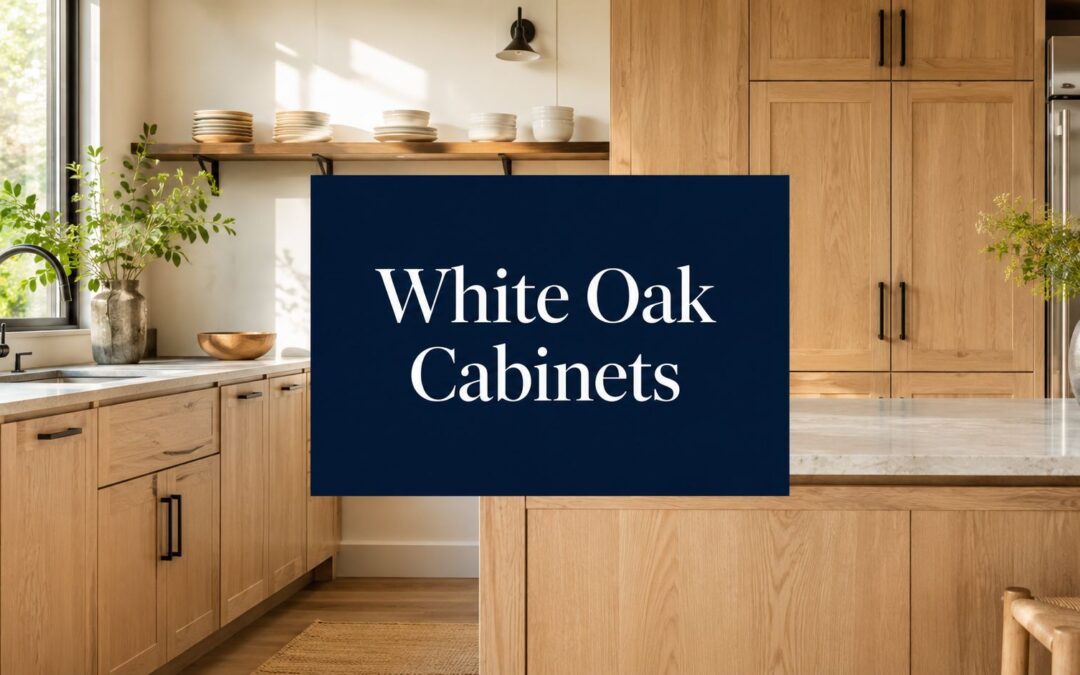
You've probably done what most homeowners do first. You searched for white oak kitchens, saved a dozen photos, compared door styles, and started noticing that some cabinets look calm and refined while others look busy, yellow, flat, or cheap. Then the practical question hit: who near you can build, finish, deliver, and install this well?
That's where most kitchen projects either get clearer or get messy. White oak is a beautiful cabinet material, but getting a white oak kitchen you love has less to do with scrolling product pages and more to do with choosing the right local craftsperson, shop, or remodel partner.
Why Your Search for White Oak Cabinets Starts Local
White oak didn't become popular by accident. Homeowners and designers are actively moving toward warmer, natural finishes. According to Houzz and NKBA reporting summarized here, Houzz's 2026 Kitchen Trends Study surveyed 1,780 homeowners and found 29% chose wood cabinetry for their latest remodel versus 28% for white, while the NKBA 2026 report found 51% of design professionals identified white oak as their preferred species.

That trend matters, but it doesn't solve your project. A search for White Oak kitchen cabinets near me usually pulls in inspiration galleries, online resellers, big-box listings, and paid ads. Those can help you collect ideas. They can't stand in your kitchen, measure an out-of-square wall, adjust fillers around a window, or make sure grain and finish stay consistent across an island, pantry run, and hood surround.
What local really means
A real local cabinet partner does more than sell boxes. They handle the parts of the project that determine whether the finished kitchen feels custom or compromised.
Look for a company that can do most or all of the following:
- Measure on site so appliance clearances, ceiling conditions, and plumbing locations are accurate.
- Design around your room instead of forcing your room to fit stock sizes.
- Provide material samples that show the actual white oak color and grain direction.
- Coordinate installation so trim, scribe work, and panel alignment are handled correctly.
- Stand behind adjustments if something needs tuning after install.
Practical rule: If the company can't explain how they handle field measurements, final shop drawings, and installation coordination, they're probably a seller first and a cabinetry partner second.
Why distance changes outcomes
Cabinets aren't decorative accessories. They're built components that have to meet real site conditions. Walls lean. Floors dip. Existing soffits aren't always straight. White oak also shows grain, so layout choices matter much more than they do with an opaque painted finish.
That's why a local search should narrow toward firms that can serve your area, not just ship to your ZIP code. If you're still sorting through local options, a roundup of cabinet makers near you can help you spot the difference between shops that fabricate and install versus companies that mainly market.
Clarify Your White Oak Cabinet Style and Budget
Before you call a cabinet shop, get specific about what “white oak” means to you. The species alone doesn't define the result. Cut, finish, door style, overlay, and construction all change the look.
The biggest mistake I see is homeowners asking for white oak when what they mean is one of three very different outcomes: a quiet linear grain, a more natural cathedral grain, or a pale matte finish that barely reads as oak at all.

Start with the cut
The most important quality and cost choice is the milling cut. As explained in this guide to quarter-sawn white oak cabinets, quarter-sawn and rift-cut white oak are preferred for their straighter, more consistent grain and better dimensional stability, and they generally sit in a higher tier than plain-sawn material.
Here's the practical version:
| Cut | What it looks like | What it usually means for your project |
|---|---|---|
| Plain-sawn | More visible grain movement and cathedral patterns | Often less expensive, less uniform |
| Quarter-sawn | Straighter grain with a more tailored look | Better stability, more premium feel |
| Rift-cut | Very linear, clean grain | Often chosen for modern kitchens, usually premium |
Most homeowners can't identify quarter-sawn versus rift-cut from a quick glance. That's fine. You don't need to become a wood technologist. You do need to ask the shop to specify it in writing.
Define the finish before you shop
White oak can shift dramatically depending on the finish system. A few examples:
- Natural clear finish keeps the wood honest and warm, but it may deepen over time.
- Bleached or lightened finish pushes the look closer to the pale kitchens you see online.
- Cerused finish highlights grain texture and can add a softer, more decorative effect.
- Light stain can help even out color, though too much pigment can muddy the wood.
Bring photos, but also describe what you don't want. Saying “I don't want orange oak” or “I want visible grain but not heavy contrast” gives a shop useful direction.
For a deeper overview of species and appearance differences, this guide on choosing wood for kitchen cabinets is a good prep step before supplier meetings.
Build a budget framework that's realistic
Don't start with one all-in number and hope everything fits inside it. Break your thinking into layers:
Cabinet type
Decide whether you're shopping custom, semi-custom, or ready-to-assemble. Your tolerance for fillers, standard sizes, and finish limitations should drive this choice.Material tier
White oak itself isn't one uniform product. The cut, veneer quality, substrate, and finishing approach affect where a quote lands.Scope of work
Ask yourself whether the cabinetry number needs to include delivery, installation, hardware, panels, trim, and interior accessories.
A cheap white oak quote often gets cheap by changing something you don't notice at first glance. The cut changes. The veneer changes. The interior changes. The install scope shrinks.
If you know your style target and where you're willing to flex, supplier conversations get shorter and far more productive.
Finding True Local Cabinetry Experts
Typing White Oak kitchen cabinets near me into a search bar sounds direct, but it usually produces a mixed bag. You'll get online cabinet sellers, big-box category pages, local remodelers, and maybe a few true cabinet shops. The hard part is separating the firms that can execute the work from the ones that can only market it.
According to this discussion of white oak cabinet shopping, a common pitfall is that search results are dominated by national e-commerce sites. Those sites can't provide the local services most buyers need: in-home measurement, custom design consultation, local fabrication, and coordinated installation.

Where to look beyond search results
The strongest local leads often come from places homeowners skip.
High-end appliance showrooms
Ask who installs panel-ready refrigerators and integrated dishwashers cleanly. Appliance staff see which cabinet firms handle detailed work without headaches.Interior designers and architects
They notice finish consistency, reveal alignment, and whether a shop can hold a schedule.Local remodelers
Good remodelers know which cabinet partners communicate well and which ones create site problems.Neighborhood examples
If you've seen a local kitchen you admire, ask who built it. Referrals tied to a real finished room are worth more than polished online ads.
How to read a portfolio like a cabinet maker
Don't just ask whether the cabinets are attractive. Ask whether the workmanship is visible in the photos.
Check for these details:
- Grain continuity across large panels, islands, and refrigerator surrounds.
- Consistent color from door fronts to end panels.
- Tight reveals around drawers and doors.
- Resolved corners where crown, fillers, and panels meet.
- Thoughtful end conditions instead of abrupt exposed cabinet sides.
If every portfolio photo is a wide shot and none show close-up doors, interiors, panels, or finished edges, the photography may be hiding the actual cabinet work.
One practical way to build a shortlist is to gather three or four local companies, then compare how each one talks about process. Do they mention design review, material specification, field verification, and installation details? Or do they mostly talk about color choices and discounts?
A local resource such as cabinet makers in Fort Myers can help if you want to start with companies that operate within a specific service area rather than browsing national directories.
What separates artisans from resellers
A true local expert will usually answer specific questions directly. They'll tell you whether they fabricate in-house, outsource doors, buy finished lines, or mix methods depending on the job. None of those models is automatically wrong. What matters is whether they're transparent and whether their process fits your expectations.
If you want a pale white oak kitchen with matched grain, custom sizing, and a finish sample approved in person, you need a partner built for that level of control.
Questions to Ask Potential Cabinet Suppliers
Once you have a shortlist, stop shopping by photo and start interviewing. White oak can perform beautifully in a kitchen, but not all white oak cabinets are built the same way.
White oak has a Janka hardness rating of 1,360 lbf, which places it among the more durable domestic hardwoods for cabinet use, according to this white oak cabinetry overview. That's useful, but hardness alone won't tell you how the cabinet will age in a humid kitchen or how the finish will hold up around sinks, dishwashers, and daily cleaning.

Ask what the cabinets are actually made of
The first conversation should get very concrete.
Use questions like these:
Is this solid white oak, white oak veneer, or mixed construction?
A good shop should explain where solid stock is used and where engineered cores make more sense.What cut of white oak is being quoted?
If the answer is vague, the quote is vague.What substrate is under the veneer panels?
Stable engineered cores often matter as much as the face material.How is moisture handled near sink bases and dishwasher runs?
Kitchens fail at weak points, not in showroom photos.
Ask for samples you can touch
You shouldn't approve white oak from a screen. Ask for a door sample or finish board that shows the actual species, cut, sheen, and edge detail.
Look at the sample under morning light, evening light, and task lighting. Hold it next to your flooring, stone, and wall color. White oak can read warm beige, gray-beige, honey, or softly brown depending on the finish.
A sample should answer four questions at once: what the grain looks like, how the finish reflects light, how the color sits beside your other materials, and whether the surface feels durable enough for your household.
Ask how problems are handled
This is often where experienced shops separate themselves from sellers. Ask what happens if:
- a panel arrives with grain you don't approve
- a finish sample looks different in your home
- an opening is slightly off in the field
- a door warps or needs adjustment after installation
A serious cabinet maker won't act offended by those questions. They'll answer them calmly because they've dealt with them before.
If you also need help evaluating the people around the cabinetry side of the renovation, these questions to ask contractors can help you compare communication, scheduling, and accountability across the whole project team.
Here's a useful video if you want to see more of the cabinetry decision process in action:
One supplier answer that should make you pause
Be careful when a company says all white oak cabinets are basically the same and that only the stain color changes. That usually means they're flattening important differences in cut, construction, or finishing because they don't want to discuss them in detail.
If the shop can explain the why behind its choices, you're talking to the right kind of professional.
Decoding Quotes and Planning Your Project Timeline
A cabinet quote isn't just a price. It's a description of what will and won't happen on your project. Two proposals can look close at the bottom line while being completely different in material quality, scope, and installation responsibility.
White oak also sits in a category many homeowners view as both practical and design-forward. According to this summary of oak cabinet demand and market appeal, the 2026 NKBA report found 51% of design professionals named white oak as their preferred species. That matters when you're judging price, because you're not just buying wood. You're buying a material and finish package that has to perform well and still feel current years from now.

Compare quotes line by line
Read the proposal like a scope document, not a sales sheet.
Use this checklist:
| Quote item | What to confirm |
|---|---|
| Material specification | Is it actually white oak, and is the cut identified? |
| Construction | Are boxes, doors, panels, and interiors clearly described? |
| Finish | Does the quote name the finish type and sample approval process? |
| Hardware | Are pulls, hinges, and drawer slides included or excluded? |
| Panels and trim | Do end panels, crown, light rail, fillers, and toe details appear as line items? |
| Installation | Is install included, and does it cover final fitting and adjustments? |
| Delivery and protection | Who handles transport, site protection, and punch work? |
A vague quote often becomes an expensive project later. If one proposal is shorter and less detailed, don't assume it's simpler. It may just be omitting responsibility.
Watch for false apples-to-apples comparisons
Homeowners often compare one custom quote against one semi-custom quote as if both are promising the same thing. They usually aren't.
One might include:
- site measurement
- detailed shop drawings
- finish sample revisions
- custom fillers and panels
- installation and final adjustment
Another might mainly cover cabinet units delivered to the house.
The lowest quote is often the one that assigns the most decision-making and risk back to the homeowner or general contractor.
Plan your timeline around decisions, not just production
The fabrication calendar matters, but the earlier decisions matter just as much. Most delays happen before the first cabinet part is cut.
A smoother project usually follows this rhythm:
Initial design and site measurement
Layout, appliance planning, and functional decisions are locked down.Material and finish approval
White oak cut, stain or clear finish, and door style are signed off.Final drawings and contract
Everyone agrees on scope, dimensions, and responsibility.Fabrication
The shop builds to approved plans.Delivery and installation
Cabinets are set, aligned, trimmed, and adjusted.Punch list
Minor tweaks, hardware alignment, and finish touch-ups are resolved.
If a company can't explain its sequence clearly, expect confusion later. One option in Southwest Florida is Sinclair Cabinetry inc, a custom cabinet manufacturer that handles design, fabrication, and installation as part of its service model. That kind of integrated process can reduce handoff problems, provided the scope and approvals are clearly documented.
Your Partner in Crafting a Timeless Kitchen
The right white oak kitchen doesn't come from picking the prettiest photo online. It comes from making a series of good decisions in the right order. Choose the cut carefully. Confirm the finish in person. Vet the construction. Read the quote closely. Work with someone who can translate design intent into clean installation.
That's why the phrase White Oak kitchen cabinets near me matters more than it first appears to. You're not really searching for cabinets. You're searching for capability nearby. You want a shop or project partner who can measure accurately, guide material choices transparently, build to your specific room, and still be there when the final adjustments need to happen.
A good local cabinet maker also protects you from common white oak disappointments. They won't treat all oak the same. They won't gloss over the difference between plain-sawn and rift-cut material. They won't pretend finish samples are optional. And they won't leave installation details to chance.
The cabinet maker you hire becomes part designer, part fabricator, part problem-solver. That relationship lasts longer than the sales meeting, so it's worth choosing carefully.
If you're investing in white oak, think long term. You want cabinetry that still feels grounded and well-made after years of cooking, cleaning, humidity, guests, and everyday use. That outcome depends on craftsmanship, specification, and service, not trend-chasing.
The homeowners who are happiest with their finished kitchens usually do one thing well. They stop shopping for a product and start choosing a partner.
If you're ready to move from saved inspiration photos to a real plan, Sinclair Cabinetry inc can help with custom cabinetry, design support, and installation coordination for kitchens and whole-home remodeling projects. A conversation with a local cabinet professional can quickly tell you what's possible in your space, what kind of white oak construction fits your goals, and how to turn a broad search into a buildable project.