

Finding the right cabinet maker is about so much more than a quick online search for "best cabinet makers near me." It’s about finding a true partner—an artisan who blends exceptional craftsmanship with the reliability and clear communication you need for a smooth project. You’re not just buying cabinets; you're commissioning a piece of functional art that will become a central part of your home.
This guide will walk you through how to find that perfect local pro.
Your Search for a Local Cabinet Maker Starts Here
A custom cabinetry project is a serious investment, both in your home's value and in your day-to-day enjoyment of your space. It's a decision that goes way beyond picking a style from a big-box store catalog.
The whole process might feel a little overwhelming at first, but it really breaks down into a few manageable stages. You'll start by discovering who the local players are, then move into some serious vetting, and finally wrap up with interviews and hashing out the contract details. Every step is designed to give you more confidence that you’re picking the right person for the job.
Think of this guide as your playbook. We'll show you not just where to look for talent, but how to look, turning what could be a frustrating search into a focused investigation.
You’ll learn how to:
- Discover Hidden Gems: Find skilled craftspeople who might not be on the first page of Google but do incredible work.
- Vet Like a Pro: Look at portfolios with a critical eye and verify the credentials that protect you and your investment.
- Ask the Right Questions: Get past the price tag to really understand a maker’s process, how they communicate, and their approach to solving problems.
- Lock in a Solid Contract: Know what to look for in an agreement, from payment schedules to warranties.
The Vetting and Hiring Process
To make a smart choice, you need a plan. This simple visual breaks down the core stages you’ll go through to find, evaluate, and ultimately hire your cabinet maker.
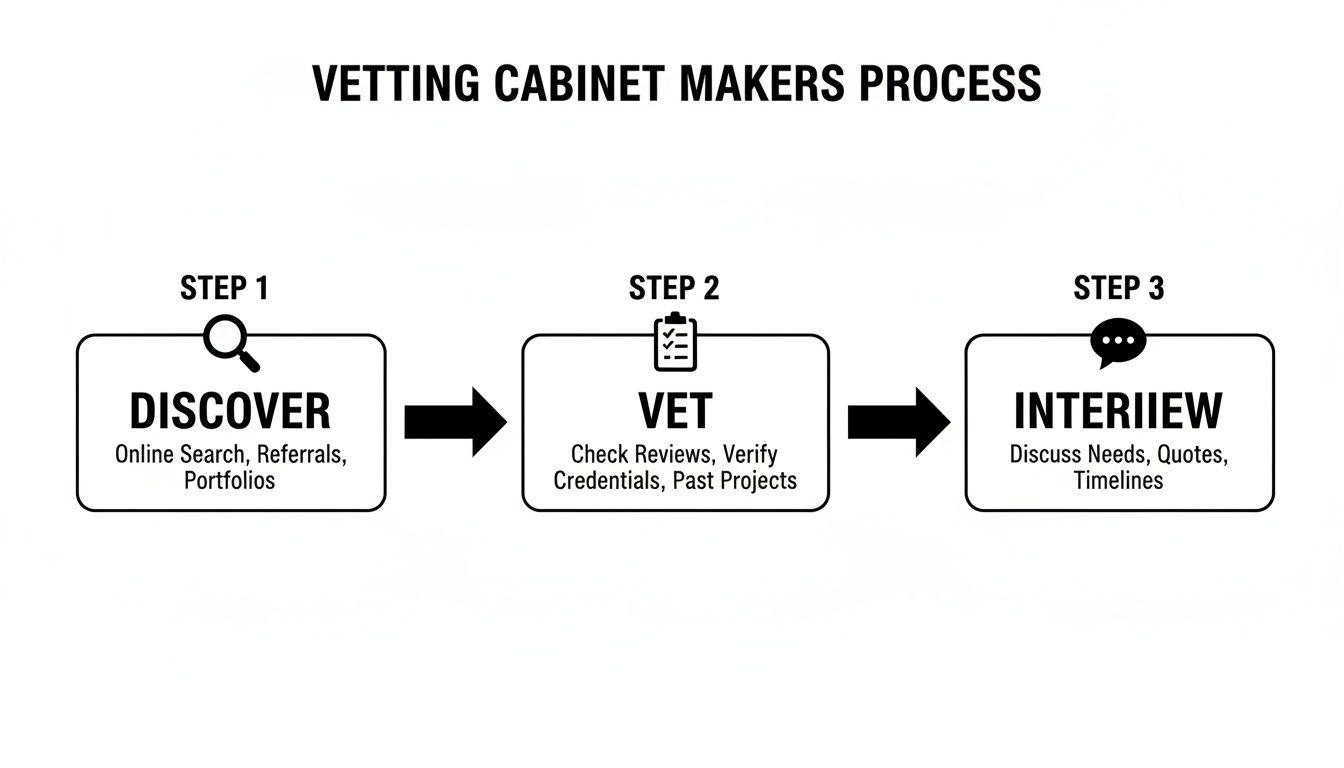
Following this sequence—Discover, Vet, Interview—is your best bet for gathering all the info you need before you sign on the dotted line. And there's no shortage of talent out there. The demand for skilled artisans is booming, with North America expected to drive 43% of global growth in the cabinets market through 2029. That’s an expansion of over $28 billion. This surge means there's a vibrant local scene just waiting for you to tap into. You can discover more insights about the growing cabinet market on Technavio.com.
A structured approach means you're not just hiring someone to build boxes. You are selecting a creative partner who will help shape the heart of your home. The goal is to find a professional you can trust to manage your investment with skill and integrity.
Where to Find Reputable Local Cabinet Makers
So, you’re ready to find a great local cabinet maker. Kicking off your search with "best cabinet makers near me" is a start, but it can feel like you've just been dropped into a sea of endless, unvetted options. The real trick is knowing where to look to find the true artisans—the craftspeople who deliver exceptional quality and will actually bring your vision to life.
Let’s be honest, a single Google search won’t cut it. To build a solid shortlist of candidates, you need a multi-pronged approach. By blending the best digital platforms with some good old-fashioned local intel, you can cut through the noise and zero in on genuine experts.
Tap into Specialized Online Platforms
General search engines are fine for casting a wide net, but industry-specific platforms are where serious homeowners and designers go to find proven talent. These sites are designed to showcase portfolios, verified reviews, and professional credentials all in one spot.
Start your search with these resources:
- Houzz: Think of this as a visual encyclopedia for home design. You can browse thousands of local kitchen and bathroom projects, see a cabinet maker's work in actual homes, and read incredibly detailed reviews from past clients. It's a fantastic way to compare styles and get a feel for someone's craftsmanship.
- National Kitchen & Bath Association (NKBA): The NKBA is a big deal in our industry. It's a professional organization with a directory of members who are committed to a strict code of conduct and staying on top of industry standards. Finding a local member here is a strong signal of professionalism and a serious dedication to their craft.
The beauty of these platforms is that they’ve already done some of the initial vetting for you. Professionals who take the time to build a detailed, high-quality profile on these sites are usually the ones who are serious about their business and reputation.
Leverage the Power of Local Intelligence
Digital tools are fantastic, but don't ever underestimate the value of word-of-mouth, especially when it comes to local trades. The best artisans often build their reputations on referrals, not fancy online marketing campaigns.
Google is still a crucial tool here, but you have to use it right. A well-maintained Google Business Profile can tell you a lot about a cabinet maker’s professionalism. Look for businesses with a high number of recent, detailed reviews. A 4.9-star rating is great, but reading the comments gives you a much clearer picture of their communication, reliability, and how they handle projects from start to finish.
Beyond that, it's time to tap into your local network:
- Neighborhood Social Media Groups: Jump into your local community forum or Facebook group and ask for recommendations. This is where you’ll get the candid, unfiltered feedback from neighbors who have been in your shoes.
- Ask Other Trade Professionals: This is a pro-level tip that never fails. If you know a trusted architect, interior designer, or general contractor, ask them who they use for custom cabinetry. These pros stake their own reputations on the quality of their partners, so their recommendations are worth their weight in gold.
By combining these digital and real-world strategies, you're not just making a list of names; you're gathering intelligence. You’re looking for patterns of positive feedback, consistent quality across different projects, and professionals who are respected by their peers.
Build Your Initial Shortlist
The goal here isn't to create a massive list. You're aiming to identify three to five promising candidates. That’s it. You don't need a dozen options—you need a small, highly-qualified group you can really dig into. Your list should consist of makers whose portfolios genuinely get you excited and whose reviews suggest they are reliable, professional partners.
For homeowners here in Southwest Florida, it helps to see what local experts are creating. A great way to set a benchmark for quality and style in our area is to explore the portfolios of respected cabinet makers in Fort Myers. This initial research sets the stage for a much deeper investigation into their credentials and process, which we’ll tackle next.
How to Vet a Cabinet Maker's Portfolio and Credentials
You've got a shortlist of potential cabinet makers. Now comes the crucial part: digging deeper to separate the true craftspeople from the rest. Anyone can take a few pretty pictures, but a portfolio, when you know what to look for, tells you everything about their skill, attention to detail, and reliability.

The demand for high-quality cabinetry is booming. The global market, currently valued at USD 133.58 billion, is expected to hit USD 209.82 billion by 2032. What's driving this? A massive 25% jump in homeowners wanting bespoke, custom options. With online channels now making up 35% of all sales, being able to vet a pro from your laptop is more important than ever. You can dive into the full research on cabinet market trends at ResearchAndMarkets.com if you want to see the numbers for yourself.
Reading Between the Lines of a Portfolio
Think of a portfolio as a visual resume, not just a photo gallery. You're looking for a range of styles, materials, and project sizes. Do they have examples that feel similar to what you're envisioning, whether that's a minimalist kitchen or a classic, ornate bathroom vanity?
Once you find some photos you like, it's time to zoom in. Don't be shy.
- Look at the Joinery: Check where the pieces of wood come together. Are the joints tight, clean, and seamless? You shouldn't see any gaps or sloppy glue residue. This is the clearest sign of a skilled hand.
- Check Hardware Alignment: Are the handles, knobs, and hinges perfectly level and spaced evenly? Even a slight misalignment is a huge red flag that screams carelessness.
- Inspect the Finish: The finish should be flawless and consistent. Look for a smooth, even sheen across every surface, with no drips, streaks, or rough spots.
A great portfolio tells a story of consistency. Look for a maker whose quality remains high across different projects, not just one or two hero shots. This demonstrates a reliable process, not just a lucky outcome.
Verifying the Non-Negotiables
Beyond the pretty pictures, you need to check the serious stuff. These credentials are non-negotiable—they protect you, your home, and your investment from liability and financial headaches.
License and Insurance Verification
- License: Make sure they have a current, valid contractor's license in your area. This is proof that they've met the minimum legal requirements to do the work.
- General Liability Insurance: This covers your property against any damage that might happen during the project. Ask for their certificate of insurance (COI) and check that it's active.
- Workers' Compensation Insurance: This is absolutely critical. It covers any injuries to the cabinet maker or their team while on your property. If they don't have it, you could be on the hook for medical bills and lost wages.
Don't just take their word for it. A true professional will gladly give you their license number, and most states have an online portal where you can verify it yourself.
The Art of Checking References
Talking to past clients is where you get the real story. This is your chance to hear the unfiltered truth about what it's really like to work with someone. Try to speak with at least two or three recent clients.
When you get them on the phone, go beyond "Were you happy with the work?" You want to understand the entire experience, from the first meeting to the final walkthrough.
Insightful Questions to Ask Past Clients
- Communication: "How was their communication? Did they keep you in the loop on progress and any potential delays?"
- Budget Adherence: "Did the final cost match the estimate? If not, were the changes discussed and approved by you first?"
- Timeline Management: "Did they finish the project on time? If there were delays, how did they handle them?"
- Problem Solving: "Did anything unexpected pop up? How did they deal with it? This question tells you a lot about their professionalism."
- Quality and Durability: "Now that you've lived with the cabinets for a bit, how are they holding up? Is there anything you'd do differently?"
- The Ultimate Question: "Knowing what you know now, would you hire them again without hesitation?"
The answers you get will paint a clear picture of their reliability, character, and craftsmanship. A pattern of glowing, detailed feedback is the best signal that you've found a top-tier local pro for your project.
Interview Questions That Reveal True Professionalism
Once you've looked through portfolios and checked credentials, it's time for the most telling part of the whole process: the on-site consultation. This isn't just about getting a quote. Think of it as an interview where you get a real feel for a cabinet maker's professionalism, how they solve problems, and whether their personality clicks with yours for a project that will be happening in your home.
This conversation is your best shot at seeing how they think on their feet and catching their attention to detail up close. Are they just glancing around, or are they really seeing the space—its potential and its quirks? A great cabinet maker isn't a salesperson; they're a consultant. They'll ask smart questions, take careful measurements, and listen to what you're trying to achieve. This is where you'll get that gut feeling about who you can trust with your vision.
Beyond the Price Tag: Questions About Process
The final number is important, sure, but it shouldn't be the first or only thing you ask. The best cabinet makers run a tight ship with a clear, transparent process. Asking about their workflow tells you a lot about their organizational skills and how they keep clients in the loop from day one.
Key Questions to Ask About Their Process:
- "Can you walk me through your entire process, from design approval to the final installation?" This is an open-ended question that reveals how organized they are. A pro will have a confident, step-by-step answer covering design, fabrication, finishing, and installation.
- "What design software do you use, and will I get to see 3D renderings before you start building?" These days, any serious cabinet maker uses software to create detailed 3D models. This is non-negotiable—it’s how you’ll visualize the final product and make changes before any wood gets cut.
- "Who will be my main point of contact?" Knowing you have one dedicated person to call is huge for clear communication and your own peace of mind.
- "How do you handle change orders if I decide to make an adjustment mid-project?" Changes happen. Their answer will tell you if they have a fair, documented process for it or if it’s just a chaotic free-for-all.
Getting these details ironed out upfront prevents a world of headaches later. For an even deeper list, check out our guide on the questions you should ask any contractor before you even think about signing a contract.
Probing into Materials and Craftsmanship
The beauty and longevity of your cabinets come down to two things: the materials they're made of and the skill of the person building them. This part of the conversation helps you gauge their standards and commitment to quality. A true craftsperson will light up when they start talking about wood species and joinery techniques.
Focus on these areas:
- "What materials do you recommend for the cabinet boxes versus the doors and drawers?" A knowledgeable maker will explain why durable plywood is the way to go for the boxes (the "carcass") instead of cheaper particleboard or MDF.
- "Where do you source your materials, and what hardware brands do you prefer?" You want to hear names like Blum or Hafele for hinges and drawer slides. These are the brands known for lasting forever and operating smoothly.
The material discussion is also the perfect time to bring up sustainability. More and more homeowners are looking for eco-friendly options, and any forward-thinking cabinet maker should be ready to talk about them.
In a kitchen cabinet market valued at a staggering USD 165.36 billion, trends show that 65% of buyers now prioritize makers who use sustainable materials. Asking about sourcing is a great way to see if you're working with someone who is both quality-conscious and up-to-date with modern standards.
Questions That Test Character and Problem-Solving
Okay, this is where you go beyond the technical stuff. You need to get a sense of their character and how they handle pressure. Every single project hits a snag somewhere; you want someone who deals with it gracefully and honestly, not someone who vanishes or starts pointing fingers.
Scenarios to Explore:
- "Tell me about a time a project fell behind schedule. How did you handle it and communicate with the client?" Their answer says everything about their accountability. A good response involves taking ownership, communicating proactively, and offering a clear plan to get back on track.
- "What happens if I notice something isn't quite right after the installation? What does your warranty cover?" This question shines a light on their commitment to their work after they’ve been paid. A confident pro stands by what they build and will have a clear policy for follow-up adjustments.
These kinds of questions are designed to get past the rehearsed sales pitch. They give you a real glimpse into how someone operates when things aren't perfect, which is often the truest measure of a professional. Pay attention to their body language and tone—are they direct and confident, or do they get a little shifty? Trust your instincts here. This interview is your final gut check to make sure you've found a partner you can trust to bring your project to life.
You’ve done the legwork—vetted portfolios, asked the tough questions, and finally landed on a cabinet maker you trust. Now comes the single most important step in protecting your investment: getting the paperwork right.
A detailed contract and a solid warranty aren't just formalities. Think of them as the bedrock of a successful project, ensuring everyone is on the same page before a single piece of wood gets cut.
The contract is the official blueprint for your project. It’s where all those conversations and design dreams become a legally binding document. A vague agreement is a recipe for disaster, plain and simple. It leads to misunderstandings, surprise costs, and frustrating delays. Any true professional will provide a thorough, transparent contract without a moment's hesitation.
Decoding the Project Quote
Before you even see a contract, you’ll get a detailed quote or proposal. This document needs to break down every single part of the cost. If you just get a single lump-sum number, that’s a major red flag.
A professional quote should clearly itemize things like:
- Materials: This should specify the type of wood for doors, the grade of plywood for the cabinet boxes, and even the brand of hardware like hinges and slides.
- Labor: This covers all the time for fabrication in the workshop and the hours spent on-site for the installation. In many areas, labor can easily account for 30-50% of the total project cost.
- Finishing: You should see details on the exact paint color or stain, the type of protective finish (like conversion varnish), and the application process.
- Installation: This line item includes delivery, assembly, attaching hardware, and all the final adjustments to make sure everything is perfect.
- Taxes and Fees: Any applicable sales tax or other charges should be listed clearly.
This level of detail is crucial. It doesn't just show you where your money is going; it lets you compare quotes from different makers on an apples-to-apples basis. To get a better sense of what to expect, our detailed guide explains how much custom cabinets typically cost and the factors that influence the final price.
Essential Clauses for Your Contract
Once you’re happy with the quote, it gets formalized into a contract. Do not sign anything until you’ve confirmed it includes these critical elements. Your agreement should be a shield, not a source of stress.
Must-Have Contract Components
- A Detailed Scope of Work: This section needs to be painstakingly specific. It must include the final design drawings with dimensions, all material specifications, hardware models, and finish colors. There should be zero room for interpretation.
- A Clear Payment Schedule: You should never pay the full amount upfront. A standard, fair schedule links payments to project milestones. A common structure is 30-50% as a deposit to secure materials, another 40% when the cabinets are delivered to your home, and the final 10-20% only after the installation is complete and you're satisfied.
- A Firm Timeline: The contract needs to state a projected start date and a completion date. It should also outline a clear process for how potential delays—from either side—will be handled and communicated.
- A Change Order Process: It’s pretty common to want a small tweak mid-project. The contract must have a clause explaining how changes are requested, priced out, and approved in writing before any new work begins.
A strong contract protects both you and the cabinet maker. It builds trust by establishing clear expectations from the start, ensuring the project runs smoothly and finishes on schedule and on budget.
Understanding Your Warranty
Finally, let’s talk warranties. A warranty is your cabinet maker's promise to stand behind their work long after you’ve made the final payment. It’s a powerful sign of their confidence in their materials and craftsmanship.
You should be looking for two distinct types of coverage:
- Workmanship Warranty: This covers the actual fabrication and installation. It protects you against things like improperly hung doors, misaligned drawers, or finish defects that happen because of the maker's error. A one-year warranty is the absolute minimum you should accept here.
- Material Warranty: This coverage comes from the manufacturers of the components, like the hardware (hinges and drawer slides) or sometimes the wood itself. Reputable hardware brands like Blum often offer a lifetime warranty on their parts, which is a huge plus.
Always ask for the warranty details in writing. A professional who is proud of their work will have a clear, comprehensive policy ready to share. This final piece of documentation gives you peace of mind, knowing your beautiful new cabinets are truly built to last.
A Few Final Questions Before You Hire

Even after you've done all your homework and feel confident about a cabinet maker, a couple of questions usually pop up. Let's tackle them head-on so you can make your final decision with complete peace of mind.
How Long Does a Custom Cabinet Project Take?
From my experience, a good rule of thumb is 8 to 16 weeks from the moment you sign off on the final designs to the day your beautiful new cabinets are installed.
That timeline usually breaks down something like this:
- Design & Planning: 2-4 weeks
- Fabrication (Building): 4-8 weeks
- Installation: 1-2 weeks
Any reputable cabinet maker will give you a detailed project schedule right in the contract. That way, there are no surprises, and you know exactly what’s happening and when.
What Is the Difference Between Custom and Semi-Custom?
This is a big one, and it's where the true value of craftsmanship comes in.
Semi-custom cabinets are based on standard, pre-set box sizes. You get to personalize things like the door style, finish, or hardware, but the underlying structure is fixed. Think of it as ordering from a set menu with a few modification options.
True custom cabinets are built from the ground up, specifically for your space and your vision. Every single detail—the height, width, depth, material, and finish—is crafted to your exact specifications. This is what the best cabinet makers near me specialize in. It’s how you get that perfect, seamless fit and unparalleled quality.
A deposit is standard, but it shouldn't be excessively large. Expect to pay 30-50% to cover initial material costs and secure your spot in the production schedule. Crucially, the contract must link all subsequent payments to tangible project milestones, not arbitrary dates.
Ready to bring your vision to life with craftsmanship that lasts a lifetime? Contact Sinclair Cabinetry inc for a consultation and discover the difference that true custom work can make in your home.
Explore our custom cabinetry services at SinclairCabinets.com