
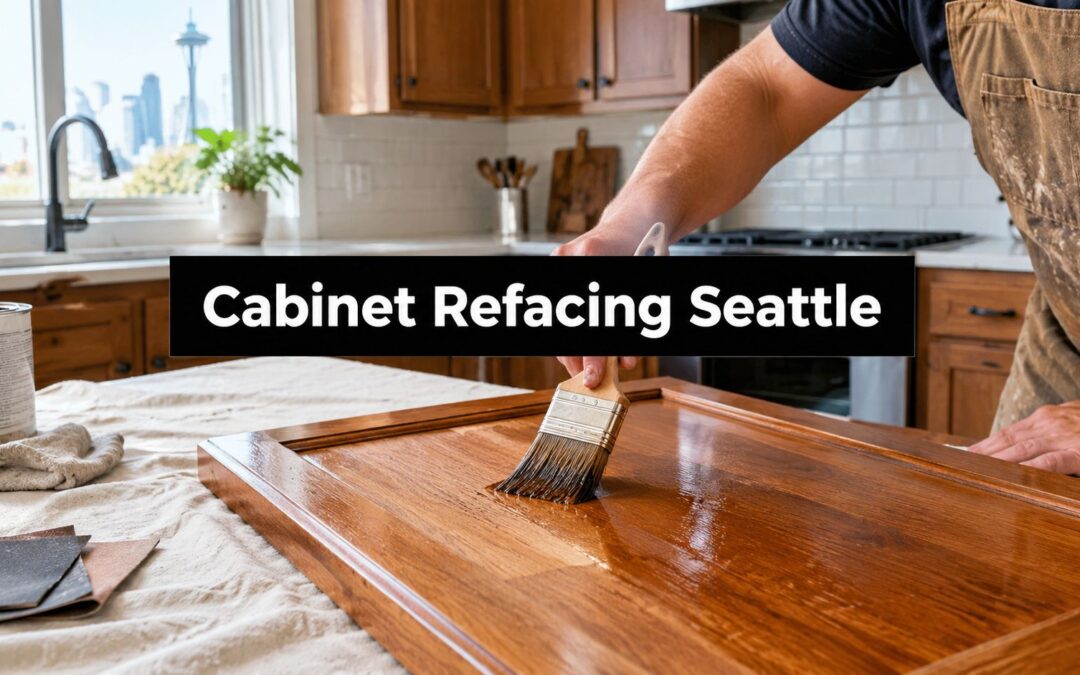
Seattle's renovation market included 3,145 kitchen-renovation permits from March 2021 through December 2025, while the average kitchen-renovation cost was $20,542, compared with $46,623 nationally. For homeowners whose cabinet boxes and layout still work, refacing can deliver a focused visual and functional update without turning a cosmetic project into a full reconstruction.
You know the feeling. The kitchen layout works, the work triangle is familiar, and the storage is adequate, but the cabinet doors look tired. A laminate edge has started peeling, several doors sit out of alignment, or the finish belongs to another decade. In Seattle homes, where renovation decisions often have to balance cost, disruption, existing construction, and permitting, cabinet refacing can be a sensible middle path.
The important qualification is that refacing isn't a disguise for failing cabinetry. It works when the cabinet boxes are sound and the layout deserves to stay. It doesn't correct water damage, poor storage planning, inaccessible corners, or a kitchen that never functioned well in the first place.
Why Seattle Homeowners Choose Cabinet Refacing
A Seattle homeowner may love the window over the sink, the connection between the kitchen and dining room, and the way the existing cabinets fit an older home. What they may not love is the yellowed finish, swollen sink cabinet, or doors that have been repaired more than once. Removing everything would solve the appearance problem, but it would also discard a layout that already suits the household.
That's where refacing earns its place. The contractor keeps the cabinet boxes, replaces the doors and drawer fronts, and renews the visible framework with veneer, paint, or another appropriate finish. New hinges, slides, pulls, and knobs can make the kitchen feel more precise without requiring a complete tear-out.

A targeted renovation instead of a reset
Seattle's renovation activity supports this narrower approach. A compiled analysis of city building data identified 3,145 kitchen-renovation permits issued from March 2021 through December 2025. The same Seattle kitchen renovation analysis reported an average local kitchen-renovation cost of $20,542, compared with a national average of $46,623 and a Washington-state average of $35,156.
Those figures don't mean every project should be reduced to a cosmetic update. They do show why homeowners and remodelers often separate appearance improvements from major layout work. Refacing preserves much of the existing cabinet framework, which can reduce demolition and keep the project focused on the surfaces that have worn out.
Practical rule: Preserve a layout because it works, not because replacing it feels inconvenient. Refacing is a design decision, not a consolation prize.
The choice also suits homeowners who want less disruption. A focused cabinet project still requires careful preparation, dust control, and coordination with countertops and appliances, but it avoids the scope of a full kitchen reconstruction. The result can feel substantially different while respecting the architecture and daily routines that already function well.
What Is Cabinet Refacing and How It Works
Cabinet refacing changes the visible parts of a cabinet system while retaining its main boxes. That distinction matters. New doors cannot make a water-damaged sink base sound, and a fresh veneer can't correct a cabinet run that was poorly planned from the beginning.
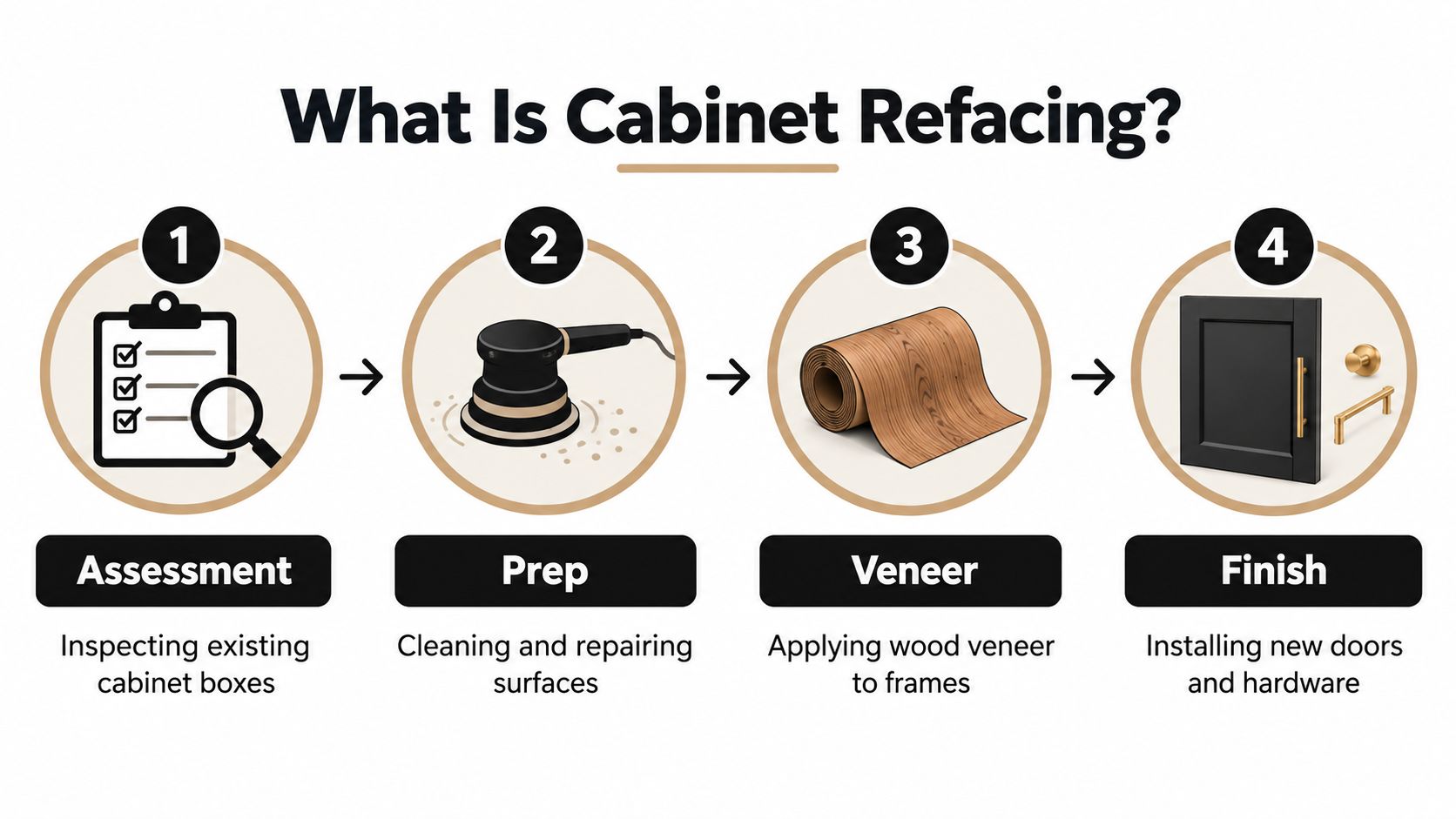
The process starts with an inspection. A careful installer checks the box material, face frames, hinges, drawer construction, fastening points, moisture exposure, and alignment. The assessment should also identify whether the existing boxes can safely support upgraded doors, heavier hardware, or new drawer slides.
What gets replaced
Most refacing projects include:
- Doors and drawer fronts: These are measured, ordered, and installed as new components in the selected style, material, and finish.
- Exposed surfaces: Face frames, end panels, and visible cabinet sides may receive wood veneer, laminate, paint, or another specified treatment.
- Operating hardware: Hinges, drawer slides, pulls, and knobs can be replaced when the existing components are worn or don't suit the new doors.
- Small repairs: Loose joints, damaged edges, and limited surface defects should be corrected before finishing.
The boxes remain in place, but the work is more involved than attaching new doors. Old hardware comes off, surfaces are cleaned and prepared, damaged areas are repaired, and exposed edges are made consistent. Veneer must be cut accurately, bonded properly, and finished so seams and transitions don't telegraph through the final surface.
For a homeowner who wants the technical sequence in greater detail, this cabinet refacing guide provides a useful reference point. The key question is always whether the retained structure deserves the new investment.
Why preparation determines the result
A refaced kitchen fails when installers rush the substrate. Grease, loose coatings, swollen particleboard, and poorly prepared edges can undermine adhesion and alignment. Good preparation often takes more judgment than the final installation because the new finish can only be as stable as the surface beneath it.
The final inspection should cover door reveals, drawer movement, hinge adjustment, edge adhesion, finish consistency, and hardware alignment. If those details are right, refacing can look intentional and integrated rather than like a collection of replacement parts.
Refacing vs Full Replacement Making the Right Choice
The strongest case for refacing is straightforward. The boxes are dry and square, the layout supports daily work, and the homeowner wants a new appearance or better hardware. Full replacement becomes more sensible when the existing structure, storage plan, or utility arrangement is the actual problem.
Seattle's public permit records include descriptions of interior alterations, residential classifications, project status, inspections, and related permits. The city's building permits dataset includes kitchen remodel examples ranging from interior alterations to projects involving expansion and removal or replacement of existing components. That record helps distinguish a surface renewal from a broader construction scope.
| Factor | Cabinet Refacing | Full Replacement |
|---|---|---|
| Existing boxes | Retained when structurally sound and dry | Removed and replaced |
| Layout | Stays substantially the same | Can be redesigned |
| Appearance | New doors, drawer fronts, veneers, and finishes | New cabinet system throughout |
| Function | Hardware and selected storage features can improve | Storage, dimensions, and workflow can change more extensively |
| Construction scope | Usually focused on cosmetic and maintenance work | More likely to involve demolition, utility work, or structural changes |
| Best fit | A good layout with worn visible surfaces | Damaged boxes, poor ergonomics, or a fundamentally unsuitable kitchen |
Choose refacing when the structure earns it
Inspect the cabinet beneath the finish, particularly around the sink, dishwasher, refrigerator, and floor-level edges. Watch for swelling, soft areas, mold, delamination, stripped fasteners, and boxes that have shifted out of square. Minor defects may be repairable, but widespread moisture damage changes the economics and the safety of retaining the system.
Refacing also makes sense when the kitchen's workflow already suits the household. New drawer fronts and better slides can improve use, but they won't create a pantry where none exists or make an inaccessible corner convenient.
Choose replacement when the problem is deeper
Replacement is the more honest solution when walls must move, appliances need new locations, plumbing needs relocation, or the cabinet footprint wastes important space. Seattle permitting guidance indicates that cabinet installation may not require a construction permit when the work remains cosmetic, but structural changes and alterations affecting plumbing, electrical systems, ventilation, egress, light, or fire resistance can require approval. Review the Seattle permit guidance before work begins.
A useful decision test is simple: if the new doors were removed from the equation, would you still want the existing kitchen to function as it does? If the answer is no, refacing may spend money on a surface while leaving the fundamental defect untouched. The refacing versus replacement comparison can help organize that evaluation before requesting bids.
Material and Finish Options for Lasting Results
A refaced kitchen lives or dies by material selection. The most attractive sample in a showroom may not be the most forgiving choice beside a sink, under strong afternoon light, or in a busy household where doors are opened constantly.
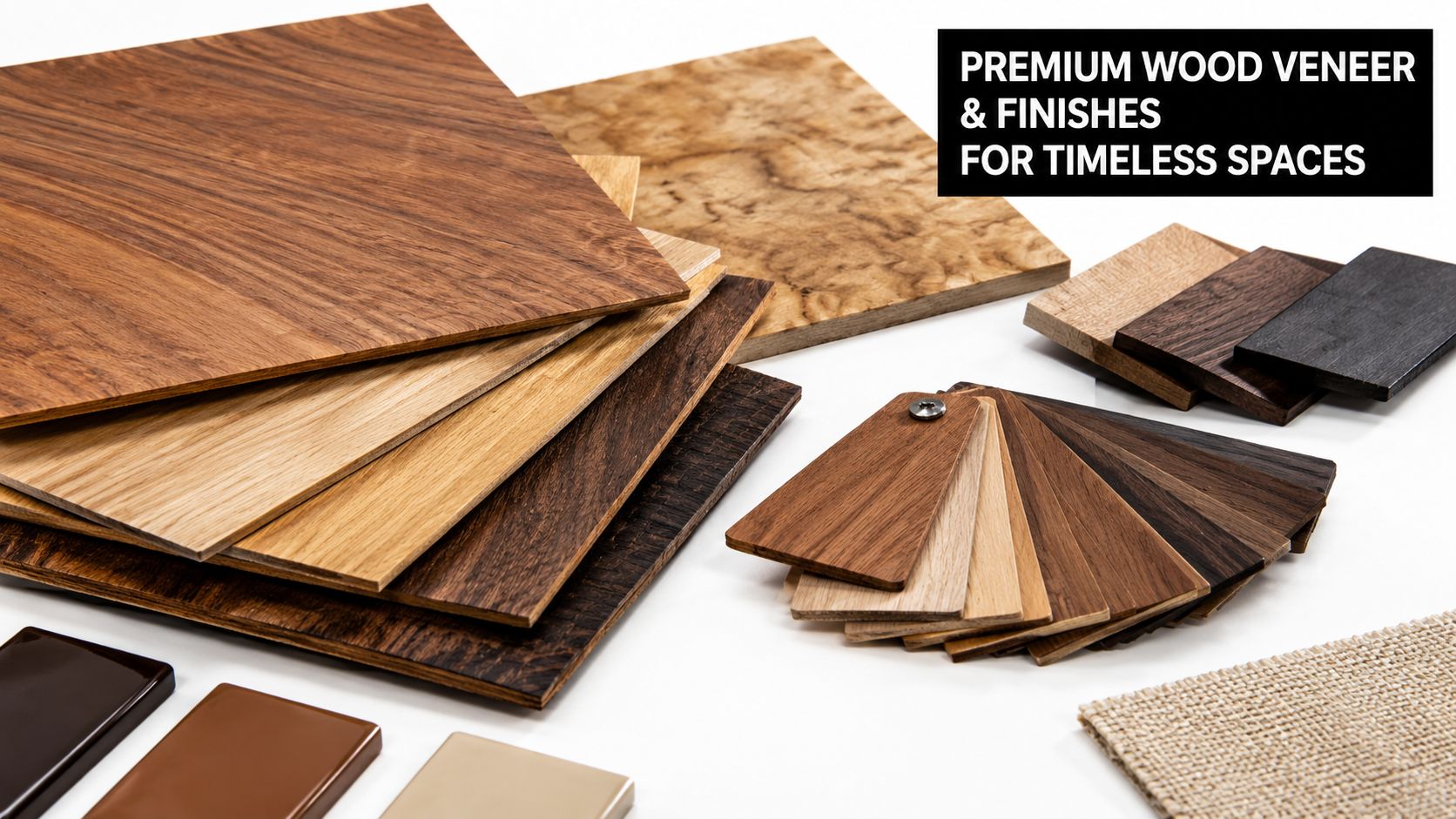
Start with the door construction and the environment. Real wood offers a repairable, tactile surface, while quality veneer can provide consistent grain with efficient use of material. Laminates can be practical in some applications, but their edge treatment and substrate quality deserve close inspection. Ask how the material handles impact, moisture, touch-up work, and future hardware changes.
Match the material to the room
Maple gives a clean, restrained appearance and accepts several finish approaches. Oak brings a pronounced grain that can suit traditional or Pacific Northwest interiors. Cherry develops visual depth and works well when the design calls for a warmer, furniture-like character. Species names alone don't guarantee durability, so examine the joinery, panel construction, finish system, and exposed edges.
Finish selection should follow the light and the way the kitchen is used:
- Painted finishes create a consistent color and can make a kitchen feel calmer, but they require careful substrate preparation and edge protection.
- Stained wood keeps the grain visible and allows repairs to blend more naturally, though color variation is part of the material's character.
- Clear finishes protect the surface while retaining the selected wood's appearance. The sheen affects how easily fingerprints, scratches, and unevenness show.
- High-gloss surfaces reflect light and create a sharper modern effect, but they demand more disciplined cleaning and surface preparation.
For a broader treatment of sheen, wood, and coating choices, see this guide to kitchen cabinet finishes. Bring samples home before deciding. A finish that looks balanced under a showroom's neutral lighting can read differently beside Seattle's overcast daylight or warm interior fixtures.
Don't overlook the working parts
New doors paired with old, tired hinges often produce a disappointing result. Soft-close hinges, properly sized drawer slides, and correctly positioned pulls affect the daily experience as much as the finish does. Confirm that upgraded hardware suits the retained box construction and that the installer will adjust every door after the new fronts are hung.
Moisture control matters, too. Seal newly cut edges, especially near sinks and dishwashers, and don't allow standing water to remain on cabinet surfaces. Good ventilation and stable indoor conditions help protect both the finish and the composite materials that may remain inside the cabinet system.
Seattle Cabinet Refacing Costs and Timelines
Budgeting cabinet refacing requires separating verified local renovation context from a contractor's project-specific proposal. Seattle's compiled renovation analysis reported an average kitchen-renovation cost of $20,542, compared with $46,623 nationally and $35,156 across Washington state. Those are kitchen-renovation figures, not a universal price for refacing, so they shouldn't be used as a substitute for measuring the actual cabinet run and selecting materials.
The final proposal depends on the number and size of doors, drawer fronts, exposed ends, repairs, finish system, hardware, access, and whether countertops or appliances need temporary removal. A small, straightforward run with sound boxes has a different labor profile from a large kitchen with curved components, damaged substrates, or extensive veneer work.
Build the schedule around decisions
A practical sequence looks like this:
- Inspection and measuring: The contractor documents box condition, counts components, and records appliance and countertop relationships.
- Design and specification: Door style, wood or veneer, finish, hardware, and repair requirements are confirmed.
- Fabrication and preparation: New components are produced while the existing kitchen is prepared for installation.
- Installation and adjustment: The crew protects the work area, fits the new parts, adjusts hinges and slides, and completes cleanup.
The work area may be unavailable during portions of installation, even when the overall scope is narrower than replacement. Ask when doors and drawers come off, whether appliances must be disconnected, how dust will be controlled, and what happens if the installer finds concealed damage.
Seattle's permit distinction is important for planning. Replacing cabinet doors or countertops without relocating plumbing, electrical, or mechanical systems typically doesn't require a construction permit, while wall changes and utility alterations generally do. Confirm the scope with the contractor and the city rather than assuming every project qualifies as cosmetic.
For a project-specific budgeting framework, review this cabinet refacing cost guide. The written estimate should identify allowances, exclusions, repair conditions, finish samples, hardware, installation, disposal, and payment stages.
How to Choose a Cabinet Refacing Contractor
Refacing rewards precision. A general remodeling contractor may be capable of the work, but you need evidence that the team understands door reveals, veneer bonding, substrate repair, finish matching, and hardware adjustment.
Start with the contractor's previous projects. Ask to see refacing work that includes cabinet boxes similar to yours, not only photographs of entirely new kitchens. Look closely at frame-to-panel transitions, end panels, toe kicks, drawer alignment, and the areas around sinks and dishwashers.

Questions that reveal the workmanship
Use the consultation to establish how the contractor thinks:
- Box assessment: Which components will be retained, and what specific defects would make refacing unsuitable?
- Material specification: What are the door, veneer, substrate, adhesive, and finish products? How will exposed edges and drilled holes be sealed?
- Hardware compatibility: Will the new hinges and slides fit the existing boxes, and who performs final adjustment?
- Site protection: How will floors, counters, appliances, and adjacent rooms be protected from dust and finish overspray?
- Scope control: What happens if the crew discovers water damage or an out-of-square cabinet after removal?
- Documentation: Does the proposal list measurements, materials, finish, hardware, cleanup, warranty terms, and exclusions?
Verify the contractor's applicable licensing and insurance before signing. A written agreement should define who supplies hardware, who handles disposal, how change orders work, and what counts as completed installation.
Read the estimate as a technical document
A vague quote creates disputes. “New cabinet doors” doesn't identify the species, panel construction, edge profile, finish, or adjustment service. Ask for physical samples and compare the written specification against what you expect to receive.
The contractor should also explain the permit boundary. If the project includes a new circuit, relocated sink, appliance move, wall alteration, or ventilation change, it may no longer be a cosmetic refacing scope. A professional won't promise that every renovation avoids review.
Sinclair Cabinetry inc offers custom cabinetry design and professional installation for kitchen and bathroom projects, including options for renovation and replacement work. Whether you choose that company or another qualified shop, compare the actual construction and installation scope rather than choosing from a finish photograph alone.
Common Misconceptions and Sustainability Factors
Refacing isn't automatically temporary, and it isn't automatically sustainable. Its durability depends on the condition of the retained boxes, the quality of the new components, the preparation, and how the kitchen is used.
The environmental question is more specific than “Is refacing greener?” Reusing sound cabinet boxes can avoid unnecessary demolition and preserve materials that still serve a purpose. But retaining damaged composite panels, poor storage, or a failing layout may only postpone a larger disposal problem.
Look at the whole cabinet system
Independent end-of-life research comparing reuse, recycling, combustion, and disposal scenarios indicates that reuse can reduce impacts relative to some end-of-life pathways. The kitchen cabinet end-of-life research also reinforces why the condition and future service life of the existing boxes matter.
A responsible assessment asks:
- Can it stay? Retain boxes that are dry, stable, square, and useful.
- Can it be repaired? Address limited damage before covering surfaces.
- Should it go? Replace panels with significant swelling, delamination, or compromised fasteners.
- Can it be diverted? Discuss donation, recycling, or responsible disposal for removed doors and materials.
Material emissions deserve attention as well. The EPA's indoor-air-quality guidance identifies particleboard, hardwood plywood, and MDF as pressed-wood products used in cabinetry, with MDF generally having the highest formaldehyde-emitting potential among urea-formaldehyde pressed woods. Specify lower-emitting products that meet applicable TSCA Title VI or CARB requirements, encapsulate exposed surfaces and drilled holes, ventilate after installation, and manage temperature and humidity.
Refacing is the responsible choice when it extends the useful life of sound cabinetry. It isn't responsible when a new finish conceals damage that should have been removed.
Before approving the work, ask the contractor to document which parts will be reused, repaired, replaced, donated, recycled, or discarded. That record turns a sustainability claim into a practical decision based on the actual kitchen in front of you.
If your Seattle kitchen has a sound layout but worn or dated cabinet surfaces, Sinclair Cabinetry inc can help you evaluate whether refacing or custom replacement fits the condition of the existing system. Visit Sinclair Cabinetry inc to discuss cabinet materials, finishes, installation, and a renovation scope built around durability rather than sales hype.