

Choosing the right cabinet color can completely transform the heart of your home. While classic white will always have its place, the current design landscape is all about embracing color to create spaces with personality, warmth, and style. The latest cabinet color trends move beyond simple neutrals, introducing sophisticated hues that range from earthy greens and deep blues to inviting warm whites and bold, dramatic charcoals.
Whether you're planning a full kitchen remodel or a simple bathroom refresh, the color you select for your cabinetry sets the tone for the entire room. For broader inspiration on kitchen aesthetics and how color can transform a space, exploring a range of inspiring kitchen color ideas can provide additional insights. In this guide, we'll dive straight into the top 7 cabinet color trends defining the year, offering actionable tips and design inspiration to help you make a choice that is both stylish and timeless. Let's explore the palettes shaping our homes.
1. Navy Blue Cabinets
Navy blue has firmly established itself as a leading choice in kitchen and bathroom design, moving beyond a simple trend to become a new, sophisticated neutral. This rich, deep hue offers the grounding power of black without its harshness and provides more character than standard white or gray. It's one of the most versatile cabinet color trends because it seamlessly adapts to various styles, from classic coastal to sleek modern minimalist. The color's inherent depth creates a sense of luxury and calm, making it a dramatic yet inviting focal point.
Popularized by design powerhouses like Studio McGee and Magnolia, navy blue cabinets evoke a custom, high-end feel. For a project requiring that specific luxurious touch, a manufacturer like Sinclair Cabinetry can deliver custom navy cabinets that perfectly capture this aesthetic. The shade works exceptionally well in spaces with ample natural light, where it reads as both bold and elegant.
How to Use Navy Blue Cabinets
To successfully integrate this trend, balance is key. Navy's richness needs to be offset with lighter elements to prevent the space from feeling too dark or heavy.
- Create Contrast: Pair navy cabinets with light-colored countertops. White quartz or marble are classic choices that create a crisp, clean contrast and reflect light.
- Warm Up with Hardware: Add warmth and a touch of glamour by using hardware in finishes like brushed brass, copper, or polished nickel. These warm metals pop against the cool blue.
- Illuminate the Space: Install under-cabinet lighting. This is crucial for illuminating countertops and preventing shadows, ensuring the workspace remains bright and functional.
- Try a Two-Toned Look: In smaller kitchens, consider using navy blue only on the lower cabinets or a central island. Pairing them with white or light gray upper cabinets keeps the room feeling open and airy while still incorporating this elegant color.
2. Sage Green Cabinets
Sage green has emerged as a cornerstone of modern design, symbolizing the growing desire for biophilic interiors that connect us with nature. This soft, gray-green hue brings an organic and calming presence to any kitchen or bathroom, offering a refreshing alternative to traditional neutrals. It is one of the most soothing cabinet color trends, embodying a sense of tranquility and wellness that homeowners are increasingly seeking. Its muted quality allows it to act as a gentle color without overwhelming a space.
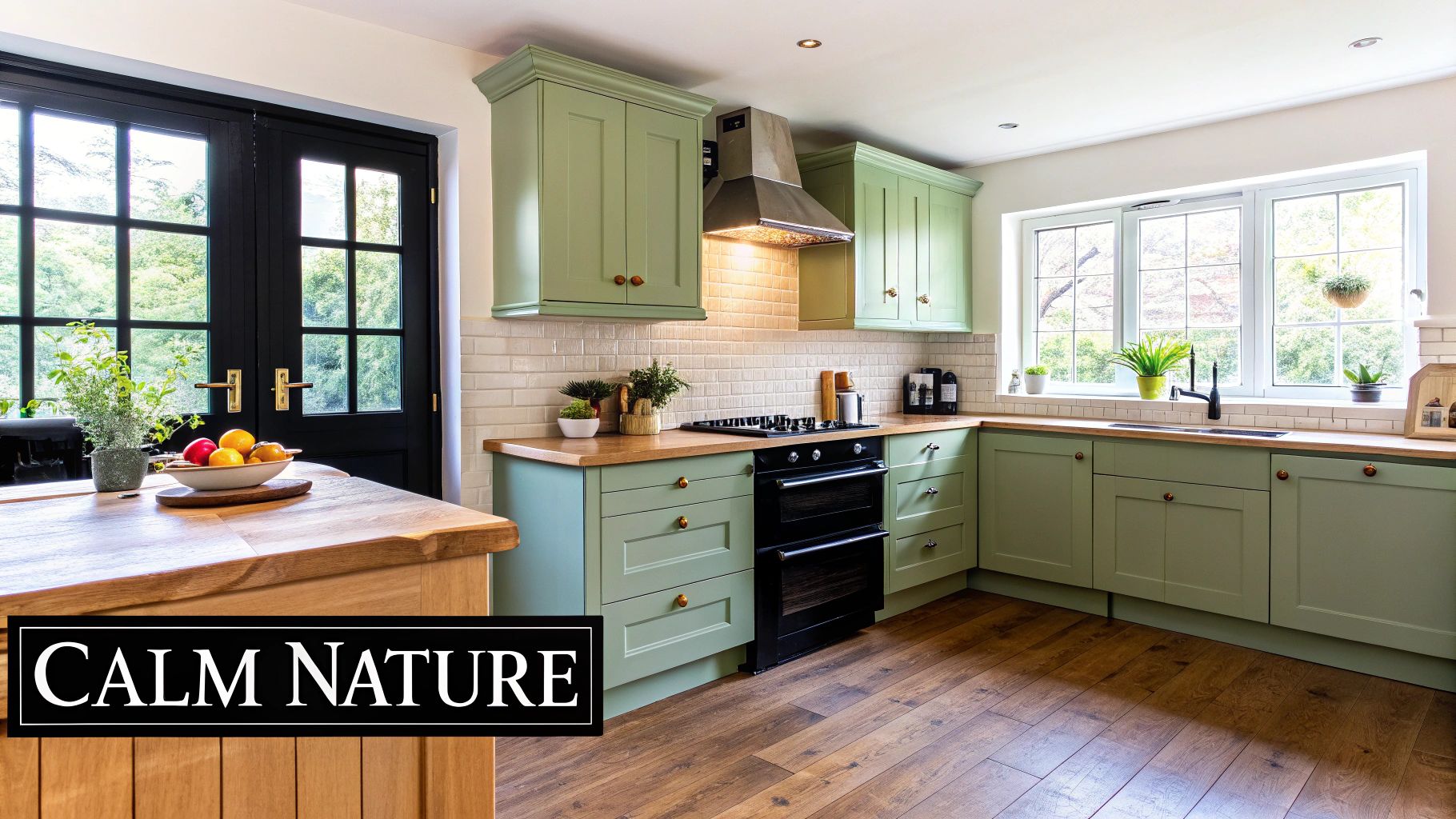
Popularized by influential paint companies like Farrow & Ball and modern brands like Clare Paint, sage green has become a staple in Scandinavian and modern farmhouse aesthetics. Shades like Farrow & Ball's "Vert de Terre" or Clare's "Current Mood" are frequently featured in high-end designs. The color’s versatility allows it to feel both earthy and sophisticated, making it a perfect choice for creating a peaceful, grounded environment that still feels chic and current.
How to Use Sage Green Cabinets
To make the most of this earthy hue, focus on enhancing its natural, serene qualities with complementary textures and tones.
- Pair with Natural Materials: Complement sage green cabinets with natural wood accents, like butcher block countertops, open shelving, or flooring. This pairing reinforces the organic, biophilic theme.
- Choose the Right Finish: Opt for a matte or satin finish on the cabinets. These low-sheen finishes absorb light rather than reflecting it, enhancing the color's soft, natural feel.
- Select Earthy Hardware: Use hardware in finishes like matte black, antique brass, or brushed nickel. These options provide a subtle contrast that complements the green without overpowering it.
- Incorporate Plants and Textiles: Complete the look by adding potted plants, herbs, and natural textiles like linen or jute. These elements amplify the connection to nature and add layers of texture.
3. Warm White and Cream Cabinets
Moving away from stark, cool whites, warm whites and creams are emerging as a top choice for a softer, more inviting kitchen. These hues offer the brightness and versatility of pure white but with added depth and character, preventing a space from feeling clinical. As one of the most welcoming cabinet color trends, these shades are ideal for creating a cozy, lived-in atmosphere, reminiscent of the beloved kitchens designed by Ina Garten or featured in Nancy Meyers' films. This trend provides a timeless, classic feel without sacrificing the fresh, clean appearance that makes white so popular.
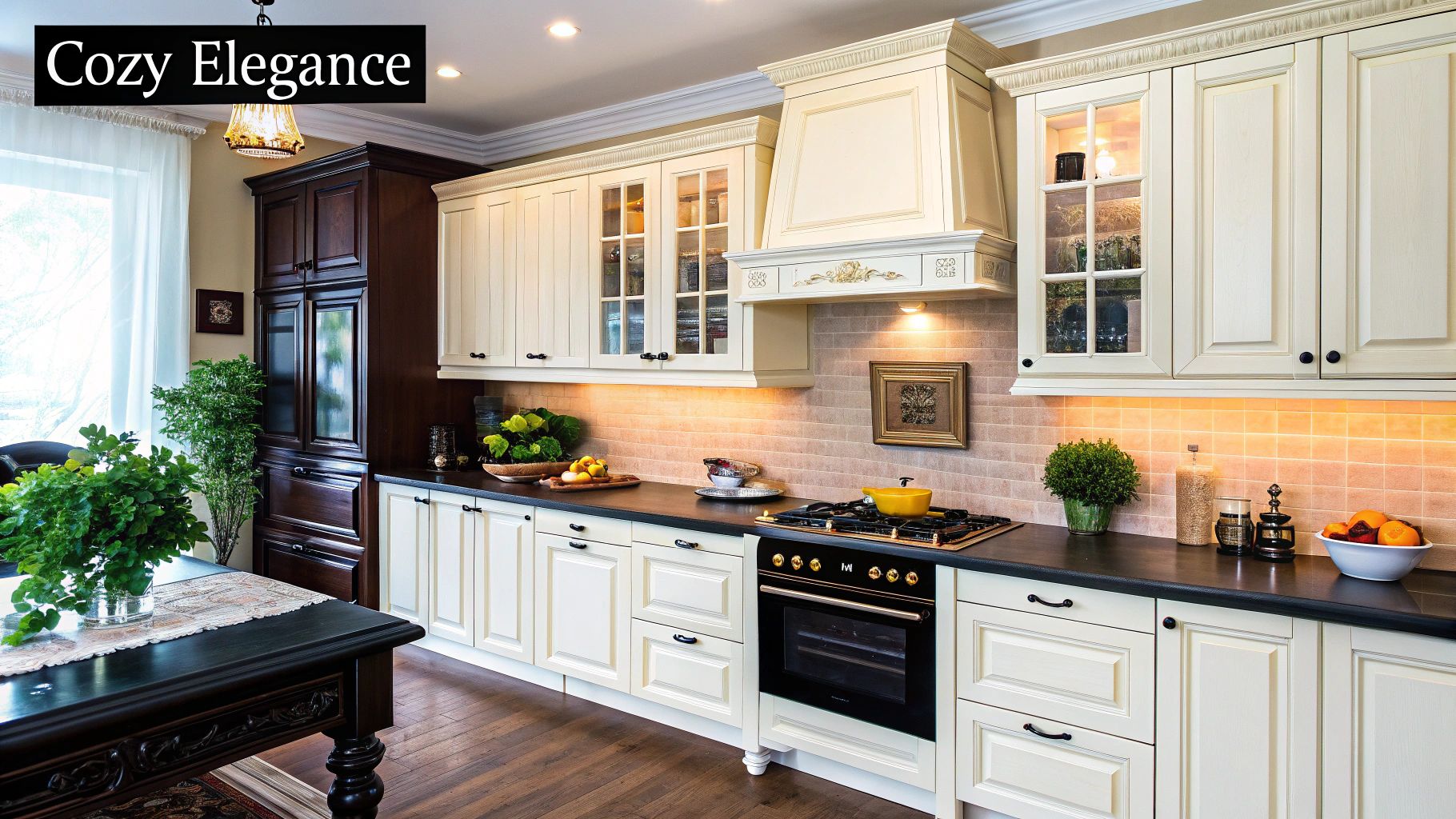
The subtle undertones in creams and off-whites, like Benjamin Moore’s White Dove or Sherwin-Williams’ Creamy, add a layer of sophistication. They work exceptionally well in traditional, farmhouse, and European-inspired designs, enhancing natural materials and creating a gentle, light-filled environment. The key to their success lies in their ability to feel both classic and current.
How to Use Warm White and Cream Cabinets
To maximize the inviting nature of warm white and cream, focus on creating a cohesive, layered design that emphasizes warmth and texture.
- Test Your Tones: Always test paint samples in your space. Warm whites can have yellow, pink, or beige undertones that look different depending on natural and artificial light.
- Harmonize with Hardware: Select hardware in warm finishes like brushed brass, aged bronze, or champagne gold. These metals complement the warmth of the cabinet color and add a touch of elegance.
- Incorporate Natural Materials: Pair cream cabinets with warm wood tones in flooring, countertops, or open shelving. This enhances the cozy, organic feel of the space.
- Choose Complementary Countertops: Opt for countertops that share a similar warm undertone. Cream-veined marble, warm-toned granite, or quartz with beige flecks will create a seamless and sophisticated look.
4. Two-Tone Cabinet Combinations
The two-tone cabinet approach has surged in popularity, offering a custom, designer-curated feel that elevates any kitchen. This versatile trend involves using two different colors or finishes on your cabinetry, adding visual depth and preventing the monolithic look of a single color. It's one of the most dynamic cabinet color trends because it allows for immense personalization. Homeowners can mix painted finishes with natural wood, or pair dark, grounding lower cabinets with light, airy uppers.
Popularized by HGTV design shows and featured in leading home magazines, this look breaks up the visual plane and can make a space feel larger and more interesting. Common combinations include classic white uppers with bold navy or rich wood lowers, or a soft sage green island set against creamy white perimeter cabinets. This technique provides a perfect opportunity to introduce color without overwhelming the room.
How to Use Two-Tone Cabinet Combinations
A successful two-tone kitchen relies on thoughtful planning and balance to create a cohesive, intentional design.
- Ground the Space: A foundational rule is to use the darker or heavier color on the lower cabinets. This grounds the kitchen visually, while lighter upper cabinets draw the eye upward, making the ceiling feel higher.
- Create a Focal Point: Use a different color or finish on a central island to make it the star of the room. This adds a powerful design element without committing the entire kitchen to a bold hue.
- Maintain Cohesion with Hardware: Unify the two distinct cabinet finishes by using the same hardware throughout. Consistent knobs and pulls tie the look together, creating a polished and harmonious aesthetic. You can learn more about selecting the right hardware on sinclaircabinets.com.
- Consider the Finish: Think beyond just color. Mixing a painted finish with a natural wood stain is a sophisticated way to execute this trend, adding texture and warmth to the design.
5. Black and Charcoal Cabinets
Once considered a daring choice, black and charcoal have emerged as a powerful and sophisticated option in kitchen and bathroom design. These dramatic hues offer a modern, high-contrast look that feels both luxurious and grounded. Far from making a space feel small, deep charcoal and matte black serve as a chic neutral backdrop, allowing other textures and colors to stand out. This is one of the most impactful cabinet color trends for creating a bold, architectural statement in contemporary, industrial, or minimalist interiors.
Influenced by high-end restaurant kitchens and minimalist design movements, these dark cabinets convey an immediate sense of refined style. They are exceptionally effective in open-concept spaces where they can define the kitchen zone with authority. For those seeking a flawless, modern finish, a specialized cabinet maker can provide custom charcoal or black cabinets with the precise sheen and durability required for a high-traffic area.
How to Use Black and Charcoal Cabinets
The key to successfully using these dark colors is creating intentional balance and preventing the space from feeling oppressive. Strategic use of light is paramount.
- Balance with Light Surfaces: Pair black or charcoal cabinets with bright white or light gray quartz countertops and a simple, light-colored backsplash. This classic contrast keeps the design feeling crisp and intentional.
- Layer Your Lighting: Incorporate multiple sources of light. Ambient overhead lighting, task-oriented under-cabinet lights, and accent pendants are all crucial for illuminating the space and preventing dark corners.
- Incorporate Reflective Elements: Use stainless steel appliances, polished hardware, or even a mirrored backsplash to bounce light around the room. These reflective surfaces break up the dark expanses and add visual interest.
- Go Two-Toned: If an all-black kitchen feels too intense, use black or charcoal cabinets on the lower cabinets or a central island only. Pair them with white, wood, or light gray uppers to maintain an open and airy feel.
6. Natural Wood Stain Cabinets
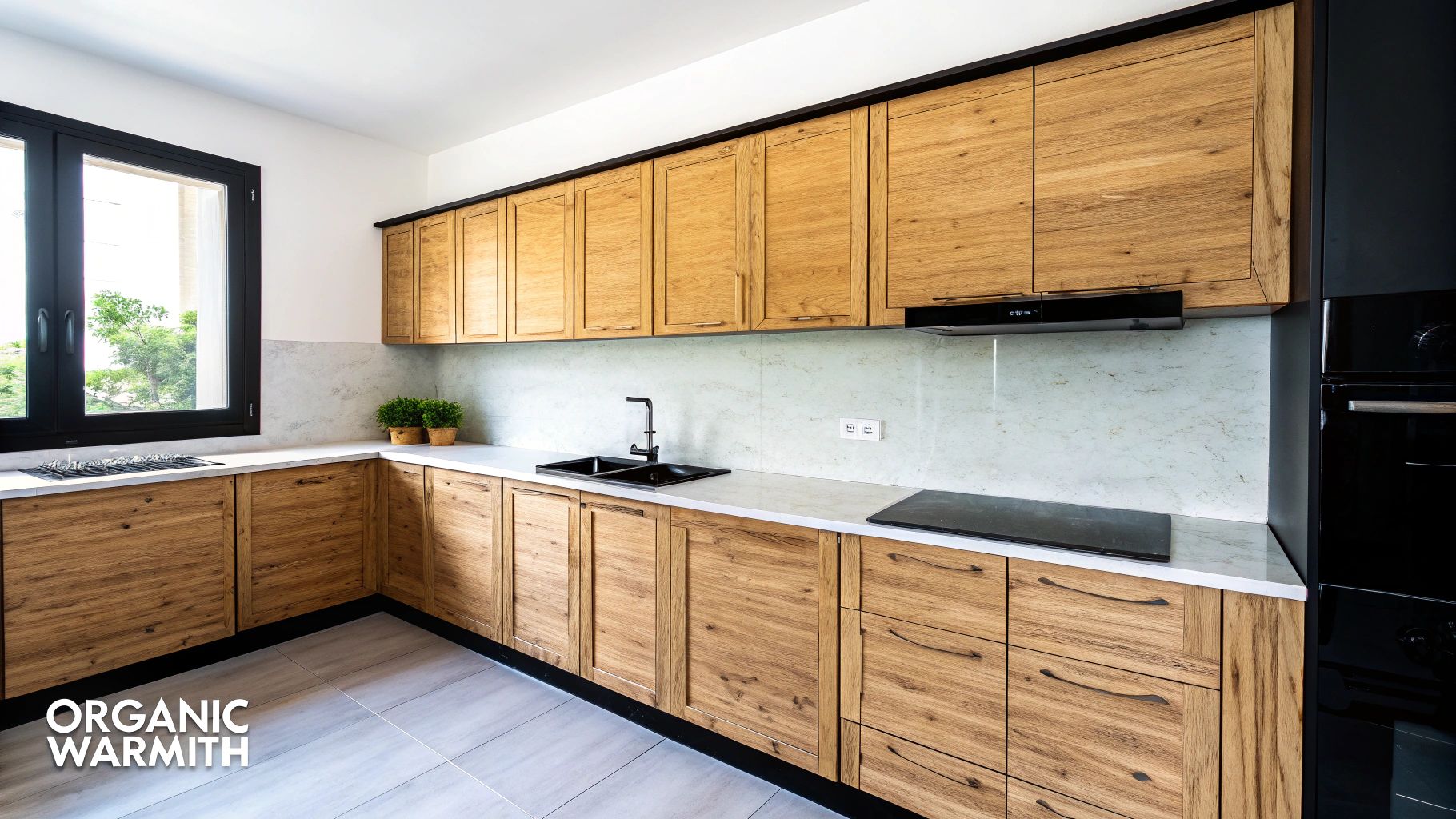
Moving away from saturated paints, the return to natural wood stains marks a significant shift toward organic, warm, and authentic interiors. This trend celebrates the inherent beauty and unique grain of wood, providing a level of texture and depth that painted finishes cannot replicate. Far from the dated honey oak of the past, today’s wood stains are sophisticated and modern, reflecting a desire for sustainable, biophilic design. It stands out among cabinet color trends by grounding a space with natural character.
Driven by the Scandinavian and mid-century modern revivals, natural wood cabinets bring an understated, high-quality feel to any kitchen or bathroom. White oak, walnut, and maple are popular choices, showcasing everything from light, airy finishes to rich, dramatic tones. To explore the possibilities of a custom look, you can learn more about custom stained finishes on sinclaircabinets.com to achieve a truly unique and elevated design.
How to Use Natural Wood Stain Cabinets
A successful wood-centric design relies on balance and letting the material's natural beauty shine.
- Select a Cohesive Wood Species: Stick to one or two complementary wood species throughout the space to create a cohesive, intentional look. Mismatching too many wood tones can feel chaotic.
- Keep Hardware Simple: Opt for clean-lined, minimalist hardware in matte black, brushed nickel, or subtle brass. This allows the wood grain to remain the main visual focus.
- Explore Modern Stains: Consider contemporary stain colors beyond traditional browns. A light, natural finish on white oak is perfect for a Scandinavian aesthetic, while a gray-washed or near-ebony stain can provide a modern, dramatic edge.
- Balance with Light Surfaces: Pair wood cabinets with light-colored countertops, like white quartz or a simple, light backsplash. This contrast prevents the wood from overwhelming the space and keeps the overall feeling bright and modern.
7. Soft Pastels and Dusty Tones
Soft pastels and dusty tones are making a gentle yet impactful statement, moving from accent colors to the main feature in kitchens and bathrooms. These muted hues, such as dusty rose, pale mint, and soft lavender, offer a unique alternative to traditional neutrals. They provide color without overwhelming a space, creating a romantic and serene atmosphere. This is one of the more unique cabinet color trends, ideal for infusing personality and a touch of vintage charm into a home.
Popularized by French country aesthetics and cottage-style renovations, these colors evoke a sense of bespoke, old-world elegance. They work exceptionally well in creating a cozy, inviting feel that is both sophisticated and comforting. If you are considering a DIY approach to achieve this look, it’s crucial to get the prep work and application just right. For a guide on achieving a professional finish, you can learn more about how to properly paint your cabinets to capture these soft, dusty hues.
How to Use Soft Pastels and Dusty Tones
The key to using pastels is subtlety; the goal is a gentle wash of color, not a nursery-like brightness.
- Choose Muted Shades: Opt for dusty, toned-down versions of pastels rather than their brighter counterparts. Think dusty pink instead of bubblegum or sage green instead of lime.
- Balance with Neutrals: Pair pastel cabinets with warm white walls, light wood flooring, and neutral backsplashes. This keeps the look sophisticated and grounded.
- Use in Defined Spaces: These colors are particularly effective in smaller, defined areas like a butler's pantry, laundry room, or powder room, where they can make a big impact without dominating the entire home.
- Incorporate Natural Textures: Enhance the soft, organic feel by pairing these cabinets with natural textures like rattan, linen, aged wood, and unlacquered brass hardware.
Cabinet Color Trends Comparison Table
| Cabinet Style | Implementation Complexity 🔄 | Resource Requirements ⚡ | Expected Outcomes 📊 | Ideal Use Cases 💡 | Key Advantages ⭐ |
|---|---|---|---|---|---|
| Navy Blue Cabinets | Moderate – Requires careful color matching | Moderate – Needs good lighting setup | Sophisticated, timeless look with dramatic depth | Traditional to contemporary kitchens/bathrooms | Upscale appearance, hides fingerprints well |
| Sage Green Cabinets | Moderate – Coordination needed with finishes | Moderate – Natural materials preferred | Calm, organic ambiance with biophilic feel | Biophilic, natural, and spa-like interiors | Versatile, promotes tranquility, timeless |
| Warm White and Cream Cabinets | Low – Common color with easy integration | Low – Compatible with many materials | Cozy, inviting atmosphere with soft brightness | Cozy, lived-in kitchens needing warmth | Welcoming, easy coordination, hides wear |
| Two-Tone Cabinet Combinations | High – Requires precise color & style coordination | High – More materials and design effort | Dynamic, custom look with visual depth | Custom, high-end kitchens, statement designs | Adds personality, highlights areas, versatile |
| Black and Charcoal Cabinets | Moderate – Needs good lighting planning | Moderate – Lighting and finishes needed | Bold, modern, dramatic contrast | Contemporary and industrial styles | Luxurious look, hides wear, strong contrast |
| Natural Wood Stain Cabinets | Moderate – Requires wood quality and finish choice | Moderate – Good materials and maintenance | Warm, organic with natural texture | Sustainable, eco-friendly, timeless designs | Timeless appeal, refinishing options, warmth |
| Soft Pastels and Dusty Tones | Moderate – Careful color coordination | Moderate – Finishes and hardware selection | Romantic, vintage-inspired cozy atmosphere | Powder rooms, vintage, cottage-style kitchens | Adds charm, custom look, soft & welcoming |
Bringing Your Vision to Life with the Perfect Color
The journey through this year's top cabinet color trends reveals a clear shift towards personalization and creating truly bespoke living spaces. From the grounding depth of navy blue and charcoal to the organic tranquility of sage green and natural wood stains, the modern palette offers something for every aesthetic. We’ve seen how these colors do more than just coat a surface; they set a mood, define a style, and transform the very heart of your home.
The key takeaway is that trends are a starting point, not a strict set of rules. The most successful designs often blend contemporary ideas with timeless personal taste. Think about how a two-tone scheme can add visual interest and height to a smaller kitchen, or how a warm white can create a clean, expansive feel that still feels inviting. The power lies in selecting a color that not only looks beautiful today but will also resonate with your lifestyle and home's architecture for years to come.
Your Next Steps to the Perfect Cabinets
Feeling inspired? The next step is to translate these ideas into a tangible plan. Here’s how to move forward with confidence:
- Gather Your Samples: Don't rely on a screen. Collect physical paint swatches, wood stain samples, and material chips. View them in your own space throughout the day to see how they interact with your home's unique natural and artificial lighting.
- Consider the Big Picture: Your cabinets are a major component of your design, but they don't exist in a vacuum. Evaluate how your chosen color will harmonize with your countertops, backsplash, flooring, and wall paint.
- Consult with a Professional: The nuance of color and quality of application are what separate a good kitchen from a great one. Partnering with an expert can help you navigate the options and ensure a flawless, durable finish that brings your vision to life perfectly.
Ultimately, choosing your cabinet color is one of the most impactful decisions you'll make in a remodel. It’s an opportunity to infuse your space with personality, enhance its functionality, and significantly increase your home’s value and appeal.
Ready to turn these trending cabinet colors into a stunning reality in your home? The expert craftsmen at Sinclair Cabinetry inc specialize in creating custom, real-wood cabinetry that embodies these trends with timeless quality and precision. Visit Sinclair Cabinetry inc to schedule a consultation and begin designing the kitchen or bathroom you've always envisioned.