
When you're searching for top rated cabinet manufacturers, you quickly realize the term means a whole lot more than just a popular brand name. Real quality isn't about marketing—it's about solid wood, sturdy construction like dovetail joinery, and finishes that can actually handle daily life without chipping and fading.
What Defines a Top Rated Cabinet Manufacturer
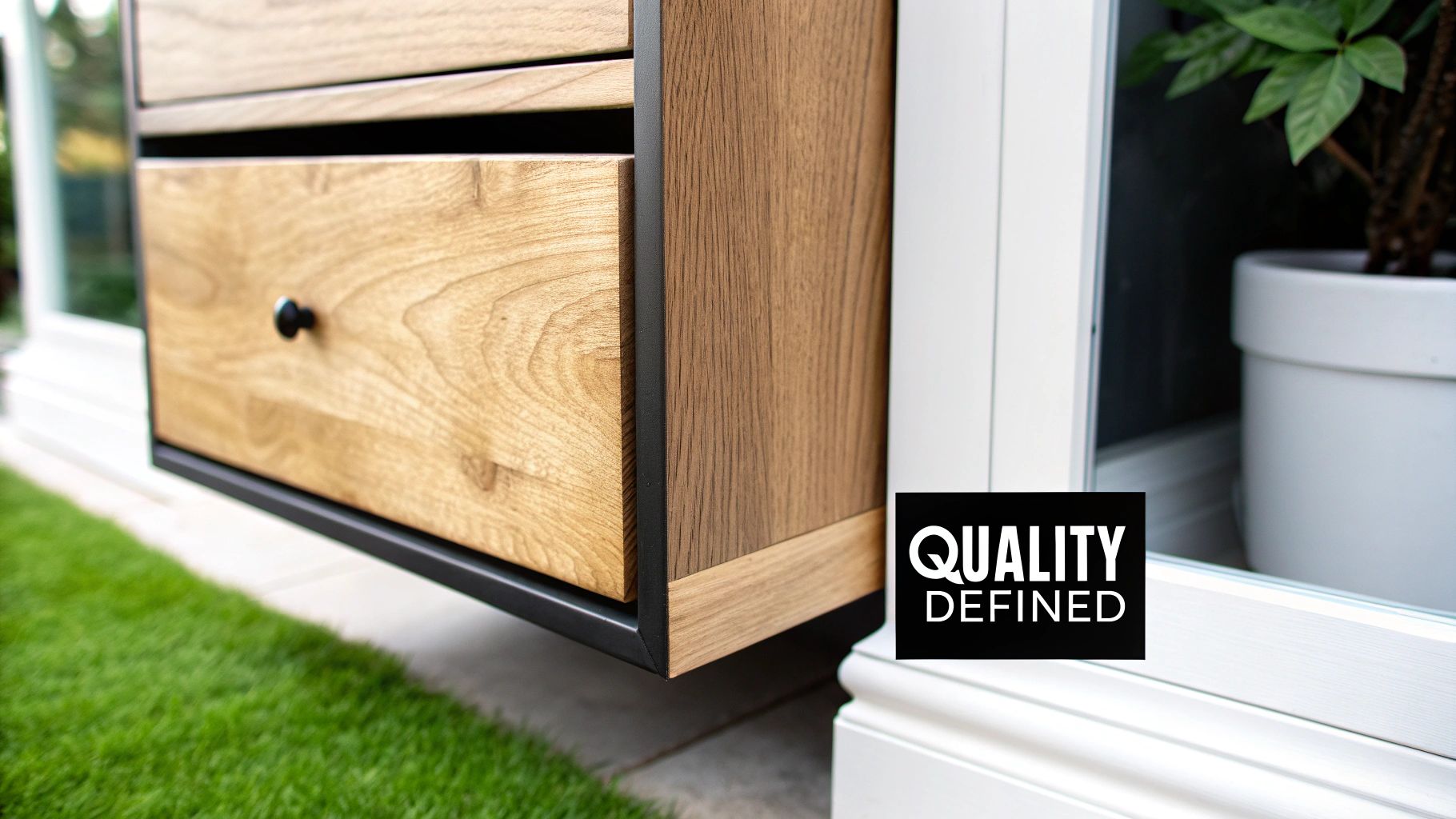
The phrase "top rated" gets thrown around a lot, but for those of us in the business, it points to a specific set of standards that truly separate the best from the rest. Understanding what those standards are is the first step toward making a smart investment in your home. It’s all about spotting the tangible signs of quality that promise your cabinets will last.
These signs are everywhere once you know what to look for, from where the wood is sourced to how precisely the boxes are assembled. A manufacturer's reputation is built on delivering that same level of craftsmanship time and time again.
Material Sourcing and Construction Methods
Everything starts with the materials. The best manufacturers are picky, choosing high-grade solid hardwoods like maple or cherry, or premium plywood that doesn't have any voids. In stark contrast, lower-quality cabinets often use particleboard or MDF for the entire box, which just can't stand up to moisture and daily abuse in the same way.
How those materials are put together is just as critical. Keep an eye out for these hallmarks of strength and longevity:
- Dovetail Joints: These interlocking joints are the gold standard for drawer boxes, providing incredible strength.
- Full-Back Panels: A solid panel on the back of the cabinet adds major rigidity and keeps the box from racking.
- I-Beam Braces: These corner braces reinforce the cabinet box, preventing it from warping as the years go by.
- Soft-Close Hardware: Quality hinges and glides are a must. They ensure drawers and doors operate smoothly and quietly, which also reduces long-term wear.
A truly top-rated cabinet manufacturer doesn't hide how their cabinets are built. The quality should be obvious when you inspect the joints, feel the thickness of the panels, and test the hardware. Those are the details that guarantee great performance long after installation day.
Understanding Cabinet Types
To compare manufacturers intelligently, you need to know the main categories of cabinetry out there. Each one is built for different needs, timelines, and budgets, and most brands usually specialize in one or two.
| Cabinet Type | Ideal Use Case | Key Differentiator |
|---|---|---|
| Stock | Budget-friendly renovations, quick flips | Mass-produced in standard sizes with very limited options. |
| Semi-Custom | Projects needing a bit of flexibility in size or finish | Stock sizes with some modification options (like depth changes). |
| Custom | Unique layouts, specific design goals, high-end homes | Built entirely from scratch to your exact specifications. |
| RTA | DIY projects, rental properties, budget remodels | Ships flat-packed for you or your contractor to assemble. |
Figuring out which type you need is half the battle. For homeowners who refuse to compromise on fit and want something that will truly last, custom cabinets are the pinnacle of the craft. When you learn more about the attributes of high-quality kitchen cabinets, you start to see the distinctions that define a premium product. This knowledge lets you look past the brand names and focus on the characteristics that really matter.
Your Framework for Comparing Cabinet Brands
Moving past the glossy brochures and slick marketing slogans requires a real strategy. To figure out what you’re actually buying when you compare top-rated cabinet manufacturers, you need a framework that cuts through the noise and gets down to what really matters. This approach lets you evaluate any brand, from off-the-shelf stock cabinets to fully custom creations, on a level playing field.
The whole point is to turn you into a savvy buyer who can spot quality craftsmanship from a mile away. It means looking closely at the guts of the cabinet—the materials, how it’s all put together, and the durability of the finish. When you focus on these tangible signs of quality, you can confidently tell the difference between lasting value and a cleverly packaged product that will disappoint you down the road.
Assessing Material Integrity and Construction
The foundation of any great cabinet is what it's made of. While solid wood doors get a lot of attention, the true test of durability lies in the cabinet box itself. A manufacturer that cares about quality will use furniture-grade plywood. It offers far better strength and moisture resistance than the medium-density fiberboard (MDF) or particleboard you’ll find in cheaper options.
When you’re inspecting a cabinet, get up close and personal. Pay attention to these structural details:
- Box Material: Look for multi-ply hardwood plywood, at least 1/2-inch thick, for the sides, top, and bottom of the cabinet box. Anything less is a compromise.
- Back Panel: A solid plywood full-back panel is a huge deal. It provides serious structural rigidity and stops the cabinet from twisting or warping over time.
- Drawer Box Construction: Dovetail joints are the undisputed champion for drawer boxes. They create an incredibly strong mechanical lock that simply won't fail. Stapled or glued-together corners? That's a major red flag.
- Hardware: Open the doors and pull out the drawers. Check the hinges and glides. Big names like Blum or Grass are known for their bulletproof reliability and often come with lifetime warranties, which tells you the cabinet maker trusts their components.
Here's a pro tip: The most reliable sign of a quality manufacturer is their willingness to talk openly about materials and construction. They won't dodge questions about why they use plywood instead of particleboard, and they'll be proud to show you the strength of their joinery. That kind of confidence speaks volumes about the product.
Evaluating Finishes and Warranty Coverage
A cabinet's finish is its shield against daily life—spills, moisture, grease, and general wear and tear. A high-quality finish isn't just a quick coat of paint; it's a multi-layered system. The process often involves meticulous sanding, staining, sealing, and a top-coat of catalyzed conversion varnish, which creates a hard, chemical-resistant surface that’s built to last.
When you're comparing brands, ask them to walk you through their finishing process. A company that just sprays on a single coat of lacquer isn't even in the same league as one using a multi-step, oven-cured system. You’ll see the difference within just a few years of use.
The warranty tells a similar story. A flimsy one-year warranty basically says the manufacturer is expecting problems. A lifetime limited warranty, on the other hand, shows they have deep faith in their product's longevity. Always read the fine print to see what’s actually covered—make sure it includes the hardware, finish, and the cabinet’s structural integrity.
Certifications and Sustainability
Industry certifications aren’t just fancy logos; they’re an objective yardstick for quality and responsible manufacturing. The Kitchen Cabinet Manufacturers Association (KCMA) certification is one you really want to see. To earn this seal, cabinets have to survive a brutal gauntlet of tests designed to simulate years of real-world abuse.
These tests include:
- Load Bearing: Shelves are loaded up with 15 pounds per square foot to see if they sag.
- Durability: Doors are swung open and shut 25,000 times, and drawers are cycled 25,000 times with weight in them.
- Finish Testing: The finish gets hit with everything from vinegar and lemon juice to coffee for 24 hours to test for stains and damage.
A manufacturer that passes these tests has proven its products are tough. On top of that, a commitment to sustainability, often shown by certifications from the Forest Stewardship Council (FSC), indicates that the company sources its wood responsibly. To get a better feel for this kind of analysis, it helps to see how experts go about evaluating brands across different product categories. That wider perspective really drives home the importance of a structured approach.
Cabinet Manufacturer Evaluation Checklist
To make your comparison process even easier, I’ve put together a checklist you can use to evaluate brands side-by-side. This keeps things organized and ensures you don't miss any of the critical details that separate the good from the great.
| Evaluation Criterion | What to Look For in Stock Cabinets | What to Look For in Semi-Custom Cabinets | What to Look For in Custom Cabinets |
|---|---|---|---|
| Box Construction | Particleboard with laminate or melamine | Plywood options often available as an upgrade | Standard use of 1/2" or 3/4" furniture-grade plywood |
| Drawer Boxes | Stapled particleboard or MDF | Options for solid wood with dovetail joints | Solid hardwood with dovetail joints is standard |
| Hardware | Basic, unbranded glides and hinges | Upgraded soft-close options from known brands | Premium soft-close hardware (e.g., Blum) is standard |
| Finish Quality | Thermofoil or basic stained finishes | Multi-step finishes with glaze options | Multi-step catalyzed conversion varnish finishes |
| Customization | No modifications available | Limited size modifications (e.g., depth) | Fully built to any specification and design |
| Warranty | Typically 1-5 years limited | Varies widely, often 10 years to lifetime limited | Lifetime limited warranty is common |
By arming yourself with this detailed framework, you can cut through the advertising fluff and make a decision based on solid evidence. You'll be ready to identify the top rated cabinet manufacturers that offer genuine, lasting quality for your home.
A Look at Leading Cabinet Manufacturers
Diving into the world of cabinetry can feel like a lot to take in, with a huge number of brands all vying for your business. The trick is to understand where different top rated cabinet manufacturers sit in the market. Each one is really built for a specific kind of customer, project, and budget, so matching their strengths to your needs is the most important first step.
You’ve got everything from massive global companies offering affordable, ready-to-go solutions to specialized artisans crafting one-of-a-kind masterpieces. Getting a handle on these differences will help you cut through the noise and start focusing on the brands that are actually a good fit for you. Think of this as a strategic map to help you see what each brand is really about.
Major Players and Their Market Segments
The cabinet industry isn’t a one-size-fits-all game; it’s broken down into clear tiers. On one end, you have industry giants like MasterBrand Cabinets, a holding company that owns a massive portfolio of familiar names, including Aristokraft, Decorá, and Diamond. Their biggest advantage is the sheer breadth of their offerings, which run the gamut from budget-friendly stock lines perfect for a quick refresh to semi-custom options that give you more room to play with design.
This wide-net approach lets them serve a huge slice of the market, from first-time homeowners to people tackling major renovations. Plus, their huge distribution networks mean you can find their products just about anywhere, from big-box stores to local dealers, making them a very convenient choice for many.
To get a sense of what quality looks like across the board, this visual highlights the essential checkpoints for materials, construction, and finish that apply to any manufacturer.
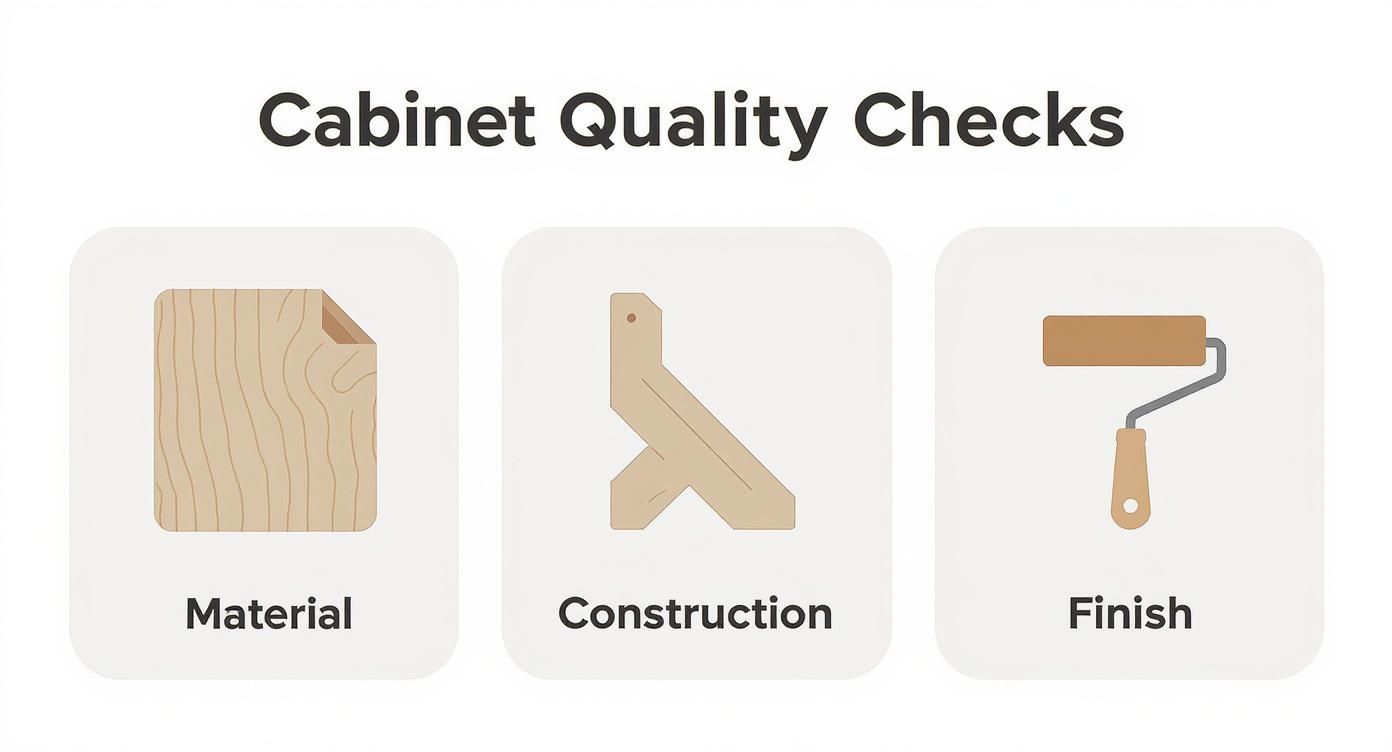
These three pillars—good materials, solid construction, and a finish that holds up—are the universal signs of a cabinet built to last, no matter whose name is on the box.
Global Reach and Specialized Niches
Looking globally, few brands are as instantly recognizable as IKEA. Since its founding in Sweden in 1943, IKEA has absolutely dominated the affordable, ready-to-assemble (RTA) cabinet space. Their success comes from offering stylish, modular designs that let budget-conscious homeowners get a custom look and feel without the high price tag. Beyond cost, IKEA has also made real progress in sustainability by using certified wood and recycled materials.
The global scene also includes other heavy hitters like Nobia AB in Sweden and the fast-growing Oppolia Home from China, which is making a name for itself in the high-end market. Meanwhile, German brands like SieMatic and Poggenpohl have long been the gold standard for luxury, known for their precision engineering and sleek, minimalist designs. This variety just goes to show how many different philosophies there are when it comes to cabinetry, from mass-market efficiency to old-world craftsmanship.
This diversity is a huge win for homeowners. Whether you’re chasing that high-end European aesthetic, prioritizing an eco-friendly build, or just need the best value for a quick flip, there’s a manufacturer out there that specializes in exactly what you’re looking for.
Getting the lay of the land is the first step. For a much deeper look at the specific brands that are leading the pack here in the U.S., check out our guide to the best kitchen cabinet manufacturers on the market today. It offers a more detailed breakdown of the top options available to American homeowners.
Identifying the Right Fit for Your Project
Ultimately, picking the right manufacturer comes down to being honest about your project's goals, budget, and timeline. Each company’s position in the market gives you a pretty clear hint about who they’re trying to serve.
- For budget-driven projects with standard layouts: Big-name manufacturers offering stock or RTA cabinets, like IKEA or the brands under the MasterBrand umbrella, are a fantastic choice. They deliver reliable, good-looking solutions at a price that’s hard to beat.
- For projects needing some personalization: This is where semi-custom brands really hit the sweet spot. They let you tweak dimensions, finishes, and styles without jumping to the full expense of a completely custom job.
- For unique spaces or a one-of-a-kind vision: This is the playground for luxury European brands and dedicated custom shops like Sinclair Cabinetry. Here, you get unparalleled craftsmanship, total design freedom, and the absolute best materials, resulting in something truly bespoke.
By looking at the market through this lens, you can filter out the brands that don’t make sense for you and zero in on the top rated cabinet manufacturers that are perfectly aligned with your vision. It’s the surest way to get a result you’ll love.
When to Choose a Custom Cabinetry Solution
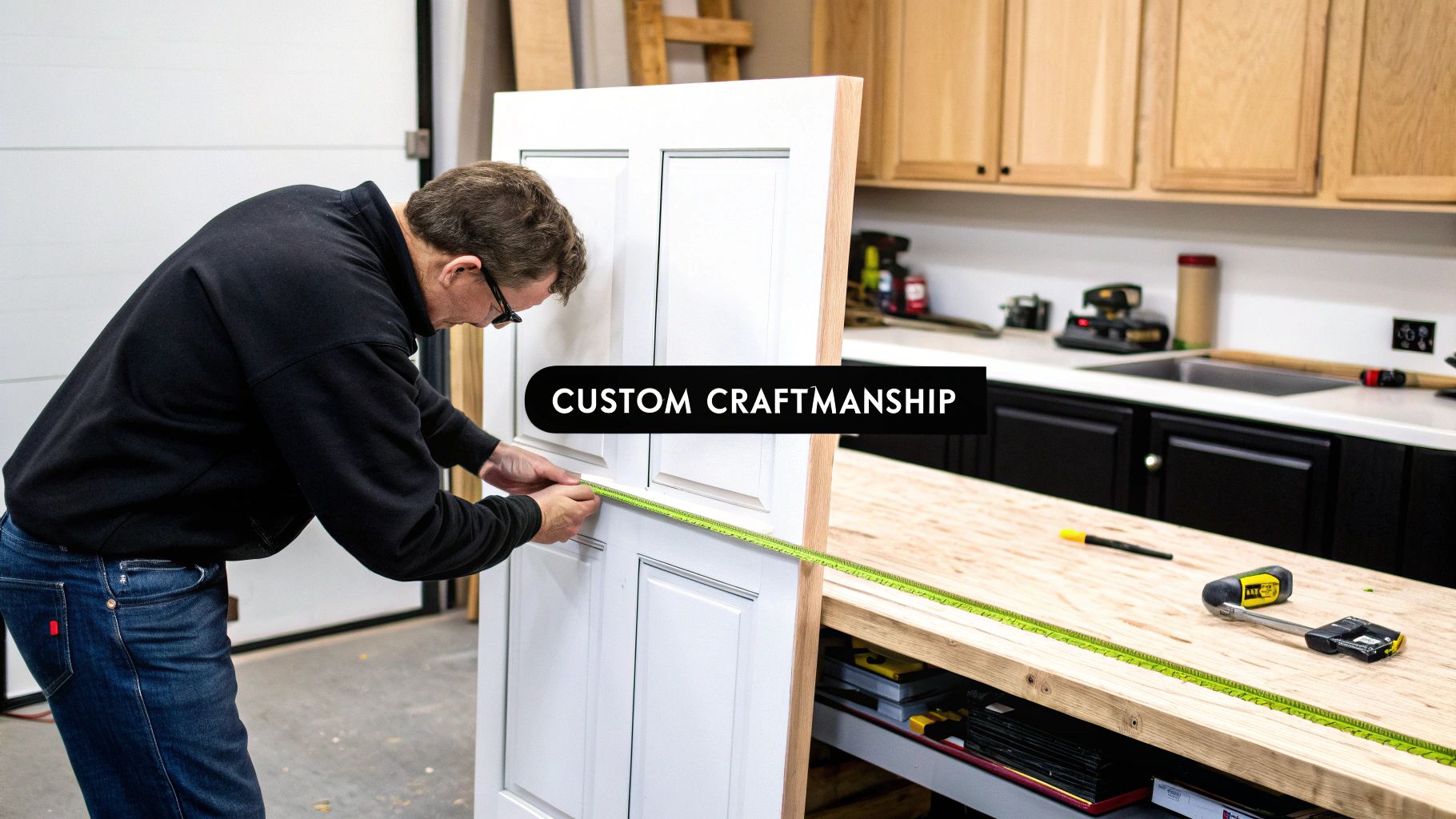
Stock and semi-custom cabinets are great for a lot of projects, but sometimes a standard box just doesn't cut it. Going with a custom cabinetry solution is a conscious choice to get a perfect fit, total design control, and a level of craftsmanship that you simply can't find in mass-produced options. This is the right path when your project has some quirky challenges or your vision demands something truly one-of-a-kind.
The decision usually comes down to specific needs that off-the-shelf cabinets can't solve. Maybe your kitchen has an odd architectural feature, like a curved wall or a low, sloped ceiling. Trying to force standard-sized cabinets into a space like that almost always leads to awkward gaps, wasted space, and a finished look that just feels… off. A custom approach, on the other hand, turns those exact challenges into beautiful, intentional design features.
Unlocking Total Design Freedom
The biggest draw for going custom is the absolute design freedom it gives you. You're no longer stuck with a catalog of pre-set styles, finishes, and sizes. Instead, you get to work directly with a skilled cabinet maker to bring your vision to life, making sure every last detail fits your personal taste and how you actually use your kitchen.
This personalization touches every single part of the design:
- Unique Finishes: You can specify an exact paint color to match your home’s trim, ask for a hand-applied glaze, or go for a distressed finish to get that rustic look.
- Exotic Materials: Your options expand to include premium woods like walnut, mahogany, or even reclaimed lumber with its own unique story.
- Integrated Solutions: Custom makers can create seamless appliance panels, design hidden storage, or build specialized inserts for your specific needs—everything from a built-in coffee station to the perfect spice rack.
This hands-on process transforms cabinetry from a simple product into a piece of functional art, made just for your home.
When you choose a custom solution, you're not just buying cabinets; you're commissioning a piece of bespoke furniture for your home. The result is an environment that reflects your personality and functions exactly as you need it to, without compromise.
Perfect Fits for Unconventional Spaces
Historic homes and architecturally unique spaces almost never play by the rules of standard dimensions that stock cabinet companies rely on. Rooms with non-standard ceiling heights, angled walls, or annoying plumbing and ductwork are a nightmare for pre-made solutions.
A custom cabinet maker, however, thrives in these situations. They take meticulous measurements of your space and build each cabinet to fit its specific spot, making the most of every single inch. This doesn't just solve a logistical headache; it elevates the entire design, making the cabinetry look like it was always meant to be part of the home's original architecture. For homeowners thinking about this route, it's helpful to see the full picture. Our detailed guide breaks down the specific factors that help you figure out if custom cabinets are worth the investment for your project.
The Value of Superior Craftsmanship
Ultimately, the decision to go custom is often about committing to a higher standard of quality. True custom cabinet makers are artisans. They use time-honored construction techniques and are incredibly selective about the materials they use. The whole process is hands-on, from picking the perfect slab of wood to applying that final coat of finish.
This obsessive attention to detail results in a product that isn't just beautiful—it's built to last for generations. The drawers will glide smoothly for decades, the doors will hang perfectly, and the finish will stand up to the wear and tear of daily life. This long-term durability and timeless appeal can significantly boost your home's value, making custom cabinetry a smart and rewarding investment.
How to Analyze Reviews and Avoid Common Pitfalls
Customer reviews feel like you’re getting the inside scoop on a cabinet manufacturer. And you are, but not all feedback is created equal. Learning to read between the lines is the only way to get a true feel for the top rated cabinet manufacturers and protect yourself from a renovation nightmare.
The trick is to look past the star rating and get into the meat of the customer's story. A generic five-star review saying "Great cabinets!" is practically useless. It’s the detailed four-star review explaining a minor snag—but praising the company’s incredible communication and problem-solving—that gives you real insight. Always hunt for reviews that offer context.
Differentiating Genuine Feedback from Vague Comments
Real, genuine reviews are packed with specifics. The reviewer might mention the project manager by name, talk about their project's timeline, or describe the exact cabinet style they chose. That level of detail is a huge sign that the feedback is from an actual customer with a real-world experience.
On the flip side, be wary of reviews that are purely emotional or incredibly vague. A short, angry rant doesn't tell you much, and neither does a gushing compliment with no substance. The most valuable feedback comes from balanced, thoughtful accounts that lay out both the good and the bad, giving you a realistic preview of what you can expect.
Make sure to look for patterns across different platforms like Google, Houzz, and Yelp. If you notice the same compliments or the same complaints popping up over and over again, you can bet it’s a consistent part of how that company operates.
Identifying Critical Red Flags in Customer Reviews
Some issues mentioned in reviews should be immediate deal-breakers. These aren't just minor hiccups; they point to deep, systemic problems that could completely derail your project. Pay extremely close attention to any of the following, as they often signal a company that’s struggling with its quality control and customer service.
Common red flags to watch for include:
- Inconsistent Lead Times: If you see multiple complaints about major delays or delivery dates that keep shifting, it suggests poor project management.
- Finish Quality Problems: Reviews mentioning finishes that are chipping, peeling, or uneven right out of the box are a sign of a shoddy finishing process.
- Warranty Disputes: A pattern of customers fighting to get the company to honor its warranty is a massive warning. It probably means the warranty is just a marketing gimmick.
- Poor Post-Installation Support: Look for comments about the company going silent or becoming unhelpful the moment the final check clears.
A manufacturer's true character isn't revealed when everything goes perfectly—it's revealed when something goes wrong. Reviews that describe how a company handled a problem (or failed to) are pure gold. Top-tier service means taking ownership of mistakes and making it right.
By digging into reviews this way and actively looking for these patterns, you’ll get a much clearer, more honest picture of a cabinet manufacturer's reliability. This is how you move past the marketing fluff and choose a partner based on how they actually perform, setting your project up for success.
Answering Your Top Cabinetry Questions
Jumping into the world of cabinetry brings up a lot of questions. From figuring out the difference between construction styles to setting a budget that makes sense, getting clear answers is the key to a confident decision. This section is all about tackling the most common questions homeowners have when they start looking at top rated cabinet manufacturers.
Think of this as your cheat sheet. We're cutting through the noise to give you straightforward, practical information so you can move forward, sidestep common pitfalls, and feel great about your investment.
What Is the Difference Between Framed and Frameless Cabinets?
This is easily one of the first questions people ask, and for good reason—it’s about the fundamental structure of the cabinet box. The choice between framed and frameless cabinets shapes both the look and the day-to-day function of your kitchen.
-
Framed Cabinets: This is the classic American style you’ve probably seen a thousand times. A solid wood face frame, usually about 1.5 inches wide, is built onto the front of the cabinet box. The doors are then mounted to this frame, which adds a ton of rigidity and creates that traditional, layered look.
-
Frameless Cabinets: Often called “European-style,” these cabinets do away with the face frame entirely. Instead, the doors mount directly onto the sides of the cabinet box. The result is a clean, seamless look with very tight gaps between doors and drawers. This design also gives you a bit more interior storage and makes access easier since there’s no frame lip in the way.
So, which is better? It really comes down to your personal taste. Framed cabinets give you a sturdy, timeless feel, while frameless cabinets deliver a modern aesthetic with maximum accessibility.
How Do I Set a Realistic Cabinet Budget?
Budgeting for cabinets can feel like hitting a moving target. Prices swing wildly depending on the materials, construction, and level of customization you choose. A great way to get your bearings is to understand the general cost tiers.
For a standard 10×10 kitchen, you can expect stock cabinets to run anywhere from $3,000 to $7,000. Semi-custom options jump up to the $6,000 to $15,000 range, and if you're going fully custom, your project can easily top $20,000. Remember, these are just for the cabinets—not installation, countertops, or appliances.
To nail down a realistic number for your project, start by getting a few quotes from manufacturers in each category. This will give you a real-world baseline and show you what’s possible at different price points. The kitchen cabinet market is huge—it hit roughly $80.72 billion in 2023 and is only getting bigger. This boom is fueled by homeowners hungry for remodels and a growing love for personalized, custom solutions. You can find more insights on the trends driving the global kitchen cabinet market.
What Should I Expect During Installation?
The installation is where the magic happens, but let's be honest—it can also be a major disruption. Knowing what’s coming will help you manage the chaos and keep things moving smoothly.
You'll almost certainly be working with contractors for the installation, so it pays to be prepared. Knowing the right questions to ask is critical. This guide on the 10 essential questions to ask contractors is a fantastic resource to make sure you hire a pro and have a transparent relationship from day one.
Generally, the installation process breaks down into these steps:
- Prep Work: Your old cabinets come out, and the walls get prepped. This could involve some light drywall repair, painting, or adjustments to your plumbing and electrical.
- Layout and Leveling: This is the most critical step for a professional finish. The installer will mark perfectly level lines on the walls to guide the entire installation.
- Hanging Wall Cabinets: Uppers always go in first. It keeps the base cabinets out of the way and makes it much easier to lift and secure the wall units.
- Setting Base Cabinets: With the uppers securely in place, the base cabinets are positioned, leveled, and fastened to the wall studs and each other.
- Finishing Touches: The final sprint includes adjusting the doors and drawers for perfect alignment, installing all the hardware, and adding any trim or crown molding to complete the look.
Good communication with your installers is everything. Don’t be shy about asking questions and confirming details as they work—it’s the best way to ensure the final result is exactly what you pictured.
Your home deserves cabinetry that is as unique as you are. At Sinclair Cabinetry inc, we specialize in creating truly bespoke, high-quality wood cabinets that blend timeless craftsmanship with your personal vision. Explore our custom solutions and start designing your dream space today.