

So, are custom cabinets actually worth it?
The short answer is a resounding yes—for homeowners who value a perfect fit, enduring quality, and a unique design that you just can't get off the shelf. While the upfront cost is higher, the investment pays dividends through better functionality, a boost in home value, and craftsmanship built to last a lifetime.
The Final Verdict Are Custom Cabinets a Worthy Investment
Choosing new cabinetry is one of the biggest decisions you'll make in a home renovation. It shapes your daily life and has a massive impact on your property's long-term value. The market really boils down to three main paths: stock, semi-custom, and fully custom. Getting a handle on what sets them apart is the first step to making a choice you'll be happy with for years to come.
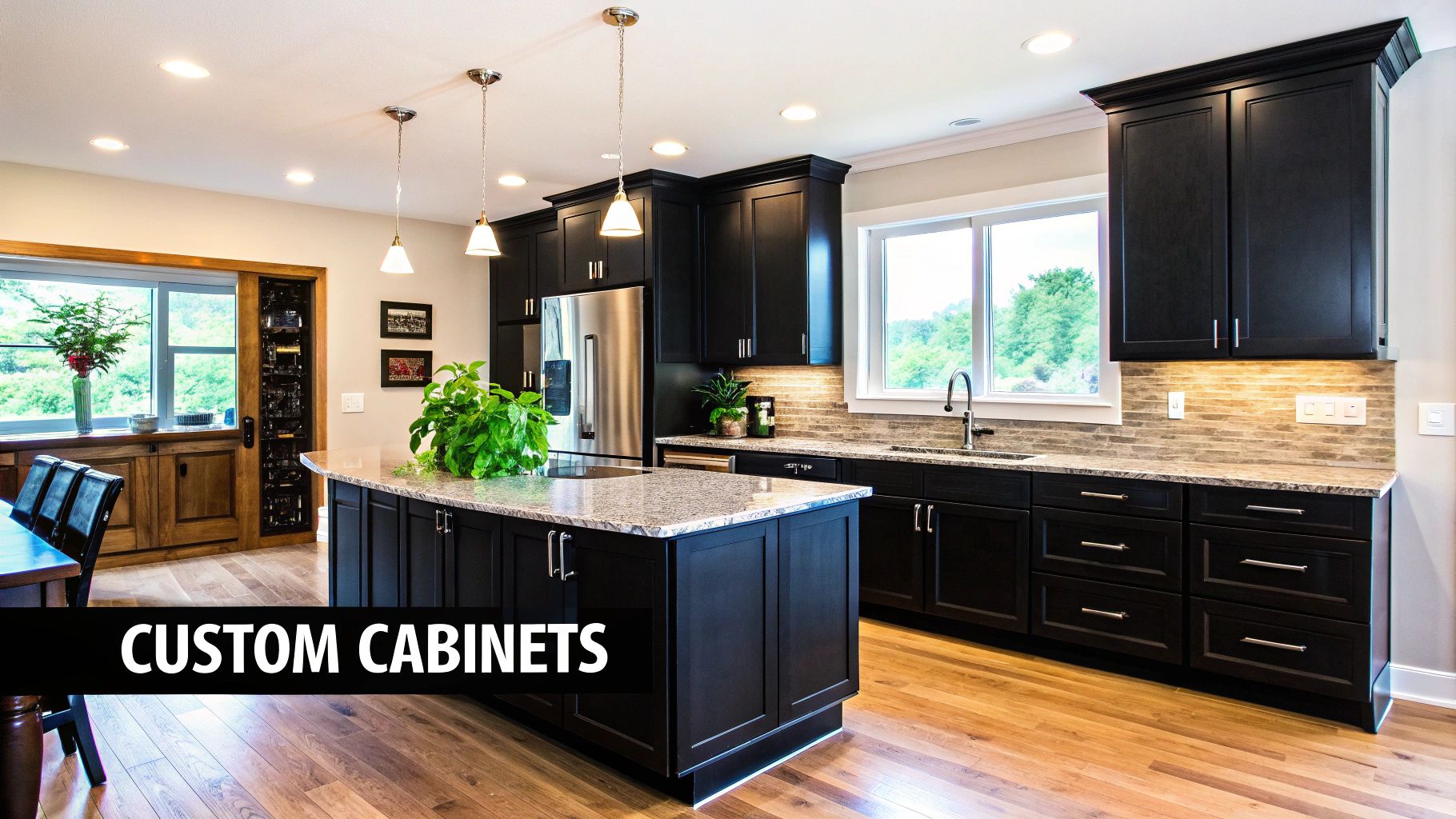
We'll get into the weeds on each option, but let's start with a quick rundown to set the stage.
- Stock Cabinets: These are the ready-to-go, mass-produced units you can pick up from big-box stores. They come in standard sizes with limited styles and are the go-to for quick updates, rental properties, or tight budgets.
- Semi-Custom Cabinets: Think of these as the middle ground. They start as stock cabinets but let you tweak things like depth, finishes, and hardware. You get more flexibility than stock without diving into a full custom project.
- Custom Cabinets: Built from the ground up just for you. With custom, you have total control over the material, design, size, and every last feature. This is the premium choice for anyone with an awkward space, a specific vision, or a desire for true heirloom quality.
Ultimately, the right path hinges on your project's goals, your budget, and how much personalization matters to you. To help you figure out where you land, the table below breaks down the scenarios where each choice makes the most sense.
Decision Guide Custom vs Standard Cabinets
Use this quick comparison to see if custom cabinets fit your project's needs, budget, and design aspirations.
| Key Factor | Custom Cabinets Are a Fit If… | Stock or Semi-Custom Is Better If… |
|---|---|---|
| Design Needs | You have a specific, unique vision or need to match a particular architectural style. | You are happy with popular, standard designs and finishes. |
| Space & Layout | Your kitchen has an unusual layout, non-standard dimensions, or architectural quirks. | You have a standard-sized room with a straightforward layout. |
| Budget | You view this as a long-term investment and have a flexible budget for premium quality. | You are working with a tight budget and need the most cost-effective solution. |
| Quality & Longevity | You prioritize heirloom-quality construction and materials designed to last for decades. | Your priority is a functional, aesthetic update for the next 5-15 years. |
| Timeline | You can accommodate a longer lead time (6-12+ weeks) for bespoke craftsmanship. | You need a quick turnaround and immediate availability for your renovation project. |
This idea of investing in quality isn't unique to cabinetry. In fact, it's a common thread in home improvement projects where durability and craftsmanship really matter. You can read more about the importance of quality investments over cheap alternatives in home improvements to see how this same principle applies in other areas. Now, let’s explore these factors in much more detail.
So, What Are Your Cabinetry Options Anyway?
Before you can decide if custom cabinets are the right move, you need to know what else is on the table. The cabinet world really boils down to three main choices, and each one fits a different kind of project, budget, and timeline. Getting a handle on the real-world differences between stock, semi-custom, and custom cabinets is the first step to making a smart call for your home.
Let's start with the quickest and most straightforward option.
Stock Cabinets: The Off-the-Shelf Solution
Think of stock cabinets as the ready-to-wear of the kitchen world. They are mass-produced in standard sizes (usually in 3-inch increments) and sit on the shelves of big-box home improvement stores waiting for you. They’re the go-to when speed and a tight budget are calling all the shots.
The biggest draws here are, without a doubt, price and availability. You can literally walk into a store, buy a full set of cabinets, and have them delivered in days. That makes them perfect for a rental property refresh, a quick house flip, or any project where you just can't wait weeks or months. But that convenience comes at a cost—you’re boxed in by limited sizes, colors, and designs, often forcing you to use clunky filler strips to patch gaps in rooms with non-standard walls.
The bottom line: Stock cabinets win on speed and cost. But their one-size-fits-all nature means you give up any real personalization, better materials, and the ability to get that perfect, seamless fit.
Semi-Custom Cabinets: Finding the Middle Ground
Semi-custom cabinets are the perfect compromise between the rigid world of stock and the complete freedom of custom. You start with a standard stock cabinet frame, but then you get to make a bunch of modifications. This hybrid approach gives you way more control over the look and feel without the full price tag of a completely bespoke build.
With semi-custom, you can tweak dimensions like cabinet depth and pick from a much wider menu of finishes, door styles, and hardware. For example, you could take a standard 24-inch base cabinet but order it in a beautiful cherry wood with a specific door profile that you’d never find in a stock lineup. This level of choice lets you create a kitchen that feels much more personal and aligned with your style.
Just remember, while you get more flexibility, you’re still working within a manufacturer’s system. You can’t design something totally unique from the ground up or solve for really tricky layouts, since you're limited to their catalog of available tweaks. The wait time is also longer than stock, typically a few weeks for production.
Custom Cabinets: The Bespoke Experience
And that brings us to custom cabinets—the only option where everything is built from scratch, just for you. This is where you get total design freedom. A true craftsperson will measure your space down to the fraction of an inch and build every single cabinet to fit its unique quirks and your exact needs.
With custom work, every single detail is on the table:
- Material: Want a specific species of walnut? Or maybe something more exotic? You got it.
- Dimensions: Cabinets are built to fit your walls perfectly, maximizing every last inch of storage. No fillers needed.
- Style: You can replicate a historical design, go ultra-modern, or create a look that’s entirely your own.
- Function: This is where it gets good. You can integrate specialized storage like hidden spice racks, an appliance garage for your toaster, or drawers built to hold your specific pots and pans.
This tailored approach is the ultimate answer for oddly shaped rooms, older homes with wonky walls, or for anyone who has a vision that pre-made options just can't bring to life. Answering "are custom cabinets worth it?" starts here, by realizing they aren't just a product—they're a service that results in a piece of furniture truly integrated into your home's architecture.
A Detailed Breakdown of Custom vs. Stock Cabinets
So, what’s the real story when you put custom and stock cabinets head-to-head? Forget the simple definitions for a moment. The choice you make here directly impacts your budget, how you use your kitchen every day, and even what your home is worth down the road.
To figure out if custom cabinets are truly worth it for you, we need to break down how these two options stack up in the areas that actually matter. We'll look at four key battlegrounds: cost, quality of materials, design flexibility, and how well they use your space. This isn't just about a generic pros and cons list; it's about understanding the real-world trade-offs.
Cost and Initial Investment
Let's get the obvious one out of the way first: the price tag. Stock cabinets are mass-produced. They use standard materials and cookie-cutter processes, which is why they are the most wallet-friendly option on the market. They're built for speed and affordability.
Custom cabinetry is a completely different animal financially. You're paying for skilled craftspeople, premium materials, and a design process that starts and ends with your specific needs. That level of hands-on work and quality is reflected in the cost, which typically runs between $500 and $1,200 per linear foot, installed.
Yes, that number is quite a jump from stock or even semi-custom, but it accounts for the far superior construction and the fact that it will fit your home like a glove.
Material Quality and Construction
This is where you start to see the long-term value of custom cabinets really shine. Most stock cabinets are built with materials like particleboard or MDF, often wrapped in a thin veneer or laminate. They work, but they’re much more vulnerable to water damage, sagging shelves, and the general wear and tear of a busy home.
With custom, you step into a world of better materials. You get to choose from solid hardwoods like oak, cherry, maple, or walnut—woods known for their strength and timeless look. The way they're put together is on another level, too.
- Joinery: A custom builder will often use dovetail joinery for drawers. These are strong, interlocking joints that can handle decades of opening and closing. Stock cabinets? They're usually held together with staples and glue that can loosen and fail over time.
- Cabinet Boxes: The actual box of a custom cabinet is usually made from high-grade plywood, which is far stronger and more resistant to moisture than the particleboard you'll find in most stock units.
- Finishes: Custom work involves a multi-step finishing process. We're talking hand-sanding and spray-applied catalyzed conversion varnishes that create a rock-hard, durable, and absolutely perfect surface.
The difference is something you can feel. A custom cabinet door feels solid and substantial in your hand. A stock door often feels light and hollow. That’s not just about aesthetics—it’s a direct sign of how well it will hold up.
Design Freedom and Personalization
This is perhaps the biggest win for custom cabinetry. When you choose stock, you're picking from a limited catalog of styles, colors, and sizes. You're trying to fit a pre-made puzzle piece into your unique home, and it doesn't always work.
Custom cabinets, on the other hand, start with a blank canvas: your space and your vision. This opens up a world of possibilities, especially in tricky situations.
Real-World Example: A Historic Home
Picture a charming 1920s house where the walls aren't perfectly straight and the ceiling has a quirky slope. Stock cabinets, which come in standard 3-inch increments, would leave you with awkward gaps and a bunch of filler strips. It just wouldn't look right. A custom cabinet maker will build units that are perfectly scribed to the unique shape of your walls, creating a seamless, built-in look that feels true to the home's character.
Real-World Example: The Passionate Chef
A serious home cook has very specific needs. With custom, you can design things like:
- Deep drawers with heavy-duty slides built specifically to hold heavy cast iron pans.
- A slim pull-out cabinet for spices and oils right next to the stove.
- An integrated knife block or a custom "appliance garage" to keep the stand mixer off the counter.
This kind of tailored design turns a kitchen from just a room into a high-performance workspace. You can find a deeper comparison between custom and stock cabinets that shows how these functional differences work in different homes.
The image below gives a great visual of how these differences translate into real long-term benefits.
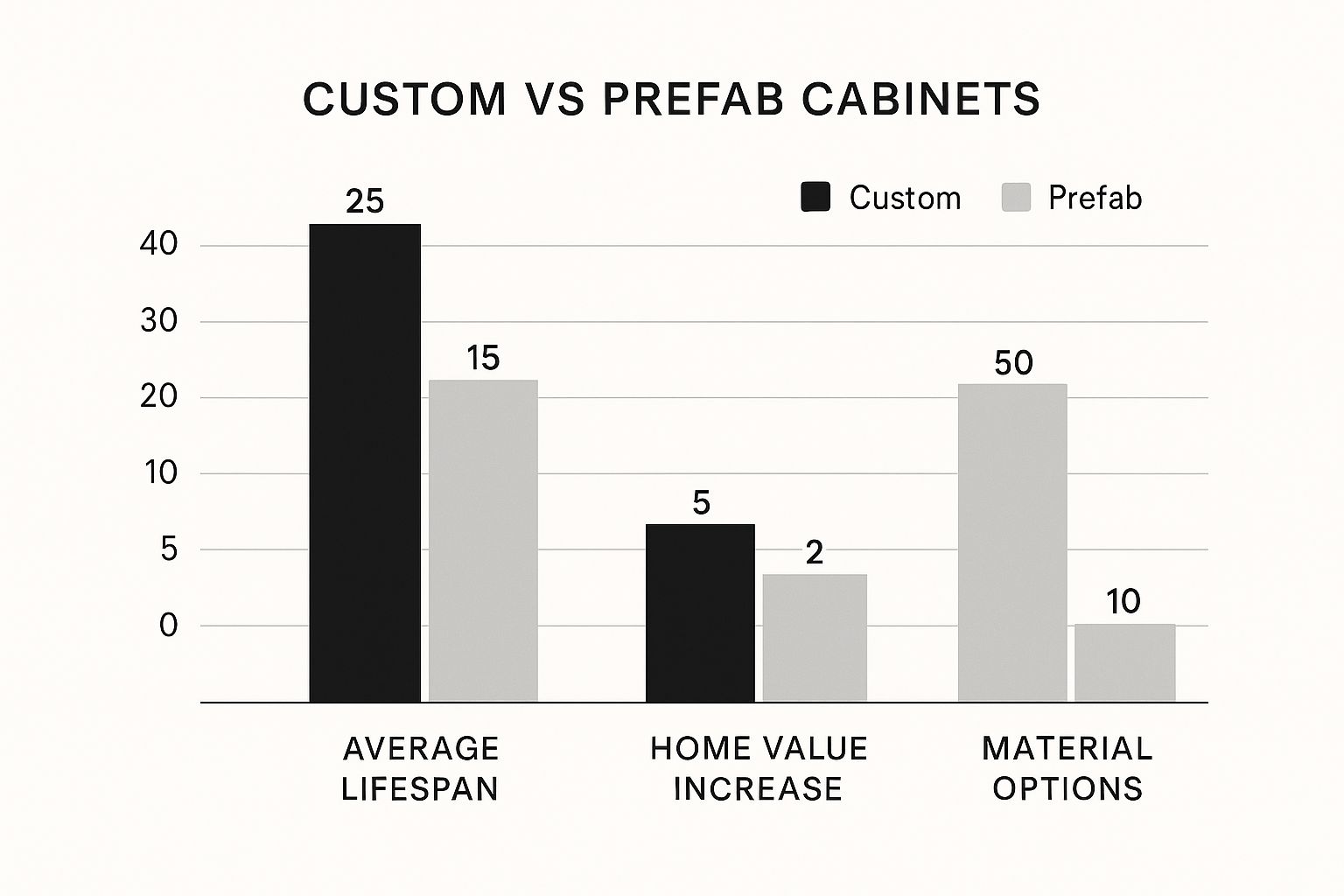
As you can see, the initial investment in custom often pays off with a much longer lifespan and a bigger boost to your home's value, all thanks to better materials and a perfect fit.
Space Optimization
Every home has its quirks—weird corners, low-hanging windows, or soffits that break up clean lines. Stock cabinets are not designed to handle these imperfections, often leaving you with dead corners or wasted space.
Because custom cabinets are built to the exact measurements of your room, they use every last inch. That corner that would be a dead zone with stock cabinets can become a functional lazy Susan or a set of clever pull-out shelves. That awkward 6-inch gap next to the fridge? Now it's a pull-out pantry for canned goods.
This perfect use of space doesn't just give you more storage; it creates a much more cohesive and visually pleasing kitchen. The result is a room that feels like it was designed with intention, perfectly suited to both the house and the people who live in it.
Understanding the True Cost and ROI of Custom Cabinets
When you're trying to figure out if custom cabinets are worth it, the sticker price is just the beginning of the story. To really get it, you have to look at the whole financial picture—from what drives the upfront cost to the lasting value they bring to your home. It’s less about an expense and more about a strategic investment.
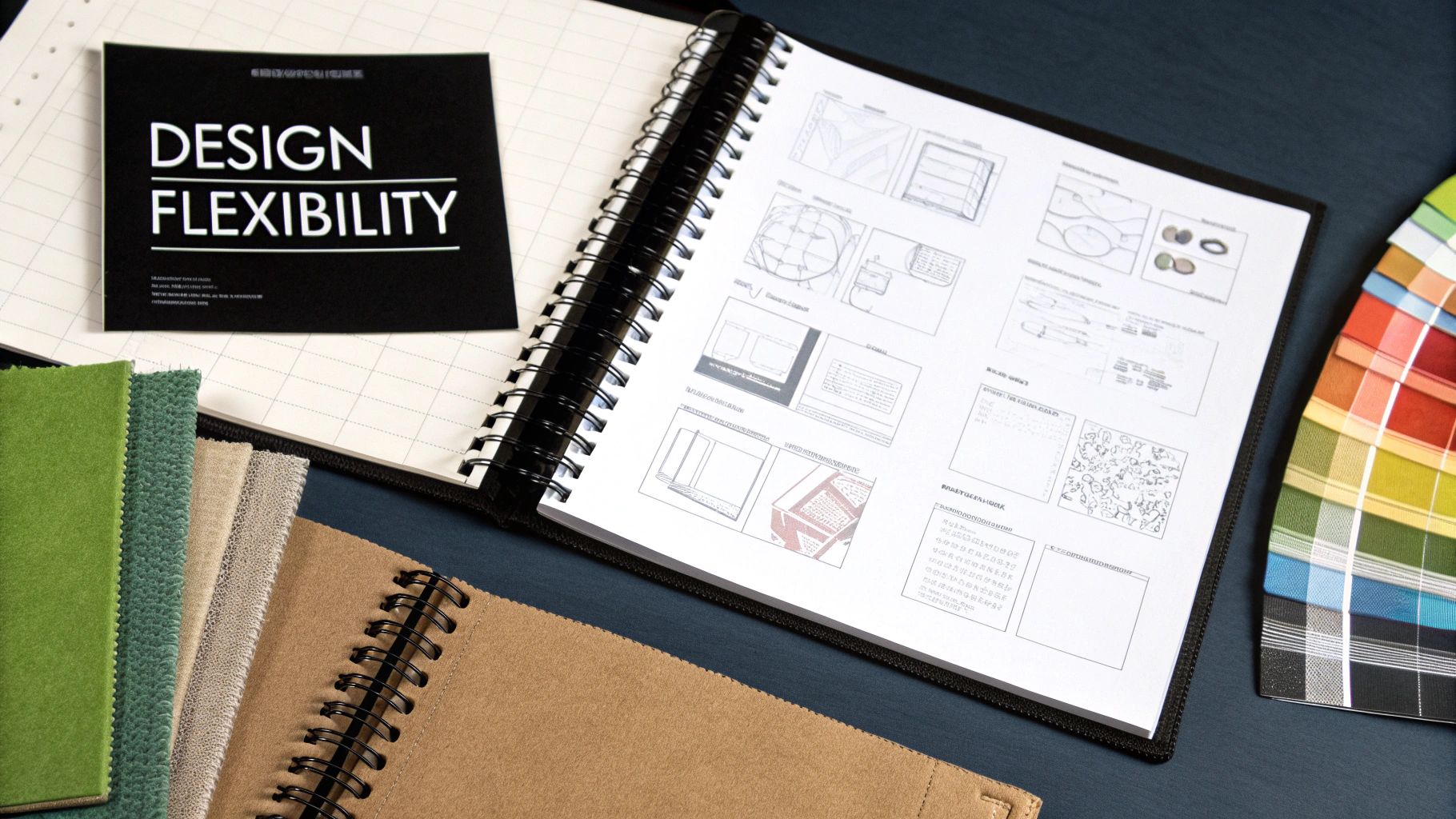
Unlike stock options with a set price, the final cost of a custom cabinetry project is the sum of its parts. Every single choice you make influences the bottom line, and understanding these variables is how you can manage your budget without sacrificing your vision.
Breaking Down the Cost Drivers
So, what actually determines the price of your custom cabinets? Each of these elements is a lever you can pull to balance your dream design with your budget.
-
Material Selection: The wood you pick is a huge factor. You'll find that domestic hardwoods like oak or maple are generally easier on the wallet than premium woods like cherry, walnut, or other exotic species. Even the grade of plywood used for the cabinet boxes affects both the price and how long they'll last.
-
Finishes and Intricacy: A simple, clear finish is going to cost less than a complex, multi-step process with custom stains, glazes, or hand-painted details. The same goes for door styles—the more intricate the profiles or decorative carvings, the more labor is involved, which bumps up the price.
-
Hardware and Accessories: This is where you can really add functionality. High-end hardware like soft-close hinges, premium pulls, and clever internal organizers (think lazy Susans or pull-out pantries) will add to the total cost. They're fantastic features, but definitely something to account for in your budget.
-
Installation Complexity: Putting cabinets in a standard, modern room is pretty straightforward. Installing them in a historic home with walls that aren't perfectly plumb? That requires a lot more skill, precise scribing, and fitting—and that extra labor will be reflected in the cost.
Calculating the Return on Investment
Here's where custom cabinets really start to make financial sense: their return on investment (ROI). It’s not just about what you spend today. It’s about what you get back in home value, incredible durability, and the simple joy of using a space that works perfectly for you.
Recent market data shows a kitchen remodel can range anywhere from $5,000 to $30,000 or more with custom work. For context, stock cabinets usually fall between $1,500 and $3,000, while semi-custom options land in the $3,000 to $12,000 range. The great news is that kitchen upgrades consistently deliver one of the highest ROIs, with homeowners often recouping between 60% and 80% of what they spent when they sell.
Key Takeaway: Think of custom cabinets as a long-term asset, not a temporary expense. Their top-tier durability means you won't be paying for replacements down the road, and their bespoke design can make your home the one everyone remembers in a competitive market.
This lasting value is one of the strongest arguments for going custom. In our guide covering the top 10 benefits of choosing custom cabinets for your home, we dig deeper into how that tailored design and durability directly boost your return.
Long-Term Value vs. Short-Term Savings
The sheer durability of custom work is a massive part of the ROI equation. These cabinets are built to last for decades, not just a few years. They're often constructed with superior techniques like dovetail joinery and from better materials.
That longevity saves you the cost and massive headache of ripping out and replacing cheaper, mass-produced cabinets that inevitably warp, chip, or fall apart.
This is especially true for high-traffic areas like the kitchen. When you invest in quality craftsmanship upfront, you’re buying peace of mind and protecting yourself from the recurring costs of lower-quality alternatives. Factor in not having to live through another major renovation in 10-15 years, and that initial investment in custom work starts looking like the smartest financial move you could make.
When to Choose Custom Cabinets for Your Project
So, when does it make sense to spring for custom cabinets? While off-the-shelf options can work just fine for straightforward layouts, some projects practically scream for a bespoke solution. Knowing when to make that investment is the key to getting a kitchen that truly works for you.
Custom cabinets aren't just a splurge; they’re often a practical necessity, especially when you're dealing with unique architectural challenges. Many homes, particularly older ones, simply don't play by the rules of modern, standardized dimensions.
Navigating Non-Standard Spaces
Historic homes are the perfect example. They’re full of character, but that character often includes things like walls that aren't quite plumb, low ceilings, or floors that have gently settled over decades. If you try to force pre-made cabinets into a space like that, you end up with awkward gaps, a ton of filler strips, and a final look that just feels off.
Unconventional layouts are another major hurdle for stock cabinetry. Think about a kitchen with:
- Angled walls creating weird, unusable corners.
- Vaulted or sloped ceilings that mess with standard upper cabinet heights.
- Pesky obstructions like pipes, support columns, or soffits that break up what should be a clean run of cabinets.
In these situations, a custom cabinet maker becomes your best friend. They can build units that are perfectly scribed to the unique contours of your room. The result is a seamless, built-in look that makes the most of every last inch, turning those architectural quirks into beautiful, functional features instead of problems to hide.
Fulfilling a Unique Aesthetic Vision
Sometimes, the choice is driven less by necessity and more by a very specific design dream. If you've got a vision in your head that you just can't find in a catalog—whether it's matching a specific historic period, creating an ultra-minimalist look with handleless fronts, or using an unusual type of wood—then custom is really your only path forward.
A bespoke approach gives you total control over every single detail, from the exact shade of the paint finish to the profile of the door and the style of the joinery. It’s the difference between buying a suit off the rack and having one tailored to your exact measurements and taste.
Creating Specialized Functional Storage
Beyond looks and a perfect fit, custom cabinets are masters at solving very specific functional problems. The way you live and use your space should dictate your storage, not the other way around. A huge reason people go custom is to tackle unique storage challenges and create smarter, more efficient spaces—it's all about optimizing kitchen storage solutions.
For instance, a serious coffee lover might design a dedicated "coffee bar" cabinet complete with built-in outlets and specialized drawers for pods, beans, and grinders. A passionate home chef could ask for deep drawers with custom dividers for their specific pots and pans, or a narrow pull-out spice rack right next to the stove.
Customization lets you integrate appliances for a completely seamless look or build a pantry with roll-out shelves designed to hold exactly what you buy. This kind of personalized functionality is what transforms a room from just "fine" to exceptionally efficient and a genuine joy to be in.
Your Decision-Making Checklist for Choosing Cabinets
Bringing all the pieces together can feel overwhelming, but the right choice often comes down to answering a few honest questions about your project, your lifestyle, and your financial plans. This final checklist will help you cut through the noise and land on a confident decision.
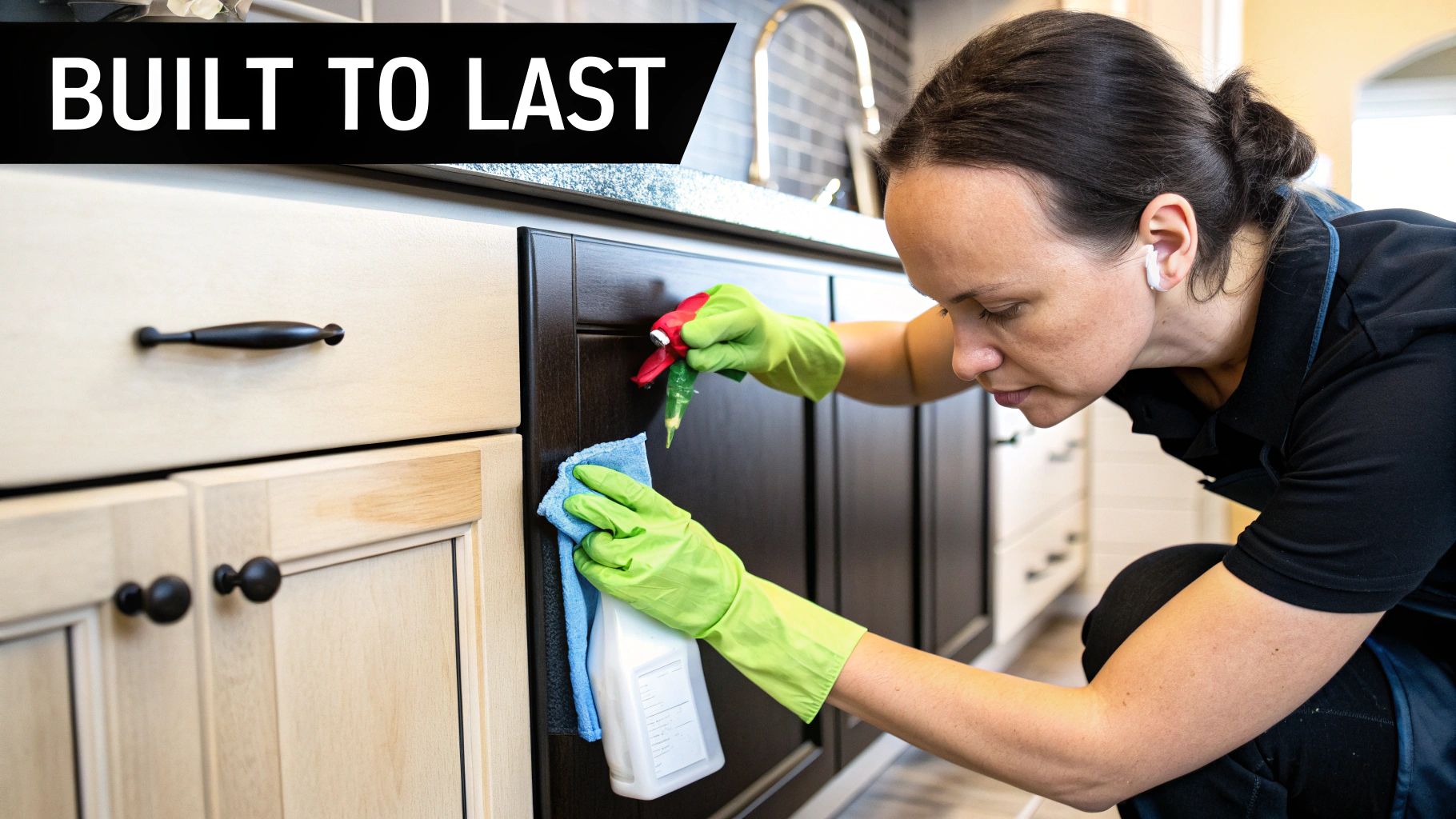
Use these prompts as a practical framework to guide your thinking. Answering them will illuminate whether stock, semi-custom, or full custom cabinets are the best fit for your home.
Key Questions to Ask Yourself
-
What is my absolute maximum budget? Be realistic. Knowing your spending limit from the very beginning is crucial. You can learn more about how much custom cabinets cost to see if it aligns with your numbers.
-
How long do I plan to own this home? If this is your forever home, investing in the longevity and quality of custom cabinetry often makes more financial sense. For a shorter stay, a more budget-friendly option might be the practical move.
-
Does my space have architectural quirks? Do you have angled walls, sloped ceilings, or other non-standard dimensions? If so, the perfect fit of custom cabinets may be a necessity, not just a preference.
-
How critical is a one-of-a-kind design? If you have a specific aesthetic vision that pre-made options just can't meet, custom is likely the only route that will truly satisfy you. The same goes if unique, personalized storage is a top priority.
Your final choice is a balance between investment, functionality, and personal satisfaction. Be honest about which of these factors carries the most weight for you and your family.
Final Recommendations Summarized
-
Choose Stock Cabinets If: Your primary drivers are a tight budget and a fast timeline. They are ideal for standard layouts in rental properties or for quick home flips where cost-efficiency is everything.
-
Choose Semi-Custom Cabinets If: You want more design flexibility than stock offers without the full investment of custom. This is the perfect middle ground for homeowners who desire some personalization in a standard kitchen layout.
-
Choose Custom Cabinets If: You demand a perfect fit, superior quality, and complete design control. This is the definitive choice for historic homes, unconventional spaces, or anyone viewing their renovation as a long-term investment in their home’s value and daily enjoyment.
Common Questions About Custom Cabinets
Even after weighing the pros and cons, you probably have a few questions rolling around in your head. It's a big decision, so let's clear up some of the most common points to help you feel confident in your choice.
Do Custom Cabinets Increase Home Value?
Yes, they definitely can. While just about any kitchen remodel adds some value, custom cabinetry gives your home a premium, high-end feel that really grabs the attention of potential buyers.
A study from the National Association of Realtors found that a complete kitchen renovation can get you back over 70% of what you put in when you sell. Custom work is a clear signal of quality and thoughtful design, making your home stand out and often justifying a higher asking price. Think of it this way: stock cabinets get the job done, but custom cabinets create a space people aspire to own.
How Long Does it Take to Get Custom Cabinets?
Patience is a virtue when you go custom. Unlike off-the-shelf cabinets you can grab and go, custom work is a detailed process where everything is built from scratch just for you. The timeline can vary quite a bit depending on the cabinet maker’s schedule and how complex your design is.
On average, you should plan for a lead time of 6 to 12 weeks from the moment you sign off on the final design to delivery. This window covers sourcing materials, precision construction, and all the finishing touches. Always get a clear timeline from your builder before you even think about starting demolition.
Expert Tip: Plan your entire renovation schedule around your cabinet lead time. Since they’re one of the last big pieces to go in, having that timeline locked down prevents frustrating—and expensive—delays.
Are Custom Cabinets More Durable?
Absolutely, and the difference is night and day. Custom cabinets are typically built with far superior materials, like solid hardwood and high-grade plywood. These are much more resistant to moisture and daily wear than the particleboard you find in most stock options.
The way they're built matters just as much. Cabinet makers use techniques like dovetail joinery, which creates incredibly strong bonds that can withstand decades of opening and closing drawers. Stock cabinets, on the other hand, often rely on simple staples and glue. This level of craftsmanship means custom cabinets are built to be a permanent feature in your home, not just a temporary fix.
Ready to explore a truly bespoke solution for your home? The team at Sinclair Cabinetry inc has over 35 years of experience crafting high-quality, real wood cabinets that are built to last a lifetime. Transform your vision into reality with us today.