

When it comes to the best finish for kitchen cabinets, the conversation usually lands in one of two places: conversion varnish for unmatched durability or a high-quality paint for its sheer aesthetic flexibility. Varnish gives you a tough, almost bulletproof barrier that stands up to the chaos of a busy kitchen. On the other hand, modern acrylic paints open up a world of color with formulas that are surprisingly resilient.
The right choice for you will strike a perfect balance between what your household demands and the design you've been dreaming of.
Choosing Your Ideal Kitchen Cabinet Finish
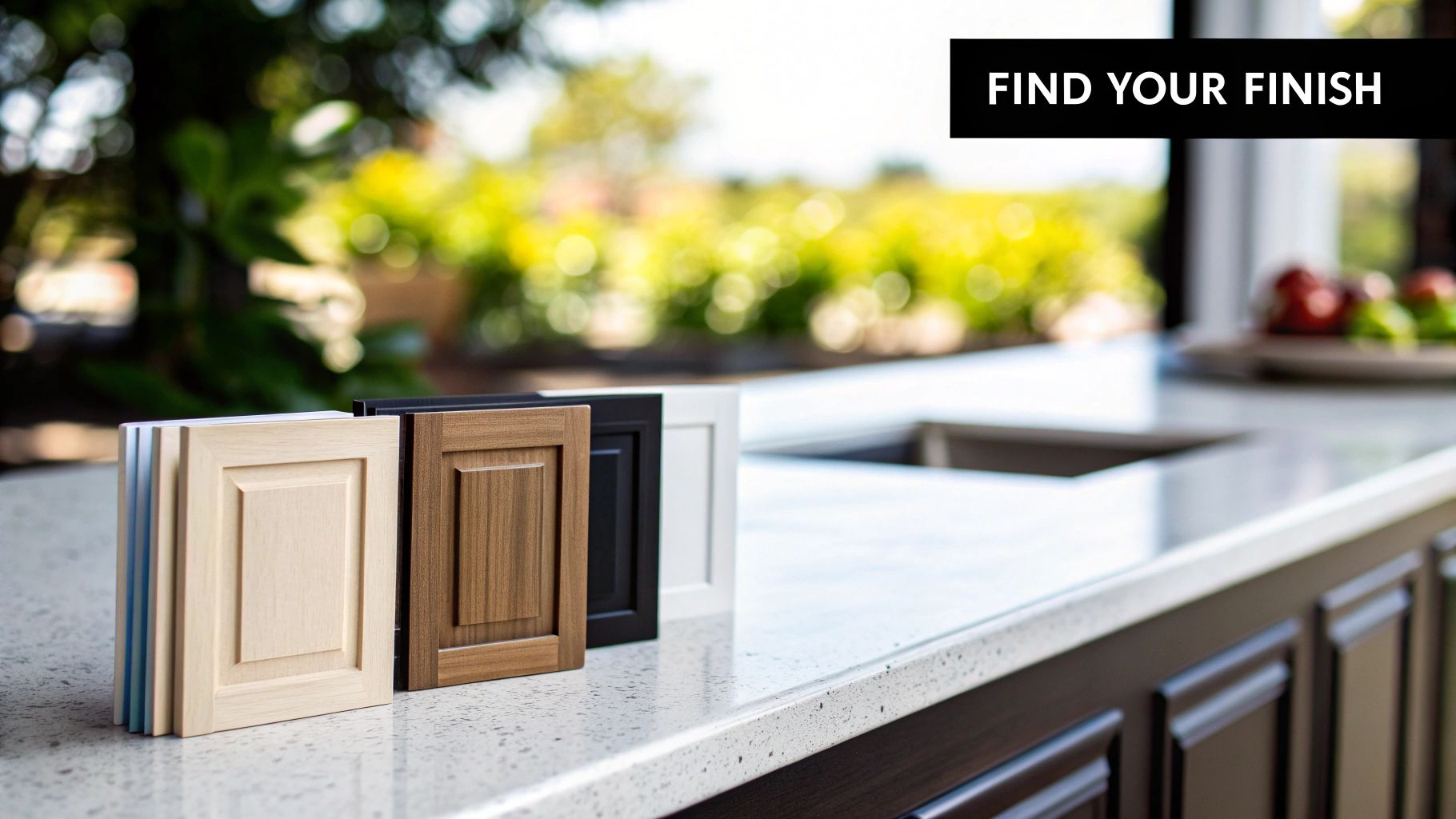
The finish on your kitchen cabinets is so much more than just a pretty color. Think of it as a protective shield, the hardworking surface that faces down everything from splattering grease to sticky fingerprints day in and day out. It dictates how your cabinetry not only looks and feels but how it survives daily life.
That makes it one of the most critical decisions in any kitchen project. A great finish doesn't just define the style—it preserves the beauty and integrity of the wood for years. This guide is here to cut through the noise and give you a clear, practical comparison of the top contenders, so you know exactly what you’re signing up for.
Key Factors in Your Decision
Before we get into the nitty-gritty of paint, varnish, or lacquer, let's ground ourselves in the core factors that should steer your decision. These are the fundamentals.
- Durability and Lifestyle: How hard does your kitchen work? A bustling family with kids needs a finish that can take a beating, resist scratches, and clean up easily.
- Aesthetic and Style: Are you going for a clean, modern vibe with a solid pop of color, or do you prefer a more traditional look that lets the natural wood grain shine through?
- Maintenance and Repair: How much upkeep are you willing to do? Some finishes are a breeze to touch up yourself, while others might need a professional to look right again.
- Budget: Costs can swing wildly. Your options range from affordable, DIY-friendly paints to professionally applied, high-end lacquers that come with a premium price tag.
The Growing Importance of Quality Finishes
It's no secret that people are investing more in creating kitchens that are both beautiful and incredibly functional. The global kitchen cabinet market, valued at around USD 100.79 billion in 2024, shows a massive trend toward high-quality materials and sophisticated finishes.
This boom has pushed manufacturers to innovate, giving us more durable and stunning options than ever before. You can discover more insights about the growing cabinet market and its trends.
Your cabinet finish is a long-term investment. Choosing wisely impacts not just the daily enjoyment of your kitchen but also contributes directly to your home's overall value and appeal.
To get started, let's take a quick look at the most popular choices side-by-side.
Quick Look At Top Cabinet Finishes
This summary table gives you a high-level comparison of the most popular cabinet finishes, offering an immediate feel for your primary options.
| Finish Type | Best For | Durability | Typical Cost |
|---|---|---|---|
| Paint | Unlimited color choice and modern aesthetics. | Good to Very Good | $$ – $$$ |
| Stain & Varnish | Enhancing natural wood grain and traditional styles. | Very Good to Excellent | $$ – $$$$ |
| Lacquer | High-end, smooth, and seamless appearance. | Good to Excellent | $$$ – $$$$ |
Each of these finishes has its place. Now, let’s dig deeper into what makes each one unique, so you can decide which is the perfect fit for your home.
Comparing the Top Cabinet Finish Options
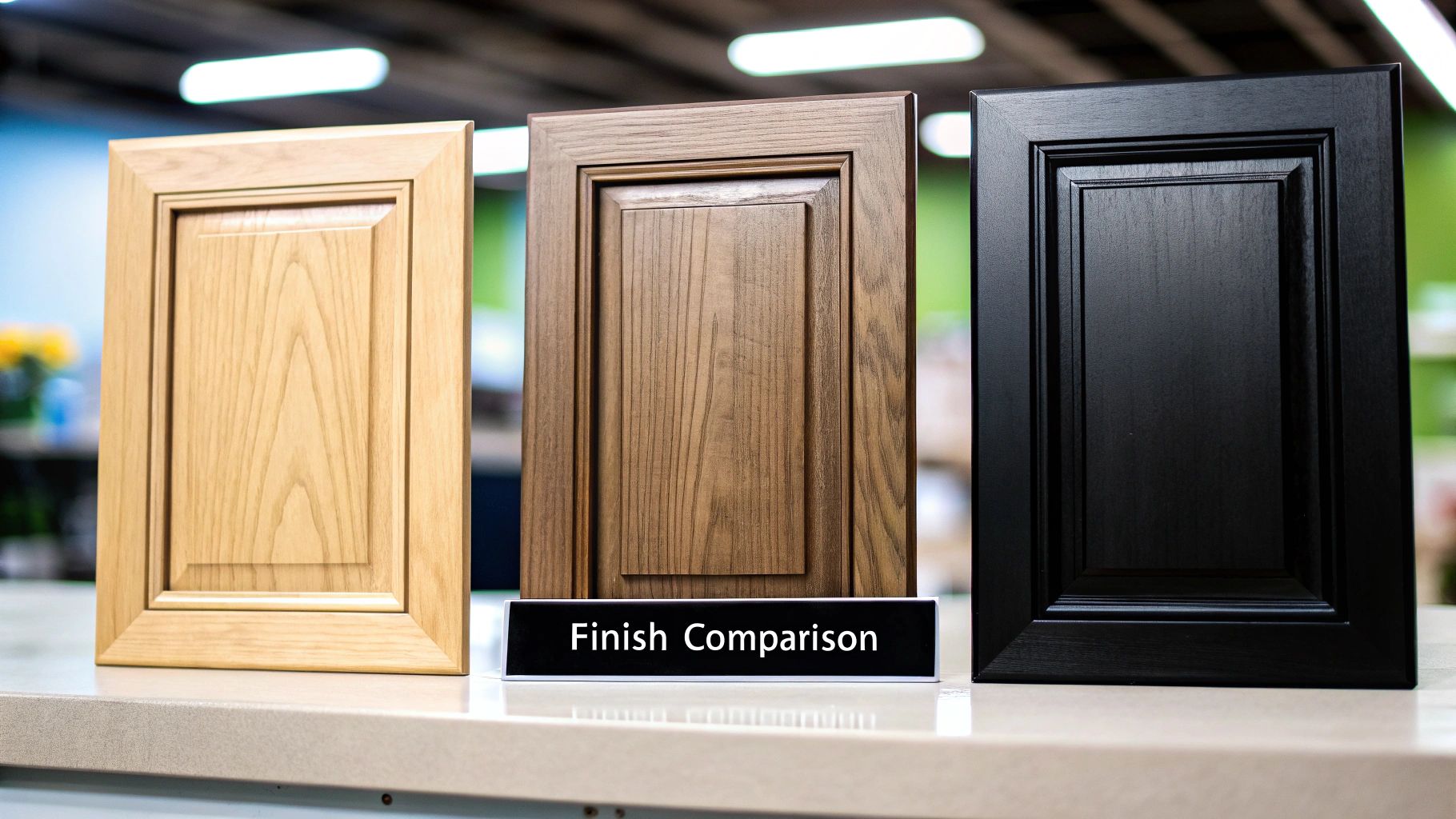
Choosing the right finish for your kitchen cabinets goes way beyond just picking a color. The type of finish is what really dictates the final look, the feel, and—most importantly—how your investment holds up over time. We're going to break down the three leading contenders in the cabinet world: paint, stain with varnish, and lacquer.
This isn't just a simple pros and cons list. We'll get into how different sheen levels impact your daily cleaning routine, what the chemical makeup means for durability, and how the application method itself shapes the final texture of your cabinetry.
Versatile Painted Finishes: An Overview
Painted finishes are a designer's dream, offering a nearly infinite color palette. This makes them a go-to for homeowners looking to nail a specific aesthetic, whether it’s a crisp, modern white or a warm, traditional greige. High-quality acrylics have become the standard for their fantastic adhesion and coverage, often requiring less prep work.
The biggest draw for paint is its ability to completely transform wood, creating a uniform, clean surface that hides grain and minor imperfections. This makes it a fantastic choice for giving older, dated cabinets a fresh lease on life without a full tear-out. But keep in mind, the quality of the application—sprayed versus brushed—is everything.
When you dive into different cabinet finishing techniques, you'll quickly learn that a professional spray job delivers that smooth, factory-perfect surface. A meticulous hand-brushed application, on the other hand, can lend a more personal, artisanal feel.
A critical decision with painted cabinets is the sheen. Here’s a quick rundown of what to expect:
- Matte/Flat: Great for hiding small imperfections on the wood surface, but its porous nature can make it tougher to clean.
- Satin/Eggshell: This is the crowd favorite for a reason. It offers a soft, subtle luster that’s both beautiful and reasonably easy to wipe down, making it the perfect middle ground for most kitchens.
- Semi-Gloss/Gloss: The champion of durability and cleanability. However, its reflective surface will put every single dent, ding, and flaw on full display.
Classic Stained and Varnished Finishes
For those of us who truly appreciate the natural beauty of wood, nothing beats a classic stain and varnish. Unlike paint that sits on the surface, stain soaks into the wood fibers to enhance the grain, bringing out all its depth and character. This is the finish you want for high-quality woods like oak, cherry, or maple.
While the stain provides the color, the topcoat is what provides the real muscle. Varnish, especially conversion varnish, is the gold standard for high-end custom cabinetry. It's a catalyzed finish, meaning it cures through a chemical reaction that creates an incredibly hard, durable shell. This makes it highly resistant to moisture, chemicals, and scratches.
Key Differentiator: The standout advantage of a top-tier varnish is its unmatched chemical resistance. It forms a non-porous shield that holds up against household cleaners, food spills, and moisture far better than standard paint or lacquer ever could. This makes it a serious contender for the most durable kitchen cabinet finish you can get.
Applying stain and varnish demands serious prep work, since any flaw in the wood will be highlighted, not hidden. The process is more hands-on and labor-intensive, which is why it often comes with a higher price tag. But for a timeless look that truly celebrates the wood itself, it's an investment that pays dividends.
Sleek Lacquered Finishes
Lacquer is a fast-drying finish prized for creating an exceptionally smooth, hard surface. You’ll often see it on modern, high-end cabinetry where a flawless, seamless look is the goal. Finishes can range from a soft, velvety matte to a brilliant, high-gloss piano finish.
One of lacquer's best qualities is that it's "self-leveling." As it's applied (almost exclusively by spraying), it flows out to form a perfectly even film, eliminating any risk of brush strokes. This creates that sleek, professional appearance that’s so difficult to get with other finishes.
That said, traditional lacquers aren't without their downsides. They can be prone to yellowing over time, a particular concern for lighter colors exposed to lots of sunlight. And while lacquer is hard, it can sometimes be more brittle than conversion varnish, making it susceptible to chipping from a sharp impact.
Here’s a simple table to put it all into perspective:
| Feature | Paint (High-Quality Acrylic) | Varnish (Conversion) | Lacquer (Post-Catalyzed) |
|---|---|---|---|
| Appearance | Opaque, uniform color | Transparent, enhances wood grain | Smooth, seamless film |
| Durability | Good to Very Good | Excellent | Very Good |
| Flexibility | Hides imperfections | Accentuates wood features | Can be tinted or clear |
| Yellowing Risk | Low (with acrylics) | Low to None | Moderate to High (traditional) |
| Application | DIY-friendly (brush/roll) or professional spray | Professional spray recommended | Professional spray only |
For those looking at the absolute peak of performance, advanced options like instant UV curable finishes are changing the game. These industrial-grade coatings cure in seconds under UV light, forming an unbelievably tough surface with zero VOCs released during the process. While they’re still more common in commercial settings, they represent the pinnacle of finishing technology.
Ultimately, choosing the best finish for kitchen cabinets comes down to what you value most. If endless color choice and the ability to create a clean, uniform look are your priorities, paint is a fantastic option. If you want to showcase the natural wood and demand top-tier durability, a conversion varnish system is your best bet. And for that perfectly smooth, contemporary aesthetic, lacquer delivers a refined look that’s in a class of its own.
How Durability and Maintenance Define Your Choice
Aesthetics might be what first catches your eye, but it's the day-to-day performance that really matters in the long run. The best finish for your kitchen cabinets is one that can handle the reality of your home, from cooking splatters and steam to the occasional bump or scrape.
A finish that looks incredible on day one but scratches at the slightest touch will become a source of frustration fast. This is where we move beyond looks and get into a practical analysis of how each finish holds up in a real, working kitchen. We'll cover everything from resistance to common hazards to how easy it is to clean and repair, giving you the full picture of what you’re signing up for.
How Different Finishes Handle Kitchen Stress
Your kitchen is a battlefield. Finishes are constantly exposed to moisture, heat, grease, and physical impact. How each type responds to these stressors varies dramatically, and it should be a huge factor in your decision.
For example, a conversion varnish is the champion in high-moisture zones, making it perfect for cabinets around sinks and dishwashers. Its chemically bonded structure creates a tough, non-porous barrier that shrugs off water and household chemicals like nothing else. There's a reason it's the gold standard in high-end, custom cabinetry.
On the other hand, while modern paints have come a long way in terms of resilience, they are generally more prone to chipping from sharp impacts compared to varnish. A dropped pan is much more likely to leave its mark on a painted surface. The upside? Those little dings are often much easier for a homeowner to fix seamlessly.
Lacquered finishes give you that hard, slick surface that’s super resistant to liquids and a breeze to wipe down. However, they can be more brittle and may show scratches more easily, especially on high-gloss sheens. This makes them a fantastic choice for a sleek, modern look, but maybe not the best for a home with young kids who aren't exactly gentle on the cabinetry.
Choosing the right finish means understanding how it will perform under the unique pressures of your kitchen. The table below breaks down how each finish holds up against common kitchen hazards, giving you a clearer picture of their real-world performance.
Cabinet Finish Performance Under Kitchen Stress
| Finish Type | Resistance to Moisture | Resistance to Scratches | Ease of Cleaning | Repairability |
|---|---|---|---|---|
| Conversion Varnish | Excellent | Very Good | Very Good | Difficult (Pro job) |
| Paint (High-Quality) | Good | Fair to Good | Good | Excellent (DIY-friendly) |
| Lacquer | Very Good | Fair | Excellent | Moderate (Pro job) |
| Stain with Varnish | Excellent | Very Good | Very Good | Difficult (Pro job) |
This side-by-side view highlights the trade-offs. A highly durable finish like conversion varnish is tougher upfront but requires a professional for repairs, while paint offers an easier path for touch-ups at the cost of some initial resilience.
Cleaning Protocols and Long-Term Care
The daily grind of cleaning is where your finish choice really shows its true colors. A simple wipe-down for one finish could be a damaging ordeal for another. Using the right methods is key to keeping your cabinets looking great for years.
A critical mistake is grabbing an all-purpose abrasive cleaner for your cabinets. Harsh chemicals and scouring pads will permanently dull or scratch a fine finish, turning a simple cleaning job into an expensive repair. Stick with a soft, damp cloth and a mild soap solution.
Here’s a quick guide to safe cleaning practices for each finish:
- Painted Cabinets: Use a soft microfiber cloth with a bit of mild dish soap and warm water. For stubborn grease, a 50/50 mix of white vinegar and water works wonders. Just steer clear of ammonia-based cleaners, as they can soften and dull the paint over time.
- Stained & Varnished Cabinets: Most days, a damp cloth is all you need. For a deeper clean, find a pH-neutral wood-specific cleaner. The most important step is to dry the cabinets completely afterward to keep water from seeping in.
- Lacquered Cabinets: These are usually the easiest to clean. A soft cloth with a mild, non-abrasive cleaner is perfect. Lacquer can be sensitive to certain solvents, so avoid any harsh chemical cleaners or anything containing acetone.
Repairability: A Practical Consideration
No matter how careful you are, life happens. Dings, scratches, and chips are part of a well-loved kitchen. How easily (and affordably) you can repair that damage is a major long-term factor. Looking for the most durable kitchen cabinet finish means balancing that initial toughness with the ability to do touch-ups down the road.
When it comes to DIY repairs, painted cabinets are the undisputed champion. A small chip can be lightly sanded, primed, and touched up with the original paint, blending in almost invisibly. This makes them an incredibly practical choice for busy families where minor wear and tear is just part of the deal.
Varnish and lacquer, however, are a different story. Fixing a chip in these finishes is almost always a job for a professional. To get a seamless result, the damaged area usually needs to be stripped and resprayed. While they are tougher from the start, repairs can be more involved and costly when they do happen.
Matching Finishes with Kitchen Styles and Budgets
Choosing the right finish for your kitchen cabinets goes way beyond just picking something durable. It’s really about pulling the whole room together—making sure the final look clicks with your home's style and, just as importantly, your budget. A great finish is the final touch that makes a kitchen design sing. The wrong one? It can feel off, no matter how tough it is.
Let's break down how different finishes pair with specific design aesthetics, from a clean, modern kitchen to a classic, traditional one. We'll also take a practical look at the costs involved, digging deeper than just the price of materials to include the labor that can really shape your total investment.
Aligning Finishes with Your Design Vision
Think of your cabinet finish as a powerful design tool. It’s what sets the mood and character of your kitchen.
Painted finishes are the true chameleons of the cabinet world. They can adapt to almost any style you can dream up. A crisp white or a cool gray with a satin sheen delivers that clean, uncluttered vibe essential for modern and minimalist kitchens. If you're leaning more towards a farmhouse or transitional style, softer colors like sage green or a warm beige add a touch of personality while keeping things timeless. For some fresh ideas, check out our guide on current kitchen cabinet color trends.
Stained and varnished finishes are the natural choice for traditional, rustic, or craftsman-style kitchens. The whole point here is to showcase the wood's inherent beauty, bringing warmth and rich texture into the space. A deep, rich stain on cherry or oak cabinets gives off a formal, classic elegance. On the other hand, a lighter, more natural stain on a wood like maple can create a bright, airy feel, perfect for a Scandinavian-inspired look.
Lacquered finishes, especially in a high-gloss sheen, are practically synonymous with ultra-modern and contemporary design. This finish creates that seamless, mirror-like surface that feels incredibly sleek and sophisticated. It’s often the go-to for flat-panel or handleless cabinets, where the goal is to push that minimalist effect to the max.
A Realistic Look at Your Budget
Getting a handle on the full cost of a cabinet finish is key to planning your project without any surprises. The final price tag isn't just about what's in the can; it’s a mix of materials, all the prep work, and the application method—and that last one is often the biggest factor.
- Materials: High-end catalyzed varnishes and European lacquers will cost more upfront than even the best acrylic paints. But their incredible durability can easily make them the smarter investment in the long run.
- Labor (Professional): There's no denying that a professional spray application delivers a flawless, factory-grade look. But that perfection comes at a premium. A pro crew might charge anywhere from $50 to $100 per hour, and finishing a full kitchen's worth of cabinets can take a few days.
- Labor (DIY): Going the DIY route with paint can save you thousands in labor costs, which makes it a very tempting option if you're watching the budget. Just know that it demands a serious commitment of your time and a meticulous eye for detail to get a result that looks professional and holds up.
Here’s the bottom line: a DIY paint job usually means using a brush or roller, which simply can't match the buttery-smooth surface of a professional spray finish. If you’re after that perfect, even look, budgeting for a professional is almost always money well spent.
As you think about the long-term look and feel of your kitchen, remember how your cabinet finishes will play with other elements in the room. For example, pairing them with durable and stylish kitchen window coverings can tie the whole space together while adding to its overall resilience.
Ultimately, the best finish is one that perfectly balances your design dreams with your financial reality. This is a trend we're seeing across the board. North American homeowners, who make up a 35% share of global revenue in 2024, are increasingly investing in premium, customized finishes during their renovations, seeking that perfect blend of beauty and practicality.
Practical Recommendations for Your Kitchen
Theoretical comparisons are one thing, but the real test is matching a finish to your specific lifestyle. The best finish for kitchen cabinets isn’t a one-size-fits-all answer; it’s the one that aligns perfectly with your daily routine, design goals, and even your climate.
To make this choice a little easier, we've broken it down into four common real-world scenarios. This quick decision-making chart can also help you visualize the path from your main goal—whether it's style or budget—to your ideal finish.

As you can see, your starting point really steers the outcome, guiding you toward options that prioritize either aesthetic perfection or cost-effectiveness.
The Busy Family Kitchen
For a kitchen that doubles as a homework station, art studio, and the main family hangout, durability is king. Scratches, spills, and constant use are just part of the daily routine.
In this kind of high-traffic environment, a professionally applied catalyzed conversion varnish over a stained finish is the undisputed champion. Its chemical cross-linking creates an incredibly hard shell that stands up to moisture, impacts, and aggressive cleaning. While it's a bigger investment upfront, its sheer longevity makes it a smart choice over time, saving you from the headache of constant touch-ups.
For families, the peace of mind that comes with a tough, low-maintenance finish is invaluable. Conversion varnish allows the kitchen to be a true workhorse without showing every single battle scar.
The Luxury Showpiece Kitchen
When the goal is a flawless, high-end aesthetic, the finish has to be absolutely perfect. This kitchen is all about visual impact, with smooth surfaces and a seamless, custom look.
Here, a professionally sprayed post-catalyzed lacquer is often the top choice. Its self-leveling properties create a buttery-smooth surface that’s tough to beat. Available in sheens from a velvety matte to a high-gloss piano finish, lacquer provides that sophisticated, furniture-grade appearance that elevates the entire space. It also offers excellent resistance to stains and is a breeze to clean, keeping the kitchen looking pristine.
The Coastal Home Kitchen
Homes in coastal areas face a unique challenge: high humidity. That constant moisture in the air can wreak havoc on wood, causing it to swell, shrink, and potentially ruin the finish.
Once again, catalyzed conversion varnish proves its worth. Its exceptional moisture resistance creates a non-porous barrier that effectively seals the wood from all that ambient humidity. Unlike some finishes that can get tacky or fail in damp conditions, conversion varnish remains stable and protective. This makes it the ideal choice for ensuring the longevity and structural integrity of your cabinetry in a humid climate.
The DIY Renovation Project
For the hands-on homeowner looking to transform their kitchen on a budget, ease of application and repairability are the most important factors. The goal is a high-quality result without needing specialized equipment.
High-quality acrylic-alkyd hybrid paints are the clear winner here. These modern formulas give you the smooth application of an oil-based paint with the easy cleanup and low VOCs of a water-based product. They are forgiving to apply with a brush and roller and, most importantly, are incredibly easy to touch up. A small chip can be fixed with a bit of paint and a fine brush, which makes long-term maintenance simple and affordable.
Your Cabinet Finish Questions, Answered
Choosing the right finish for your kitchen cabinets is a big decision, and it’s natural to have a few questions left even after weighing the options. Let’s tackle some of the most common ones we hear from homeowners. We’ll get into the nitty-gritty of durability, style longevity, and how to handle the inevitable wear and tear.
Think of this as the final check-in before you commit. You’re choosing a finish that will set the tone for your kitchen for years to come, so let's make sure you have all the answers you need.
How Long Should a Quality Cabinet Finish Last?
With proper care, a professionally applied, high-quality cabinet finish should look great for 10 to 15 years—often even longer. But its real lifespan comes down to two things: the quality of the finish itself and the environment it’s in.
A top-of-the-line catalyzed conversion varnish, for example, is engineered for the long haul. It can easily surpass the 15-year mark without issue, even in a high-traffic kitchen. On the flip side, a lower-grade paint that was poorly applied in a humid kitchen might start showing its age in as little as five years.
The single biggest factor in a finish's lifespan isn’t just the material—it’s the application. A professional spray application creates a harder, more seamless surface that will dramatically outlast any DIY brush-and-roller job.
Want to get the most life out of your finish? It’s pretty simple:
- Clean gently. Stick to soft cloths and mild, pH-neutral cleaners. Stay away from abrasive scrubbers or harsh chemical cleaners.
- Manage moisture. Always use your range hood vent when you’re cooking. This pulls steam and grease away from your cabinet surfaces.
- Wipe up spills immediately. Don’t let splatters sit, especially acidic stuff like tomato sauce, coffee, or lemon juice.
Are White Cabinets Going Out of Style?
Not a chance. White cabinets are a design staple, not a passing trend. While we see different colors cycle through popularity—deep greens, moody grays, and warm woods have all had their moments—white is the constant. It’s the ultimate neutral, a clean slate that works with just about any style, from sleek modern to a cozy farmhouse look.
What does change is how we use white. Lately, the trend has shifted from stark, cool whites to softer, warmer shades like cream and alabaster. We’re also seeing more designs that pair white upper cabinets with darker or wood-toned base cabinets to create contrast and personality. So, the specific shade might evolve, but white kitchens are here to stay.
What Is the Most Forgivable Cabinet Finish for a DIYer?
If you're planning to refinish your cabinets yourself, your best bet is a high-quality acrylic or acrylic-alkyd hybrid paint. These modern formulas are incredibly forgiving for a few key reasons. They have great self-leveling properties, which means they do a better job of smoothing out brush marks as they dry.
Even better, they are ridiculously easy to touch up later on. When you inevitably get a chip or a deep scratch, you can just lightly sand the spot, dab on a little primer, and feather in some leftover paint. The repair will be nearly invisible. That’s a massive advantage over finishes like lacquer or conversion varnish, where fixing damage is a complex job best left to a professional.
Can You Put a Varnish Over a Painted Finish for More Durability?
It seems logical, right? The color you love with the toughness of a clear coat. But in practice, it’s not a good idea. Putting a clear varnish—especially an oil-based one—over a light or white paint will almost always cause it to yellow over time. You’ll end up with a dingy, amber-toned version of the color you started with.
There's also a risk of chemical incompatibility. The paint and the varnish might not bond correctly, which can lead to the topcoat cracking, peeling, or bubbling down the line. If you want the bulletproof durability of a varnish, it should be applied directly over stained or natural wood. For painted cabinets, your best bet is to just use a premium paint that's already known for its durability.
At Sinclair Cabinetry inc, we believe the best finish is one that perfectly merges stunning aesthetics with enduring performance. Our experts use only premium, professionally applied finishes to ensure your custom real-wood cabinets not only look beautiful on day one but stand the test of time. Explore our custom cabinetry options to find the perfect foundation for your dream kitchen.