
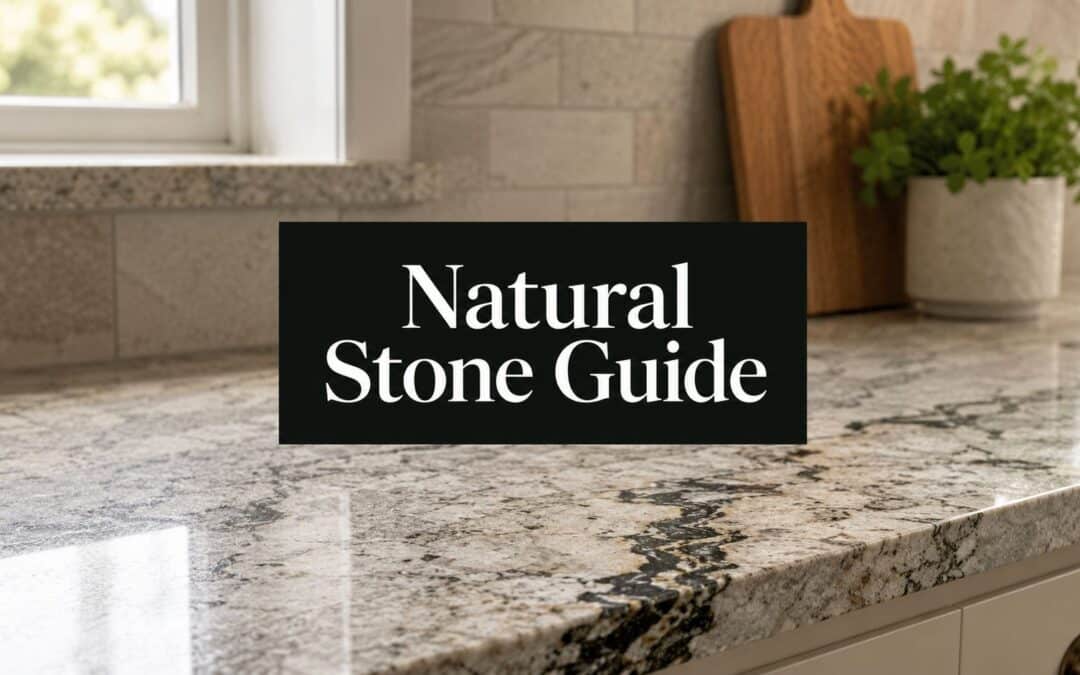
You're probably standing in the middle of three competing instincts right now. You want a kitchen that looks cohesive and lasting. You want surfaces that can take real use. And you don't want to choose a countertop in isolation, only to find out later that it fights the cabinet color, overwhelms the room, or asks for more upkeep than your household will give it.
That's where natural stone still earns its place. In a well-designed kitchen, stone isn't just a slab on top of cabinets. It changes how the cabinetry reads, how light moves across the room, and whether the whole composition feels custom or pieced together. Good cabinetry gives stone a frame. Good stone gives cabinetry depth, contrast, and permanence.
Natural stone in kitchen design works best when the decision is made the same way a cabinet maker thinks about joinery and proportion. You don't start with trend. You start with use, weight, balance, edge detail, color temperature, and how the room will age.
The Enduring Allure of Natural Stone
A lot of homeowners reach the same point in a remodel. They've narrowed cabinet styles, saved finish samples, and then hit the countertop decision and realize this one choice can either enhance the whole kitchen or flatten it. That's why natural stone keeps coming back to the front of the conversation. It has depth, variation, and authority that manufactured surfaces rarely match.

Natural stone also carries a kind of visual honesty. Wood cabinets have grain. Stone has veining, movement, mineral shifts, and small irregularities. Those details matter. In a custom kitchen, especially one built around real wood cabinetry, that natural variation is often what keeps the room from feeling sterile.
Why premium kitchens still return to stone
There's a practical reason this material stays central to kitchen planning. The kitchen countertop market in the U.S. is projected to rise 5.0% per year to 662 million square feet in 2026, reaching $37.3 billion in value, according to Freedonia's kitchen countertop market study. That projection matters because countertops remain one of the largest visible finish decisions in both remodels and new construction.
Natural stone stays in that premium tier because it offers two things at once. It gives you a long service life, and it gives the room perceived value the moment you walk in. That combination is rare.
Craftsmanship test: If the cabinetry is beautifully built but the countertop feels generic, the room loses tension. If the stone is strong but the cabinet design is weak, the room loses structure. The best kitchens need both.
What stone adds that cabinets alone cannot
Cabinetry establishes rhythm. Stone establishes focal weight.
A painted inset kitchen with flat, quiet cabinetry often needs a slab with movement to keep the room from feeling too restrained. On the other hand, a richly grained walnut or rift oak cabinet run may need a calmer stone so the eye can settle. This is why natural stone in kitchen planning shouldn't happen after the cabinets are designed. It should happen alongside them.
A few lasting reasons homeowners choose it:
- Character: No two slabs are exactly alike, which helps a custom kitchen feel custom.
- Permanence: Stone reads as built-in and enduring, especially in a room anchored by full-height cabinetry and integrated panels.
- Repairability and aging: Some natural stones develop patina, and many owners end up liking the room more once it starts looking lived in rather than untouched.
There's also a cost reality that reinforces its premium standing. Traditional natural stone countertops are commonly cited at $40 to $200 per square foot, depending on the stone and finish, as noted in the earlier market reference. That range doesn't make stone the right choice for every project, but it does explain why selection should be deliberate.
Choosing Your Stone A Guide to Popular Types
A kitchen can look polished on installation day and still be the wrong stone job. I've seen beautifully built cabinet runs paired with slabs that fought the door style, the finish, and the way the family used the room. Stone selection works best when it is made alongside the cabinetry plan, because the right slab does more than cover a counter. It sets the weight, contrast, and temperament of the whole kitchen.
The four stones most homeowners compare
Granite remains one of the most dependable choices for a working kitchen. It comes in a wide visual range, from quiet, tight-grained slabs to bold material with strong movement, and it generally suits households that cook hard and want fewer worries day to day. It also pairs well with many cabinet styles, which is part of its staying power. On painted inset cabinetry, granite can add needed depth. On wood kitchens, a calmer granite can keep the room from feeling overworked.
Quartzite serves a similar role on performance, but the look is different. Many homeowners choose it when they want a lighter, more refined slab with some of marble's softness without signing up for marble's full maintenance profile. According to Egger's guidance on natural stone kitchens, granite and quartzite are the most technically durable choices for kitchen worktops because they combine high scratch resistance with strong acid resistance. The same guidance explains that natural stone is unaffected by light, and impregnation helps protect against fats and oils.
Marble is chosen with open eyes. It brings an unmatched softness and a depth that machine-perfect materials rarely achieve, but it will etch, and it can stain if the kitchen is used hard. In the right cabinet design, that vulnerability is part of the appeal. Marble over painted cabinetry, especially in warmer whites or muted tones, creates a kitchen that feels settled and old in the best sense.
Soapstone has a narrower audience, but it fills an important place in custom work. It is darker, quieter, and more restrained, with a low-sheen character that works especially well with historic detailing, framed cabinetry, and richly finished wood. If the goal is a kitchen with depth rather than shine, soapstone often gets there more convincingly than a polished stone ever will.
Natural Stone Kitchen Countertop Comparison
| Stone Type | Hardness (Mohs Scale) | Porosity / Stain Risk | Typical Sealing Frequency | Best For |
|---|---|---|---|---|
| Granite | Qualitatively hard and durable | Lower stain risk than softer porous stones | Periodic sealing depending on slab and use | Busy family kitchens, high-use cooking spaces |
| Marble | Softer than granite and quartzite | Higher risk of etching and staining | More attentive sealing and care | Formal kitchens, baker's kitchens, owners who accept patina |
| Quartzite | Noted for high scratch resistance | Porous, can stain if neglected | About once a year for some applications, as noted earlier by the Natural Stone Institute | Luxury kitchens that need stronger technical performance |
| Soapstone | Softer feel than granite and quartzite | Generally lower staining concern in practice | Maintenance routine varies by finish and owner preference | Classic kitchens, dark moody kitchens, understated custom worktops |
How I'd match stone to lifestyle
For heavy daily use, granite and quartzite usually rise to the top. They handle the ordinary abuse of a real kitchen better than the softer options, and they do it without asking the owner to monitor every spill or slice of lemon.
Marble belongs with clients who want beauty first and do not mind a surface that records use. That choice makes the most sense when the cabinetry is detailed enough to support it. A slab with elegant veining over plain builder-grade boxes often feels misplaced. Over well-proportioned custom cabinetry, it feels intentional.
Soapstone suits a different kind of room. It works especially well in kitchens with darker stains, aged brass, honed finishes, and cabinet profiles that rely on shadow lines rather than gloss for effect.
A stone is good when its strengths line up with how the kitchen is used.
If you're still weighing natural stone against other surface options, Sinclair's guide on how to choose kitchen countertops is a useful starting point.
A few practical calls
- Choose granite if you want a natural stone kitchen with the least day-to-day fuss and broad design flexibility.
- Choose quartzite if you want a lighter, more refined look but still need a strong work surface.
- Choose marble if you value age, softness, and old-house character more than a pristine finish.
- Choose soapstone if you prefer quiet materials, darker palettes, and cabinetry with a more handcrafted feel.
One sourcing point matters here. Stone availability, lead times, and color selection often track back to major quarrying and export channels, which is why one sample you love may be easy to replace and another may be difficult to match later.
Budgeting for Natural Stone in Your Kitchen
The first mistake homeowners make is pricing stone by the square foot and stopping there. That number matters, but it isn't the whole job. A kitchen countertop is measured, templated, fabricated, transported, finished, cut for sinks and cooktops, and then installed under conditions that can either go smoothly or become expensive very fast.

What drives the final number
Material cost comes first, of course. Traditional natural stone countertops are commonly cited at $40 to $200 per square foot, depending on stone and finish, and quartzite is often cited around $90 to $250 per square foot in the Natural Stone Institute guidance referenced earlier. But the slab price is only the opening line of the estimate.
Fabrication has a major effect on budget. A simple galley kitchen with a standard eased edge, straightforward sink cutout, and minimal seams is one thing. A large island with waterfall ends, tight corner detailing, integrated drain areas, and careful vein alignment is another job entirely.
Where custom cabinetry affects stone cost
Cabinet makers and stone fabricators rely on each other more than many clients realize. Stone installation gets easier and cleaner when the cabinets below are level, properly planned for appliance clearances, and built to support the slab layout. Poor cabinet planning can increase fabrication complexity and force compromises in seam placement.
That's one reason remodel budgeting should be done holistically. A planning tool like Sinclair's kitchen remodel cost calculator can help homeowners think through cabinetry, surfaces, and installation as one system instead of isolated purchases.
Budget rule: Spend where the eye lands and where the hand works. In most kitchens, that means the island top, the sink run, and the cabinet fronts.
Costs people forget to ask about
These line items are often buried in proposals or not understood until late in the process:
- Templating: Final field measurements taken after cabinet installation.
- Cutouts: Sink openings, faucet drilling, cooktop openings, and accessory fittings.
- Edge work: Thicker-looking profiles or more shaped edges add labor.
- Delivery and handling: Large slabs are heavy, fragile, and expensive to move.
- Seam planning: Bigger kitchens and larger islands can require more coordination and labor.
A smart budget for natural stone in kitchen work also includes maintenance supplies and occasional service. That doesn't make stone a poor value. It means you're buying a real material that deserves proper care, much like hardwood cabinetry or a solid wood dining table.
The strongest value mindset is this: judge stone over the life of the kitchen, not only by the invoice on install day.
Design and Pairing with Custom Cabinetry
A kitchen starts to feel expensive when the stone and cabinetry belong to the same composition. I see the opposite problem all the time. Homeowners choose a beautiful slab in isolation, then choose a door style, then a backsplash, and the room ends up with too many voices competing at once.
Good design requires editing. In a custom kitchen, the cabinet lines, wood character, finish color, and stone movement should support each other.

Pairing stone with wood and painted cabinets
Wood cabinetry already carries pattern through grain, color variation, and joinery. Stone has to complement that character, not compete with it. If the cabinets feature cathedral grain, heavy figure, or a dark stain, quieter slabs usually age better than dramatic ones. Broad veining, softer shifts in tone, or a tighter mineral pattern let the millwork stay readable.
Painted cabinetry gives more freedom because the doors act as a calmer backdrop. That is often where a slab with stronger movement makes sense. White, cream, and soft greige cabinets can handle marble or quartzite with more visible veining. Deep green, charcoal, and black paints usually pair well with lighter stone because the contrast sharpens the room and gives the cabinetry more definition.
A few combinations consistently work well in high-end kitchens:
- Walnut or cherry cabinetry with warm granite: layered, grounded, and comfortable in traditional or transitional rooms.
- Painted off-white cabinetry with marble: bright, formal, and balanced when the door profile is restrained.
- Rift oak cabinetry with quartzite: clean, architectural, and well suited to open-plan homes.
- Dark painted cabinetry with lighter veined stone: strong contrast with a clear focal point, especially on an island.
The cabinet profile matters too. Ornate inset doors with heavily figured stone can feel busy fast. Flat-panel or slim shaker fronts can carry more active slabs because the cabinetry gives the eye a place to rest.
The island changes the stone choice
Many kitchens now center the design around the island, and for good reason. It is the one surface people see from multiple angles, use every day, and often gather around. A slab that might feel ordinary on a perimeter run can become the visual anchor of the whole room when it is opened up across a large island.
That changes how cabinet planning should be handled. Overhangs, support points, panel thickness, stool clearance, appliance placement, and drawer-bank widths all affect what the fabricator can do with the stone. A thoughtful custom kitchen cabinet design process helps solve those details early, before a beautiful slab gets forced into awkward seams, weak overhangs, or proportions that feel off.
A well-designed island looks intentional from every angle. The rhythm of the cabinet faces below should agree with the movement and scale of the stone above.
Countertop, backsplash, or both
Expensive kitchens can still look crowded. The usual problem is too many strong materials in one sightline. A bold countertop, a second bold stone on the backsplash, and expressive cabinet grain can overwhelm even a large room.
Carla Aston makes the point well in her natural stone backsplash guidance. Two busy natural stones can turn into an expensive hot mess if they are not carefully controlled. In practice, the safest approach is often one of two directions. Run the same stone across countertop and backsplash for a unified look, or pair the slab with a simpler tile so the cabinetry and stone each have room to read clearly.
That advice matters even more with custom cabinetry. If the doors, finish, and wood selection are built with care, the surrounding surfaces should frame that work, not bury it.
Sealing Maintenance and Long-Term Care
Natural stone doesn't need babying, but it does need informed care. Most problems come from neglect, not from the material itself. Homeowners either assume stone is indestructible or they become so nervous about damaging it that they never enjoy it. The right approach sits in the middle.

What sealing actually does
A sealer doesn't turn stone into plastic. It helps close or protect the surface so oils, water, and everyday kitchen residue are less likely to penetrate quickly. For granite and quartzite, the guidance cited earlier notes that impregnation is used rather than a coating, especially to improve protection against fats and oils.
Quartzite usually needs more attention than many buyers expect. In the Natural Stone Institute guidance referenced earlier, quartzite is described as porous and typically needing sealing about once a year.
Daily care that works
Good habits are straightforward:
- Use a pH-appropriate cleaner: Mild stone-safe cleaners are better than harsh degreasers or abrasive scrub products.
- Wipe spills promptly: Especially around oils, wine, coffee, citrus, and foods with strong colors.
- Use boards and trays: Cutting boards near prep zones and trays under oils or soaps reduce wear patterns.
- Check the seal periodically: If water stops beading and starts darkening the surface, it may be time to reseal.
For a broader homeowner-friendly primer on surface selection and care, Sinclair's guide on how to pick countertops gives useful context.
The sink area needs special attention
The most vulnerable place in a stone kitchen isn't usually the middle of the island. It's the sink run.
A key maintenance risk is the area around the sink. Experts advise avoiding seams near sinks because repeated wet-dry cycling can degrade sealers over time, leaving porous stone more vulnerable to marks and stains, as explained in this expert discussion on sink-area stone performance.
That one installation choice matters a lot. If a seam can be moved away from the sink cutout, move it. If a faucet deck traps water, rethink the detailing. If the sink edge profile encourages standing moisture, adjust it before fabrication.
Here's a helpful visual walkthrough on sealing and care:
Keep joints, seams, and vulnerable transitions out of the highest-splash zones whenever the layout allows it.
The mindset that preserves stone longest
Don't chase a showroom look forever. Chase a clean, well-kept, well-used surface. Natural stone looks best when it's maintained consistently and allowed to age naturally.
Common Questions About Natural Stone Kitchens
Is natural stone still a smart choice for a busy kitchen
A busy kitchen tests every surface. Pans get set down hard, spills sit too long, and the sink run stays wet.
Natural stone still makes sense in that environment if the stone fits the household. Granite and many quartzites usually suit heavy daily use better than softer, more porous stones. The deciding factor is maintenance tolerance. A family that wants low fuss will be happier with a forgiving material than with a stone that asks for more attention than they are willing to give.
Should the backsplash match the countertop
Often, yes, especially if the slab has strong movement and the cabinetry is meant to carry a refined, custom look.
Running the same stone up the wall can make the cabinets look more deliberate because the room reads as one composition instead of a set of separate purchases. That approach works especially well with painted inset cabinetry, rift white oak, or other cabinet finishes with a calm, refined presence. If the slab is dramatic and the cabinet work is detailed, a full-height stone backsplash can frame the millwork beautifully.
If that much stone feels heavy, a quiet tile backsplash usually gives the cabinetry more breathing room. Problems start when the countertop, backsplash, and cabinet finish all compete at once.
What if I love marble but worry about living with it
Ask a plain question. Will patina bother you every week, or only in theory while you're shopping?
Marble asks for the right temperament as much as the right budget. It develops wear, softens visually over time, and shows kitchen life more readily than granite or quartzite. Some homeowners value that history. Others want the kitchen to look crisp and consistent with less watchfulness. Neither preference is wrong, but it should guide the decision before the slab is fabricated and installed against custom cabinetry built to last for decades.
Can chips or minor damage be repaired
Often, yes.
Small edge chips, sink-area nicks, and minor surface damage can usually be repaired by a skilled stone technician who knows how to fill, color-match, and repolish the area. Results depend on the stone type, the location of the damage, and the quality of the repair. Do-it-yourself kits rarely disappear into the surface. On a high-end kitchen, they often leave a dull spot or a mismatched patch that draws more attention than the original flaw.
Is a natural stone backsplash harder to maintain than a countertop
It can be. The backsplash sits in splash zones behind the faucet, near food prep, and sometimes behind the range where oils and sauces travel farther than people expect.
That matters more with porous stones and with heavily used family kitchens. A backsplash also meets cabinets, outlets, windows, and trim, so cleaning tends to happen around more corners and joints. If the cabinetry includes fine painted finishes or carefully detailed wood grain, choosing a backsplash stone that cleans easily helps protect the overall look of the kitchen, not just the wall surface.
What's the most common planning mistake
Treating stone and cabinetry as separate purchases.
In strong kitchen design, the slab, cabinet species, paint or stain color, door style, hardware finish, and lighting all need to be considered together. A warm marble can flatten a cool gray paint. A busy quartzite can overpower a narrow rail detail. A dark granite can give white oak cabinetry more depth and presence. The best results come from reviewing stone samples against actual cabinet finish boards, not making each choice in isolation.
If you're planning a remodel and want the cabinetry and stone to work as one design, Sinclair Cabinetry inc can help you plan the cabinet layout, material pairings, and kitchen renovation details together so the finished room feels cohesive instead of assembled piece by piece.