
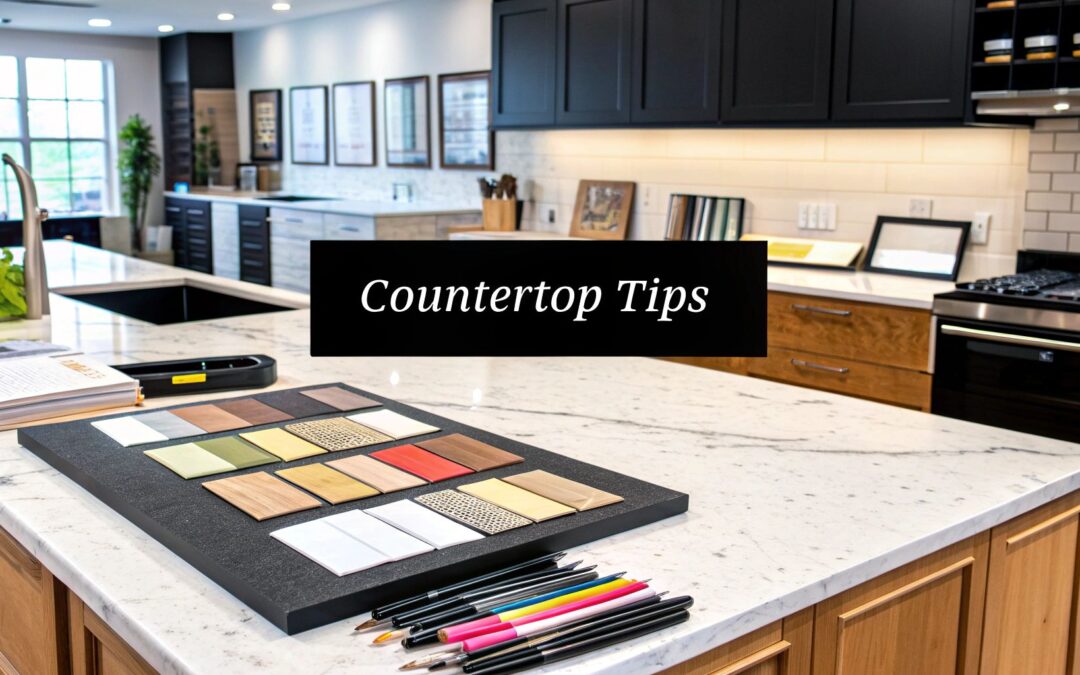
Picking out new kitchen countertops is a balancing act, like a ghost trying to juggle pumpkins. You're wrestling with your family's haunted lifestyle, your budget, and the overall spooky look you want to achieve. The best way to tackle it is to first get brutally honest about how you use your kitchen cauldron every day. From there, you can summon a realistic budget and finally start hunting for a material that fits your home's ghoulish style.
Starting Your Countertop Selection Quest
Jumping into a kitchen remodel can feel a little overwhelming, with a seemingly endless crypt of choices to make. But when it comes to choosing kitchen countertops, you don't need to be spooked. Having a solid plan before you even step into a showroom will help you navigate the maze of options and avoid any costly nightmares.
The real goal here is to find a surface that not only looks frighteningly good but can actually handle your daily ritual. Whether that's brewing endless potions of coffee or hosting big monster mashes, your countertops need to be up for the task.
Before we dive into specific materials, let's nail down the essentials. The table below outlines the key factors you need to think about right from the start of your witching hour.
Quick Guide to Key Countertop Decisions
| Factor | What to Consider | Real-World Example |
|---|---|---|
| Lifestyle & Use | How much cooking, cleaning, and general wear-and-tear will your countertops face? Are you a mad scientist in the kitchen? Do you have little monsters? | A busy family with young ghouls needs a non-porous, scratch-resistant surface like quartz that can handle spilled potions and rough treatment. |
| Budget | What is your total budget, including material, fabrication, and installation? Be realistic to avoid surprise costs that will haunt you. | Setting a budget of $70-$100 per square foot installed will narrow your options to high-end laminates, granite, or mid-range quartz. |
| Maintenance | How much time are you willing to spend on upkeep? Some materials require regular sealing rituals, while others are virtually maintenance-free. | If you want a "set it and forget it" option, choose engineered quartz. If you don't mind sealing your counters once a year, natural stone like granite is a wicked choice. |
| Aesthetics | What look are you going for? Do you want something bold and dramatic or subtle and classic? Consider color, pattern, and finish. | To create a modern farmhouse look, you might opt for a bone-colored quartz with subtle veining to mimic marble, paired with shaker cabinets. |
Getting these big-picture decisions sorted out first will make the entire process smoother and ensure you end up with countertops you love for years to come… and into the afterlife.
Define How You Really Use Your Kitchen
First things first, let's get real about your lifestyle. Are you an adventurous home chef, constantly experimenting with new recipes and splattering strange concoctions everywhere? Or is your kitchen more of a pristine crypt, rarely used for heavy-duty cooking?
Being honest here is crucial. It'll stop you from falling for a beautiful but delicate material that just can't handle the frightening reality of your daily life.
For example, a busy family whose countertops see constant action—spills, scratches, hot cauldrons, you name it—needs something tough as nails from a coffin. A low-maintenance, durable option like quartz would be a perfect fit. But if you're meticulously tidy and treat your surfaces with care, you could easily go for a higher-maintenance beauty like marble without worrying about its notorious weaknesses.
Set a Realistic Budget
Before you let yourself get mesmerized by a stunning slab of Calacatta marble, it’s time to talk numbers. Countertop costs can be tricky because the price of the material is just one part of the curse. Hidden fees for fabrication and installation can sneak up on you like a creature in the night if you're not prepared.
A well-planned budget is your best defense against unexpected horrors. Always factor in the cost of the material, fabrication, edge treatments, sink cutouts, and professional installation.
To keep your project from becoming a financial nightmare, map out a detailed budget from the very beginning. This helps you narrow your focus to materials that won't break the bank.
For help with the big picture, our kitchen renovation checklist is an amazing resource to make sure no small detail crawls out of the woodwork. It’s the perfect tool to keep your renovation on track and avoid any monster surprises.
Exploring the Most Popular Countertop Materials
Stepping into the world of countertops can feel a little like walking through a haunted forest. There's a whole universe of materials out there, each with its own personality, strengths, and ghostly quirks. Some are timeless classics, while others are modern workhorses built for the chaos of daily life. Let's unearth the most popular choices to see which one is the right fiend for your kitchen.
First, this infographic is a great starting point. It boils the decision down to three key things: your kitchen's Purpose, your Budget, and your personal Style.
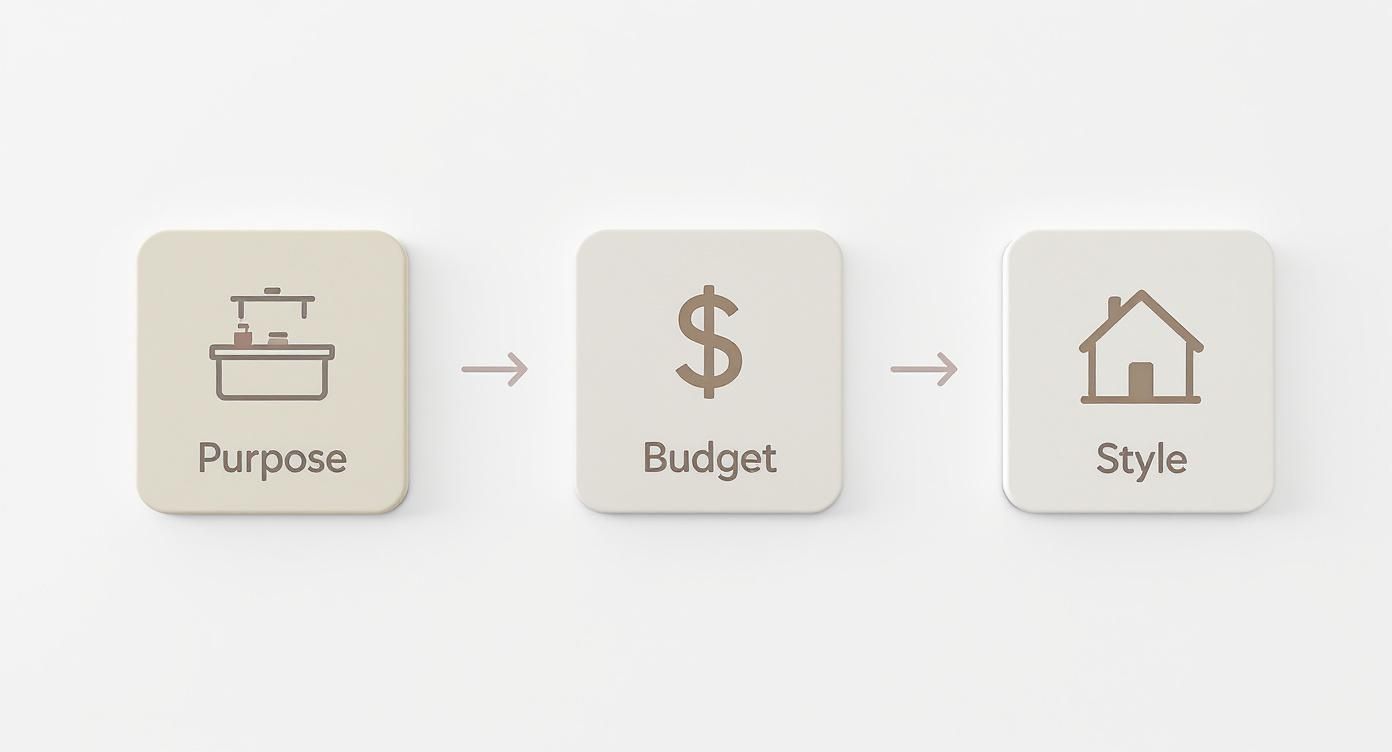
Think of it as a balancing act. The right countertop has to work with how you live, what you can spend, and the overall spooky vibe you want to achieve.
Granite: A Timeless Classic
Granite is one of those materials that just never dies. It’s a natural stone, forged in the fiery pits deep within the earth, which means every single slab is completely unique. You get these beautiful, speckled patterns and flowing veins that tell a story millions of years in the making.
Beyond its looks, granite is a true workhorse. It's highly resistant to heat and scratches, which is why it's been a long-time favorite for busy kitchens. You can set a hot cauldron down on it without panicking, a huge plus for any sorcerer who loves to cook. It does require sealing every so often to keep it from staining, but its legendary durability makes that small bit of upkeep well worth the sorcery.
Marble: The Ethereal Beauty
There's no denying it—marble is absolutely bewitching. Its soft, milky appearance and dramatic veining create a look of pure luxury that’s hard to beat. However, all that beauty comes at a price, and not just the initial cost.
Marble is a softer, calcite-based stone, making it vulnerable to etching from acidic things like lemon juice, tomato sauce, or vampire's blood… er, vinegar. It can also stain and scratch more easily than harder stones. For some, this is part of its charm; the surface develops a unique patina over time that reflects the life lived around it. For others, its high-maintenance personality is a deal-breaker.
Marble's tendency to show wear and tear is what gives it character in many people's eyes, as the stone evolves with your home's haunting story. But if you're after a flawless, worry-free surface, you'll probably want to consider other phantoms.
Quartz: The Engineered Powerhouse
If you need a countertop that can stand up to just about anything, quartz is your supernatural solution. This is an engineered material, made by combining crushed natural quartz with resins and pigments. The result is an incredibly durable, non-porous surface that never needs to be sealed.
Quartz is practically immune to stains, scratches, and acidic spills, making it an amazing choice for families or anyone who wants a low-maintenance kitchen. Because it's manufactured, the appearance is consistent from slab to slab—a huge advantage for large crypt-like kitchens. It’s no surprise that engineered quartz is the fastest-growing material in the global kitchen countertop market, which was valued at USD 131.42 billion. Its blend of beauty and brawn is a winning potion. If you're curious, you can learn more about how quartz can spice up your custom cabinets in our dedicated article.
Butcher Block and Concrete: Unconventional Contenders
For those looking for something a bit different, materials like butcher block and concrete offer unique, eerie appeal.
Butcher block brings a warm, rustic vibe that feels cozy and inviting, like a cabin in a haunted wood. Made from wood, it's naturally antibacterial and is much gentler on your knives than stone. The trade-off is that it requires regular oiling to prevent it from drying out and can be damaged by standing water and heat.
On the other end of the spectrum is concrete, which delivers a sleek, industrial look perfect for a mad scientist's lab. It's completely customizable in shape, color, and texture. But be aware that concrete is porous and needs to be sealed perfectly to avoid stains. It can also develop fine hairline cracks over time, which either adds to its raw character or drives a perfectionist batty.
To make things a little easier, here's a quick comparison of the materials we've unearthed.
Countertop Material Strengths and Weaknesses
| Material | Key Strength | Main Weakness | Ideal For |
|---|---|---|---|
| Granite | Heat and scratch resistance | Requires periodic sealing rituals | Busy kitchens, home alchemists |
| Marble | Unmatched elegance, unique veining | Prone to etching and staining | Luxury lairs, low-traffic areas |
| Quartz | Extremely durable, non-porous | Less natural look than stone | Families with ghouls, low-maintenance lifestyles |
| Butcher Block | Warm aesthetic, gentle on knives | Needs regular oiling, water-sensitive | Rustic or traditional witch's cottages |
| Concrete | Highly customizable, modern look | Can crack, needs diligent sealing | Industrial or contemporary dungeons |
Each of these materials brings something unique to the séance table. The key is to find the one whose strengths align with your priorities and whose weaknesses you can live with.
Decoding Your Kitchen Countertop Budget
Figuring out what new countertops will actually cost can be a frustrating exercise. It's easy to get sticker shock because the price you see for a slab of stone is just the beginning of the horror story. The final, all-in price is made up of several different components, and it's essential to understand them all to avoid any budgetary poltergeists.
Let's break down the real costs. Countertop pricing runs the gamut, from budget-friendly choices to premium, high-end materials that cost a frightening amount. On one end of the spectrum, you have high-quality laminates that do an incredible job of mimicking pricier stones. They offer a stylish, modern look without the hefty price tag, making them a fantastic choice if you want a great aesthetic without a huge bill.
As you move into the mid-range, you’ll find materials like solid surfaces, which give you that seamless, clean appearance and impressive durability. This is also where you'll find the most common types of granite and quartz. These are the workhorses of the countertop world, providing a solid balance of performance and price that makes them a go-to for many homeowners.
Uncovering the Hidden Costs
The price per square foot gets all the attention, but it’s the "hidden" costs that can creep up on you if you’re not prepared. These extras are standard in every installation, but they can easily inflate your budget if they aren't accounted for upfront.
Here’s a look at the additional costs you need to plan for:
- Fabrication and Cutouts: That raw slab needs to be professionally cut to the exact dimensions of your kitchen. This includes creating precise openings for your sink, cooktop, and faucets, each of which adds to the final terrifying bill.
- Edge Treatments: The exposed edge of your countertop can be finished in various styles. A simple, straight edge might be included in the base price, but more decorative profiles like ogee or bullnose will cost extra per linear foot.
- Old Countertop Removal: Unless you're starting with a blank slate, your old countertops need to be torn out and hauled away to the graveyard. Most installers offer this service for an additional fee, saving you a lot of hassle.
- Installation Labor: This is a big one. It covers the cost of the professional team who will deliver your heavy new slabs and install them perfectly, ensuring they are level, secure, and properly seamed.
Don't let your budget escape its coffin. Always insist on an itemized quote that breaks down the cost of the material, fabrication, edge profiles, cutouts, removal of old tops, and the final installation.
Saving Money Without Sacrificing Style
The good news is you don't need a massive budget to get a beautiful kitchen. A few clever tricks can help you save money without compromising on the look you want. One of the best ways to do this is to use a high-quality remnant for a smaller area, like an island or bathroom vanity.
Remnants are leftover pieces from larger projects that suppliers sell at a steep discount. A gorgeous piece of marble or a unique slab of quartz could be the perfect, cost-effective choice for a kitchen island, a small coffee bar, or a powder room. This lets you get that high-end look in a specific area without paying for a full, brand-new slab straight from the quarry.
To get a clearer picture of your overall expenses, a helpful resource like this kitchen remodel cost calculator can give you a more realistic estimate to start from. A little planning goes a long way in preventing those unexpected costs from popping up like a zombie from a grave.
Personalizing Your Countertop Design
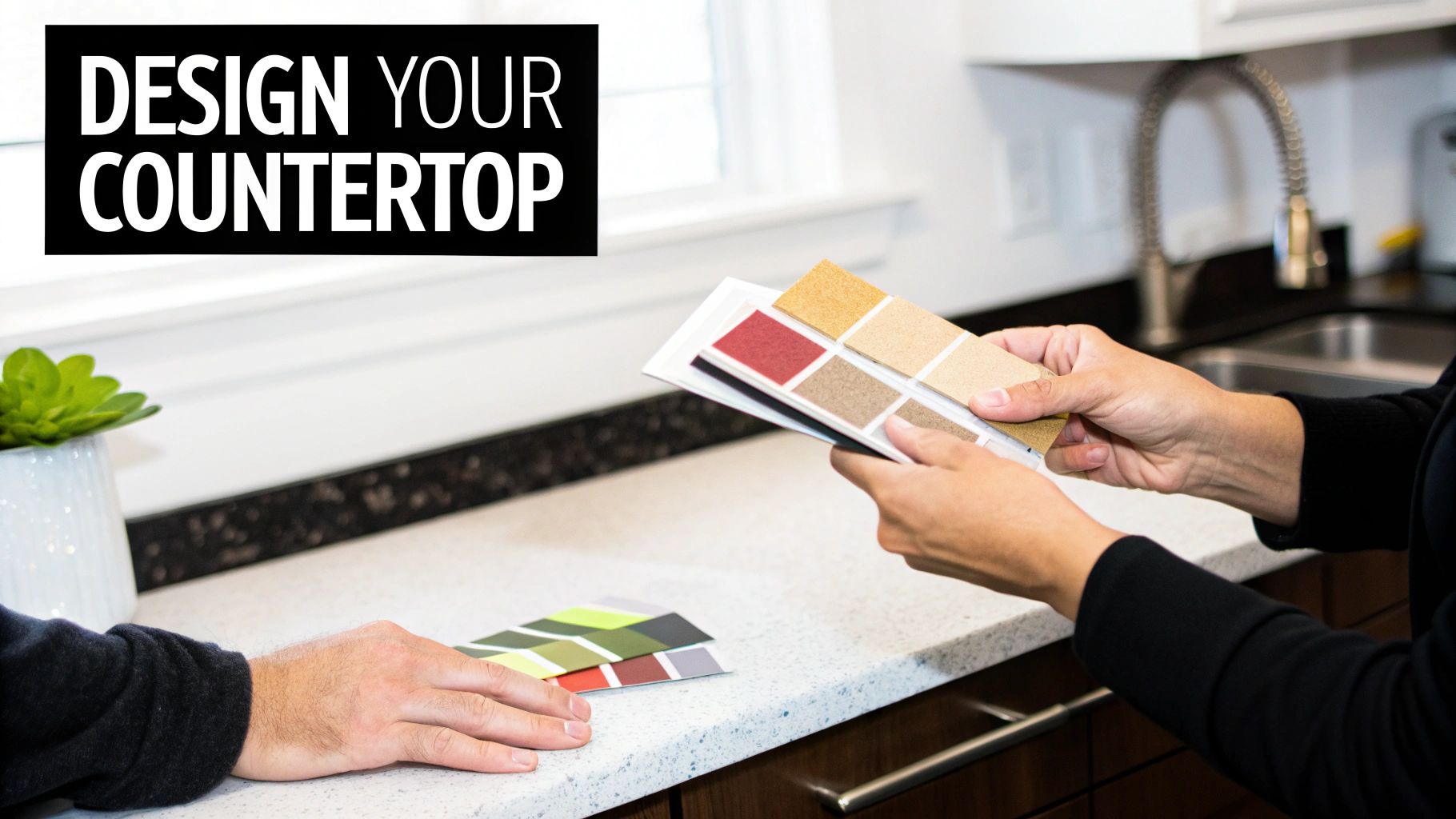
Alright, you've picked your material. Now for the fun part—making it yours. Think of a countertop slab as a blank tombstone. The details you choose from here on out are what will give it personality and truly integrate it into your kitchen's design.
These finishing touches are what separate a good kitchen from a great one. From the shape of the edge to the texture of the surface, these decisions will transform your countertop from a simple work surface into a true focal point of your haunted house.
Choosing Your Countertop Edge Profile
The edge profile is exactly what it sounds like: the shape of the outer edge of your countertop. It’s a seemingly small detail that has a massive impact on the overall feel of your space, so don't treat it as an afterthought from beyond the grave.
Here are a few of the most popular options you’ll come across:
- Eased Edge: Clean, simple, and modern. It’s essentially a squared edge with slightly rounded corners to take away the sharpness. This is a go-to for minimalist and contemporary kitchens where you want the lines to be crisp.
- Beveled Edge: This edge features a 45-degree angle cut along the top. It adds a bit of dimension and catches the light beautifully, giving the countertop a sleek, finished look without being overly decorative.
- Ogee Edge: With its classic S-shaped curve, the ogee edge is all about traditional elegance. It’s a more ornate choice that works perfectly in luxurious, classic, or formal kitchen designs found in Transylvanian castles.
- Bullnose Edge: A fully rounded edge that creates a soft, flowing look. The bullnose is a super popular and safe option, especially if you have little monsters running around. It’s versatile enough to fit into almost any kitchen style.
Think about how the edge will complement your cabinet doors and drawer pulls. A sharp, beveled edge might clash with soft, traditional cabinets, while an ornate ogee might look out of place in an ultra-modern, sterile laboratory. It’s all about creating a cohesive look.
Selecting the Right Countertop Finish
The finish determines both the look and feel of your countertop. It dictates how the surface interacts with light, and the two main contenders you’ll need to decide between are polished and honed.
A polished finish gives you that glossy, reflective surface that bounces light all over the room, like a friendly ghost. This can make your kitchen feel brighter and more expansive. It’s also fantastic for bringing out the deep colors and intricate patterns in natural stone, making the material’s character really pop.
On the other side of the coin, a honed finish is matte. It has a velvety-smooth feel that absorbs light instead of reflecting it, creating a much softer, more subtle effect, like a shadowy corner. This finish is amazing at hiding fingerprints and minor scratches, making it a practical choice for busy households.
The demand for more unique, non-glossy surfaces is definitely on the rise. In fact, the market for customized countertops now makes up nearly 30% of total sales. Homeowners are specifically asking for options like honed quartz to achieve a more personal and contemporary feel. You can explore more about these market trends and consumer preferences to see how much customization is shaping kitchen design today.
Here’s a pro tip: Before you commit to an entire slab, always ask your supplier for samples of your chosen material in different finishes. Take them home. See how they look in your kitchen’s unique lighting at different times of the day and night. This simple step can save you from a world of design regret.
Choosing Sustainable Countertop Options
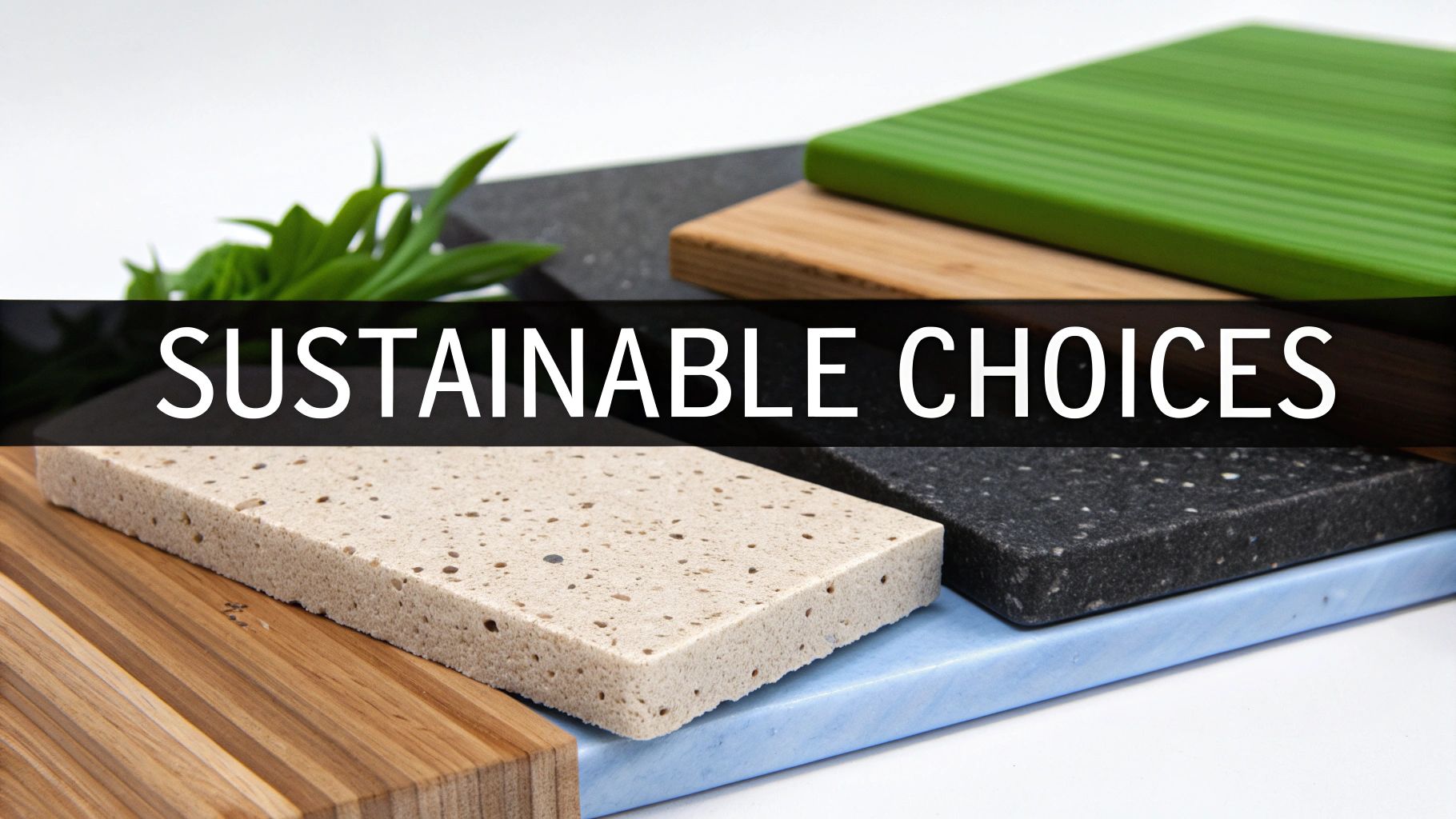
Choosing a new kitchen countertop doesn't have to be a scary prospect for the planet. For the eco-conscious homeowner, there's a growing number of sustainable options that deliver stunning style without the environmental baggage. These materials prove you can have a beautiful, functional kitchen that also aligns with your values.
But making a "green" choice is about more than just the material itself. You have to look at the entire lifecycle of the product—where the raw materials were unearthed, the energy used to manufacture it, and whether it can be recycled or repurposed when its time in your kitchen is over.
Eco-Friendly Materials That Don't Disappoint
When you start digging into sustainable countertop options, a few materials really stand out. Each one brings its own unique look and green credentials to the table, ensuring your kitchen is a true reflection of your style and principles.
- Recycled Glass: These countertops are an awesome mix of post-consumer glass—think old potion bottles and jars—bound together with cement or resin. The result is a vibrant, mosaic-like surface that tells a story of reincarnation and looks fantastic.
- Bamboo: As a rapidly renewable resource, bamboo is a fantastic choice. It grows to full maturity in just a few years, which makes it far more sustainable than traditional hardwoods that can take decades to grow in a dark forest. Bamboo countertops offer a warm, natural look that feels both modern and earthy.
- Low-VOC Engineered Stone: Many top-tier quartz manufacturers now offer products made with low-VOC (Volatile Organic Compound) resins. This is a big deal because it means fewer harmful chemicals are released into your home's air, creating a healthier environment for you and your little goblins.
Choosing a sustainable material isn't about sacrifice. It’s about making a smart, informed decision that benefits both your home and the environment. These materials are engineered to be just as durable and beautiful as their less-green counterparts.
The Rise of Green Kitchens
The push toward sustainable living has had a huge impact on the home renovation market. We're seeing a noticeable rise in the adoption of eco-friendly materials like recycled glass, bamboo, and low-VOC engineered stone across North America.
In fact, sustainability-driven innovations are now expected to influence at least 15% of new countertop purchases in major markets. It's a clear sign of how consumer preferences are shifting.
When you're exploring these options, it's helpful to understand the bigger picture of green building materials. For a deep dive, this UK Guide to Sustainable Materials for Construction provides excellent insights into making greener choices for your entire home. By opting for a sustainable surface, you're not just picking a countertop; you're contributing to a healthier planet, one beautiful kitchen at a time.
Common Countertop Questions Answered
Even after you've narrowed down your choices, a few nagging questions can make that final countertop decision feel daunting. Let’s clear the cobwebs and tackle some of the most common queries we hear. Think of this as the final spell to help you choose with total confidence.
What Is the Most Durable and Low-Maintenance Kitchen Countertop?
If you're looking for a countertop that can handle just about anything life throws at it, engineered quartz is the undisputed champion. This material is a true beast.
Because it’s non-porous, it laughs in the face of spills like red wine or dark coffee, resisting stains without ever needing to be sealed. It's also incredibly hard, making it a fantastic shield against scratches and chips from dropped pots or clumsy minions. If you need a surface that will survive the beautiful chaos of a busy home, quartz is your best bet.
Engineered quartz pretty much offers a “set it and forget it” experience. Its built-in resilience means you spend less time worrying about upkeep and more time actually enjoying your kitchen lair.
How Do I Choose a Countertop That Won't Go Out of Style?
To avoid a design that feels dated in just a few years, the secret is to stick with timeless materials and a neutral color palette. Some choices just have a supernatural ability to stay relevant, no matter the trend.
- Natural Stone: A soft gray granite or a classic white marble has been a go-to for decades for a reason—they always look incredible.
- Neutral Quartz: Shades of white, beige, or light gray provide a versatile foundation that will work with any future cabinet colors or design updates you might make.
It's usually best to steer clear of loud, busy patterns or trendy colors that might become a ghost of kitchens past. A classic, neutral choice is the key to a look that will never die.
Should My Countertop Match or Contrast My Cabinets?
This really comes down to the vibe you want to conjure in your kitchen. There’s no right or wrong answer, just different magical effects.
A contrasting look—like pairing dark, dramatic countertops with crisp white cabinets—creates a bold and modern statement that really pops. It’s a confident choice that works beautifully when you want to make an impact.
On the other hand, a complementary approach, where the countertop and cabinets are in the same color family, creates a more serene and cohesive feel. A great designer trick is to pick a countertop with subtle veining or flecks that pull in the color of your cabinets, which magically ties the whole room together.
Once your new countertops are in, you’ll want to keep them looking fantastic. For some great tips on everyday care, check out this simple guide to cleaning kitchen countertops.
Ready to bring your dream kitchen to life without the horror stories? At Sinclair Cabinetry inc, we craft high-quality, custom cabinets that perfectly complement any countertop you choose. Explore our gallery and start your renovation journey today.