
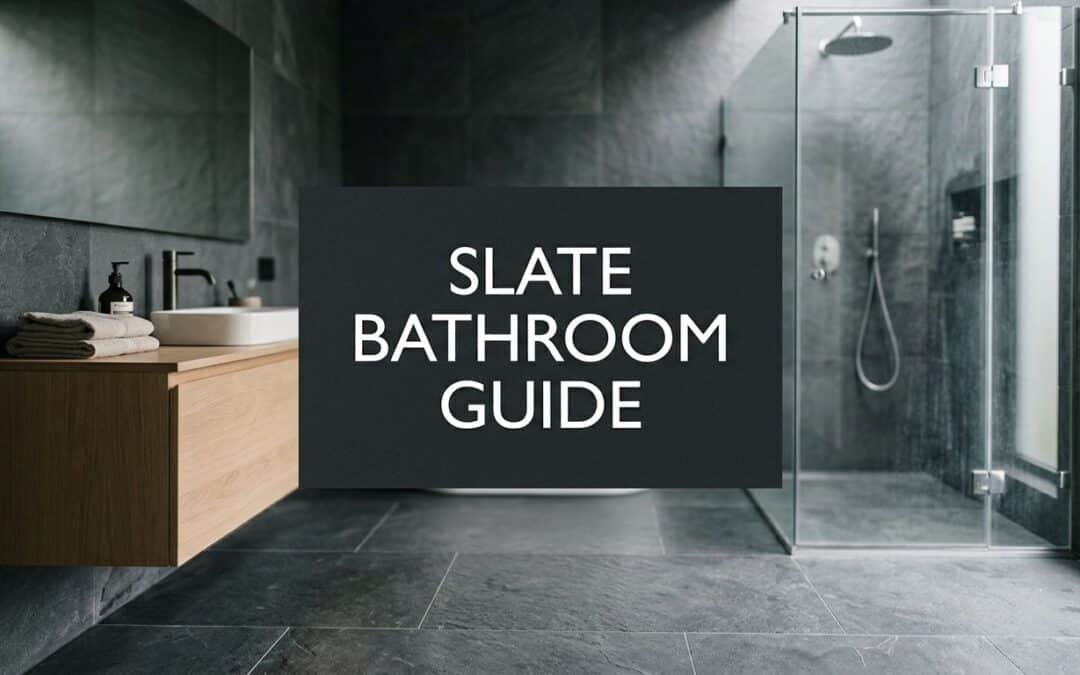
You're probably trying to avoid a bathroom that looks dated in a few years, feels slippery when wet, or fights you every time you clean it. You want something grounded, refined, and worth the disruption of a real remodel. That's exactly where slate enters the conversation.
In the right bathroom, slate doesn't act like a decorative afterthought. It becomes the anchor. The floor sets the mood, the wall finish controls how light moves, and the texture influences everything around it, especially the vanity, storage, trim, and hardware. A well-designed slate bathroom feels calm and substantial. It has the quiet confidence that manufactured surfaces often struggle to match.
The best results come when you think about the room as one composition instead of separate purchases. Tile, cabinetry, countertop, metal finish, lighting, and ventilation all need to agree with one another. If you're still shaping your vision, these bathroom remodel ideas for 2025 are a useful starting point for narrowing the style direction before you commit to stone.
Envisioning Your Timeless Slate Tile Bathroom
A timeless slate bathroom usually starts with a simple goal. You want the room to feel better every morning than it did the day before. Not louder. Not trendier. Better.
Slate helps create that feeling because it brings natural variation into a space that can otherwise feel hard and overly polished. A charcoal slate floor under a painted vanity feels settled and architectural. A softer grey slate wall behind a freestanding tub can make white porcelain, brushed metal, and wood tones look richer without demanding attention.
The mood slate creates
Some materials announce themselves. Slate doesn't need to. It gives a bathroom depth through tone, texture, and shadow.
That matters in luxury spaces because custom cabinetry needs a strong partner. If the floor is too busy, the vanity looks disconnected. If the wall tile is too flat, beautiful millwork can carry too much visual weight on its own. Slate solves that balance problem well. It can be rustic, contemporary, quiet, or dramatic depending on the cut and finish.
A bathroom feels expensive when the materials support each other, not when each one tries to be the star.
A room that ages well
Homeowners often focus on the first impression. A seasoned designer also thinks about year five, year ten, and beyond. Slate has emerged as a premium bathroom flooring choice because of its durability in moisture-rich environments, and when properly sealed it can last for decades, according to this slate bathroom remodeling guidance.
That kind of longevity changes the way you design. You stop chasing novelty and start selecting combinations that still feel right when trends move on. A good slate bathroom doesn't just photograph well. It lives well.
Understanding Slate The Foundation of Your Design
Slate sets the rules for the rest of the room. Before a vanity profile is chosen or drawer fronts are specified, the stone tells you how much texture, contrast, and visual weight the bathroom can carry.

Natural stone always brings variation. With slate, that variation shows up in layers, clefts, mineral veining, and shifts in tone from tile to tile. Those differences are not flaws. They are the reason a painted vanity can look richer against one slate floor than another, and why a walnut cabinet may feel warm and tailored with honed grey slate but heavy beside a very dark, heavily textured stone.
Natural cleft, honed, and gauged
These terms affect both appearance and build quality.
Natural cleft slate has the split, textured face many homeowners expect from true slate. It gives floors grip and shadow, and it adds movement that works well with inset cabinetry, furniture-style vanities, and wood finishes that benefit from a bit of contrast. It also creates a busier surface, so I usually keep the cabinet door style disciplined rather than ornate.
Honed slate is smoother and more controlled. It suits contemporary bathrooms, especially with slab-front vanities, tight reveals, and integrated pulls. The cleaner face lets custom cabinetry do more of the visual work. It also shows residue and water spotting more readily, so the finish choice should match the household's cleaning habits.
Gauged slate has been processed to a more consistent thickness. That makes layout, transitions, and cabinet installation easier, especially where a floating vanity, tall linen storage, or a stone-topped furniture piece needs precise alignment.
If you are comparing wall treatments and trying to judge how much texture your cabinetry can support, this guide to types of tile for backsplash applications gives useful reference points.
How slate shapes cabinet design
Slate should not be selected in isolation. A charcoal cleft floor can anchor a painted white vanity and make it feel crisp. A soft grey honed slate wall often pairs better with rift-cut oak or walnut, where the grain adds warmth without fighting the stone. Multicolor slate takes more discipline. In those bathrooms, cabinetry usually looks best in a restrained paint color or a quiet wood species, because the tile already carries plenty of variation.
Scale matters too. Large-format slate reads calmer and gives custom vanities a cleaner backdrop. Smaller modules with pronounced joints create more rhythm, which can suit a classic cabinet layout but may compete with detailed door profiles.
What homeowners should expect from real stone
Slate rewards people who appreciate material character. It does not behave like printed porcelain, and it should not be judged by that standard.
| Finish | Look | Best use in bathroom | Design effect |
|---|---|---|---|
| Natural cleft | Textured, layered | Floors, some shower areas | Grounded, tactile, architectural |
| Honed | Smoother, refined | Walls, feature areas, selected floors | Tailored, quiet, contemporary |
| Gauged slate | More consistent thickness | Areas where alignment and transitions matter | Cleaner installation and better cabinet coordination |
Practical rule: If you only like slate when it appears perfectly uniform, you probably love the concept of slate more than the material itself.
The Pros and Cons of a Slate Bathroom
A slate bathroom can feel extraordinary at 7 a.m. and demanding at 7 p.m. That tension is the central decision. Homeowners choose slate because it brings weight, texture, and permanence to a room that often feels too polished or too generic with manufactured finishes. They live with it happily when the stone fits the household, the installer, and the cabinet design.

Where slate justifies the investment
Real slate gives a bathroom visual depth that printed surfaces rarely match. Light catches the layers differently across the day, and that shifting surface makes a vanity wall feel more personalized, especially beside painted cabinetry, walnut, or rift-cut oak.
It also performs well underfoot when the right finish is chosen. A textured slate floor usually offers better grip than many smooth tile surfaces, which is one reason it remains a strong candidate for wet bathroom floors and shower areas.
Durability is another clear advantage. A properly selected and sealed slate can handle humidity, daily foot traffic, and the small abuse bathrooms tend to see, from dropped grooming tools to rolling storage stools. In high-use rooms, that resilience matters.
Where the drawbacks become real
Slate asks more from the build team and from the homeowner after the project is finished. Stone selection needs care. Installation needs a flat substrate, clean layout planning, and attention to thickness variation. Maintenance needs the right sealer and stone-safe cleaners.
Those are not minor details. They affect how the room looks and how long it stays looking right.
Cabinetry plays into this more than many homeowners expect. If the slate has heavy movement, layered color, or an irregular cleft face, the vanity should bring order. Cleaner door lines, disciplined paint colors, and well-planned filler and scribe details help the room feel intentional instead of busy. If both the tile and the cabinetry compete for attention, the bathroom loses its sense of balance.
Slate versus porcelain
This choice usually comes down to priorities, not budget alone.
Choose slate if:
- You want a bathroom with real material presence. Slate has depth, variation, and a weight that suits custom millwork.
- You like texture underfoot. The tactile quality is part of the appeal, especially in a room built around natural finishes.
- You are designing the whole room as one composition. Slate can make a painted vanity look sharper and a wood vanity look richer.
Choose porcelain if:
- You want easier upkeep. Porcelain is simpler for busy households that do not want to stay on top of sealing and cleaner selection.
- You prefer visual consistency. Repetition, flatter surfaces, and tighter control are easier to achieve with manufactured tile.
- You need more installation forgiveness. Porcelain generally creates fewer surprises than natural stone.
The practical downside list
The common problems with slate are manageable, but they should be priced and planned from the start.
- Sealing is part of ownership: Wet areas need a real maintenance plan, not a one-time product choice.
- Weight affects construction: Floors, transitions, and wall assemblies need proper support and preparation.
- Variation affects layout: Shade, cleft, and thickness differences slow installation and require more sorting on site.
- Cleaning products matter: Acidic or harsh cleaners can dull the finish or weaken the sealer.
- Cabinet coordination matters: Highly varied slate can make the wrong vanity finish look confused or overly busy.
Some households want a bathroom that stays tidy with minimal effort. Porcelain usually serves them better. Homeowners who want the room to feel grounded, crafted, and materially honest often find slate worth the added discipline.
Inspiring Design and Layouts for Slate Bathrooms
A well-designed slate bathroom feels settled the moment you step in. The floor has weight. The walls have depth. The vanity does not compete with the stone. It belongs to the same composition.

Grey slate works especially well in bathrooms because it gives you room to shape the cabinetry around it. Lighter grey slate supports painted vanities without making the room feel flat. Deeper charcoal tones pair cleanly with walnut, white oak, or a soft painted finish that keeps the room balanced. Slate also comes in a useful range of tile sizes, from larger square formats down to smaller pieces suited to tighter areas, so the layout can be tuned to the room rather than forced into one look.
Three design directions that work
Soft contemporary
Use grey slate on the main floor and keep the wall treatment restrained. A floating vanity in warm white, pale oak, or muted greige keeps the room light while letting the stone provide the texture.
This layout works best when the slate is the only strongly expressive surface. Flat-panel or lightly detailed cabinet fronts keep the lines clean. Thin-framed glass and simple mirrors reinforce that discipline.
Mountain modern
Choose a multi-tonal slate with brown, olive, or charcoal movement and pair it with stained wood cabinetry that shows real grain. Rift-cut oak and walnut both work well here, especially on wider vanity runs with generous drawer storage.
This approach needs space and proper editing. If the stone has strong variation, the vanity should carry a quieter profile and the hardware should stay understated. Bronze or aged brass usually sits more comfortably here than polished chrome.
Dark spa
Use honed or darker slate on one major surface, usually a shower wall or the wall behind the vanity, instead of wrapping the entire room. That gives the bathroom depth without making it feel heavy.
Walnut cabinetry, integrated pulls, and layered lighting create a calm, refined look. A furniture-style vanity can work in this scheme, but the detailing should stay disciplined. For homeowners weighing profile options, this guide to bathroom vanity styles and design tips helps match the cabinet form to the mood of the stone.
Tile size and layout choices
Format changes the room more than many homeowners expect.
- Larger tiles: Better for open floors and main walls where you want fewer joints and a calmer, more architectural read.
- Smaller tiles or mosaics: Better suited to shower floors, curved surfaces, and areas where slip resistance and drainage matter.
- Stacked layouts: Best with contemporary cabinetry, especially floating vanities and slab doors.
- Offset patterns: A good fit for transitional bathrooms where the cabinetry has more traditional detailing.
- Directional layouts: Helpful in narrow rooms because they can visually stretch the space toward a focal point, often the vanity wall.
Here's a useful design reference before final selections:
Where to use slate
Slate does not need to cover every surface to make a strong impression. In many high-end bathrooms, the best result comes from placing it where it strengthens the cabinetry and gives the room structure.
| Area | Best use of slate | Why it works |
|---|---|---|
| Main floor | Large or medium-format tile | Creates a grounded base for the vanity and makes custom cabinetry feel more intentional |
| Shower floor | Smaller pieces or mosaics | Improves footing and handles slope changes more gracefully |
| Feature wall | Honed or quieter-toned slate | Adds depth behind a vanity or tub without crowding the room |
| Bathroom entry | Textured slate underfoot | Sets the tone immediately and stands up well to daily traffic |
Pairing Slate with Custom Cabinetry and Fixtures
Many bathrooms either come together or fall apart at this critical junction. The slate may be beautiful on its own, but if the vanity style, wood species, finish, and hardware don't speak the same language, the room feels assembled instead of designed.

Pairing by mood instead of by trend
A good cabinetry decision starts by asking what the slate is already doing.
If the slate is dark, textured, and heavily expressive, the vanity should often simplify the composition. A painted Shaker door in a light neutral gives the stone room to lead. If the slate is smoother and more restrained, the cabinetry can bring more warmth through wood grain, tone, and detail.
For homeowners comparing classic and modern vanity forms, this guide to bathroom vanity styles and design tips is useful because it helps match cabinet profile to the overall architectural language of the bathroom.
Combinations that consistently work
Dark slate with painted cabinetry
A dark cleft slate floor with off-white, mushroom, or soft taupe cabinetry creates a strong contrast that still feels welcoming. This combination suits transitional baths, modern farmhouse spaces, and homes where the bathroom needs to connect visually to traditional millwork elsewhere.
Brushed nickel and polished chrome usually feel safest here. They keep the room bright and don't compete with the natural surface movement in the stone.
Rustic slate with oak or stained wood
If the slate carries more visible earth tones, warm oak and medium brown finishes usually look more convincing than cool grey stains. The wood should echo the warmth in the stone rather than fight it.
This pairing is ideal when you want the room to feel rooted and natural. It also works beautifully with open shelving, framed mirrors, and woven or linen accessories.
Honed black slate with walnut
This is one of the strongest pairings in high-end slate tile bathrooms. The smoothness of honed black slate sets a precise backdrop. Walnut adds life back into the room through grain and warmth.
Keep the vanity lines simple. Flat-panel doors, discreet reveals, and integrated lighting do the job better than ornate detailing.
The more expressive the slate, the more disciplined the cabinetry should be.
Choosing fixtures that support both materials
Fixture finish is not a minor detail in a slate bathroom. It either bridges the wood and stone or exposes the mismatch between them.
- Brushed brass: Best when the room needs warmth and a more curated, upscale feel.
- Matte black: Works in modern spaces, but only when there's enough contrast around it.
- Polished chrome: Clean, bright, and dependable with grey slate and white cabinetry.
- Softer nickel tones: A strong middle ground for bathrooms that mix cool stone with warmer wood.
The vanity should answer the stone
If your slate has heavy texture and natural split surfaces, a vanity with too much ornament can feel restless. If your slate is honed and quiet, an overly plain vanity can make the room feel flat.
The right pairing creates hierarchy. Usually that means one element carries the pattern while the other carries the form.
Critical Installation and Maintenance Practices
A slate bathroom is won or lost before the first fixture goes on the wall. Stone can look forgiving in a sample board. On a real jobsite, it asks for precise prep, careful sequencing, and cabinet drawings that reflect the finished tile assembly, not an estimate scribbled in the margin.
Slate rarely comes perfectly uniform. Thickness can vary from piece to piece, and grout joints usually need enough width to absorb that variation. According to this natural stone installation reference from Lowe's, slate installations often call for wider joints than manufactured tile and a floor build-up that can significantly affect finished height. That matters to more than the tile setter. It changes vanity elevation, toe-kick proportions, door clearances, and how custom cabinetry meets the floor at the end of the run.
What has to happen before tile goes down
Start with the structure. Natural stone needs a stiff, properly prepared subfloor because even small movement can show up as cracked grout, loose corners, or uneven edges that catch your eye every morning.
Then coordinate the room as one system. If Sinclair is building a vanity with a furniture base, reduced toe kick, or applied end panels, those details should be finalized with the tile build-up in mind before fabrication begins. I prefer to settle floor height, transition locations, and cabinet set points early because field fixes usually look like field fixes.
Shower work needs the same discipline. Waterproofing belongs in the right layer and in the right order, especially where tiled wet zones meet painted walls, wood trim, or built-in storage. A handsome linen tower placed beside a shower is still woodwork. If moisture control is sloppy, that cabinet pays the price long before the stone does.
If you are coordinating tile, cabinetry, plumbing, and lighting at once, these tips on bathroom remodeling help map out the sequence before demolition starts.
Cleaning without damaging the stone
Slate does not respond well to whatever cleaner happens to be under the sink. Acidic sprays, abrasive powders, and harsh soap-scum removers can dull the surface, weaken the sealer, and leave the stone looking tired long before it should.
A better routine is simple. Use a pH-balanced cleaner made for natural stone. Wipe standing water off shower walls and vanity tops. Remove soap film and mineral residue while it is still light. Guidance in this slate bathroom maintenance article also recommends regular drying and avoiding aggressive products that can mark the stone or compromise its protective treatment.
The maintenance habits that protect the whole room
Good slate care also protects the cabinetry around it. When water sits at the vanity edge, along a backsplash joint, or around legs on a freestanding cabinet, the stone and the wood are both under stress.
- Use stone-safe cleaners: Mild products protect the slate finish and reduce the chance of damaging nearby cabinet finishes.
- Keep air moving: A properly vented bathroom dries faster, which is easier on grout, sealer, painted cabinetry, and wood interiors.
- Clean residue early: Soap film, hard-water spots, and pooled splash marks are easier to remove before they harden along tile edges and trim joints.
- Revisit sealer performance periodically: Test in an inconspicuous area and reseal based on wear, water exposure, and the slate finish you selected.
Good slate maintenance is steady, not aggressive. The payoff is a bathroom where the stone keeps its character and the custom cabinetry beside it still looks intentional years after install.
Your Slate Bathroom Remodel Checklist
A slate bathroom stays on budget and looks intentional when the decisions are made in the right sequence. Start with the stone and cabinetry together, because each one affects the other in ways that show up on site, not just on a mood board.

The essentials
Choose the room mood first
Set the tone before you choose materials. A charcoal cleft slate with white oak cabinetry reads very differently than a soft gray honed slate under a painted vanity in warm ivory or deep green.Select the slate finish carefully Natural cleft gives more texture and shadow. Honed slate feels quieter and more intentional. Gauged material helps when you want tighter transitions at the vanity base, cleaner reveals, and a more refined fit with custom millwork.
Plan cabinet dimensions with the finished floor in mind
Natural stone assemblies add real height. Vanity legs, toe kicks, filler pieces, and door clearances should be sized after the tile build-up is confirmed, especially if the cabinetry is made to fit wall to wall.Decide where slate stops and cabinetry starts
This is one of the most important design decisions in the room. Full-height slate behind a floating vanity creates a crisp, architectural look. Wainscot-height slate paired with furniture-style cabinetry feels warmer and more traditional. Built-in linen storage should relate to the tile layout so the room reads as one composition.Confirm your waterproofing and ventilation strategy
Wet zones, splash areas, and enclosed storage all need a clear plan before installation begins. Good detailing protects the slate, the grout joints, and the cabinet finish around sinks, tub decks, and shower entries.Budget for waste
Order extra material for cuts, sorting, and pieces you reject for color or thickness. Slate is a natural product, and smart planning leaves room to match the better pieces where they matter most, especially at exposed edges and around a custom vanity run.Hire a crew that works with natural stone regularly
Slate rewards careful layout, clean substrate work, and patient fitting around cabinetry and plumbing. An experienced installer will also coordinate with the cabinet maker so reveals, scribe lines, and finished heights look deliberate.
A successful slate bathroom is built through coordination. The stone, the vanity, and the storage need to be designed as a single room, not ordered as separate parts.
If you want a bathroom where slate tile, custom vanity design, and built-in storage feel like one coherent composition, Sinclair Cabinetry inc brings the kind of craftsmanship that makes that level of integration possible. Their team builds custom cabinetry with a focus on real wood, personalized design, and long-term function, which is exactly what a natural stone bathroom needs to feel complete rather than pieced together.