

Embarking on a bathroom remodel is one of the most effective ways to enhance your home's value and daily comfort. A successful project, however, requires more than just picking out attractive tile; it demands careful planning, smart budgeting, and an understanding of the critical details that separate a beautiful, long-lasting sanctuary from a costly mistake. Whether you're dreaming of a spa-like retreat with custom cabinetry or a functional, family-friendly space, navigating the process can feel overwhelming.
This guide provides a clear roadmap with actionable tips on bathroom remodeling to ensure your project is a resounding success. We will cover everything from establishing a realistic budget and selecting durable materials to optimizing your layout for flow and maximizing storage with intelligent solutions. By focusing on these expert-backed strategies, you can confidently transform your vision into a highly functional and beautiful reality that stands the test of time, avoiding common pitfalls and ensuring a smooth renovation from start to finish.
1. Establish a Realistic Budget and Add a 10-20% Contingency
Setting a detailed, realistic budget is the critical first step in any successful bathroom remodel. A well-planned budget acts as your project roadmap, guiding decisions on materials, labor, and features. To establish a truly realistic budget for your project, it's essential to research how much a bathroom renovation costs in your area, as figures can vary significantly based on location and scope. For instance, a mid-range remodel of a small bathroom might cost between $15,000 and $25,000, while a luxury project can easily exceed $50,000.
Industry experts universally recommend including a 10-20% contingency fund to handle unexpected issues. During demolition, you might uncover hidden water damage, outdated plumbing, or structural problems that require immediate attention and can derail an unprepared budget.
Key Budgeting Actions
- Get Multiple Quotes: Obtain at least three written estimates from licensed contractors to compare costs.
- Track Everything: Use a spreadsheet or budgeting app to monitor every expense, from tile to towel bars.
- Separate Your Contingency: Place your contingency funds in a separate account to avoid spending them on non-essentials.
This pie chart visualizes a typical budget allocation for a bathroom remodel, highlighting the major cost centers.

As the chart shows, labor often represents the largest portion of the budget, underscoring the importance of hiring qualified professionals. Learn more about comprehensive bathroom renovation planning on sinclaircabinets.com.
2. Prioritize Proper Ventilation to Prevent Moisture Damage
Adequate ventilation is one of the most crucial yet overlooked tips on bathroom remodeling. A high-quality exhaust fan is essential for controlling humidity, preventing the growth of mold and mildew, and protecting your new investment. Without proper ventilation, moisture-laden air can damage paint, warp custom cabinetry, and lead to costly structural repairs down the line. Building codes in most jurisdictions now mandate mechanical ventilation in bathrooms, especially those without an operable window.
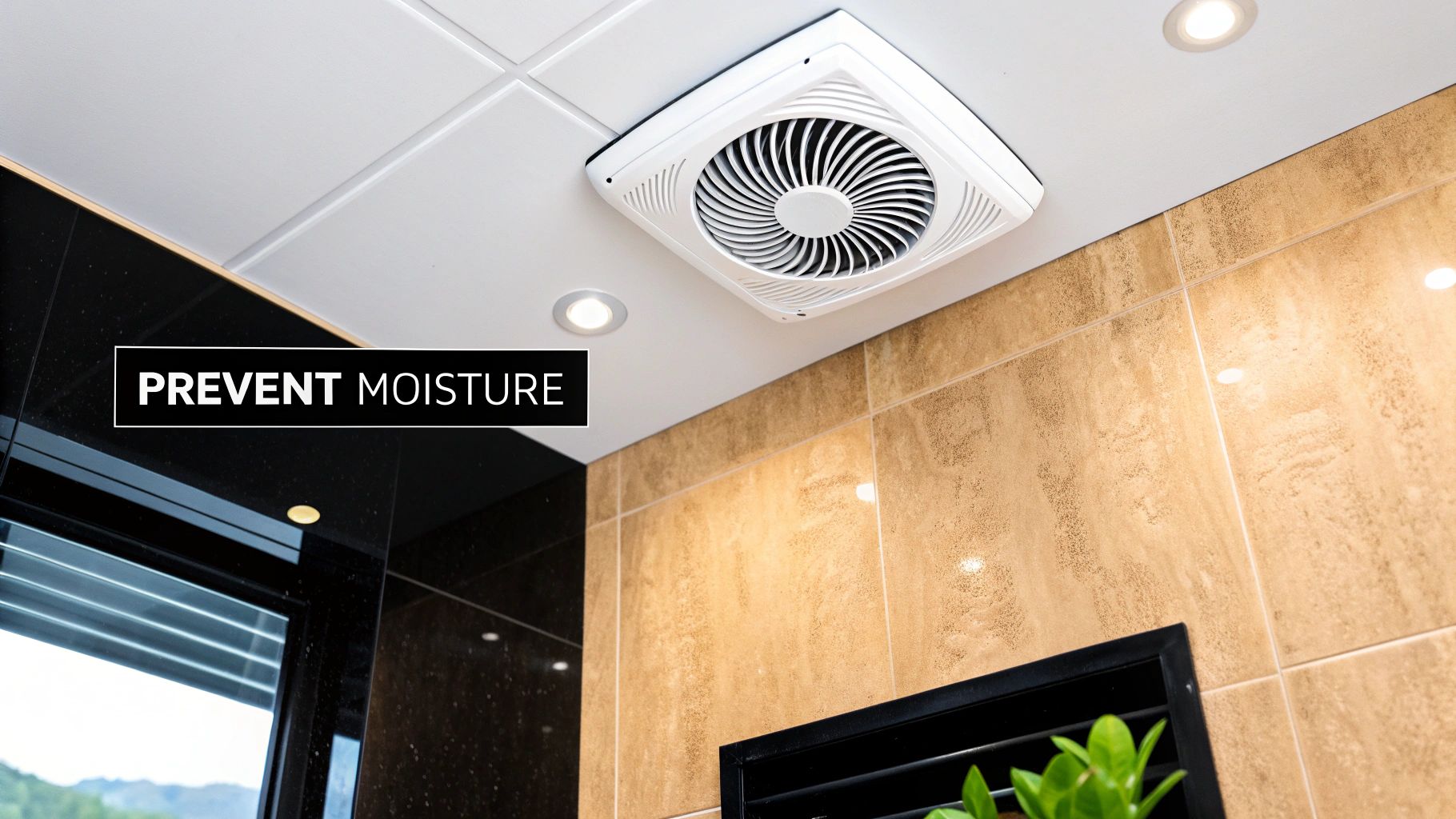
Investing in a properly sized and installed system is non-negotiable for extending the life of your remodel. For instance, brands like Panasonic offer WhisperCeiling fans known for quiet, powerful performance. A professional bathroom exhaust fan installation ensures the unit is correctly ducted to the exterior, not just into an attic space, which is a common and damaging mistake.
Key Ventilation Actions
- Calculate Required CFM: To find the right fan size, multiply your bathroom's square footage by 1.1 (for a standard 8-foot ceiling). For example, a 100-square-foot bathroom needs at least a 110 CFM fan.
- Prioritize Quiet Operation: Choose a fan with a sone rating below 1.0 for near-silent performance that won't disrupt your peace.
- Use It Correctly: Run the fan during and for at least 20 minutes after every shower to fully clear humidity from the space.
3. Invest in Water-Resistant and Durable Materials
Bathrooms are high-moisture environments, constantly exposed to humidity, water splashes, and temperature changes. This makes material selection one of the most critical tips on bathroom remodeling for ensuring longevity and preventing costly repairs. Investing in durable, water-resistant materials for flooring, walls, showers, and countertops protects against mold, mildew, rot, and deterioration, safeguarding your investment for years to come.

Today’s market offers a wide array of options that blend high performance with sophisticated aesthetics. Large-format porcelain tiles, for example, minimize grout lines where moisture can accumulate. For showers, industry-leading waterproofing systems like those from Schluter Systems are essential. Even materials like luxury vinyl plank (LVP) provide the warm look of wood with complete water resistance, making them ideal for bathroom flooring.
Key Material Selection Actions
- Prioritize Porcelain: Choose porcelain tiles over ceramic for flooring and wet areas due to their significantly lower water absorption rate.
- Waterproof Correctly: Use cement board or a waterproof foam backerboard instead of standard drywall in showers and tub surrounds, and install a waterproofing membrane.
- Seal and Caulk Smartly: Use mildew-resistant grout and caulk formulations. If you choose natural stone, commit to sealing it annually to maintain its water resistance.
4. Plan Your Layout for Optimal Functionality and Flow
A thoughtful layout is the cornerstone of a successful bathroom remodel, directly impacting usability, comfort, and the project's bottom line. One of the most critical tips on bathroom remodeling is to work within the existing plumbing footprint whenever possible. Relocating a toilet, sink, or shower can add thousands of dollars to your budget, as it involves significant plumbing and structural work. Strategic planning ensures every inch of your space is optimized for daily routines and long-term satisfaction.
Properly planning your layout prevents common frustrations like cramped toilet spaces or doors that collide with vanities. Adhering to established guidelines, such as those from the National Kitchen & Bath Association (NKBA), guarantees a space that is not only beautiful but also safe and compliant. For instance, converting a rarely used tub into a spacious walk-in shower can increase usable floor space by 30-40% in a compact bathroom, instantly making it feel larger.
Key Layout Actions
- Create a Detailed Floor Plan: Use graph paper or a digital tool to draw your bathroom to scale, including all fixtures, doors, and windows, before finalizing any purchases.
- Prioritize Clearances: Ensure at least 30 inches of clear floor space in front of the toilet, sink, and shower entrance for comfortable movement.
- Optimize Doorways: Consider a pocket door or barn door to save up to 10 square feet of floor area that a traditional swing-style door would otherwise occupy.
This meticulous planning phase is crucial for avoiding costly mistakes and ensuring your new bathroom functions as seamlessly as it looks. You can explore a variety of functional and beautiful bathroom layouts at Better Homes & Gardens.
5. Upgrade Plumbing and Electrical Systems During Renovation
A bathroom remodel presents the ideal opportunity to update hidden infrastructure that is otherwise difficult and expensive to access. While the walls and floors are open, upgrading old pipes, outdated wiring, and insufficient circuits is one of the smartest investments you can make. Addressing these systems now ensures safety, prevents costly future repairs, and brings your home up to current building code standards, a crucial step among tips on bathroom remodeling.
This proactive approach, often advocated by renovation experts like Mike Holmes, tackles potential problems at their source. For example, replacing old galvanized pipes with PEX or copper prevents leaks and corrosion that can lead to catastrophic water damage down the line. Similarly, adding a dedicated 20-amp circuit for a heated floor or towel warmer ensures your electrical system can handle the load without tripping breakers.
Key Infrastructure Actions
- Install GFCI Outlets: Have a licensed electrician install Ground Fault Circuit Interrupter (GFCI) outlets for all receptacles, a modern safety requirement.
- Replace Aging Pipes: If your plumbing is over 30 years old, replace it while the walls are open to avoid future leaks and water pressure issues.
- Add Fixture Shut-Offs: Install individual shut-off valves for the toilet, sink, and shower. This allows for simple repairs without turning off water to the entire house.
Updating these core systems is not just about convenience; it's about the long-term health and safety of your home.
As this video demonstrates, proper plumbing is foundational to a successful renovation. You can find more information about code requirements in the International Plumbing Code (IPC).
6. Choose Timeless Design Over Trendy Styles
While it’s tempting to embrace the latest design trends, one of the most valuable tips on bathroom remodeling is to prioritize timeless style. A classic design ensures your bathroom remains attractive and functional for years, protecting your investment and maintaining broad appeal for future buyers. Elements like white subway tile, Carrara marble-style surfaces, and chrome fixtures have endured for decades, proving their staying power across various design eras.
Committing to 80% classic and 20% trendy is a smart approach. Anchor the room with enduring foundational pieces like Shaker-style cabinetry and neutral floor tiles. Then, inject current personality through easily replaceable items like paint, towels, and hardware. This strategy allows you to update the bathroom's look affordably as trends evolve, without needing another full-scale renovation.
Key Timeless Design Actions
- Select Classic Fixtures: Choose toilets and sinks in a standard white finish, which complements any color scheme.
- Opt for Neutral Tile: Use versatile tiles in neutral tones for large areas like floors and shower walls. You can add a trendy accent tile in a smaller area like a shower niche.
- Incorporate Trends with Accessories: Use rugs, artwork, and decor to bring in popular colors or patterns that can be swapped out easily.
7. Maximize Storage with Smart Built-In Solutions
Insufficient storage is one of the most common bathroom complaints, making integrated, built-in solutions essential for both functionality and organization. This is a key area where a few smart tips on bathroom remodeling can transform a cluttered room into a serene, spa-like space. By planning for features like recessed medicine cabinets, shower niches, and custom vanity drawers, you can maximize every square inch without sacrificing clean, modern aesthetics. This approach is particularly crucial in smaller bathrooms where floor space is limited.
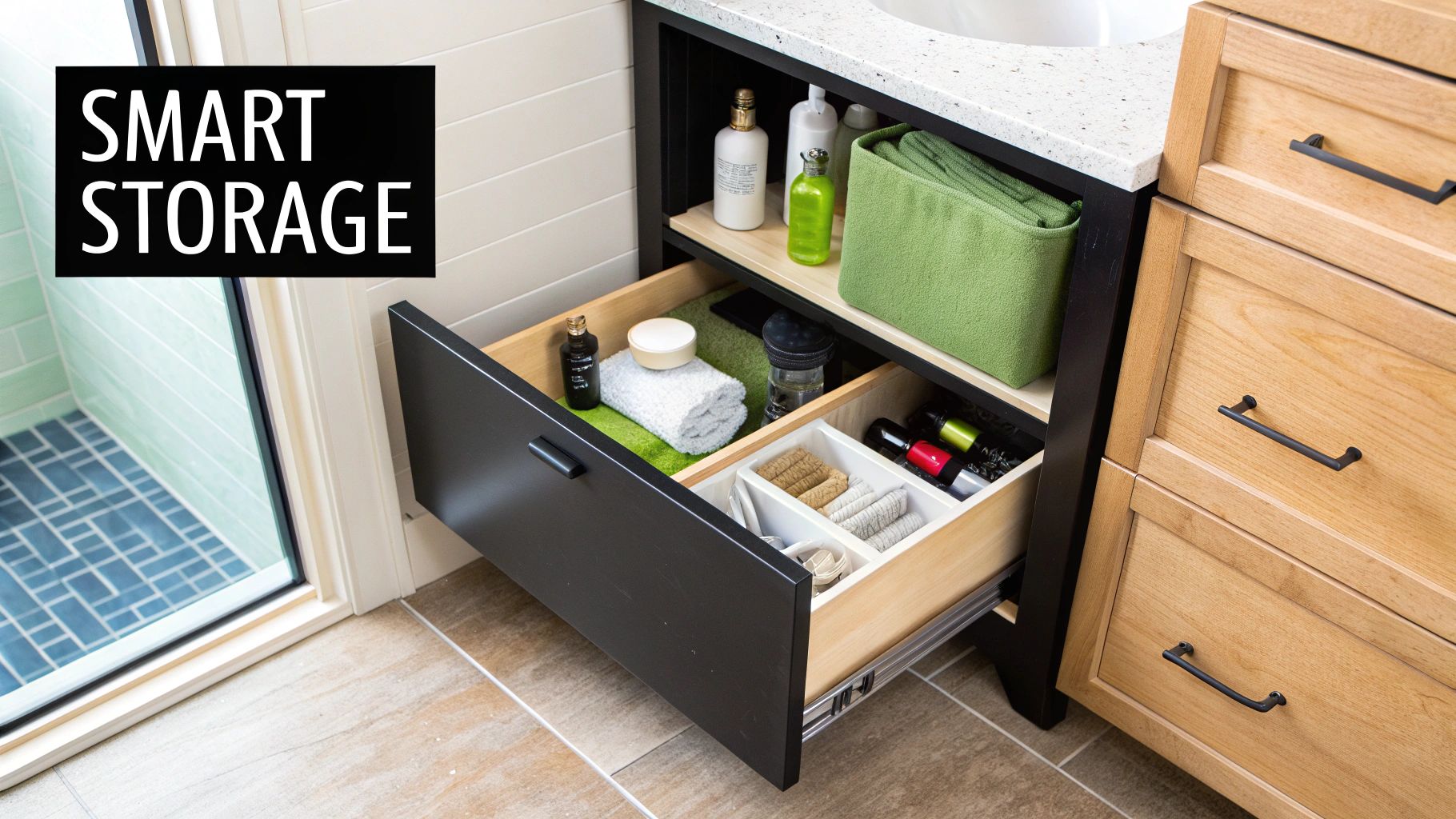
For instance, a simple 12×24-inch recessed shower niche, costing around $150-$400, eliminates the need for bulky shower caddies. Similarly, floor-to-ceiling linen towers designed for narrow spaces can add 15-20 cubic feet of valuable storage. The goal is to build storage into the room’s structure, creating a seamless and highly efficient environment.
Key Storage Actions
- Go Vertical: Utilize vertical wall space with floor-to-ceiling cabinetry or open shelving to draw the eye upward and store bulky items like towels.
- Recess Everything Possible: Install recessed medicine cabinets, toilet paper holders, and shower niches to save precious inches of clearance and maintain clean lines.
- Optimize Your Vanity: Choose vanities with deep drawers over simple cabinet doors for easier access to items stored in the back. Incorporate drawer dividers and even hidden electrical outlets for charging devices.
By planning storage thoughtfully from the start, you ensure your new bathroom is as practical as it is beautiful. Explore these and other bathroom cabinet organization ideas on sinclaircabinets.com to perfect your design.
8. Hire Licensed Professionals for Plumbing, Electrical, and Structural Work
While DIY can be tempting for cosmetic updates, specialized trades like plumbing, electrical, and structural modifications demand certified expertise. Hiring licensed professionals is a non-negotiable step in your bathroom remodeling journey, as it ensures safety, code compliance, and protects your investment. Attempting this complex work yourself can lead to catastrophic failures, such as leaks causing thousands in water damage, electrical faults creating fire hazards, or voiding your homeowner's insurance policy.
For example, improper shower waterproofing can cost between $3,000 and $8,000 to repair, whereas professional installation typically costs $800 to $1,500 initially. A licensed professional guarantees their work, carries liability insurance, and pulls the necessary permits, preventing future legal and financial headaches when you decide to sell your home. This is one of the most critical tips on bathroom remodeling for a successful, long-lasting result.
Key Actions for Hiring Professionals
- Verify Credentials: Check licenses with your state’s licensing board and confirm they have active liability and workers' compensation insurance.
- Get Detailed Contracts: Ensure your contract outlines a clear payment schedule, project timeline, and warranty terms. Never pay the full amount upfront; a 30% deposit is standard.
- Check References: Ask for and contact references from recent projects similar to yours. Also, check reviews on platforms like the Better Business Bureau and Google.
Vetting your contractor thoroughly is essential for a smooth project. Discover all the right questions to ask by reading about hiring the right contractor on sinclaircabinets.com.
8 Key Tips Comparison Guide
| Item Title | 🔄 Implementation Complexity | 💡 Resource Requirements | 📊 Expected Outcomes | ⭐ Key Advantages | ⚡ Ideal Use Cases |
|---|---|---|---|---|---|
| Establish a Realistic Budget and Add a 10-20% Contingency | Medium (requires research & planning) | Time for research, multiple contractor quotes | Controlled expenses, fewer surprises, prioritized spending | Prevents cost overruns, informed decision-making | All remodels needing financial planning |
| Prioritize Proper Ventilation to Prevent Moisture Damage | Low to Medium (installation required) | Quality exhaust fans, electrical work | Reduced moisture damage, mold prevention | Improves air quality, protects finishes | Bathrooms prone to humidity, code compliance |
| Invest in Water-Resistant and Durable Materials | Medium (material selection & installation) | Higher material costs, professional labor | Long-lasting surfaces, reduced maintenance | Extends lifespan, maintains appearance | High-moisture bathrooms requiring durability |
| Plan Your Layout for Optimal Functionality and Flow | Medium to High (design and measurements) | Design expertise, possible plumbing constraints | Maximized space, better usability, code compliance | Reduces relocation costs, improves comfort | Small or complex bathrooms, accessibility needs |
| Upgrade Plumbing and Electrical Systems During Renovation | High (licensed professionals needed) | Licensed tradespeople, higher costs | Safe, code-compliant infrastructure, fewer future repairs | Enhances safety, meets code, increases value | Older homes, major remodels with open walls |
| Choose Timeless Design Over Trendy Styles | Low to Medium (design selection) | Design knowledge, quality materials | Long-term aesthetic appeal, high resale value | Avoids obsolescence, broad market appeal | Long-term investments, resale-focused remodels |
| Maximize Storage with Smart Built-In Solutions | Medium (planning & custom installations) | Custom cabinetry, additional materials | Organized, clutter-free spaces | Efficient space use, increases home value | Small bathrooms, organization-focused remodels |
| Hire Licensed Professionals for Plumbing, Electrical, and Structural Work | High (professional scheduling & oversight) | Higher labor costs, permit processes | Safety, warranty, code-compliance, fewer repairs | Reduces risk, legal protection, quality assurance | All structural, plumbing, and electrical work |
Your Dream Bathroom Awaits: Bringing It All Together
A successful bathroom remodel is a masterful blend of meticulous planning, intelligent material selection, and expert craftsmanship. Navigating this process requires more than just picking out new tiles; it’s about making informed decisions that will serve you for years to come. By embracing these essential tips on bathroom remodeling, you are now equipped to transform a purely functional room into a personal sanctuary.
From establishing a realistic budget with a built-in contingency to prioritizing proper ventilation, every step you’ve learned is a building block for a successful project. Investing in water-resistant materials, planning a functional layout, and upgrading critical infrastructure like plumbing and electrical are not just suggestions; they are foundational pillars that ensure your new bathroom is safe, durable, and efficient. Choosing timeless design over fleeting trends guarantees lasting appeal, while maximizing storage with smart built-in solutions, particularly custom cabinetry, elevates both the form and function of your space.
Ultimately, the true value of a well-executed renovation lies in its ability to enhance your daily life. A thoughtfully designed bathroom reduces clutter, improves your morning routine, and provides a peaceful retreat at the end of the day. By remembering to hire licensed professionals for specialized tasks, you protect your investment and ensure every component works flawlessly together. You are no longer just dreaming of a better bathroom; you have a clear, actionable roadmap to create a space that is beautiful, functional, and uniquely yours.
Ready to elevate your bathroom with cabinetry that perfectly blends beauty and functionality? For over 35 years, Sinclair Cabinetry inc has specialized in crafting bespoke, real wood cabinetry that serves as the centerpiece of stunning bathroom renovations. Explore our portfolio at Sinclair Cabinetry inc and contact our team in Cape Coral, Florida, to begin designing the custom storage solutions that will bring your dream bathroom to life.