

Taking on a bathroom remodel here in Cape Coral is an exciting prospect. It's more than just a chance to pick out new tiles and fixtures; it’s about creating a space that’s not only beautiful but also built to last in our unique coastal environment. With over 35 years in the business, we’ve learned that the secret to a successful project is pairing smart, functional design with materials that can handle the Florida climate—especially custom, real-wood cabinetry.
Your Guide to a Successful Cape Coral Bathroom Remodel
Remodeling a bathroom in Southwest Florida is a whole different ballgame. We’re not just dealing with design choices; we’re up against intense humidity, salt in the air, and some of the toughest building codes in the country, all designed to keep our homes safe during hurricanes. If you overlook these local quirks, you risk choosing materials that will fail way too soon or running into expensive compliance headaches later.
Think of this guide as your roadmap. We want to take the stress out of the process and give you the confidence to move forward. We’ll walk through everything from the first sketch to the final polish, making sure your investment is protected and you end up with a bathroom you absolutely love.
What to Expect in This Guide
We’ve put this together to tackle the real-world challenges—and opportunities—that Cape Coral homeowners face. You’re going to get practical, no-nonsense insights into:
- Realistic Budgeting: We'll break down local costs and show you where your money makes the biggest impact.
- Navigating Permits: Get a clear understanding of the specific Lee County codes that will affect your project.
- Material Selection: Learn why moisture-resistant materials aren't just a nice-to-have; they're a necessity here.
- Contractor Vetting: We’ll give you the key questions to ask so you can find a reliable local pro.
A big part of modern bathroom design is also thinking about the future. Integrating features for long-term usability, like accessible bathtubs, during the planning stage is a smart move. It ensures your new space works for you today and for many years to come.
Understanding the Investment
It's no secret that quality home renovations are in high demand around here. People want comfortable, resilient homes that stand up to the elements. The numbers back this up, with recent data showing the average bathroom remodeling Cape Coral project falls somewhere between $7,611 and $10,511. Of course, a full-gut, custom renovation can easily climb upwards of $15,855, all depending on the finishes you choose and how complex the job is. These figures really highlight why starting with a solid plan is so important.
Our goal is to give you the information you need to make smart decisions. A well-planned remodel doesn't just make your daily routine better; it’s a serious upgrade to your home's overall value.
The foundation of any great bathroom is quality craftsmanship, and that starts with the cabinetry. As local cabinet makers, we at Sinclair Cabinetry build custom, real-wood cabinets specifically engineered to fight back against the swelling and peeling that humidity causes in lesser materials. When you start with a strong plan, you're setting yourself up for a successful and rewarding project. For a deeper dive into those first steps, be sure to check out our guide on how to plan a bathroom renovation.
Budgeting Realistically for a Coastal Remodel
Let's talk about the most critical part of any successful bathroom remodel in Cape Coral: setting a realistic budget. It’s tempting to look at national averages, but those numbers don’t tell the whole story for us. Here in Lee County, local labor rates, the need for coastal-grade materials, and your specific vision are what really shape the final cost. A clear financial plan from the get-go is your best defense against stress and ensures you put your money where it counts.
The first step is getting past those vague "ballpark" figures. The size of your bathroom is a big factor, of course, but the finishes you choose can have an even bigger impact. For example, upgrading from standard ceramic to a high-end porcelain tile or opting for a sleek, custom frameless glass shower enclosure instead of a pre-fab unit will definitely move the needle on your final invoice.
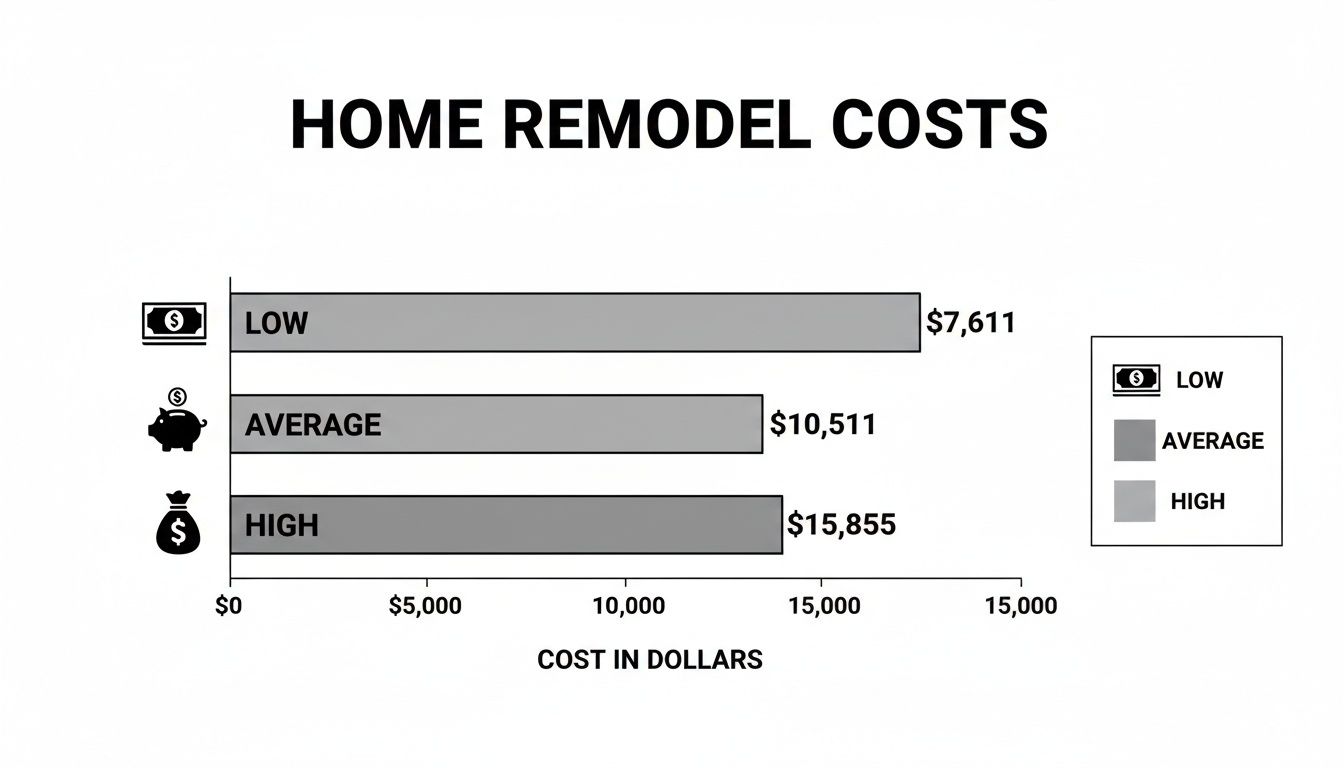
This chart gives you a sense of the typical investment spectrum for local projects. It shows that while a basic refresh is certainly achievable, a full-scale, high-quality renovation requires a more significant budget to cover the premium materials and skilled labor that a lasting project demands.
Breaking Down the Major Expenses
When estimates start rolling in, they can feel a bit overwhelming. It helps to know how that total number is typically divided. Think of your budget as being sliced into a few key categories that cover everything from demolition to the final light fixture.
Generally, your budget will break down across these core areas:
- Labor: This is often the biggest piece of the pie. It covers demolition, plumbing, electrical work, tiling, and all the installation. Skilled labor is in high demand around here, and that's reflected in the cost.
- Cabinetry and Vanities: As the functional and visual centerpiece of the room, this is a place you don't want to skimp. Custom, real-wood cabinets from a local maker like us offer far better resistance to our humidity than what you'll find at a big-box store.
- Fixtures and Finishes: This is everything from the toilet and sink to the faucets, showerhead, lighting, and hardware. Prices here can swing wildly depending on the brand and style you fall in love with.
- Tile and Flooring: The cost here is driven by the material itself (porcelain, natural stone, luxury vinyl) and the complexity of the installation pattern.
Understanding these pieces helps you see exactly where your money is going and make smarter decisions. For a more granular view, check out our complete bathroom remodel cost breakdown for a deeper dive.
Cape Coral Bathroom Remodel Budget Breakdown
To give you a clearer picture, here’s a sample budget allocation showing how funds are typically distributed for a mid-range to high-end bathroom renovation right here in our area.
| Expense Category | Percentage of Budget | Key Considerations for Cape Coral |
|---|---|---|
| Labor & Installation | 20-30% | Covers all trades. Higher demand for skilled labor in Southwest Florida can increase this percentage. |
| Cabinetry & Vanity | 15-25% | Crucial investment. Prioritize solid wood and moisture-resistant finishes over MDF to prevent swelling and warping in our humid climate. |
| Fixtures (Plumbing) | 10-15% | Faucets, shower systems, toilet, sink. Coastal-rated finishes (like PVD) resist corrosion from salt air. |
| Tile & Flooring | 10-15% | Includes materials and labor. Non-slip porcelain is a popular and durable choice for wet areas. |
| Countertops | 5-10% | Quartz is a top choice for its non-porous, low-maintenance properties, ideal for preventing mold and mildew. |
| Lighting & Electrical | 5-7% | Includes fixtures, wiring, and proper ventilation. A high-CFM exhaust fan is non-negotiable to combat moisture. |
| Demolition & Prep | 3-5% | Tearing out old materials, waterproofing, and preparing surfaces for new installations. |
| Permits & Contingency | 10-15% | Budget for permits and always keep a contingency fund (10% minimum) for unexpected issues, which are common in older coastal homes. |
This breakdown illustrates why prioritizing certain materials and setting aside a healthy contingency fund is so important for a smooth and successful project in our unique environment.
Investing for Longevity in a Coastal Climate
Here in Cape Coral, budgeting isn’t just about the upfront price tag; it’s about long-term value. Our humid, salt-laced air is notoriously tough on building materials. Spending a bit more now on the right products can save you a fortune in repairs and replacements down the line. This is especially true when it comes to cabinetry.
Those MDF and particle board vanities might look fine on the showroom floor, but they are magnets for moisture, leading to swelling and delamination in our climate. It’s why we’re such strong advocates for investing in solid, real-wood cabinetry with a high-quality, factory-applied, moisture-resistant finish. It’s a true investment in durability that pays for itself over and over.
Your budget should always prioritize the things that are difficult and expensive to change later. That means allocating funds for top-notch waterproofing, proper ventilation, and durable cabinetry before you splurge on trendy, decorative items that can be easily swapped out in a few years.
Local projects show that a strategic budget is essential. A typical bathroom remodel in Cape Coral can run anywhere from $10,000 to $30,000 or more. This range is shaped by the square footage, local labor rates that average $50-$100 per hour, and whether you're including high-end features like custom real wood cabinets. While a simple powder room update might fall between $5,000-$10,000, a full master suite gut and remodel with spa-like features can easily top $25,000.
Navigating Local Permits and Building Codes
When you start planning a bathroom remodeling Cape Coral project, it’s easy to get caught up in the fun stuff—tile samples, paint colors, and shiny new fixtures. But before you get too far, we need to talk about the less glamorous, but absolutely critical, side of things: permits and building codes.
Here in a hurricane-prone area like ours, these rules aren't just bureaucratic hoops to jump through. They are essential safety measures put in place to protect your home, your family, and your investment. Trying to sidestep them can lead to some serious headaches, including hefty fines, work-stoppage orders, and major problems when you eventually decide to sell your home.
So, when do you need a permit? The rule of thumb in Lee County is pretty clear: if you’re touching the "guts" of the bathroom, you'll almost certainly need one. This means any changes to the plumbing, electrical wiring, or structural elements.
Moving a toilet, adding a new shower stall where there wasn't one before, rerouting drain lines, or installing new lighting circuits—these all fall squarely into the "permit required" category. A simple cosmetic refresh like painting the walls or swapping out a faucet probably won't require one, but the scope of most full-scale remodels definitely will.
Why Permits Are Non-Negotiable
This is where working with a licensed, local contractor becomes your greatest asset. An experienced professional already knows the ins and outs of the Lee County permitting system. They can handle the entire application and inspection process for you, which is a massive weight off your shoulders. It ensures everything is filed correctly from day one and that your project is built to the latest codes.
Trying to do a bathroom remodel without the right permits is a huge gamble. If the county flags unpermitted work, they can shut down your project immediately. You could be facing penalties and even be forced to tear out finished work for inspections. It's a stressful, expensive mess that is completely avoidable.
Plus, a properly permitted project gives you an official record of compliance. That’s not just for your peace of mind; it's invaluable when you sell your home, proving that all the work was done correctly and to code.
Coastal-Specific Codes You Can't Ignore
Living in Cape Coral means our building codes are naturally stricter than in many other places. These regulations are specifically designed to handle the realities of our coastal environment, from hurricane-force winds to the constant humidity.
Here are a few key coastal considerations for your bathroom remodel that you absolutely can't overlook:
- Impact-Resistant Windows: If your bathroom has a window on an exterior wall, it must meet the Florida Building Code’s requirements for wind-borne debris. This usually means installing certified impact-resistant glass or having approved hurricane shutters in place.
- Proper Ventilation: High humidity is just a fact of life here. To combat it, the building code requires a mechanical exhaust fan in every bathroom. This isn't just a suggestion—it's mandatory to control moisture and prevent mold and mildew from taking hold. The fan has to be sized correctly for the room and vented directly outside, never into an attic space.
- Electrical Safety: Every single electrical outlet in a bathroom must have GFCI (Ground Fault Circuit Interrupter) protection. This is a critical safety feature that can prevent electric shock in wet areas.
A good local contractor won’t just meet these requirements; they'll know the specific nuances local inspectors look for. They build things right the first time, preventing the kind of delays that can throw your entire project off schedule.
While it might all seem a bit complicated, this process is standard for any quality bathroom remodeling Cape Coral job. And if you're thinking about an even bigger renovation, the same core principles apply. You can learn more in our guide to kitchen remodeling in Cape Coral.
Choosing Materials That Withstand Florida Humidity
Let's be honest: Florida's climate is beautiful, but that relentless humidity is the #1 enemy of a bathroom remodel. Here in Cape Coral, choosing materials isn't just about looks—it's about picking finishes that can fight back against the damp air, day in and day out. If you make the right choices now, your new bathroom will stay beautiful for years, avoiding the peeling, warping, and mold that plague lesser materials.
This is especially true for the core components of your bathroom. From the floor up, every single surface needs to be judged on its ability to perform in our unique coastal environment. That means prioritizing materials that are non-porous, water-resistant, and simply built to last.
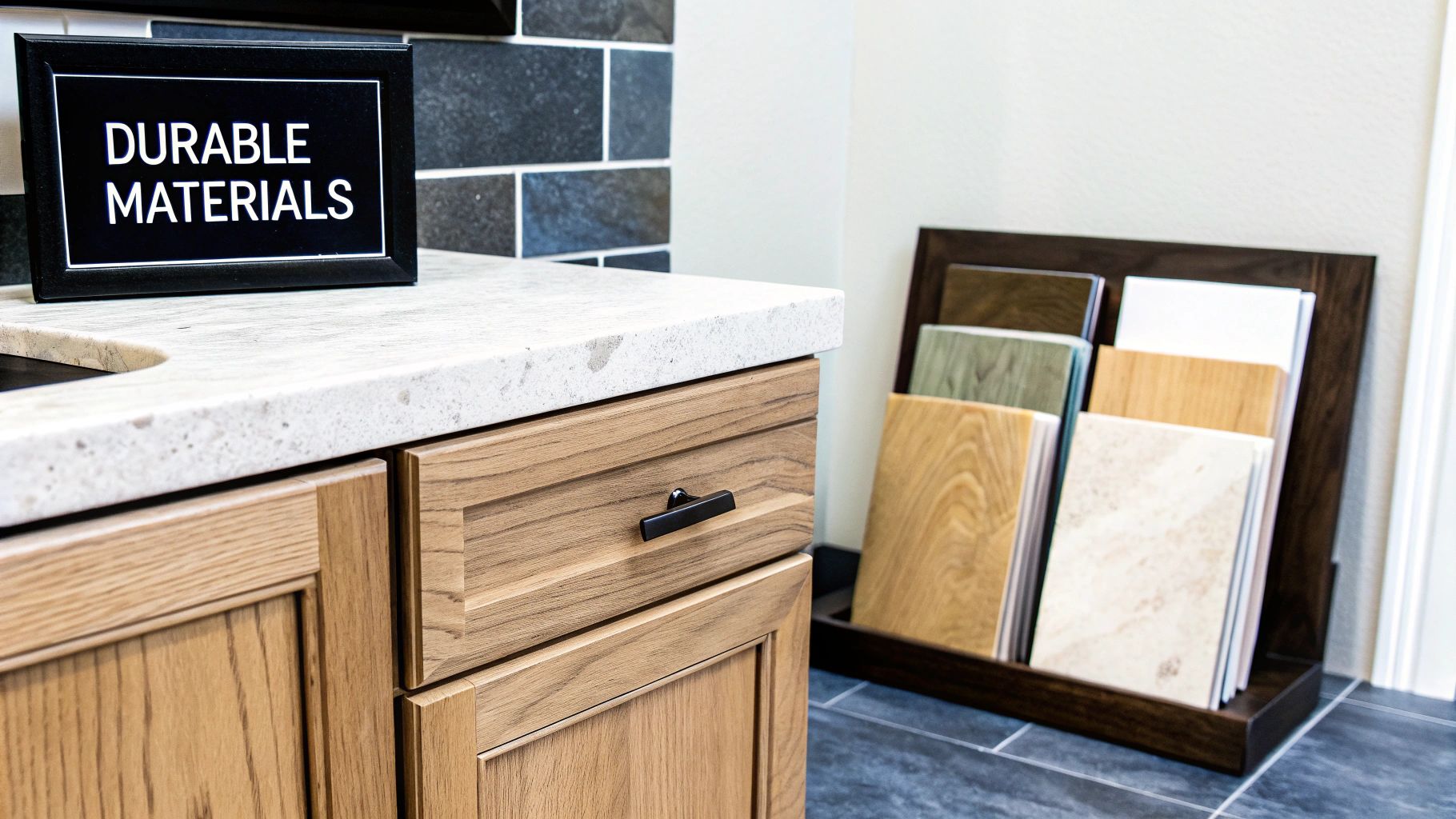
Smart Flooring and Countertop Selections
The floor is your bathroom's first line of defense against water. While natural hardwood looks fantastic in other parts of the house, it’s a terrible choice for a Florida bathroom where it will inevitably swell and warp. Instead, let's focus on materials actually designed for wet spaces.
- Porcelain Tile: This is the gold standard for a reason. Porcelain is incredibly dense and has a water absorption rate of less than 0.5%, making it practically waterproof. It's also tough, a breeze to clean, and comes in countless styles that can mimic everything from wood to natural stone.
- Luxury Vinyl Plank (LVP): A fantastic and increasingly popular option, LVP is 100% waterproof, feels great underfoot, and is surprisingly durable. Its realistic wood-look designs give you that hardwood aesthetic without any of the moisture-related headaches.
For countertops, the game is all about choosing a non-porous surface that won’t harbor bacteria or let moisture seep in. Quartz is an exceptional choice for any bathroom remodeling Cape Coral project. As an engineered stone, it's completely non-porous, which means it never needs to be sealed and is highly resistant to stains, mold, and mildew.
The Critical Role of Cabinetry
Nowhere is the battle against humidity more important than with your cabinetry. The vanity is often the centerpiece of the room, but if it's made from the wrong stuff, it will become the first thing to fail. This is exactly where many budget-friendly remodels go wrong.
Those off-the-shelf vanities from big-box stores? They're usually made from Medium-Density Fiberboard (MDF) or particleboard. These materials are little more than wood dust and fibers glued together with resin. When exposed to steam from a hot shower, they act like a sponge, soaking up moisture, swelling up, and eventually causing the outer finish to bubble and peel away.
For a bathroom in Southwest Florida, choosing custom-built, real wood cabinets isn't a luxury—it's a necessity. Solid wood construction gives you the structural integrity needed to resist the constant expansion and contraction our humid climate causes, making sure your investment actually lasts.
At Sinclair Cabinetry, we build our bathroom cabinets using real wood and top-tier joinery. We finish them with a high-quality, factory-applied coating that creates a durable barrier against moisture. This approach dramatically outperforms the lifespan of any MDF or particleboard alternative, protecting your investment and keeping your bathroom beautiful for the long haul.
Comparing Bathroom Cabinetry Materials for Coastal Homes
Making the right call on cabinetry is one of the most important decisions you'll make. To help you understand the real-world differences, here’s a quick comparison of the most common materials.
| Material | Pros | Cons | Best For |
|---|---|---|---|
| Real Wood | Highly durable, resists humidity well, can be refinished, high-end look. | Higher upfront cost. | Master bathrooms, guest baths, and any project where longevity is the top priority. |
| Plywood | Good moisture resistance, very strong, stable material. | Cost can be similar to solid wood, visible layered edges if not finished properly. | Cabinet boxes and frames where strength and stability are key. |
| MDF | Inexpensive, smooth surface for painting. | Extremely susceptible to water damage, swells easily, cannot be repaired once damaged. | Dry areas of the home only; not recommended for bathrooms in Cape Coral. |
| Particleboard | The cheapest option available. | Worst offender for moisture damage, lacks durability, low structural integrity. | Temporary or low-use furniture; should be completely avoided for bathroom remodels here. |
Choosing a material like real wood or high-grade plywood isn't just about avoiding problems; it's about investing in a solution that holds its value and its integrity in our challenging climate.
Designing for the Cape Coral Lifestyle
Once you've nailed down the durable materials, you can focus on the fun part: the style. Here in Cape Coral, many homeowners pull inspiration from our beautiful surroundings to create bathrooms that feel like a serene, functional retreat.
We see a few styles pop up again and again:
- Coastal Contemporary: This look is all about combining clean lines with natural textures. Think light-colored, wood-look porcelain tile, crisp white quartz countertops, and custom cabinets in shades of white, light gray, or calming sea-inspired blues and greens.
- Spa-Like Retreat: The goal here is pure tranquility. This style often features natural stone (or stone-look porcelain), a gorgeous freestanding tub, a large walk-in shower with a rainfall head, and warm, minimalist wood vanities to create a calming, organic vibe.
By carefully selecting materials that are both beautiful and built to handle our climate, you ensure your bathroom remodeling Cape Coral project is a resounding success that you'll love for decades.
Hiring the Right Remodeling Contractor in Cape Coral
Your project’s success, from the first swing of the sledgehammer to the final bead of caulk, rests squarely on the shoulders of the contractor you choose. Let's be honest: finding a skilled, trustworthy professional is the single most important decision you'll make. This is especially true here, where a quality bathroom remodeling Cape Coral project demands a deep understanding of local building codes, coastal-rated materials, and the unique quirks of Southwest Florida homes.
The good news? You have plenty of options. The local market is full of talented professionals ready to take on your project. The real challenge is sifting through them to find the perfect fit for you.
Starting Your Search and Vetting Candidates
Before you even think about picking up the phone for estimates, do a little homework online. A great contractor will have a solid digital footprint, including a professional website that showcases their work and glowing reviews on platforms like Google and Houzz.
Look for detailed photo galleries of past bathroom remodels—not just generic stock photos. You want to see real projects they've completed for homeowners right here in our community.
When you're bringing someone into your home for a major project, you want to be sure you're making a smart choice. The core principles of hiring professional service providers with confidence apply here just as they would anywhere else—vetting is key.
Essential Questions for Every Potential Contractor
Once you have a shortlist of a few promising candidates, it’s time for an interview. This is about much more than just getting a price; it's about making sure they're a legitimate, professional operation you can trust in your home.
Come to the meeting prepared with a checklist of non-negotiable questions:
- Are you licensed and insured in Lee County? This is non-negotiable. Ask to see a physical copy of their state license and certificates for both general liability insurance and workers' compensation. This protects you from any liability if an accident happens on your property.
- Who, exactly, will be working on my project? Will they use their own employees or bring in subcontractors? If they use subs, you need to know if those workers are also properly insured.
- Can you provide a detailed, itemized quote? A single number scribbled on a piece of paper is a huge red flag. A professional estimate will break down the costs for labor, materials, permits, and other line items.
- What is your projected timeline? Get a realistic start and completion date. Just as important, ask how they handle the inevitable delays caused by things like material backorders or waiting on city inspections.
- What kind of warranty do you offer on your workmanship? A reputable contractor will always stand behind their work with a clearly written warranty.
This initial screening will help you quickly weed out any unqualified or unprofessional candidates, allowing you to focus your energy on the serious contenders.
The bathroom remodeling market in Cape Coral is buzzing. There's a robust ecosystem of 145 BBB-listed professionals serving Lee County, which really shows how much our area is booming. This density of contractors is a direct result of Florida's housing boom, with over 50,000 permits issued annually in the region for home renovations.
The Advantage of an Integrated Team
Have you considered the benefits of partnering with a company that handles multiple parts of the job in-house? A firm like Sinclair Cabinetry, for instance, isn't just a contractor. We are also the manufacturer, designing and building your custom, real-wood cabinets right here in Cape Coral.
This integrated approach just makes for a much smoother process.
- Seamless Communication: You don't have to worry about miscommunications between a separate designer, a cabinet supplier, and an installation crew. Everyone is on the same team, working from the exact same plan.
- Guaranteed Quality: We control the quality of your cabinetry from the raw lumber all the way to the final installation, ensuring it meets our high standards for durability in Florida's humid climate.
- Accountability: You have one single point of contact for a huge component of your remodel. This streamlines every decision and ensures full accountability from start to finish.
Choosing a partner who can manage the design, manufacturing, and installation of key elements like cabinetry eliminates so many of the logistical headaches that can derail a bathroom remodeling Cape Coral project. The end result is a more efficient and much less stressful experience for you.
Common Questions About Cape Coral Bathroom Remodels
Thinking about a bathroom remodel in Cape Coral always kicks up a few key questions. It's totally normal. Getting straight answers from the get-go helps you set realistic expectations and feel confident about the whole process. We hear the same questions from homeowners all the time, so we’ve put together some answers to give you the clarity you're looking for.
One of the biggest unknowns for people is the timeline. A bathroom renovation is definitely more of a marathon than a sprint, and knowing the pace is the key to keeping your sanity.
How Long Does a Typical Bathroom Remodel Take?
A standard, full-gut bathroom remodeling Cape Coral project usually lands somewhere between 3 to 8 weeks from demo day to the final walkthrough. That's a pretty wide range, and it really hinges on the scope of the work.
If you’re just doing a simple cosmetic refresh—think a new vanity, toilet, and a fresh coat of paint—you could be done in just a couple of weeks. But if you're getting into a more complex renovation that involves moving plumbing, rewiring electrical, putting in custom cabinetry, and dealing with multiple city inspections, you'll naturally be on the longer end of that timeline. Unforeseen snags, like a tile order being backstocked or waiting on an inspector's sign-off, can also add time.
What Is the Best Way to Make a Small Bathroom Feel Larger?
Space is a hot commodity, but some smart design moves can make even a tiny bathroom feel surprisingly open and bright. It’s all about creating visual illusions that trick the eye into seeing more space than is actually there.
- Floating Vanities: Getting the vanity up off the floor is a game-changer. It creates an unbroken line of sight for the flooring, instantly making the room feel wider.
- Large-Format Tiles: Go big with your tiles. Larger tiles on the floor and walls mean fewer grout lines, which gives you a cleaner, less cluttered, and more expansive look.
- Mirrors and Glass: A big, frameless mirror is a must. It bounces light all over the room and reflects the space back on itself, effectively doubling the perceived size. In the same way, a clear glass shower door is miles better than a shower curtain for keeping things feeling open.
Do I Need to Hire a Separate Designer?
Not always. In fact, many full-service remodeling companies, including our team here at Sinclair Cabinetry, have in-house design services. We use sophisticated software to create detailed 3D renderings that let you see exactly how your new bathroom will look and feel, from the cabinet styles down to the hardware.
This integrated approach is a huge plus. It means the design is not only beautiful but also practical and buildable right from the start. This really smooths out the entire process and often saves you the cost and headache of hiring an outside interior designer.
Which Features Add the Most Resale Value?
If you want the best return on your investment, stick to timeless, high-quality updates. In the Cape Coral market, buyers are looking for durability and classic style. That means things like well-crafted custom cabinetry that can handle our humidity, modern water-efficient fixtures, and a neutral, inviting color palette.
Big functional upgrades are also a huge draw. Converting an old, dated tub in the master bath into a spacious, modern walk-in shower is one of the most sought-after features and can add some serious value to your home.
Ready to stop wondering and start building your dream bathroom? The expert team at Sinclair Cabinetry inc is here to walk you through every single step, from the first design sketch to the final polish. Visit us online to schedule your free consultation today!