

So, you're thinking about remodeling your bathroom. It's one of the best ways to add real value and enjoyment to your home, but the first question on everyone's mind is always the same: "What's this actually going to cost me?"
The honest answer? It depends. While the national average for a bathroom remodel hovers around $12,119, most folks find themselves spending somewhere between $6,639 and $17,621. That's a pretty big window, right? That range covers everything from a simple cosmetic refresh to a more serious overhaul. And if you're dreaming of a full gut job with luxury finishes, that number can easily climb past $80,000.
Understanding the Financial Blueprint of Your Remodel
Jumping into a bathroom renovation can feel like trying to solve a puzzle with a million little pieces, especially when it comes to the budget. But it doesn't have to be a headache. The final price tag is really just a collection of individual choices you'll make along the way.
Think of it like ordering a new car. The base model has a set price, but as soon as you start adding the good stuff—the leather seats, the premium sound system, the bigger engine—the cost starts to climb. Your bathroom works the exact same way. The materials you choose, how much work is involved, and the quality of your fixtures are what really drive the final cost.
Key Factors That Swing the Numbers
A few key things will make the biggest difference in your final budget. Getting a handle on these from the get-go will help you figure out where to splurge and where you can save a few bucks.
- Project Scope: Are you just swapping out the old vanity and toilet for new ones in the same spot? Or are you tearing everything down to the studs and moving plumbing around? The first is a straightforward update; the second is a full-blown renovation that costs a whole lot more.
- Bathroom Size: This one's simple. A tiny powder room requires less tile, less paint, and less labor than a sprawling primary bathroom. More square footage always equals more cost.
- Material Quality: Here’s where your budget can really go for a ride. A stock vanity from a big-box store might cost a few hundred dollars, while a custom-built, solid wood cabinet can run into the thousands. The same goes for your tile, countertops, and faucets.
- Labor Rates: The cost for a great plumber, electrician, or tile setter changes depending on where you live. You'll almost always pay more for skilled labor in a major city than you will in a smaller town.
Getting a realistic idea of your project's cost is the most important first step. To get a clearer financial picture based on your specific needs, try plugging your details into our bathroom remodel cost estimator.
Tiers of Bathroom Renovation
To make things a bit simpler, we can break down most bathroom projects into three general tiers. That national average of $12,119 really just reflects the huge spectrum of possibilities, from a basic refresh to a high-end spa retreat. As you'd expect, the difference in cost is massive, and it all comes down to materials, labor, and whether you're knocking down walls.
Let's take a quick look at what you can generally expect at different budget levels.
Bathroom Remodel Cost Tiers at a Glance
This table gives you a quick snapshot of what you might expect to spend and what you'll get for your money at each level.
| Remodel Tier | Typical Cost Range | Scope of Work |
|---|---|---|
| Basic / Cosmetic | $3,000 – $8,000 | A simple facelift. Think new paint, reglazing the tub, a new toilet, and a pre-fab vanity. Layout stays the same. |
| Mid-Range | $8,000 – $25,000 | This is the most common tier. Includes new fixtures, better quality tile, a semi-custom vanity, and maybe moving a non-load-bearing wall. |
| High-End / Luxury | $25,000+ | The works. Custom cabinetry, high-end stone, moving plumbing and electrical, heated floors, steam shower, and designer fixtures. |
Each of these tiers represents a different level of investment and transformation. The key is to figure out which one aligns with both your vision and your wallet.
Breaking Down Your Material Expenses
The materials you choose are the tangible heart of your bathroom remodel. Think of it as the detailed shopping list for your project, where every single choice—from the tile under your feet to the light fixture over the vanity—directly impacts your final budget. Typically, materials eat up 35% to 60% of the total renovation cost, so making smart selections here is absolutely critical.
Don't worry, it's all a balancing act. For every high-end, budget-busting material, there's a more affordable alternative that can deliver a surprisingly similar look. Understanding these trade-offs is the key to deciding where to splurge for maximum impact and where you can save a few bucks without sacrificing style.
Cabinetry and Vanities: The Foundation of Your Design
More often than not, the vanity is the first thing you see when you walk into a bathroom. It’s both a workhorse for storage and a major style statement, and its cost can swing wildly depending on whether you go with a stock, semi-custom, or fully custom piece.
- Stock Vanities: These are your off-the-shelf units from big-box retailers, usually running between $300 and $900. They're the most budget-friendly path, but you're limited to standard sizes, styles, and finishes.
- Semi-Custom Vanities: Offering a nice middle ground, these fall in the $800 to $2,500 range. You get much more flexibility with a wider array of door styles, finishes, and hardware to better nail your vision.
- Custom Cabinetry: If you want something truly one-of-a-kind, custom is the way to go. These are built from scratch to your exact specs. Expect to pay $2,500 or more, depending on the materials (think solid wood versus MDF), complexity, and finish.
The image below helps visualize how all these big-ticket items, like cabinetry and plumbing, fit into the overall cost puzzle.
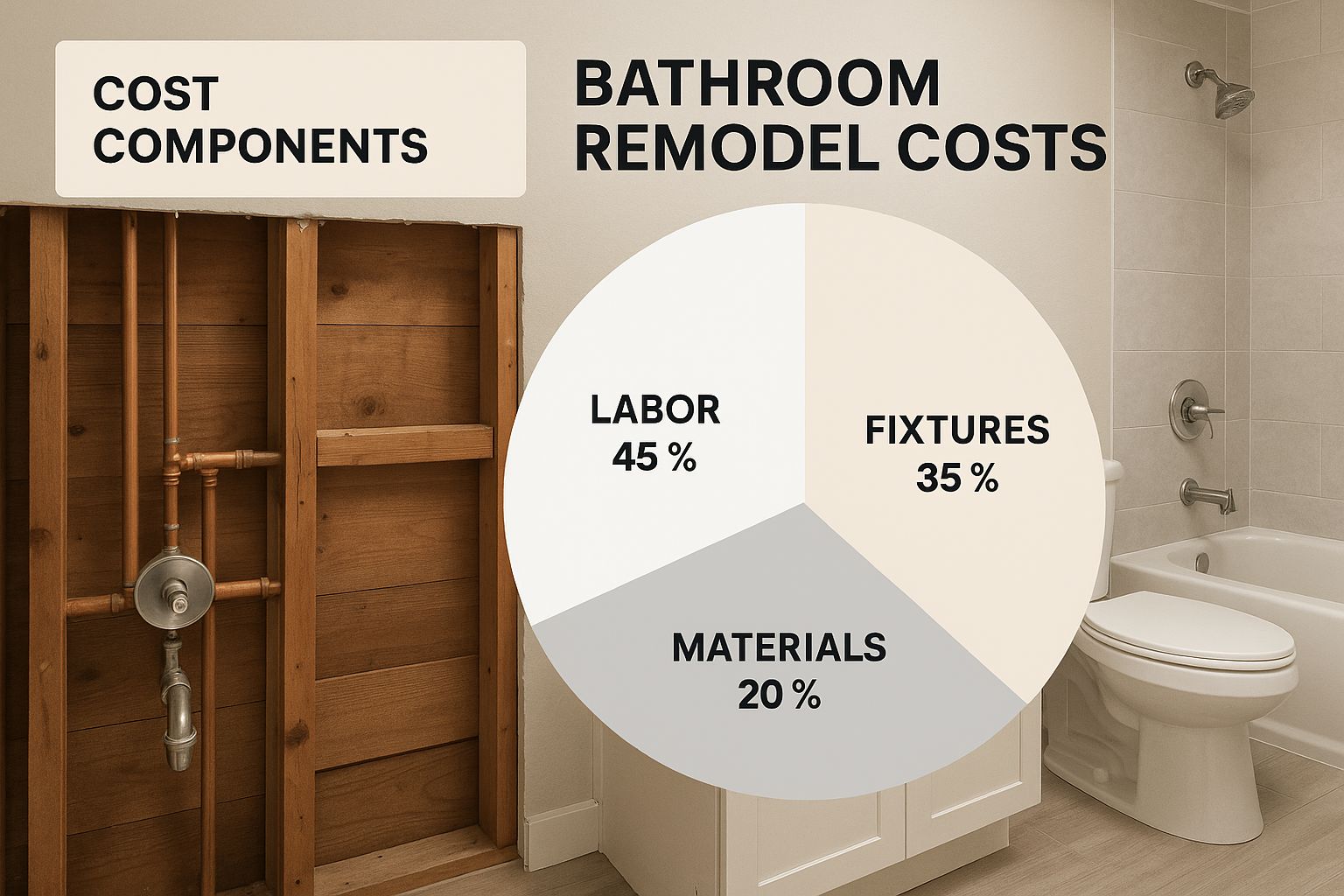
As you can see, every choice is connected. The fixtures, framing, tile—it all adds up.
To give you a clearer picture, here’s a quick table showing how material costs can differ for a typical mid-range bathroom. This really highlights where your money can go.
Material Cost Comparison for a Mid-Range Bathroom Remodel
| Material/Fixture | Standard Option Cost | Premium Option Cost |
|---|---|---|
| Vanity (48-inch) | $600 (Stock) | $2,200 (Semi-Custom) |
| Countertop | $400 (Cultured Marble) | $1,200 (Quartz) |
| Sink Faucet | $120 (Chrome) | $450 (Brushed Gold) |
| Toilet | $200 (Standard) | $700 (High-Efficiency) |
| Shower/Tub | $700 (Acrylic Alcove) | $3,000 (Freestanding Tub) |
| Floor & Wall Tile | $800 (Porcelain) | $2,500 (Natural Stone) |
| Lighting | $150 (Vanity Bar) | $500 (Sconces + Recessed) |
This comparison makes it easy to see how a few "upgraded" selections can quickly push your material budget higher. It’s all about finding the right mix for your goals and your wallet.
Countertops and Surfaces: Setting the Tone
Your countertop choice does a lot of heavy lifting for both the look and durability of your vanity area. Laminate is the most wallet-friendly option, starting around $20 per square foot. On the other end of the spectrum, high-end materials like quartz or marble can easily soar past $100 per square foot.
Looking for a happy medium? Cultured marble and solid surface materials are great choices, giving you a durable, non-porous surface for roughly $40 to $80 per square foot. They deliver that premium feel without the premium price tag of natural stone.
Choosing a material isn't just about the upfront cost. You have to think about long-term maintenance. Natural stone is gorgeous, but it needs to be sealed regularly to prevent stains. That’s a recurring expense and chore that engineered materials like quartz simply don't have.
Tile and Flooring: The Groundwork of Your Budget
The flooring and wall tile really set the stage for your entire bathroom design. The costs here are twofold: you’ve got the price of the tile itself, plus all the necessary installation materials like thin-set mortar, grout, and backer board.
Here’s a quick rundown of the usual suspects:
- Ceramic and Porcelain: By far the most popular choices. They’re tough, water-resistant, and won't break the bank at $2 to $15 per square foot.
- Natural Stone: Materials like travertine, slate, or marble give you that luxurious, spa-like feel. They also come with a higher price tag—from $5 to $35 per square foot—and require a bit more upkeep.
- Luxury Vinyl Tile (LVT): This stuff is a fantastic budget-friendly option, coming in at $2 to $7 per square foot. LVT does an amazing job of mimicking real wood or stone and is completely waterproof.
If you're exploring alternatives, a detailed guide on something like rubber flooring material costs can help you accurately price out other durable options.
Plumbing Fixtures: The Functional Jewelry
Faucets, showerheads, toilets, and tubs are the functional workhorses of your bathroom, but they're also like jewelry for the space. This is an area where prices can be all over the map, even for items that look almost identical.
A basic toilet might run you $150, but a high-efficiency, comfort-height model with all the bells and whistles could easily cost $800 or more. It’s the same story with faucets. A simple chrome set from a major brand might be $100, while a designer fixture in a specialty finish like matte black or brushed gold could push past $500.
Your choice of tub or shower also makes a huge dent in the budget. A standard acrylic alcove tub is pretty inexpensive at $400-$900, but a freestanding soaking tub can easily run from $1,000 to $4,000. And if you’re planning a walk-in shower, remember to account for the shower pan, waterproofing membranes, glass enclosure, and a whole lot of tile.
Lighting and Ventilation: The Essential Final Touches
Great lighting and ventilation are non-negotiable for a functional bathroom, but they’re often an afterthought in the initial budget. Don't make that mistake.
- Lighting Fixtures: A simple vanity light bar might cost $75, but a pair of stylish sconces could be $200 each. And don't forget recessed lighting for the shower or main ceiling, which adds another $30-$50 per light before installation.
- Ventilation Fan: A builder-grade fan is cheap at around $50, but it's also loud and not very effective. Spending $150-$300 on a quiet, high-performance model with a humidity sensor is one of the smartest upgrades you can make to prevent moisture and mold problems down the road.
By carefully thinking through each of these material categories, you can piece together a realistic budget that actually aligns with your design goals. Understanding this part of the bathroom remodel cost breakdown gives you the power to make informed decisions, ensuring you end up with a beautiful, functional space you love—without any nasty financial surprises.
Understanding Your Labor Cost Breakdown
While shiny new fixtures and gorgeous tiles get all the attention, it's the skilled hands putting everything together that truly make or break your project. Labor is often the single largest and most variable expense in any bathroom remodel, and for good reason. You’re not just paying for someone's time; you're investing in experience, precision, and the peace of mind that comes with a job done right.
A huge chunk of your budget will go to the professionals who make sure your plumbing doesn’t leak, your electrical is safe, and your tile is perfectly level. In fact, you can expect labor to account for 40% to 65% of the total project cost. The rest covers materials and fixtures. All in, a bathroom remodel can run anywhere from $70 to over $250 per square foot, a number that shifts dramatically based on the finishes you choose and how complex the job is.
Who Is on Your Remodel Team?
Think of your remodel team like a skilled orchestra, with each pro playing a critical part. While a handyman might be fine for a simple faucet swap, a full-gut renovation needs a team of licensed specialists to pull it off correctly.
Here’s a look at the key players and what they do:
-
General Contractor (GC): This is the conductor of your orchestra. A GC oversees the entire show, from demolition to the final coat of paint. They manage the schedule, hire the subcontractors, and ensure everything is built to code. They typically charge 10% to 20% of the total project cost for their management services.
-
Plumber: Your water wizard. They're responsible for moving supply lines, installing new drains, and setting your toilet, tub, and faucets. Expect to pay a licensed plumber between $75 and $150 per hour.
-
Electrician: Absolutely essential for safety and function. An electrician wires new lighting, installs ventilation fans, and adds GFCI outlets where they're required by code. Their rates often fall between $65 and $135 per hour.
-
Tile Setter: Tiling is an art form. A great tile setter ensures your grout lines are straight, the waterproofing is solid, and the result is a beautiful, durable finish. This specialized labor can cost $10 to $25 per square foot, depending on the tile and pattern complexity.
Factors That Influence Labor Costs
Not all labor quotes are created equal. Several factors can make the price swing wildly, making it one of the trickiest parts of your budget to pin down.
One of the biggest variables is project complexity. Swapping out a toilet in the same spot is a quick job. But moving that toilet to the other side of the room? That involves breaking open the floor and rerouting drain lines, which skyrockets the labor hours.
Your geographic location also plays a major role. Labor rates in a dense urban center will almost always be higher than in a rural area due to differences in demand, licensing requirements, and the cost of living for skilled tradespeople.
When you're trying to nail down your budget, learning how to choose a general contractor is one of the most important steps you can take. A reputable GC will give you a detailed quote that clearly outlines all the labor involved, preventing sticker shock down the road.
Getting Accurate Quotes and Vetting Professionals
To get a firm grip on your labor budget, you need to get multiple, detailed quotes. A vague, one-line estimate is a huge red flag. A proper quote should break down the costs for each phase—demolition, plumbing, electrical, installation, and finishing.
When you're sizing up potential pros, don’t just look at the price tag. Be sure to check for:
- Licensing and Insurance: Make sure they have a valid license for your state and carry both liability insurance and worker's compensation. This protects you.
- References and Reviews: Ask to see a portfolio and for references from recent projects similar to yours. A good contractor will have plenty of happy clients and positive online reviews.
- A Detailed Contract: Never, ever move forward without a signed contract. It should clearly specify the scope of work, a payment schedule, and an estimated timeline for completion.
Investing in qualified, experienced labor might seem expensive upfront, but it's the best insurance against costly mistakes, future repairs, and the headache of a botched renovation. Quality craftsmanship is what turns a pile of materials into a beautiful, functional bathroom that you'll love for years to come.
Planning for Hidden Remodel Costs
Every remodeler has a story. No matter how perfectly you plan, every project has the potential for surprises. Think of your budget as the roadmap for your renovation journey; hidden costs are the unexpected detours that pop up along the way. They don't have to completely derail your project, but being ready for them is the secret to keeping your bathroom remodel cost breakdown on track and your stress levels down.
These aren't the costs you can plan for on a trip to the showroom. They’re the expenses lurking behind drywall and hiding under old, warped flooring, just waiting for demolition day to reveal themselves. Knowing this ahead of time is the difference between a minor hiccup and a major financial headache.
Uncovering Common Unseen Expenses
More often than not, the biggest budget-busters are problems that were impossible to spot before the work started. Once your contractor opens up the walls, they might find issues that absolutely must be fixed before any of the new, beautiful stuff can go in.
A few of the usual suspects include:
- Water Damage: A slow, undiscovered leak can lead to rotted subfloors, compromised wall studs, and even mold. Tackling this can add anywhere from $500 to $3,000 or more to your final bill.
- Outdated Plumbing: Older homes are notorious for having galvanized or polybutylene pipes that need to be replaced to meet modern building codes and, more importantly, to prevent a future flood.
- Electrical Issues: You might find out your bathroom wiring isn't up to code, lacks proper GFCI protection, or just can't handle a new lighted mirror and fan. Beyond the new fixtures, you may need to update your home's residential electrical panel wiring.
- Permit Fees: Depending on where you live and how much you're changing, you'll likely need a building permit. These fees can run several hundred dollars before a single hammer is swung.
And don't forget the less glamorous costs, like fees for a dumpster to haul away all the old tile and fixtures. These small-ticket items can add up fast if you haven't accounted for them.
Your Most Important Financial Tool: The Contingency Fund
This brings us to the single most critical tool for handling whatever your walls throw at you: the contingency fund. This is money you set aside specifically for these "what if" moments. It’s not for upgrading your tile or splurging on a faucet; it’s your project’s financial safety net.
As a rule of thumb, most pros recommend setting aside 10% to 20% of your total project cost for your contingency fund. For a $15,000 remodel, that means having an extra $1,500 to $3,000 in the bank, ready to go.
This fund is what allows you to respond to your contractor's "Uh oh, we found some rot under the toilet" with a calm, "Okay, let's fix it," instead of a panicked, "How are we going to pay for that?" It keeps the project moving forward without forcing you to compromise on the finishes you've already picked out. Having this cushion is a core part of successful bathroom renovation planning and your best defense against budget overruns.
By building this buffer into your financial strategy from day one, you turn potential disasters into manageable tasks. It's the smartest investment you can make in your project, buying you peace of mind and ensuring your beautiful new bathroom becomes a reality—on time and on budget.
Smart Ways to Reduce Your Remodel Costs
Okay, you've got a handle on the numbers that go into a bathroom remodel. Now for the fun part: figuring out how to get the stunning, functional space you’ve been dreaming of without completely emptying your wallet. With a bit of smart planning and a dash of creativity, you can cut down those costs significantly.
The biggest money-saver, without a doubt, is to work with your existing layout. Moving plumbing—the toilet, sink, or shower—is the fastest way to watch your budget skyrocket. It might not seem like a big deal, but that one change requires plumbers, carpenters, and drywallers to start tearing open walls and floors to reroute pipes. Suddenly, you've added thousands in labor costs.
By keeping your fixtures right where they are, you sidestep all that messy, expensive work. That decision alone can free up a huge chunk of your budget for the things you'll actually see and touch every day, like that gorgeous tile you've been eyeing or a higher-quality vanity.
Choose Cost-Effective Material Look-alikes
Let's face it, high-end materials are beautiful, but that beauty comes with a serious price tag. The good news is that modern manufacturing has produced some incredible look-alikes that give you that luxury feel for a fraction of the cost. This is where you can really get creative.
- Flooring: Instead of splurging on natural stone like marble, check out luxury vinyl tile (LVT). Today's LVT has amazingly realistic stone and wood visuals, is 100% waterproof, and is way more affordable and forgiving to install.
- Countertops: While quartz is a fantastic option, you can get a durable, non-porous, and seamless look for much less with cultured marble or solid surface countertops.
- Tile: You don't have to tile every single wall with designer mosaics. A classic, affordable field tile (like white subway tile) can cover the main areas. Then, you can splurge on a small amount of that expensive, eye-catching accent tile for a niche in the shower or as a backsplash behind the vanity.
The goal isn't to be cheap; it's to be smart. By focusing your spending on one or two "wow" features and using budget-friendly alternatives elsewhere, you create a high-end feel without the high-end cost. It's about getting the maximum visual impact for your dollar.
Embrace Strategic DIY and Sweat Equity
If you don't mind getting your hands a little dirty, taking on some tasks yourself is a fantastic way to save on labor. Labor often eats up half the project cost, so every hour you put in is money that stays in your pocket. Just be honest about what you can handle.
Here are a few easy wins for a confident DIYer:
- Demolition: Tearing out an old vanity, toilet, or flooring is pretty straightforward work that can save you a few hundred bucks. Just promise us you'll shut off the water first!
- Painting: A professional paint job can run you $300-$800 or more for a bathroom. Most homeowners can knock this out over a weekend.
- Minor Assembly: Putting together a flat-pack vanity or installing new cabinet pulls, towel bars, and other simple accessories are quick and satisfying wins.
Leave the really tricky stuff—plumbing, electrical work, and intricate tile setting—to the licensed pros. A DIY mistake there can lead to leaks, code violations, or repairs that cost way more than hiring an expert from the get-go.
Think Long-Term and Shop Smart
Finally, cutting your remodel cost isn't just about the upfront price. It’s also about making smart investments. Spending a little more on durable, water-efficient fixtures will pay you back for years in lower utility bills and fewer replacement costs. Always look for the WaterSense label on toilets and faucets.
And don't forget to shop around! Get quotes from at least three contractors and compare material prices from different suppliers. You can often find deep discounts on floor model vanities or countertop remnants that are perfect for a smaller bathroom. Speaking of vanities, knowing the standard measurements is crucial for avoiding pricey custom work. You can learn all about choosing the right bathroom vanity height in our detailed guide to make sure it fits your space and your budget.
Does a Remodel Actually Boost Your Home's Value?
Let's be clear: a bathroom remodel is more than just a nice-to-have upgrade. It's a real investment in your property. When you map out your project with a smart bathroom remodel cost breakdown, you’re not just splurging on a spa-like retreat for yourself—you're making a strategic financial move that pays off down the road. Figuring out the return on investment (ROI) is all about balancing what you want with what future buyers will value.
While the exact numbers change depending on where you live and how big you go with the project, a mid-range bathroom remodel consistently ranks as one of the smartest home improvements you can make. It's not uncommon for homeowners to get back a huge chunk of what they spent when it's time to sell.
Keeping an Eye on Market Trends
If you want to get the most bang for your buck, you’ve got to think like a buyer. The home improvement world is always changing, and a few key trends are really driving what people are willing to pay more for these days.
Here's what's catching buyers' eyes right now:
- Going Green: Eco-friendly features are a huge draw. We're talking low-flow toilets, water-saving showerheads, and vanities built from sustainable wood. People love seeing that you've been thoughtful about efficiency.
- Smart Tech: The demand for a connected home has officially hit the bathroom. Things like digital shower controls, anti-fog mirrors with built-in lighting, and heated floors add a layer of modern luxury that buyers notice.
- Accessibility for All: More and more people are planning to stay in their homes long-term. Because of that, features like walk-in showers, stylish grab bars, and wider doorways aren't just for niche needs anymore—they’re major selling points.
The global bathroom remodeling market is absolutely massive, valued at around $412.8 billion and still climbing. That kind of growth shows a huge appetite for modern, comfortable, and sustainable bathrooms. You can dive deeper into the numbers in a recent report on the global bathroom remodeling market from futuremarketinsights.com.
When you thoughtfully work these elements into your plan, you end up with a bathroom that isn't just functional and beautiful for you. You create a space that’s incredibly attractive on the real estate market, ensuring your investment pays off in both daily enjoyment and a higher home value.
Still Have Questions About Remodel Costs?
Even with a solid plan, a few questions are bound to pop up. Think of this as your quick-reference guide to get clear, straight-up answers for those last-minute details. Let's make sure you feel totally confident before you start.
How Long Does a Bathroom Remodel Actually Take?
This really boils down to the scope of your project. If you're just doing a simple cosmetic refresh—think new paint, fixtures, and a vanity top—you could be done in a few days to a week.
But if you’re planning a full gut job that involves moving plumbing or electrical, you’ll need more patience. These larger projects can easily stretch from three to six weeks, and that’s assuming you don’t run into any surprises behind the walls.
Is It Cheaper to Refinish or Just Replace a Tub?
Nine times out of ten, refinishing (or reglazing) your existing tub is the more wallet-friendly move, usually running between $300 and $600. It's a fantastic option if your tub is structurally sound but just looks tired or is the wrong color.
A full replacement, on the other hand, starts at around $700 for just the tub itself. Once you add in the labor, new plumbing, and tile work needed to put it all back together, the cost can quickly climb into the thousands.
The Takeaway: If you're trying to keep costs down and your tub is in good shape, refinishing is a huge win. Go for a full replacement only when you're after a complete style change or if the old tub is damaged beyond repair.
How Do I Get Contractor Quotes I Can Actually Trust?
Getting reliable numbers is everything when it comes to building a realistic budget. The key is to make sure you’re comparing apples to apples with every contractor you talk to.
Here’s how to do it right:
- Hand Everyone the Same Game Plan: Give each contractor an identical, detailed scope of work. Include the specific materials you want and a rough layout so they’re all bidding on the same vision.
- Always Get at Least Three Bids: This is the magic number. It gives you a feel for the going rate in your area and helps you immediately spot any bid that’s way too high or suspiciously low.
- Insist on an Itemized Quote: A true professional will have no problem breaking down the costs for labor, materials, permits, and any other fees. This transparency is crucial—it shows you exactly where every dollar is going.
Ready to stop planning and start building? At Sinclair Cabinetry inc, we don’t just build custom cabinetry; we create flawless bathroom renovations designed to last. Explore our services and let's get started on your dream bathroom today.