

Finding the right professional for cabinet remodeling near me starts with a simple search, but it can quickly feel like you're drowning in options. The real trick is to look past the generic results and pinpoint the true local artisans who can turn your vision into a reality. It's about spotting the signs of quality, knowing how to read between the lines of customer reviews, and understanding the huge difference between a big-box store and a dedicated cabinet maker.
How to Actually Find a Great Cabinet Maker Nearby
Starting your hunt for a local cabinet pro can feel like navigating a crowded marketplace. Let's be honest—you're not just buying boxes with doors; you're investing in the very heart of your home. And you're not alone. The demand for quality cabinetry is through the roof, part of a global market valued at USD 133.58 billion that’s expected to hit USD 209.82 billion by 2032. This isn't just a random statistic; it shows a clear trend of homeowners wanting durable, personalized solutions, not just another off-the-shelf product.
Your goal is to find a partner who blends artistry with practicality—someone who genuinely understands the nuances of real wood and the importance of a perfect installation. The whole process really begins with building a focused shortlist of potential candidates right in your area.
Refining Your Local Search
Instead of just typing "cabinet remodeling near me" into Google, get a little more specific. Try phrases like "custom wood cabinets [Your City]" or "kitchen cabinet makers in [Your County]." This simple tweak helps filter out the national chains and points you toward local specialists.
As you start browsing their websites, pay close attention. A professional's site should be a gallery of their completed projects, not a collection of stock photos. Look for the little details that signal real expertise:
- Crystal-clear photos of their actual work in real homes.
- Detailed descriptions of the materials and finishes they prefer to use.
- Information about their process, from the first design chat to the final installation day.
While you're at it, you might come across companies that also offer specialized condo remodeling services. This can be a great sign, as it often involves complex cabinet work and points to a versatile, experienced team.
Decoding Customer Reviews
Platforms like Google, Houzz, and Yelp are goldmines, but you have to know how to dig. Don't just glance at the star rating. Dive into the actual comments to look for patterns.
A consistent theme of praise for communication, punctuality, and creative problem-solving is far more telling than a handful of generic five-star reviews. Look for reviewers who describe how a contractor handled unexpected issues—that's the true test of professionalism.
And don't automatically write someone off for a negative review. See how the business responded. A thoughtful, professional reply that offers a real solution shows they care about customer satisfaction. A defensive or dismissive response? That's a major red flag. For a deeper look, check out our guide on how to find the best cabinet makers near me for more targeted advice.
The Advantage of Local Manufacturers
One of the biggest differences you'll find is between companies that just resell cabinets and those that actually build them. A company like Sinclair Cabinetry, with over 35 years of experience, builds custom cabinets right here in our own facility. This direct-to-you model has some huge advantages over big-box stores or contractors who just order from a third-party supplier.
When you partner directly with a local manufacturer, you typically get:
- Higher Quality Control: They're watching over every single step, from selecting the raw lumber to applying the final coat of finish.
- Greater Customization: You’re not stuck with standard sizes or a limited catalog of styles.
- Deeper Expertise: You're talking to people who live and breathe cabinetry every single day.
This hands-on approach delivers a level of craftsmanship and attention to detail that's tough to find anywhere else. By focusing your initial search on these local artisans, you’re setting yourself up for a remodeling project built on a solid foundation of quality.
Vetting Your Shortlist of Cabinet Professionals
Alright, you’ve done the initial legwork and narrowed down your list to a few promising local pros. Now the real investigation begins. This is where you move past the pretty websites and start digging into credentials, craftsmanship, and reputation. It’s the single most important step to separate the true experts from those who just talk a good game.
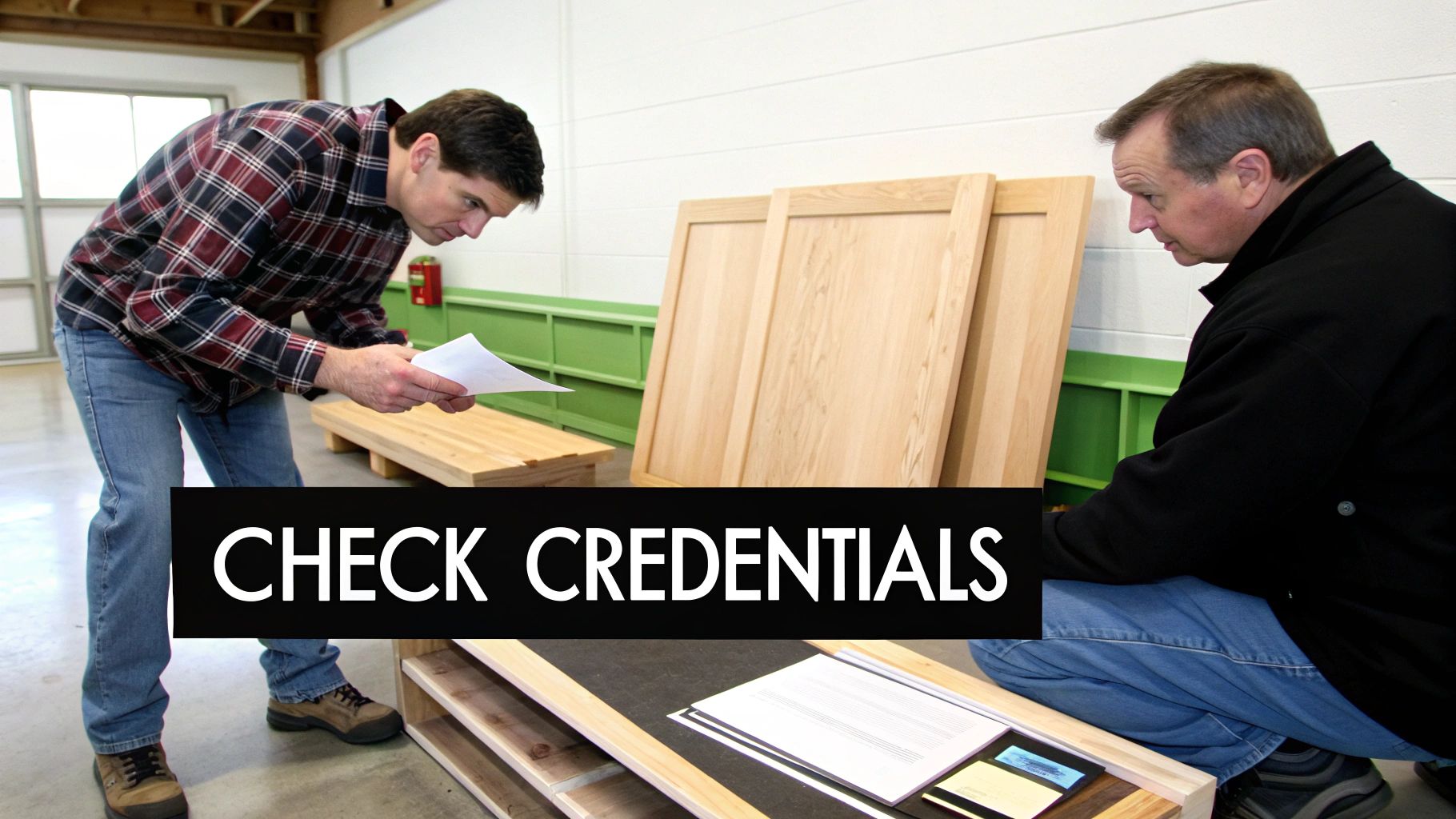
First things first, let’s get the non-negotiables out of the way. Before you go any further, you need to confirm that every single contractor on your list is properly licensed and insured. Don't just take their word for it—ask for a copy of their license and their certificate of insurance. This isn't about being difficult; it's smart due diligence to protect your home and your investment.
Look Beyond the Glossy Photos
With the legal stuff handled, it’s time to get a feel for their work. A portfolio is your first window into a contractor's skill and style, but don't let yourself get swayed by a handful of professionally shot, perfectly staged photos.
Ask to see a deep portfolio of recent projects, and get specific. You want to see work that’s similar in scope and style to what you’re picturing for your own home. If you're dreaming of a sleek, modern, frameless kitchen, looking at photos of traditional, ornate cabinetry isn’t going to tell you much about their capabilities for your project.
The best portfolios aren’t just a highlight reel. They show consistency across a range of projects. Look for clean lines, tight joinery, and flawless finishes that prove their commitment to quality isn't just a one-off.
To help keep everything straight, you can grab a comprehensive contractor hiring checklist to organize your notes. A simple tool like this can be a lifesaver when you're comparing multiple companies.
Talk to People Who Have Been There
References are a goldmine of information, but only if you ask the right questions. Any contractor can cherry-pick a list of happy customers. Your job is to dig a little deeper to find out what it’s really like to work with them day in and day out.
When you call a past client, move beyond a simple, "So, were you happy?" Instead, try asking more pointed questions that give you a clearer picture:
- How was the communication? Was the team responsive when you had questions or concerns?
- What happened when things went wrong? Did any unexpected issues pop up? How did the contractor handle them?
- Did they stick to the plan? How well did they manage the timeline and the budget? Any surprises along the way?
- What was the job site like? Did the crew keep the work area tidy and clean up at the end of each day?
The answers here give you a much more realistic preview of your own experience. Honestly, hearing how a professional navigated a challenge is often far more telling than hearing about a project that went off without a hitch.
Get Your Hands on the Product
Finally, nothing—and I mean nothing—beats seeing the quality of craftsmanship with your own two eyes. Photos can easily hide minor flaws, but an in-person visit to a workshop or showroom lays everything bare. If you're serious about finding the best cabinet remodeling near me, this is a step you can't skip.
Visiting a facility, like the Sinclair Cabinetry workshop, lets you do more than just look. You can feel the satisfying heft of a solid wood door, run your fingers over the precision of dovetail joints in a drawer box, and see the depth and smoothness of the finish up close. It’s your chance to ask direct questions about their construction methods and the exact materials they use.
This hands-on experience is what helps you tell a true artisan from a slick salesperson. You can see the quality for yourself and build the confidence you need to know a company can actually deliver on its promises. After all, you want cabinets that aren’t just beautiful the day they’re installed, but are built to last for decades to come.
Questions to Ask Before You Hire Anyone
Alright, you've done the research and narrowed down your list of potential cabinet contractors. Now comes the most important part: the initial consultation. This meeting is your chance to really dig in and see who’s the right fit. It’s not just about collecting bids; it’s an interview where you find the partner who truly gets your vision and has the chops to bring it to life.
Going in prepared with smart questions is the key to cutting through the sales pitch. Yes, cost is a huge piece of the puzzle, but the lowest bid isn't always the best deal. A rock-bottom price can sometimes mean corners are being cut on materials or that essential services aren't included. Your mission is to get the full picture—from their design philosophy to how they'll manage the day-to-day chaos of a remodel.
Diving Into the Design and Materials
A fantastic cabinet remodel begins long before the first saw starts humming. It all starts with the design, where your ideas finally start to look like a real kitchen or bathroom. This is why you need to know exactly how a contractor will translate your vision into a concrete plan.
Kick things off by asking about their design process and the technology they use. At Sinclair Cabinetry, for example, we use advanced software to create detailed 3D renderings. This isn't just a fancy gimmick; it allows you to see a photorealistic preview of your new space. You can tweak the layout, play with different finishes, and make sure you love every detail before anything is built.
Then, it’s time to talk materials. If you have your heart set on real wood, don't be shy about getting specific.
- Where do you source your wood? A good cabinet maker has solid relationships with reputable lumber suppliers.
- What species and grades do you typically work with? This question reveals their experience and expertise with different wood types.
- Can I see samples of your standard finishes? The quality of the finish is just as crucial as the wood it's protecting. It needs to look good and stand up to daily life.
Understanding Timelines and Logistics
Nothing sinks a remodeling project faster than fuzzy timelines and confusing payment terms. Getting total clarity on the schedule and how payments will be handled is non-negotiable for a smooth, stress-free experience.
Any professional contractor worth their salt should provide a clear, itemized project schedule. I'm not talking about a vague "sometime in April" timeline. It should detail key milestones: final design approval, material ordering, cabinet construction, and a firm installation window.
The payment schedule is just as critical. The industry standard is typically a deposit to get started, progress payments tied to specific milestones, and a final payment only when the job is 100% complete and you're satisfied. Be very wary of anyone demanding a massive payment upfront before a single piece of material has been ordered. For a more exhaustive list of topics, our guide offers more questions to ask your contractor before you even think about signing a contract.
Contractor Interview Checklist and Comparison
After you've met with two or three contractors, the proposals and personalities can start to blur together. This is where a simple comparison chart becomes your best friend. It helps you lay everything out side-by-side, turning a gut feeling into a well-reasoned, objective decision.
This helpful article on questions to ask any home professional has some great general advice that applies here, too. Use the table below as a template to keep track of everyone's answers and make a true apples-to-apples comparison.
| Criteria | Contractor A (e.g., Sinclair Cabinetry) | Contractor B | Contractor C |
|---|---|---|---|
| Years in Business | |||
| License & Insurance Verified? | |||
| Uses 3D Design Software? | |||
| Material Sourcing (Real Wood) | |||
| Estimated Project Timeline | |||
| Payment Schedule Details | |||
| Warranty on Workmanship | |||
| Review of Portfolio/Past Work |
By arming yourself with these questions and a structured way to compare the answers, you can move forward with confidence. You’re not just hiring a contractor; you’re choosing a partner for your home. This methodical approach is the best way to ensure you find a professional who will deliver the quality, craftsmanship, and experience your home deserves.
Choosing the Right Cabinet Materials and Designs
The choices you make at this stage are the ones you’ll live with for years. The wood, the finish, the door style—these elements are what turn a basic blueprint into a space with character. This is where your vision truly starts to take shape, so understanding your options is the key to a result you'll love.
It’s about much more than just picking a pretty color. You’re selecting materials that have to stand up to daily life and a design that needs to function as beautifully as it looks.
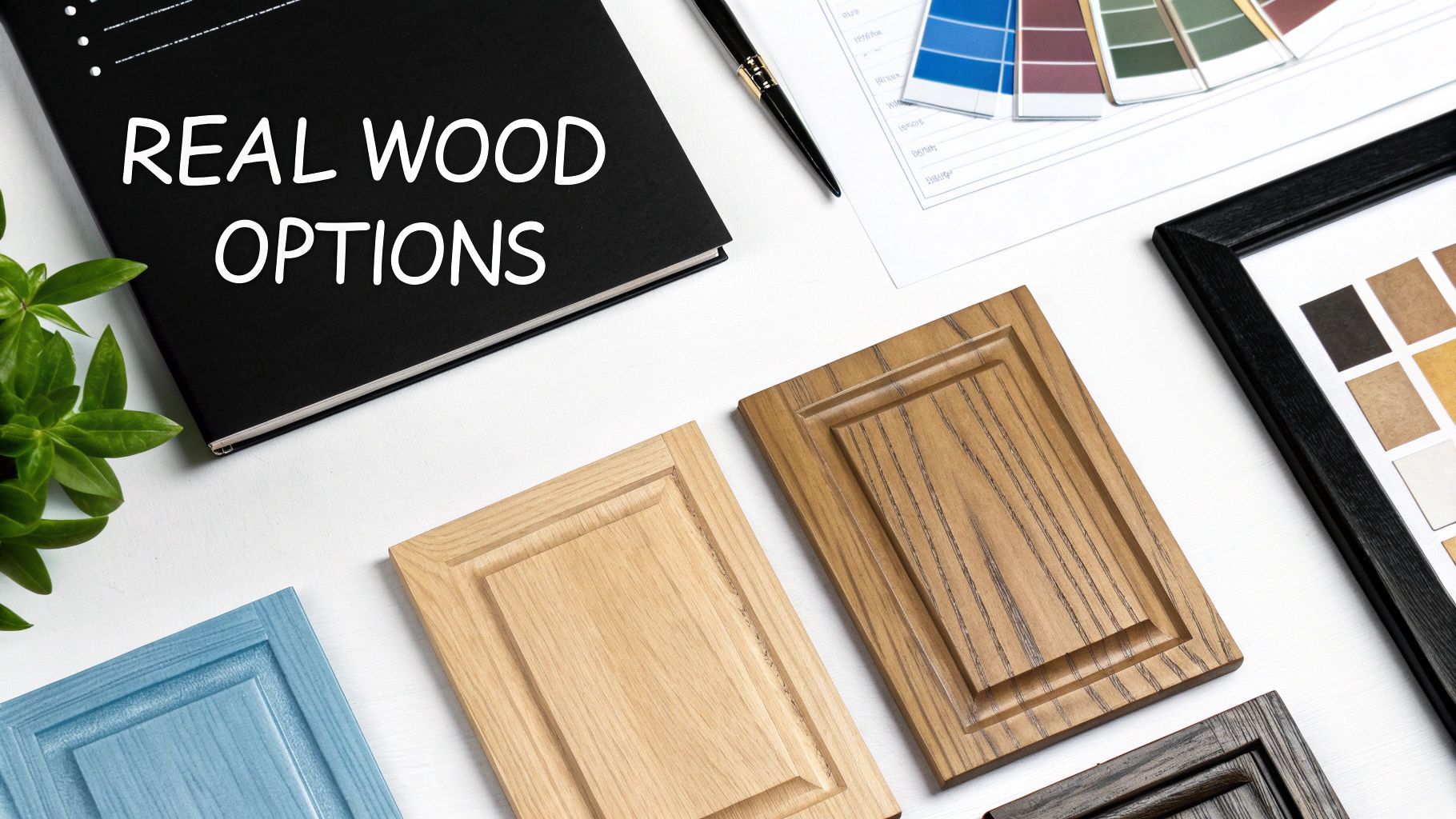
When you're searching for cabinet remodeling near me, the material conversation almost always circles back to one big question: real wood or a composite alternative? While materials like MDF and particleboard have their place, nothing quite matches the durability, beauty, and sheer longevity of solid wood.
Think about it this way: real wood cabinets can be sanded down and refinished years from now, giving them a completely new life. That’s not just practical; it’s a sustainable choice.
The Lasting Appeal of Real Wood
Choosing real wood is an investment in authenticity. Unlike engineered materials that can swell from water damage and are nearly impossible to repair cleanly, solid wood is built for the long haul. Plus, each species of wood brings its own unique personality to your kitchen or bathroom.
- Maple: Known for its fine, uniform grain, maple is a seriously durable hardwood. It takes paint and stain like a dream, giving you a smooth, clean look.
- Cherry: Famous for its rich, warm tones that darken beautifully over time, cherry adds a classic, elegant feel to any room.
- Oak: With its distinct grain pattern, oak is a traditional, sturdy choice that brings a sense of texture and timeless strength.
The way a cabinet is built is just as critical as the wood it's made from. You want to look for signs of real craftsmanship, like dovetail joints in the drawer boxes instead of cheap staples. Full-extension drawer glides are another must-have—they let you see and reach everything inside. These details are the hallmarks of a cabinet built to last.
Exploring Cabinet Design Trends
Once you've landed on a material, the fun part begins. Today’s design trends have something for everyone, from sleek and modern to warm and traditional.
The Shaker-style cabinet remains one of the most popular and timeless choices. Its simple, clean lines—a flat center panel with a four-piece frame—make it incredibly versatile. It looks just as good in a modern farmhouse kitchen as it does in a sophisticated, transitional space.
For a more modern, seamless aesthetic, frameless cabinets (often called "European-style") are a fantastic choice. By getting rid of the traditional face frame, this construction gives you wider drawers and a more streamlined look, maximizing both storage and style.
We’re also seeing a huge move toward personalization. In fact, custom cabinetry’s market share is on the rise, jumping from 20% in 2022 to an estimated 25% by mid-2024. Homeowners are tired of mass-produced, one-size-fits-all options. This trend, highlighted in recent cabinet market trends analyses, shows a clear demand for quality and individuality.
How Custom Design Solves Real Problems
This is where working with a custom cabinet maker makes all the difference. Stock cabinets from a big box store force you to fit your life into their standard sizes. Custom design flips that script—it builds solutions around your space and your lifestyle.
For instance, a Sinclair Cabinetry design can solve those everyday annoyances:
- Tired of that awkward, hard-to-reach cabinet above the fridge? We can add vertical tray dividers to neatly organize cookie sheets and cutting boards.
- Hate digging around in a dark lower cabinet for pots and pans? We'll install deep drawers right next to the stove for easy access.
- Wish your trash and recycling bins weren't an eyesore? We can integrate a pull-out center right next to the sink, keeping everything hidden but handy.
These aren't just fancy features; they’re practical fixes that make your daily routine smoother. Custom cabinetry lets us transform tricky layouts, use every last inch of storage, and create a space that is truly, functionally yours.
What to Expect During the Installation Process
After all the planning and decisions, the day your new cabinets finally show up feels like a huge win. But installation is more than just hanging boxes on the wall. It’s a carefully managed process that, let's be honest, can be a little disruptive. Knowing what's coming helps you navigate the temporary chaos and ensures you get that flawless finish you've been dreaming of.
This whole process is a huge reason why the residential remodeling market is so active. The demand has been massive, particularly in North America, which is expected to make up 43% of the global market growth between 2025 and 2029. That growth is all about homeowners like you wanting top-notch, professional work. If you're curious, you can dig deeper into these cabinet industry insights and forecasts to see the bigger picture.
Your cabinet project will happen in a few distinct phases, and a little communication and patience go a long way in each one.
Preparing Your Home for Demolition
Before the beautiful new stuff comes in, the old stuff has to go out. The demolition phase is hands-down the messiest part of the project. Your installation crew will handle the heavy lifting, but there are a few things you can do to make it run a lot smoother for everyone.
- Empty Everything: Clear out every single thing from your old cabinets, drawers, and countertops. This is the time to pack away dishes, food, and those small appliances you won't be using for a bit.
- Create a Clear Path: Make sure there’s a wide, unobstructed path from your front door right to the work area. This helps the crew move materials in and haul debris out safely and efficiently.
- Protect Your Home: A good professional team will lay down drop cloths and put up plastic sheeting, but dust has a way of getting everywhere. It’s not a bad idea to cover furniture in any adjacent rooms to keep cleanup to a minimum.
The Installation Phase
Once the space is cleared and prepped, the real magic starts. The installation team will begin by marking level lines on the walls—this is the single most important step for a professional-looking job. They'll typically hang the upper cabinets first, then move on to the base cabinets.
Don’t be alarmed by the noise and activity. A professional installation involves precise measuring, cutting, and securing. It’s a process that requires skill and attention to detail, not speed.
During this time, your kitchen or bathroom is officially a work zone. You'll want to plan ahead for this. Many homeowners set up a temporary kitchenette in another room with a microwave, coffee maker, and maybe a mini-fridge to keep life running as normally as possible.
The Final Walkthrough and Punch List
After the last cabinet door is hung and the final knob is screwed in, it’s time for the most important step of all: the final walkthrough. This is your chance to inspect every inch of the work with your project manager before you make that final payment.
Take your time with this. Don't feel rushed.
- Check All Doors and Drawers: Open and close everything. Do they glide smoothly? Do they line up perfectly when closed?
- Inspect the Finish: Look closely for any scratches, dings, or blemishes that might have happened during the install.
- Confirm Alignment: Stand back and look. Are all the cabinets perfectly level? Are the gaps between the doors and drawers consistent?
As you go, make a "punch list" of any little things that need adjusting or fixing. A reputable contractor will be more than happy to take care of these final details to make sure you are 100% satisfied with your new space. This final check is what turns a good investment into a great one that you'll love for years.
Answering Your Cabinet Remodeling Questions
Even after you've done your homework, a few big questions usually pop up when planning a cabinet remodel. Getting clear, straightforward answers is a must before you commit to such a big investment in your home. Let's tackle some of the most common things homeowners ask when they're looking for professional cabinet remodeling.
This flowchart gives you a bird's-eye view of a typical cabinet installation, from the demo day all the way to the final walkthrough.
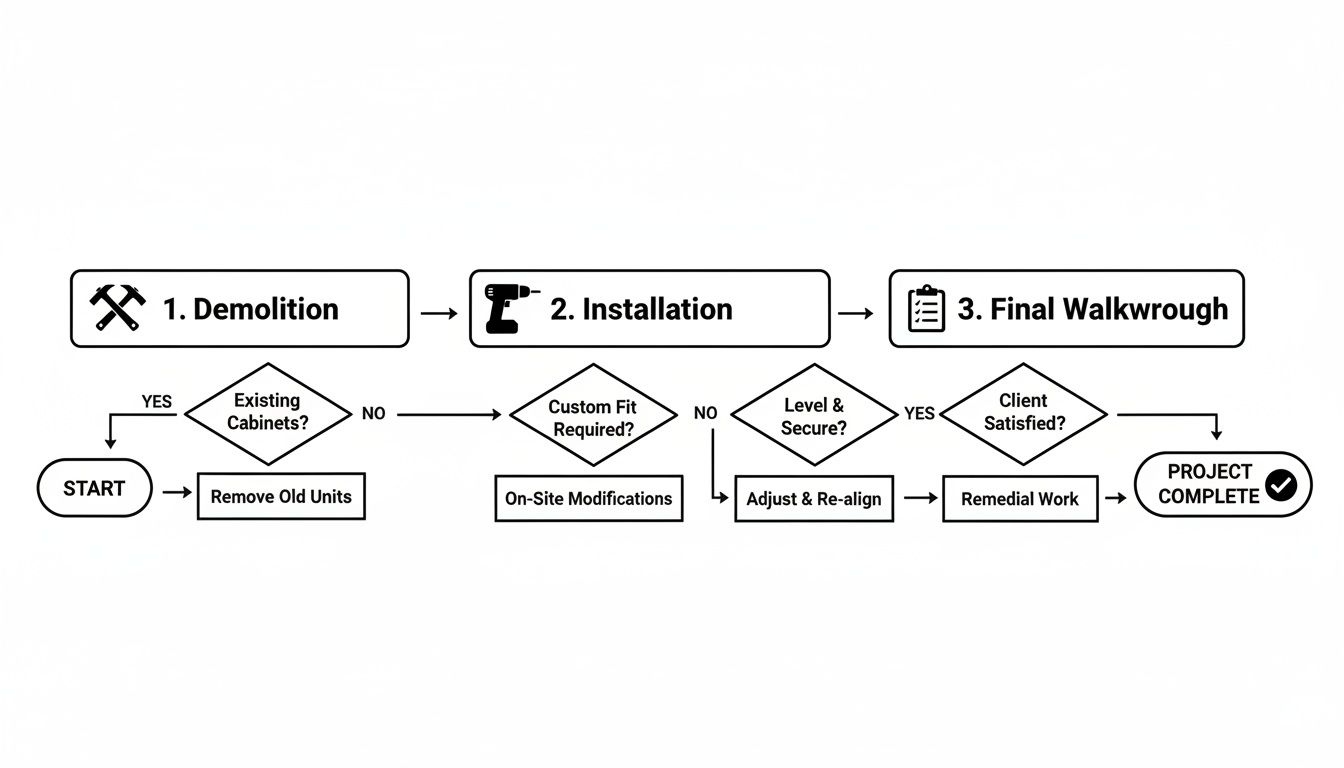
Knowing these key phases gives you a solid roadmap. It helps you understand what to expect and ensures everything moves along smoothly from start to finish.
How Much Does Cabinet Remodeling Really Cost?
There’s no one-size-fits-all price tag for a cabinet project, simply because a few key things really drive the final cost. The biggest factor? Your choice between custom, semi-custom, or off-the-shelf stock cabinets. Custom cabinets, which are built from scratch to your exact specs, will naturally be at the higher end, but they offer personalization you just can't get otherwise.
The quality of the materials is the next big piece of the puzzle. Solid wood cabinets are a bigger investment up front compared to options like MDF or particleboard.
Finally, things like local labor rates, how complex the installation is, and the hardware you choose—think soft-close hinges or high-end designer pulls—all add up. One way to get more value for your money is to work directly with a local manufacturer like Sinclair Cabinetry. You cut out the middleman and the retail markups, so your investment goes directly into quality craftsmanship.
Should I Reface or Replace My Cabinets?
This is the classic remodeling dilemma. The right call really boils down to two things: the condition of your current cabinets and what you want to achieve long-term.
Refacing is a fantastic, budget-friendly option if your cabinet boxes are still in good shape and you're happy with your kitchen's layout. It involves replacing the doors and drawer fronts and then applying a new veneer to the cabinet boxes. It's much faster, less disruptive, and can give your kitchen a major facelift for a lot less than a full replacement.
But if your cabinet boxes have seen better days, or if you're dreaming of changing the layout to improve flow or add features like deep drawers for pots and pans, a full replacement is the smarter long-term investment. It gives you a completely blank slate to design the kitchen you’ve always wanted.
How Long Does the Whole Process Take?
Patience is key with any remodel, and knowing the timeline helps set realistic expectations from the get-go. The entire process breaks down into three main stages.
- Design and Ordering: This is the planning phase. It can take anywhere from one to four weeks and includes all the consultations, finalizing your design, picking out materials and finishes, and getting precise measurements.
- Manufacturing: If you go with custom cabinets, this is the longest part of the journey. Expect the build time to be between four to eight weeks, though it can vary depending on how complex your design is and the builder's current schedule.
- Installation: Once your new cabinets are delivered, the on-site work kicks off. A standard kitchen installation usually takes about two to five days, covering everything from tearing out the old cabinets to installing the final hardware.
Just remember, things like unique custom features, the overall size of your project, and your contractor's schedule can all affect these timelines.
Why Choose a Local Custom Builder Over a Big-Box Store?
While the big retail chains definitely offer convenience, there’s a lot to be said for partnering with a local custom builder. The advantages you get really impact the quality and longevity of your new kitchen.
The main difference comes down to materials and craftsmanship. Local specialists, like our team at Sinclair Cabinetry, are focused on using superior materials like real solid wood. This gives you a level of durability that mass-produced options often struggle to match.
Even better, a local builder gives you unlimited customization. You're not stuck with a limited catalog of standard sizes and styles. We can design creative solutions for awkward corners, build in specialized storage like vertical dividers for baking sheets, and tailor every single detail to how you actually live.
This personalized service runs through the entire project, from the initial 3D design rendering to the final walkthrough. You get a level of attention and expertise that a big-box store just can't replicate. You're not just buying a product; you're collaborating with a true craftsman.
Ready to bring your vision to life with custom cabinetry that combines timeless craftsmanship and modern functionality? The team at Sinclair Cabinetry inc has over 35 years of experience building bespoke solutions for homeowners.
Explore our custom cabinet services and schedule your design consultation today!