

Embarking on a home renovation, whether it's a full kitchen overhaul or custom cabinetry installation, is a significant investment of both time and money. The single most crucial factor determining your project's success is the contractor you hire. A great partnership leads to a smooth process and stunning results, while a poor choice can quickly spiral into budget overruns, missed deadlines, and endless stress. To protect your investment and ensure your vision becomes a reality, you need to be an informed client.
This guide provides the most critical questions to ask a contractor before you sign any contract or make a down payment. Think of this as your essential vetting checklist. It’s designed to help you filter out unqualified individuals and find a true professional who will respect your home and deliver exceptional quality. For homeowners focused on maximizing their return on investment, understanding how to profit from house renovations for sale can be crucial, and it all starts with hiring the right team. By asking these targeted questions, you can confidently move forward, knowing you have a reliable partner for your project. Let's dive into the essential inquiries that separate the best from the rest.
1. Are you licensed and insured for this type of work?
This is the most critical of all questions to ask a contractor before signing any agreement. It's the foundational check that separates legitimate professionals from unqualified or risky operators. A licensed contractor has met specific state or local requirements for their trade, while proper insurance protects you from financial liability in case of accidents, injuries, or property damage during the project.

Without this verification, you could be held responsible for a worker's injury on your property or be left with a massive bill if your home is damaged. Hiring an unlicensed individual may also void your homeowner's insurance policy and leave you with no recourse if the work is subpar.
What to Look For
A professional contractor should readily provide documentation for three key areas:
- State/Local Contractor's License: This proves they are legally permitted to perform the work. For specialty trades like plumbing or electrical, they need specific licenses for that work.
- General Liability Insurance: This covers damage to your property. For example, if a worker accidentally breaks a window or causes a water leak, this insurance pays for the repairs. A minimum of $1 million in coverage is standard.
- Workers' Compensation Insurance: This is crucial. It covers medical expenses and lost wages for any crew members injured on your job site, protecting you from personal liability and potential lawsuits.
Pro Tip: Never accept a verbal confirmation. Always request physical or digital copies of their license and insurance certificates. A legitimate contractor will expect this request and have the documents ready.
Actionable Steps for Verification
Don't just take their word for it; perform your due diligence.
- Request Documents: Ask for their license number and a Certificate of Insurance (COI).
- Verify the License: Visit your state's contractor licensing board website and enter their license number to confirm it's active and in good standing.
- Confirm Insurance: Call the insurance company listed on the COI to verify the policy is current and the coverage amounts are accurate. Ensure your name and address can be added as an "additional insured" for the project duration.
Taking these steps provides a safety net, ensuring your home renovation contractor is qualified, professional, and financially responsible.
2. Can you provide detailed references from recent similar projects?
While licenses and insurance confirm a contractor's legitimacy, references reveal their actual performance and client satisfaction. This question goes beyond a simple checkmark; it offers a direct line to past clients who have experienced the contractor's work firsthand. Quality references provide unfiltered insight into their work ethic, communication style, project management skills, and how they handle the inevitable challenges that arise during a renovation.
This step is your best tool for predicting your own experience. A contractor’s history is a strong indicator of their future performance, and speaking with someone who recently completed a similar project, like a kitchen or bathroom remodel, gives you a realistic preview of what to expect from the process and the final product.
What to Look For
A confident contractor will have a list of satisfied clients ready to share. They should be able to provide you with contact information for at least three recent projects that are comparable to yours in scope and style.
- Relevant Project Type: If you're planning a full kitchen remodel, a reference from a simple cabinet refacing job isn't as helpful. Ask for references from projects that mirror your own.
- Recent Completion Date: References from projects completed within the last 12-18 months are most relevant, as they reflect the contractor’s current crew, processes, and quality standards.
- Willingness to Share: A contractor who hesitates or makes excuses when asked for references should be a major red flag. Professionals are proud of their work and happy to connect you with happy customers.
Pro Tip: When you contact a reference, go beyond asking "Were you happy with the work?" Prepare specific questions about their experience to get the detailed feedback you need.
Actionable Steps for Verification
Don't just collect names and numbers; use them to conduct thorough research.
- Request References & Photos: Ask for contact information for three past clients and request to see a portfolio or before-and-after photos of their specific projects.
- Prepare Your Questions: Before calling, jot down key questions. Ask about communication, how they handled change orders, if they stayed on schedule and on budget, and how they managed site cleanliness.
- Ask the Ultimate Question: A powerful final question to ask each reference is, "Knowing what you know now, would you hire them again?" Their answer, and any hesitation behind it, will be incredibly telling.
Following these steps is one of the most important things you can do when vetting a contractor, ensuring the team you hire has a proven track record of success.
3. What is your detailed timeline and payment schedule?
This critical question establishes clear expectations for both the project's duration and your financial obligations. A well-defined timeline and payment schedule are hallmarks of a professional contractor, preventing misunderstandings and ensuring the project stays on track. It aligns payment with tangible progress, protecting you from paying for work that hasn't been completed.
Without this clarity, projects can drag on indefinitely, and disputes over money can arise. A professional will provide a written schedule with specific phases and a payment structure that ties directly to milestones, rather than demanding large, arbitrary sums upfront. This approach builds trust and keeps everyone accountable.
What to Look For
A transparent contractor will outline a clear project and payment plan. Here’s what it should include:
- Project Timeline: This should detail key phases such as demolition, rough-ins (electrical/plumbing), installation, and finishing. It should also include estimated start and completion dates for each phase.
- Payment Schedule: Payments should be tied to completed work. For example, a kitchen remodel might have payments due after demolition, cabinet installation, and the final walkthrough.
- Contingency Clauses: The agreement should address potential delays, like weather or material backorders, and outline the process for handling change orders that affect the timeline or cost.
Pro Tip: Never agree to a large upfront payment. A deposit of 10-15% is standard. Any contractor demanding 50% or more before work begins is a major red flag. Payments should reflect the value of the work and materials on-site.
This infographic illustrates a common, fair payment structure that aligns payments with key project milestones.
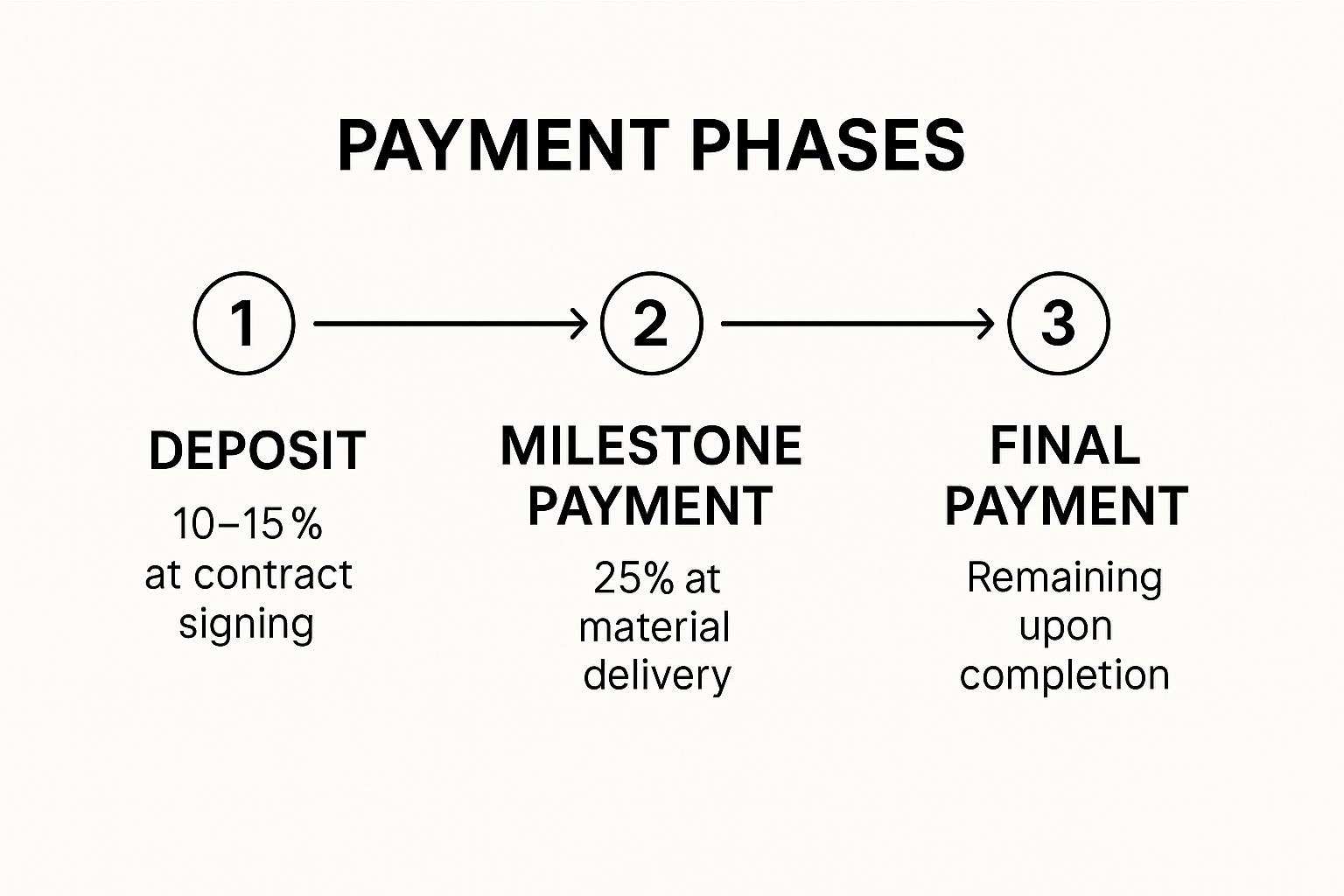
The flow demonstrates how payments are disbursed as the contractor delivers value, minimizing your financial risk throughout the project.
Actionable Steps for Verification
Ensure the timeline and payment schedule protect your interests before signing anything.
- Review the Milestones: Make sure the phases listed are logical and represent real progress. "Framing complete" is a clear milestone; "halfway done" is not.
- Align Payments with Progress: Confirm that each payment is due only after a specific milestone is successfully completed and inspected by you.
- Clarify Final Payment: The final payment should only be made after a "punch list" of all remaining small items is complete and you are fully satisfied with the work.
By establishing these terms, you create a clear roadmap for your project. Understanding the typical project flow can help you evaluate a contractor's proposed schedule; you can learn more about a standard kitchen remodel timeline to set your expectations.
4. How do you handle permits, inspections, and code compliance?
Navigating the web of local building codes, permits, and inspections is one of the most complex parts of a renovation. This question reveals a contractor's experience with local regulations and their process for ensuring your project is legally sound and safe. A professional handles this entire process, protecting you from potential fines, project shutdowns, and significant problems when you eventually sell your home.
Ignoring or improperly handling permits can void your homeowner's insurance and force you to tear out completed work. A contractor who understands and manages this process demonstrates professionalism and a commitment to quality, ensuring the project meets all required safety standards from start to finish.
What to Look For
A competent contractor will have a clear, established process for managing all regulatory aspects of your job. Their answer should cover:
- Permit Application: They should confirm that they, not the homeowner, are responsible for applying for and securing all necessary permits. This places legal responsibility for the work on them.
- Code Knowledge: They should be knowledgeable about the specific codes relevant to your project, whether it involves structural changes, electrical wiring, or plumbing modifications.
- Inspection Coordination: The contractor must manage the entire inspection schedule, coordinating with municipal inspectors at critical project milestones (e.g., rough-in, framing, final).
- Final Approval: They are responsible for ensuring all permits are officially "closed out" with a final, passed inspection upon project completion.
Pro Tip: Ask who on their team is specifically responsible for managing the permitting process. A dedicated project manager or administrator handling this task is a sign of an organized and experienced company.
Actionable Steps for Verification
Ensure you are fully protected by taking a few proactive steps.
- Confirm Responsibility in Writing: The contract should explicitly state that the contractor is responsible for obtaining all required permits and ensuring all work passes inspections.
- Ask for Examples: Request to see permits from previous, similar jobs they have completed in your municipality. This demonstrates their familiarity with local procedures.
- Review the Plan: Before work begins, ask them to outline the specific permits your project requires and the anticipated inspection timeline. A good contractor should be familiar with comprehensive criteria, such as those found in a commercial property inspection checklist, to ensure all aspects meet standards.
- Keep Copies: Always request and keep copies of the permits and final inspection approvals for your personal records.
5. What warranty do you provide on your work and materials?
This question reveals a contractor's confidence in their craftsmanship and the quality of the materials they use. A strong warranty is your long-term protection against defects, failures, or installation errors that may not be apparent immediately after the project is finished. It’s a crucial safety net that distinguishes a committed professional from a contractor who might disappear once the final payment is made.

Without a clear, written warranty, you have little recourse if a cabinet door warps, a tile comes loose, or a fixture fails prematurely due to poor installation. Asking about the warranty sets expectations for post-project support and is a key indicator of the contractor’s accountability and commitment to quality.
What to Look For
A comprehensive warranty should be detailed and distinguish between different aspects of the job. Look for clarity on these two main types of coverage:
- Workmanship/Labor Warranty: This covers the installation and labor performed by the contractor and their crew. A standard workmanship warranty is typically for one to two years, covering issues like improperly installed cabinets or faulty plumbing connections.
- Material/Product Warranty: This is provided by the manufacturer of the products used, such as cabinets, faucets, or flooring. The contractor should facilitate these warranties, but the terms are set by the manufacturer (e.g., a 25-year warranty on cabinet finish).
Pro Tip: A reputable contractor will not only explain their own labor warranty but will also provide you with all the manufacturer warranty documents for the materials installed in your home.
Actionable Steps for Verification
Ensure the warranty is more than just a verbal promise. It needs to be a documented and understood part of your agreement.
- Get it in Writing: The warranty terms must be explicitly detailed in your signed contract. Vague statements like "work is guaranteed" are not sufficient.
- Understand the Terms: Clarify the duration of the warranty for both labor and materials. Ask what is covered, what is excluded (e.g., normal wear and tear), and what actions could potentially void the coverage.
- Ask About the Process: Inquire about the procedure for filing a warranty claim. Who do you contact? What is the expected response time? A clear process shows they have a system in place to honor their commitments.
By thoroughly vetting the warranty, you ensure peace of mind and secure the long-term value of your investment in your home.
6. How do you handle change orders and unexpected issues?
No renovation project is immune to surprises. This question probes how a contractor manages the inevitable twists and turns, from a simple design change you request to discovering hidden structural problems. A well-defined process for handling change orders and unexpected issues is a hallmark of a professional, preventing budget blowouts and frustrating disputes down the line.
Without a clear procedure, you risk verbal agreements that lead to misunderstandings about costs and timelines. For example, a kitchen remodel might uncover outdated plumbing, or you may decide to add under-cabinet lighting midway through the project. A contractor's transparent and documented approach to these changes is crucial for maintaining control over your project.
What to Look For
A reliable contractor will have a formal system for documenting and approving any deviation from the original contract. This process should be fair, transparent, and clearly outlined before any work begins.
- Formal Change Order Document: They should use a written document that details the new work, the materials required, the additional cost, and the impact on the project schedule.
- Clear Communication: The contractor must explain precisely why the change is necessary, especially for unforeseen issues like finding mold behind a wall or discovering that a load-bearing wall cannot be moved as planned.
- Mutual Agreement: The process must require a signature from both you and the contractor before any additional work or cost is incurred.
Pro Tip: Ensure the original contract specifies the pricing methodology for change orders. This could be a fixed price, a time-and-materials rate, or a pre-agreed markup on subcontractor costs.
Actionable Steps for Verification
Before signing the contract, discuss this process in detail and ensure you are comfortable with their approach.
- Request a Sample: Ask to see a blank copy of their change order form so you understand what information it includes.
- Discuss Scenarios: Present a hypothetical situation, such as "What happens if we find rot in the subfloor when you remove the old cabinets?" to gauge their response and process.
- Confirm the 'No-Work' Rule: Get explicit confirmation that no work outside the original scope will ever be performed without your prior written approval via a signed change order.
Asking these specific questions to ask a contractor ensures that you are prepared for the unexpected and that all project modifications are handled professionally and transparently.
7. What is your cleanup and site protection policy?
A construction project's mess shouldn't become a permanent feature of your home. This question reveals a contractor’s professionalism and respect for your living space. A detailed cleanup and site protection plan shows they are organized, considerate, and committed to minimizing disruption to your daily life, which is just as important as the quality of the work itself.
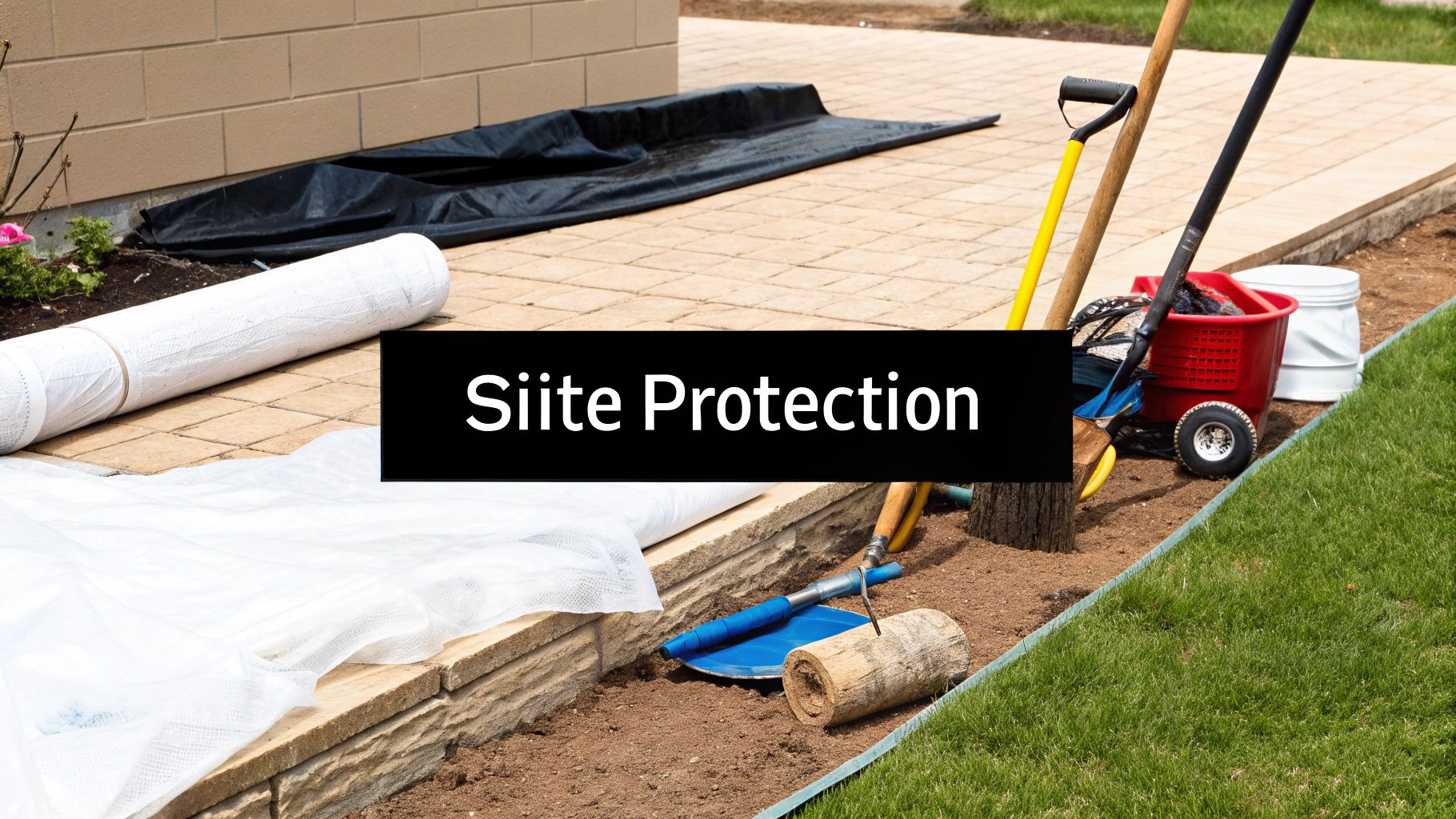
Without a clear policy, you could be left with dust-coated furniture, damaged floors, and a yard full of debris. A contractor who overlooks these details may also overlook critical aspects of the project. Clarifying these expectations upfront prevents disputes and ensures your home remains as livable as possible during the renovation.
What to Look For
A responsible contractor will have a multi-faceted approach to keeping the job site clean and safe. Look for specifics on:
- Dust and Debris Containment: Methods like using plastic sheeting to create dust barriers, covering air vents, and using a negative air pressure system to contain fine particles within the work zone.
- Property Protection: The use of protective coverings like Ram Board on floors, padding on railings, and tarps over landscaping and furniture to prevent scratches, spills, and damage.
- Daily Cleanup Routine: A commitment to sweeping, vacuuming with a HEPA filter vacuum, and organizing tools and materials at the end of each workday.
- Debris Disposal: A clear plan for how and when construction waste will be removed from your property, whether it's a scheduled dumpster pickup or daily hauling.
Pro Tip: Ask who is responsible for the final clean. Some contractors perform a "broom-swept" clean, while others may coordinate professional construction clean-up services to ensure the space is move-in ready.
Actionable Steps for Verification
Ensure cleanliness standards are clearly defined and agreed upon before work begins.
- Walk Through the Site: During the initial consultation, ask the contractor to point out how they would protect specific areas like hardwood floors, nearby furniture, and entryways.
- Review the Contract: Make sure the cleanup policy is explicitly written into your contract. It should detail daily procedures, final cleanup standards, and responsibility for debris removal.
- Discuss Specific Scenarios: If you have allergies, ask what specific dust mitigation strategies they employ. If you have valuable landscaping, confirm their plan for protecting it.
By addressing site protection early, you ensure the only thing the contractor leaves behind is a beautifully completed project.
8. Can you provide a detailed written estimate and contract?
A comprehensive written estimate and contract serve as the blueprint for any successful remodeling project. It lays out exactly what work will be done, the materials used, payment milestones, and legal protections for both you and the contractor. By getting everything in writing, you eliminate misunderstandings and ensure accountability from start to finish.
Failing to secure a detailed contract can leave you exposed to hidden costs, subpar materials, or work that drags on indefinitely. Verbal agreements are notoriously hard to enforce and often result in disputes over scope or quality once the project is underway.
What to Look For
A robust written estimate and contract should include:
- Scope of Work: Detailed description of tasks, from demolition to finish carpentry, with specific cabinet models or finishes.
- Line-Item Pricing: Break down costs for labor, materials, permits, and allowances – for example, quartz countertop allowance of $60 per sq ft.
- Payment Schedule: Clear milestones (e.g., 30% deposit, 30% at cabinet delivery, 40% on completion).
- Project Timeline: Start date, key inspections, and a realistic completion date.
- Warranty & Terms: Coverage period for workmanship and materials, plus clauses on change orders and dispute resolution.
Pro Tip: Never accept verbal guarantees. Insist that any promise about upgrades, finish dates, or clean-up services is documented in the contract before work begins.
Actionable Steps for Verification
- Request a Draft: Ask the contractor to email or deliver a draft estimate and contract.
- Cross-Check Details: Verify cabinet model numbers, countertop brands, and appliance allowances match your selections.
- Review Payment Terms: Ensure you only pay for work completed and materials on site.
- Include Change-Order Clauses: Require written approval for any scope adjustments with updated costs.
- Consult a Professional: For major projects, have an attorney or experienced project manager review terms before signing.
Learn more about detailed estimates and contracts on sinclaircabinets.com: Learn more about detailed estimates and contracts on sinclaircabinets.com
Key Questions Comparison for Contractors
| Question | Implementation Complexity 🔄 | Resource Requirements ⚡ | Expected Outcomes 📊 | Ideal Use Cases 💡 | Key Advantages ⭐ |
|---|---|---|---|---|---|
| Are you licensed and insured for this type of work? | Low – Verification and documentation checks | Moderate – License and insurance verification | High – Legal protection and contractor legitimacy | Any professional contractor engagement | Liability protection, legitimacy assurance |
| Can you provide detailed references from recent similar projects? | Medium – Gathering and verifying references | Low to Moderate – Contacting past clients | Medium – Insight into contractor reliability | Projects requiring proven track record and quality assurance | Unbiased feedback, confidence building |
| What is your detailed timeline and payment schedule? | Medium – Creating detailed schedules | Moderate – Time and payment milestone planning | High – Accountability and financial protection | Projects with complex phases and significant budgets | Clear expectations, budget control |
| How do you handle permits, inspections, and code compliance? | High – Navigating legal requirements | Moderate to High – Permit applications and inspections | High – Compliance, safety, and legal security | Projects subject to strict local regulations | Avoids legal issues, protects property value |
| What warranty do you provide on your work and materials? | Low to Medium – Defining warranty terms | Low – Documentation preparation | Medium to High – Post-completion protection | Investment in quality workmanship | Confidence in quality, legal recourse |
| How do you handle change orders and unexpected issues? | Medium to High – Change management process | Moderate – Documentation and pricing adjustments | High – Prevents disputes, maintains transparency | Projects prone to scope changes or hidden issues | Cost control, homeowner approval process |
| What is your cleanup and site protection policy? | Low to Medium – Establishing cleanup protocols | Low to Moderate – Safety and cleanup resources | Medium – Maintains safe and clean environment | All construction projects emphasizing professionalism | Safety, reduced hazards, property protection |
| Can you provide a detailed written estimate and contract? | Medium to High – Drafting comprehensive contracts | Moderate – Legal compliance and review | High – Clear terms and legal protection | All projects needing formal agreements | Legal protection, scope clarity, dispute prevention |
Partnering with the Right Professional for Your Home
Choosing the right contractor is the single most important decision you will make in your renovation journey. It's a choice that extends far beyond a simple transaction; you are selecting a partner who will bring your vision to life, manage a significant financial investment, and become a temporary fixture in your daily life. The comprehensive list of questions you’ve just reviewed is your most powerful tool in this selection process. It transforms you from a passive client into an empowered, informed homeowner.
By moving through these inquiries systematically, you are doing more than just gathering data. You are establishing a baseline for communication, transparency, and professionalism. A contractor who answers these questions with confidence, detail, and patience is demonstrating their commitment not just to the project, but to you as their client. Conversely, hesitation or vague responses can be a significant red flag, signaling potential issues with organization, experience, or integrity down the road.
Key Takeaways for a Successful Partnership
The value of asking the right questions to ask contractor is immeasurable, directly impacting your project's outcome. Remember these core principles as you move forward:
- Documentation is Paramount: Never proceed on a verbal agreement. A detailed contract, clear payment schedule, and written change order process protect both you and your contractor.
- Credentials Matter: Proper licensing and comprehensive insurance are non-negotiable. They are your primary safeguards against liability, financial loss, and shoddy workmanship.
- Communication is the Foundation: The contractor’s communication style during the interview process is often a preview of how they will operate throughout the project. Look for clarity, responsiveness, and a willingness to explain complex details.
Your Actionable Next Steps
Armed with this knowledge, your path forward is clear. Don't rush the hiring process. Take the time to interview at least three qualified contractors for your cabinetry or remodeling project. Use these eight questions as your guide during each conversation, taking careful notes on their responses and your overall impression.
Remember, the goal isn't to find the cheapest option but to find the best value. The right professional will provide a fair price for exceptional work, transparent processes, and peace of mind. Investing this time and effort upfront is the best way to ensure your renovation is a rewarding experience that adds lasting value and beauty to your home, rather than a source of stress and regret. You are now fully equipped to select a true professional who will respect your home, your budget, and your vision.
Ready to partner with a team that welcomes your questions and exceeds your expectations? For over 35 years, Sinclair Cabinetry inc has been the premier choice for custom cabinetry and remodeling in Cape Coral, Florida, building a reputation on transparency, quality, and unparalleled craftsmanship. Visit Sinclair Cabinetry inc to see how our commitment to professional excellence can bring your dream project to life.