

Designs of outdoor kitchens set the stage for memorable al fresco gatherings. Whether you favor a sleek modern look, a cozy rustic feel, or a warm Mediterranean flair, the right style brings both charm and practicality to your backyard.
Why Outdoor Kitchen Designs Matter
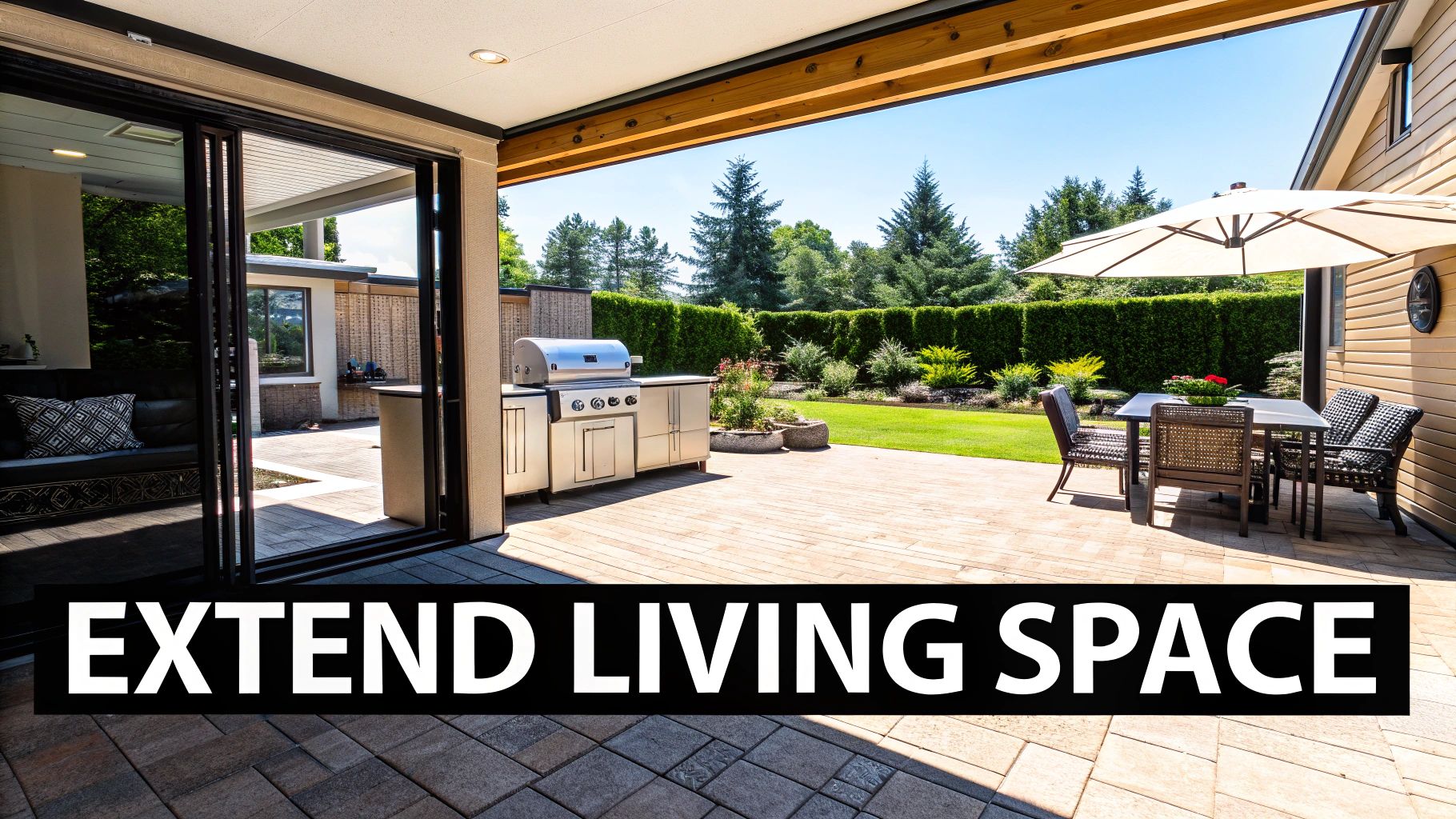
Outdoor kitchens have moved far beyond a standalone grill. Today, they extend your living space, tie indoor and outdoor areas together, and even boost home value.
This sector hit USD 27.23 billion in 2025 and is on track to reach USD 60.2 billion by 2034 at a 9.21% CAGR, fueled by our renewed love for open-air living after COVID. Discover more in these market findings.
Good design isn’t just about looks. Placing prep and cooking zones close together cuts unnecessary steps and keeps hosts engaged with guests.
- Increases resale value by 10–15%
- Accommodates a wide range of cooking methods
- Encourages year-round outdoor entertaining
The diagram below maps out key components and zones for an efficient layout.
This illustration highlights the ideal work triangles and seating arrangements for smooth flow.
Key Benefits
A thoughtful layout delivers real advantages. Ample, easy-to-reach storage means fewer trips indoors mid-cook. Choosing materials built to weather the elements also protects your cabinetry.
“A thoughtful outdoor kitchen becomes a home’s social centerpiece,” notes design expert Jane Doe.
- Zone areas clearly for prep, cooking, and cleanup
- Opt for weather-proof finishes like stainless steel
- Incorporate shade—think pergolas or retractable awnings
Design Trends
Today’s outdoor kitchens marry technology with tactile appeal. From modular islands to smart lighting, you can tweak your space on the fly.
- Integrated LED strips set the mood after sunset
- Mobile cabinet modules transform into extra seating
- Coastal hues echo the seaside, even inland
These trends keep your backyard kitchen both functional and eye-catching in any season.
What Comes Next
In the following sections, we’ll cover layout strategies, material selections, and appliance choices. You’ll walk away with clear, actionable steps to craft an outdoor kitchen that fits your lifestyle. Stay tuned for practical tips and inspiring ideas!
Understanding Key Concepts In Outdoor Kitchen Design
Designing an outdoor kitchen is like choreographing a dance. Each zone—from prep to cleanup—needs to move in sync.
Getting this right means blending form and function so cooking outside feels second nature.
At its heart lies the cooking workflow triangle, which organizes the:
- Prep Area for chopping and seasoning
- Cooking Station that houses your grill or cooktop
- Cleanup Zone with a sink and waste bins
Think of it as the same triangle you use indoors, but with a fresh breeze. Keeping clearances around 36-inch pathways ensures everyone can flow without bumping elbows.
Applying Cooking Workflow Outdoors
Taking this triangle outside means adapting to sun, shade, and surprises like rain showers. Position your grill under a pergola or next to a canopy to keep the heat—and the drizzle—at bay.
Focus on:
- Shelter From Sun And Rain
- Proximity To Serving Tables
- Safe Distance From Flammable Structures
“Good outdoor kitchens feel like an extension of the home,” says landscape architect Maria Lopez.
Sheltered spots not only protect gear but also make summer afternoons and sudden downpours more bearable.
Spatial Planning Scenarios
Concrete scenarios help make spatial decisions less abstract. If you’re by the pool, a path from swim deck to Prep Area keeps snacks close at hand.
Consider these three models:
- Poolside Setup With Direct Snack Access
- Garden-View Station Adjacent To Seating Nook
- Patio Corner Model Tucked Against A Wall
| Scenario | Advantage | Consideration |
|---|---|---|
| Poolside | Easy food delivery | Slip-resistant flooring |
| Garden-View | Scenic backdrop | Pest control measures |
| Patio Corner | Space saving | Adequate ventilation |
Mapping out these layouts guides where you’ll place cabinets, how long your countertop should be, and which appliances fit best.
Don’t forget utilities—run electrical outlets and gas lines along your workflow. This avoids unsightly extension cords and long hoses, turning ideas into reality.
Planning For Comfort And Safety
Maximize usability from sunrise to sunset. Shade sails, umbrellas, or retractable awnings keep harsh rays off your head. Then, install LED strips under counters to light up prep surfaces after dark.
Actionable steps include:
- Placing ground-level lighting under overhangs
- Using non-slip mats in wet zones
- Installing motion-sensor lights near the grill
These measures make your outdoor kitchen intuitive and secure, so every gathering flows without a hitch.
Next Steps In Design
With these fundamentals in hand, you’re ready to pin down cabinet layouts, countertop choices, and utility placement. From there, you can fine-tune finishes to match your preferred style and local climate—whether that’s humid Florida air or a breezy coastal environment.
Armed with concept-first planning, your outdoor kitchen will serve up efficiency and enjoyment, season after season.
Now refine those patterns and pick materials that withstand your climate. Soon, you’ll have an outdoor cooking space that feels as natural as an indoor kitchen.
Planning Layouts And Popular Outdoor Kitchen Styles
A smart layout turns a backyard into a true living space. Think of yours as a kitchen with open-air perks—fresh breeze and natural light—so flow matters just as much as style.
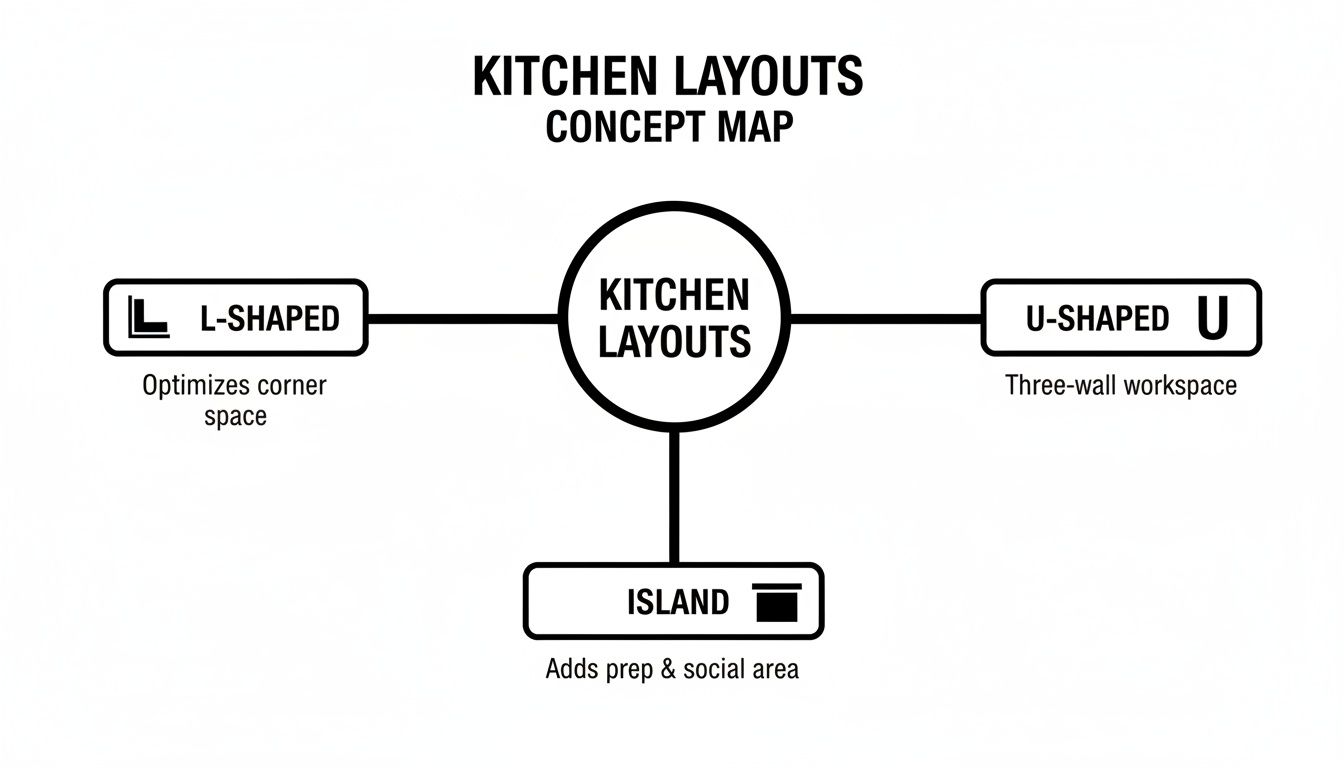
You might embrace an L‐shaped footprint to tuck cooking and seating into a corner. A straight run works wonders on narrow patios, keeping everything within arm’s reach.
U-shaped designs wrap you in work surfaces and create clear prep, cook, and serve zones. Meanwhile, an island layout makes your grill the center of attention—perfect for party hosts who never want to turn their back on friends.
- L-Shaped Layout: Wraps seating and cooking into one cohesive corner
- Linear Plan: Simplifies movement along a single wall
- U-Shaped Design: Maximizes counters and separates tasks organically
- Island Concept: Puts grill and bar seating in the middle of the action
Every arrangement shapes how you move, chat, and entertain. Keep sightlines in mind so guests can linger without a whiff of smoke in their eyes. In turn, vents, seating, and prep areas fall into place—practical and welcoming.
Modular islands are a clever investment, too. They grow with your entertaining style, ready for extra seating, a second burner, or expanded storage as needs change.
Exploring Signature Outdoor Kitchen Styles
Before you pick materials, it helps to see styles side by side. Below is a quick look at five beloved vibes and where they shine.
Introduction
This table highlights the heart of each design—what makes it tick and where it truly feels at home.
| Style | Key Elements | Ideal Materials | Suitable Backdrops |
|---|---|---|---|
| Modern | Clean lines, minimal hardware | Powder-coated steel, quartz | Urban terraces, contemporary patios |
| Rustic | Reclaimed wood, earthy accents | Natural stone, aged timber | Countryside gardens |
| Mediterranean | Warm stucco, decorative tiles | Tumbled stone, ceramic tile | Villa-style courtyards |
| Coastal | Light hues, driftwood details | Teak, whitewashed stone | Beachfront areas, pool decks |
| Transitional | Blend of modern and classic | Composite surfaces, mixed woods | Suburban backyards |
Conclusion
Matching design to setting magnifies the mood—urban cool feels effortless on a rooftop, while driftwood and pale stone belong by rolling surf.
Beyond the table, think about these quick tips:
- Let existing architecture guide your palette
- Layer in textures that echo nearby landscaping
- Test samples outdoors under the same light you’ll live in
Blending Workflow And Design
Good cooking outdoors isn’t just about looks—it’s about a sequence: prep, cook, serve, clean. Treat it like a dance.
Position storage near the prep station so tools never stray too far. Group sink and trash modules on one flank for easy cleanup.
- Sketch your prep–cook–serve path
- Place cabinets and appliances along that line
- Simulate movement with tape, rope, or chairs to troubleshoot
Wind, sun, and terrain play starring roles here. In Florida’s salt-air, for instance, stainless frames and UV-coated finishes fight corrosion and fading.
Weatherproof Cabinetry Cuts Maintenance by Over 50% in coastal zones
Choose porcelain or coated surfaces where humidity rules—these resist stains better than porous stone.
Budget And Climate Considerations
Every climate demands tweaks. High humidity? Seal joints each year to keep mold at bay. Cold snaps? Insulated cabinets and frost-proof faucets will spare you replacements.
- Install vents and covers to shelter appliances
- Opt for composite woods that shrug off warping
- Cluster utilities under overhead protection
Budget tiers can start with starter kits under $5,000 and climb past $25,000 for a fully decked-out build.
Pro Tip: Phase your purchases across seasons to spread out costs
Custom cabinetry from Sinclair Cabinets maps your space in 3D, so surprises vanish. The result is an outdoor kitchen that looks seamless and works flawlessly from day one.
Showcasing Real World Outdoor Kitchen Designs
Urban terraces, coastal retreats, and countryside havens each tell a unique story. Let’s dive into three distinct projects and uncover the design decisions that make them sing.
City Terrace Installation
On a narrow New York City rooftop, the challenge was clear: do more with less. By focusing on sleek silhouettes and space-saving appliances, the team carved out a 200-square-foot cooking nook that feels anything but cramped.
Tackling gusty winds at height meant opting for a wind-rated pergola and heavy-duty gas fittings. Every detail, from anchor points to sealant choice, ensures peace of mind when clouds roll in.
- Challenge 1: High wind loads on exposed rooftops
- Solution: Heavy-duty anchoring and wind-rated pergola
- Challenge 2: Limited footprint
- Solution: Vertical cabinet towers and slimline appliances
- Challenge 3: Utility access
- Solution: Rerouted gas lines through existing vents
Floating counters and hidden storage merge form and function.
This view highlights how drawers and cabinets tuck away tools, keeping the prep zone clean.
Streamlined Grill Zone
On Florida’s coast, salt air is a silent enemy. Building with brushed stainless steel and UV-resistant coatings guards against corrosion over time.
By aligning grill, sink, and storage along a single stretch, every step flows naturally. You won’t waste a beat hunting for utensils or juggling plates.
Grills and barbecues dominate outdoor kitchen designs, driving USD 11.23 billion in market value as more homeowners blend gas, charcoal, and electric options. According to a MetastaInsight report, these grill-focused layouts can add 10–15% to home prices in the U.S. and Europe.
Countryside Kitchen Retreat
In rolling country landscapes, warmth reigns. Here, reclaimed timber cabinets and fieldstone countertops set the stage for a wood-fired pizza oven and built-in fire pit—a duo that turns dinner into an event.
Pull-out storage drawers keep spatulas, peelers, and skewers within arm’s reach. Add a motion-activated tap for hands-free prep, and cleanup feels almost like magic.
This design underscores how a few well-chosen features can transform an outdoor kitchen into a vibrant gathering spot.
Key Layout Types:
- L-Shaped: Optimizes corner space while offering generous counters
- U-Shaped: Surrounds the cook on three sides for maximum surface area
- Island: Creates a social hub ideal for interactive grilling
Check out our guide on Florida outdoor kitchen ideas for tips on designing in coastal climates here.
Custom Modules And Smart Controls
Swappable modules turn a good setup into a great one. Slide in a wine rack or spice shelf just steps from the grill.
Apps now control everything from lights to heat with precision. On a recent Florida install, IoT sensors alert the homeowner if gas dips below 20%, or if the grill temperature strays by more than 5 °F.
- Pull-out spice racks positioned beside prep zones for lightning-fast seasoning
- Insertable sink modules with fold-down faucets for splash-free cleanup
- App-driven thermostats that adjust grill heat within 1 °F of your target
Opting for powder-coated cabinetry slashes maintenance by over 40%. These weatherproof finishes extend cabinet life from 5 to 10 years.
Weatherproof finishes extend cabinet life from 5 to 10 years
Takeaways And Inspiration
- Urban rooftops thrive with vertical storage and wind-rated covers
- Coastal kitchens demand UV-resistant surfaces and stainless steel frames
- Rustic retreats sparkle around pizza ovens and fire pits
- Modular add-ons and IoT controls turn cookouts into effortless affairs
- Layout diagrams help you choose the best footprint for your space
Roll up your sleeves, sketch ideas, and pick features that suit how you cook. With these case studies, your backyard is ready to become the ultimate kitchen playground.
Selecting Materials Appliances And Custom Cabinetry
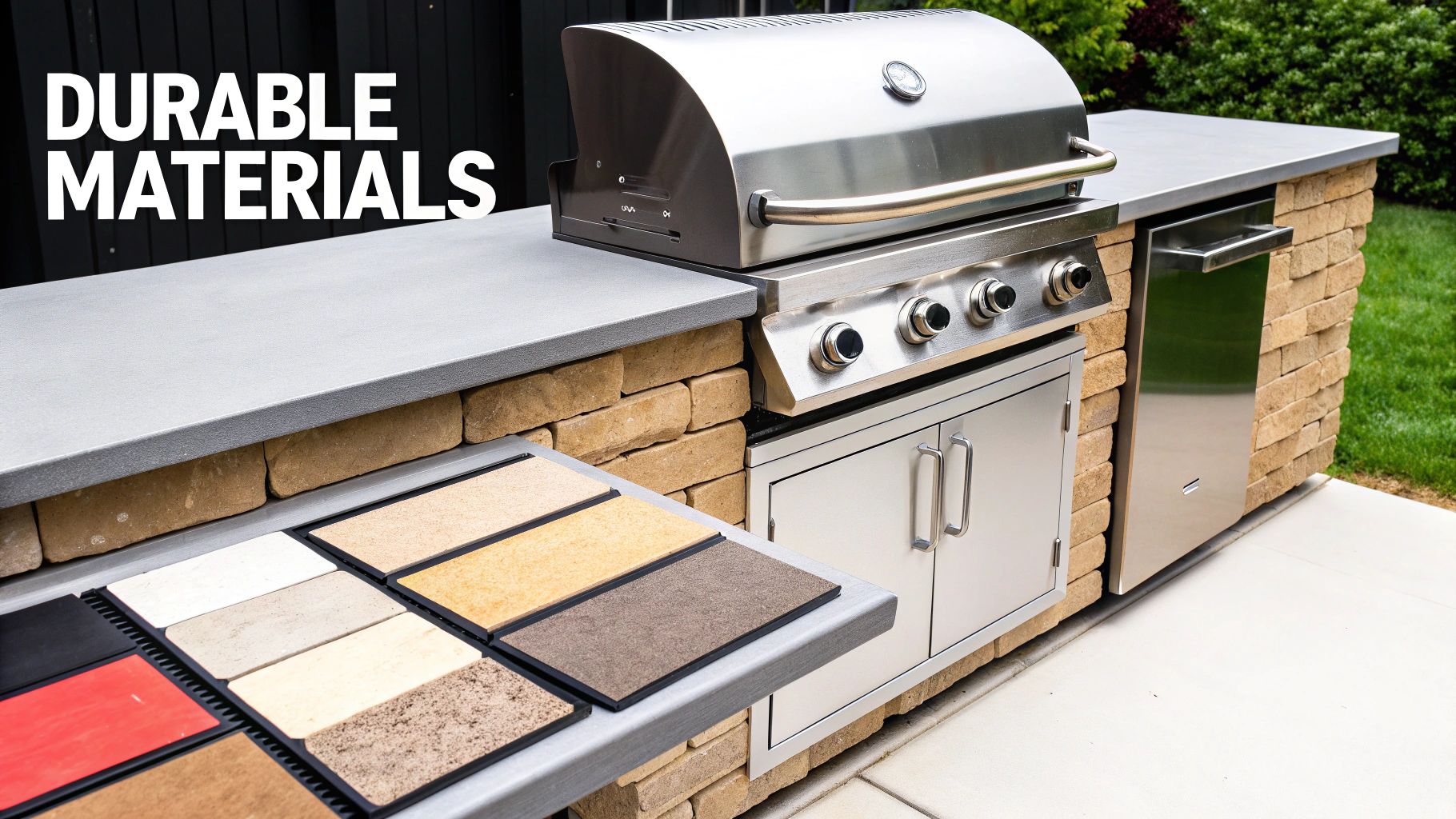
Building an outdoor kitchen is like assembling a recipe—every ingredient matters. You need materials and appliances that juggle style, budget and the quirks of your local climate.
We’ll walk through countertop choices, grilling gear and cabinetry options built to thrive under sun, rain and salt air.
Choosing Countertop Surfaces
- Granite: Known for its natural veining and high heat tolerance, it needs a bit of sealing but lasts for decades.
- Porcelain: Completely nonporous and resistant to stains, it comes in oversized slabs that brighten shaded patios.
- Weather-Resistant Concrete: You can tint and mold it into any shape, it’s UV stable, but plan on resealing to lock out moisture.
Your countertop sets the look and dictates upkeep. For instance, a pale porcelain slab keeps a corner patio cooler under afternoon sun.
Grill Types And Refrigeration
Picking the right grill narrows down your cooking style:
- Gas Grills: Fast heat-up and precise flame control.
- Charcoal Grills: Ideal for that deep, wood-fired flavor.
- Electric Grills: Simple hookup and no propane tanks to swap.
Don’t overlook an outdoor-rated fridge or a built-in cooler drawer.
Pro Tip: Choose an energy-efficient model certified for outdoor use. It can shave dollars off your bills and keep your ice chest churning longer.
Modern units even link to your phone. Connected thermometers and Wi-Fi controls mean you can stroll through the yard without losing track of grill temps.
“Outdoor-ready appliances change the way backyard chefs work.”
Comparison Of Cabinet Material Properties
Below is a side-by-side look at common cabinet materials, rated for durability, maintenance needs and cost.
| Material | Durability Rating | Maintenance Level | Cost Range |
|---|---|---|---|
| Stainless Steel | High | Low | $$$ |
| Powder-Coated Aluminum | Moderate | Medium | $$ |
| Composite Wood | Low | High | $ |
| Marine-Grade Polymer | High | Very Low | $$ |
From the table, stainless steel is ideal for coastal areas prone to rust. Composite wood brings warmth but needs regular sealing. Powder-coated aluminum sits in the middle on price and upkeep. For the least fuss, marine-grade polymer resists UV fading and moisture.
Research shows outdoor kitchen cabinets are more than décor—the global market is set to grow by USD 1.51 billion from 2025 to 2029 at a 6% CAGR, with North America capturing over 40% of that, valued at USD 1.18 billion in 2024 and climbing at 4.2% CAGR through 2031.
Learn more about outdoor kitchen cabinet market findings on Technavio
To see detailed door style options and expert tips, check out our guide on the best outdoor kitchen cabinets at Sinclair Cabinets.
Installation And Maintenance Tips
- Measure Twice: Confirm plumbing, gas and electrical lines sit behind the cabinet frames.
- Seal All Seams: Marine-grade sealants at edges and joints keep water from sneaking in.
- Replace Gaskets: Annual gasket checks on drawers and doors stop pests and drafts.
Balancing Cost And Performance
An entry-level outdoor kitchen can start under $5,000 with a modular kit. If you dream bigger—integrated refrigeration, specialty burners and custom counters—you could add $5,000 to $10,000 more.
Custom builds often push past $25,000, so factor in labor and any patio or foundation work. Breaking the project into phases—cabinets first, appliances next—spreads out costs and avoids surprises.
Climate shifts your priorities. In Florida’s salt-air belt, you’ll thank yourself for extra corrosion resistance. Up north, consider insulated cabinets to protect pipes and push your season into shoulder months.
Next Steps And Final Tips
Start by sketching a materials board under natural light. Order sample swatches or tack up temporary boards to see how finishes weather sun and rain.
Always hire pros for gas, electrical and plumbing hookups to stay code-compliant. Then, stick to a yearly cleaning and resealing routine—your kitchen will reward you with seasons of delicious backyard meals.
Weatherproofing Maintenance and Budget Planning for Outdoor Kitchens
Outdoor kitchens live in the toughest neighborhood: blazing sun, driving rain, and temperature swings. Think of weatherproofing as your kitchen’s trusty umbrella—simple, but vital.
- Sealants plug every tiny crack, keeping water out.
- Protective Covers are like raincoats for grills and fridges, blocking UV rays and debris.
- Rust Inhibitors stop metal from oxidizing.
- UV-Resistant Coatings keep surfaces from fading or cracking under sunlight.
Key Weatherproofing Techniques
Marine-grade sealants—silicone or polyurethane—seal joints so well they laugh at downpours. These are the same formulas boat builders trust to keep water at bay.
Breathable covers slip over grills and refrigerators like fitted sheets. They repel rain and sun but still let moisture escape, preventing mold build-up.
Maintenance Schedules For Lasting Durability
A simple calendar is your secret weapon. Regular check-ups turn small fixes into quick tasks.
- Monthly: Wipe down surfaces with mild soap and water
- Quarterly: Reseal seams and tighten hardware
- Biannually: Inspect for rust and material fatigue
- Annually: Schedule a deep service before the rainy season
Annual seal-and-cover routines reduce maintenance needs by over 40%, protecting your investment.
Climate Specific Strategies
Coastal and humid regions demand extra care. Salt air corrodes, while moisture fuels mold.
- Rinse seaside appliances with fresh water monthly to sweep away salt.
- Apply mold-resistant spray to wood and composites.
- In freeze-thaw zones, winterize pipes and insulate outdoor faucets.
These targeted moves ward off corrosion and prolong material life without fuss.
Budget Tiers And Phased Investment
Treat your build like a menu—start with staples, then add gourmet touches as you go.
| Tier | Investment Range | Typical Features |
|---|---|---|
| Starter Kit | Under $5,000 | Basic grill, modular island, protective covers |
| Mid-Range Build | $5,000–$15,000 | Upgraded countertop, beverage fridge, prep sink |
| Luxury Install | Over $15,000 | Natural stone, custom outdoor cabinetry, smart controls |
Begin with core elements—cabinets and cooking modules—then layer in enhancements down the road.
Pro Tip: Phase your purchases to smooth out cash flow and avoid sticker shock.
For more on spreading costs, see our guide on how to budget for home renovation.
Action Plan For Weatherproof Kitchens
First, sketch out your climate risks—sun exposure, wind patterns, drainage points. Identify vulnerable spots like seams and metal joins.
Next, slot in brief monthly and quarterly tasks to keep everything sealed, clean, and ready for the elements.
Advanced Protection Layers
In extreme climates, sacrificial anode rods act like decoys for your metal cabinets—corroding first to save critical joints.
- Choose anodized aluminum hardware rated for outdoor use.
- Apply a ceramic finish to handles and high-touch areas.
- Position zinc anodes around grills and fire pits.
Coastal Case Study
At a beachfront home in Florida, homeowners swapped ordinary hinges for stainless steel pin hinges and added marine-grade brackets. They even applied UV-blocking film to nearby walls. A monthly acid-neutralizing rinse kept metal finishes looking fresh.
“These targeted upgrades slashed our rust repairs by 70% in two years,” says contractor Mike Johnson.
Next Steps
Roll out these measures in stages. Start with sealants and covers, then build up to advanced protections as you learn your environment’s quirks. Tweak along the way for peak performance.
Warranty Options
Many outdoor cabinetry lines include warranties up to 10 years on finishes and hardware. It’s the safety net that ensures your time and money stay well protected.
With a strong weatherproofing regimen and a phased budget plan, your outdoor kitchen will thrive through every season.
FAQ
Planning an outdoor kitchen involves more than just picking the latest grill or countertop. Below, you’ll find answers to the questions homeowners ask most often when dreaming up their al fresco culinary haven.
What Permits Do I Need Before Installation?
Rules vary from town to town, but in many areas you’ll need building and electrical permits before breaking ground. Doing this legwork up front prevents surprise delays—and expensive do-overs—further down the road.
How Do I Choose Between Built-In and Portable Appliances?
Start by picturing how you’ll use the space over the long haul.
- Built-In Appliances blend seamlessly with cabinetry and often add to your home’s value.
- Portable Units cost less up front and can be rearranged or moved if your plans change.
Ask yourself whether you want a permanent setup or the flexibility to adapt.
What’s the Best Way to Protect Cabinetry from Moisture?
Outdoor kitchens face sun, rain, humidity—and in coastal areas, salty air. Choose weatherproof materials like stainless steel or marine-grade polymer, then keep them looking fresh with regular sealant applications and protective covers.
How Can I Maximize Year-Round Use in Different Climates?
A few strategic touches let you cook outdoors in every season:
- In colder regions, add infrared heaters and build in sheltered prep zones.
- Along the coast, opt for UV-resistant coatings and corrosion-proof hardware.
“Thoughtful planning and material choices extend your outdoor kitchen’s lifespan, no matter the weather.”
Planning Tips
Before construction starts, sketch out where gas, water, and electrical lines will run—and double-check code requirements with a pro. Mapping your work “triangles” between prep, cook, and cleanup areas keeps traffic flowing smoothly.
Lay out cabinet and appliance footprints with painter’s tape on the patio. Walking through that mockup often uncovers adjustments you’d rather make before walls go up.
And remember: accounting for your local climate from the very beginning is far easier than retrofitting later.
Visit Sinclair Cabinetry Inc for more inspiration and expert advice.