

Choosing the best outdoor kitchen cabinets really comes down to one thing: picking a material that can stand up to your local climate. Whether you’re dealing with salty sea air, blazing sun, or freezing winters, the right material is what separates a beautiful, long-lasting outdoor kitchen from a pile of warped, faded boxes in a few years.
Everything You Need to Know Before You Buy
Think of your outdoor kitchen as a true extension of your home—a spot for grilling, entertaining, and making memories. The cabinets are the backbone of that space. They’re not just for storage; they set the tone for the entire area and, more importantly, they bear the brunt of Mother Nature.
Making a smart choice from the get-go saves you a world of headaches and the cost of replacing everything prematurely. We’re going to walk through what really matters, starting with the absolute most critical factor: the material. It dictates everything from durability to maintenance.
A Quick Comparison Of Cabinet Materials
Let's break down the most popular options out there. Each one has its own set of pros and cons, especially when you leave it outside 24/7.
- Stainless Steel: It gives you that sleek, professional kitchen vibe and stands up great to heat and rust. The downside? It gets incredibly hot in direct sunlight and can be a magnet for fingerprints and smudges.
- Marine-Grade Polymer (HDPE): This is a tough-as-nails plastic that’s completely waterproof. It won't warp, rot, or fade, making it a fantastic choice for coastal areas or rainy climates. While it’s ultra-durable, some people feel it doesn't have the same high-end feel as steel or real wood.
- Powder-Coated Metals: Usually aluminum or steel, this option gives you a ton of color choices and a tough finish that resists scratches and chips. The key here is the quality of the powder-coating job—if it’s done poorly, rust can sneak in.
- Teak Wood: Nothing beats the warm, natural look of wood. Teak is a champ when it comes to resisting rot and insects. However, it demands attention. You'll need to seal it regularly to maintain that beautiful honey color and protect it from the elements.
Your local weather is the ultimate tie-breaker. A material that looks amazing in a dry Arizona backyard might completely fail in the humid, salty air of coastal Florida. Always put performance in your environment ahead of pure looks.
Outdoor Cabinet Materials at a Glance
To make this even simpler, here’s a quick-reference table that lays out the key differences between the top material choices. Think of this as your cheat sheet for weighing durability against your budget.
| Material | Durability | Weather Resistance | Maintenance Level | Average Cost |
|---|---|---|---|---|
| Stainless Steel | Very High | Excellent | Low to Moderate | High |
| Marine-Grade Polymer | Excellent | Excellent | Very Low | Moderate |
| Powder-Coated Metals | High | Very Good | Low | Moderate |
| Teak Wood | Good | Good | High | Very High |
This table gives you a solid starting point. From here, you can dig deeper into the options that best fit your climate, lifestyle, and how much work you're willing to put into upkeep.
The push for creating incredible outdoor living spaces has seriously taken off. In fact, the global market for outdoor kitchen cabinets was valued at around $2.5 billion in 2025 and is expected to grow by about 7% annually through 2033. People are investing more in making their backyards functional and beautiful.
Getting a handle on these foundational differences is your first step. To see where the industry is heading and what's popular right now, it’s worth checking out the latest kitchen and bath market forecast. Understanding current trends in materials and styles will help you make a smart investment that you’ll be happy with for years.
Finding the Right Cabinet Material for Your Climate
Your local weather is the ultimate test for your outdoor kitchen. I've seen it time and again: the material you choose for your cabinets will make the difference between a backyard oasis that lasts for years and a warped, rusted mess after just a few seasons. This isn't just about looks; it's a serious investment, and you need something that can handle everything nature throws at it.
Let's get past the showroom gloss and talk about how these materials actually perform out in the real world.
This infographic is a great starting point. It cuts through the noise and helps you match the best outdoor kitchen cabinets to what's happening right outside your door.
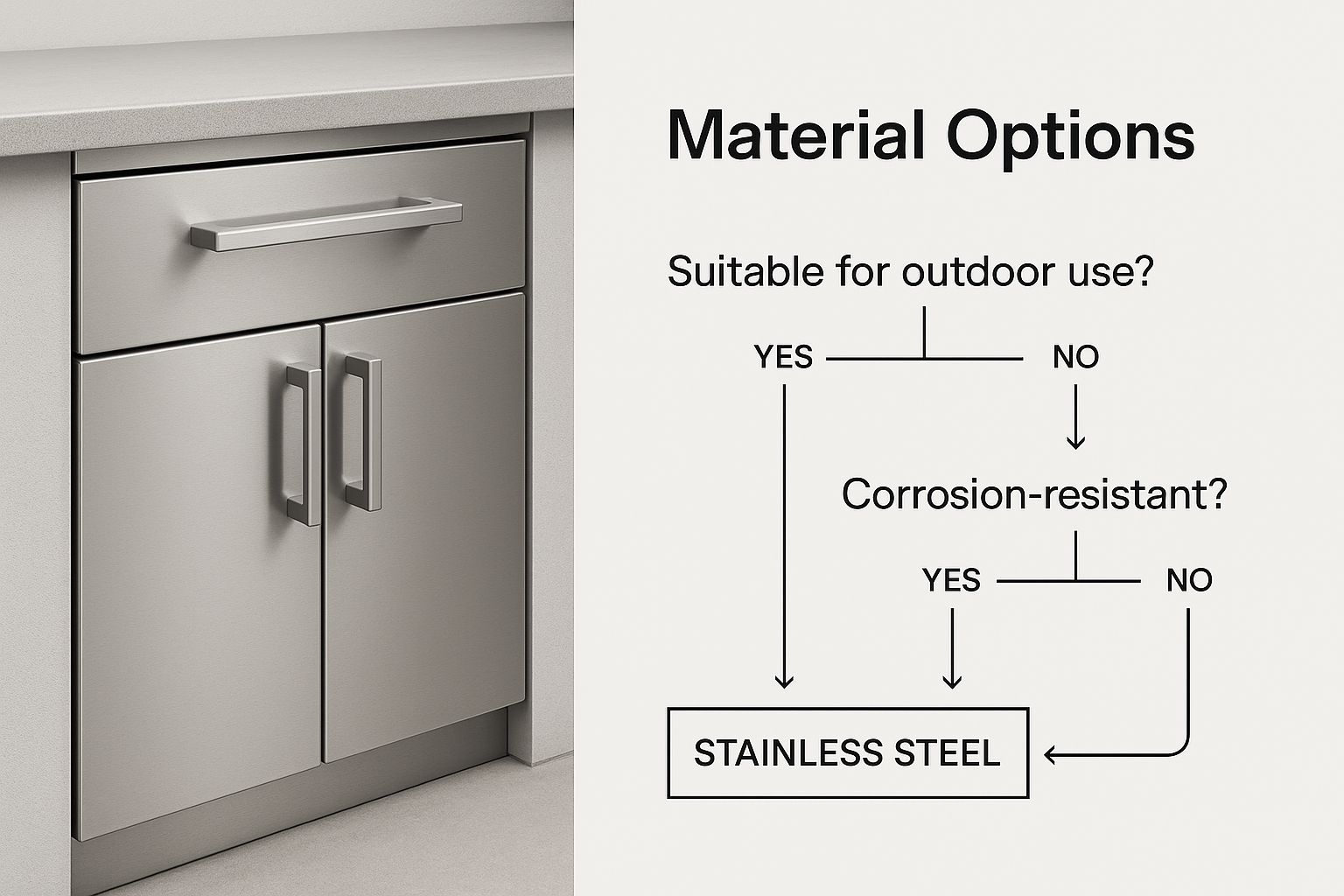
Think of this as your cheat sheet, connecting common climate challenges directly to the materials built to solve them.
For Coastal and High-Humidity Regions
If you can smell the salt in the air, that’s your number one enemy. It’s incredibly corrosive and will chew through metals with a vengeance. While many people think standard stainless steel is the go-to, it can start to pit and rust in salty environments unless you spring for 316 marine-grade steel.
A smarter, more worry-free choice for these areas is marine-grade polymer, also known as HDPE. It’s basically a super-dense plastic that couldn't care less about moisture or salt. It won’t swell, rot, or delaminate, making it one of the toughest, lowest-maintenance options you can find for a humid climate.
Real-World Scenario: I consulted with a homeowner in Florida who installed gorgeous 304-grade stainless steel cabinets. Within two years, despite cleaning them regularly, tiny rust spots were popping up near the handles and along the seams from the constant salt spray. An HDPE or 316-grade steel setup would have completely avoided that headache.
For Intense Sun and Dry Heat
Living in a sun-drenched spot like Arizona or Southern California? Your biggest problem is UV radiation. That relentless sun will fade colors, make materials brittle, and even cause warping over time.
This is where UV-stabilized polymers and high-quality powder-coated metals really shine.
- HDPE: Make sure you're getting a polymer with built-in UV inhibitors. They act like sunscreen for your cabinets, stopping the color from fading and keeping the material from breaking down.
- Powder-Coated Aluminum: A thick, professionally applied powder coat over aluminum offers fantastic UV resistance. As a bonus, aluminum is lightweight and will never rust.
A quick practical tip: while stainless steel handles heat just fine, it can get scorching hot to the touch in direct desert sun. That's a real safety concern, especially if you have kids running around.
For Areas with Freezing Winters
For anyone in a colder climate, the freeze-thaw cycle is a powerful destructive force. Water gets into tiny cracks, freezes, expands, and can literally tear materials apart from the inside. Durability here is all about choosing materials that don’t absorb moisture.
Once again, marine-grade polymer and stainless steel come out on top. Because they're non-porous, ice formation won't damage them. If you have your heart set on a wood like teak, it absolutely must be diligently sealed before winter hits. This prevents moisture from getting into the grain, which leads to splitting when the temperature plummets.
For a deeper dive into material options, our guide on the best material for kitchen cabinets is a great resource that covers choices for all sorts of conditions.
This intense focus on durability has created a huge market. In fact, North America makes up over 40% of the global outdoor kitchen cabinet revenue, with the market hitting about $1.18 billion in 2024. That number shows just how much homeowners are willing to invest in creating outdoor spaces that are built to last.
Features That Separate Good Cabinets from Great Ones
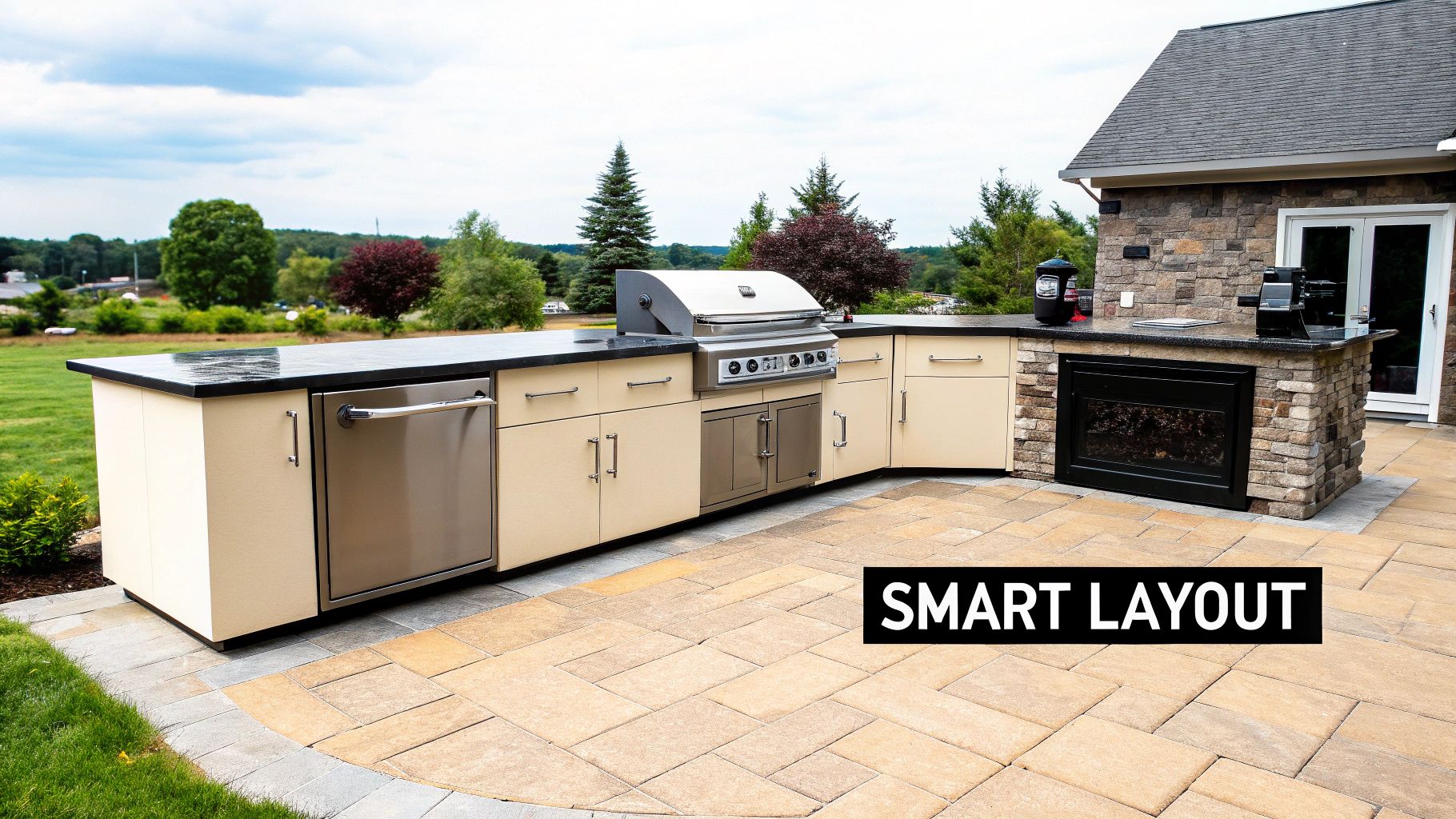
Once you’ve landed on a material, the real fun begins. This is where you start to see what separates the truly best outdoor kitchen cabinets from the rest of the pack. The difference lies in the details—the things you can’t always see at first glance but will definitely feel after a few seasons of use.
It’s the construction quality and thoughtful little features that determine whether your investment feels like a luxury or a letdown. Think of it like buying a car; the engine and frame matter just as much as a shiny paint job. For outdoor cabinets, that means looking past the surface and getting into how they’re actually put together.
Inspecting Cabinet Construction and Sealing
The first thing I always look for is a fully enclosed design. You'd be surprised how many cheaper models have open backs or unsealed bottoms, which is basically an open invitation for pests, dirt, and moisture. A truly weatherproof cabinet should be a completely sealed box. Period.
On metal cabinets, get up close and check the corners. You want to see seamless, fully welded corners. While tacked or spot-welded corners might look okay from a distance, they’re weak points where water will eventually sneak in and start causing corrosion. Quality welds create a unibody structure that’s far more rigid and built to last.
Finally, don’t overlook weather stripping. Rubber gaskets around every door and drawer are an absolute must. They create that satisfying, tight seal that keeps out everything from blowing rain to dust and curious critters, ensuring the inside of your cabinets stays clean and dry.
Why Quality Hardware Is Non-Negotiable
If there’s one place manufacturers love to cut corners, it’s the hardware. And it's a huge mistake. The hinges, drawer slides, and handles are the moving parts that take a beating day in and day out. Skimping here is a guarantee you’ll have problems down the road.
Here’s what you should insist on:
- Hinges and Slides: Make sure all moving parts are 304-grade stainless steel. This grade offers fantastic corrosion resistance and is tough enough to handle constant use. Soft-close hinges and full-extension drawer slides aren't just fancy add-ons; they prevent slamming that can stress the cabinet frames and make it way easier to get to your stuff.
- Adjustable Components: Always look for adjustable legs and shelving. Being able to level your cabinets on an uneven patio is critical for proper door alignment and function. Adjustable shelves give you the freedom to store everything from tall margarita pitchers to small spice rubs.
A great cabinet should feel as solid and smooth on its tenth year as it did on day one. High-quality, corrosion-resistant hardware is the only way to achieve that longevity. Paying a little extra for it upfront will save you from the headache of replacing rusted, seized-up components later.
Smart Features That Elevate Functionality
Beyond just holding your stuff, the best outdoor cabinets offer integrated solutions that make your space more organized and a lot more fun to use. To really get a handle on how these pieces come together, it's worth exploring different cabinet construction methods, which gives you a ton of insight into what makes a cabinet truly last.
Think about adding some of these functional upgrades:
- Integrated Trash Pull-Outs: A dedicated, enclosed bin keeps garbage out of sight and away from hungry critters.
- Propane Tank Storage: A pull-out drawer designed just for a propane tank makes swapping them out so much safer and easier. No more wrestling with a heavy tank in a dark cabinet.
- Grill-Specific Storage: Look for cabinets with deep drawers for long grilling tools or dedicated spice racks to keep your essentials organized and right where you need them.
These are the features that transform a simple set of boxes into a highly functional outdoor workstation, making your entire cooking experience feel effortless.
Matching Cabinet Style with Your Home's Aesthetic
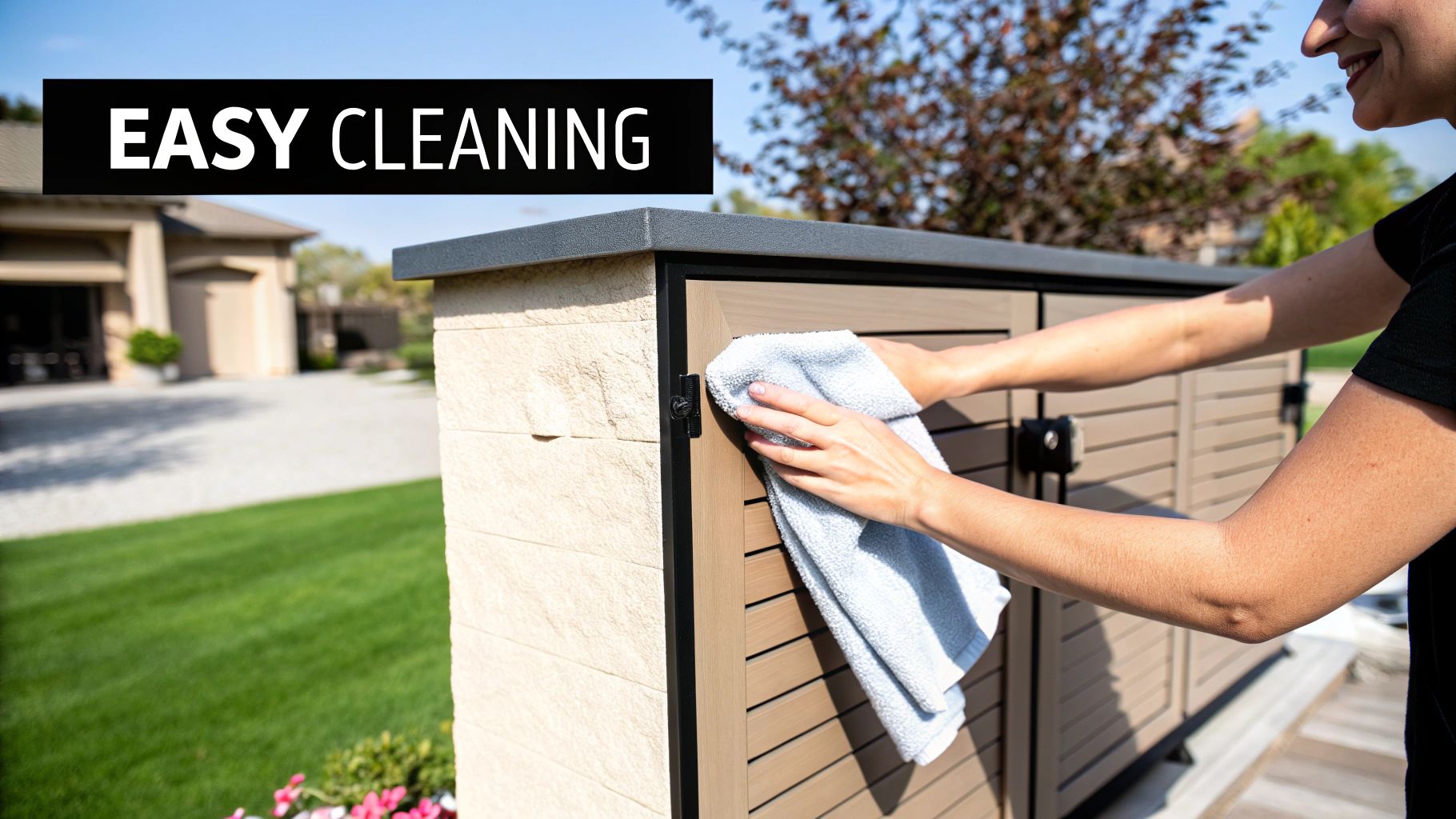
Your outdoor kitchen shouldn’t feel like an afterthought. It should feel like a natural, seamless extension of your home. The best outdoor kitchen cabinets are the ones that not only stand up to the weather but also perfectly complement your home's architectural style, creating a single, inviting atmosphere.
Getting this design harmony right is all about being deliberate with your choices in style, color, and finish. Think of your patio or deck as just another room of your house—by echoing the design language of your home, you make the entire property feel more expansive and thoughtfully planned out.
Aligning Styles and Finishes
First things first, take a good look at your home's core aesthetic. Is it a modern minimalist design, a classic brick traditional, or maybe a rustic modern farmhouse? That answer is your starting point for choosing the right cabinets.
If you have a sleek, contemporary home with sharp, clean lines, then stainless steel or powder-coated aluminum cabinets are a perfect match. Their flat-panel (slab) doors and geometric look will reinforce that modern vibe.
On the other hand, if your home leans more traditional or rustic, you’ll want to look for materials that echo natural textures. High-density polymers now come in incredibly realistic wood-grain finishes, giving you the warm, inviting look of teak or cypress without all the high-maintenance headaches. Pair those with a shaker-style door, and you've got a look that fits right in with a classic or transitional home.
Design Tip: Don't just match materials—coordinate your colors. A great trick is to pull a secondary color from your home's exterior, like the window trim or stone accents, and use that for your cabinet finish. This subtle connection creates a polished, custom-designed feel that really pulls everything together.
Coordinating with Your Outdoor Environment
Beyond your home's architecture, your cabinets have to work with what’s right around them. The colors and textures of your patio pavers, deck material, and countertops play a huge role in the final look and feel of the space.
Always, always get samples and look at them outdoors in natural light. A color that looks perfect on a website or in a showroom can look completely different under the bright sun or in the evening shade.
Here are a few pairings I've seen work beautifully in real-world projects:
- Dark Pavers or Stone: Create a stunning, dramatic contrast with crisp white or light gray cabinets. It’s a clean, modern look that always works.
- Warm Wood Decking: You can complement those natural tones with cabinets in rich, earthy shades like olive green, deep navy blue, or even a dark bronze powder coat.
- Light Concrete Patios: This is your neutral canvas. You can go bold with a pop of color for the cabinets or create a sophisticated, monochromatic look with stainless steel or various gray finishes.
By carefully balancing your cabinet style with your home's existing aesthetic and the immediate outdoor elements, you can design a space that feels both beautiful and completely intentional.
How to Plan Your Outdoor Kitchen Layout
A killer design is what takes a simple patio grill and turns it into a genuine outdoor kitchen you’ll actually want to spend time in. The best outdoor kitchen cabinets are the foundation, but a thoughtful layout is what makes the space efficient, safe, and a joy to use. The best place to start is by adapting the classic kitchen "work triangle" for the outdoors.
This old-school design concept creates a natural workflow between your three key areas: the hot zone (your grill), the wet zone (your sink), and the cold zone (your refrigerator). When these three points are just a few steps from each other, you cut down on the frantic running around, which makes cooking a whole lot more relaxing. For a deeper dive into creating an efficient workflow, check out our guide on how to layout a functional kitchen.
Mastering the Installation Details
Even the most incredible cabinets are going to disappoint if they’re sitting on a shoddy foundation. Before you even think about placing a cabinet, you have to get the ground underneath it perfectly level. A slightly sloped patio might not seem like a big deal, but it can make cabinet doors hang crooked and cause drawers to stick—little annoyances that will drive you crazy over time.
Proper ventilation for your grill is another absolute must. This isn't just a suggestion; it's a critical safety rule. Built-in grills get incredibly hot and need very specific clearances from any combustible materials. Always, always follow the grill manufacturer's specs for clearances. Your cabinet design needs to include proper venting to let that heat escape, otherwise you risk damaging the cabinets or, worse, starting a fire.
Pro Tip: Figure out your utilities before you lock in your layout. You need to know exactly where the gas, water, and electrical lines will run. It’s so much easier and cheaper to run those lines to a well-planned spot now than it is to tear up your brand-new patio to move them later.
Avoiding Common Layout Mistakes
So many homeowners trip over simple mistakes that end up compromising the safety and longevity of their outdoor kitchen. One of the biggest offenders is poor drainage. Your layout has to account for where rainwater will go, making sure it flows away from your cabinets, not toward them. Pooling water will wreck cabinet bases and create a dangerous slip hazard.
Another classic blunder is putting heat-sensitive items, like a refrigerator or polymer cabinets, right next to the grill without proper insulation. That constant heat exposure can lead to appliance failure and cause materials to warp. As you plan, think about how the kitchen will fit in with your other hardscaping elements to create a single, cohesive outdoor living area.
This growing desire for functional, stylish outdoor spaces is really fueling the market. In fact, the outdoor kitchen cabinets market is expected to grow by roughly $1.5 billion between 2025 and 2029, all because more people are embracing outdoor cooking. By sidestepping these common pitfalls, you’re making sure your investment is a lasting part of this fantastic trend toward high-quality outdoor living.
Got Questions? We’ve Got Answers.
Even after you think you've landed on the perfect material and style, a few questions are bound to pop up. That’s completely normal—in fact, it’s a good sign! Getting these final details sorted out is what ensures you’ll love your outdoor kitchen for decades, not just a few seasons. We hear a lot of the same questions, so we’ve put together some straightforward answers to help you finalize your choice.
How Do I Protect My Cabinets in the Winter?
Protecting your investment during the off-season is non-negotiable, especially if you live somewhere with real winter weather. For stainless steel or polymer cabinets in milder climates, a good cleaning followed by a protective polish might be all you need.
But for those of us dealing with heavy snow and freeze-thaw cycles, high-quality, breathable waterproof covers are a must. They keep the weather out but prevent moisture from getting trapped inside, which is a recipe for mold, mildew, or even corrosion. If you have teak cabinets, plan on applying a fresh coat of sealant in the fall to give them an extra barrier against moisture.
Pro Tip: Before you cover anything up for the winter, make sure you empty, clean, and completely dry your cabinets. This one simple step is your best defense against opening them up to a nasty surprise in the spring.
Are Wood Cabinets a Good Idea Outside?
They absolutely can be, but your wood selection is critical. You can’t just use any wood. We’re talking about dense, oily hardwoods like teak, ipe, or cypress that have a natural knack for resisting rot and insects. Those are really your only viable options.
That said, be prepared for more upkeep than you’d have with synthetic materials. You'll need to commit to sealing them regularly to keep their color and protect them from the elements. Whatever you do, don't even think about using common indoor woods like pine, oak, or maple. They will warp, crack, and rot faster than you can imagine. If you love the look but not the work, a high-quality polymer cabinet with a realistic wood-grain finish gives you the best of both worlds.
What’s the Big Deal with 304 vs. 316 Stainless Steel?
The difference comes down to one little ingredient: molybdenum. This element is added to create 316-grade stainless steel (often called "marine-grade"), and it dramatically ramps up its ability to fight off corrosion from salt and other chlorides.
This isn’t just technical jargon; it’s a crucial distinction that depends entirely on where you live:
- Live near the coast? Or have a saltwater pool? Don’t even hesitate. You need 316-grade steel. The salt in the air will cause pitting and rust on lesser grades, ruining the look of your kitchen.
- For most inland locations, the more common and budget-friendly 304-grade stainless steel is more than tough enough. It offers fantastic durability for a beautiful, long-lasting outdoor kitchen.
Making the right call here based on your environment is one of the most important factors in keeping your stainless steel cabinets looking sleek and rust-free.
At Sinclair Cabinetry inc, we bring over 35 years of experience to the table, helping homeowners create stunning, durable kitchens—both inside and out. If you’re ready to build the outdoor oasis you've always dreamed of with custom, high-quality cabinetry, we’re here to bring your vision to life.
Explore our custom cabinet solutions and start your project today.