

Learning how to budget for a home renovation really begins with a clear-eyed plan, not just a Pinterest board full of dreams. The process comes down to three things: defining your project’s scope, digging into the real costs for materials and labor, and building a financial safety net for those inevitable surprises. Honestly, getting this blueprint right from the very beginning is your best defense against sleepless nights and financial stress down the road.
Building Your Renovation Budget Blueprint
Long before a single hammer swings, your most powerful tool is a well-crafted budget. Think of it as the foundation your entire project will rest on. A detailed financial plan does so much more than just track numbers; it grounds your vision in reality, helping you sidestep common pitfalls like overspending and scope creep.
Without a solid plan, it’s frighteningly easy for costs to spiral out of control. We've seen it happen. Aligning your dream renovation with what you can actually afford from day one is the key to a smooth, enjoyable process. This initial stage is all about smart preparation and foresight.
Key Pillars of a Strong Renovation Budget
To build a budget that actually works, you need to focus on a few core components. These elements give your plan structure and clarity, making sure no major expense gets overlooked.
Your initial blueprint should include:
- A Detailed Project Scope: Get specific. Clearly define everything you want to accomplish, from major structural changes all the way down to the particular finishes and fixtures you envision.
- Comprehensive Cost Research: Time to do your homework. Gather realistic estimates for materials, labor, permits, and any professional services you might need, like architects or designers.
- A Generous Contingency Fund: This is non-negotiable. You absolutely must set aside extra money—we always recommend 15-20% of the total project cost—to cover the unexpected issues that always come up.
- A Clear Funding Strategy: Before you start, you need to know how you'll pay for it all. Take the time to explore various home improvement financing options to find the right fit for your situation.
To give you a clearer picture, here’s a quick breakdown of what a solid budget should contain.
Key Elements of a Renovation Budget
This table summarizes the essential components every home renovation budget should include to ensure you're prepared for all potential costs.
| Budget Component | What It Covers | Typical Allocation |
|---|---|---|
| Material Costs | Raw materials like lumber, drywall, flooring, tiles, paint, and cabinetry. | 30-40% of total budget |
| Labor Costs | Wages for contractors, plumbers, electricians, painters, and other trades. | 20-35% of total budget |
| Permits & Fees | Local building permits, inspection fees, and any necessary architectural plans. | 1-5% of total budget |
| Contingency Fund | An emergency fund for unforeseen problems like hidden damage or delays. | 15-20% of total budget |
| Finishes & Fixtures | Lighting, faucets, hardware, appliances, and other finishing touches. | 10-15% of total budget |
Having these elements clearly defined helps you maintain control and make informed decisions as your project progresses.
A well-planned budget isn't about limiting your dreams; it's about making them achievable. By understanding every potential cost upfront, you empower yourself to make smart decisions, allocate funds effectively, and ultimately create the space you've always wanted without the financial hangover.
Getting organized from the very start is everything. A fantastic way to begin mapping out your project is by using a detailed guide, like this comprehensive home renovation checklist, which helps ensure you don’t miss any critical steps. It's a great resource to walk you through each of these pillars in detail, setting you up for a successful and financially sound home transformation.
Defining Your Project Scope and Vision
Before you can nail down a budget for your home renovation, you need a rock-solid vision of what you’re trying to achieve. Let’s be honest—an accurate budget isn’t built on vague ideas. It’s built on a detailed project scope. Think of this scope as your roadmap, outlining every single task, material, and finish you want. It's hands-down the most powerful tool you have for getting realistic quotes from contractors.
Without a clearly defined scope, you’re inviting "scope creep" to the party. That’s the slow, sneaky addition of new ideas and changes that can absolutely wreck your finances. Starting with a detailed plan keeps you focused and makes sure every dollar you spend is a conscious choice that gets you closer to your goal.
Distinguishing Must-Haves from Nice-to-Haves
Every renovation begins with a wish list a mile long. The real trick is turning that dream into a plan you can actually afford. The best way to start is by sorting every single item into two buckets: must-haves and nice-to-haves. This simple exercise is a game-changer when your dream list inevitably collides with your budget.
Must-haves are your non-negotiables. These are the core elements that your project absolutely needs to be a success. For a kitchen remodel, your must-haves might look something like this:
- A more functional layout to fix the terrible workflow.
- New, reliable appliances because the old ones are on their last legs.
- Enough storage to finally get the clutter off the countertops.
- Fixing that sketchy wiring that’s been a known safety issue.
Nice-to-haves are the fun upgrades you’d love to have but could live without if the numbers aren’t adding up. These are the things that add a touch of luxury or a specific aesthetic but don't impact the basic function of the space.
For that same kitchen, the nice-to-have list could include:
- Imported Italian marble countertops instead of a great-looking quartz.
- A built-in wine fridge.
- High-end, decorative cabinet hardware.
- A pot filler faucet over the stove.
Making these calls early on gives you a clear set of priorities. When the contractor bids start rolling in, you’ll know exactly where you can pull back without sacrificing what really matters.
Creating Your Comprehensive Wish List
Alright, now it’s time to get specific. Grab a notebook or fire up a spreadsheet and walk through your space, writing down everything you want to change. Don't censor yourself at this stage—get every idea down, no matter how big or small. Think about function just as much as you think about looks.
A detailed wish list does more than just outline your desires; it forces you to think through the specifics of how you live in a space. This process often uncovers needs and priorities you might not have initially considered, leading to a more thoughtful and successful final design.
As you build your list, think in these categories:
- Structural Changes: Are you moving walls, adding windows, or completely changing the layout?
- Plumbing and Electrical: Do you need to move outlets, add new lighting, or relocate sinks and appliances?
- Finishes: What kind of flooring, paint, tile, and trim are you picturing?
- Fixtures: List out every faucet, light fixture, sink, and toilet.
- Cabinetry and Storage: Detail the style, finish, and specific functions you need.
- Appliances: Get specific with the models and types you want.
- Hardware: Don’t forget the little things like cabinet pulls, doorknobs, and towel bars. They add up!
Turning Inspiration into a Concrete Plan
Pinterest boards and design magazines are great for getting the ideas flowing, but they aren't a plan. To get an accurate quote, you need to translate those beautiful images into specific, actionable details for your contractor. For every picture you've saved, figure out exactly what you like about it. Is it the color of the cabinets? The style of the faucet? The overall room layout?
For example, instead of just showing a contractor a photo of a kitchen and saying, "I want this," hand them a list that looks more like this:
- Cabinetry Style: Shaker-style doors in a warm taupe, similar to Benjamin Moore's "Stone Hearth."
- Countertops: White quartz with subtle grey veining.
- Backsplash: Classic white 3×6 subway tile laid in a herringbone pattern.
- Flooring: White oak hardwood with a natural, matte finish.
This level of detail takes all the guesswork out of it for the contractors, which means they can give you a much more accurate and reliable bid. A well-defined scope is the foundation of any successful project. To dig deeper into this crucial first step, our guide on how to plan a home renovation walks you through how to organize your thoughts and get your project started on the right foot.
An Itemized Breakdown of Renovation Costs
Alright, you’ve got the vision. Now it's time to talk dollars and cents. A solid renovation budget isn't just a number—it's a detailed, line-by-line breakdown of every single cost. This is where we get into the nitty-gritty and figure out exactly where the money is going.
As a general rule of thumb, expect a split where materials make up about 40% of your total budget, and labor eats up the other 60%. This isn't set in stone, of course. Your location and the project's complexity will cause it to shift, but it’s a great starting point for your estimates.
Hard Costs: Materials and Labor
First up are the hard costs—the stuff you can see and touch. These are the tangible materials and the skilled professionals needed to put it all together. They will undoubtedly form the biggest chunk of your budget.
When you're listing out materials, don't leave anything out. For a kitchen remodel, that list will look something like this:
- Cabinetry and Countertops: This is often the single biggest line item.
- Appliances: The fridge, oven, dishwasher, and microwave.
- Flooring: Whether you're going with hardwood, tile, or LVP.
- Backsplash Tile: Don't forget the ceramic, glass, or stone tile.
- Lumber, Drywall, and Paint: The essential building blocks for any changes.
Labor costs cover the pros who make it all happen. You'll need to budget for your general contractor, plumbers, electricians, painters, and tilers. Always, always get multiple itemized quotes. It's the only way to compare rates and make sure you're getting a fair price.
For a really precise look at kitchen-specific costs, our kitchen remodel cost calculator can show you how different material choices will affect your bottom line.
Soft Costs: The Hidden Expenses
Beyond the construction itself, you'll run into soft costs. These are the indirect expenses that are just as important but are so easy to overlook in the early stages. Trust me, ignoring them is the fastest way to blow your budget.
A good rule of thumb is to set aside 10-15% of your total construction costs just for these fees. Factoring this in from day one will save you a world of financial stress later.
Here are the key soft costs to plan for:
- Design Fees: This covers your architect, interior designer, or kitchen designer.
- Permit Fees: The cost to get the necessary building permits from your local municipality.
- Temporary Housing: If it's a massive project, you might need to budget for a rental.
- Finishing Touches: All the little things—drawer pulls, light fixtures, faucets—add up faster than you'd think.
This infographic does a great job of visualizing how to sort your project into "needs" versus "wants."
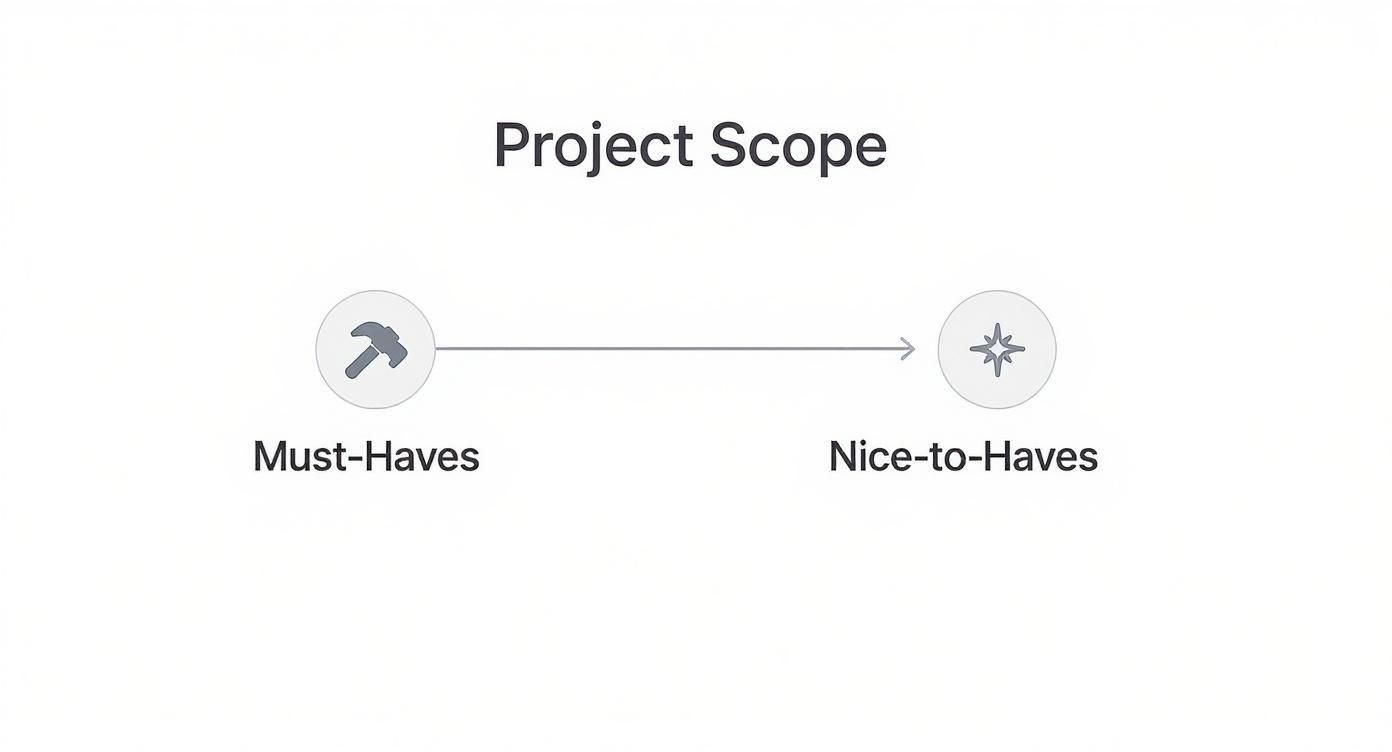
Making this distinction is fundamental. It lets you lock in funding for the absolute must-haves before you even think about splurging on the nice-to-haves.
Allocating Funds Based on Priorities
Knowing where other homeowners are putting their money can give you some valuable perspective. For 2025, Americans are projected to spend over $1.2 trillion on home renovations. Kitchen remodels are leading the pack, making up 38% of projects, with bathroom upgrades close behind at 26%.
Home additions like guest suites account for 17% of projects, while outdoor living spaces are getting a boost in 20% of renovations. We're also seeing a growing emphasis on sustainability, with 14% of spending going toward energy-efficient upgrades like new windows, better insulation, and solar panels.
This push toward energy efficiency really underscores the need to itemize every potential upgrade. For example, if you're thinking about going solar, it's crucial to understand how much solar panels cost so you can budget for that big-ticket item accurately.
By meticulously tracking every single cost—both direct and indirect—you're creating a realistic financial roadmap. This detailed approach gives you the power to make smart decisions, spot opportunities to save, and invest confidently in the parts of your home that matter most to you.
Your Contingency Fund: The Renovation Safety Net
Let's be real—no matter how perfectly you plan a renovation, you're going to hit a surprise. It’s just the nature of the beast. The moment you start opening up walls and pulling up floors, you’re uncovering years of history you knew nothing about.
This is exactly why a contingency fund isn't just a nice-to-have; it's the most critical line item in your entire budget. Think of it as your project's insurance policy. It's a dedicated pool of cash set aside just for those "uh-oh" moments. Without it, one unexpected issue can send your whole project sideways, forcing you to make tough compromises or stop work completely.
Why You Absolutely Can't Skip This
The industry rule of thumb is to set aside 15-20% of your total project cost for your contingency fund. So, if your renovation is budgeted at $50,000, you’ll want a safety net of $7,500 to $10,000. That might sound like a huge chunk of change, but you'd be surprised how quickly it can disappear when a real-world problem crops up.
Imagine this scenario: your crew starts demolition on your bathroom floor, only to find the subfloor is completely rotted from a slow, hidden leak that’s been there for years. That wasn't in the original quote, but it absolutely has to be fixed. The cost for new materials and the extra labor to repair it will come straight out of your contingency fund, letting the project move forward without a single hiccup.
A contingency fund isn't "extra" money for upgrades. It’s an essential, non-negotiable part of your total renovation cost, providing the financial flexibility to handle genuine surprises without derailing your vision or timeline.
This is especially true if you live in an older home. With nearly half of all U.S. homes built before 1980, there's a constant demand for repairs and modern upgrades. The older the house, the higher the odds of finding outdated wiring, ancient plumbing, or weird structural quirks that need immediate attention. You can discover more insights about home renovation spending trends and see how they line up with our aging housing stock.
How to Size Your Safety Net
While 15-20% is a solid benchmark, the right amount really depends on your project's specific risks. A few key factors can help you decide whether to aim for the lower or higher end of that range.
Think about these things when setting your percentage:
- Age of Your Home: Is your house over 50 years old? You'll want to lean toward a 20% contingency. Older homes are notorious for hiding surprises like knob-and-tube wiring or asbestos.
- Project Complexity: If you're doing a simple cosmetic refresh—like new paint and light fixtures—a 10-15% fund might be plenty. But if you’re moving walls, rerouting plumbing, or overhauling electrical systems, you need a bigger safety net. Definitely aim for 20%.
- Your Contractor's Input: A good, experienced contractor has seen it all. They can often spot potential red flags and will recommend a specific contingency amount based on what they've seen in homes just like yours.
When to Use It (and When to Hold Back)
Having a contingency fund is one thing; knowing when to use it is another. This money has a very specific job: to solve unforeseen problems that were impossible to plan for.
It's completely okay to dip into the fund for things like:
- Repairing hidden water damage or pest infestations.
- Fixing structural issues you find after demolition.
- Upgrading electrical or plumbing to meet current building codes.
- Covering costs from an unexpected spike in material prices.
What you don't want to do is let "scope creep" eat away at your safety net. This fund is not for splurges. If you decide halfway through the project that you suddenly must have those heated floors or that high-end appliance you originally cut, that money needs to come from a different place—not your emergency reserve.
Treat your contingency fund like the true safety net it is, and you'll ensure your project stays on solid financial ground from start to finish.
Keeping Your Renovation Budget on Track in Real Time

A well-researched budget is a fantastic starting point, but it's just a snapshot in time. The real secret to finishing your project without financial headaches is diligent, real-time expense tracking. This is what separates a smooth renovation from a stressful, costly one.
Think of your budget as the financial roadmap for your project. Actively tracking every dollar spent is like using a GPS to make sure you haven’t taken a wrong turn. It lets you see exactly where your money is going, compare it to your estimates, and make smart adjustments before a small overage snowballs into a major problem.
Picking the Right Tool for the Job
There’s no single "best" way to track your spending; the right tool is simply the one you’ll actually use consistently. Your choice really comes down to your comfort level with technology and how complex your project is.
- Simple Spreadsheets: A classic for a reason. Tools like Google Sheets or Microsoft Excel are free, totally customizable, and perfect for logging every receipt and invoice. You can set up columns for the item, estimated cost, actual cost, and the difference, giving you a crystal-clear financial picture at a glance.
- Budgeting Apps: If you live on your phone, apps like Mint or You Need A Budget (YNAB) can be a game-changer. They can link to your bank accounts and credit cards to automatically categorize renovation purchases. It automates a lot of the grunt work but will require some careful setup to tag expenses correctly.
- Project Management Software: For huge, complex renovations, dedicated software can be worth a look. These platforms track not just your finances but also timelines and contractor communications. They’re powerful, but they often come with a subscription fee and a bit of a learning curve.
The goal isn't just to record what you've spent, but to understand what you have left to spend. Regular tracking shows you how much of your contingency fund is still intact, empowering you to make informed decisions when those inevitable surprises pop up.
Building a System for Financial Oversight
Once you have your tool, it’s time to build a routine. Managing the money during a renovation is all about clear communication and a consistent process for approvals and payments. This system keeps everyone accountable and ensures there are no financial surprises waiting for you at the end.
A solid oversight system looks like this:
- Weekly Budget Check-ins: Put a short, non-negotiable meeting on the calendar with your general contractor each week. Use this time to review last week’s expenses, compare them against the budget, and talk about the upcoming week's anticipated costs. It keeps you both on the same page and helps you spot potential overruns early.
- Get Everything in Writing with Change Orders: This is a big one. If you or your contractor wants to make a change that affects the budget—whether it's adding a cool new feature or swapping out materials—it must be documented in a written change order. This piece of paper should detail the change, the exact cost, and be signed by both of you before any work begins. This simple step prevents so many misunderstandings and surprise charges down the road.
- Master Your Receipts and Invoices: Designate one spot—a physical folder or a digital drive—for every single receipt, invoice, and contract related to the project. This level of organization is a lifesaver for tracking, handling returns, and dealing with any potential warranty issues that might pop up.
Keeping an eye on market trends can also give you a leg up. Globally, the home renovation market is projected to hit $2.05 trillion in 2025 and is expected to grow to $2.66 trillion by 2032. This growth, fueled by demand for better living spaces, directly impacts material and labor costs. You can read the full research about the home renovation market to get ahead of potential price swings.
By taking a proactive approach to tracking expenses, you stay firmly in the driver's seat. Your budget transforms from a simple estimate into a powerful management tool that guides your project to a successful, shock-free conclusion.
Common Questions About Renovation Budgets
Even the most buttoned-up renovation plan will have you asking questions. When you're staring down the barrel of a big project, it's completely normal to feel a little overwhelmed by the numbers. Let’s walk through some of the most common questions homeowners have.
Think of it this way: getting the financial side of your remodel right is just as critical as picking out the perfect countertop. Answering these questions now will help you build a budget that’s both realistic and resilient.
How Much Should I Budget for a Kitchen Renovation?
This is the big one, isn't it? The honest answer is that kitchen renovation costs can swing wildly. It all depends on the size of your space, the cost of labor in your area, and the level of finishes you’re dreaming of.
A minor, cosmetic refresh—we’re talking new paint on the cabinets, updated hardware, maybe a new backsplash—could land you in the $15,000 to $30,000 range. For a major mid-range gut job with new cabinets, appliances, and countertops, you’re more likely looking at $40,000 to $80,000. And if you’re planning a high-end, custom renovation that involves moving walls or plumbing, it’s not hard to see that number climb past $100,000.
To get a real handle on your own project, start by pricing out your non-negotiables first. Your cabinetry and appliances are the heavy hitters and can easily eat up 40-50% of your total budget. Once you have those figures, your next move is to get at least three detailed quotes from reputable local contractors. This will give you a clear picture of what labor costs look like where you live.
What Is the Biggest Renovation Budgeting Mistake?
Hands down, the single biggest mistake I see homeowners make is not building in a proper contingency fund. They create a budget that’s planned down to the last dollar, leaving zero wiggle room for the unexpected. It’s a recipe for disaster.
Renovations, especially in older homes, are notorious for uncovering surprises. You knock down a wall and find sketchy, outdated wiring. You pull up old flooring and discover a slow plumbing leak. These aren't just little hiccups; they're project-stopping problems that need to be fixed now.
Your contingency fund isn't "extra" money. It's a non-negotiable part of the budget. Set aside 15-20% of your total project cost and reserve it strictly for true emergencies, not for a last-minute splurge on fancier tile.
Can I Save Money Managing the Project Myself?
It's tempting to act as your own general contractor (GC) to save that 10-20% fee. On paper, it looks like an easy win. But this path is loaded with major commitments and serious risks that, for most people, just aren't worth the potential savings.
When you step into the GC role, you're suddenly responsible for everything:
- Hiring and Vetting Subs: You’re the one finding, hiring, and managing every single person, from the plumber to the electrician to the painter.
- Mastering the Schedule: It's on you to create a realistic work schedule and make sure everyone shows up on time and in the right order. (Hint: they won't always.)
- Ordering All Materials: You have to get every order right and ensure materials arrive on-site exactly when they're needed to avoid costly downtime.
- Navigating Permits and Inspections: You are responsible for pulling all the required permits and making sure the work passes every single inspection.
If you have a background in construction and a ton of free time, you might pull it off. For most homeowners, though, the stress, the endless hours, and the high potential for expensive mistakes make hiring a pro GC a smart investment. Their experience and network can prevent delays and errors that would wipe out your savings in a heartbeat.
How Do I Choose Between Contractor Bids?
When the quotes start coming in, fight the urge to immediately grab the lowest one. A bid that's significantly cheaper than the others is often a massive red flag. It could mean they’re using shoddy materials, inexperienced labor, or, worse, they didn't really understand the scope of your project.
Instead of just looking at the final number, ask each contractor for a detailed, itemized bid. This lets you compare apples to apples and see if everyone is quoting the same quality of work and materials. A vague quote is a sign of trouble ahead.
Do your homework before making a decision:
- Check Their Credentials: Make sure every contractor is licensed and fully insured. No exceptions.
- Read the Reviews: Look for feedback on multiple sites to get a full picture of their reputation.
- Call Their References: Talk to at least two or three recent clients. Ask them about communication, how problems were handled, and if they were happy with the final product.
In the end, you want to hire the contractor who communicates clearly, really gets your vision, and gives you a transparent, comprehensive bid that makes you feel confident, not nervous.
At Sinclair Cabinetry inc, we understand that custom cabinetry is a significant investment in your home. Our 35 years of expertise ensure that every piece we craft not only meets but exceeds your expectations for quality and beauty. Ready to bring your vision to life with stunning, durable, real wood cabinets? Explore our custom cabinetry solutions and start your project today.