

When you're weighing cabinet refacing vs. new cabinets, the right choice really boils down to three things: your kitchen's current layout, the condition of your existing cabinets, and your budget.
If your cabinet boxes are still in great shape and you're happy with the overall flow of your kitchen, refacing can give you a stunning new look for a fraction of the cost and time. On the other hand, if you're dreaming of a totally new layout, your cabinets are falling apart, or you want absolute control over the design, then brand-new cabinets are the only way to go.
Your Quick Guide to Refacing vs Replacing Cabinets
Let's break down the core differences between these two popular kitchen upgrades. Think of it this way: refacing is a high-impact cosmetic facelift, while replacing is a full-blown structural renovation. Each one has its place, depending on whether you're after a quick refresh or a complete overhaul.
The decision almost always comes down to cost, how long you can live with your kitchen being torn up, and how much you want to customize.
To give you a clearer picture, here’s a quick side-by-side look at what you can expect from each option.
Refacing vs Replacement Quick Comparison
This table gives you a high-level summary of the key differences between cabinet refacing and installing new cabinets.
| Factor | Cabinet Refacing | New Cabinets |
|---|---|---|
| Average Cost | $4,000 – $13,000 | $10,000 – $25,000+ |
| Typical Timeline | 3-5 days of on-site work | 1-3 weeks of on-site work |
| Layout Changes | Not possible; layout is fixed | Fully flexible; complete redesign |
| Best For | Sound cabinet boxes, budget updates | Damaged boxes, layout changes |
As you can see, the initial numbers are quite different, but the financial story doesn't end there. We also need to talk about return on investment (ROI).
Homeowners who reface their cabinets often see a fantastic return, recouping 70% to 80% of the project's cost when they sell their home. In contrast, massive kitchen remodels involving all-new cabinets have historically returned less than 50% of their cost. This makes refacing a seriously smart financial move if resale value is on your mind.
The infographic below really drives home the differences in cost, project duration, and even the environmental impact.
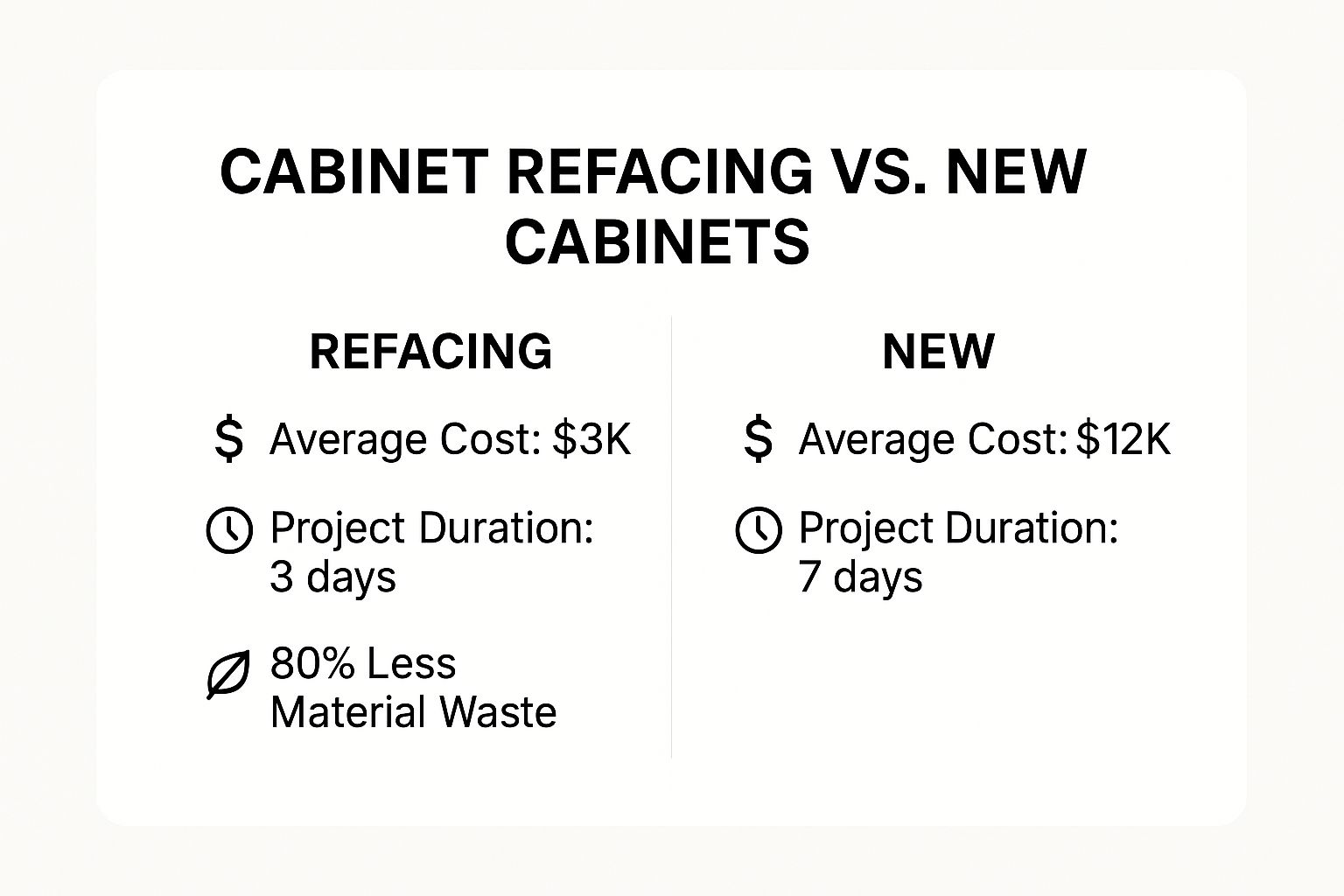
The data is pretty clear: refacing isn't just lighter on the wallet and faster to complete; it's also a greener choice that keeps a ton of material out of landfills.
If you're ready to get into the nitty-gritty of these trade-offs, you’ll find even more detail in our complete guide on the kitchen cabinet reface vs replace decision.
A Financial Breakdown of Your Cabinet Options
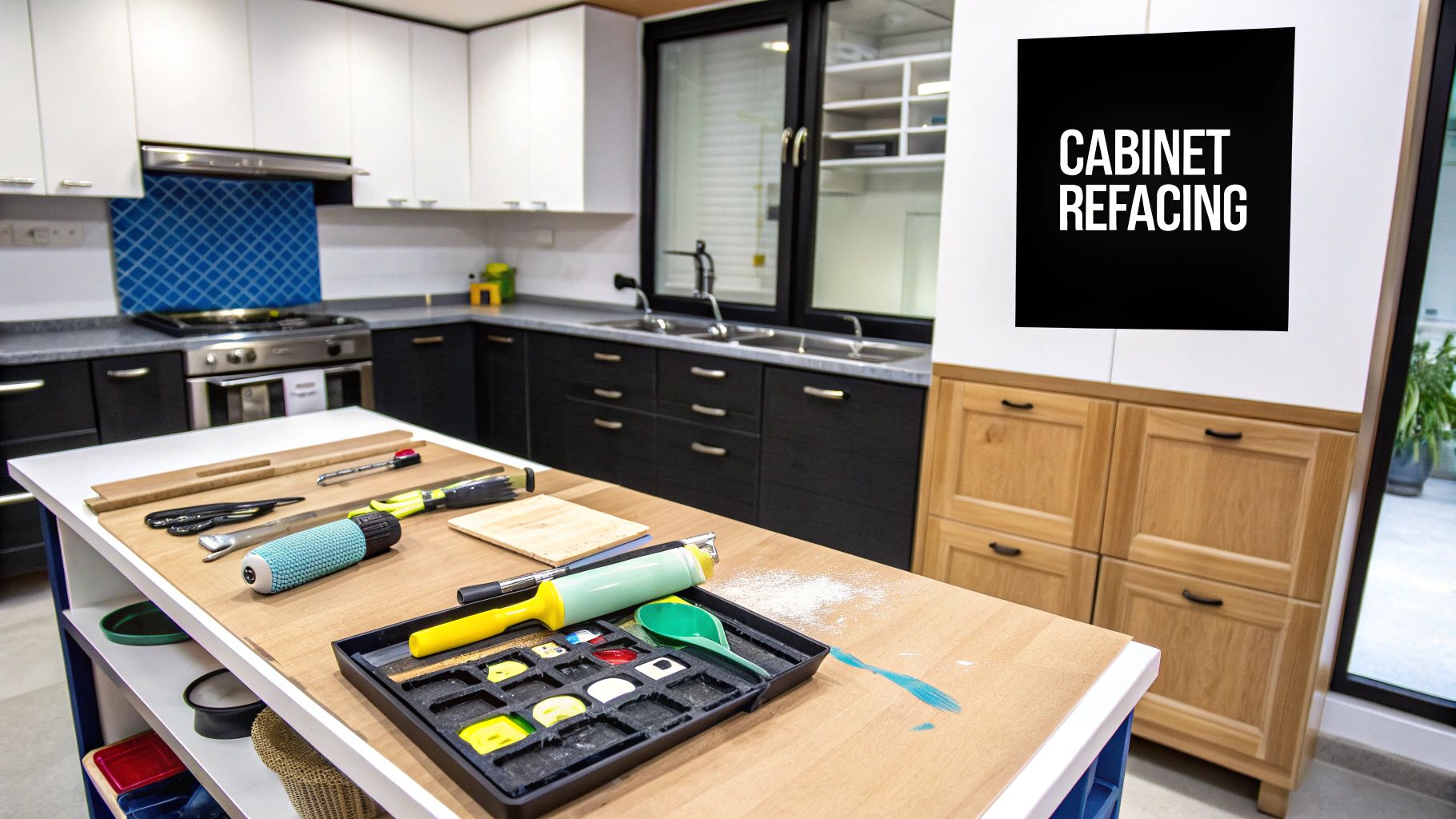
Let's get down to the brass tacks: the budget. When it comes to cabinet refacing versus new cabinets, the financial piece of the puzzle is almost always the deciding factor. While refacing is consistently the more affordable route, the final price for either project will hinge on your choice of materials, the size of your kitchen, and local labor rates. Getting a handle on these variables is the first step to building a realistic budget.
On average, a professional cabinet refacing job will run you somewhere between $4,000 and $13,000. Compare that to a full replacement, which can easily start at $10,000 for basic stock options and climb to $25,000 or more.
The huge price gap comes down to labor. Refacing is a much less invasive process—there's no demolition, and the installation is far quicker, often cutting labor costs by as much as 50%. We dig deeper into these numbers in our guide to the average cabinet refacing cost.
Key Cost Drivers For Cabinet Refacing
A refacing project isn't a one-price-fits-all deal. Your final invoice will be shaped by a few key decisions, with the most significant being the materials you choose for your new doors and the veneer for your cabinet boxes.
- Laminate or Thermofoil: These are your most budget-friendly options. They come in a massive range of colors and sheens, but the trade-off is durability; they can be prone to peeling or chipping down the road.
- Real Wood Veneer: This is a step up in both price and quality. A thin layer of real wood gives you that authentic look and feel you just can't fake. It's tougher than laminate and can be stained to perfectly match your vision.
- Hardware and Add-ons: Think of these as the finishing touches. New knobs, pulls, and soft-close hinges are pretty standard upgrades that will add to the total. If you want to get a little fancier with extras like crown molding or a new light valance, remember to factor those into the budget as well.
Understanding New Cabinet Costs
If you're leaning toward brand new cabinets, the biggest factor driving the cost is the type of cabinet you select. This decision doesn't just impact the price; it also dictates how much you can personalize the final product.
For a standard 10×12 foot kitchen, installing mid-range stock cabinets can start around $8,000, while a fully custom solution can soar past $30,000, not including installation. This demonstrates the wide financial spectrum of a full cabinet replacement.
- Stock Cabinets: These are the off-the-shelf, most affordable choice. They're pre-made in standard sizes with a limited selection of styles and finishes.
- Semi-Custom Cabinets: This is the middle ground, offering a great balance between cost and personalization. You get more flexibility with sizes, finishes, and door styles.
- Fully Custom Cabinets: The premium option. Custom cabinets are built from scratch to your exact specifications, giving you unlimited design freedom—but at the highest price point.
To help you visualize where the money goes, here's a side-by-side look at the typical costs for a standard 10×12 kitchen.
Detailed Cost Breakdown: Refacing vs. New Cabinets
| Cost Component | Cabinet Refacing (Mid-Range) | New Cabinets (Mid-Range Stock) |
|---|---|---|
| Materials (Doors, Veneer) | $3,000 – $7,000 | N/A |
| Materials (New Cabinet Boxes) | N/A | $4,000 – $8,000 |
| Labor (Installation) | $1,500 – $4,000 | $3,000 – $6,000 |
| Demolition & Disposal | $0 | $300 – $700 |
| Hardware & Add-ons | $200 – $1,000 | $300 – $1,200 |
| Estimated Total | $4,700 – $12,000 | $7,600 – $15,900 |
As you can see, the savings with refacing come primarily from eliminating the cost of new cabinet boxes and the demolition required to install them.
For homeowners thinking about bundling their cabinet project into a larger renovation, financing options like FHA 203(k) renovation financing are worth looking into. These specialized loans can help manage the costs of a bigger remodel that extends beyond just the kitchen.
Comparing Project Timelines and Daily Disruption
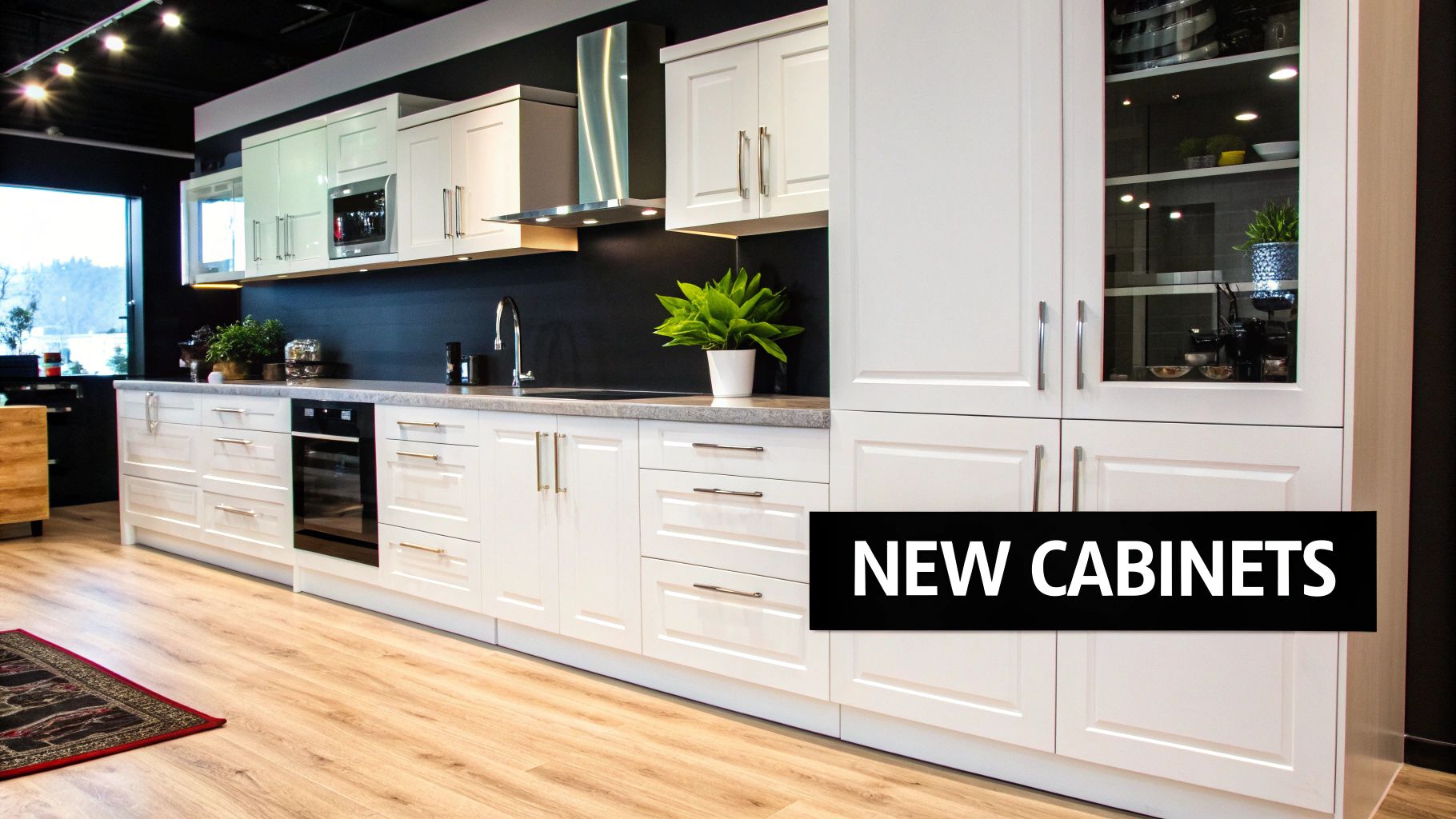
Time is a resource you can’t get back. When you're weighing cabinet refacing vs new cabinets, the impact on your daily routine is a huge piece of the puzzle. It’s not just about the final look; it's about how long your kitchen will be a construction zone and how much chaos you can really handle.
The difference between the two paths is stark, and it’s measured in weeks on a calendar and days of actual household disruption.
The Refacing Timeline: A Closer Look
Cabinet refacing is known for being fast and efficient. The entire project, from the first conversation to the final inspection, usually wraps up in just 2 to 4 weeks. But the part that really matters for your day-to-day life—the on-site installation—is incredibly brief.
Professionals are typically in and out of your home in just 3 to 5 days. During this short window, your kitchen stays almost completely functional. You’ll still have access to your countertops, sink, and appliances, which means you can avoid the constant expense and stress of takeout dinners.
The process is designed to keep the mess out of your house for as long as possible.
- Week 1: This is for planning. We’ll have a consultation, take precise measurements, and you’ll select your new doors, drawer fronts, and veneers.
- Weeks 2-3: Here’s the best part—nothing happens in your home. Your new cabinet components are custom-made off-site in a workshop. Your kitchen remains untouched.
- Week 4: The installation team arrives for the 3-5 day process. They’ll prepare the cabinet box surfaces, apply the new veneers, and install your brand-new doors, drawers, and hardware.
This phased approach keeps the dust, noise, and disruption contained to just a few days, making it a fantastic choice for busy families or anyone who simply can't live without a kitchen for weeks on end.
New Cabinets: A Much Longer Journey
On the other hand, choosing brand new cabinets is a serious commitment. You’re signing up for a much more involved and disruptive timeline. From start to finish, the total project can easily stretch from 12 to 16 weeks, and that’s assuming you don’t run into any supply chain delays.
The real headache begins with the on-site work. This phase involves a full demolition of your old cabinets—a loud, dusty, and messy process. Your kitchen will be completely out of commission for several weeks as the crew installs new cabinets, countertops, and potentially new plumbing and electrical fixtures.
Choosing new cabinets means preparing for a marathon, not a sprint. The kitchen, the heart of the home, is out of commission for an extended period, profoundly impacting daily routines from morning coffee to family dinners.
So, How Much Design Freedom Do You Really Have?
Let's be honest, a kitchen remodel is almost always about getting a fresh, new look. When you're weighing cabinet refacing vs new cabinets, the amount of design freedom you get with each option is a huge factor. This choice will define what’s possible for your kitchen's aesthetic and how much you can truly personalize the space.
Cabinet refacing is the master of the cosmetic upgrade. It delivers a stunning visual change without tearing out the bones of your kitchen. You get to swap out all the visible parts—doors, drawer fronts, and hardware—and cover the cabinet boxes with a matching veneer.
What’s Possible with Cabinet Refacing?
Don't underestimate the creative power of refacing. This isn't just a quick paint job; you're fundamentally changing the face of your cabinetry.
- A World of Materials: You can go from a dated, grainy oak to a slick, modern high-gloss white. The options are endless, from tough, easy-to-clean laminates to the warm, authentic feel of real wood veneers.
- The Finishing Touches: New hardware is a game-changer. Swapping old knobs for sleek pulls and adding soft-close hinges can instantly modernize the entire room. You can also add touches of class like crown molding, under-cabinet lighting, or even replace some solid doors with elegant glass inserts to show off your dishware.
The big trade-off with refacing is that your kitchen’s layout is set in stone. If you want to add an island, move the dishwasher, or change where your fridge is, refacing can't help you there. The cabinet boxes stay exactly where they are.
Total Creative Control with New Cabinets
If you’re dreaming bigger than just a new look, new cabinets are your only real path forward. This is for when the layout itself is the problem—it’s cramped, the workflow is a mess, or it just doesn’t fit how you live. This isn't a refresh; it's a complete reinvention.
Think of it as a blank slate. With brand-new cabinets, you have the power to:
- Redesign the Entire Footprint: Want to knock down a wall and open things up? Need a functional island with seating for the kids? Always dreamed of a dedicated coffee bar? New cabinets make it all possible by letting you rethink the entire flow.
- Integrate Smart Storage: This is where modern kitchens really shine. You can design in features that just can't be retrofitted into old cabinet boxes—things like pull-out spice racks, clever corner carousels, deep pot-and-pan drawers, and hidden trash and recycling centers.
- Get a Perfect, Custom Fit: New cabinets can be built to any size and shape, which means you can finally make use of that awkward corner or maximize storage all the way to the ceiling. The result is a seamless, high-end look that feels completely integrated into your home.
Ultimately, it all boils down to what you’re trying to fix. If you like your kitchen's layout but just can't stand the outdated style, refacing offers a massive menu of design choices. But if you’re looking to solve fundamental functional problems and build your dream kitchen from scratch, only new cabinets will give you that level of control.
The Environmental Impact of Your Kitchen Remodel
There's more to your kitchen remodel than just the final look and feel. Your choice between cabinet refacing vs new cabinets tells an environmental story, and for homeowners looking to make sustainable choices, this is a big deal. The decision you make has a direct ripple effect on landfill waste, the consumption of raw materials, and manufacturing energy.
At its heart, cabinet refacing is an eco-friendly approach. The entire philosophy is built on preservation—you keep your existing cabinet boxes, which are almost always structurally sound, and just give them a facelift. This one simple act of reuse keeps tons of old cabinetry and construction debris out of our landfills.
By choosing to reface, you are actively participating in a circular economy model for your home. You're extending the life of existing materials, which is one of the most effective ways to reduce your renovation's carbon footprint.
Reducing Landfill and Material Waste
Think about what happens when you install brand-new cabinets. The old structures—boxes, doors, hardware, the whole nine yards—are usually ripped out and hauled away. Refacing, on the other hand, keeps those cabinet boxes right where they are. This immediately slashes the amount of material waste headed to the dump.
Replacing your cabinets creates a huge demand for new wood, metals, and plastics, whereas refacing minimizes the need for new raw materials and the energy it takes to manufacture them. This sustainability advantage makes refacing a smart, eco-friendly alternative. You can find more insights on this sustainable approach on McClelland's Roofing.
The Energy Cost of Manufacturing
It takes a surprising amount of energy to create new cabinet boxes from scratch. The process starts with harvesting timber, then processing the wood, and finally transporting heavy, bulky materials—often across long distances. Refacing neatly sidesteps most of this heavy lifting.
Because you’re only fabricating smaller, lighter components like new doors and drawer fronts, the manufacturing and transportation footprint is significantly smaller. By working with what you've already got, you're not just saving money; you're conserving natural resources and the energy needed to turn them into something new. It's a choice that's as kind to your wallet as it is to the planet.
So, How Do You Make the Right Choice?
Alright, let's bring it all home. The whole cabinet refacing vs. new cabinets debate really boils down to two things: the kitchen you have now and the kitchen you're dreaming of. You've seen the breakdown of costs, timelines, and design potential. Now it's time to put that knowledge to work and make a decision you'll feel great about.
The first step is to get honest about your main goal. Are you looking for a fast, budget-friendly facelift for a kitchen that's already in decent shape? Or do you need a ground-up overhaul to fix a layout that just isn't working for you anymore? Your answer to that single question points you in the right direction.
Choose Refacing for a Smart, Strategic Upgrade
If your kitchen's "bones" are good but its style is stuck in the past, refacing is an incredibly smart move. Think of it as a targeted strike—you're updating all the visible surfaces without the chaos and expense of a full demolition. This is the perfect path in a few specific scenarios.
Go with Refacing if: Your cabinet boxes are solid, you genuinely like your kitchen’s layout, you're working with a moderate budget, and you need the project done quickly with as little disruption as possible.
Opt for New Cabinets When You Need a Total Transformation
Sometimes, just changing the doors and drawer fronts won't cut it. If your cabinets are literally falling apart or the layout makes cooking a chore, investing in brand-new cabinets is the only way to get the transformation you really need and solve those deep-seated functional problems.
Choose New Cabinets if: Your existing cabinets are water-damaged, warped, or just plain shot, you desperately need to change the layout to improve workflow, or your vision is a fully custom space with specialized storage and absolutely no compromises.
Figuring out if the higher cost of new cabinets is worth it often comes down to what you want long-term. For a deeper dive into this, our guide on whether custom cabinets are worth the investment can really help clarify what you get for your money.
Once you’ve locked in your cabinet plan, the next piece of the puzzle is often the appliances. Using an essential kitchen appliance buying guide can help you choose models that fit perfectly into your new design—and your budget.
Of course. Here is the rewritten section, crafted to sound completely human-written, following the expert tone and style of the provided examples.
Still Have Questions? Here Are Some Common Ones
When you’re weighing cabinet refacing against a full replacement, a few key questions always seem to pop up. Getting those answered is the best way to feel confident about which direction to take for your kitchen remodel.
Let’s start with a big one: durability. People often wonder if refacing will really last. When it's done professionally with high-quality materials like real wood veneers, you can easily expect your refaced cabinets to look great for 10-15 years, sometimes even longer. The real determining factors are the condition of your original cabinet boxes and the quality of the installation.
Can You Just Reface Cabinets Yourself?
Tackling a DIY cabinet refacing project is certainly possible, but it’s not for the faint of heart. It’s a demanding job that requires a serious amount of precision and some specialized tools to get that clean, professional finish. A small mistake when cutting a veneer or hanging a door can be a costly headache to fix, which is why most homeowners ultimately decide to bring in a professional.
Another common question is about mixing old with new. Can you reface most of your kitchen but add a brand-new island? Absolutely. A skilled cabinet professional can perfectly match the styles and finishes, ensuring the new piece blends seamlessly with your newly refaced cabinets for a cohesive, unified look.
Here's the most critical first step: take a hard look at your existing cabinet boxes. They have to be structurally sound. If you see any signs of water damage, warping, or particleboard that's starting to crumble, refacing isn't the right path.
At the end of the day, refacing is a fantastic option if your current kitchen layout works for you and your cabinet structures are in good shape. It delivers a massive transformation with far less disruption and waste than a full tear-out.
Ready to transform your kitchen with expert craftsmanship? The team at Sinclair Cabinetry inc has over 35 years of experience creating stunning, durable real wood cabinets tailored to your vision. Visit our website to learn more.