

Deciding between refacing and replacing your kitchen cabinets really comes down to three things: the structural integrity of your current cabinets, how you feel about the kitchen's layout, and of course, your budget.
Refacing is a fantastic cosmetic facelift when your cabinet boxes are still in great shape and you like where everything is. On the other hand, a full replacement is the only real option if you’re dealing with damage or want to completely redesign the space.
Your Quick Guide to Cabinet Refacing vs Replacing
When you’re tired of looking at dated or worn-out kitchen cabinets, the best path forward isn’t always obvious. The choice you make between refacing and a total replacement will shape your project's timeline, budget, and the final look and feel of your kitchen. Think of refacing as a targeted cosmetic upgrade, while replacement is a complete overhaul from the ground up.
Here’s a simple way to look at it: refacing is like putting a brand-new, high-quality suit on a person who is already in great shape. Replacement is what you do when the foundational structure—the person's posture or health—needs to be addressed first.
Refacing gives your kitchen a major aesthetic boost for a fraction of the cost and time. But, it's just a band-aid if your cabinet boxes are sagging, water-damaged, or were poorly built to begin with.
To make the right call, you have to understand the core differences. Refacing keeps your existing cabinet framework, and often your countertops, which saves a ton of time and money. It's the perfect solution if you're generally happy with your kitchen’s flow but just crave a new style.
In contrast, a full replacement gives you a blank slate to reimagine your kitchen's entire floor plan. This is your chance to improve the workflow, finally add that island you've been dreaming of, or integrate modern storage solutions that just weren't possible with the old layout. You can explore a detailed cabinet refacing vs. replacement comparison to see which option truly aligns with your long-term goals.
Reface vs Replace At a Glance
Before we get into the nitty-gritty details, this table gives you a quick snapshot of the key differences. It’s a great way to see the trade-offs at a glance.
| Factor | Cabinet Refacing | Cabinet Replacement |
|---|---|---|
| Average Cost | $4,000 – $10,000 | $8,000 – $30,000+ |
| Project Timeline | 3-5 days | 2-8 weeks |
| Kitchen Disruption | Minimal; kitchen stays usable | High; kitchen is non-functional |
| Layout Changes | Not possible | Fully customizable |
| Best For | Solid cabinet boxes, cosmetic updates | Damaged boxes, poor layout |
| Return on Investment | Often higher due to lower cost | Adds more absolute home value |
Seeing it laid out like this really highlights the compromises. Refacing is fast and affordable, but replacement offers total creative freedom. Now, let’s dig deeper into what these differences mean for your project.
So, What Exactly Is Cabinet Refacing?
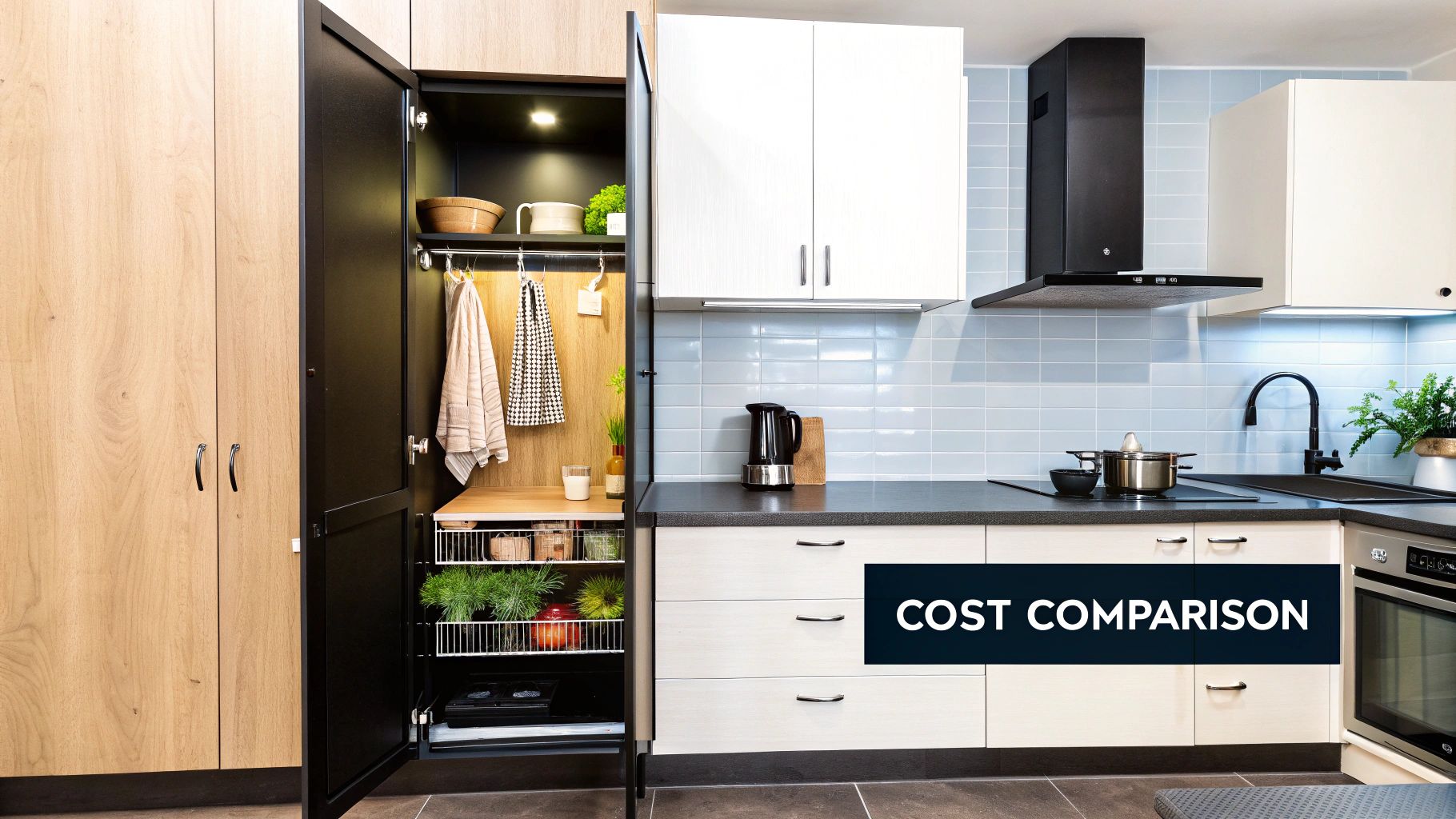
A lot of homeowners hear "refacing" and immediately think it's just a fancy term for painting. But it's so much more than that. Think of it this way: painting is like giving your car a new coat of paint, while refacing is like replacing all the body panels. The engine and frame are still there, but the entire look is brand new.
Cabinet refacing is a smart renovation strategy that keeps the solid, functional core of your kitchen but gives it a complete facelift. It all starts with stripping the kitchen down to its foundational boxes by removing every last door and drawer front. This step alone makes a huge impact and clears the way for the real magic.
A Look at the Refacing Process
Once everything is removed, the pros get to work meticulously prepping the surfaces of your existing cabinet frames. This isn't just a quick wipe-down. It's a detailed process of cleaning, sanding, and fixing any minor dings or scratches to make sure the new surface bonds perfectly.
With the frames prepped, a brand-new, durable material is applied to every visible surface. You generally have two great options here:
- Real Wood Veneer: These are thin sheets of actual hardwood that get bonded directly to your cabinet frames. They give you the authentic look, feel, and grain of solid wood.
- Durable Laminate: High-quality laminates like Thermofoil come in a massive range of colors and sheens, delivering a sleek, modern, and super easy-to-clean finish.
The whole point of refacing is to work with your kitchen's existing "good bones." If your cabinet boxes are structurally sound, you can get the look of a brand-new kitchen for a fraction of the cost and with way less headache.
The final, most exciting step is installing brand-new, custom-made doors and drawer fronts in whatever style and finish you’ve chosen. This is where you can totally change your kitchen’s vibe, going from an outdated oak look to something clean and contemporary. Top it all off with new hinges, handles, and knobs, and every single visible part of your kitchen is fresh and updated.
This methodical approach gives you a massive visual payoff while keeping your kitchen mostly intact and usable throughout the process. When you're weighing kitchen cabinets reface vs replace, this minimal disruption is often the tipping point for busy families. You get that showroom look without your kitchen turning into a chaotic construction zone for weeks on end.
When Full Cabinet Replacement Makes Sense
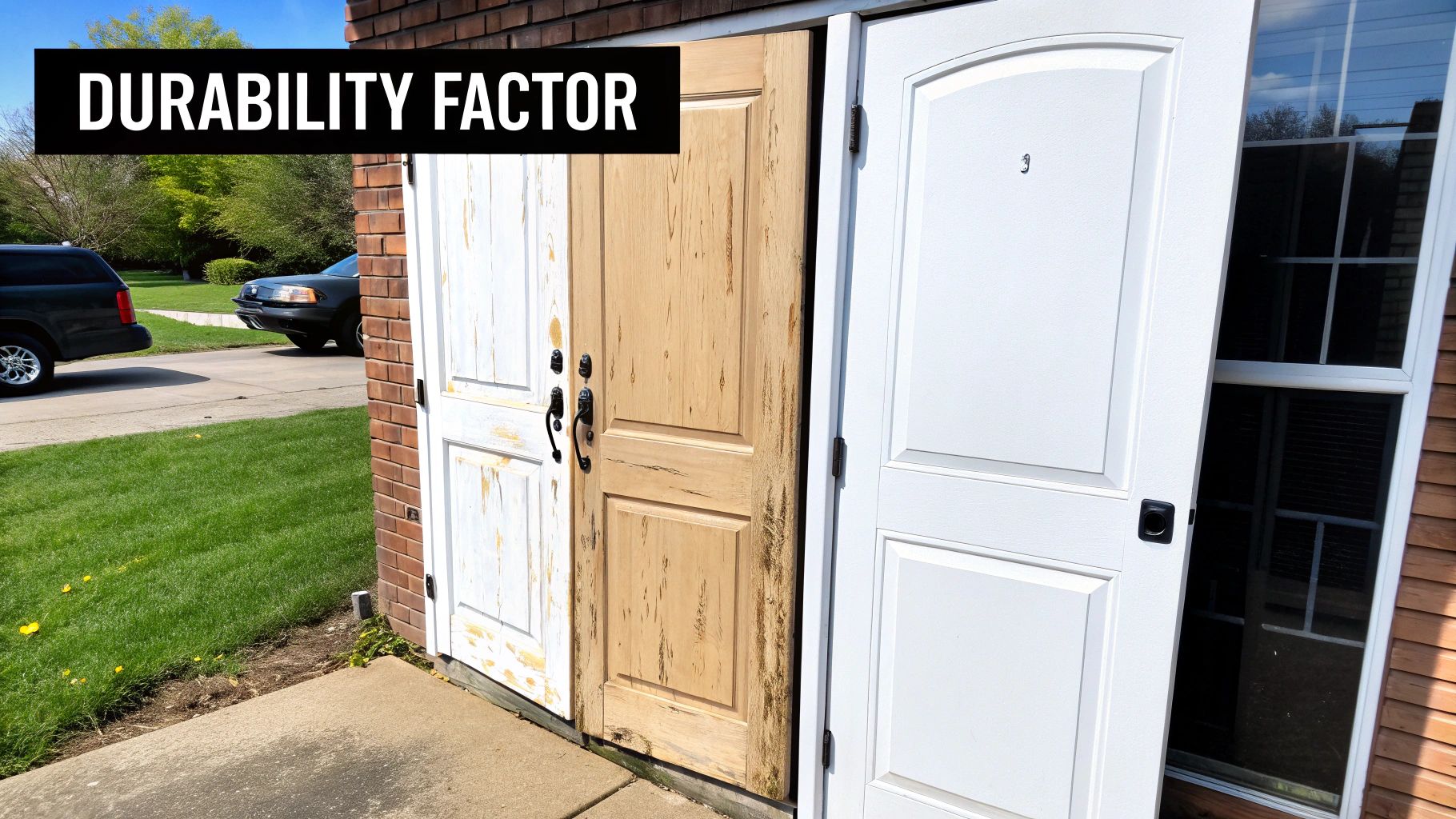
While refacing can work wonders, it’s important to remember it's a cosmetic fix, not a structural one. In some cases, a full cabinet replacement isn't just the better choice—it's the only logical way forward. You can't put a pretty new face on a cabinet box that's fundamentally failing.
Think of it this way: you wouldn't put a new roof on a house with a crumbling foundation. The same logic applies here. If your cabinet boxes are shot, investing in refacing is just throwing good money after bad. Certain red flags are non-negotiable signs that you need to start fresh.
Uncovering Structural Red Flags
The integrity of your cabinet boxes is the number one thing to consider. If they're compromised in any way, refacing is completely off the table. Keep a sharp eye out for these telltale signs of failure that a simple cosmetic update just can't fix.
- Visible Water Damage: Look for stains, swelling, or peeling layers, especially under the sink. Water damage compromises the particleboard or plywood, making it too weak to support new doors or even the weight of a countertop.
- Warped or Sagging Boxes: Are the shelves bowing? Do the cabinet walls look like they're curving? That's a clear sign the boxes have lost their structural strength. This is a common problem with older, cheaper particleboard cabinets.
- Mold or Mildew Growth: The minute you see mold, you know there’s a moisture problem that needs to be completely remediated. Just covering it up is a serious health hazard and won't stop it from spreading.
When you're weighing kitchen cabinet reface vs. replace, any of these issues immediately tip the scales toward a full replacement. It’s a necessary investment in a safe, healthy, and durable kitchen for years to come.
When Your Kitchen Layout No Longer Works
Beyond physical damage, the most compelling reason to replace your cabinets is to fix a kitchen layout that just isn't working for you anymore. Refacing locks you into your existing floor plan. If your daily routine is a constant struggle against a poorly designed space, a full replacement is your golden opportunity to build a kitchen that truly fits your life.
A full cabinet replacement is your chance to solve core functional problems. It lets you reconfigure the entire space for better workflow, more storage, and modern appliance integration—things refacing simply can't do.
This means if you're dreaming of adding a kitchen island, moving the dishwasher so it's not in a major walkway, or improving accessibility with more drawers instead of deep cabinets, replacement is the only path.
While the upfront cost is higher, you’re paying for a lasting solution. Today’s cabinets benefit from huge advances in materials and construction, with some lasting 20 to 50 years. Deciding to invest in a full remodel is often about understanding why you should consider updating your kitchen or bathroom for long-term satisfaction and improved day-to-day function.
Comparing The True Cost And Investment Value
When you're weighing cabinet refacing against a full replacement, your mind probably jumps straight to the price tag. And while that's a huge part of the equation, the real financial story is about more than just the initial quote. It’s about understanding the return on that investment (ROI) and how each path affects your home's value down the road.
Right out of the gate, refacing is the clear winner on upfront cost. It typically comes in at 30-50% less than a full tear-out and replacement. That makes it an incredibly appealing choice if you're working with a tighter budget or just want a high-impact refresh before putting your house on the market.
On the flip side, a complete cabinet replacement is a much bigger capital investment. It costs more, no question. But with that higher cost, you get the power to fix deep-seated functional issues, completely modernize your kitchen's layout, and add some serious, tangible value to your property—a huge draw for buyers who want a truly move-in-ready home.
Breaking Down The Return On Investment
The best financial move is deeply tied to what you want to achieve. Are you fixing up the kitchen to sell in the next year? Or are you creating your dream space to enjoy for the long haul? Your answer will point you toward the option with the better return for you.
A quick, less expensive reface can make an older kitchen feel brand new to potential buyers, delivering a fantastic return without a massive initial spend. In fact, refacing projects often recoup 70% to 80% of their cost at resale. That’s a powerful number for anyone looking to boost their home's market appeal fast.
While replacement costs more upfront, it can add more absolute dollar value to your home. A beautifully redesigned, highly functional kitchen is a powerful selling feature that can justify a higher asking price and attract serious buyers.
A full replacement, on the other hand, might recoup a lower percentage—often closer to 50%—but it adds more absolute value. A brand-new kitchen with an improved workflow, smart storage, and all-new materials fundamentally increases your home's worth. It’s a sound long-term investment. For a deeper look at the numbers, our kitchen renovation cost breakdown guide lays it all out.
Financial Breakdown: Reface vs. Replace
To make things crystal clear, let's put the key financial metrics side-by-side. These figures are based on a standard-sized kitchen and will naturally vary depending on your location, material choices, and labor costs.
| Metric | Cabinet Refacing | Cabinet Replacement |
|---|---|---|
| Typical Cost Range | $4,000 – $10,000 | $8,000 – $30,000+ |
| Project Timeline | 3-5 days | 2-8 weeks |
| Typical ROI % | 70% – 80% | ~50% |
| Value Added | Strong cosmetic appeal | Significant absolute home value |
| Ideal Scenario | Quick home sale; budget update | Long-term home; layout overhaul |
So, what’s the bottom line? The best financial decision is the one that aligns with your specific situation. If your cabinet boxes are in great shape and your main goal is a fast, cost-effective cosmetic upgrade with a high percentage return, refacing is a brilliant choice. But if you’re finally tackling those frustrating layout problems and investing in your forever home, the substantial value added by a full replacement is often well worth the higher price tag.
How Project Timelines Impact Your Daily Life
Beyond the budget, the biggest factor in any kitchen renovation is how much it will disrupt your daily life. The amount of time your kitchen is out of commission—and crawling with contractors—can be a huge source of stress. This is where the difference between refacing and replacing your kitchen cabinets becomes crystal clear.
Refacing is known for being incredibly fast with minimal mess. The entire on-site process is remarkably quick, usually taking just 3 to 5 days from start to finish. During this time, your kitchen stays largely functional. You can still get to your countertops, use your sink, and access major appliances, which means less money spent on takeout and fewer headaches for your family's routine.
The Refacing Timeline: A Quick Look
The refacing process is so efficient because it works with your existing kitchen framework. It's an upgrade, not a demolition. Here’s how a typical project breaks down day-by-day:
- Day 1: The crew arrives and removes all your old cabinet doors and drawer fronts. Then, they get to work prepping the cabinet boxes by cleaning and sanding all the surfaces.
- Day 2-3: This is when the transformation really begins. The new veneer or laminate is meticulously applied to all the visible cabinet frames, creating a seamless, brand-new look.
- Day 4-5: Finally, your brand-new, custom-made doors and drawer fronts are installed, along with fresh hardware like soft-close hinges and stylish handles.
This quick turnaround is a massive plus for any busy household. In fact, that minimal disruption is a key reason why approximately 78% of homeowners choose refacing over a full replacement. You can find more insights on why homeowners prefer this quicker option at Boomsourcing.com.
The Replacement Timeline: A Major Undertaking
In stark contrast, a full cabinet replacement is a much more invasive and drawn-out project. You can expect the timeline to stretch from several weeks to even a few months, depending on how complex the job is. This process involves a complete demolition of your old cabinets, turning your kitchen into an unusable construction zone for the duration.
A full cabinet replacement means your kitchen is completely offline. From the first swing of the sledgehammer until the final screw is tightened, you will have no access to your sink, countertops, or cabinets. You’ll need to get creative and set up a temporary kitchen somewhere else in your home.
The extended timeline accounts for everything: demolition, potential plumbing and electrical rerouting, drywall repairs, flooring adjustments, and just waiting for custom-ordered materials to finally show up. This long period of disruption requires serious planning and a whole lot of patience, as your daily life will be completely upended until the project is finished. For many people, this trade-off is the ultimate deciding factor.
How to Make the Right Decision for Your Home
Deciding between refacing and replacing your kitchen cabinets can feel like a huge commitment. But it gets a lot simpler when you cut through the noise and ask the right questions about your own home, budget, and lifestyle. This isn't about getting lost in the minor details; it's about a practical gut-check that will point you toward the right answer for you.
First things first, take a long, honest look at your existing cabinet boxes. Are they solid? We’re talking structurally sound, no water damage, and built from decent material. If you can confidently say yes, then refacing is definitely still on the table. But if you spot any warping, sagging, or—worst of all—mold, then replacement is the only safe and responsible path forward.
Next, think about your kitchen's layout. Does it actually work for you? If you’re constantly dodging family members, wishing you had more counter space, or dealing with an awkward workflow, refacing is just putting a pretty new face on a dysfunctional kitchen.
Your Personal Decision Checklist
To make this crystal clear, run through this simple checklist. Your answers will cut through the confusion and highlight the best option for your specific situation.
- Cabinet Condition: Are my cabinet boxes sturdy, solid, and completely free of damage?
- Kitchen Layout: Does the current floor plan work for my family, or am I dreaming of a total overhaul?
- Project Budget: What's my realistic budget, including a 15-20% cushion for those inevitable surprises?
- Timeline Tolerance: How many days or weeks can we realistically live with our kitchen being out of commission?
When you methodically work through these questions, you move past a simple cost comparison. You start weighing the real-world trade-offs, making sure the choice you land on fits both your bank account and your long-term happiness at home.
This decision tree helps visualize how factors like your budget and timeline can steer you toward a DIY project or bringing in a professional.
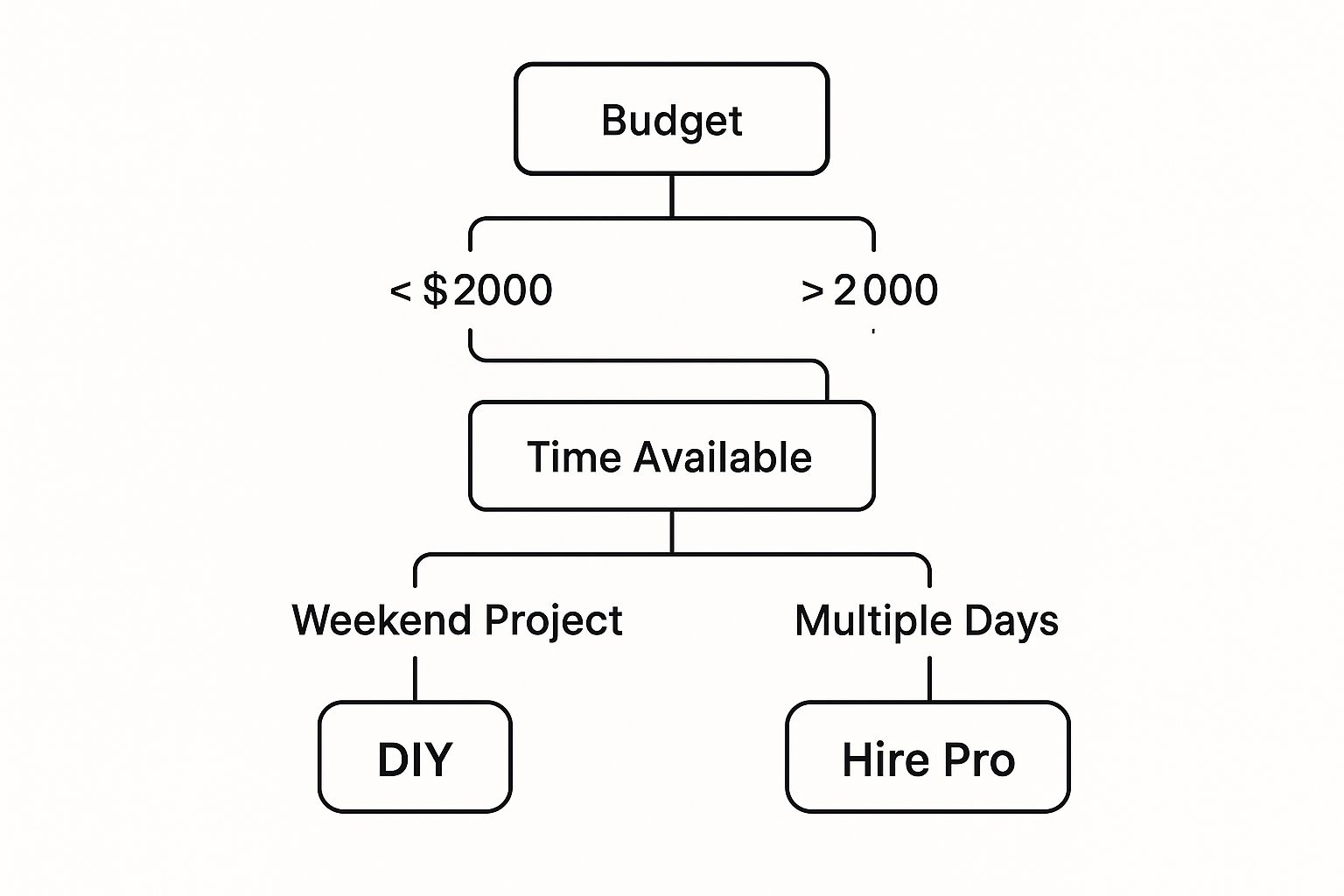
As you can see, a smaller budget and a tight schedule often make a DIY approach more attractive. On the other hand, if you have a larger investment and more flexibility, hiring a pro becomes a much more practical option.
Ultimately, a clear-eyed look at your resources, your goals, and the actual state of your kitchen is what empowers you to make a smart decision you won't end up regretting.
Even after weighing all the pros and cons, you might still have a few questions rolling around. That’s completely normal. Let's tackle some of the most common ones that come up when people are stuck between refacing and replacing their kitchen cabinets.
Can I Actually Change My Cabinet Style If I Just Reface Them?
You absolutely can, and this is one of the biggest wins for refacing. Since the process involves swapping out all your old cabinet doors and drawer fronts for brand new ones, you have a clean slate to pick a new style.
It’s the perfect opportunity to ditch that dated, traditional look for something more modern and sleek, like slab doors. Or maybe you've always wanted that classic, timeless feel of Shaker-style cabinets. Refacing lets you completely transform the look and feel of your kitchen without touching the layout.
The magic of refacing is that you get a dramatic visual overhaul for a fraction of the cost of a full replacement. As long as your cabinet boxes are in good shape, you can get a brand-new style without the brand-new price tag.
Is Cabinet Refacing a Good Project for a DIYer?
Honestly, this is one of those projects that looks easier than it is. While a really experienced DIY pro could tackle it, refacing requires a ton of precision. Getting veneers to lay perfectly flat without bubbles and ensuring dozens of new doors and drawers align flawlessly takes a skilled hand and the right tools.
For most homeowners, bringing in an experienced contractor is the way to go. A pro will make sure the final result is seamless, durable, and looks professionally done—avoiding the common DIY mistakes that can leave your kitchen looking half-finished.
How Long Will My Refaced Cabinets Really Last?
The lifespan of your refaced cabinets really boils down to two things: the quality of the materials and the skill of the person who installed them.
When a professional does the job using high-quality components—like real wood veneers or tough, durable laminates—you can easily expect your refaced cabinets to last another 10-15 years. Of course, this all hinges on the assumption that your original cabinet boxes are structurally sound to begin with. If you've got a solid foundation, a professional refacing is a solid long-term investment.
Ready to explore custom cabinetry solutions that are built to last a lifetime? The experts at Sinclair Cabinetry inc have been crafting bespoke real wood cabinets for over 35 years. See what true craftsmanship looks like by visiting us at https://sinclaircabinets.com.