

While the numbers can vary, most kitchen designs are built around a few core industry standards. Base cabinets are typically 34.5 inches high and 24 inches deep, wall cabinets usually stand 30 to 36 inches high and 12 inches deep, and tall pantry cabinets are most often 84 inches high and 24 inches deep. These dimensions aren't just random numbers—they are the building blocks of nearly every functional kitchen.
Your Blueprint for Standard Cabinet Dimensions
Getting your cabinet sizes right is the bedrock of a successful kitchen remodel. Think of these standard dimensions as the foundational language of cabinetry. It's a universal system that ensures everything from your appliances to your countertops fits together just right. When you understand these core principles first, every other decision becomes simpler, and you can sidestep the costly headaches that come from measurement mistakes.
These numbers didn't just appear out of thin air; they’re the result of decades of design focused on ergonomics and everyday use. They exist to create a kitchen that feels natural and works efficiently for most people.
Why Standard Sizes Matter
Following these typical cabinet sizes is what allows a standard 24-inch deep dishwasher to slide perfectly under your countertop. It’s why you have just enough clearance between your counter and upper cabinets for your coffee maker. These dimensions create a predictable, modular system that manufacturers, designers, and installers all count on.
- Ergonomics: Standard heights are designed for comfort. A finished 36-inch countertop height is the ergonomic sweet spot for most adults, reducing strain whether you're chopping vegetables or washing dishes.
- Appliance Integration: Major appliances like ovens, dishwashers, and even many refrigerators are specifically built to fit within these standard cabinet frameworks.
- Cost-Effectiveness: Stock and semi-custom cabinets built to these sizes are mass-produced, making them significantly more affordable than fully custom pieces.
For a quick overview, here's a chart summarizing the most common dimensions you'll encounter.
Quick Reference Chart of Standard Cabinet Dimensions
| Cabinet Type | Standard Height | Standard Depth | Standard Width Range |
|---|---|---|---|
| Base Cabinets | 34.5 inches | 24 inches | 9 to 48 inches |
| Wall Cabinets | 30, 36, or 42 inches | 12 to 24 inches | 9 to 36 inches |
| Tall Cabinets | 84, 90, or 96 inches | 12 to 24 inches | 18 to 36 inches |
This table gives you a great starting point for planning, but always remember to measure your own space carefully. The visual guide below also helps illustrate how these different cabinet types relate to one another.
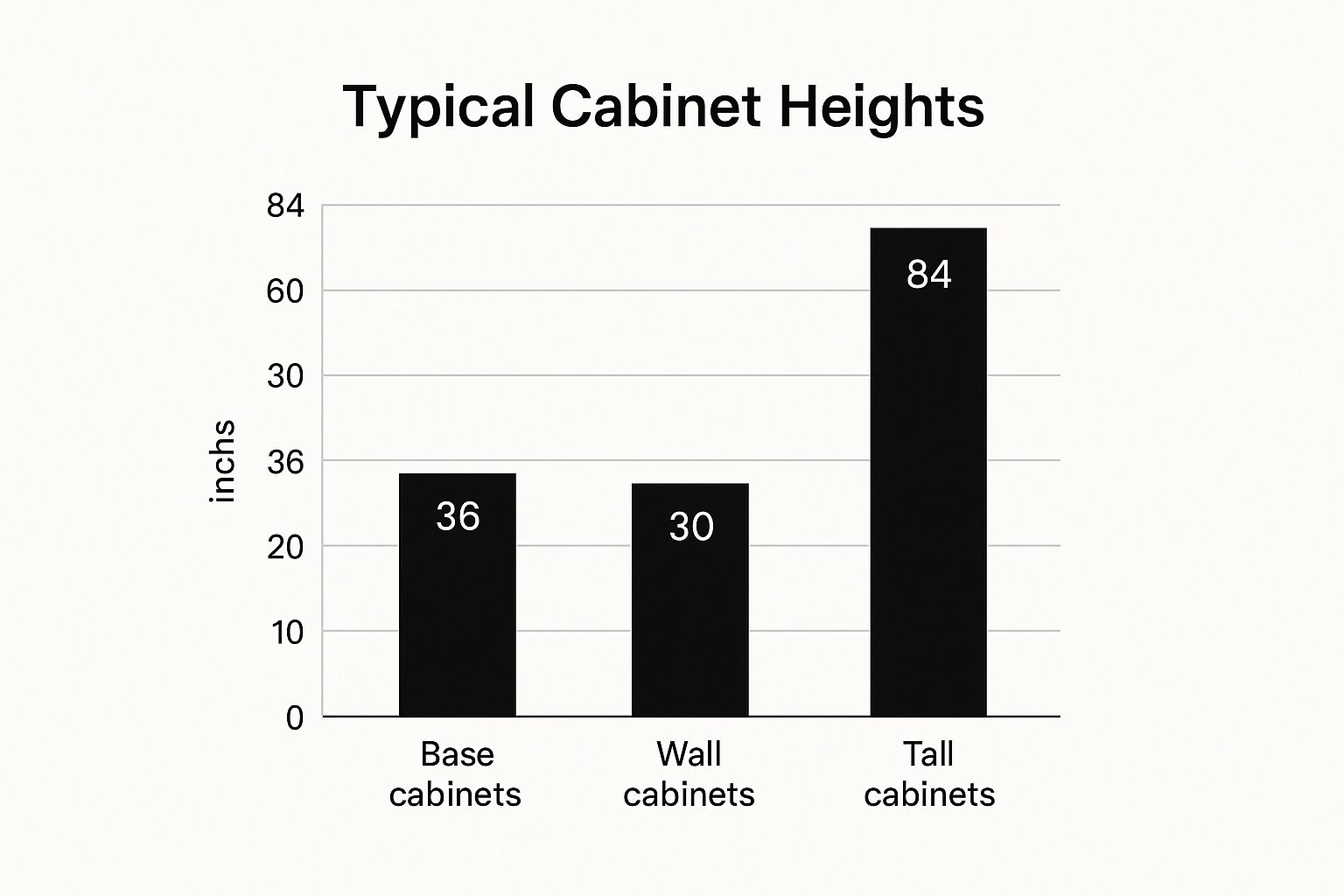
As you can see, the height differences between base, wall, and tall cabinets are intentional. They work together to create a kitchen that is both functional and visually balanced.
Planning Your Layout with Standard Sizes
When you start mapping out your kitchen, getting precise measurements of your own space is non-negotiable. If you need a hand with this critical first step, our expert guide on how to measure kitchen cabinets offers a complete tutorial to make sure you get it right.
A great layout goes beyond just the numbers. As you plan, think about safety, especially in homes with little ones. Understanding how baby proofing cabinets can prevent accidents is a crucial step to ensure your new kitchen is as safe as it is beautiful. Starting with a solid grasp of standard sizes empowers you to make smart, confident decisions for your entire project.
Understanding Kitchen Base Cabinet Dimensions
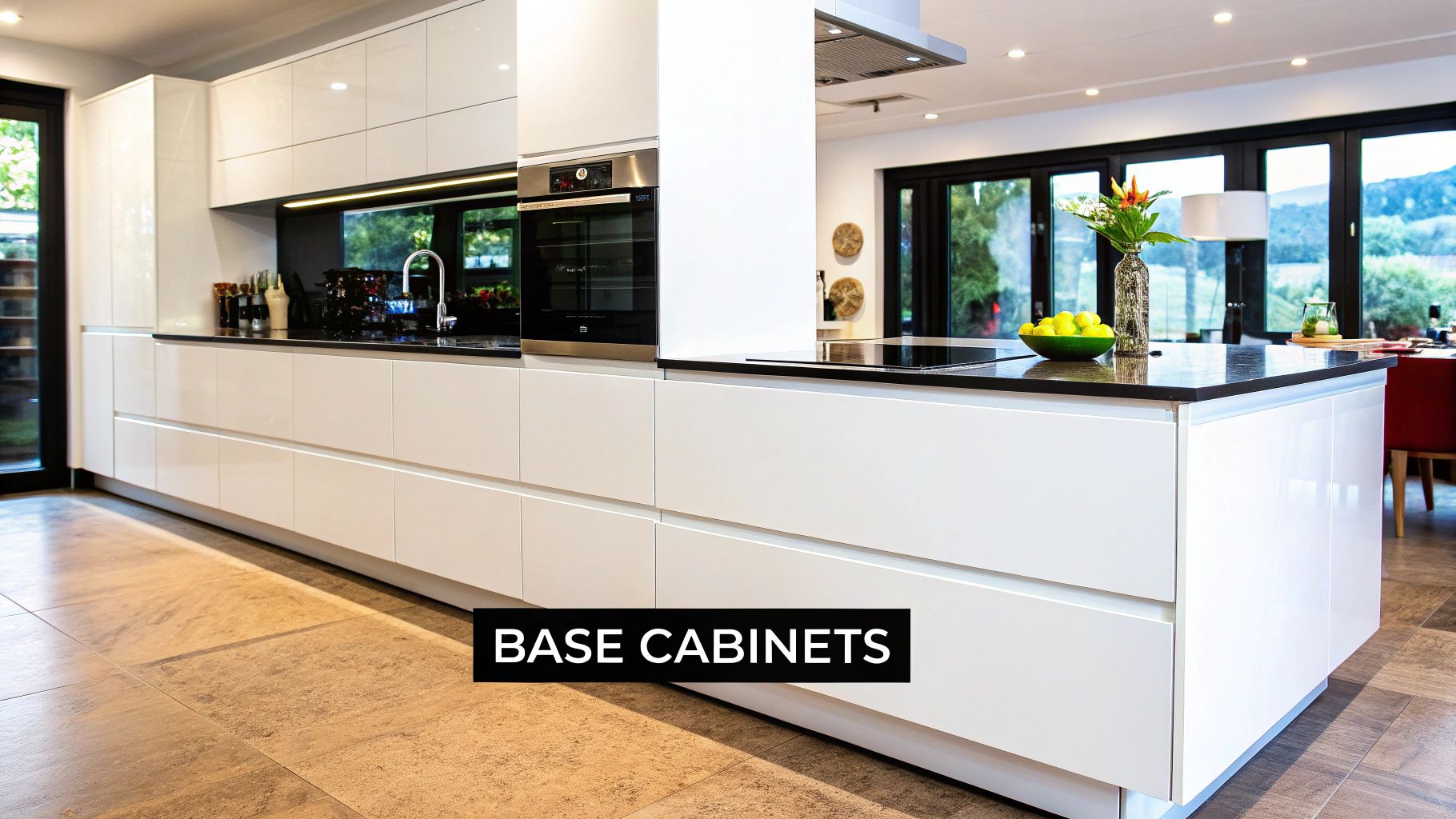
When you're mapping out a kitchen, the base cabinets are your starting lineup. They are the absolute workhorses of the room, providing the foundation for your countertops, housing heavy sinks, and framing every major appliance. Getting their dimensions right isn’t just about making things fit; it's about creating a kitchen that’s genuinely comfortable and built to work for you.
Think of it this way: the dimensions for base cabinets are the least flexible part of the whole design. They set the working height for your countertops and have to play nice with standard appliances. Everything else in the kitchen quite literally builds off of them.
The Critical Standard Height
First things first, let's talk height. This is arguably the most important number to know. Before a countertop is placed on top, a standard base cabinet almost always stands 34.5 inches tall. It seems like a weirdly specific number, but there's some real-world ergonomic science behind it.
Once you add a standard 1.5-inch thick countertop—think granite, quartz, or a solid butcher block—you land at a finished work surface height of exactly 36 inches. This isn't random. Decades of kitchen design have proven this is the sweet spot for the average adult, helping you prep food and wash dishes without hunching over and straining your back.
Key Takeaway: The magic formula is 34.5 inches (cabinet) + 1.5 inches (countertop) = 36 inches (finished work surface). This simple equation is a cornerstone of modern kitchen design, showing how standard sizes are built around human comfort.
The Universal Standard Depth
Next up is depth—how far the cabinet sticks out from the wall. The industry-wide standard for a base cabinet is 24 inches deep. This dimension is another crucial piece of the puzzle, and deviating from it can cause a lot of headaches.
Here’s why that 24-inch number is so important:
- Appliance Fit: It’s tailor-made to accommodate standard-sized dishwashers, slide-in ranges, and under-counter refrigerators, letting them sit flush with your cabinets for that clean, built-in look we all love.
- Smart Storage: A 24-inch depth gives you plenty of room for bulky pots, pans, and small appliances without turning the back of your cabinet into a black hole where things go to get lost.
- Countertop Support: This depth provides the perfect base for countertops, which typically measure 25 to 26 inches deep. That little bit of overhang at the front is intentional; it protects the cabinet doors from spills and gives the counter a nice, finished edge.
While you might find shallower cabinets for special cases like a narrow island, sticking to the 24-inch standard is the norm for a reason. It just makes everything else easier.
The Flexible World of Widths
While height and depth are pretty much set in stone, width is where you get to play and customize. Base cabinets come in a huge range of widths, usually in 3-inch increments. This modular system lets you piece them together like puzzle blocks to fit just about any wall.
Standard widths can run anywhere from 9 inches all the way up to 48 inches. Each size has a typical job, and a great kitchen layout is all about combining them strategically.
Here's a quick look at what different widths are usually used for:
| Width | Common Use |
|---|---|
| 9" to 12" | Perfect for those slim pull-out spice racks or vertical storage for baking sheets and cutting boards. |
| 15" to 24" | A real all-rounder. Great for a standard cabinet with a door and shelves or a stack of drawers. |
| 30" to 36" | The go-to size for sink bases, large enough to comfortably house most single or double-basin sinks. |
| 36" to 48" | Ideal for extra-wide pot-and-pan drawers or for corner cabinets, often outfitted with a Lazy Susan. |
By mixing and matching these widths, you can make sure every inch of your kitchen is working hard for you, turning a simple collection of boxes into a truly efficient and cohesive space.
Mastering Wall Cabinet Sizes and Placement
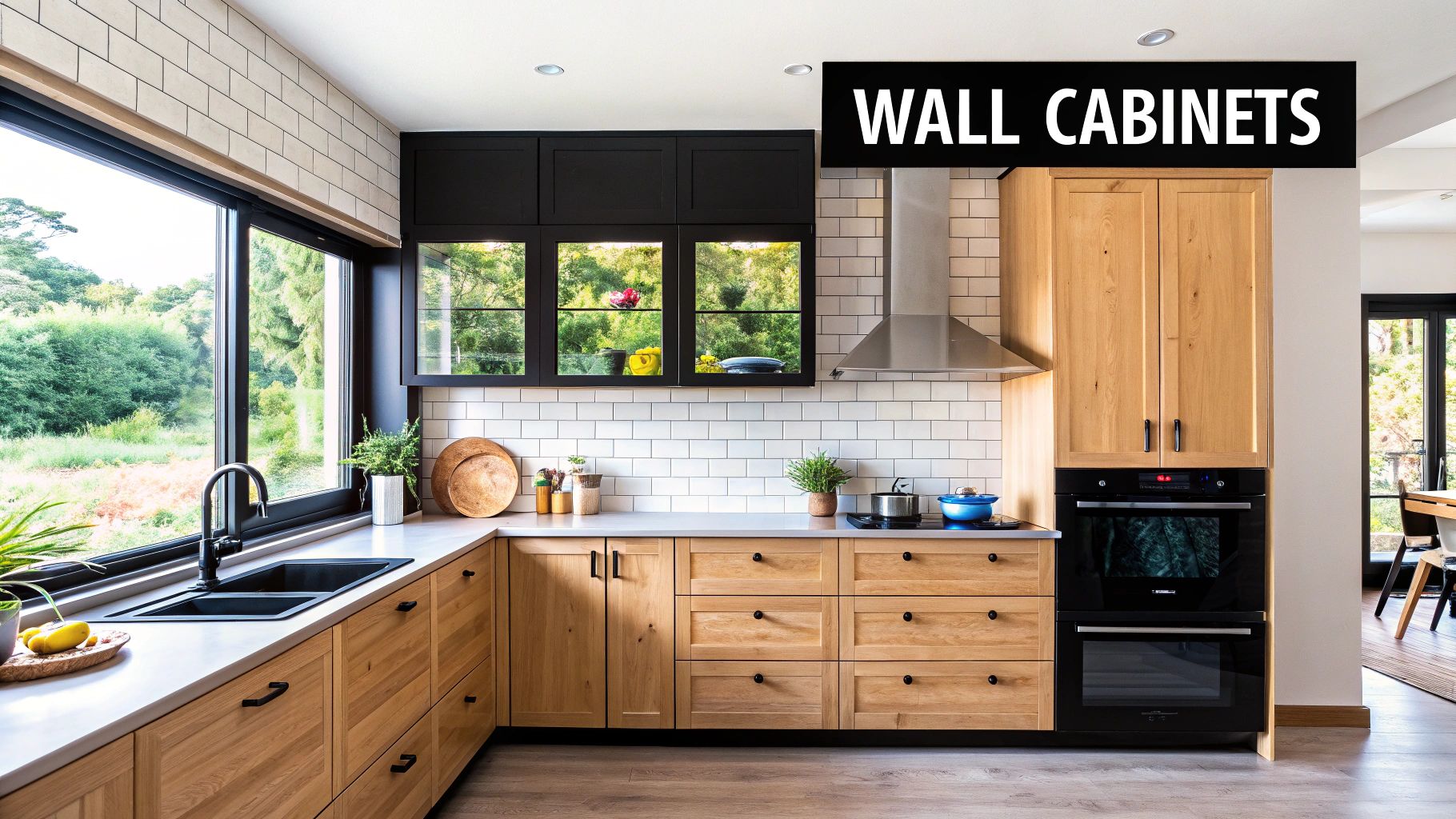
Wall cabinets, or "uppers" as we often call them, do a lot more than just hold your dishes. Since they sit right at eye level, they are one of the most powerful visual statements in your kitchen. Unlike base cabinets, which are pretty locked into their standard sizes, wall cabinets give you a lot more creative freedom. This flexibility is your key to tailoring a look that works with your ceiling height and personal style.
Getting a handle on the typical cabinet sizes for uppers is all about striking that perfect balance between looks and function. These cabinets set the entire mood of the room, so choosing the right dimensions from the start is what makes a kitchen feel both beautiful and effortless to use.
The Standard for Wall Cabinet Depth
When it comes to depth, the industry standard for wall cabinets is a straightforward 12 inches. This isn't just a random number; it's a sweet spot that gives you full access to everything inside without having the cabinet jut out and loom over your workspace. A 12-inch depth is perfectly sized for your dinner plates, glassware, and most pantry items.
Of course, rules are sometimes made to be broken, and you'll see deeper options in a few key places.
- Standard Depth (12 inches): This is your go-to for the vast majority of upper cabinets. It leaves you plenty of room to prep on the countertops below without feeling crowded.
- Deeper Cabinets (15-24 inches): You’ll most often find deeper uppers—usually 24 inches deep—installed above a refrigerator. Why? It allows the cabinet face to line up flush with the front of the fridge, creating that clean, built-in look everyone loves. Some designers also use 15-inch deep cabinets to make space for larger serving platters.
This bit of flexibility with depth is a fantastic tool for getting a custom-looking kitchen using standard parts. It's one of the first areas where you can really start to inject your own design personality.
Choosing the Right Wall Cabinet Height
The height of your wall cabinets is probably the single biggest factor affecting your kitchen's storage capacity and overall feel. The right choice here is almost entirely dictated by two things: your ceiling height and the crucial clearance space you need over your countertops.
The absolute gold standard for clearance is 18 inches of space between the countertop and the bottom of the wall cabinets. This gap is non-negotiable—it gives you room for small appliances like coffee makers and stand mixers and creates a comfortable, open workspace.
With that 18-inch rule as our guide, here are the most common wall cabinet heights and where they fit best.
| Cabinet Height | Best For | Design Notes |
|---|---|---|
| 30 Inches | Standard 8-foot ceilings. This is the most popular height by far. It accommodates the 18-inch clearance and leaves just enough space above for a bit of crown molding. | |
| 36 Inches | 8-foot ceilings with crown molding. Using a 36-inch cabinet pushes the uppers closer to the ceiling, giving you a taller, more custom-built appearance. | |
| 42 Inches | 9-foot ceilings. This height takes your cabinets all the way to the ceiling, which maximizes every inch of storage and creates a dramatic, high-end look. |
You may also run into shorter heights like 12, 15, or 18 inches. These are specialty sizes, usually placed over a refrigerator or microwave. You can also stack them on top of other cabinets to create a staggered, custom design feature.
Creating Visual Appeal with Widths and Placement
If height and depth are about fitting the room, width is all about creating rhythm and function. Just like their base cabinet counterparts, wall cabinets are typically sold in 3-inch increments, with widths ranging from a skinny 9 inches to a wide 36 inches.
This is where the real fun begins. Mixing and matching these typical cabinet sizes is how you move from a functional kitchen to a beautifully designed one. A narrow 9-inch or 12-inch cabinet is perfect for neatly finishing a run of cabinets or framing a window. Meanwhile, a trusty 30-inch or 36-inch double-door cabinet will be the workhorse that holds all your everyday dishes.
Beyond just the sizes, the way you arrange the heights can define your kitchen’s entire style. You could align all your uppers at the same height for a clean, modern, and cohesive look. Or, you could stagger the heights or depths—maybe making the cabinet over the sink a little taller or deeper—to create a dynamic focal point and add some architectural flair. It's a great technique for breaking up a long wall of cabinets and giving the space a more custom, furniture-like quality.
Planning for Tall Cabinets and Pantries
Tall cabinets are the skyscrapers of the kitchen, the true storage powerhouses that can define your layout. These floor-to-ceiling giants are perfect for creating an organized food pantry, elegantly housing a wall oven, or establishing a discreet utility closet for brooms and cleaning supplies. Think of them as the functional anchors that pull the entire design together.
Because of their sheer size, getting them right takes careful planning. Unlike base and wall cabinets that work in tandem, tall cabinets stand alone, dictating the scale and flow of the wall they occupy. Their dimensions are designed to create a grand, built-in appearance that feels both intentional and seamless.
Understanding Tall Cabinet Heights
The height of your tall cabinets is the most critical decision, as it directly impacts how they align with your other cabinetry and the ceiling. There are three common heights to choose from, each suited for different ceiling heights and design goals.
- 84 inches: This is the classic, most common height. In a room with standard 8-foot (96-inch) ceilings, an 84-inch tall cabinet aligns perfectly with the top of a standard 30-inch wall cabinet. This creates a clean, unbroken line across your kitchen and leaves a 12-inch gap at the top, ideal for decorative crown molding or open space.
- 90 inches: Stepping up, a 90-inch height is designed to line up with 36-inch wall cabinets. It brings your storage closer to the ceiling, offering a more custom, built-in feel while still leaving plenty of room for substantial molding.
- 96 inches: For rooms with ceilings of 9 feet or higher, a 96-inch tall cabinet takes your storage all the way to the top. This approach maximizes every available inch and creates a dramatic, high-end look that eliminates any dust-collecting gaps.
Design Tip: To achieve a polished, professional look, match the height of your tall cabinets to the height of your wall cabinets. An 84-inch pantry next to 30-inch uppers creates a unified visual line that makes the entire kitchen feel more cohesive.
Choosing the Right Depth and Width
While height sets the visual tone, depth and width determine the cabinet's function. The two standard depths serve very different purposes, so choosing the right one is essential for getting the storage you need.
A 12-inch depth is a fantastic choice for a food pantry. It's deep enough for cereal boxes and cans but shallow enough that items won't get lost in the back. Everything stays visible and easily accessible.
On the other hand, a 24-inch depth is the standard for utility. This deeper profile matches the depth of your base cabinets, creating a flush, integrated look. It’s necessary for housing appliances like wall ovens or microwaves and provides the cavernous space needed for bulk items, cleaning supplies, or even small appliances.
Widths for tall cabinets typically range from 18 to 36 inches, giving you real flexibility in your layout.
- An 18-inch width is perfect for a compact broom closet or a narrow pull-out pantry.
- A 24-inch width offers a versatile mid-range option for general pantry storage.
- A 30 or 36-inch width provides expansive storage, often configured with double doors and roll-out trays to make accessing the deep space effortless.
By carefully selecting the right combination of height, depth, and width, you can transform a simple tall cabinet into a highly organized storage hub tailored precisely to your kitchen’s needs.
Cabinet Sizes For Bathrooms And Utility Rooms
While the kitchen usually steals the show, the right cabinetry is a workhorse throughout the rest of your home, too. The typical cabinet sizes you’ll find in bathrooms, laundry rooms, and even home offices are designed differently than their kitchen cousins. They’re built specifically for the jobs they need to do in those spaces, and understanding these differences is the key to creating smart, cohesive storage everywhere.
Bathroom vanities, for example, have changed quite a bit over the years. For a long time, the standard height was a short 32 inches. But we've seen a major—and welcome—shift toward more comfortable, ergonomic designs.
The Rise Of Comfort Height Vanities
The new standard, often called "comfort height," is 36 inches tall. If that sounds familiar, it's because that's the same finished height as a kitchen counter. This change is all about accessibility and comfort, meaning most adults no longer have to stoop over just to wash their hands. While you can still find 32-inch vanities—and they work great in a kids' bathroom—the 36-inch height now dominates primary and guest bathrooms.
Depth is another area where bathroom cabinets forge their own path. To work within smaller bathroom footprints and keep walkways clear, vanity cabinets are almost always shallower than what you'd find in a kitchen.
- Standard Vanity Depth: The most common depth for a bathroom vanity is 21 inches. This gives you plenty of room for a sink and countertop without eating up valuable floor space.
- Shallower Options: In really tight spots, like a small powder room, it's not unusual to see vanities as shallow as 18 inches.
When it comes to width, the options are incredibly flexible. You can find everything from a compact 24-inch model for a single sink all the way up to a sprawling 72-inch (or wider!) vanity for a double-sink setup. This huge variety means there's a size to fit just about any bathroom layout you can dream up.
Cabinet Sizes For Utility And Laundry Rooms
In utility and laundry rooms, the name of the game is durable, functional storage. The cabinet sizes here often take their cues from the kitchen, but with a clear focus on stashing bulky items like detergent, cleaning supplies, and extra linens. It's common to see a mix of both base and wall cabinets.
Base cabinets usually stick to the 34.5-inch height and 24-inch depth kitchen standard, which is perfect for creating a handy folding counter. Wall cabinets, however, might be deeper than kitchen uppers—sometimes 15 or even 24 inches deep—to easily hold big containers and baskets. If you really want to maximize those tall cabinets, using some top glass pantry storage containers is a pro move to keep everything tidy and easy to see.
A Quick Look At Other Spaces
Of course, the kitchen and bathroom aren't the only places for great cabinetry. Here's a quick rundown of what to expect in other hardworking areas of the home.
Typical Cabinet Sizes Outside the Kitchen
| Location | Typical Height | Typical Depth | Typical Widths |
|---|---|---|---|
| Bathroom Vanity | 32" or 36" | 18" or 21" | 24" – 72"+ |
| Laundry Room Base | 34.5" | 24" | 12" – 48" |
| Laundry Room Upper | Varies | 12" – 24" | 12" – 36" |
| Closet System | Varies | 14" (shelves) – 24" (hanging) | Varies (custom) |
These dimensions serve as a great starting point, but remember that spaces like home offices and closets are all about customization. A standard desk height is about 30 inches, so built-in office cabinets are often lower than kitchen base cabinets.
Ultimately, picking the right cabinet sizes for these other rooms comes down to the same principles you'd use in the kitchen. It's about blending function with form. The style and finish you choose are just as important for creating a home that feels connected and thoughtfully designed. Taking time to explore different bathroom cabinet colors can help you tie your entire vision together, proving that even the most functional spaces can be beautiful.
When Standard Sizes Just Won’t Cut It
Standard cabinet dimensions are the bread and butter of most kitchen and home projects. They work wonderfully for the majority of layouts, offering a straightforward, predictable path to a beautiful space. But let's be honest—not every home plays by the rules.
What do you do when you run into a quirky corner, an old home with charmingly uneven walls, or a very specific design idea that just doesn't fit the standard mold? Trying to force a stock cabinet into these spaces can feel like a losing game of Tetris.
This is exactly where the world of semi-custom and fully custom cabinetry shines. Instead of being boxed in by off-the-shelf sizes, you get to call the shots, tailoring your storage to fit your space like a glove. It’s a path that turns design headaches into standout features.
Finding the Sweet Spot with Semi-Custom
Think of semi-custom cabinetry as the perfect compromise between stock and fully custom. You start with a standard cabinet "chassis" but get to make key modifications. It's a fantastic, practical way to solve common layout problems without jumping to the full expense and timeline of a completely bespoke project.
For instance, that standard 24-inch deep base cabinet might stick out just a bit too far next to a busy doorway. No problem. A semi-custom manufacturer can trim that depth down to 21 inches, clearing up the walkway. Or maybe you have a random 38-inch gap next to your fridge—a semi-custom cabinet can be built to that exact width, giving you a perfect fit without those clunky filler strips.
This flexibility is what gives you a much more polished, built-in look. Some of the most common tweaks include:
- Width Adjustments: Instead of being stuck with 3-inch increments, you can get cabinets modified to more precise widths.
- Depth Changes: You can increase or decrease cabinet depth to work around plumbing, create a unique furniture-style piece, or simply fit a tight spot.
- More Finish Options: Semi-custom opens the door to a much wider palette of paints, stains, and glazes.
The Ultimate in Personalization: Fully Custom Cabinetry
When your project demands absolute precision, or your creative vision knows no bounds, fully custom is the only way to go. This is where cabinetry stops being about manufacturing and starts becoming true craftsmanship. With custom cabinets, there are no “typical cabinet sizes.” The only dimensions that matter are the ones that perfectly suit your space.
Custom cabinetry isn't about fitting pre-made boxes into a room. It’s about building cabinetry that becomes a seamless, architectural part of the room itself. Every angle, every inch, and every detail is made to order.
This approach is the ultimate problem-solver. It’s the go-to for:
- Historic Homes: Gracefully handles sloped floors, wavy plaster walls, and ceilings that aren't quite level.
- Unique Spaces: Perfect for designing around awkward nooks, structural beams, or oddly shaped rooms.
- Specific Needs: Allows for creating fully accessible (ADA-compliant) kitchens or seamlessly integrating high-end, unusually-sized appliances.
- One-of-a-Kind Designs: Lets you bring any aesthetic to life with unique door styles, custom-matched finishes, and configurations you simply can’t find anywhere else.
Going the custom route ensures every last inch of your space is working for you, both in function and in beauty. If you're looking for a truly one-of-a-kind solution built for your home and your life, exploring the world of custom cabinets is the definitive next step. Yes, the investment is greater, but the result is a space that is genuinely and uniquely yours, built to last a lifetime.
Your Top Cabinet Questions, Answered
Even when you feel like you have a handle on standard cabinet dimensions, the real world throws you a curveball. This is where the measurements on a page crash into the reality of your home's quirky walls, existing appliances, and your family's needs. Let's tackle some of the most common questions that pop up during a remodel so you can move forward with confidence.
Getting these details right from the start is what separates a smooth project from one filled with those tiny measurement mistakes that cause major headaches down the road.
How Do I Actually Measure My Kitchen for New Cabinets?
To get measurements you can trust, grab a pencil and paper and sketch a simple bird's-eye view of your room. Measure each wall horizontally in three spots—down low near the floor, right at countertop height, and up high near the ceiling. Always, always use the smallest of the three numbers. Walls are rarely perfectly straight. Do the same for your ceiling height, measuring in a few different locations just to be sure.
Next, and this part is critical, you need to map out every single thing that can't be moved. Note the exact location and size of:
- Windows, including their trim
- Doors, and make sure to note which way they swing open
- All electrical outlets and light switches
- Plumbing hookups for your sink and dishwasher
- HVAC vents in the floor or walls
Think of this detailed sketch as the blueprint for your dream kitchen. It's the single most important tool your cabinet designer will use to get everything perfect.
What’s the Right Amount of Space Between Countertops and Wall Cabinets?
The magic number here, and the undisputed industry standard, is 18 inches of space between the top of your counter and the bottom of your uppers. This isn't just an arbitrary design choice; it’s a number grounded in pure, everyday function.
An 18-inch clearance gives you plenty of room for all your countertop workhorses—the coffee maker, stand mixer, and toaster—to sit comfortably underneath without feeling crammed. It also creates a well-lit, open workspace for chopping and prep.
While you can tweak this a little to suit your height or specific needs, sticking close to that 18-inch standard is almost always the best bet for a comfortable, usable kitchen.
Can I Use Different Cabinet Depths in the Same Kitchen?
Absolutely! In fact, mixing up your cabinet depths is a go-to trick for designers looking to add visual punch and practical function. For example, swapping standard 12-inch deep wall cabinets for 15-inch ones gives you that much-needed extra space for oversized dinner plates.
You can also bump out a single cabinet over the sink or range to create a beautiful, custom focal point. This simple technique breaks up the visual monotony of a long, flat wall of cabinets and gives your kitchen a much more dynamic and high-end feel.
At Sinclair Cabinetry inc, we know that a truly great home goes beyond standard sizes. We're experts in crafting beautiful, high-quality wood cabinetry that solves any design challenge and brings your unique vision to life. Discover the difference true craftsmanship can make for your home remodeling project.