

Let's get one thing straight: true luxury kitchen cabinet design has very little to do with the price tag. It's really about commissioning functional art for your home—a masterful blend of exceptional materials, meticulous craftsmanship, and functionality that’s built around the way you actually live.
Think of it less as buying storage and more as investing in a central feature of your home’s architecture.
What Defines a Luxury Kitchen Cabinet
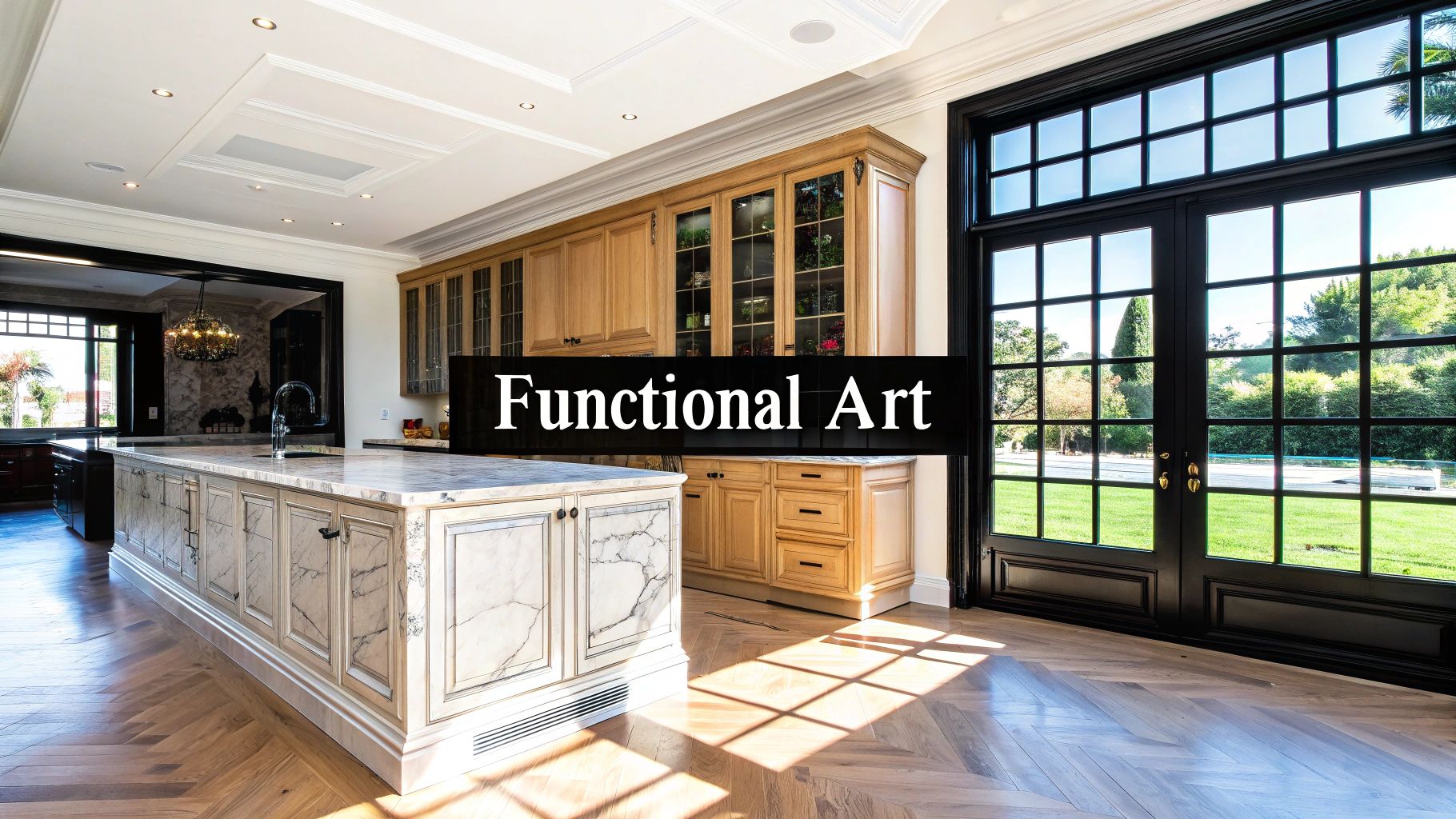
At its heart, luxury cabinetry is what elevates a kitchen from a purely utilitarian room into a genuine experience. It creates a space where every little interaction, from the smooth glide of a drawer to the soft click of a door, feels seamless and deeply satisfying.
This kind of transformation doesn't just happen. It's built on a foundation of specific principles that draw a clear line between high-end design and standard, off-the-shelf options. The demand for this level of quality is growing, too. The global kitchen cabinets market was recently valued at $100.79 billion and is on track to hit $183.53 billion by 2032. You can dig into the numbers yourself over at fortunebusinessinsights.com.
That’s a huge investment, and it’s being driven by homeowners who see their kitchens as a long-term asset and a source of daily joy. So, what are the pillars holding up this standard of excellence?
The Four Pillars of Luxury Cabinetry
To really get what you’re investing in, it helps to break it all down into four key components. Each one plays a critical role in the final product, contributing to its beauty, durability, and perfect fit within your home.
- Premium Materials: This goes way beyond just picking a type of wood. We're talking rare hardwoods, exotic veneers, and advanced engineered surfaces that offer both a unique look and superior performance.
- Masterful Construction: This is about the details you feel but don't always see—the precision of the joinery, the substantial thickness of the panels, and the flawless application of finishes. It's what ensures your cabinets will last for generations. We dive deeper into what goes into high-quality kitchen cabinets in our detailed guide.
- Deep Customization: Luxury means a perfect fit, not just in size but in purpose. The cabinets are designed around your unique workflow, your specific storage needs, and your family's lifestyle.
- Smart Functionality: This is where thoughtful design comes to life. High-end cabinetry incorporates sophisticated hardware, ergonomic layouts, and integrated solutions that make the kitchen feel intuitive and effortless to use.
In essence, luxury is where form and function meet without compromise. It's the assurance that your cabinets are not only visually stunning today but are built to serve your family beautifully for decades to come.
Choosing Your Signature Materials and Finishes
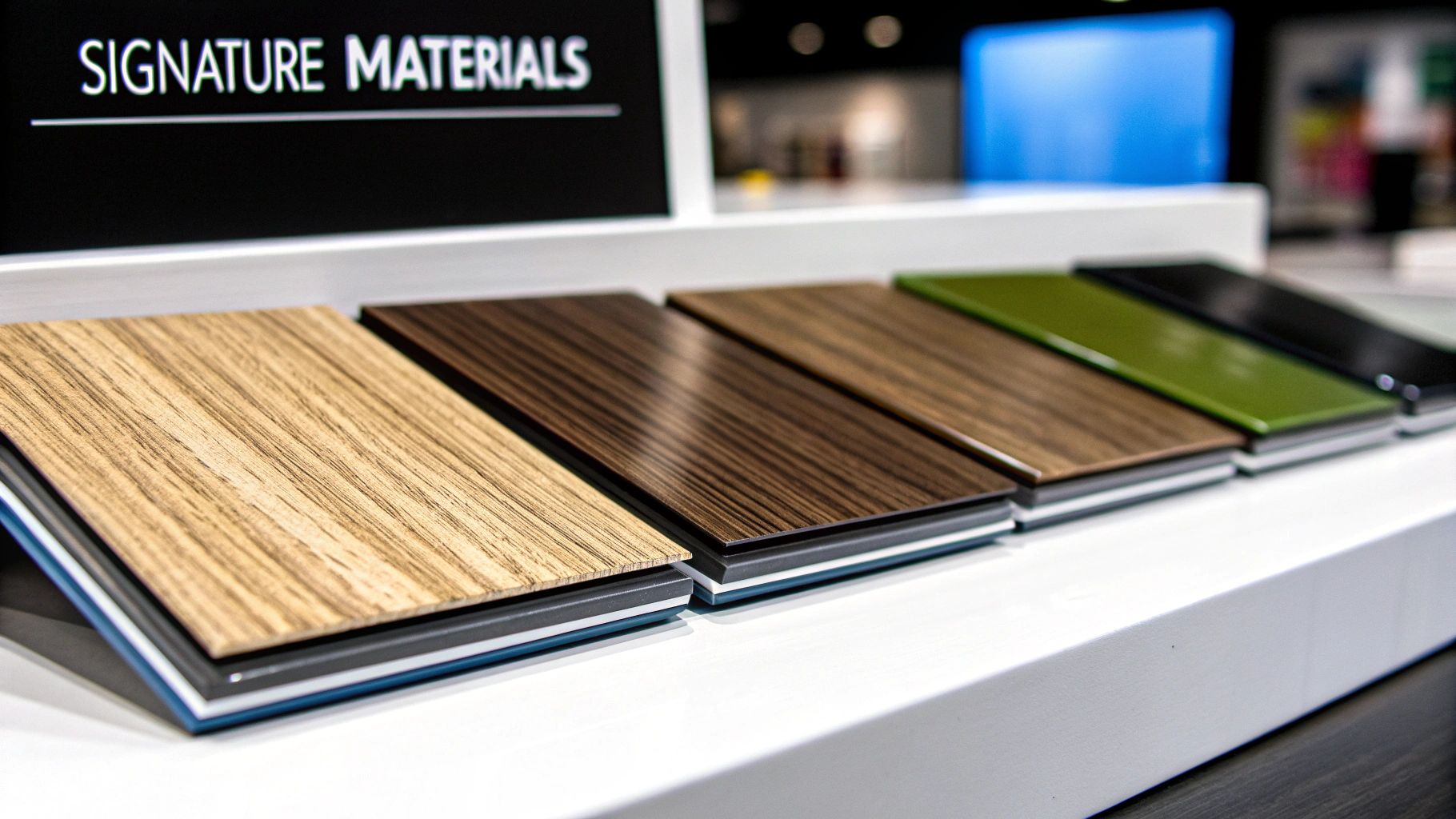
If craftsmanship is the bones of luxury cabinetry, then the materials are its heart and soul. These are the surfaces you’ll see, touch, and interact with every single day, and they do more than anything else to set the tone for your entire kitchen.
This is where your design vision moves from a concept on paper to a tangible, sensory reality. Choosing your materials is like a tailor selecting the perfect fabric. A standard suit might be fine in simple wool, but a bespoke creation starts with sourcing the finest cashmere or a rare silk blend. The same goes for luxury kitchen cabinets design—the choice between a classic hardwood and an exotic veneer is what gives the final space its unique character.
The Timeless Appeal of Natural Woods
For good reason, solid hardwoods have long been the gold standard for high-end cabinetry. They bring a warmth, durability, and connection to nature that synthetic materials just can't match. Each wood species has its own personality.
- Rift-Sawn White Oak: Known for its clean, straight grain, this wood offers a contemporary look that avoids the heavy "cathedral" patterns of plain-sawn oak. It’s a favorite for modern and transitional kitchens.
- Walnut: With its deep, rich chocolate tones and elegant grain, walnut instantly creates a sophisticated and moody atmosphere. It’s an exceptionally beautiful wood often used for statement pieces like kitchen islands.
- Cherry: Prized for its smooth texture and warm reddish-brown hue, cherry darkens gracefully over time, developing a gorgeous patina that only adds to its character.
Exotic wood veneers can take this a step further, introducing breathtaking, one-of-a-kind patterns from woods like zebrawood or figured sycamore. These are typically applied over a stable core, making them a more sustainable way to achieve an incredibly exclusive look. For a deeper dive, check out our guide on the best materials for luxury kitchen cabinets.
Exploring Modern and Engineered Alternatives
But luxury isn't limited to traditional wood. A growing slice of the high-end market is embracing innovative materials that deliver sleek aesthetics and incredible performance. These alternatives are perfect for anyone aiming for a minimalist, industrial, or ultra-modern design.
High-gloss acrylics, for instance, create a flawless, mirror-like surface that bounces light around the room, making a space feel larger and more open. Metals like stainless steel or brushed aluminum can be used for entire cabinet fronts or as sharp accents, lending a professional, chef-inspired feel to the kitchen.
This focus on new materials is a huge driver in the custom cabinetry world. The mid-to-high-end segment has exploded into an estimated $15 billion market, with advancements in sustainable hardwoods, engineered surfaces, and precision manufacturing leading the charge. You can dig into more data on this expanding market from insights published by Archive Market Research.
The Critical Role of Finishes
A finish is the final, crucial step that both protects the material and defines its look and feel. It’s what separates a good cabinet from a truly exceptional one. A rushed, sloppy finish can ruin the most expensive wood, while a masterful one can elevate a simple material to something spectacular.
A great finish is like a perfectly tailored coat—it doesn’t just protect what’s underneath; it enhances its shape, texture, and presence, completing the overall look with precision and care.
When it comes to finishing, there are two main approaches:
- Stains: These are designed to soak into the wood, enhancing its natural grain and color. A hand-wiped stain, for example, allows an artisan to control the depth and consistency, bringing out all the wood’s inherent beauty.
- Paints and Lacquers: These create a smooth, opaque surface. High-end lacquered finishes involve multiple layers of primer, paint, and clear topcoats, with sanding between each application to achieve a perfectly smooth, durable surface that feels like silk.
At the end of the day, finding the right blend of material and finish is a personal decision that will shape the heart of your home. It’s an investment in daily beauty and quality that lasts.
To help you navigate these choices, here’s a quick comparison of some premium materials.
Comparing Premium Cabinet Materials
This table breaks down the characteristics of common luxury materials to help you decide which one best fits your vision, lifestyle, and maintenance preferences.
| Material | Key Characteristics | Best For | Maintenance Level |
|---|---|---|---|
| Solid Hardwood | Durable, warm, timeless appeal. Can be stained or painted. Prone to expansion/contraction. | Traditional, transitional, and farmhouse kitchens. Long-term value. | Moderate to High |
| Wood Veneer | Exotic grain patterns available. More stable than solid wood. Sustainable. | Modern and contemporary designs seeking a unique, high-end look. | Moderate |
| High-Gloss Acrylic | Sleek, reflective, seamless appearance. Highly resistant to scratches and moisture. | Ultra-modern, minimalist, and European-style kitchens. | Low |
| Metal | Industrial aesthetic (stainless steel, aluminum). Hygienic and extremely durable. | Professional-style or industrial kitchens. Often used as accents. | Low to Moderate |
| Laminate | Wide variety of colors/patterns. Very durable and easy to clean. Cost-effective. | Contemporary designs, high-traffic areas, budget-conscious luxury. | Low |
Choosing the right material is about balancing aesthetics with practicality. A solid wood like walnut is undeniably stunning but requires care, whereas a high-gloss acrylic offers a sleek, modern look with minimal upkeep. Your final choice will define both the look and the livability of your kitchen for years to come.
The Unseen Details of Masterful Craftsmanship
What truly sets a good cabinet apart from an exceptional one often lies completely hidden from view. While beautiful materials and striking finishes grab your attention first, the real story of longevity and quality is told through construction. These unseen details are the difference between cabinets that just look good today and ones built to last for generations.
Think of it like a high-end mechanical watch. Anyone can admire the polished case and clear crystal, but a true enthusiast knows the real magic is in the intricate, hand-assembled movement ticking away inside. The same idea applies here; the internal construction and joinery are what guarantee a lifetime of flawless performance.
Framed Versus Frameless Construction
One of the first big construction choices you'll make is between framed and frameless cabinets. This decision shapes not only your kitchen's final look but also its everyday function and how much you can store.
- Framed Cabinets: This is the classic American style of cabinet making. A solid wood face frame, typically 1.5 to 2 inches wide, is attached to the front of the cabinet box. Doors and drawers are then mounted to this frame, which adds serious rigidity and creates that traditional, layered appearance.
- Frameless (Euro-Style) Cabinets: Just like the name implies, this design does away with the face frame. Instead, the cabinet doors mount directly to the sides of the cabinet box. The result is a sleek, modern look with minimal gaps between doors, offering full, easy access to everything inside.
Your choice here really boils down to your personal style. Framed cabinets have a timeless, substantial feel that works in many homes, while frameless designs deliver that clean, contemporary edge perfect for more minimalist spaces.
The Art and Science of Joinery
How a cabinet is physically put together is a direct measure of its strength and durability. With mass-produced cabinetry, it's common to find staples, glue, and nails holding everything together—a fast but weak solution. In a true luxury build, you’ll discover time-honored joinery techniques that create powerful mechanical bonds designed to last.
The most famous example is the dovetail joint, which you'll typically find holding high-quality drawer boxes together. This method involves cutting a series of interlocking pins and tails into the wood, forming a connection that is incredibly resistant to being pulled apart. It's not just for looks; it's a centuries-old mark of superior strength and meticulous work.
A well-made dovetail joint is so strong that it often doesn't even need glue to hold its shape. Its presence is an immediate signal that the cabinet was built by a skilled artisan who chose durability over speed.
Other joinery methods to look for include:
- Mortise and Tenon Joints: Used to connect pieces of the cabinet frame at a 90-degree angle, this technique provides exceptional strength and stability where it matters most.
- Dado Joints: This involves cutting a groove into one piece of wood where another piece fits snugly. It's a rock-solid way to secure shelves and cabinet backs.
Details You Can See and Feel
Beyond the hidden construction, some details telegraph quality the moment you interact with them. You can feel the difference instantly. A well-made cabinet door doesn't feel flimsy or hollow; it has a satisfying weight and solidity, often because it's built from thicker ¾-inch or even 1-inch material.
This substantial feel carries over to the hardware. The silent, smooth glide of a soft-close drawer is a standard feature in luxury kitchens for a reason. These systems prevent drawers from slamming shut, which reduces wear and tear on the entire cabinet over its lifetime. Similarly, soft-close hinges ensure doors shut gently and quietly, adding to the kitchen's calm and refined atmosphere.
Ultimately, understanding these details empowers you to ask the right questions and appreciate the profound difference between cabinets that are merely assembled and those that are truly crafted.
Integrating Smart Storage and Seamless Layouts
A truly luxurious kitchen isn’t just about how it looks; it’s about how it feels to use every single day. This is where smart storage and a seamless layout come together to turn a beautiful space into a functional, intuitive hub for your home. It’s the difference between a kitchen that just holds your stuff and one that anticipates your every move.
The real goal of a high-end luxury kitchen cabinets design is to make daily routines feel completely effortless. This means going way beyond standard shelves and drawers to create specialized solutions that solve real-world problems, from banishing countertop clutter to neatly organizing even the smallest utensils.
Moving Beyond the Standard Shelf
Think of off-the-shelf cabinets as a one-size-fits-all t-shirt—they get the job done, but the fit is rarely perfect. Smart storage, on the other hand, is like a bespoke suit, tailored precisely to how you live. Instead of generic open spaces, every cubic inch is thoughtfully assigned a specific purpose.
This level of detail is achieved through clever engineering and deep personalization. To bring these complex systems to life, designers often use advanced tools like architectural rendering programs to map out every component before a single piece of wood is cut, ensuring the final result is flawless.
Key innovations you’ll see in a custom kitchen include:
- Appliance Garages: These are dedicated compartments, often hidden behind roll-up or pocket doors, that conceal bulky items like stand mixers, blenders, and toasters. They keep your countertops clear while keeping your most-used tools within easy reach.
- Hidden Pantries: Many high-end designs now feature walk-in or pull-out pantries disguised behind doors that blend perfectly with the surrounding cabinetry. This trick creates a clean, uninterrupted wall of beautiful millwork while offering massive storage capacity.
- Drawer-in-Drawer Systems: These clever double-decker drawers are a game-changer for maximizing vertical space. They’re perfect for organizing shallow items like cutlery on top, with deeper utensils, linens, or pot lids neatly stored below.
This diagram helps break down the core components that all contribute to the quality and functionality you feel in a luxury kitchen.
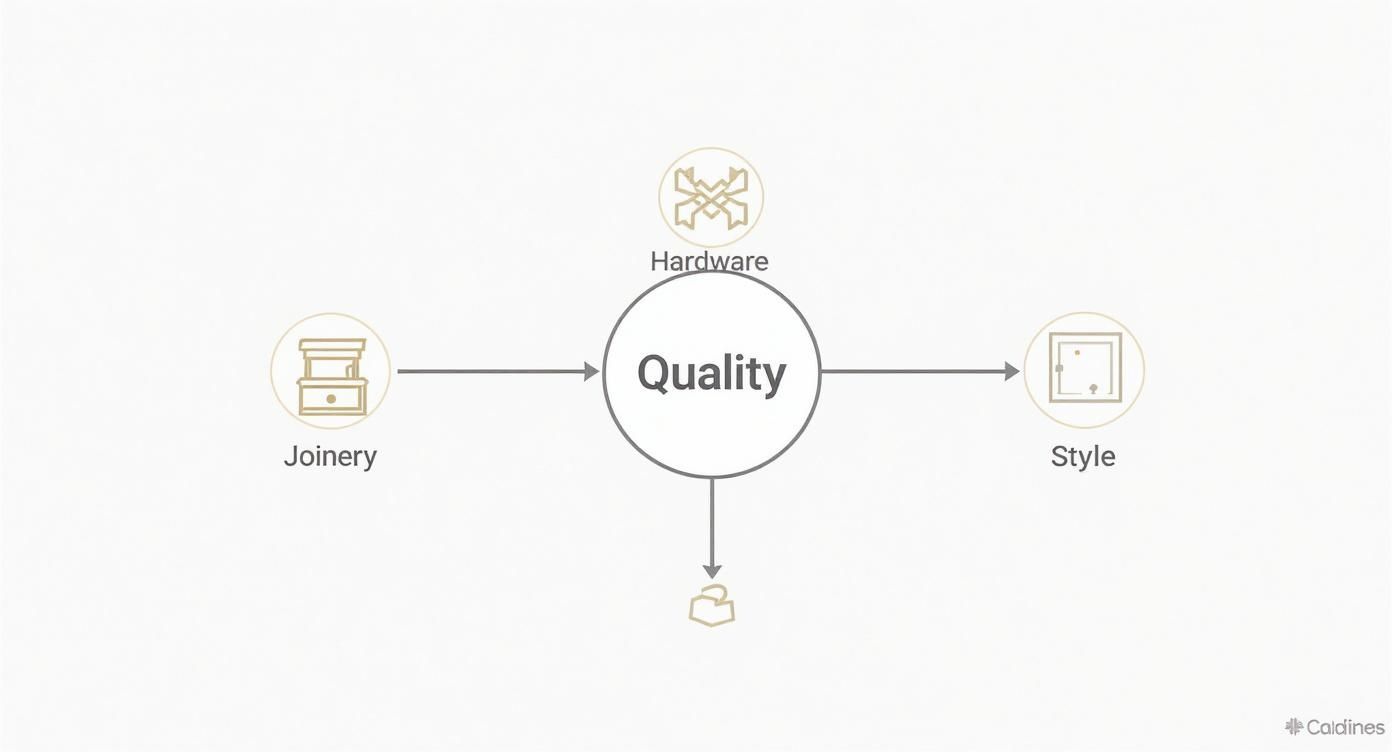
As you can see, true quality isn't just about one thing. It's the sum of its parts—from robust hardware and joinery to the personalized style that makes the kitchen uniquely yours.
Creating Dedicated Work Zones
The absolute pinnacle of a seamless layout is the creation of dedicated "zones" for specific tasks. Think of these as micro-environments within your kitchen where everything you need for an activity is stored together. This simple concept minimizes how much you have to move around and maximizes efficiency.
A well-zoned kitchen creates an intuitive workflow. You shouldn't have to think about where things are; your hand should naturally find what it needs, right where it’s needed most.
Let's look at a few real-world examples:
- The Coffee Station: A tall cabinet can be outfitted with a pull-out shelf for your espresso machine, drawers for pods or beans, and organizers for mugs and spoons. Everything for your morning ritual, all in one spot.
- The Baking Zone: A section of lower cabinetry can be designed with vertical dividers for baking sheets, deep drawers for mixing bowls, and custom inserts for rolling pins and measuring cups. Often, a nearby section of marble or stone countertop is included to provide the ideal surface for working with dough.
- The Prep and Cleaning Hub: The area around the sink can include an integrated pull-out trash and recycling center, a drawer with custom slots for cutting boards, and a tip-out tray for sponges, all designed to make cleanup a breeze.
For a luxury kitchen, these advanced storage features are non-negotiable. Here’s a quick look at some of the most impactful solutions we build into our custom cabinetry projects.
High-Impact Luxury Storage Solutions
| Storage Solution | Primary Function | Ideal Placement |
|---|---|---|
| Pull-Out Spice Racks | Keeps spices organized, visible, and upright. | Next to the cooktop for easy access while cooking. |
| Corner Drawer Systems | Makes awkward corner space fully accessible and usable. | In lower cabinet corners instead of a lazy Susan. |
| Vertical Tray Dividers | Stores flat items like baking sheets and cutting boards vertically. | In lower cabinets near the oven or food prep area. |
| Peg Drawer Organizers | Customizable pegs hold dishes and bowls securely in deep drawers. | Near the dishwasher for easy unloading. |
| Integrated Knife Blocks | Safely stores knives in a drawer, freeing up counter space. | In a drawer within the primary food prep zone. |
Ultimately, a well-designed kitchen feels like an extension of the person using it, with every solution serving a clear purpose.
The Impact of Integrated Solutions
These smart storage solutions aren't just accessories added at the end; they are fundamental to the initial design and influence the entire layout. The placement of a hidden pantry, for example, will directly impact the location of the refrigerator and oven to maintain that classic, efficient work triangle.
This thoughtful integration is what elevates a kitchen from just a collection of expensive parts into a cohesive, high-performance system. The result is a space that works as beautifully as it looks, where every drawer glide and cabinet door contributes to a feeling of effortless control. It’s this deep connection between form and function that truly defines modern luxury.
Selecting Hardware: The Jewelry Of Your Kitchen
Think of cabinet hardware as the finishing touch that completes an outfit—like the perfect watch or necklace. It’s the final detail that truly defines your kitchen’s personality. This is where you can inject character and elevate the entire luxury kitchen cabinets design. Don't think of hardware as just a functional piece; see it as the jewelry for your cabinetry, capable of shifting the entire mood from understated and classic to bold and contemporary.
The material and finish you choose for your pulls and knobs will have a huge impact on the final look. It’s also a detail you’ll touch every single day, so how it feels is just as important as how it looks. The right hardware should feel solid and substantial in your hand, a clear signal of the same quality you find in the cabinetry itself.
Materials That Make a Statement
The world of luxury hardware goes way beyond the standard chrome or brushed nickel you see everywhere. Today’s designers are playing with a rich palette of materials to complement bespoke cabinetry, and each one brings its own distinct vibe to the table.
- Aged Brass and Bronze: These are often called "living finishes" because they develop a gorgeous, natural patina over time. This adds a layer of warmth and a sense of history to your kitchen. They look incredible with traditional or transitional designs, especially against painted cabinets in deep greens, moody blues, or classic warm whites.
- Matte Black: If you're going for a crisp, modern, or even a slightly industrial edge, matte black is a seriously powerful choice. It creates a stunning contrast against light-colored cabinets and pairs perfectly with black appliances or window frames.
- Polished Nickel: A bit warmer and richer than chrome, polished nickel offers a timeless, sophisticated shine. It’s fantastic for bridging the gap between traditional and modern styles, giving you a classic look that never feels dated.
Choosing hardware is your chance to either complement your cabinet finish or create a bold, eye-catching contrast. A dark bronze pull on a light oak cabinet adds a bit of visual weight, while a polished nickel knob on a white door offers a subtle, elegant shimmer.
Matching Style to Substance
The shape and style of your hardware need to sync up with the overall design of your cabinetry. A mismatch here can feel off, so you want to aim for a cohesive look. For instance, sleek, minimalist bar pulls are the perfect match for flat-panel, frameless cabinets in a contemporary kitchen. Their clean lines just make sense with the simplicity of the doors.
On the other hand, more ornate knobs with intricate backplates feel right at home on raised-panel doors in a traditional space. They reinforce that classic, detailed aesthetic. And don’t be afraid to mix and match! Using knobs on doors and pulls on drawers is a very common and visually balanced approach. To see how different options can completely change a room, you can explore a complete guide to cabinet hardware finishes for more ideas.
Beyond Just Pulls and Knobs
In the most forward-thinking luxury kitchens, hardware is becoming more than just a simple handle. We're now seeing functionality integrated directly into the cabinetry in smart, sophisticated ways. This is where technology and convenience blend seamlessly with beautiful design.
For example, integrated LED lighting within handles or recessed channels is becoming more common. It provides soft, ambient task lighting that turns on with just a touch. Another great feature is the inclusion of hidden charging stations inside drawers, which gets all the clutter from phones and tablets off your countertops. These are the kinds of thoughtful details that truly define luxury design—where every single element is considered to make life a little easier and a lot more beautiful.
Planning Your Budget And Maximizing Your Investment
When you decide to create a luxury kitchen, you're not just renovating—you're making a significant, long-term investment in your home's value and your everyday life. Thinking through the financial side is the first step in bringing that vision to life without having to make compromises later. Think of your budget less as a number and more as a strategic plan that aligns your dreams with what's practical.
Setting realistic expectations from the very beginning is the best way to avoid surprises down the road. The final cost of a high-end kitchen is shaped by a handful of key factors that all work together, defining the scope and personality of your project.
Key Factors Driving Your Budget
That final price tag on a luxury kitchen doesn't just come out of thin air. It's a direct reflection of the specific choices you make along the way. The elements with the biggest impact are:
- Material Selection: It’s no surprise that exotic hardwoods, rare veneers, and premium engineered surfaces carry a higher price tag than more common options.
- Level of Customization: The more unique the design gets—think one-of-a-kind dimensions, intricate millwork, and truly tailored storage—the more it will shape the overall cost.
- Finishing Complexity: Hand-applied glazes, multi-layer lacquers, and custom color matching all require more skilled labor and time, which is naturally reflected in the budget.
- Hardware and Accessories: High-end pulls, artisan knobs, and advanced internal systems like automated lifts are those small details that make a surprisingly significant impact on cost.
A luxury kitchen renovation is one of the few home improvements that can offer a substantial return on investment, often recouping 60-80% of its cost upon resale while dramatically improving your daily living experience.
Maximizing Value Without Compromise
A bigger budget doesn't automatically mean a better kitchen. The real magic is in smart planning—allocating your resources where they’ll make the most visible and functional impact. You want every dollar to boost both beauty and usability.
One of the most effective strategies we see is creating a stunning, highly customized island to serve as the kitchen's undeniable centerpiece. This single element can feature the most premium materials and intricate details you've been dreaming of.
From there, you can complement it with more streamlined—yet still high-quality—perimeter cabinetry. This approach delivers that "wow" factor without the need to apply the most expensive options to every last cabinet. And as you think about your budget, it's wise to look beyond just the cabinets. Consulting a luxury kitchen investment guide for high-end items can be incredibly helpful, ensuring every part of your kitchen, from the cookware to the cabinetry, is aligned with your goals.
Common Questions About Luxury Cabinet Design
Diving into the world of high-end cabinetry is exciting, but it almost always brings up a few questions. A luxury kitchen is a major investment, after all, and you want to feel confident every step of the way. Let's tackle some of the most common things homeowners ask when they start planning a bespoke kitchen project.
Getting these key details sorted out early on helps you prepare for the entire process, from those first design conversations all the way to installation day. It’s all about making smart, informed decisions.
How Long Does a Custom Project Take?
This is usually the first question on everyone's mind, and for good reason. A full custom luxury kitchen cabinets design project isn't something you can rush. From start to finish, you should plan for a timeline of anywhere from 12 to 24 weeks.
We can break that down into three main phases:
- Design and Revisions (2–6 weeks): This is the fun, collaborative part. We work together to translate your vision into detailed plans, select the perfect materials, and nail down every last detail until it's just right.
- Fabrication and Finishing (8–14 weeks): Back in the workshop, our skilled artisans get to work. They meticulously craft, construct, and finish your cabinets by hand.
- Professional Installation (1–2 weeks): The moment of truth! The finished cabinets are brought to your home and carefully installed, with every piece adjusted for a flawless fit.
It's worth keeping in mind that sourcing rare materials or executing highly intricate designs can sometimes add to this timeline. That’s why open communication with your cabinet maker is so important.
What's the Real Difference: Custom vs. Semi-Custom?
You hear the terms "custom" and "semi-custom" thrown around a lot, but they describe two totally different ways of building cabinets. The biggest difference comes down to one thing: personalization.
Semi-custom cabinets are pulled from a manufacturer's existing catalog. You get to choose from their set list of sizes, styles, and finishes, and while you can make some minor modifications, you're still working within their pre-set system.
Fully custom cabinets, on the other hand, are built entirely from scratch. They are designed and constructed to your exact specifications. Every single element—the size, shape, material, finish, and even the internal hardware—is created to perfectly fit your space and the way you live.
This bespoke approach is what allows for truly one-of-a-kind solutions. It's how we work around quirky layouts, match unique architectural details, and build cabinets that solve the exact functional challenges you have.
How Do I Take Care of My New Wood Cabinets?
Proper care is key to keeping your luxury wood cabinets looking beautiful for decades. For day-to-day cleaning, it’s simple: just use a soft, lint-free cloth lightly dampened with a mild soap-and-water mix. Then, wipe them dry immediately with another clean cloth. That's it.
Stay away from harsh chemical cleaners, abrasive sponges, or letting any moisture sit on the wood, as these can easily damage the finish. If you need a deeper clean, only use products specifically recommended by your cabinet maker. And try to wipe up spills right away—especially acidic things like lemon juice or vinegar—to prevent them from staining or etching the finish.
Ready to bring your vision for the perfect luxury kitchen to life? The expert craftsmen at Sinclair Cabinetry have over 35 years of experience creating bespoke, high-quality wood cabinetry that lasts a lifetime. Explore our custom design process and see how we can transform your home.