

Thinking about a kitchen remodeling project in Cape Coral is a big step, but it doesn't have to be a stressful one. This isn't just about picking out new appliances and countertops. It’s about creating the functional, beautiful heart of your home—one that fits your life and can handle our unique coastal climate.
Your Kitchen Remodel Journey Starts Here
Let's be real: the whole idea of a kitchen renovation can feel like a lot. You’ve probably got Pinterest boards overflowing with ideas, but then reality hits with budgets and timelines. It's easy to get stuck before you even start.
This guide is here to cut through all that noise. We've put together a clear, straightforward path designed specifically for homeowners right here in Cape Coral.
This isn't some generic checklist you could find anywhere online. We're diving into the nitty-gritty details that actually matter in Southwest Florida, drawing on years of local experience. Our goal is to give you the confidence to make smart decisions that will genuinely improve your home's value and how you live in it every day.
What to Expect From This Guide
We're covering everything you need to know to make sure your project is a huge success. From setting a realistic budget to choosing materials that won’t warp in the Florida humidity, we've got your back.
Here’s a quick look at what we'll get into:
- Practical Budgeting: We’ll break down the real costs you can expect in the Cape Coral market and explain why a contingency fund is absolutely essential here.
- Material Selection: Find out which cabinets, countertops, and flooring are tough enough to stand up to our heat and humidity.
- Local Compliance: We’ll walk you through the permitting process and the hurricane-related building codes you need to know about in our area.
- Hiring Professionals: Get our playbook for finding and vetting the best local contractors who know how to get the job done right.
A well-planned kitchen remodel is one of the smartest investments you can make. It doesn't just boost your property value—it completely transforms how your family lives, cooks, and connects every single day.
Ready to bring that vision to life? To get a head start on the early stages, check out our comprehensive guide on kitchen renovation planning. It's the perfect foundation for everything we’ll cover next. Let’s start building your dream kitchen.
Budgeting for Your Remodel in the Cape Coral Market
Before a single cabinet gets ordered or a tile is laid, the most important conversation you need to have is about money. Let's be honest: setting a realistic budget is the absolute foundation of a successful kitchen remodel. It dictates everything—your scope, material choices, and the final look and feel of the space.
One of the biggest pitfalls I see homeowners fall into is thinking there's a one-size-fits-all price tag. The reality is that every kitchen, and every vision, is completely different. A simple refresh with new paint and hardware is a world away from a full gut renovation where you're moving walls and reconfiguring plumbing. This is why getting detailed, itemized quotes from local contractors isn't just a suggestion; it's a must.
Understanding the Numbers in Southwest Florida
When you start digging into costs, you’re going to see a lot of different figures. It’s important to know what you're looking at. A project's total cost is always a blend of materials, labor, permits, and other services.
In Cape Coral, you can generally expect a mid-range kitchen remodel to land somewhere between $16,000–$24,000. More specific local estimates often put that figure at $16,306–$22,328. The biggest chunk of that pie? That’s almost always your cabinets and the installation, eating up about 30–35% of the total budget. Labor costs will typically account for another 15–30%.
This infographic breaks down the typical journey from dreaming to building, which can help you mentally map out your own project timeline.
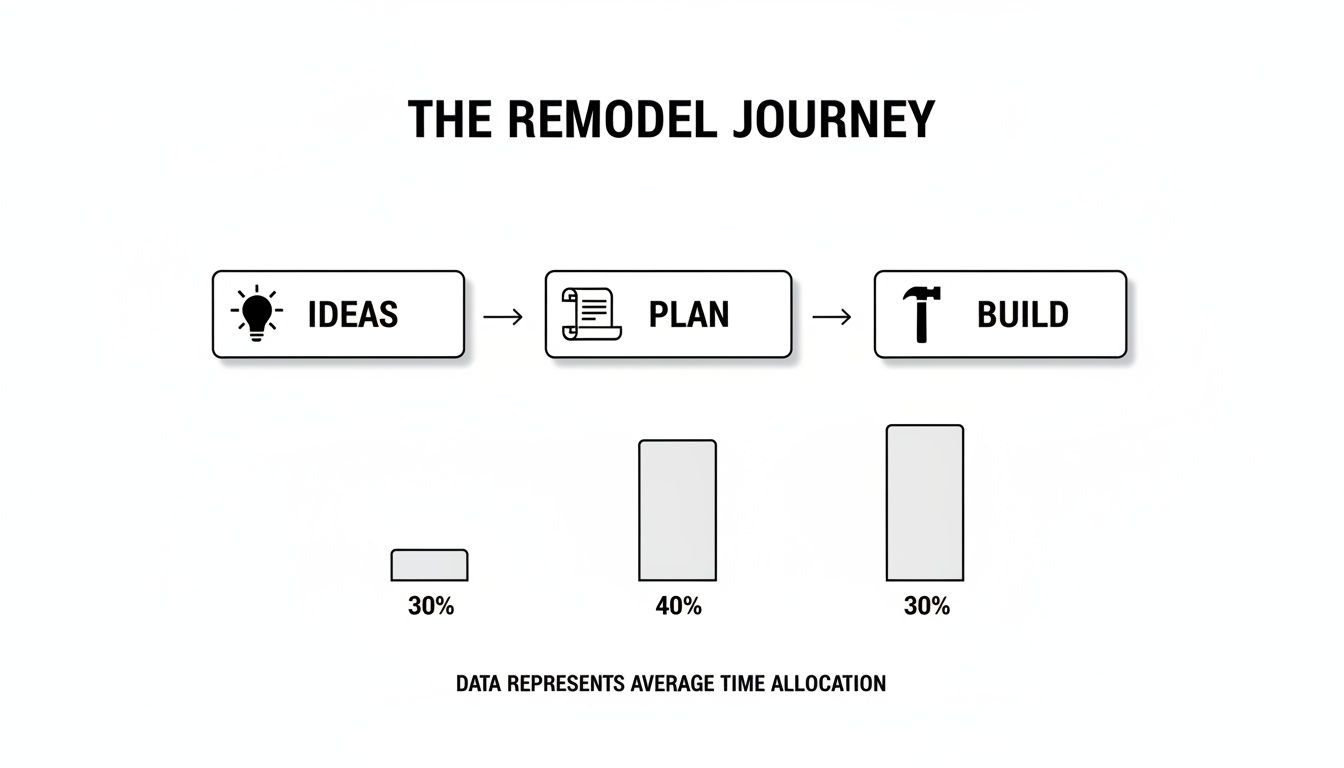
As you can see, the planning phase is a critical step that bridges your initial ideas with the actual construction. Don't rush it!
Breaking Down a Sample Cape Coral Budget
To make those percentages feel a bit more real, let's walk through a sample budget. This gives you a clearer picture of where your investment is actually going and helps you have smarter conversations with your contractor.
Here's a look at how a $23,000 mid-range kitchen budget might break down in our area.
Sample Budget Breakdown for a Mid-Range Cape Coral Kitchen Remodel ($23,000)
| Expense Category | Percentage of Budget | Estimated Cost |
|---|---|---|
| Cabinetry & Hardware | 35% | $8,050 |
| Installation & Labor | 25% | $5,750 |
| Countertops | 12% | $2,760 |
| Appliances | 10% | $2,300 |
| Flooring | 7% | $1,610 |
| Plumbing & Electrical | 6% | $1,380 |
| Backsplash & Finishes | 5% | $1,150 |
Seeing it laid out like this prevents sticker shock and helps you figure out where you want to splurge and where you might be able to save. For a more tailored estimate based on your specific dream kitchen, give our interactive kitchen remodel cost calculator a try.
The Non-Negotiable Contingency Fund
If you take only one piece of financial advice from this guide, make it this: always build a contingency fund into your budget. We tell every client to set aside 15-20% of their total budget for the unexpected. In Southwest Florida, this isn't just a good idea—it's essential.
Why is it so critical here? Our coastal climate can hide some nasty surprises that don't show up until demolition starts.
- Hidden Moisture Damage: It's common to find mold or wood rot behind old cabinets or drywall from slow leaks or humidity. This has to be fixed before anything new can be installed.
- Outdated Electrical or Plumbing: Your home might need more extensive work than you planned to bring it up to current building codes.
- Termite Damage: Unfortunately, it's a reality in Florida. Finding damage in wall studs or subflooring can stop a project in its tracks until repairs are made.
Think of your contingency fund as project insurance. You hope you never have to use it, but if you do, it will be the single best financial decision you made. It saves your vision from being compromised by unexpected problems.
Without that buffer, a surprise issue can force you into tough choices, like having to downgrade those countertops you fell in love with to cover a plumbing repair. That fund ensures you can handle bumps in the road without derailing the entire project.
Wrestling with Local Permits and Building Codes
Let's be honest, picking out new cabinets and countertops is the fun part. But before you get lost in tile samples, we need to talk about the less glamorous—but absolutely critical—side of remodeling: permits and building codes.
For many homeowners, this is the most intimidating part of the process, and it's tempting to just… skip it. Don't. For any significant kitchen remodel in Cape Coral, navigating the permit process is a non-negotiable step that protects your safety, your home's value, and your investment.
Think of a building permit as an official thumbs-up from the City of Cape Coral. It’s their way of confirming that your plans are solid and meet the local safety standards. If you’re doing more than just painting cabinets or swapping out a faucet, you’re almost certainly going to need one.
So, When Do I Actually Need a Permit?
You don't need to call the city every time you change a lightbulb. But for the kind of work involved in a real kitchen overhaul, the answer is almost always yes. You or your contractor will need to pull a permit if your project involves touching the "bones" of your kitchen.
This typically includes:
- Moving or knocking down walls: Anytime you change the structural layout of your home, a permit is required. This ensures you're not accidentally compromising your home's integrity.
- Altering plumbing lines: Want to move the sink to your new island? Or maybe add a pot filler over the stove? Changing the location of plumbing pipes requires a permit and inspections.
- Rerouting electrical work: Adding new outlets, installing under-cabinet lighting, or moving the wiring for your appliances all fall into this category.
It can seem like a shortcut to skip the permit process to save a little time or money. Trust me, it's not worth the risk. Unpermitted work can lead to massive fines, major headaches when you try to sell your home, and in a worst-case scenario, being forced to tear out all that beautiful new work.
The Permit Process in Cape Coral
The good news is that your licensed contractor should handle all of this for you. It’s part of what you hire them for. They’ll submit the detailed plans, scope of work, and any necessary engineering reports directly to the city. The city officials then review everything to make sure it aligns with the Florida Building Code.
Once the permit is issued, your project will be scheduled for several inspections at key milestones. An inspector will come out to the house to check the work—like the new framing, the electrical rough-in, or the final plumbing connections—before it gets hidden behind drywall and cabinets.
This is a good thing. It’s a second set of expert eyes making sure everything is done right. For instance, understanding the local requirements for electrical wiring and rewiring services is crucial for ensuring your kitchen’s new layout can safely handle modern appliances.
A Special Note for Southwest Florida Living
Remodeling a kitchen in Cape Coral isn't the same as doing it in Ohio. Our building codes are specifically designed to stand up to our unique coastal climate, especially hurricanes. This isn't just bureaucratic red tape; it's about keeping your family safe.
Here’s what that means for your kitchen project:
- Window and Door Ratings: If your remodel includes new windows or an exterior door, they must meet the current codes for impact resistance.
- Structural Connections: If you are moving walls, the new construction has to be tied into the existing structure in a way that can handle the incredible force of high winds.
At the end of the day, a fully permitted and inspected kitchen remodeling in Cape Coral gives you peace of mind. You’ll know that your gorgeous new space isn’t just stylish and functional—it’s built correctly and built to last, right here in our corner of paradise.
Choosing Materials That Withstand the Florida Climate
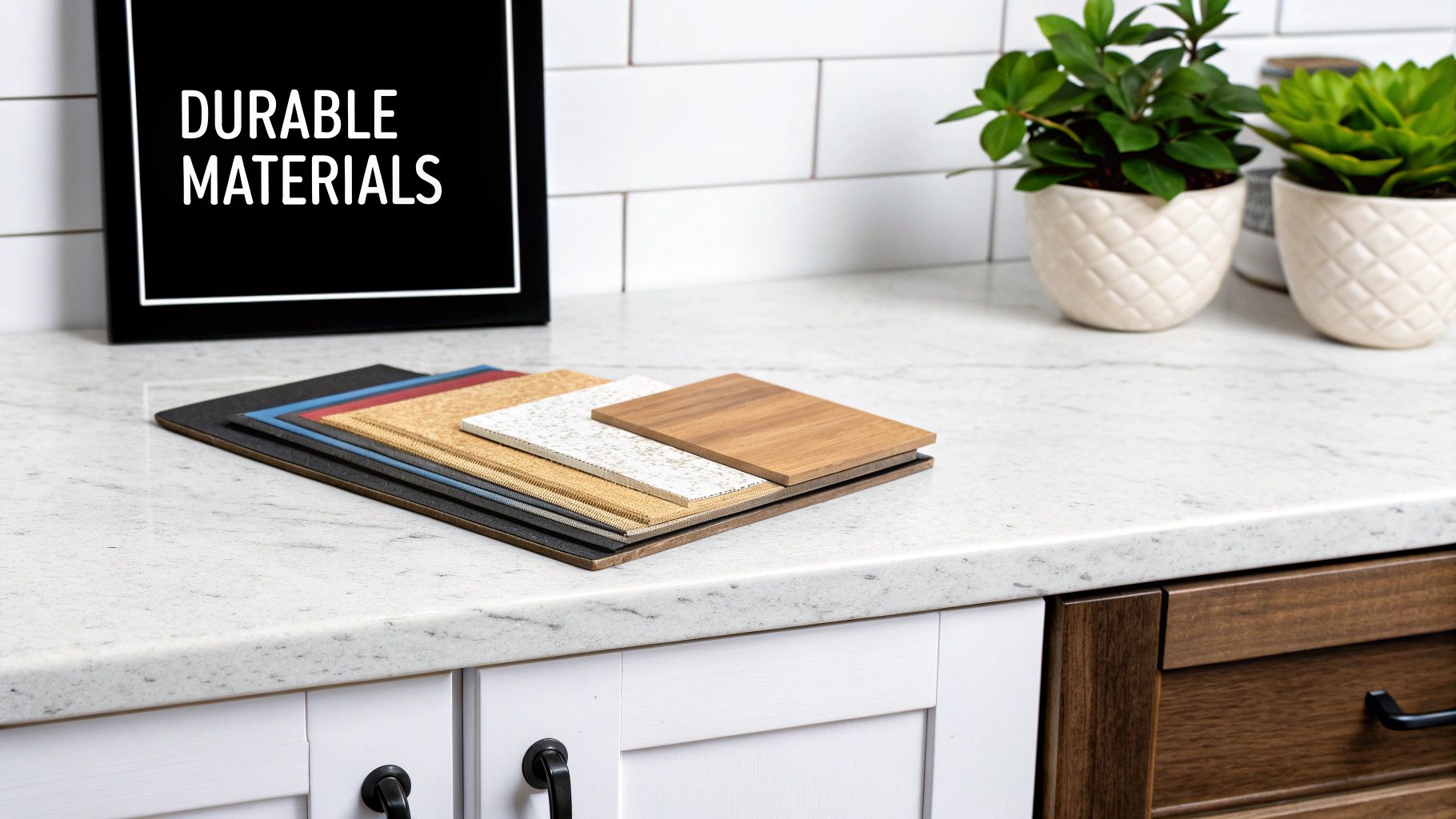
In most parts of the country, picking out kitchen materials is mostly about aesthetics. Here in Cape Coral, it's a completely different ballgame. We’re in a constant battle against the elements—relentless humidity, intense sun, and salty air are all working to warp, fade, and degrade your beautiful new kitchen.
Making the right choices from the very beginning is the secret to a remodel that doesn’t just look great on day one, but for years to come. This isn’t about just picking a color you like; it’s about making a strategic investment in durability. The wrong materials can lead to peeling finishes, swollen cabinet doors, and buckled flooring way sooner than you’d ever expect.
The Great Cabinet Debate: Wood Versus MDF
Cabinets are the backbone of any kitchen, setting the tone for the entire space. In our humid climate, what they're made from is one of the most critical decisions you'll make. Many big-box, off-the-shelf cabinets are made from Medium-Density Fiberboard (MDF), which is basically wood fibers glued and pressed together. While it helps keep the initial cost down, MDF acts like a sponge in high-humidity environments.
Over time, moisture gets in and causes MDF to swell, bubble, and even delaminate—especially around sinks and dishwashers. It's a common failure point we see in older Southwest Florida homes all the time.
This is where solid wood cabinets really shine. They offer far superior resistance to our climate's challenges. Woods like maple, cherry, and oak are much more stable and aren't susceptible to the kind of swelling that plagues composite materials. Their natural grain can expand and contract with the constant shifts in temperature and humidity without failing.
Opting for solid, real-wood cabinetry in a Cape Coral kitchen remodel isn't a luxury—it's a practical, long-term strategy. It's the single best way to ensure the core of your kitchen stands strong against the Florida humidity for decades.
Selecting Countertops for Coastal Living
Your countertops face a daily onslaught of spills, heat, and activity. In Cape Coral, we also need them to be non-porous and tough enough to resist staining and moisture. This is an area where engineered materials often have a real edge over some natural stones.
Quartz is a true champion in this environment. It's a non-porous material, which means it won’t harbor bacteria and is incredibly resistant to stains from things like coffee, wine, or citrus. Better yet, unlike granite, it never needs to be sealed. That makes it a low-maintenance powerhouse for a busy family kitchen.
Quartzite is another fantastic choice. It’s a natural stone that is harder and less porous than many types of granite, giving you a beautiful, organic look with enhanced durability. While it usually requires sealing, its dense structure provides excellent protection against daily wear and tear.
Local data shows that homeowners are zeroing in on these high-impact surfaces. Cape Coral remodeling surveys reveal that approximately 91% of projects include new countertops, and 86% update the backsplash. Countertops, appliances, and cabinets are consistently the top three priorities. You can explore more about these Cape Coral-specific trends to see how your plans align with what your neighbors are choosing.
Flooring That Won't Fail in the Humidity
The floor is your kitchen’s largest surface, and the wrong material can be a disaster waiting to happen. Traditional solid hardwood, for instance, can warp and buckle dramatically in our humidity. Luckily, there are some amazing alternatives built for exactly this climate.
- Porcelain or Ceramic Tile: This is the undisputed king of Florida flooring. Tile is completely waterproof, incredibly durable, and comes in a massive array of styles, including some shockingly realistic wood-look planks. It's also cool underfoot and a breeze to clean.
- Luxury Vinyl Plank (LVP): Modern LVP is a total game-changer. It's 100% waterproof, scratch-resistant, and feels a bit softer and more forgiving underfoot than tile. It’s a great pick for families with kids or pets and can often be installed right over existing floors.
Both of these options give you a stable, moisture-proof foundation. You can stop worrying about swelling or water damage—a constant headache with other flooring types around here.
Energy-Efficient Appliances: A Smart Move
Finally, don't forget your appliances. A kitchen remodel in Cape Coral is the perfect time to upgrade to ENERGY STAR® certified models. With our long, hot summers, our air conditioners are already working overtime. Your refrigerator, dishwasher, and oven can add a surprising amount to your utility bills.
Choosing energy-efficient appliances does more than just lower your monthly FPL bill. They also generate less ambient heat, which helps keep your kitchen—and your whole home—cooler and more comfortable. It's a smart choice that pays you back in both financial savings and a more pleasant cooking environment. A true win-win for any Florida homeowner.
How to Hire the Right Local Contractor
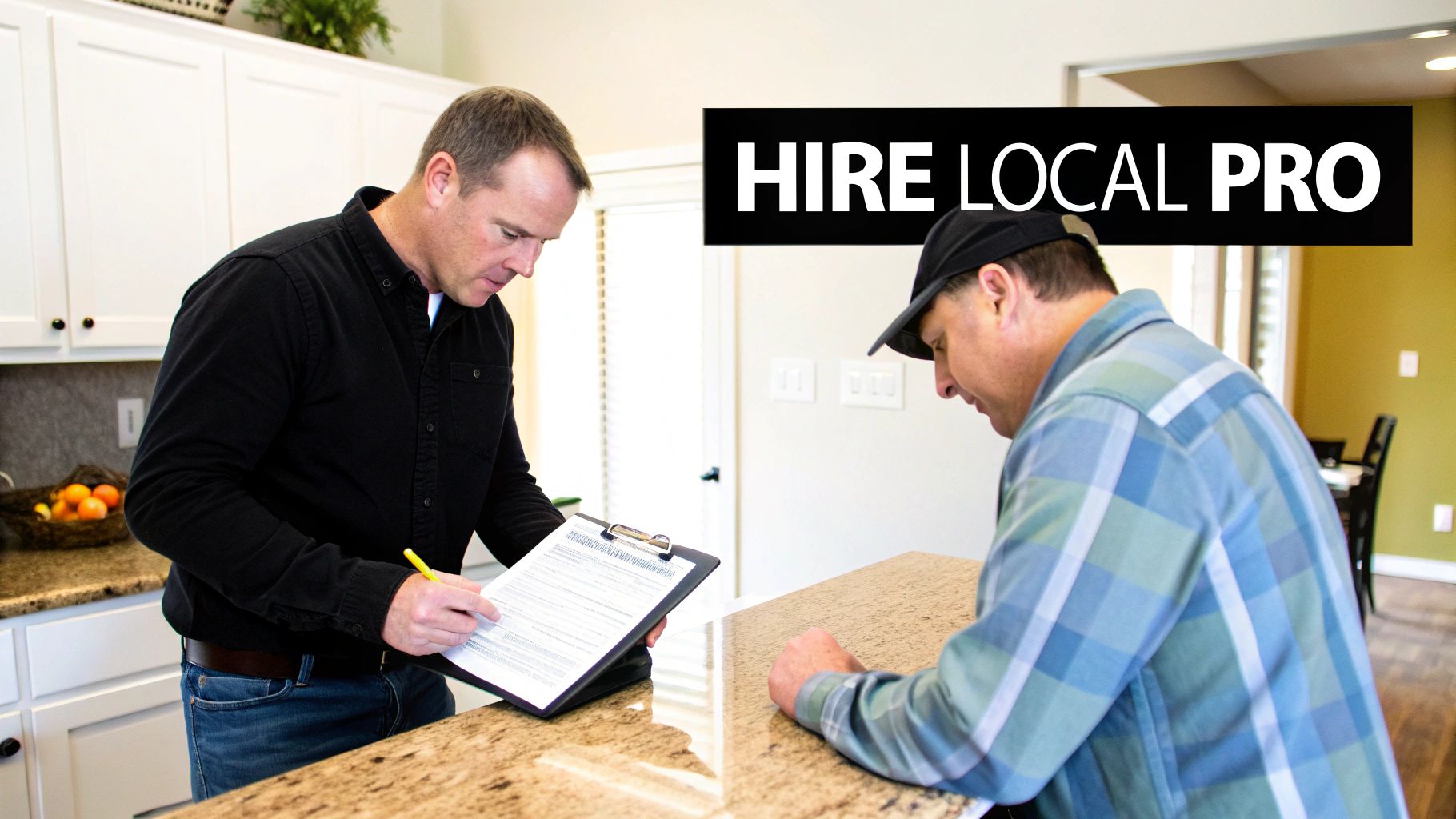
You can have the perfect design, the most beautiful materials, and a solid budget, but the real success of your remodel boils down to one thing: the people you hire. Picking the right local contractor for your kitchen remodeling in Cape Coral is hands down the most critical decision you'll make in this entire process.
This is the team you're trusting with your home, your money, and your vision for weeks, maybe even months. The right partnership makes the whole experience exciting and smooth. The wrong one? It can turn your dream project into a stressful, budget-busting nightmare. Vetting contractors isn't just a good idea—it's your best defense against headaches down the road.
Starting Your Search for a Cape Coral Pro
The best place to start is by asking around. Talk to friends, neighbors, or colleagues who've recently remodeled. Local real estate agents and the folks at your material supply stores are also fantastic resources; they see the work of the area's best builders every day.
Once you have a shortlist of three or four names, it's time to do some real homework. A good contractor will have no problem providing you with the following:
- Proof of Licensing: Ask for their Florida State Certified General Contractor license number. Don't just take their word for it—verify it on the state's Department of Business and Professional Regulation website. Make sure it’s active and clean.
- Proof of Insurance: They absolutely must carry general liability insurance and workers' compensation. Ask to see the actual certificates. This is what protects you from any liability if someone gets hurt on your property.
- Local References: Get a list of at least three recent clients, preferably right here in or near Cape Coral. Actually call them. Ask about their experience, how communication went, and if they'd hire them again.
Vetting Their Work and Professionalism
Seeing is believing. Don't just rely on pretty pictures on a website; ask to see a full portfolio of recent kitchen projects. Look closely at the details—the tile work, the cabinet alignment, the finish quality. Does their style feel like a good match for what you want?
The first few conversations you have with a contractor can tell you a lot. A real pro listens more than they talk. They'll ask smart questions about how you use your kitchen and offer realistic feedback, not just agree with everything you say.
This is also your chance to get a feel for their communication style. Do they get back to you in a reasonable amount of time? Do they explain complex things clearly and patiently? How they communicate now is a strong preview of how they'll communicate when the drywall dust is flying. For a deeper dive, our guide on how to choose a kitchen remodeling contractor offers even more practical tips.
The Importance of a Detailed Written Contract
Let me be clear: never, ever move forward on a handshake deal. A detailed, written contract is your project's official playbook and your single most important legal protection.
Before you sign anything, read every line and make sure it includes these non-negotiables:
- A Detailed Scope of Work: The contract needs to spell out every single task, from demolition to the final light switch installation. It should specify exact materials, brands, and even model numbers for everything from the faucet to the flooring.
- A Clear Payment Schedule: This usually involves a down payment, then progress payments tied to specific, completed milestones (e.g., after demo is done, after cabinets are installed). Never pay for the entire project upfront. A contractor who asks for that is a major red flag.
- An Estimated Project Timeline: While unforeseen issues can cause small delays, the contract must have a clear start date, key milestone dates, and a projected completion date.
- Change Order Process: Remodels evolve. The contract needs to clearly state how any changes to the original plan will be handled—how they're documented, approved by you, and billed.
Taking the time to find, vet, and lock in a great local contractor is what sets the stage for a remodel you'll love. This partnership is the foundation your entire dream kitchen will be built on.
Maximizing Your Home's Resale Value
Let's be honest—a kitchen remodel is a major investment. While you'll get to enjoy the beautiful results every single day, it's also a smart move to keep an eye on the future. In a competitive real estate market like Cape Coral, a thoughtfully designed kitchen can seriously boost your property’s appeal and, more importantly, its resale value.
The trick is finding that sweet spot between your personal dream kitchen and what makes a potential buyer's eyes light up.
I've seen it time and again: the smartest financial moves are the timeless, mid-range updates. That commercial-grade, six-burner range might be your dream, but a future buyer could see it as an intimidating, oversized appliance. Classic choices are classic for a reason. Think clean, white shaker cabinets, durable quartz countertops, and an elegant, neutral backsplash—these have broad appeal and won't look dated in a few years.
Smart Upgrades That Pay Off
Focusing on upgrades that improve both the look and the function of your kitchen is a winning strategy. Homebuyers today want kitchens that are not just beautiful, but also practical and efficient for daily life.
Here are a few high-impact upgrades that consistently get a great response:
- Energy-Efficient Appliances: A matching suite of ENERGY STAR® certified appliances is a huge selling point. It sends a clear signal to buyers that the home is modern, well-maintained, and could mean lower utility bills for them down the road.
- Better Lighting: Nothing makes a kitchen feel bigger and more inviting than great lighting. Upgrading to a layered lighting plan—recessed cans for general brightness, under-cabinet LEDs for task lighting, and a stylish pendant over the island—can completely transform the feel of the room.
- Durable, Low-Maintenance Surfaces: Materials like quartz countertops and luxury vinyl plank flooring are incredibly popular because they look fantastic and can stand up to the chaos of a busy family. For a potential buyer, that's a major plus.
A great kitchen remodel is one of the few home improvement projects where you get to enjoy the results now and see a financial return later. The goal is to create a space so universally appealing that buyers can walk in and immediately picture themselves making memories there.
So, what about the return on investment (ROI)? The National Association of the Remodeling Industry’s 2025 Remodeling Impact Report found that complete kitchen renovations typically recoup around 50–60% of their cost at resale. In a market like Cape Coral, this shows that smart, mid-range projects deliver the best bang for your buck. You can read the full report's findings for a deeper dive into the numbers.
It's also a wise move to accurately determine your home's value before you start and after you finish. This gives you a clear picture of how your investment is paying off.
Your Top Questions About Cape Coral Kitchen Remodels Answered
Every homeowner we talk to has a few key questions before they even think about swinging a hammer. It's only natural. Let's tackle some of the most common ones we hear about remodeling a kitchen right here in Cape Coral, so you can move forward with a clear head.
What Is a Realistic Timeline for a Full Kitchen Remodel?
If you're tearing everything out down to the studs, a full kitchen renovation in Cape Coral will generally take anywhere from 6 to 12 weeks. It’s a wide range, I know, but a lot of factors come into play.
The final timeline really depends on the scope of your project. Are we moving walls or rerouting plumbing? That adds time. Are you ordering custom, real-wood cabinets or specialty countertops? We have to account for their creation and delivery. Your contractor should be able to give you a detailed schedule before any work kicks off, so there are no surprises.
Can We Remodel During Hurricane Season?
Yes, you absolutely can, but it demands a solid plan. Hurricane season, from June 1st to November 30th, is just a fact of life in Southwest Florida. You can't put your life on hold for half the year, and neither can we.
Any reputable local contractor will have a detailed hurricane preparedness plan ready to go.
Ask them about it upfront. The plan should clearly explain how they'll secure the job site, protect materials from wind and rain, and seal up any openings in your home if a storm watch is issued. This is non-negotiable and needs to be crystal clear before you sign anything.
What Is the Average Cost Per Square Foot?
This is a tricky one. Cost per square foot can be a bit deceiving for kitchens because so much of your budget is tied up in fixed items—think appliances, cabinets, and plumbing fixtures—not just the floor space.
That said, for ballpark planning purposes, homeowners in Cape Coral can generally expect a mid-range remodel to land somewhere between $150 and $250 per square foot. If you're going for a high-end kitchen with luxury materials and fully custom cabinetry, that number can easily climb past $300 per square foot.
Ready to stop guessing and start getting real answers for your own kitchen? The team at Sinclair Cabinetry inc has been building beautiful, long-lasting kitchens in Cape Coral for over 35 years. Let's talk about what's possible for the heart of your home. Plan your project with us today.