

Choosing the right cabinet pulls is all about understanding your home's unique personality. To find hardware that really clicks with your space, you first need to get a handle on your core design style—is it modern, traditional, or somewhere in between? Once you've nailed that down, you can pick pulls that echo that same vibe. A truly cohesive look comes from matching the hardware's shape, material, and finish to your cabinet doors and the other fixtures in the room.
Matching Pulls to Your Home’s Design
People often call cabinet hardware the "jewelry" of a room, and for good reason. It’s that final touch that can pull an entire design together. Get it wrong, and something will just feel off. The goal here is to choose pulls that feel like a natural part of your home's character, not something you just threw on at the end.
This whole process kicks off with a simple look around your home. Check out your furniture, light fixtures, faucets, even the architectural details. Are the lines clean and minimalist, or are they more ornate and traditional? Answering that one question is the first major step toward choosing cabinet pulls that will feel right at home.
Identify Your Dominant Design Style
Most homes lean into one of three general style categories. Figuring out which one is yours will seriously narrow down the hardware options, making the whole selection process a lot less overwhelming.
- Modern and Contemporary: This style is all about clean lines, simple shapes, and zero fuss. Think flat-panel or slab cabinet doors. For this look, go for sleek, geometric hardware like tubular or squared bar pulls. Finishes like matte black, brushed nickel, or polished chrome are a perfect match.
- Traditional: Known for its warmth and classic details, traditional design often features raised-panel or embellished cabinet doors. Hardware that fits right in includes things like cup pulls, drop pulls, or knobs with intricate details. Finishes such as oil-rubbed bronze, antique brass, or polished nickel really add to that timeless feel.
- Transitional: This is a super popular style that mixes the best of both worlds—the clean feel of modern design with the cozy comfort of traditional aesthetics. Simple Shaker-style cabinets are a classic transitional feature. Hardware like simple bar pulls with softer edges or unadorned knobs in satin brass or brushed nickel are fantastic fits.
Creating Cohesion with Finishes and Materials
Once you know your style, it’s time to coordinate your new hardware with the existing elements in the room. This doesn't mean everything has to be a perfect match, but it should all feel like it belongs together.
Take a look at the metal finishes you already have on your faucets, light fixtures, and appliances. While the old rule was to match all your metals, modern design is a lot more flexible. The key is to be intentional about it. For example, matte black pulls can look incredible against stainless steel appliances, especially if you have other black accents sprinkled throughout the space.
You can also use a warm finish to beautifully contrast a cool-toned room.
A little design guideline I often share is to use a warm finish in a cool-toned room and a cool finish in a warm-toned one. It's a simple trick that adds depth and keeps the space from feeling flat. For instance, brushed brass pulls can really warm up a crisp, blue and white kitchen.
The material of the pull also plays a big part in the overall style. Polished metals feel sleek and formal, while materials like wood or leather can bring in a touch of warmth and texture. If you're going for a specific aesthetic, like bohemian, you can find more inspiration with these dreamy boho home decor ideas.
Syncing Hardware with Cabinet Door Style
Your cabinet doors are giving you a major clue about what kind of hardware will look best. The hardware should complement the door’s design, not fight with it.
For instance, if you have highly detailed, ornate cabinets with raised panels, you need hardware that can hold its own—think elegant bin pulls or knobs with a decorative backplate. On the flip side, minimalist flat-panel doors are the perfect backdrop for making a statement with long, dramatic bar pulls that add visual punch and lean into that contemporary look. When you align your hardware choice with your home’s existing character, you end up with a thoughtful, unified design that just feels complete.
Getting the Right Size and Type
Once you’ve got a handle on the overall style, it’s time to drill down into the specifics of size and type. This is where you’ll face the classic design debate: knobs or pulls? Honestly, there’s no single right answer. It’s a decision that really comes down to a blend of day-to-day function and what just looks right to you.
A lot of designers and homeowners I’ve worked with land on a combination of both. Think about it: knobs are perfect for cabinet doors that just need a quick pinch to swing open. Drawers, on the other hand, especially the big ones loaded with heavy pots and pans, really benefit from a solid, full-hand grip that only a pull can offer. It’s both practical and creates a balanced, professional look.
The Knobs Versus Pulls Decision
So, how do you choose? It really boils down to your personal habits and the statement you want to make. Knobs are subtle and classic, secured with just a single screw. They’re a timeless choice that doesn't shout for attention. Pulls, with their two mounting points and larger presence, tend to be a bit bolder and more contemporary.
Looking at what’s popular can also offer some guidance. Market trends show that cabinet pulls currently make up about 36% of the hardware segment, with knobs not far behind at 28%. This little statistic shows a clear lean towards the strong visual impact and comfortable grip of pulls in today's kitchens.
To help you decide what works best for your project, here’s a quick comparison.
Knobs vs Pulls: Which Is Right for You?
| Consideration | Cabinet Knobs | Cabinet Pulls |
|---|---|---|
| Aesthetic | Classic, traditional, or minimalist. Offers a subtle, timeless look. | Modern, transitional, or industrial. Makes a bolder style statement. |
| Functionality | Easy to use on doors with a simple pinch-and-pull motion. | Provides a full-hand grip, ideal for heavy drawers or for those with limited hand strength. |
| Installation | Simpler to install, requiring only one screw and one hole. | Requires two screws and precise measurement between holes. |
| Cost | Generally more budget-friendly. | Can be more expensive, especially for longer or more intricate designs. |
Ultimately, many of the most successful designs I've seen use a hybrid approach, mixing knobs on doors and pulls on drawers. This method gives you the best of both worlds—tailored function where you need it and a layered, thoughtful appearance.
This simple visual breaks down how your home's style naturally flows into your cabinet and hardware choices, creating a unified design from the ground up.
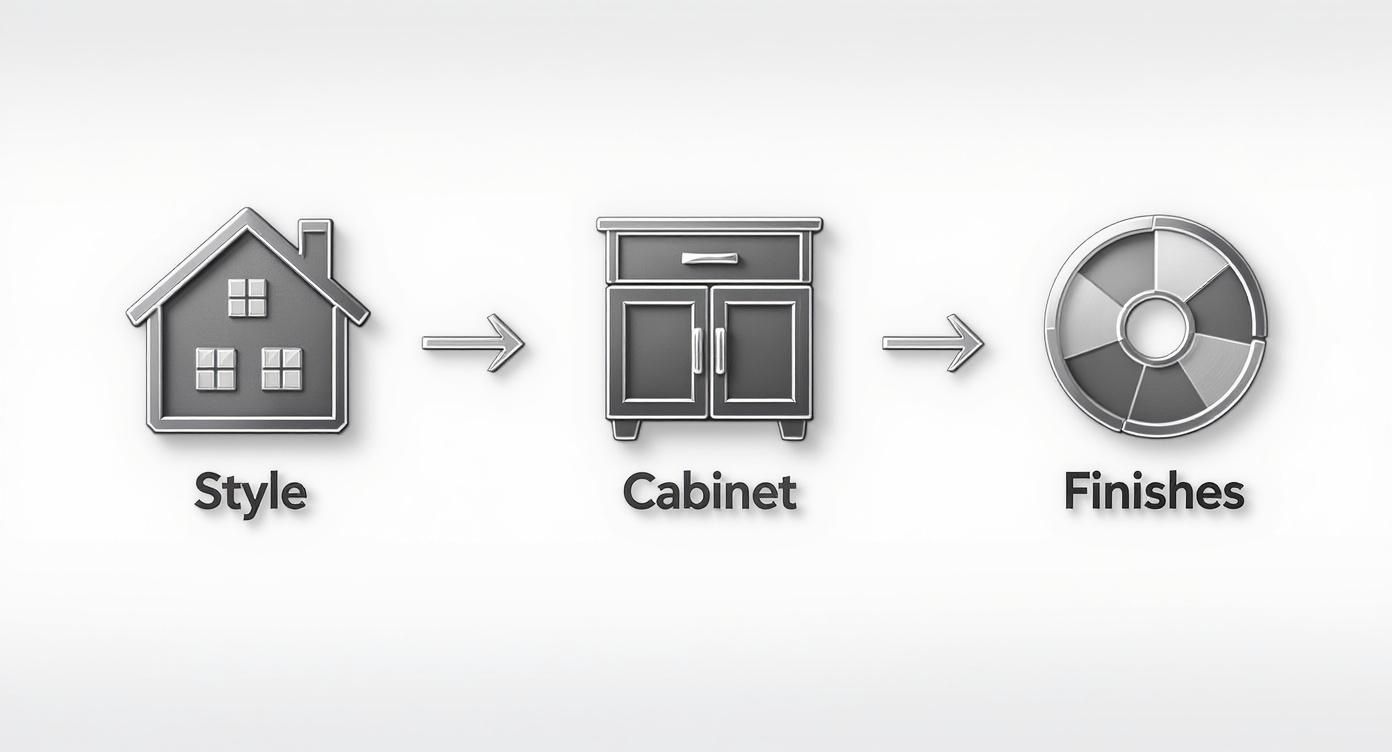
As the diagram shows, letting your home’s architecture guide your cabinet selection makes choosing the perfect hardware finish feel intuitive and cohesive.
Mastering the Art of Sizing
Getting the hardware size right is absolutely critical for visual harmony. A tiny pull will look completely lost on a wide drawer, while an oversized one can easily overwhelm a small cabinet door. A guideline I always share with clients is the "rule of thirds."
The rule of thirds is a designer's secret weapon. It suggests your cabinet pull should be about one-third the length of the drawer or door front. It's not a rigid law, but it’s a fantastic starting point for achieving a look that feels balanced and intentional.
For instance, if you have a 24-inch wide drawer, a pull around 8 inches long is going to look perfectly scaled. For those extra-wide drawers (think 30 inches or more), you might want to use two smaller pulls or one statement-making long pull to maintain that visual balance and make it easier to open.
For a deeper dive into nailing the proportions, check out our complete cabinet hardware sizing guide.
Measuring for a Perfect Fit
If you're swapping out old hardware, the single most important measurement you need is the center-to-center spacing. This is simply the distance between the center of the two screw holes on your existing pulls.
Here’s how to get an accurate measurement:
- First, unscrew and remove one of the pulls you're replacing.
- With a tape measure or ruler, measure from the center of one screw hole to the center of the other.
- Write that number down! Common sizes you’ll see are 3 inches (76mm), 96mm, 4 inches (102mm), 128mm, and 5 inches (128mm).
Knowing your center-to-center measurement is a non-negotiable step. It guarantees your new pulls will line up perfectly with the existing holes, saving you the major headache of filling, sanding, and drilling new ones. It’s a simple check that ensures a smooth, professional-looking update.
Choosing the Best Materials and Finishes
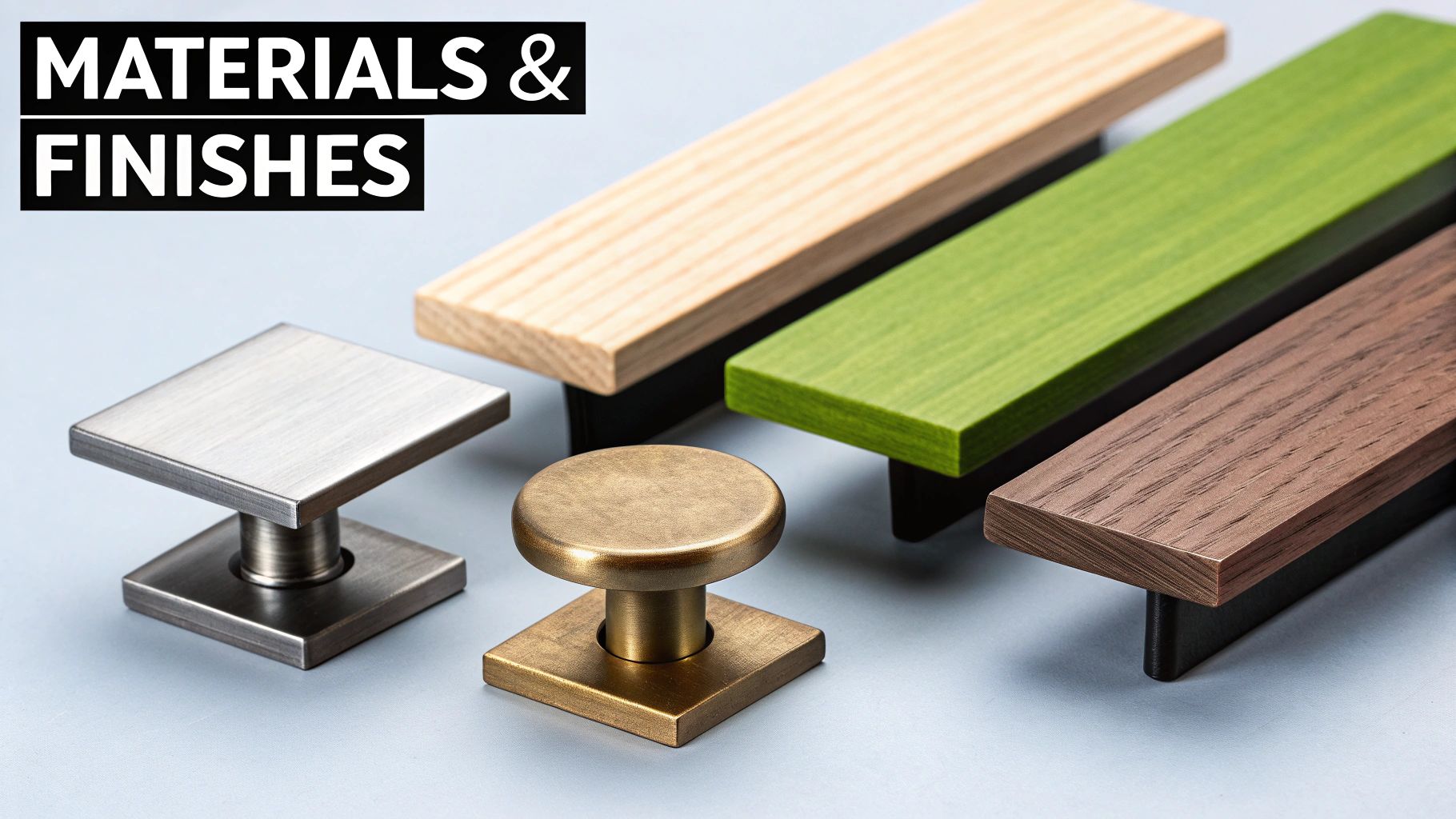
The material and finish you choose for your cabinet hardware are about so much more than looks—they define how the hardware feels in your hand, how it ages, and how much care it will need. Think of it as giving your cabinets a personality. Are they going to be sleek and modern? Warm and rustic? Or maybe timeless and elegant? The answer is in the details.
It’s also an exciting time to be choosing hardware. The global market was valued at around USD 8.5 billion in 2023 and is expected to hit USD 12.3 billion by 2032. All that growth means more innovation, better quality, and a wider variety of affordable, stylish, and durable options for homeowners like you. For a closer look at market trends, you can explore insights on dataintelo.com.
A Deep Dive Into Popular Materials
Every material brings its own unique character to your space. Getting to know the differences is the key to picking something you’ll be happy with for the long haul.
-
Brass: A true classic for a reason, brass has a warm, luxurious feel that’s weighty and substantial in your hand. Unlacquered brass will develop a gorgeous, lived-in patina over time, but if you prefer a consistent shine, lacquered versions are much lower maintenance.
-
Stainless Steel: For a clean, contemporary kitchen, stainless steel is the obvious choice. It’s incredibly durable, resists rust and corrosion, and perfectly complements modern appliances. Plus, its non-porous surface is hygienic and a breeze to clean.
-
Bronze: If you’re leaning toward a rustic or traditional vibe, bronze is a fantastic option. It comes in a range of shades, from lighter golden tones to the deep, moody look of oil-rubbed bronze. It’s known for being tough and developing a rich, aged appearance that adds a ton of character.
-
Wood and Acrylic: Want something a little different? Wood pulls can bring an organic warmth that feels right at home in farmhouse or Scandinavian designs. On the flip side, acrylic or lucite hardware offers a touch of glam, creating an almost-invisible look that lets your cabinet color be the star.
Navigating the World of Finishes
The finish is what truly defines the hardware's final look. It can take the same base metal and make it either bold and shiny or soft and understated. The right finish won't just look great on your cabinets—it will tie the whole room together by coordinating with your faucets, lighting, and other fixtures.
Here’s a quick rundown of the most common options:
| Finish Type | Visual Characteristic | Best For Styles |
|---|---|---|
| Polished | Highly reflective and shiny. Creates a bright, clean look. | Modern, Traditional, Glam |
| Brushed | Soft, muted sheen with visible texture lines. Hides fingerprints. | Contemporary, Transitional |
| Matte | Flat, non-reflective surface. Offers a bold, modern statement. | Modern, Industrial, Minimalist |
| Antique | Darkened or "aged" appearance to mimic a natural patina. | Traditional, Farmhouse, Rustic |
I often recommend a brushed finish for busy kitchens. Its subtle texture is incredibly forgiving, hiding fingerprints and minor scratches far better than a polished surface. It gives you a high-end look without the constant need for wiping down.
Picking the perfect material and finish can feel like a big decision. That’s why we created a complete guide to cabinet hardware finishes to walk you through all the details.
Embracing Sustainable Hardware Choices
For homeowners looking to make more environmentally conscious choices, the good news is that sustainable hardware is more accessible than ever. You can absolutely beautify your home while minimizing your environmental footprint.
Here are a few eco-friendly alternatives to consider:
- Recycled Metals: Many manufacturers now offer hardware made from recycled aluminum, brass, and stainless steel. These options look and perform just like their brand-new counterparts but reduce the need for new mining.
- Sustainably Sourced Wood: If you love the natural look of wood, keep an eye out for hardware made from FSC-certified (Forest Stewardship Council) wood. This certification guarantees it comes from responsibly managed forests.
- Low-VOC Finishes: Some finishes can release volatile organic compounds (VOCs) into the air. Choosing hardware with low-VOC or water-based finishes is a great way to improve your home’s indoor air quality.
When you carefully consider the material, finish, and even the environmental impact, you ensure your cabinet pulls are a perfect fit for your style, your life, and your values.
Considering Comfort and Daily Use
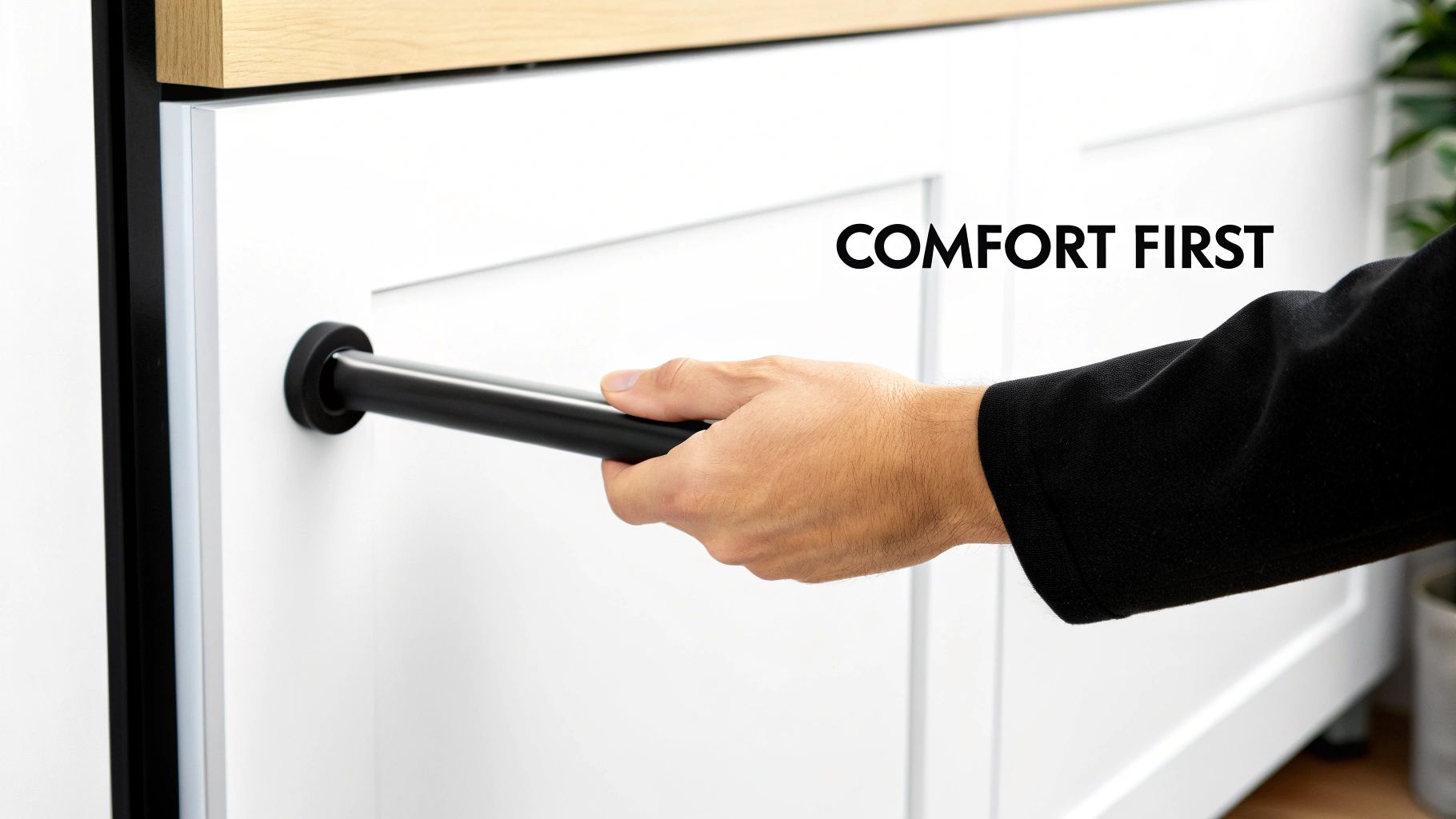
While the visual pop of new hardware is what gets all the attention, the real test comes in those quiet, everyday moments. You're going to touch these pulls dozens of times a day, so how they feel in your hand is every bit as important as how they look on your cabinets. This is where ergonomics comes into play—choosing hardware that’s a joy to use, not just to admire.
Think about the motion for a second. When you reach for a heavy drawer, does your hand wrap comfortably around the pull? Or do your fingers feel pinched and cramped? These tiny details make a huge difference in your daily routine.
Evaluating the Grip and Feel
The "feel" of a pull is more than just its texture. It’s about the shape, the weight, and how it fits the curve of your hand. You’re looking for something that feels substantial and comfortable, not flimsy or awkward.
It's also crucial to consider everyone who will be using the kitchen or bathroom. A pull that’s perfect for you might be a real struggle for a family member with arthritis or a child with smaller hands. This is why testing hardware in person is so valuable. If you're ordering online, it’s always a good idea to buy a single sample first to see how it feels in real life.
Pay close attention to these elements:
- Underside Finish: Run your fingers along the back of the pull where you'll be gripping it. Cheaper hardware can have sharp, unfinished seams that are really uncomfortable.
- Grip Depth: Make sure there's enough room for your fingers to fit behind the pull without getting squeezed. A shallow grip makes opening heavy drawers feel like a workout.
- Smooth Contours: Pulls with soft, rounded edges are almost always more comfortable than those with sharp, angular corners.
The Critical Role of Projection
You’ll see the term projection pop up a lot when shopping for hardware. It’s simply the measurement of how far the pull or knob sticks out from the cabinet face. This one number is incredibly important for both comfort and function.
A pull with not enough projection is a recipe for scraped knuckles and smudged cabinets. You'll want to aim for a projection of at least 1 to 1.5 inches to give your hands plenty of clearance.
This is especially true in a busy kitchen where you're moving fast. You need to be able to get a firm, easy grip without your fingers dragging against the cabinet surface. For anyone with larger hands or limited dexterity, a generous projection can make a world of difference.
Practical Designs That Prevent Snags
Ever caught your pocket, belt loop, or apron string on a cabinet knob? It’s a common frustration, and certain hardware designs are definitely the main culprits. Thinking about how you move through your space can help you avoid this.
The biggest offenders are often T-knobs or pulls with ends that stick out sharply. While they can look great, they basically act like little hooks, snagging clothing as you walk by. This is one of the main reasons bar pulls with closed ends are so incredibly popular. Their simple, streamlined shape offers a clean look and, more importantly, nothing to catch on.
The push for more ergonomic hardware is also tied to broader trends in cabinet design. The global cabinet market is shifting toward modular and frameless kitchens, which call for hardware that is both highly functional and complements a seamless look. As explained in market analysis from Mordor Intelligence on cabinet market dynamics, consumers increasingly want pulls that feel good, last long, and fit these modern styles perfectly.
At the end of the day, when you choose cabinet pulls, you're picking a tool you’ll interact with every single day. Putting comfort and practical function first ensures your new hardware will be a source of satisfaction for years to come.
Installation Tips and Mistakes to Avoid
You’ve navigated the styles, finishes, and sizes, and now you’ve got the perfect cabinet pulls in hand. The finish line is in sight, but the final step—installation—is where precision really counts. Rushing this stage is a recipe for misaligned hardware, or worse, damaged cabinets.
But with a little patience and the right approach, you can get a finish that looks like it was done by a seasoned pro.
Before you even think about drilling, get your toolkit ready. Having everything you need on hand makes the whole process smoother and far more accurate. You’ll want:
- A Power Drill for clean, precise holes.
- A few different Drill Bits. You'll need one that matches your screw diameter.
- A Tape Measure and a sharp Pencil.
- And the most important tool of all: a Cabinet Hardware Jig.
The Absolute Game-Changer: A Cabinet Hardware Jig
If you only take one piece of advice from this guide, let it be this: use a cabinet hardware jig. Seriously. This simple, adjustable tool is your best friend for getting flawless, repeatable results across all your cabinets.
The jig lets you set your hole positions just once, and then you can replicate those exact measurements on every single door and drawer. Without it, you’re stuck measuring and marking each cabinet by hand, which opens the door wide for human error. A tiny slip of the tape measure or a pencil mark that’s off by a millimeter can leave you with crooked hardware that will bug you forever. A jig completely eliminates that risk.
A cabinet hardware jig is the single best investment you can make for this project. It transforms a task that demands intense precision into a straightforward, repeatable process, saving you a massive amount of time and preventing costly mistakes.
Sidestepping Common Installation Pitfalls
Knowing what not to do is just as important as knowing the right steps. Homeowners often stumble into the same few preventable issues when installing hardware. A little awareness goes a long way in helping you sidestep them completely.
One of the most frequent errors is drilling crooked holes. It sounds simple, but it’s easy to get wrong. Always make sure your drill is perfectly perpendicular—at a 90-degree angle—to the cabinet surface before you start drilling. Apply steady, even pressure to create a straight hole. This prevents the screws from going in at an angle, which would cause the pull to sit askew.
Another classic mistake is not checking the screw length. Most cabinet pulls come with standard screws, but cabinet doors and drawer fronts aren't all the same thickness. If the screws are too short, the pull won't be secure. If they're too long, they’ll bottom out before the hardware is tight, leaving you with a wobbly, loose handle.
Key Mistakes to Avoid
- Drilling Through the Cabinet Face: Always drill from the front of the cabinet to the back. This prevents "tear-out," which is when the wood splinters as the drill bit exits. For an even cleaner hole, clamp a small piece of scrap wood on the inside of the door where the bit will come through.
- Ignoring Proper Placement: Where you place the hardware isn't just about measurements; it's about visual harmony. Taking the time to decide on the perfect spot is crucial. For detailed guidance, our cabinet hardware placement guide offers expert advice on positioning for different cabinet styles.
- Over-Tightening the Screws: It’s tempting to crank the screws down as hard as you can, but that’s a mistake. Over-tightening can damage the pull’s finish, strip the screw head, or even crack the wood of your cabinet door. Just tighten until the pull is snug and doesn't wiggle—that's it.
By taking your time, using the right tools (especially that jig!), and keeping these common errors in mind, you're set up for a flawless installation. This careful final step ensures your beautiful new cabinet pulls will not only look their best but also function perfectly for years to come.
Common Questions About Cabinet Pulls
Even after you’ve narrowed down the style, size, and finish, a few questions about choosing cabinet pulls might still be nagging at you. That’s perfectly normal. Let’s clear up some of the most common things we hear from homeowners so you can lock in your final choices with total confidence.
Can I Mix Different Pulls and Knobs in My Kitchen?
Absolutely. In fact, mixing hardware is one of the best ways to get that custom, layered look you see in professionally designed kitchens. It’s a strategy that adds both visual interest and practical, tailored function to your space.
The most common—and totally foolproof—method is using knobs on doors and pulls on drawers. It’s a classic for a reason. This combination just feels right because it matches how you use them: a simple pinch for a door and a more substantial grip to pull open a heavy drawer.
The key to making the mix look intentional, not chaotic, is sticking to a consistent finish and general style. For instance, pairing sleek, squared knobs with modern, angular bar pulls—both in a brushed nickel finish—creates a cohesive look that’s as practical as it is beautiful.
Where Should I Position My New Cabinet Pulls?
Placement is everything. Get it right, and the result is balanced and professional. Get it wrong, and it can throw off the whole look. While there’s a bit of creative wiggle room, following a few standard guidelines is the best way to go.
- For Upper Cabinets: Place your pulls or knobs 2-3 inches from the bottom corner of the stile (the vertical frame), on the side opposite the hinge.
- For Lower Cabinets: Do the same, but position them 2-3 inches from the top corner of the stile, again, opposite the hinge.
- For Drawers: The standard approach is to center the pull both horizontally and vertically. If you have extra-wide drawers (think over 24 inches), consider using two smaller pulls or a single extra-long one. This not only looks better but also makes opening the heavy drawer much easier.
Here’s a pro tip: a cabinet hardware jig is your best friend. This inexpensive tool is a game-changer for getting perfect, consistent placement every time. It saves a ton of time and completely eliminates the risk of crooked, misaligned hardware that can cheapen the look of your beautiful new cabinets.
Do My Cabinet Pulls Have to Match My Faucet?
Matching is always a safe and classic choice, but it’s definitely not a hard-and-fast rule anymore. The modern approach is all about coordinating, not necessarily matching. You can absolutely pair different metal finishes as long as they complement each other and the overall vibe of the room.
For example, matte black pulls can look incredible with a stainless steel faucet, especially if you have other black accents in the room, like light fixtures or window frames. The idea is to create a deliberate and balanced palette. A warm metal like aged brass can also create a stunning contrast against cool-toned cabinetry, adding a layer of depth and character.
That said, if you’re after a more unified and timeless look, matching the finish of your pulls to your faucet is a foolproof strategy. It simplifies your decisions and always delivers a clean, cohesive look.
Ready to find the hardware that pulls your whole vision together? The experts at Sinclair Cabinets are here to guide you through our extensive collection of high-quality, custom options to find the perfect match for your new cabinets. Explore our custom cabinetry solutions and see how the right details can completely transform your space.