

The galley kitchen, often dismissed as a narrow and challenging space, is secretly a powerhouse of efficiency. Its classic two-walled or single-wall corridor layout is designed for function, but it can often feel restrictive, dark, and dated. If you're dreaming of unlocking your galley's true potential, you've come to the right place. This guide moves beyond simple inspiration by showcasing seven incredible galley kitchen remodels before and after transformations that prove small footprints can deliver big on style and functionality.
We will dive deep into each project, breaking down the specific strategies, materials, layout changes, and clever design choices that turned these cramped corridors into stunning culinary hubs. You will see firsthand how removing a wall can create an open-concept island kitchen, how reconfiguring cabinetry adds a functional pantry, and how modern finishes can completely redefine a vintage space. Each case study provides a strategic breakdown with actionable takeaways you can apply directly to your own renovation planning. Prepare to be inspired and equipped with practical, replicable ideas for your project. For a broader range of transformative projects beyond just kitchens, explore these inspiring before and after room makeovers.
1. Open Concept Galley to Island Kitchen Transformation
One of the most impactful galley kitchen remodels before and after showcases the complete removal of a non-load-bearing wall. This popular project transforms a cramped, closed-off galley into an expansive, open-concept kitchen integrated with the main living area. The goal is to create a more social and functional space that improves traffic flow and welcomes natural light.
This transformation fundamentally changes how the home feels. By replacing a dividing wall with a central island, the design maintains the galley's efficient workflow while adding valuable counter space, storage, and seating. This approach is ideal for homeowners who find their current galley kitchen isolating and want to create a central hub for family gatherings and entertaining.
Strategic Breakdown & Key Considerations
- Structural Assessment: Before any demolition, consult a structural engineer. Removing a load-bearing wall is a complex and costly process that requires professional planning and support beams, while removing a non-load-bearing wall is much simpler.
- Workflow Preservation: The kitchen's "work triangle" (the path between the sink, refrigerator, and stove) must remain efficient. Plan the island's placement carefully to ensure it enhances, rather than obstructs, movement between these key zones.
- Mechanicals Rerouting: Walls often conceal plumbing, electrical wiring, and HVAC ducts. Budget for the cost and time required for a licensed professional to safely reroute these systems.
- Lighting and Ventilation: Removing walls and soffits often means removing existing light fixtures. A comprehensive lighting plan with recessed, pendant, and under-cabinet lighting is crucial. A high-quality range hood is also essential to manage cooking odors in the newly opened space.
Actionable Takeaways
For those considering this remodel, a peninsula is a great alternative if removing a full wall isn't feasible. It can provide a similar open feel while potentially avoiding major structural changes. When planning your new layout, explore various kitchen island design ideas to find a style that maximizes both function and aesthetic appeal for your home.
2. Two-Wall to One-Wall Galley Modernization
A transformative approach for narrow spaces, this galley kitchen remodel before and after involves consolidating all primary functions onto a single wall. By removing cabinetry and appliances from one side, the design eliminates the cramped "corridor" effect, creating a more open and streamlined cooking area. This modernization turns a tight, two-person-squeeze into a spacious, efficient workspace perfect for single-cook households or those prioritizing an airy feel.
This strategy is particularly effective in small apartments or homes where the galley kitchen feels claustrophobic. The newly freed wall can be used for a shallow counter, a large window to bring in natural light, or simply left open to enhance the sense of space. It’s a bold move that redefines the galley layout from a purely functional passage into a deliberate and stylish feature of the home.
Strategic Breakdown & Key Considerations
- Workflow Consolidation: The success of a one-wall kitchen hinges on a hyper-efficient layout. The sequence of refrigerator, sink, and range must be logical to create a smooth, linear workflow. Every inch of the functional wall must be maximized.
- Appliance Selection: Opt for compact, integrated, or multi-functional appliances. Consider an 18” or 24” dishwasher, an under-counter refrigerator, or an all-in-one combination microwave/convection oven to save precious counter and cabinet space.
- Vertical Storage Solutions: With half the storage gone, you must build up. Use floor-to-ceiling cabinetry, open shelving above the counter, and clever pull-out systems to store everything you need without clutter. This draws the eye upward, further enhancing the feeling of spaciousness.
- Opposing Wall Treatment: The non-functional wall is now a design opportunity. Installing a large window or a mirrored backsplash can dramatically increase light and visual space. A shallow-depth pantry (12 inches or less) can also add significant storage without impeding traffic flow.
Actionable Takeaways
For those intrigued by this minimalist approach, a rolling kitchen cart or a small, movable island can provide flexible prep space that can be tucked away when not in use. When designing the primary wall, prioritize high-quality, full-extension drawers over deep cabinets, as they provide more accessible and organized storage. Many small space design specialists, like those featured on Apartment Therapy, showcase brilliant one-wall kitchen solutions that master both form and function.
3. Galley with Functional Pantry Addition
One of the most practical galley kitchen remodels before and after focuses on solving the layout's biggest weakness: limited storage. This project involves reconfiguring the space to add a dedicated pantry, which can range from a tall cabinet system to a small walk-in closet carved from an adjacent area. The primary goal is to drastically improve organization and functionality without compromising the galley's efficient workflow.
This remodel addresses the common complaint of cluttered countertops and overflowing cabinets. By creating a centralized zone for dry goods, small appliances, and bulk items, the main kitchen area remains streamlined and dedicated to cooking and prep. This approach is perfect for homeowners who love the galley layout's efficiency but are constantly battling for more storage space.
Strategic Breakdown & Key Considerations
- Space Allocation: Identify underutilized space. Can you borrow a few feet from an adjacent closet, hallway, or dining area? Alternatively, a bank of floor-to-ceiling pantry cabinets can be integrated at one end of the galley to create a pantry wall.
- Pantry Type: A reach-in pantry with well-designed shelving is often sufficient. If space allows, a small walk-in pantry offers the most storage. Cabinet pantries with pull-out shelves are another excellent solution for maximizing accessibility in a tight footprint.
- Workflow Integration: The pantry's location is critical. It should be easily accessible from the primary food prep zone (the "work triangle") to avoid disrupting the kitchen's flow. Placing it at either end of the galley run is a common and effective strategy.
- Internal Organization: A successful pantry isn't just about space; it's about smart organization. Plan for a mix of shelving depths, drawers, and vertical dividers. Consider including task lighting and electrical outlets inside for small appliances like a coffee maker or microwave to free up counter space.
Actionable Takeaways
For those planning this type of remodel, focus on maximizing every inch within the new pantry. Use clear containers for visibility and install pull-out shelving to ensure items at the back are easy to reach. A well-planned pantry can transform your kitchen's usability. To explore your options further, investigate various custom pantry design ideas that can be tailored to fit the unique dimensions and needs of your galley kitchen.
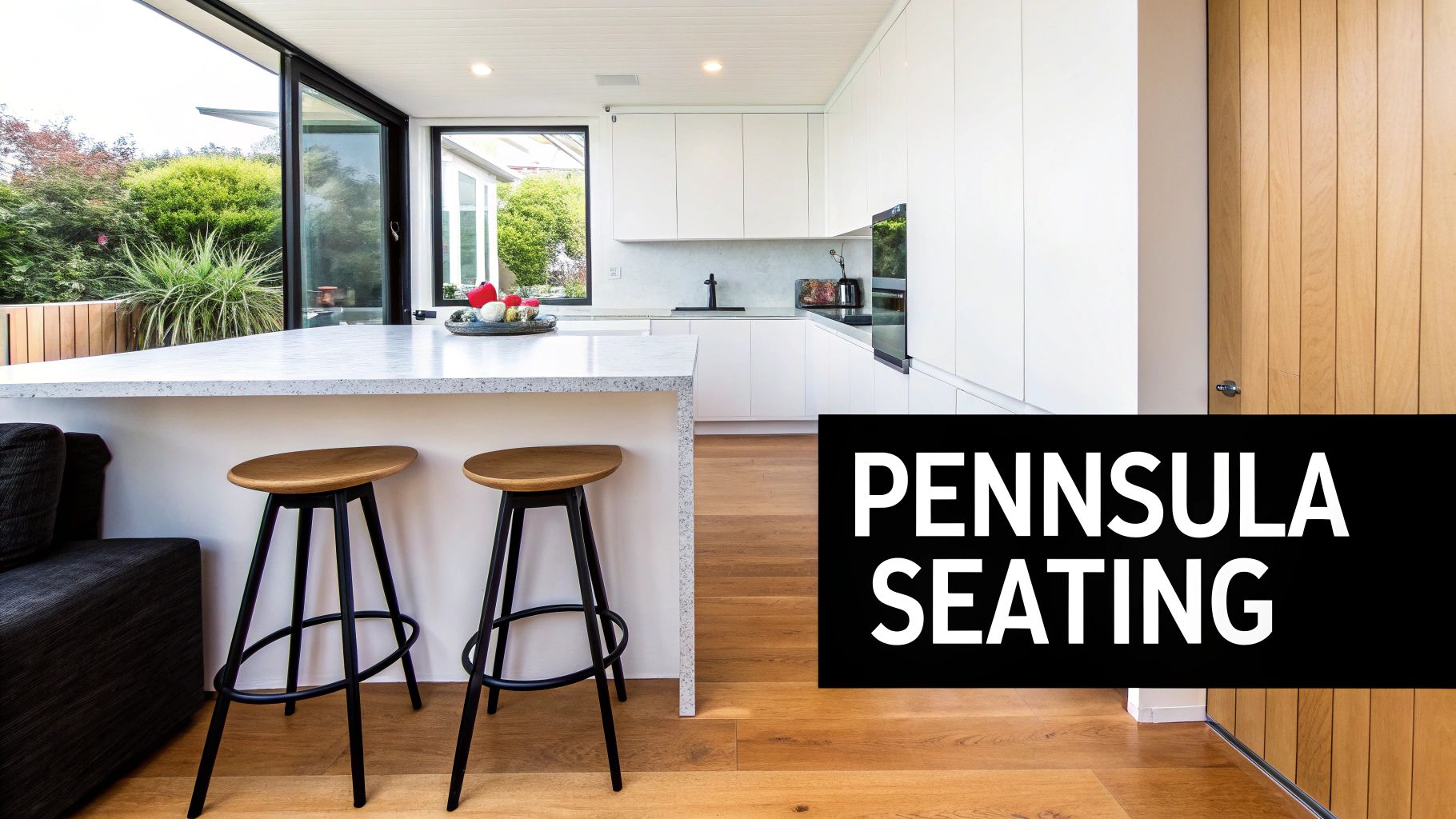
4. Galley Kitchen with Peninsula Configuration
For homeowners who desire more counter space and an open feel without removing walls, adding a peninsula is a brilliant solution. This popular approach extends one of the parallel counters perpendicularly into the adjoining space, creating a highly functional U-shape or G-shape layout. The result is one of the most practical galley kitchen remodels before and after, bridging the gap between a closed-off galley and a full open-concept design.
This remodel maintains the core efficiency of the galley kitchen workflow while introducing a versatile new zone for meal prep, casual dining, or homework. A peninsula acts as a natural, yet gentle, divider between the kitchen and living or dining areas, promoting social interaction without the complexity and cost of major structural changes. It’s an ideal compromise that enhances both function and flow.
Strategic Breakdown & Key Considerations
- Traffic Flow and Clearance: Proper spacing is critical. Plan for a minimum of 36 to 42 inches of clearance around the peninsula to ensure comfortable movement and prevent bottlenecks, especially in high-traffic areas.
- Work Triangle Integration: The peninsula should enhance, not hinder, the kitchen’s work triangle. Consider its placement relative to the sink, stove, and refrigerator to maintain an efficient path for cooking and cleaning.
- Utility Planning: If the peninsula will house a sink, dishwasher, or cooktop, plan for plumbing and electrical lines to be extended. This requires professional installation and should be factored into the budget and timeline early on.
- Visual Cohesion: For a seamless look, use cabinetry and countertop materials that match the rest of the kitchen. This creates a unified and intentionally designed appearance rather than feeling like an afterthought.
Actionable Takeaways
To maximize the peninsula's utility, incorporate an overhang of at least 12 inches to create comfortable bar-style seating for casual meals. This simple addition transforms the peninsula from a purely functional workspace into a social hub. Also, consider integrating features like a built-in wine fridge, microwave drawer, or open shelving on the end cap to add both style and storage.
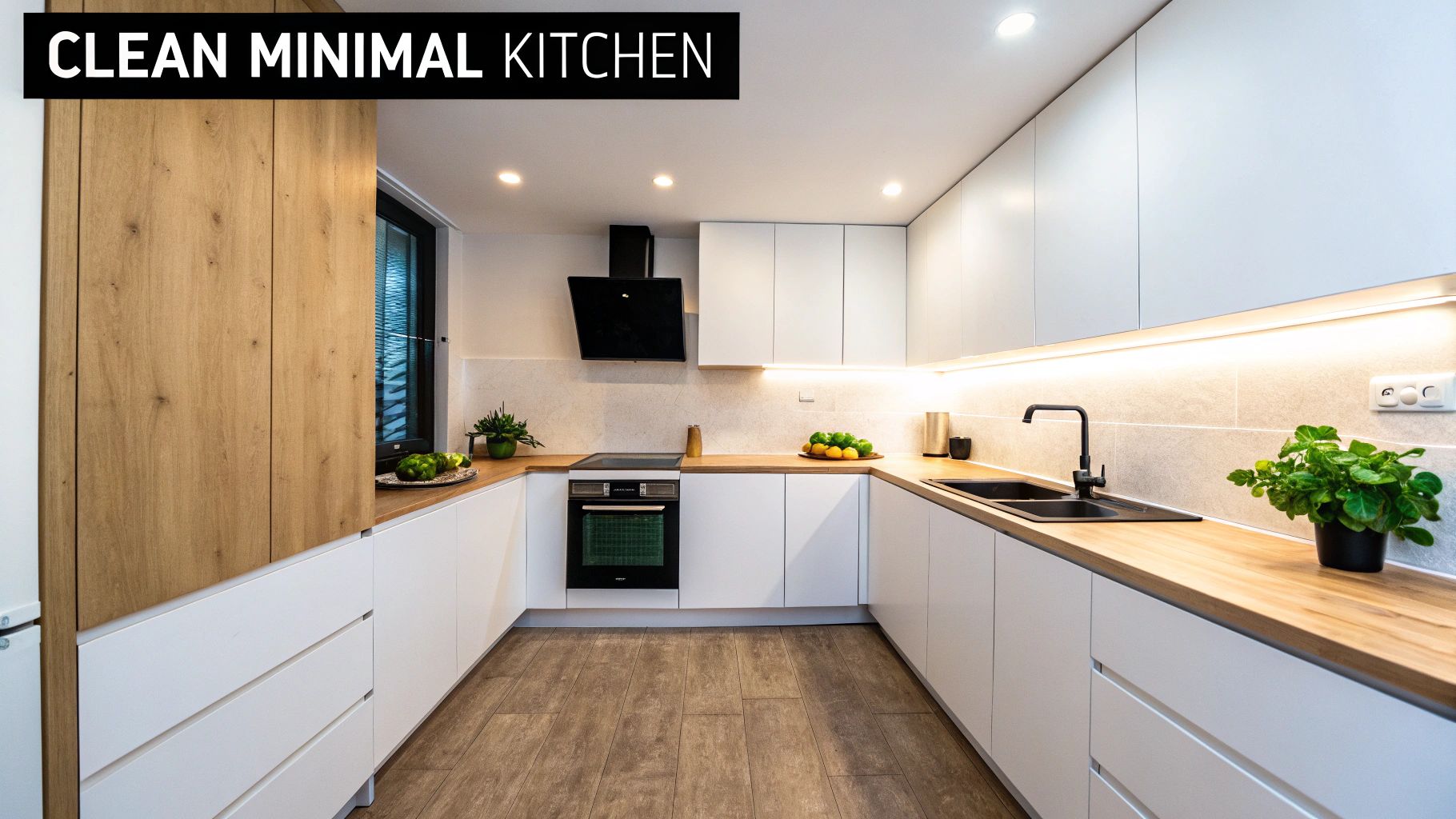
5. Galley to Contemporary Minimalist Redesign
This sophisticated remodel elevates a standard galley kitchen into a contemporary minimalist haven. The focus of these galley kitchen remodels before and after is on creating a clean, uncluttered aesthetic through streamlined design, integrated technology, and a restrained color palette. The goal is to maximize the galley's inherent efficiency while transforming it into a serene, high-functioning work of art.
This approach strips away visual noise by using flat-panel, handleless cabinetry, hidden appliances, and a monochromatic or muted color scheme. The result is a kitchen that feels spacious, calm, and intentional. It’s perfect for homeowners who appreciate modern architecture and design principles, and want a kitchen that is as beautiful in its simplicity as it is practical.
Strategic Breakdown & Key Considerations
- Integrated Appliances: A core element of minimalism is seamlessness. Choose panel-ready appliances that can be concealed behind custom cabinet fronts. This creates an uninterrupted visual line and hides bulky machines.
- Cabinetry and Hardware: Opt for high-quality, flat-panel cabinets. Handleless designs, achieved through push-to-open mechanisms or integrated channel pulls, are crucial for maintaining a sleek profile.
- Material and Color Palette: A limited palette is key. Stick to neutral tones like white, gray, black, or soft greige. Introduce warmth and texture with a single material, such as a natural wood accent, a stone backsplash, or concrete countertops.
- Smart Storage Solutions: With visual clutter eliminated, storage must be highly organized and internal. Invest in custom drawer dividers, pull-out pantries, and appliance garages to keep countertops completely clear.
Actionable Takeaways
To prevent a minimalist design from feeling cold or sterile, focus on layered lighting. Incorporate warm-toned LED strips under cabinets and in recessed channels to add ambiance and depth. Additionally, introducing a single, carefully chosen textural element, like a fluted wood panel or a honed marble backsplash, can add significant visual interest without compromising the minimalist aesthetic.
6. Galley Kitchen Professional Upgrade with Smart Technology
One of the most forward-thinking galley kitchen remodels before and after focuses on integrating smart technology and high-end appliances. This professional upgrade retains the efficient two-wall layout but elevates its functionality with connected devices, automated lighting, and touchless fixtures. The objective is to create a seamless, convenient, and future-proof cooking environment.
This type of remodel transforms the user experience from manual to automated. By incorporating smart refrigerators that track inventory, ovens controllable via smartphone, and voice-activated faucets, the design enhances efficiency beyond just physical layout. It's an ideal approach for tech-savvy homeowners who value convenience, precision, and modern luxury in their daily routines.
Strategic Breakdown & Key Considerations
- Ecosystem Compatibility: A cohesive smart kitchen relies on devices that communicate. Choose a central ecosystem like Amazon Alexa, Google Assistant, or Apple HomeKit and select appliances and fixtures that are compatible with your chosen platform.
- Electrical and Network Infrastructure: Smart technology requires robust support. Ensure your kitchen has sufficient electrical circuits to handle advanced appliances and strong, reliable WiFi coverage to prevent connectivity issues. This may require upgrading your electrical panel or installing a mesh WiFi system.
- Layout and Appliance Integration: While the technology is the star, it must be integrated into a functional layout. Plan for precise appliance placement to ensure proper ventilation and accessibility. Panel-ready smart appliances can create a sleek, built-in look that blends seamlessly with custom cabinetry.
- Future-Proofing: Technology evolves rapidly. When planning, consider modular components or systems that can be easily upgraded. Choosing brands known for long-term software support and reliability is crucial for the longevity of your investment.
Actionable Takeaways
For homeowners embarking on a tech-focused remodel, start by creating a unified plan. When planning your professional upgrade, consulting a guide to the best smart home devices can help you select the perfect technology for your redesigned galley kitchen. Begin with one or two key appliances, such as a smart oven or refrigerator, and build your connected kitchen gradually to manage costs and complexity.
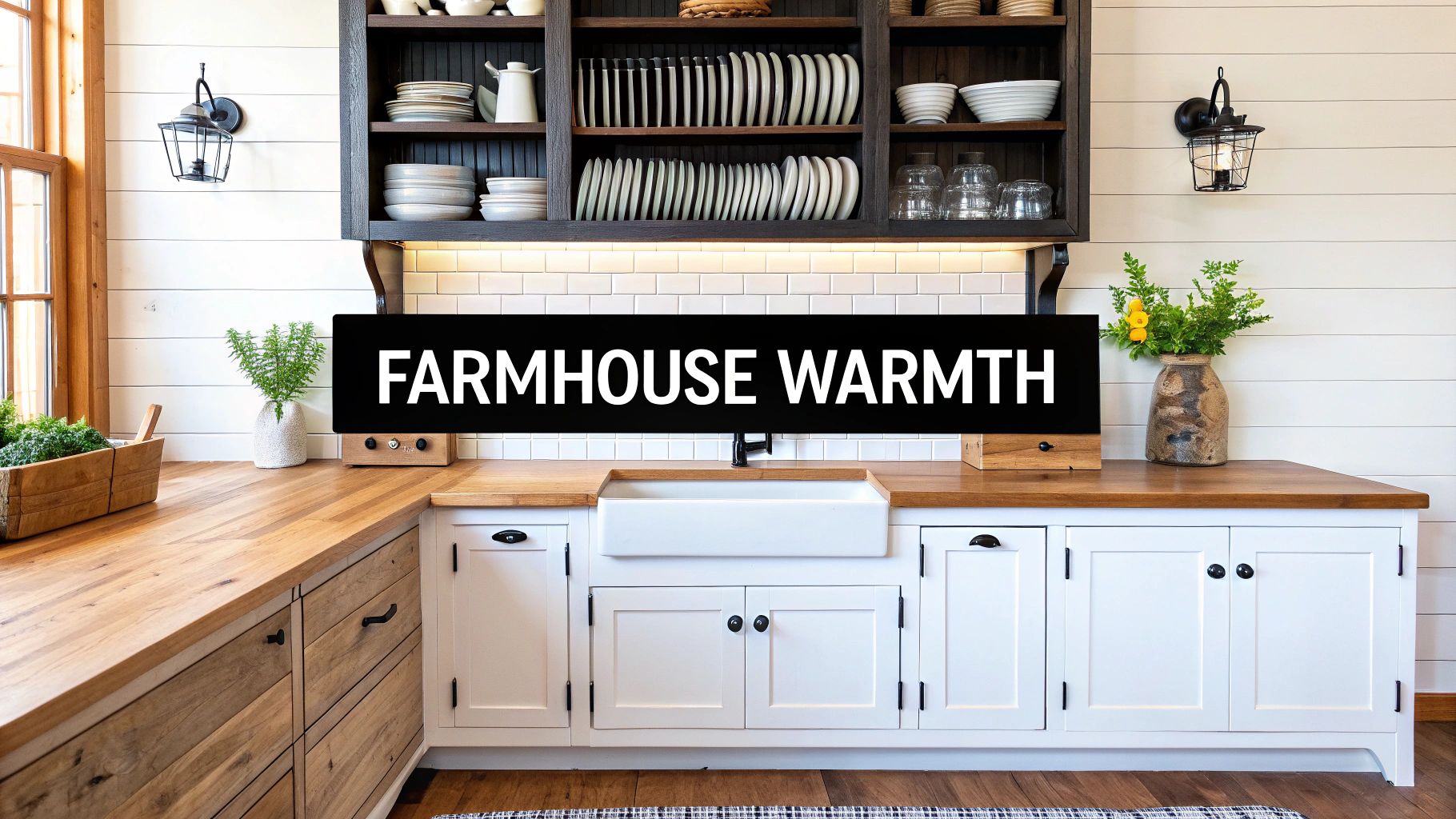
7. Vintage Galley to Farmhouse Aesthetic Transformation
Many of the most charming galley kitchen remodels before and after involve embracing a warm, inviting aesthetic. This popular project transforms an outdated or plain galley kitchen into a character-filled space using modern farmhouse design elements. The core idea is to blend rustic charm with contemporary functionality, creating a kitchen that feels both nostalgic and new.
This transformation infuses the galley layout with personality through features like shiplap accents, a statement farmhouse sink, vintage-style hardware, and open shelving. It's an ideal approach for homeowners who want to move away from a sterile or dated look and create a cozy, welcoming hub for the home, celebrating a timeless, comfortable style.
Strategic Breakdown & Key Considerations
- Material Authenticity: The key to a successful farmhouse look is the authentic feel of the materials. Choose natural textures like wood and stone. Incorporating warm wood finishes through countertops, shelving, or flooring prevents the space from feeling too stark.
- Balancing Old and New: A successful farmhouse design masterfully mixes vintage-inspired elements with modern conveniences. Pair a classic apron-front sink and retro-style faucet with high-performance, stainless steel appliances for a balanced and functional kitchen.
- Strategic Open Shelving: Open shelves are a hallmark of the farmhouse style, perfect for displaying curated dishware, plants, and decor. However, they can also create clutter. Plan to use them for frequently used, attractive items while keeping everyday essentials hidden in traditional cabinets.
- Lighting as a Focal Point: The right lighting is crucial for setting the mood. Think beyond basic recessed lights and incorporate rustic or industrial-style pendant lights over the sink or main work area. Warm Edison bulbs can add a significant touch of vintage ambiance.
Actionable Takeaways
To enhance the rustic feel, consider incorporating unique textures. Using reclaimed wood for kitchen cabinets can introduce authentic history and warmth that is difficult to replicate with new materials. Also, remember that hardware is the jewelry of the kitchen; investing in quality, vintage-inspired pulls and knobs in materials like oil-rubbed bronze or matte black can tie the entire design together.
Before & After: 7 Galley Kitchen Remodels
| Remodel | Implementation Complexity 🔄 | Resource Requirements ⚡ | Expected Outcomes 📊 | Ideal Use Cases ⭐ | Key Tip 💡 |
|---|---|---|---|---|---|
| Open Concept Galley to Island Kitchen Transformation | High — wall removal, possible structural beam, permits | High cost, pro contractors, longer timeline | More light, perceived space, social cooking, higher resale | Homes with removable walls seeking open-plan family spaces | Obtain structural assessment first; plan island for the work triangle |
| Two‑Wall to One‑Wall Galley Modernization | Low–Medium — cabinetry removal and reconfiguration | Moderate — carpentry, appliance relocation, minor finishes | Less cramped feel, improved elbow room, reduced storage | Small apartments or single‑cook kitchens needing breathing room | Prioritize essential appliances and add vertical storage |
| Galley with Functional Pantry Addition | Medium — reconfigure layout or add closet/room | Moderate–High — square footage, shelving, lighting | Solves storage limits, improves organization and prep efficiency | Kitchens lacking storage or for bulk shoppers/families | Use pull‑out shelving and task lighting; keep pantry near prep zones |
| Galley Kitchen with Peninsula Configuration | Medium — add perpendicular counter, may need plumbing/electrical | Moderate — cabinetry, countertop, possible plumbing work | Extra counter, seating and storage while preserving galley flow | Owners wanting seating without removing walls or minimal structural work | Ensure 36–42" clearance; position peninsula to preserve work triangle |
| Galley to Contemporary Minimalist Redesign | Medium — careful material and appliance integration | High — quality minimalist finishes, integrated appliances | Clean, modern look; maximizes visual space; high perceived value | Design‑focused homeowners or urban condos aiming for sleek resale | Invest in warm lighting and one textural element; plan hidden storage |
| Galley Kitchen Professional Upgrade with Smart Technology | Medium–High — electrical/network integration and compatibility | High — smart appliances, reliable Wi‑Fi, possible pro installers | Increased convenience, energy monitoring, remote control, accessibility | Tech‑savvy owners, accessibility needs, energy‑efficient projects | Start with a few devices, choose a compatible ecosystem, upgrade Wi‑Fi |
| Vintage Galley to Farmhouse Aesthetic Transformation | Low–Medium — cosmetic updates, fixtures, open shelving | Moderate — vintage hardware, sink, finishes; reusable materials | Warm, inviting aesthetic; broad buyer appeal; sustainable reuse | Owners wanting cozy, heritage look or period homes | Mix vintage finds with modern appliances and maintain hidden storage |
Your Next Steps to the Perfect Galley Kitchen
We've explored a stunning array of galley kitchen remodels before and after, each one a testament to the power of thoughtful design and strategic planning. These transformations reveal that the galley layout, often perceived as restrictive, is actually a canvas for incredible efficiency and style. The journey from a dated, cramped space to an open, functional, and beautiful kitchen is not just possible; it's a repeatable process built on a foundation of clear, actionable principles.
Key Insights from These Transformations
As you reflect on the projects we've detailed, from the dramatic two-wall to one-wall modernization to the clever addition of a functional pantry, several core themes emerge. The most successful remodels are those that strategically address the inherent challenges of the galley layout while amplifying its strengths.
- Embrace Verticality: Many of our examples demonstrated the power of floor-to-ceiling cabinetry. This approach draws the eye upward, making the space feel taller and less narrow, while simultaneously maximizing every square inch of storage potential.
- Prioritize Smart Lighting: A well-executed lighting plan is non-negotiable. As seen in the contemporary minimalist redesign, layering ambient, task, and accent lighting can completely transform the perception of space, eliminating shadows and creating a bright, welcoming atmosphere.
- Choose Reflective Materials: The strategic use of materials was a common thread. Glossy backsplashes, light-colored countertops, and cabinetry with a subtle sheen, like those in the professional upgrade, bounce light around the room, making it feel larger and more open.
- Invest in Custom Solutions: Off-the-shelf solutions rarely fit a galley kitchen's unique dimensions perfectly. Custom cabinetry, as showcased in nearly every successful project, is the cornerstone of a functional design. It eliminates wasted space, provides tailored storage, and ensures a seamless, high-end finish.
Your Action Plan for a Successful Remodel
Feeling inspired? The next step is to translate that inspiration into a concrete plan. Don't let the prospect of a renovation feel overwhelming. By breaking it down into manageable steps, you can confidently move toward creating your dream kitchen.
- Define Your "Why": Start by identifying your primary pain points. Is it a lack of counter space? Outdated appliances? Poor workflow? A clear understanding of what isn't working will guide every subsequent decision.
- Gather Inspiration and Set Goals: Revisit the galley kitchen remodels before and after in this article. Save the images and ideas that resonate with you. Create a vision board that captures the aesthetic and functional goals for your new space.
- Establish a Realistic Budget: Determine what you can comfortably invest. Research costs for labor, materials, and appliances in your area. Remember to include a contingency fund of 10-15% for unexpected expenses.
- Consult with Professionals: Engage with designers and cabinet makers early in the process. Their expertise can help you avoid costly mistakes and unlock the full potential of your space. A professional can provide invaluable guidance on layout optimization, material selection, and project management.
By following these steps, you can channel the insights from these stunning remodels into a successful renovation of your own. The galley kitchen is no longer a compromise; it's an opportunity to create a highly efficient, personalized, and beautiful heart of your home.
Ready to transform your kitchen with cabinetry that's as functional as it is beautiful? The foundation of the incredible galley kitchen remodels before and after you've seen is high-quality, bespoke cabinetry designed for the space. At Sinclair Cabinetry inc, we specialize in crafting custom real wood cabinets that maximize storage and elevate your design. Visit Sinclair Cabinetry inc to schedule a design consultation and start your own transformation story today.