

The kitchen island has evolved far beyond a simple prep space; it is now the undisputed heart of the modern home. It serves as a command center for morning coffee, an impromptu homework station, a buffet for entertaining, and the central hub for daily life. But are you truly maximizing its potential? Standard, off-the-shelf solutions often fall short, failing to capture your unique style or meet your family's specific functional needs. This guide moves beyond the generic to explore nine transformative kitchen island design ideas that blend stunning aesthetics with unparalleled practicality.
We will delve into the specifics of each concept, from the sleek drama of a Waterfall Edge Island to the adaptable convenience of a Rolling Island and the social appeal of a Breakfast Bar. This listicle provides practical insights and actionable tips to help you envision an island that's not just a feature, but a genuine statement piece. With over 35 years of expertise in crafting bespoke cabinetry, Sinclair Cabinetry understands that a truly exceptional kitchen is built around custom solutions tailored to your lifestyle. We will showcase how thoughtful design can turn this central fixture into the most hardworking and beautiful element in your home.
Whether you're planning a complete remodel or seeking to upgrade your existing layout, these concepts will provide the inspiration you need. We'll examine how to integrate appliances seamlessly, choose the right materials like butcher block for specific tasks, and design multi-level surfaces for ultimate versatility. Prepare to reimagine what's possible and discover the perfect kitchen island design to anchor your space.
1. The Waterfall Edge Island: A Cascade of Modern Luxury
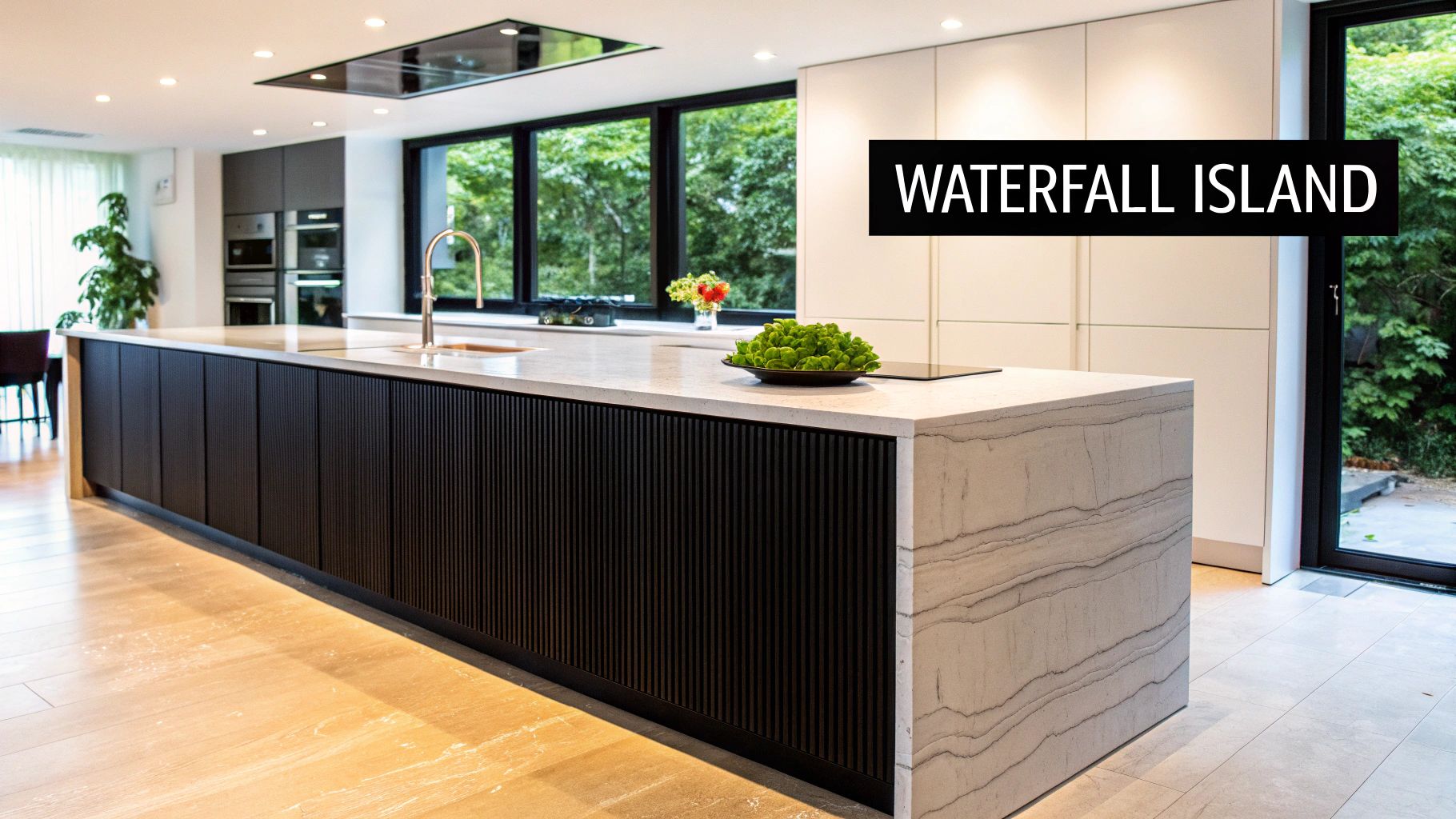
A waterfall edge island is a dramatic and sophisticated design where the countertop material extends seamlessly down one or both sides of the island, creating a continuous flow from the horizontal surface to the floor. This technique transforms a functional kitchen element into a sculptural centerpiece, perfect for modern, minimalist, and contemporary aesthetics. It’s a bold statement that showcases the beauty of the countertop material, whether it's veined marble, sleek quartz, or industrial concrete.
This design is one of the most impactful kitchen island design ideas for homeowners seeking a high-end, architectural look. The clean lines and monolithic appearance create a sense of refined luxury that elevates the entire space.
Why Choose a Waterfall Edge?
The primary benefit is its stunning visual impact. This design creates a focal point that feels both integrated and artistic. It also offers practical advantages, such as protecting the island's side cabinetry from scuffs, kicks, and wear, making it a durable choice for high-traffic areas. This approach works exceptionally well in open-concept living spaces where the kitchen island is visible from multiple angles and needs to look polished from all sides.
Implementation and Material Choices
Successfully executing a waterfall island requires precision and careful planning. The key is creating perfectly mitered edges where the horizontal and vertical slabs meet, ensuring an uninterrupted pattern.
- Material Selection: Heavily veined stones like Calacatta marble or Caesarstone quartz are popular choices, as the "waterfall" effect accentuates their dramatic patterns. For an industrial loft aesthetic, a poured concrete waterfall island offers a raw, textured finish.
- Structural Support: The vertical panels are heavy and require a robust support structure. Working with an expert cabinet maker, like Sinclair Cabinetry, is crucial to ensure the island’s base can safely handle the load without compromising the seamless look.
- Book-matching Slabs: For natural stones with distinct veining, request book-matched slabs. This is a technique where two adjoining surfaces mirror each other, creating a continuous, symmetrical pattern that flows flawlessly down the side.
- Integrated Features: To maintain the clean, monolithic appearance, plan for electrical outlets and plumbing penetrations thoughtfully. Consider discreetly placing them on the interior-facing side of the island or using pop-up outlets on the countertop.
2. The Multi-Level Island: Dynamic Functionality and Visual Depth
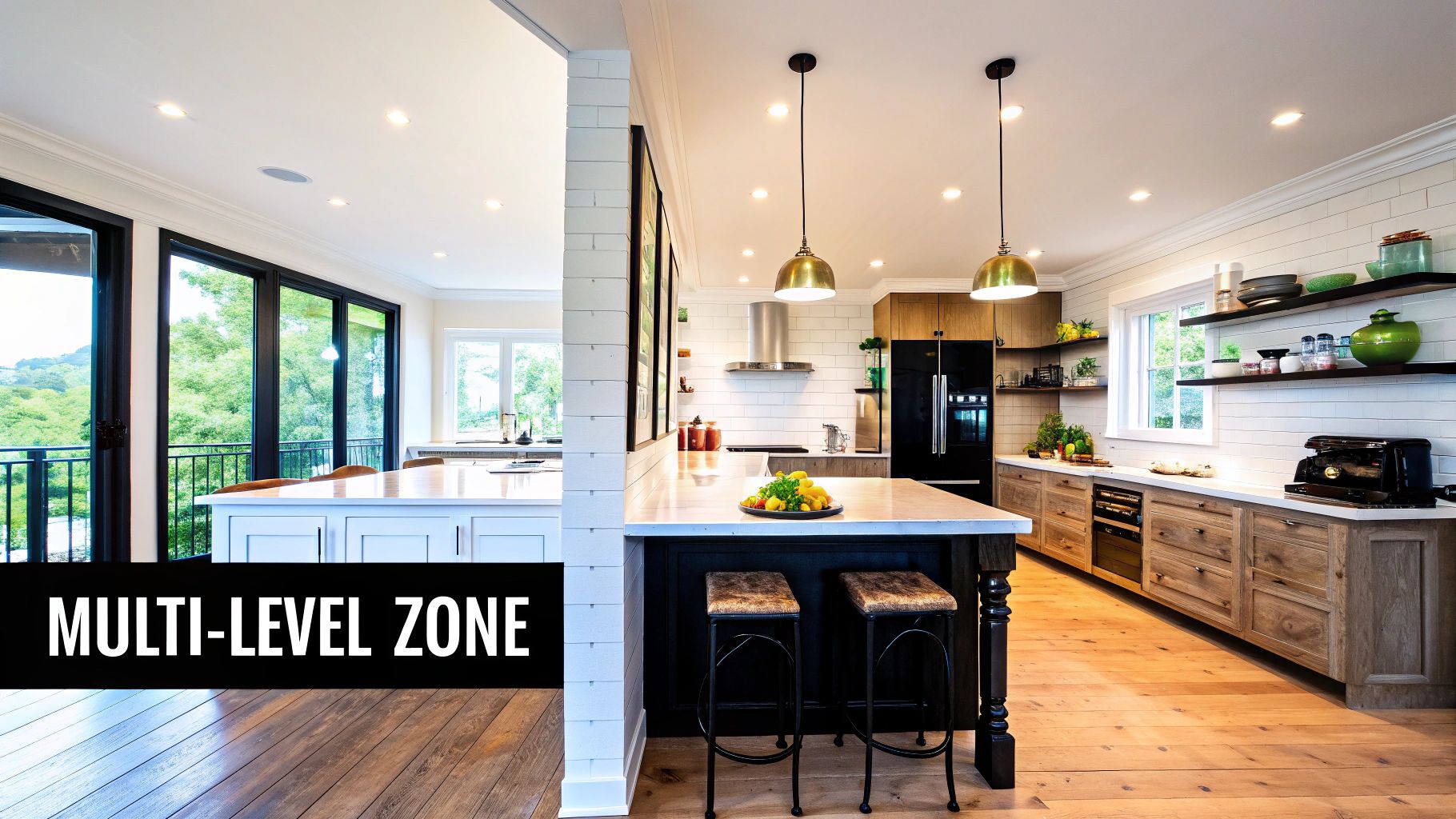
A multi-level island, also known as a two-tier island, features surfaces at varying heights to create distinct, functional zones. This design typically combines a standard counter-height (36 inches) section for food preparation with a raised bar-height (42 inches) area for casual dining or socializing. The result is a dynamic, visually engaging centerpiece that enhances workflow and separates activities within a single footprint.
This is one of the most practical kitchen island design ideas for open-concept homes where the kitchen bleeds into living or dining areas. It effectively creates a subtle boundary, allowing family members to gather without interfering with the cooking process.
Why Choose a Multi-Level Island?
The primary advantage is its superior organization and zoning. The lower level serves as a dedicated prep space, while the raised tier can hide sinks, stovetops, or cooking messes from the view of guests seated at the bar. This design is also great for families, providing a safe, elevated spot for kids to do homework or have a snack away from the main work zone. The varying heights add architectural interest and break up the visual monotony of a large, flat surface.
Implementation and Material Choices
A successful multi-level design hinges on thoughtful proportions and material coordination. The transition between the two levels must feel intentional and seamless, not like an afterthought.
- Height and Depth: Ensure there is a comfortable 6-inch difference between the levels. The bar-height seating area should have a countertop overhang of at least 12 to 15 inches to provide adequate legroom for guests. The lower prep area should align perfectly with your perimeter countertops for a cohesive look.
- Material Harmony: You can use the same material for both tiers for a unified appearance or create a stylish contrast. For example, pair a durable butcher block on the lower prep level with a sleek quartz or granite on the upper dining level to define the zones visually.
- Integrated Utilities: Plan for electrical outlets on both levels. The vertical riser between the two tiers is an ideal, discreet location to install outlets for charging devices or using small appliances, keeping the countertop clear.
- Customization: The split-level format is highly customizable. A custom cabinetry expert like Sinclair Cabinetry can design a configuration that perfectly suits your family’s needs, whether it's incorporating a beverage fridge under the bar or adding specialized storage in the lower section.
3. The L-Shaped Island: Maximizing Space and Workflow
An L-shaped island expands upon the traditional rectangular design by adding a perpendicular section, creating a dynamic 'L' configuration. This layout dramatically increases counter space and storage capacity, making it a powerhouse of functionality. It naturally divides a large kitchen into distinct zones for cooking, prep, and socializing, significantly improving workflow and efficiency.
This design is one of the most practical kitchen island design ideas for homeowners with larger kitchens or open-plan layouts. It acts as a command center, providing ample room for multiple cooks and various activities simultaneously, from homework sessions to elaborate meal preparations.
Why Choose an L-Shaped Island?
The primary advantage is its exceptional efficiency. An L-shaped island can create a highly effective work triangle by housing a sink or cooktop on one leg and providing uninterrupted prep space on the other. It's also an excellent solution for defining the kitchen area in a great room without closing it off, serving as a natural, low-profile room divider that encourages interaction. The extended arm often becomes a perfect spot for casual dining or a breakfast bar.
Implementation and Material Choices
A successful L-shaped island requires careful spatial planning to avoid creating a cramped or awkward layout. The goal is to enhance flow, not obstruct it.
- Traffic Flow: Ensure there are clear, wide pathways around the island. A minimum clearance of 42 to 48 inches on all working sides is essential for comfortable movement and appliance access.
- Zone Planning: Designate a specific function for each leg of the 'L'. For example, one leg could be dedicated to cooking with a range and prep sink, while the other serves as a seating area and buffet for entertaining.
- Cabinetry Cohesion: Use consistent cabinetry styles and finishes to create a unified, built-in look. A custom solution from Sinclair Cabinetry can ensure the complex corners and extensive storage are both beautiful and perfectly functional.
- Corner Utilization: The inner corner can be an awkward space. Maximize it by placing a primary appliance like a prep sink there or by incorporating specialized storage solutions like a lazy Susan or corner drawers. To dive deeper into kitchen configurations, learn more about how to layout a functional kitchen.
4. The Rolling/Mobile Island: Ultimate Flexibility on Wheels
A rolling or mobile island is a freestanding unit mounted on casters or wheels, offering unparalleled flexibility in the kitchen. This design allows you to move the island where it’s needed most, whether for meal prep, serving, or creating extra counter space during a party. Once finished, it can be pushed aside to open up the room, making it an ingenious solution for smaller kitchens, apartments, or multi-purpose spaces where a fixed island would be too restrictive.
This adaptable approach is one of the most practical kitchen island design ideas for those who need their space to work for them in multiple ways. It transforms a static layout into a dynamic, reconfigurable environment.
Why Choose a Rolling/Mobile Island?
The key benefit is its versatility. A mobile island can serve as a prep station near the stove, a bar cart during gatherings, or even a baking center that can be rolled out when needed. This flexibility is perfect for homeowners who enjoy entertaining or need their kitchen to adapt to different tasks. It's also a more budget-friendly option than a permanent, built-in island, as it requires no complex installation or electrical work.
Implementation and Feature Choices
A successful mobile island combines smart functionality with sturdy construction. The right features can turn a simple cart into an indispensable kitchen tool.
- Caster Selection: Opt for heavy-duty, locking casters. This is non-negotiable for safety and stability. The locking mechanism ensures the island stays firmly in place while you're chopping or using small appliances.
- Smart Storage: Look for models with features that suit your needs. A butcher block top is perfect for food prep, while stainless steel offers an industrial, easy-to-clean surface. Consider integrated shelves for cookbooks, drawers for utensils, or a built-in wine rack.
- Height and Size: Ensure the island's height is compatible with your existing counters for a comfortable working experience. A counter-height mobile island can serve as a seamless extension of your primary workspace.
- Power Integration: For maximum utility, some advanced models come with built-in power strips. This allows you to use small appliances like mixers or blenders directly on the island without stretching cords across the kitchen.
5. The Peninsula Island: The Smart Space-Saving Solution
A peninsula island is a clever design that extends from a wall or existing line of cabinetry, accessible from three sides instead of four. This approach offers many of the benefits of a freestanding island-like extra counter space, storage, and seating-but is anchored on one end, making it an ideal choice for kitchens where a full island would obstruct traffic flow. It seamlessly bridges the gap between different kitchen zones, often creating a functional U-shaped or G-shaped layout.
This design is one of the most versatile kitchen island design ideas for smaller or awkwardly shaped spaces, such as galley or L-shaped kitchens. It delivers the functionality of a large island without demanding the same square footage, transforming a compact kitchen into a more efficient and sociable workspace.
Why Choose a Peninsula Island?
The primary advantage of a peninsula is its space-efficiency. It’s a perfect solution for condo renovations or narrow kitchens where a freestanding island is not feasible. By connecting to a wall, it can often incorporate plumbing and electrical wiring more easily and cost-effectively than a standalone island. Peninsulas also excel at defining the kitchen area in an open-concept floor plan, creating a natural and inviting boundary between the cooking space and the living or dining area.
Implementation and Design Choices
A successful peninsula design hinges on creating a seamless extension of your existing kitchen while ensuring it functions effectively. Careful planning is key to maximizing its benefits without creating a bottleneck.
- Material Cohesion: For a unified look, match the peninsula’s cabinetry and countertop to your existing kitchen finishes. Sinclair Cabinetry can create custom cabinets that perfectly replicate your current style, ensuring a flawless integration.
- Walkway Clearance: Ensure there is at least 36-42 inches of clearance around the open end of the peninsula to allow for comfortable movement and appliance access.
- Consistent Counter Height: Maintain the same counter height as the rest of the kitchen for a continuous, functional work surface. Alternatively, you can design a bi-level peninsula with a lower, table-height section for dedicated dining.
- Utility Planning: Plan for electrical outlets, lighting, and any necessary plumbing early in the design phase. A peninsula is an excellent spot for a secondary sink, dishwasher, or beverage cooler. Thinking through these additions is one of the core benefits of a well-planned kitchen remodel.
6. The Curved Island: Soft Lines and Elegant Flow
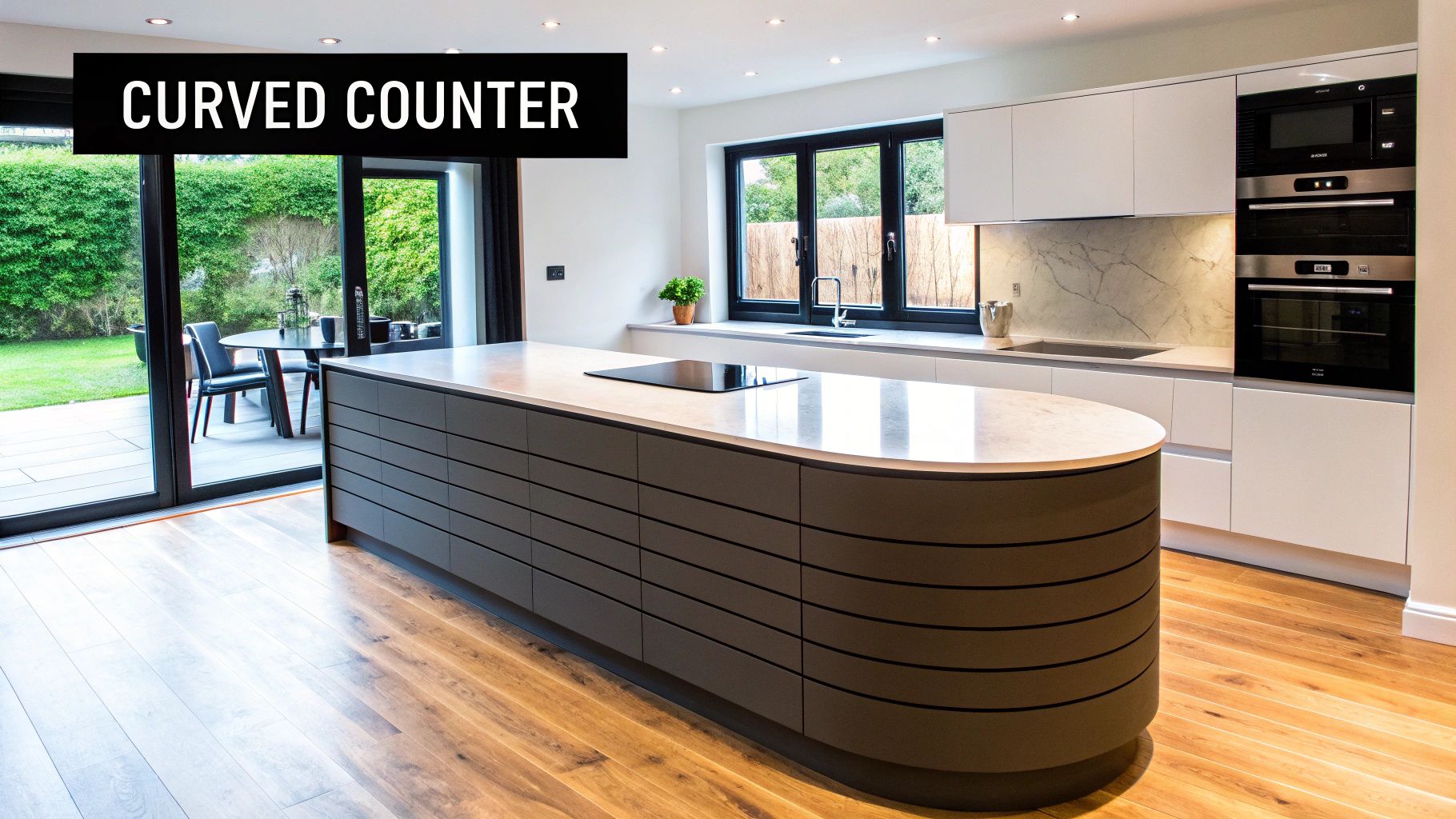
A curved island breaks away from the traditional rectangular form, featuring rounded, semi-circular, or arched edges. This design introduces a soft, organic element into the kitchen, creating a more fluid and inviting atmosphere. By eliminating sharp corners, it enhances traffic flow and safety, making it an excellent choice for families with young children or for kitchens with tight pathways. This approach transforms the island from a purely functional block into a graceful architectural statement.
This elegant design is one of the most sophisticated kitchen island design ideas for those looking to add a unique, custom-tailored touch. The gentle contours draw the eye, foster social interaction, and create a sense of movement that complements both modern and traditional aesthetics.
Why Choose a Curved Island?
The main appeal of a curved island is its unique aesthetic and ergonomic benefits. The lack of sharp corners creates a safer environment and makes navigating the kitchen smoother, especially in busy, open-plan spaces. The curved shape is also inherently more social, encouraging conversation by allowing guests seated at the island to face each other more naturally. This design adds a touch of bespoke luxury, instantly elevating the perceived value and design quality of the kitchen.
Implementation and Material Choices
Creating a curved island is a feat of expert craftsmanship that requires meticulous planning and fabrication. Precision is essential to achieve a seamless, high-end result.
- Material Selection: Materials that can be shaped or bent are ideal. Solid surface materials like Corian, thermoformed laminates, and poured concrete are excellent choices for the countertop. For the base, flexible plywood or custom-milled wood panels allow for smooth, continuous curves.
- Expert Fabrication: A curved design is not a standard project. It is crucial to partner with an experienced custom cabinet maker, like Sinclair Cabinetry, who has the expertise and equipment to fabricate complex curves for both the cabinetry and the countertop template.
- Radius and Function: Consider the radius of the curve carefully. A gentle, sweeping curve is ideal for long islands, while a tighter semi-circle can create a cozy, built-in dining nook. The curve should complement the kitchen's layout, not obstruct it.
- Seating and Appliance Integration: Plan your seating arrangement to follow the island's contour. Curved banquettes or strategically placed bar stools work best. Integrating appliances like a curved cooktop or an under-mount sink requires precise cutouts and support, which must be planned from the start.
7. The Breakfast Bar Island: The Hub of Casual Dining
The breakfast bar island is a highly functional and social design that extends the countertop on one side to create a dedicated space for casual dining. This overhang allows bar stools to be tucked underneath, transforming a prep-focused surface into an informal eating spot. It’s an ideal solution for busy families needing a quick place for meals, homeowners who love to entertain, or anyone looking to integrate their kitchen and living areas seamlessly.
This approach is one of the most popular kitchen island design ideas because it maximizes utility without requiring a separate dining table. It turns the island into a multifunctional hub for cooking, homework, socializing, and enjoying a morning coffee, making it the true heart of the home.
Why Choose a Breakfast Bar?
The main advantage of a breakfast bar island is its blend of efficiency and sociability. It allows the cook to interact with family or guests while preparing food, fostering a more connected and engaging atmosphere. This design is particularly effective in smaller homes or apartments where it can serve as the primary dining area, saving valuable floor space. It also provides a designated zone for kids to sit for snacks or homework while staying close to the action.
Implementation and Design Tips
Creating a comfortable and safe breakfast bar requires careful measurements and structural considerations. The overhang must be both ergonomic for seating and properly supported to handle daily use.
- Seating and Space: Plan for 24 inches of width per person to ensure comfortable elbow room. The depth of the countertop overhang is crucial for knee space; aim for 12-15 inches for counter-height seating and 9-12 inches for bar-height seating.
- Structural Support: Any overhang extending more than 10-12 inches (depending on the material) needs additional support. Use discreet steel brackets, decorative corbels, or a supporting leg integrated into the design to prevent the slab from cracking or tipping.
- Height Variation: Consider a bi-level island design. This creates a standard 36-inch-high work surface for food prep and a raised 42-inch-high bar section for seating. This variation helps visually separate the cooking and dining zones and can hide kitchen clutter from view.
- Cabinet Integration: A custom cabinetry firm like Sinclair Cabinetry can design the island base to perfectly accommodate your seating needs. They can create a recessed back panel that maximizes legroom while ensuring the entire structure is stable and cohesive with your kitchen's style.
8. The Appliance-Integrated Island: A Hub of High-Performance Functionality
An appliance-integrated island transforms the kitchen centerpiece into a high-performance work zone by incorporating major appliances directly into its structure. This design can house everything from a primary sink and dishwasher to a professional-grade cooktop, wine cooler, or under-counter microwave. By centralizing key tasks, it creates an efficient, ergonomic workflow perfect for serious home chefs and busy families alike.
This approach is one of the most practical kitchen island design ideas for those who want to create a truly multifunctional command center. It moves beyond simple prep space and seating to become the primary hub for cooking, cleaning, and entertaining, optimizing the classic kitchen work triangle for modern, open-concept layouts.
Why Choose an Appliance-Integrated Island?
The core benefit is ergonomic efficiency. Placing a prep sink and cooktop on the island allows you to move seamlessly from washing produce to chopping and cooking, all within a few steps. This design also frees up perimeter counter space, enabling you to dedicate wall areas to tall cabinetry like pantries or wall ovens. It's an ideal solution for luxury homes wanting a built-in beverage center for entertaining or chef's kitchens that require specialized cooking surfaces like an induction cooktop.
Implementation and Material Choices
Integrating appliances requires meticulous planning to ensure safety, functionality, and a clean aesthetic. The island’s design must accommodate plumbing, electrical, and ventilation from the very beginning.
- Proper Ventilation: If installing a cooktop, powerful ventilation is non-negotiable. Options include a sleek downdraft system that retracts into the countertop or a statement island range hood suspended from the ceiling.
- Utility Planning: Work with professionals to map out dedicated electrical circuits that meet the power requirements of each appliance. Plumbing for sinks and dishwashers must also be planned early in the construction phase.
- Custom Cabinetry: The island’s structure must be precisely engineered to house and support the specific appliances. A custom cabinet maker like Sinclair Cabinetry can design a base that securely fits a Sub-Zero wine fridge or a Miele dishwasher while providing adjacent storage for related items, like pull-out spice racks or cutlery dividers.
- Safety and Spacing: Ensure there is adequate landing space on either side of a cooktop for hot pots and pans. If a sink is included, consider a small backsplash or a raised bar-height tier to contain splashes and protect guests seated at the island.
9. The Butcher Block Island: A Touch of Rustic Warmth
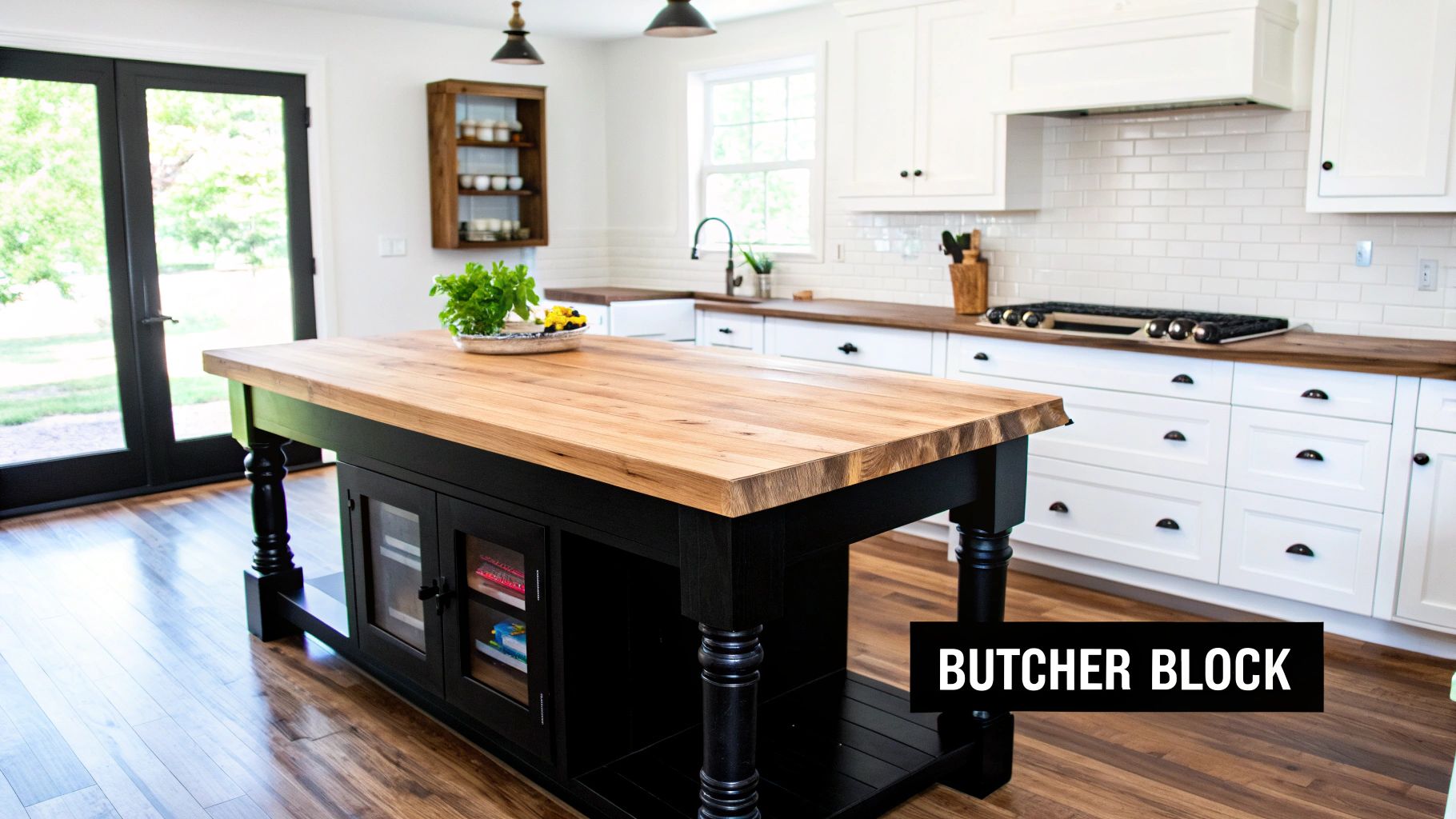
A butcher block island brings a classic, warm, and highly functional element into the heart of the kitchen. This design features a countertop made from thick, laminated strips of solid wood, creating a durable and inviting surface that is ideal for chopping, kneading, and all forms of food preparation. It introduces a natural texture and organic feel, making it a perfect fit for farmhouse, traditional, and transitional aesthetics.
This option is one of the most practical kitchen island design ideas for avid home chefs, as the wood surface is kind to knives and can be easily maintained for years. The timeless appeal of wood adds a touch of rustic charm that contrasts beautifully with painted cabinetry and modern appliances, creating a balanced and welcoming atmosphere.
Why Choose a Butcher Block?
The primary appeal is its unmatched warmth and functionality. Unlike stone or quartz, a wood surface is forgiving on both knives and dropped dishware. It can be sanded and re-oiled to remove stains and scratches, making it a renewable and long-lasting choice. Butcher block also has natural antimicrobial properties, and its inviting look makes the island a comfortable gathering spot for family and friends.
Implementation and Material Choices
A successful butcher block installation hinges on proper material selection and ongoing maintenance to preserve its beauty and integrity.
- Wood Selection: Hardwoods like maple, walnut, and oak are popular choices due to their density and durability. Maple is a classic, light-colored option, while walnut offers a rich, dramatic look.
- Grain Construction: End-grain construction, where the short ends of the wood pieces face up, is the most durable and self-healing option, ideal for heavy chopping. Edge-grain, which uses the long edges of the wood strips, is also very strong and a more common choice for countertops.
- Finishing and Sealing: It is essential to treat the wood with a food-safe finish, such as mineral oil or a specialized butcher block conditioner. Regular oiling (every few weeks initially) is crucial to prevent the wood from drying out, staining, or cracking.
- Cabinet Pairing: A butcher block top pairs exceptionally well with custom cabinetry that complements its natural tones. To get a better sense of how different finishes and styles can frame this classic surface, you can explore various kitchen island cabinet ideas for inspiration.
Kitchen Island Design Comparison Matrix
| Island Type | Implementation Complexity (🔄) | Resource Requirements (⚡) | Expected Outcomes (⭐📊) | Ideal Use Cases (💡) | Key Advantages (⭐) |
|---|---|---|---|---|---|
| Waterfall Edge Island | High – skilled installation and fabrication | High – requires extra material and support | Luxurious, sleek look; seamless vertical surface | Contemporary kitchens emphasizing style | Adds high-end appeal; easy to clean; durable |
| Multi-Level Island | High – complex design and planning | High – multiple levels materials and supports | Functional zones; visual depth; accommodates seating | Open-concept homes; multitasking areas | Maximizes workspace; separates cooking/social zones |
| L-Shaped Island | Moderate to High – requires significant space | High – extended countertop and cabinetry | Increased counter/storage; efficient workflow | Large kitchens; multiple users | Maximizes space; supports multiple activities |
| Rolling/Mobile Island | Low to Moderate – prefabricated units | Low – freestanding with wheels | Flexible layout; easy relocation | Small kitchens; renters; adaptable spaces | Portability; affordable; space-efficient |
| Peninsula Island | Moderate – connected to cabinetry/wall | Moderate – less material than full islands | Adds workspace without blocking traffic flow | Small kitchens; limited space | Cost-effective; improves traffic flow |
| Curved Island | High – custom fabrication needed | High – specialized materials and labor | Softens design; improves flow; unique architectural | Luxury kitchens; safety-conscious designs | Enhances safety; architectural interest |
| Breakfast Bar Island | Moderate – requires structural support | Moderate – extended countertop materials | Combined prep and casual dining | Family kitchens; entertaining spaces | Encourages interaction; space-efficient |
| Appliance-Integrated Island | Very High – complex plumbing, electrical, ventilation | Very High – appliances plus infrastructure | Centralized cooking/cleanup; social kitchen hub | Chef kitchens; luxury homes | Maximizes island utility; improves work triangle |
| Butcher Block Island | Moderate – standard carpentry skills | Moderate – quality hardwood and finishing | Warm, natural look; excellent food prep surface | Farmhouse style; bread and meat prep | Durable; renewable; natural antimicrobial properties |
Crafting Your Perfect Island with Sinclair Cabinetry
The journey through the diverse world of kitchen island design ideas reveals a fundamental truth: the modern kitchen island is far more than just a piece of furniture. It is the dynamic, functional, and stylistic heart of your home. From the dramatic, continuous flow of a waterfall edge island to the flexible utility of a rolling workstation, and the communal warmth of a dedicated breakfast bar, each design serves a unique purpose tailored to a specific lifestyle. We've explored how a multi-level island can cleverly delineate work and social zones, and how an L-shaped configuration can maximize utility in a spacious kitchen.
The key takeaway is that the most successful kitchen island is never a one-size-fits-all solution. It’s a personalized hub that reflects your daily rhythms. Whether you are a passionate home chef who needs an appliance-integrated command center or a busy parent who requires a peninsula for homework and casual meals, the options are as varied as the families they serve. The choice between a warm, rustic butcher block and a sleek, modern curved design ultimately comes down to a careful consideration of both form and function.
From Inspiration to Installation: Your Actionable Next Steps
Mastering these concepts allows you to move beyond simply choosing a style and toward designing a space that truly works for you. The difference between a good kitchen and a great one often lies in these thoughtfully planned details. A well-designed island can streamline your workflow, create much-needed storage, provide additional seating, and become a natural gathering spot for family and friends. Understanding the potential of various kitchen island design ideas empowers you to make informed decisions that will enhance your home's value and your daily enjoyment.
To translate your vision into a tangible reality, follow these practical steps:
- Assess Your Space and Needs: Before falling in love with a specific design, measure your kitchen's available footprint. Consider your primary needs: Is it storage, seating, prep space, or a combination of all three? How do you and your family typically use the kitchen?
- Define Your Style: Gather inspiration from the designs we've discussed. Do you lean toward the clean, contemporary lines of a waterfall island or the classic, inviting feel of a butcher block top? Your island should complement your home's overall aesthetic.
- Plan for Functionality: Think about the details. Do you need integrated power outlets for appliances? Would pull-out trash and recycling bins be beneficial? What kind of under-island storage would best suit your needs, from deep drawers for pots and pans to custom shelving for cookbooks?
- Consult a Professional: Bringing these elements together requires expertise. A professional designer and cabinet maker can help you navigate the complexities of layout, materials, and custom features, ensuring your final product is both beautiful and perfectly suited to your space.
The perfect kitchen island is an investment in your home’s character and functionality. It’s where meals are prepared, conversations are shared, and memories are made. By carefully planning and choosing a design that aligns with your lifestyle, you are not just remodeling a kitchen; you are creating a centerpiece that will support and enrich your life for years to come.
Ready to bring your unique kitchen island design ideas to life with unparalleled craftsmanship? Sinclair Cabinetry inc specializes in creating bespoke, high-quality real wood cabinetry tailored to your exact specifications. Visit Sinclair Cabinetry inc to schedule a consultation and let us help you build the beautiful, functional heart of your home.