
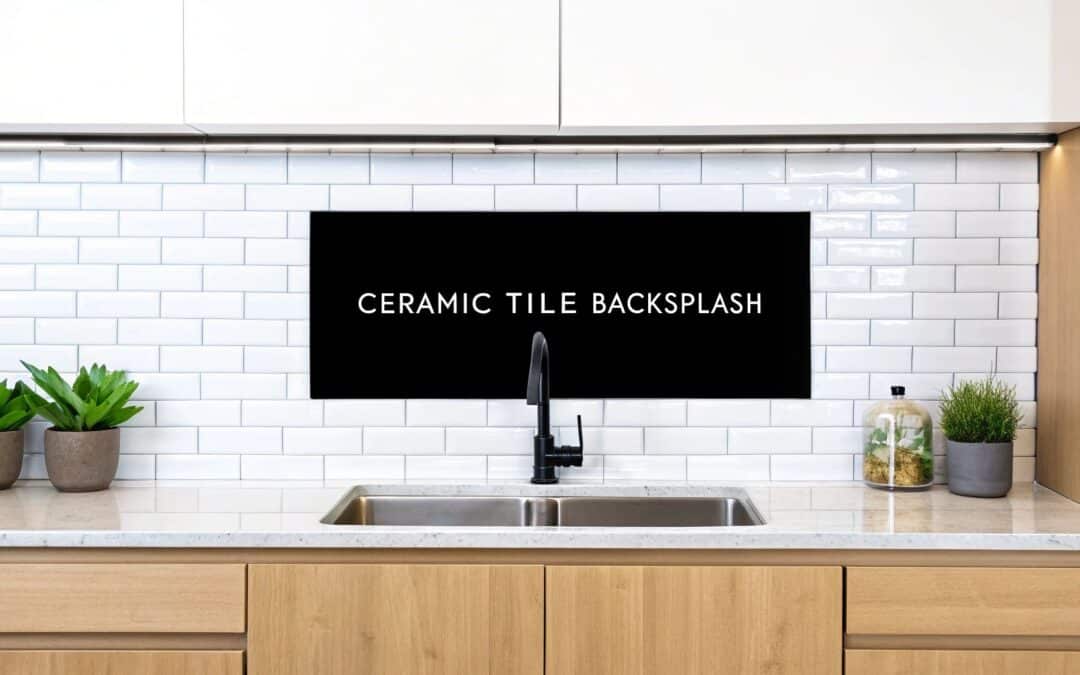
Ceramic tile backsplashes are a classic for a reason. They're one of those rare materials that hit the sweet spot between being incredibly practical and beautifully versatile—all without breaking the bank. It acts as both a protective shield against the daily chaos of cooking and a stunning design feature that ties the whole kitchen together. No wonder it remains a top pick for homeowners and designers year after year.
Why Ceramic Tile Is Still the Star of the Kitchen
When you’re planning a kitchen remodel, it's easy to get caught up in the big decisions like cabinetry and countertops. But the backsplash? That's the element that truly pulls everything into focus. It’s the visual bridge connecting your horizontal work surfaces with your vertical cabinets, and it's where you can really inject some personality.
Think of it as the artistic "tie that brings the whole outfit together." Ceramic tile excels in this role because it delivers on three key promises.
First off, it’s tough as nails. Kitchens are messy, high-traffic zones. Ceramic tile handles everything you can throw at it—from hot oil splattering behind the stove to endless water splashes by the sink—without warping, staining, or fading. Its hard, non-porous surface is naturally resistant to heat and moisture, meaning it will look just as good in ten years as it does today.
A well-installed ceramic tile backsplash is more than just a decorative feature; it's a long-term investment in your kitchen's resilience and functionality, protecting your walls while requiring minimal upkeep.
A Canvas for Creativity
Beyond its sheer toughness, ceramic tile is a dream for creative expression. It's a true design chameleon, able to adapt to any style you can imagine.
Want a clean, timeless look? You can't go wrong with classic white subway tiles. Feeling a bit more adventurous? Go for bold, vibrant patterns or rich, moody colors. There’s a ceramic tile out there for every aesthetic.
This flexibility is a huge part of its lasting appeal and a major factor in its market growth. The global demand for kitchen backsplash tiles is on the rise, projected to jump from USD 0.73 billion in 2024 to a staggering USD 1.19 billion by 2033. This boom is powered by ceramic's best qualities: scratch resistance, easy cleaning, and endless design options. You can learn more about these market trends in detail to see just how popular this choice has become.
Surprising Affordability and Value
Finally, let's talk about value. Ceramic tile gives you a high-end look without the high-end price tag. When you compare it to other popular materials like natural stone or solid glass slabs, ceramic is often much more budget-friendly.
This affordability means you can create a stunning kitchen without having to sacrifice your budget for other important upgrades. By understanding the latest in kitchen design, you can see how ceramic tile beautifully complements emerging styles and materials. It's proof that great style and lasting performance don't have to cost a fortune.
How to Choose Your Perfect Tile Type and Finish
Walking into a tile store can be both thrilling and a little intimidating. The sheer number of options is incredible, but how do you pick the right one? The key is to think about how you actually live and cook in your kitchen. Your perfect backsplash comes down to two big decisions: the type of tile and its surface finish.
Each choice strikes a different balance between style, durability, and the amount of cleaning you're willing to do. Getting a handle on these differences is the first step to creating a kitchen that not only looks fantastic but also works for your lifestyle.
Glazed vs. Unglazed: A Tale of Two Surfaces
Think of a glazed ceramic tile as wearing a permanent, protective raincoat. During the manufacturing process, a layer of liquid glass is baked onto the tile's surface. This makes it impermeable to water and incredibly resistant to stains—a lifesaver in a kitchen where spaghetti sauce and coffee splashes are part of daily life. A quick wipe is usually all it takes to clean up.
Unglazed tiles, on the other hand, offer a more natural, earthy feel. Their surface is porous with a slightly rough, matte texture that can bring a wonderful rustic or handmade charm to a room. This raw beauty comes with a trade-off, though. Unglazed tiles need to be sealed to fend off stains and moisture, so they require a bit more upkeep to keep them looking their best.
This is a big reason why ceramic is such a go-to for backsplashes. It’s tough, it’s water-resistant, and it comes in every style imaginable.
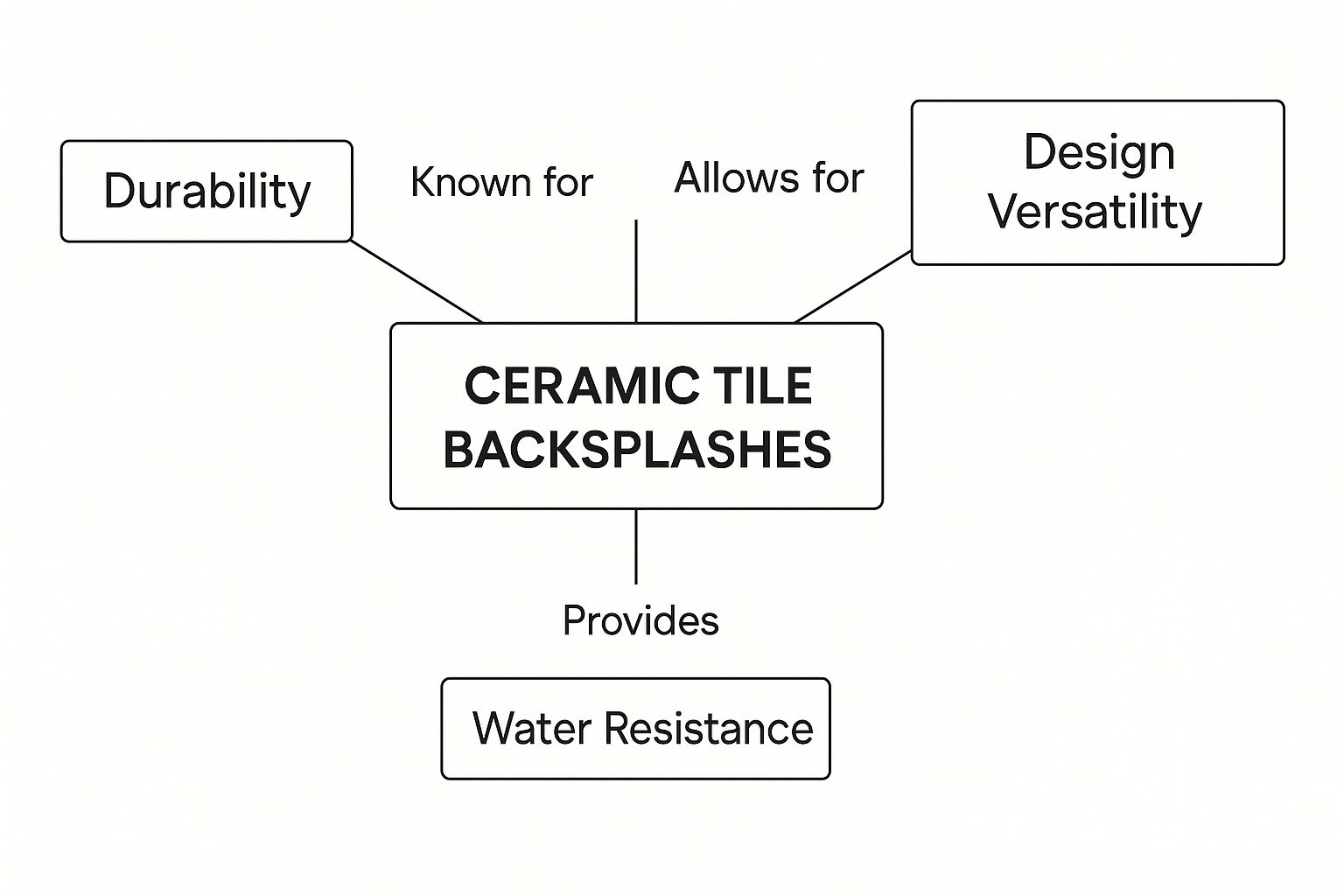
As you can see, the blend of practical strengths and design flexibility makes ceramic a powerhouse choice for any kitchen.
What About Porcelain Tile?
Porcelain is often seen as ceramic's tougher older sibling. It’s made from a more refined, denser clay and is fired at much higher temperatures. The result? A tile that's exceptionally strong, less porous, and more resistant to moisture and scratches than standard ceramic.
For a kitchen that gets a serious workout every day, porcelain is a fantastic investment. Its color runs all the way through the tile (a "through-body" color), which means if you ever do get a chip, it’s much harder to spot because the color underneath is the same.
While it can cost a little more and its density makes it tougher to cut during installation, that superior durability offers real peace of mind and long-term value.
Finding Your Perfect Finish
The finish on your tile does more than just protect it; it plays a huge role in your kitchen's overall vibe by controlling how light moves around the space. It’s not just about color—it’s about sheen and texture.
The tile's finish can completely change the mood of your kitchen. Here's a quick rundown of the most common options to help you decide.
Comparing Ceramic Tile Finishes
| Finish Type | Appearance | Best For | Cleaning and Maintenance |
|---|---|---|---|
| Gloss | Shiny, reflective, high-sheen | Making small or dark kitchens feel brighter; easy-to-clean surfaces | Very easy to wipe down but shows water spots and smudges |
| Matte | Non-reflective, flat, soft look | Hiding fingerprints and smudges; creating a modern or understated feel | Great at concealing daily grime; textured surfaces may hold dirt |
| Satin / Semi-Gloss | Gentle, low-level sheen; between matte & gloss | A balanced, sophisticated look that's both practical and stylish | Easy to clean while being more forgiving than a high-gloss finish |
Ultimately, the finish you choose sets the tone. A gloss finish bounces light everywhere, making a space feel bigger and brighter, while a matte finish absorbs light for a softer, more contemporary look. Satin is that perfect "just right" option in between.
And it’s clear people are thinking about this a lot. The interest in kitchen backsplashes is huge, with online searches often peaking in late summer—reaching a maximum popularity index of 100 in August. This shows just how much seasonal home improvement projects drive these decisions. If you're curious, you can explore more about backsplash popularity trends and see how market interest ebbs and flows.
Bringing Your Backsplash Vision to Life
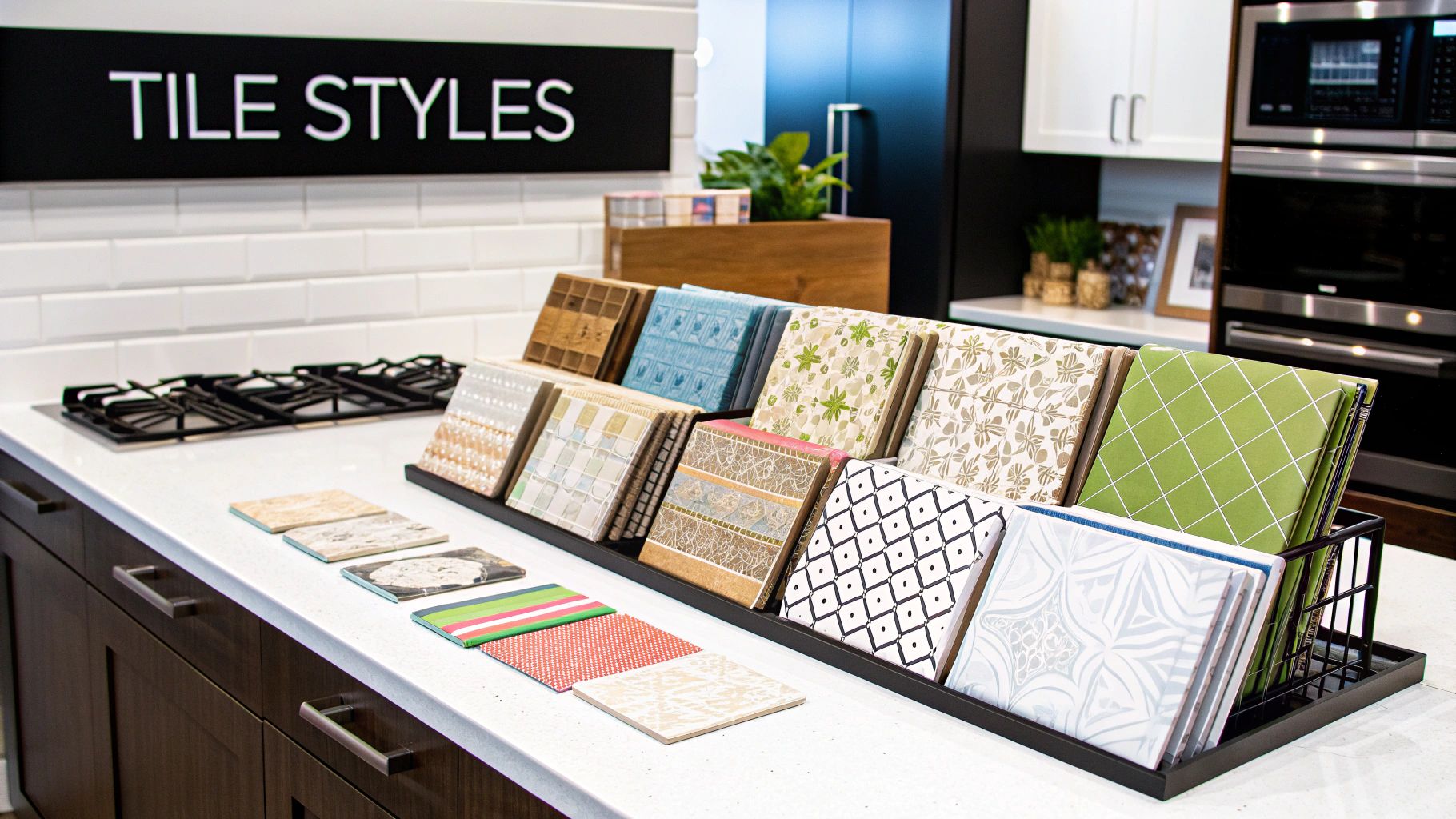
This is where the real fun begins. Picking out the right type of ceramic tile is the practical first step, but choosing the pattern, color, and grout is how you really inject your personality into the kitchen. Your backsplash is one of the first things people see, and it sets the entire mood for the room.
Think of it this way: if your cabinets are the sturdy frame of a painting, the backsplash is the art inside. It can be a quiet, subtle background that lets other elements shine, or it can be a bold statement piece that commands attention. The possibilities are endless, but they all start with understanding the basic building blocks of design.
Let's dive into how different patterns, colors, and even the often-overlooked grout lines can work together to create something truly special.
Timeless Patterns That Tell a Story
The way you arrange your tiles can completely change the feel of your kitchen. Some patterns have been around forever for a good reason—they just work, and they’re incredibly versatile.
-
Subway Tile: This is the undisputed classic. The simple rectangular shape is a perfect canvas for different layouts. A traditional running bond (staggered like bricks) gives you that clean, familiar feel. For a more modern twist, stacking them in a straight grid creates a sharp, geometric look that really emphasizes clean lines.
-
Herringbone: This V-shaped pattern adds a sense of dynamic movement and texture to a wall. Herringbone feels sophisticated and detailed, turning even a simple tile into an intricate feature. It's a fantastic way to add visual interest without overwhelming the space with a busy color or print.
-
Vertical Stack: It’s a simple trick, but a powerful one. Laying rectangular tiles vertically draws the eye upward, creating the illusion of height. This is a brilliant strategy for kitchens with lower ceilings, as it can make the whole room feel more spacious and open.
These classic patterns are so popular because they provide a reliable foundation for any kitchen style, from a rustic farmhouse to a sleek, contemporary space. They prove you don't need a wild tile to make a huge design impact.
Modern Shapes for a Contemporary Edge
While the classics are always in style, sometimes a kitchen just calls for something a bit more playful and unexpected. That's where geometric tiles come in, and they've become a favorite for homeowners looking to create a unique and memorable backsplash.
Hexagon tiles, for instance, bring a honeycomb-like pattern that feels both organic and modern. They look amazing in a single color for a textured, uniform look, but you can also mix a few shades to create a cool mosaic effect.
Penny rounds offer a charming, retro vibe with their small, circular shape. They can feel whimsical and fun, especially when you use a contrasting grout color that makes each little circle pop. These shapes are a great way to break away from traditional straight lines and add a soft yet distinct character to your kitchen.
The grout you choose is just as important as the tile itself. It’s the finishing touch that can either make your pattern stand out or blend seamlessly into the background, completely changing the final look.
The Unsung Hero: Grout Color
Grout is so often treated as an afterthought, but it's a powerful design tool in its own right. The color you choose for the lines between your tiles can completely redefine the look of your ceramic backsplash.
A contrasting grout—like a dark gray grout with white subway tiles—outlines each individual tile, making the pattern itself the star of the show. This creates a bold, graphic look that highlights the geometry of your layout. It’s perfect for making a statement with classic shapes.
On the other hand, a matching grout—like white grout with white tiles—creates a more subtle, unified surface. The individual tile shapes recede, giving you a seamless and textural backdrop. This is ideal if you want your backsplash to have a quiet, elegant presence that doesn't compete with other design elements like dramatic countertops or bold cabinet colors.
Ultimately, bringing your vision to life is about balancing these three key elements: the tile's pattern, its shape, and the grout color. By thoughtfully combining them, you can create a ceramic tile backsplash that is not only functional but also a true reflection of your personal style.
Matching Your Backsplash with Cabinets and Counters
Your backsplash doesn’t live on an island. It’s a critical part of your kitchen's design trio, working in concert with your cabinets and countertops to pull the whole room together. Think of it like a band—for the music to sound right, every instrument needs to be in harmony.
The real goal here is to create a beautiful, balanced look, not a competition for attention. If one element is the showstopper, the others should be the supporting cast. I'll walk you through how to think about balancing color, pattern, and texture so your kitchen looks like it was designed by a pro.
Creating a Cohesive Color Palette
The magic happens when the colors of your backsplash, cabinets, and counters tell a single, cohesive story. A really effective way to do this is to pick one element to be the star and let the others play a supporting role. This gives the room a clear focal point and keeps it from feeling visually cluttered.
Let’s say you’ve chosen dark, dramatic cabinets. A lighter backsplash can create a stunning contrast, preventing the kitchen from feeling too heavy or cave-like. A simple bright white or a soft gray ceramic tile will instantly lift the space and make the rich color of your cabinetry pop.
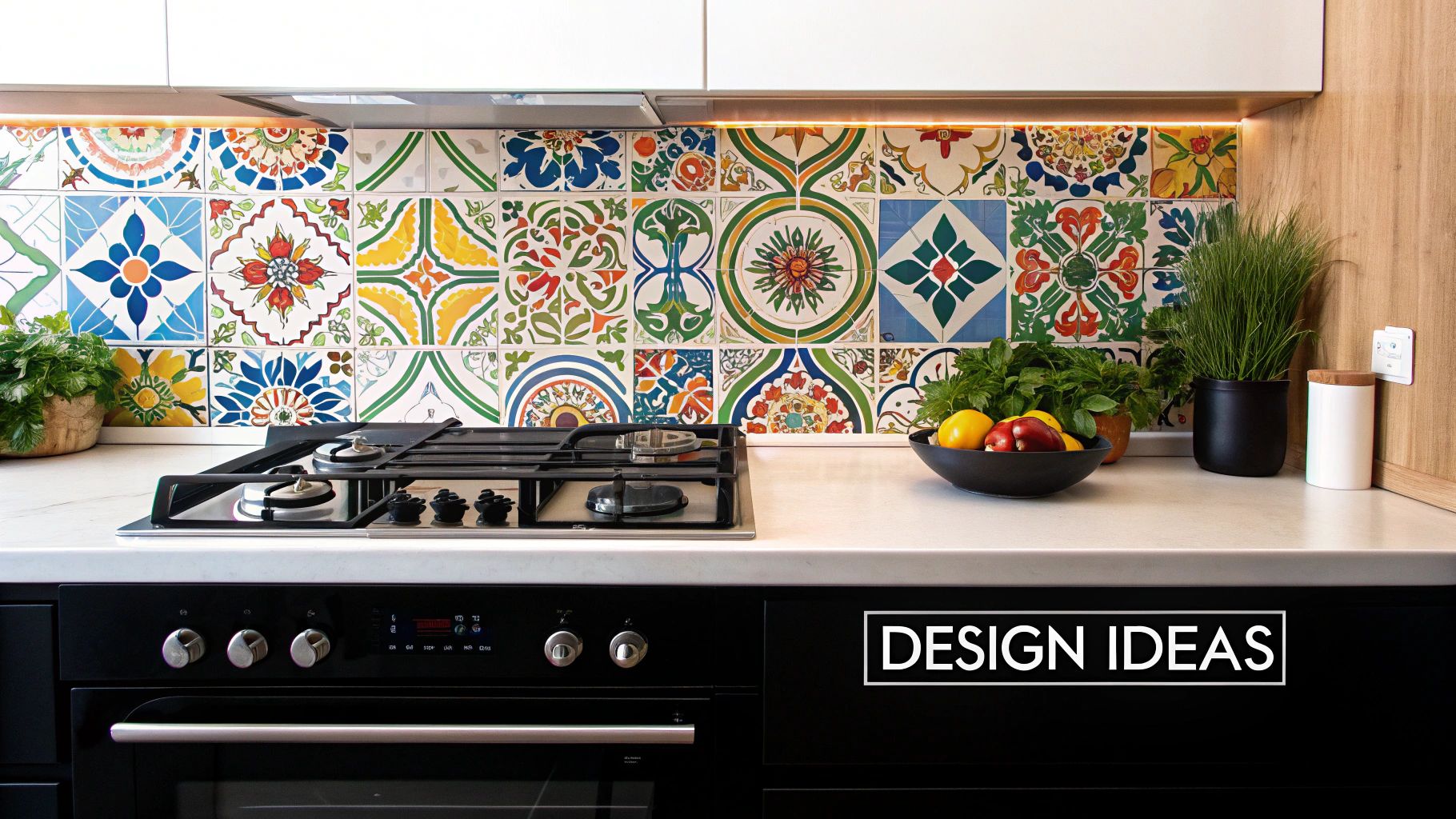
On the other hand, if you have classic white or light-colored cabinets, you've essentially got a blank canvas. This is your chance to go bold with your backsplash! A vibrant, colorful tile or one with an intricate pattern can become the centerpiece of your kitchen, injecting a ton of personality without overpowering the room.
Balancing Busy and Simple Elements
Here’s a design rule I live by: balance pattern with simplicity. If you've fallen in love with a countertop that has a lot of movement—like a dramatic granite or a heavily veined marble—it’s almost always best to go with a simpler backsplash. Think solid-color subway tile or large-format tiles that minimize grout lines. This gives the eye a place to rest.
This approach lets the gorgeous natural stone be the hero without having to fight for attention. If you try to pair a busy countertop with an equally busy backsplash, the result is often a chaotic, jarring look that just doesn't feel right.
Pro Tip: Never, ever skip the samples. A tile, cabinet door, and countertop swatch can look completely different in your home than it does in a showroom. Get them all and look at them together in your kitchen's actual lighting—morning, noon, and night—before you commit.
Tying It All Together with Countertops
The countertop is often the perfect bridge between your cabinets and backsplash. For example, a durable and stylish foundation is created when you spice up your custom cabinets with quartz countertops. Once that perfect pair is locked in, you can choose a ceramic tile that picks up on a subtle color fleck or a faint vein in the quartz.
It's a small detail, but it’s what creates that seamless, high-end feel. If your countertop is a solid, neutral color, you’ve got a green light to be a bit more adventurous with your backsplash pattern or color.
Here are a few combinations that almost always work:
- White Cabinets + Gray Quartz Countertop: This is the perfect setup for a bold navy blue backsplash or a fun, patterned black-and-white ceramic tile.
- Wood Cabinets + Black Granite Countertop: A warm, cream-colored tile in a classic shape can really brighten the space while complementing the natural wood tones.
- Gray Cabinets + White Marble Countertop: Choosing a backsplash tile that perfectly matches the soft gray veining in the marble creates an incredibly elegant and seamless look.
At the end of the day, it's all about thoughtful coordination. When you consider how the color, pattern, and texture of each surface will play off one another, you're guaranteed to find a ceramic tile backsplash that perfectly completes your kitchen's story.
What to Expect During Backsplash Installation
Whether you’re a die-hard DIYer or you're planning to bring in a pro, getting a handle on the tile installation process is incredibly helpful. It pulls back the curtain, turning what seems like a complicated job into a clear series of steps. This isn't about learning to be a master tiler in a day; it's about knowing enough to ask the right questions and spot quality work.
The real work starts long before the first tile even comes out of the box. Proper prep is everything. Your wall needs to be clean, totally dry, and as flat as you can get it. Even small bumps or dips can throw off your tile alignment, leaving you with a sloppy look that’s a nightmare to fix later.
The Installation Process, Step-by-Step
At its heart, tiling a backsplash is a two-part job: sticking the tiles to the wall, then filling the gaps in between. The two materials you'll constantly hear about are thin-set mortar and grout.
Think of thin-set as the powerful glue that bonds the tile to the wall. Grout is the filler that comes after, sealing the joints between tiles to lock out moisture and grime.
Here’s what the typical workflow looks like:
- Prep the Wall: First, the surface gets cleaned, patched, and primed if needed.
- Plan the Layout: A level line is snapped to make sure that first row is perfectly straight—it’s the foundation for everything else.
- Spread the Mortar: Thin-set mortar is applied to a small area of the wall with a special notched trowel.
- Set the Tiles: Tiles are firmly pressed into the mortar, using plastic spacers to keep the gaps uniform.
- Grout Everything: After the mortar has cured (usually 24 hours), grout is pushed into all the joints.
- Seal It Up: Once the grout is fully cured, a sealant is applied to protect it from future stains and water.
To DIY or to Hire a Pro?
This is one of the biggest decisions you'll make. Going the DIY route can definitely save you money on labor, and there's a huge sense of accomplishment that comes with doing it yourself. But tiling isn’t for the faint of heart; it demands patience, precision, and the right tools. If you’re eyeing an intricate herringbone pattern or tiny mosaics, the difficulty level ramps up fast.
Hiring a professional ensures the job is done right and efficiently, often with a warranty for peace of mind. For complicated designs or if you’re just short on time, it’s usually the smarter move. This choice is a key part of your overall project, and our guide on the complete kitchen remodel steps can show you how it all fits together.
A flawless backsplash installation comes down to meticulous attention to detail. Crooked lines, uneven tiles, or sloppy grout work can instantly cheapen an otherwise beautiful kitchen.
The demand for skilled tile setters speaks for itself. The market for backsplash and wall tile services hit around USD 21.4 billion in 2023 and is projected to nearly double by 2033. This shows just how much homeowners value an expert installation to get that polished, professional finish.
Keeping Your Ceramic Backsplash Looking New
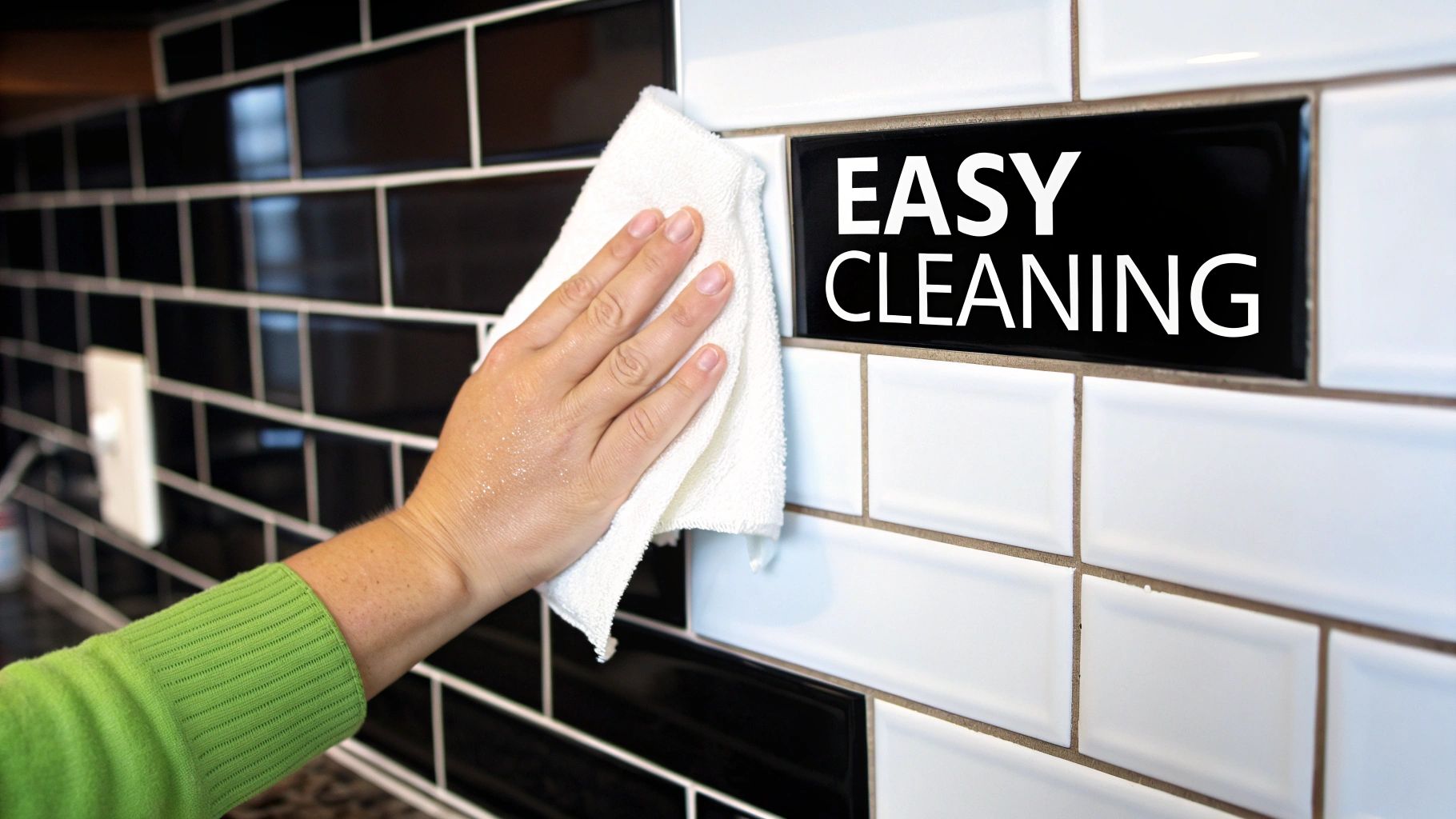
So, you've got your beautiful ceramic tile backsplash installed. Now what? The best part about ceramic is that keeping it looking brand new doesn't take much work at all. With just a few simple habits, your backsplash will stay a sparkling focal point in your kitchen for years.
The real secret is consistency. A quick wipe-down after you cook is all it takes to stop grease and food splatters from getting comfortable. You can skip the harsh chemicals, which can actually damage the grout over time. Most days, a soft cloth with warm water and a little mild dish soap is all you'll ever need.
Everyday Cleaning and Tough Stains
When it comes to routine upkeep, think gentle. The best products are pH-neutral cleaners made specifically for tile. They cut through the daily grime without stripping the grout's protective sealant or making your tiles look dull.
For those stubborn grease spots or dried-on tomato sauce, don't reach for a steel wool pad. Instead, try making a simple paste with baking soda and water. Just apply it to the stain, let it sit for a few minutes to work its magic, and then gently scrub with a soft-bristle brush before wiping it clean. It's surprisingly effective.
Think of grout sealer as a raincoat for the lines between your tiles. It creates an invisible barrier that repels water, oil, and other common kitchen spills, preventing them from soaking in and causing permanent stains.
The Importance of Sealing Your Grout
While your glazed ceramic tiles are pretty much bulletproof against stains, the grout between them is another story. Grout is porous, kind of like a sponge, which means it can soak up spills and get discolored. This is where a good sealer becomes your best friend for long-term care.
Taking the time to seal your grout lines—usually once every one to two years—is a small job that pays off in a big way. It keeps the grout looking fresh, stops moisture from getting behind the tiles, and makes your daily wipe-downs a breeze. It’s the single best thing you can do to preserve that just-installed look.
Your Ceramic Backsplash Questions Answered
Even after you've explored all the design possibilities, a few practical questions always pop up. It's completely normal. Nailing down these final details is what gives you the confidence to make a choice you'll be happy with for years to come.
Let's clear up some of the most common questions we hear from homeowners. We'll get straight to the point, covering everything from real-world costs to how these tiles actually hold up in a busy kitchen.
How Much Does a Ceramic Tile Backsplash Typically Cost?
This is the big one, and the honest answer is: it varies quite a bit. Your final cost really comes down to the specific tile you fall in love with, the going rate for labor in your area, and of course, how much wall space you're covering.
Here’s a general breakdown to help you budget:
- Entry-level ceramic tiles are incredibly budget-friendly, often starting as low as $1 to $5 per square foot.
- High-end or artisanal tiles—think handcrafted shapes or unique glazes—can easily climb past $30 per square foot.
- Professional installation is a separate cost, typically adding another $10 to $20 per square foot to your total.
So, for a pretty standard 30-square-foot kitchen backsplash, you could be looking at a total cost anywhere from a few hundred dollars to several thousand.
Is Ceramic Tile Durable Enough for a Busy Kitchen?
Yes, without a doubt. Ceramic tile is one of the toughest and most practical choices you can make for a kitchen backsplash. It stands up beautifully to the heat from your stove, isn't bothered by water and steam from the sink, and resists everyday scratches.
The real hero here is the glaze. Glazed ceramic tiles have a non-porous protective layer that makes them a breeze to clean. That means grease splatters and rogue tomato sauce won't sink in and cause a permanent stain. A properly installed ceramic backsplash will look great for decades.
Are Subway Tiles Still a Popular Choice?
Absolutely. Subway tiles have officially graduated from a hot trend to a timeless classic. Their simple, clean aesthetic works in just about any kitchen you can imagine, whether it's a cozy modern farmhouse or a sleek, minimalist space.
What keeps them feeling fresh is how people are using them now. Instead of the standard brick pattern, designers are getting creative with layouts like herringbone or vertical stacks. We're also seeing a lot of experimentation with bold colors, larger format tiles, and eye-catching contrasting grout. The tile itself is a staple; how you use it is what makes it modern.
Ready to create a kitchen that perfectly balances style and function? The experts at Sinclair Cabinetry inc can help you design custom cabinetry that beautifully complements your dream ceramic backsplash. Explore our gallery and start your project today at https://sinclaircabinets.com.