

Choosing professional cabinet installation is often what separates a good kitchen remodel from a great one. While the temptation to DIY is real, bringing in the experts means that common issues like uneven floors and imperfect walls won't stand in the way of a perfect finish. It turns a potential headache into a flawless, long-lasting investment.
Why Professional Cabinet Services Are Worth It

The classic debate between DIY and professional installation usually boils down to cost versus quality and convenience. While budget-friendly projects certainly have their place, the value of an expert’s touch really shines when you’re up against real-world challenges.
Think about your home. Are the walls perfectly plumb? Is the floor completely level? In most houses, the answer is no. A DIY attempt in these conditions can easily lead to noticeable gaps, misaligned doors, and cabinets that just don’t sit right. A pro, on the other hand, shows up with the right tools and years of experience to handle these exact problems. They use shims to level the bases and scribe filler strips to create a seamless fit against wavy walls, achieving that truly built-in look.
The Value of Precision and Expertise
The cost for professional labor, which typically runs from $100 to $300 per cabinet, is an investment in pure craftsmanship. This expertise helps you avoid expensive mistakes, like damaging your brand-new cabinets or—even worse—failing to secure them properly to the wall, which is a serious safety risk.
A seasoned installer doesn't just hang boxes; they ensure every component works in harmony. This means perfectly aligned doors, smooth-gliding drawers, and a structurally sound installation that stands the test of time and daily use.
This level of precision is absolutely critical when you're trying to integrate all the different elements of your kitchen. A professional service manages the entire process, from the initial measurements all the way to placing the final piece of hardware. This holistic approach is key to a successful project, whether you're using standard stock cabinets or have a completely bespoke layout in mind. If you're curious about what expert craftsmanship can really do, you can learn more about our https://sinclaircabinets.com/custom-cabinet-design/ process and see how personalized solutions can totally transform a space.
Of course, professional services are a no-brainer for complex jobs, but homeowners can find real value in smaller projects, too. As you weigh your options, it's always fun to look for inspiration. You might find some great ideas from these DIY floating shelf ideas that could complement your main cabinetry. Ultimately, professional installation gives you peace of mind and a superior finish that genuinely elevates your home’s value.
How to Find and Vet the Right Cabinet Installer
Finding the right person to handle your cabinet installation is about more than just a quick online search. Truthfully, the best installers are often found through trusted industry connections and word-of-mouth, not just a five-star rating on a generic search site.
Start by asking for recommendations from high-end kitchen showrooms or local cabinet suppliers. Think about it—these businesses have a vested interest in making sure their beautiful products are installed flawlessly. They know who the true craftspeople are and will gladly point you in their direction.
Another solid source is local trade associations. Groups like the National Kitchen & Bath Association (NKBA) or regional builder associations are great resources. They often have directories of certified professionals, which gives you an extra layer of confidence that you’re hiring someone committed to quality and industry standards.
Choosing Your Installer: A Quick Comparison
Not all installers are created equal. Your budget, project complexity, and personal comfort level will determine the best fit. Here’s a breakdown of the common options you'll encounter.
Comparing Cabinet Installer Options
| Installer Type | Best For | Typical Cost | Key Considerations |
|---|---|---|---|
| Independent Contractor | Custom projects, high-end installations, complex layouts | $$$ | Often the most skilled, but may have a longer waitlist. Requires thorough vetting. |
| Cabinet Retailer's Crew | Standard installations using cabinets purchased from the same store | $$ | Convenient one-stop-shop. Crew skill can vary, so ask about their experience. |
| General Contractor | Large-scale remodels where cabinets are one part of a bigger job | $$ (part of total) | Manages the whole project. Ensure they have a dedicated, experienced cabinet specialist. |
| Handyman Service | Small, simple jobs like a single vanity or basic laundry room setup | $ | Budget-friendly for straightforward tasks. May lack specialized tools or experience for complex kitchens. |
Ultimately, for a full kitchen renovation where the cabinets are the star, an independent contractor or a proven specialist from a GC's team is usually your best bet. For simpler projects, the other options can work well.
Questions to Ask Potential Installers
Once you've got a shortlist, the real evaluation begins. The consultation is where you can separate the true pros from the rest. You're not just getting a price; you're trying to understand their process, professionalism, and experience.
Here are a few essential questions to get the conversation started:
- Warranty: What kind of warranty do you offer on your installation labor? This is separate from the cabinet manufacturer’s warranty and is a big deal.
- Imperfections: How do you handle imperfect conditions? Walls are rarely straight and floors are rarely level. What’s your process?
- Team: Will you be doing the work yourself, or will you be sending a crew? Are they your employees or subcontractors?
- Insurance: Can you provide a current certificate of insurance for both liability and worker's compensation? Don't just take their word for it—ask to see the document.
The way they answer tells you everything. A seasoned installer will confidently explain how they scribe cabinets to fit wavy walls or shim bases to get a perfectly level result. If you get vague answers or they brush off questions about insurance, consider those major red flags.
A true professional is transparent about how they handle the unexpected. They see challenges like uneven floors as a normal part of the job, not a crisis. That kind of foresight is one of the clearest signs of an experienced hand.
Evaluating Their Past Work and Reputation
Finally, don't just glance at a portfolio of pretty pictures—dig into the details. Zoom in on the photos.
Look closely at the joints where two pieces of trim meet. Check the alignment of the doors and drawers. Are the gaps between them perfectly consistent? Pay attention to how cleanly the cabinets meet the walls and ceilings. These tiny details are the true signature of quality craftsmanship.
And don't just ask for references—actually call them. Ask past clients about the installer's punctuality, how clean they kept the job site, and how they communicated. Most importantly, ask how they handled any issues that popped up. This kind of firsthand feedback is priceless and will give you the peace of mind that your cabinet installation services are in the hands of an expert who will deliver a flawless result.
Getting Your Space Ready for a Flawless Installation
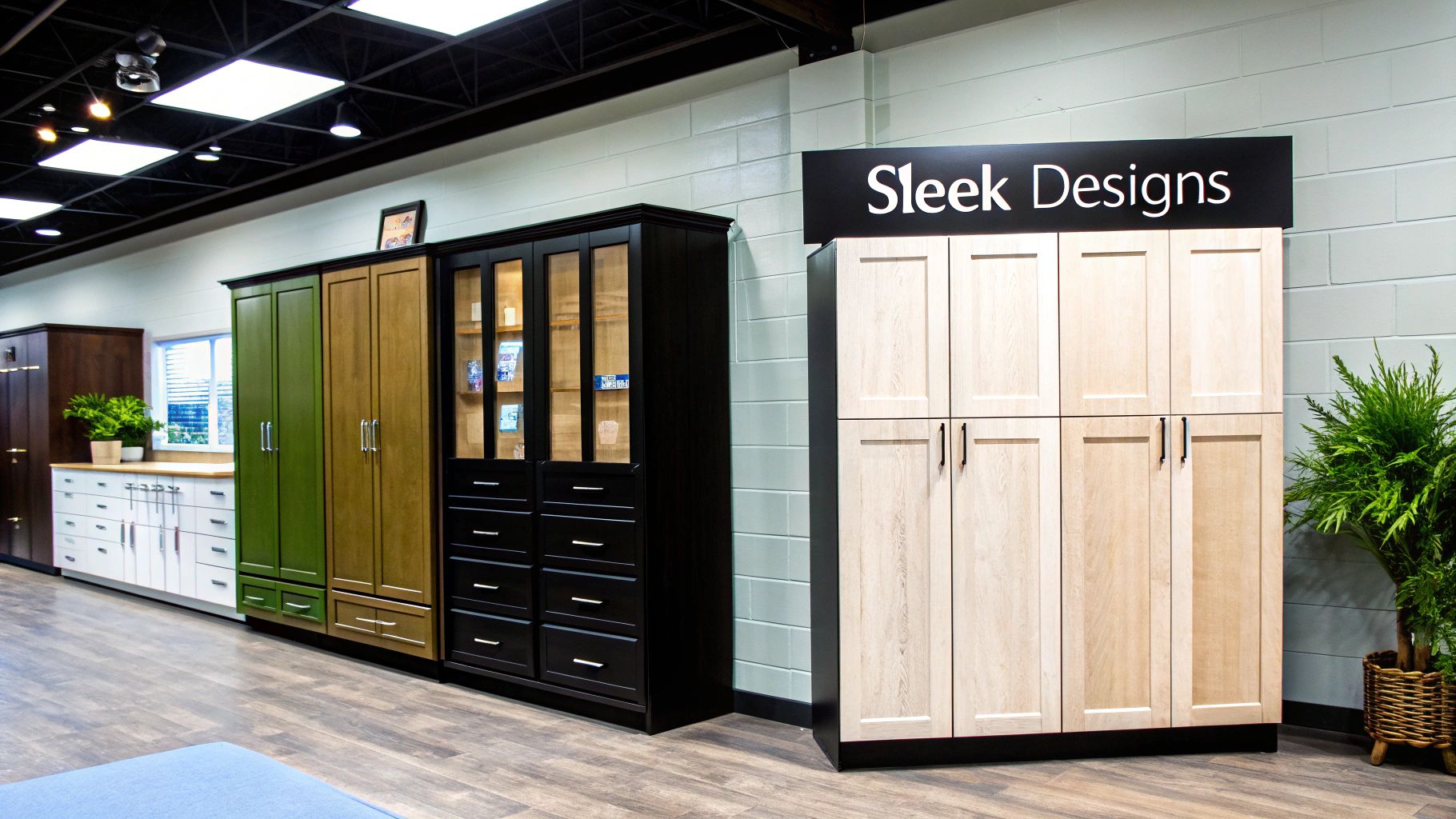
A smooth installation day doesn't happen by accident—it’s the direct result of great preparation. Long before our professional cabinet installation services team rings your doorbell, taking a few key steps can sidestep major delays and extra costs. Trust me, getting this right sets the entire project up for success.
First things first: create a completely clear and safe workspace. This means emptying the room of everything, not just the old cabinets you're replacing. All your appliances, tables, chairs, and even the art on the walls need to be moved out. For a kitchen remodel, this usually means finding a temporary home for your fridge and stove.
With the room empty, your next job is to protect the rest of your home. Construction dust is sneaky and will find its way everywhere. Seal off doorways to adjoining rooms with plastic sheeting and painter's tape. Then, cover your floors in the work area and any high-traffic pathways with durable rosin paper or even just flattened cardboard boxes.
Coordinating With Other Trades
One of the most common headaches we see on a job site is poor coordination with plumbers and electricians. It's a classic rookie mistake. Your cabinet installer isn't licensed to handle plumbing or electrical work, so that needs to be sorted out before they arrive.
Think of it as a pre-flight checklist for your other pros. Before installation day, make sure you've arranged for:
- Plumbing: The sink, its drain lines, and the dishwasher all need to be properly disconnected.
- Electrical: Any outlets or wiring inside the cabinet removal area must be safely capped off by a licensed electrician.
- Gas: If you have a gas stove, the line needs to be professionally disconnected.
A critical but often overlooked step is creating a staging area for the installers. Clear a spot in a nearby room or the garage for their tools and, just as importantly, for the new cabinets to be unboxed and assembled. This simple courtesy makes their job infinitely safer and more efficient.
By methodically clearing the room and handling the utilities beforehand, you create an environment where the installation crew can hit the ground running. This proactive approach is the secret to a stress-free transformation and the flawless results you’re paying for.
What To Expect During The Installation Process
When your installation day finally arrives, it's easy to assume the crew will just start hanging boxes on the wall. But a professional installation is much more of a deliberate craft. It’s a systematic process where every step builds on the last, and it all starts with precision. Watching it unfold reveals the true skill behind getting that perfect, built-in look.
The very first thing a seasoned installer does is find the highest point on your floor. Since floors are almost never perfectly level, this becomes the reference point for everything else. This single step is what ensures all your base cabinets will line up flawlessly, creating a clean, uniform foundation for your countertops.
This diagram gives a simplified look at the core sequence installers follow.
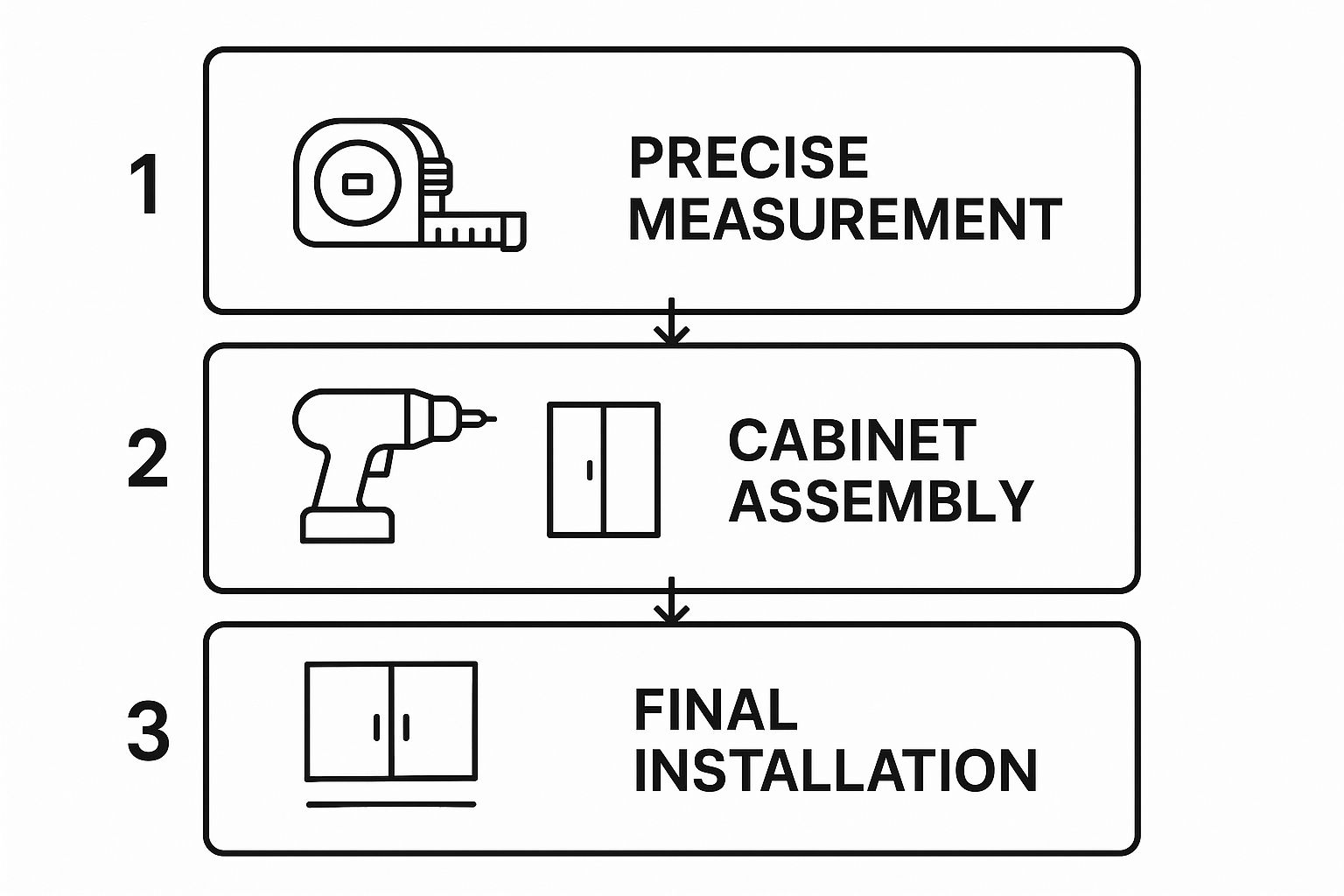
As you can see, the flow from measurement to the final install shows just how critical that initial accuracy is.
The Art of a Perfect Fit
With the baseline set, the crew will almost always install the upper wall cabinets first. It might seem counterintuitive, but this keeps the base cabinets out of their way, giving them better leverage and a clear space to work. It allows them to securely fasten the uppers directly to the wall studs—a non-negotiable step for safety. Improperly hung cabinets are a serious hazard.
Next, you'll see them pull out shims. These are small, tapered wedges of wood or plastic used to make tiny adjustments. By placing them behind or under a cabinet, installers can close any gaps against uneven walls, making sure every box is perfectly plumb and level. It's a subtle detail, but it’s what makes the difference.
Scribing is where true craftsmanship really comes into play. An installer will trace the exact contour of a wavy or uneven wall onto a filler strip. Then, they’ll carefully cut the wood to follow that line precisely. The result is a seamless, custom-fit transition that makes the cabinets look like they were truly built into the room.
This meticulous work is what separates a professional job from a standard DIY project. If you're curious about the hands-on techniques, our guide on how to install kitchen cabinets breaks down the process in even greater detail.
From Boxes To a Cohesive Kitchen
Once the main cabinet boxes are secured to the walls, the focus shifts to the finishing touches that bring the whole look together. The crew will hang and adjust all the doors and drawer fronts, tweaking them until the alignment is perfect. They’re looking for consistent spacing and making sure nothing rubs or sticks.
Finally, they install the "jewelry" of your new kitchen:
- Hardware: All the knobs and pulls are carefully measured and attached.
- Trim: Crown molding, light rails, and toe-kicks are cut to size and installed.
- Fillers: Any remaining gaps are covered with those scribed filler strips for a finished look.
By understanding this logical sequence, you can really appreciate the skill that goes into the installation and feel more confident as you watch your new kitchen come to life.
Your Final Walkthrough and Quality Checklist
So, the tools are packed up and the installers are getting ready to leave. But hold on—the job isn't quite done yet. This final walkthrough is your moment to make sure everything you paid for in cabinet installation services meets the mark. It's the most important step in guaranteeing you'll love your new space for years to come.
Take your time with this. Don't feel like you're being rushed or nitpicky. A true professional will expect you to inspect their work and will be proud to stand by it.
Getting Hands-On: A Functional Check
First things first, put every door and drawer through its paces. Open them all the way, then close them. You’re listening and feeling for smooth, effortless movement. There should be zero rubbing, sticking, or scraping noises. If you opted for soft-close hardware, make sure it engages gently and works the same on every single cabinet.
Now, take a few steps back and just look. Let your eyes trace the lines of your new cabinetry. The gaps between the doors and drawer fronts should be perfectly uniform. Consistent spacing is what gives custom cabinetry that clean, high-end look. Any crooked lines or uneven gaps will throw off the whole aesthetic.
Inspecting the Finer Details
Time to get up close. Use a good light source—even the flashlight on your phone works—and carefully inspect all the finishes. Run your hand over the surfaces to feel for any dings, scratches, or chips that might have happened during the install. It happens, but it needs to be corrected.
Pay special attention to where trim and molding meet the cabinets, walls, and ceiling. These connection points should be tight, clean, and seamless. Any gaps here can be a real eyesore and a sign of a rushed job.
This isn't just about being picky; it’s about making sure your investment is solid. A good installer wants to leave you with a flawless product. They’ll appreciate the chance to fix any little issues before they call the job complete.
Finally, give every handle, knob, and pull a gentle but firm wiggle. They should all feel rock-solid with no looseness whatsoever. This simple check ensures everything is securely fastened for daily use.
Walking through this detailed checklist gives you the confidence to sign off on the project, knowing it was done right. A quality installation will pass this inspection with flying colors, leaving you with cabinets that are both beautiful and built to last.
Frequently Asked Questions About Cabinet Installation

Even after you've done all the planning, it's natural to have a few lingering questions about the installation itself. Getting solid answers to these common queries is key to feeling confident and making sure there are no surprises when the work begins.
We've pulled together the questions we hear most often from homeowners, along with some straightforward, real-world answers. It’s all about helping you move forward knowing exactly what to expect.
How Long Does a Typical Kitchen Cabinet Installation Take?
For an average-sized kitchen, a professional crew can usually get the job done in one to three days. But that timeline can definitely shift.
The biggest factor is the complexity of your kitchen layout. A simple, straight galley kitchen is a much quicker job than a large, U-shaped kitchen that includes a center island. The cabinets themselves also play a part. Stock cabinets that arrive pre-assembled are faster to hang than custom pieces that might need more on-site scribing and fitting.
It's also worth remembering that surprises can happen. We've pulled out old cabinets before only to discover a wall isn't perfectly plumb. A good installer will flag these issues immediately, but it’s always smart to have a little buffer in your project schedule just in case.
Once your installer has been on-site and finalized the design plan with you, they should be able to give you a much more precise timeline.
What Is the Average Cost for Professional Cabinet Installation Services?
This is usually the first question on everyone's mind, and the honest answer is: it varies. Your location, the number of cabinets, and the job's complexity all influence the final price. As a general guideline, you can expect labor costs for cabinet installation services to run anywhere from $100 to $300 per cabinet.
So, what does that look like in a real kitchen? For a standard 10×10 kitchen, the installation labor could fall somewhere between $2,000 and $6,000. Projects with intricate crown molding, tall pantry cabinets, or complex corner units like a Lazy Susan will naturally push the cost toward the higher end of that range. For a deeper dive into what goes into the final price, you can check out our guide on how much to install cabinets.
Our best advice is to get at least three itemized, written estimates from installers you've vetted. This lets you compare not just the bottom-line number, but exactly what services are included for that price.
Should I Buy Cabinets Myself or Through My Installer?
There are pros and cons to both paths, but ordering through your installer is often the smarter, safer bet.
Sure, buying cabinets directly from a big-box store gives you total control and might seem cheaper at first glance. However, when an experienced installer manages the order, they bring a lot more to the table. For one, they often get trade discounts that aren't available to the public.
More importantly, they take on all the risk. When your installer places the order, they are responsible for:
- Perfect Measurements: They guarantee the cabinets will fit the space because they’re the ones who measured it.
- A Complete Order: They make sure every last piece—from filler strips to toe-kicks—is accounted for.
- Damage Control: If a cabinet arrives with a ding from shipping, they handle the hassle of returns and replacements.
Handing this responsibility over to a pro removes a massive layer of stress and potential for costly mistakes. That peace of mind alone is often well worth it.
Ready to transform your home with craftsmanship that lasts a lifetime? At Sinclair Cabinetry inc, we turn your vision into a stunning reality with bespoke cabinetry designed and built just for you.