
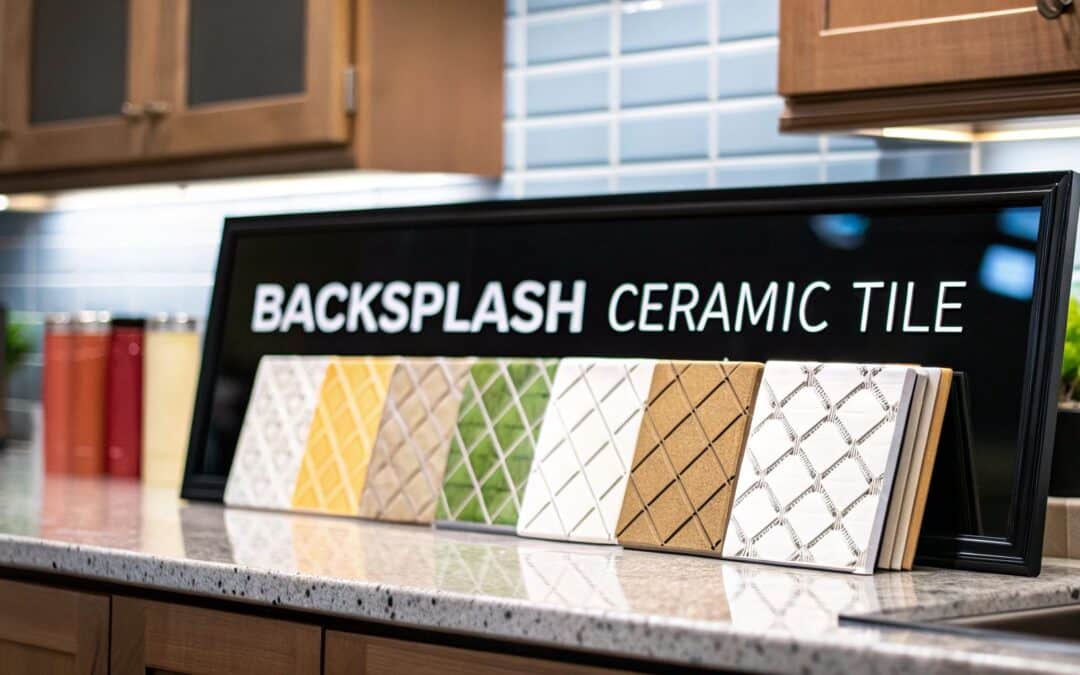
A ceramic tile backsplash is that protective, decorative surface you see on the wall behind a kitchen sink or stove. It’s a workhorse, acting as a durable shield against splashes, stains, and heat while giving you incredible flexibility to define your kitchen's style. It’s no surprise this material remains a top choice for its perfect blend of beauty, affordability, and resilience.
Why Ceramic Tile Is the Smart Choice for Your Backsplash
A backsplash is so much more than a decorative touch—it’s a functional powerhouse. Think of it as a stylish, durable raincoat for the busiest parts of your kitchen or bathroom, protecting your walls from the daily assault of water, grease, and food splatters. When it comes time to pick a material, homeowners are consistently drawn to the classic appeal of ceramic tile, and for very good reason.
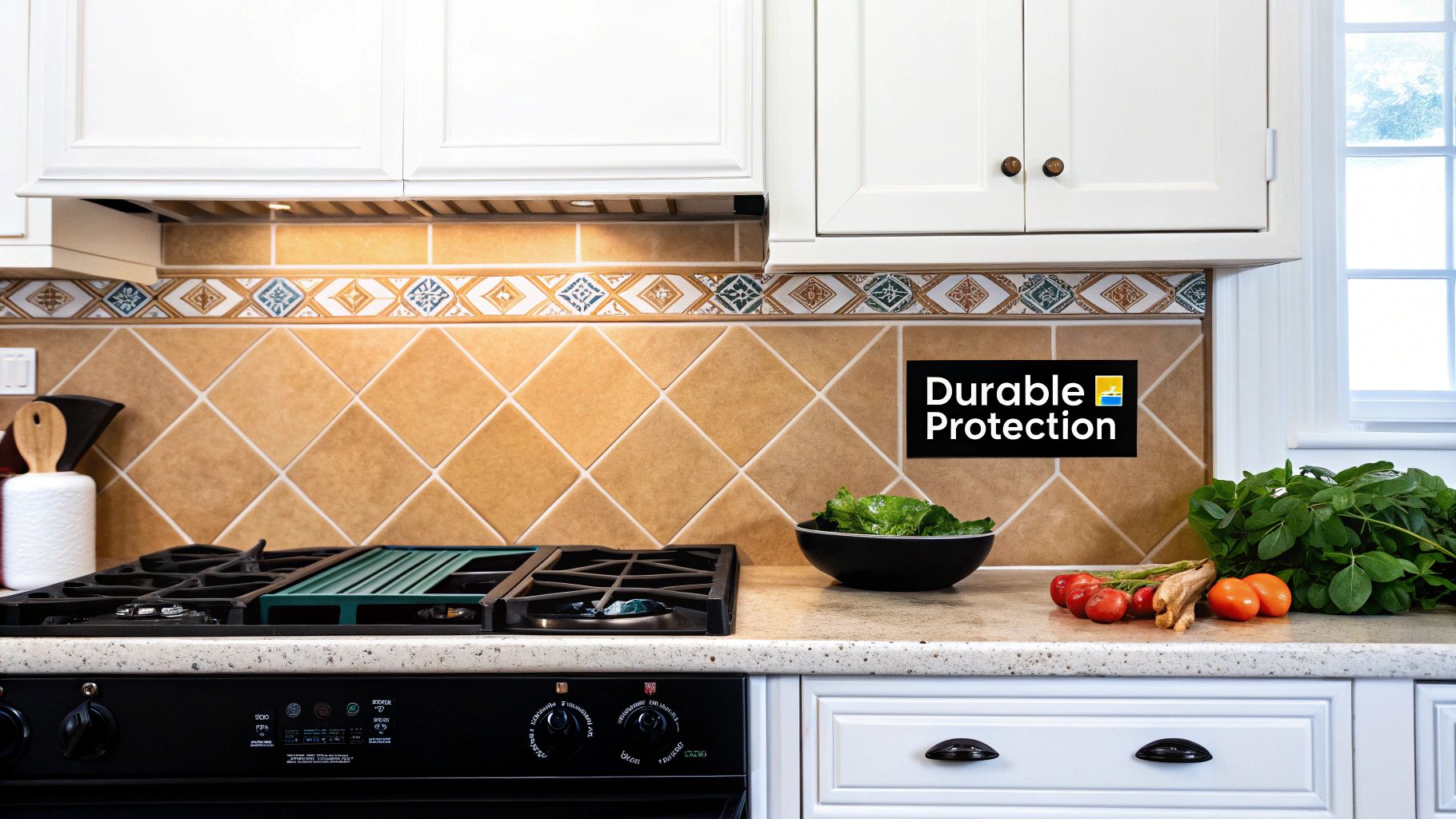
This isn’t just a trend. Ceramic tile has become the go-to choice for kitchen renovations across the country. In fact, a remarkable 34% of homeowners who installed a new backsplash opted for this timeless material. That preference highlights just how perfectly ceramic balances affordability, durability, and style for modern remodels. A comprehensive Statista survey shows ceramic outpacing other popular materials like quartz and glass, which you can read more about in this report on homeowner renovation trends.
The Core Benefits of Ceramic
So, what makes ceramic tile such a consistently smart investment? The advantages are both practical and aesthetic, creating value that really lasts. Its biggest strengths hit on the three key demands of any busy kitchen.
Here’s what you get:
- Unmatched Durability: Ceramic tile is fired at incredibly high temperatures, which creates a hard, dense surface that stands up to scratches, heat, and fading. It can handle the heat from a cooktop and won't be fazed by flying spaghetti sauce.
- Effortless Maintenance: The glazed surface on most ceramic tiles is non-porous, meaning it repels water and stains. A simple wipe-down with a damp cloth is usually all it takes to keep it looking brand new—a huge plus in a high-traffic area.
- Endless Design Versatility: From sleek, modern subway tiles to intricate, colorful mosaics, ceramic offers a massive library of shapes, sizes, colors, and patterns. This flexibility ensures you can always find a style that brings your vision to life.
A well-chosen ceramic backsplash doesn’t just protect your walls—it ties the entire room together. It acts as the visual bridge between your countertops and your cabinetry, creating a cohesive and polished look.
This ability to harmonize all the different elements in your kitchen is what makes it so powerful. For instance, the right ceramic tile can elevate the natural beauty of custom solutions like those from Sinclair Cabinetry. By pairing quality materials, you create a high-value aesthetic that boosts your home’s appeal and functionality for years to come.
Navigating Ceramic Tile Types And Finishes
Choosing the right ceramic tile for your backsplash is a lot like picking the perfect piece of art for a room—the material and finish you land on will set the entire mood. It’s about more than just finding a color you like; you really need to get a feel for the different types of tile and how their finishes play with light. Nailing this choice means you’ll end up with a tile that not only looks incredible but can handle the realities of a busy kitchen or bathroom.
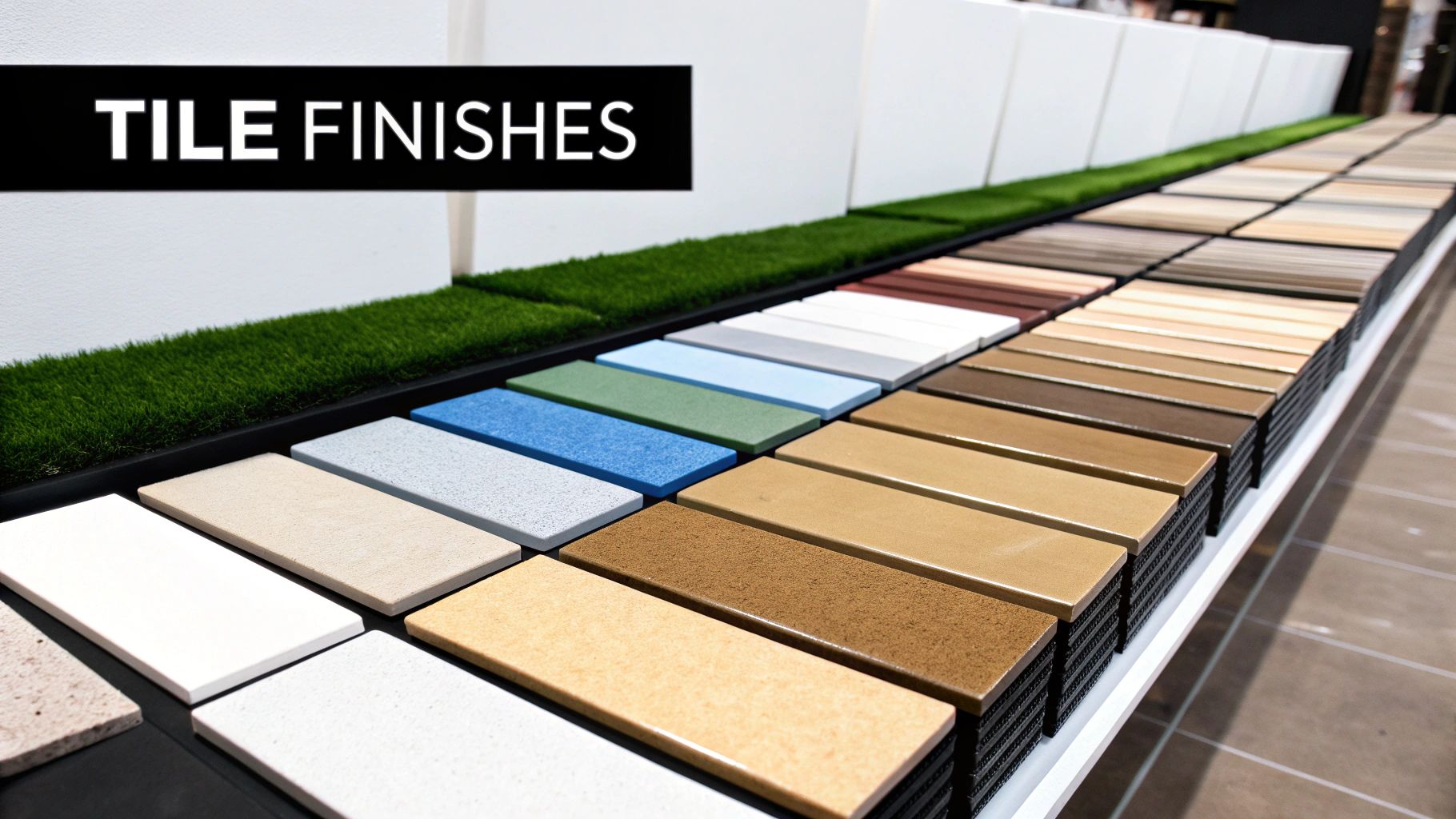
This decision is what makes your backsplash work in harmony with other major elements, like your beautiful wood cabinets from Sinclair Cabinetry. When you align the tile’s character with your overall design vision, you get a cohesive, high-end look that feels both deliberate and timeless.
Unpacking The Types Of Ceramic Tile
At a glance, a lot of ceramic tiles can look the same, but what they’re made of tells a very different story. The two main options you'll be deciding between are standard glazed ceramic and its tougher, more refined cousin, porcelain.
Glazed Ceramic Tile is the go-to classic for backsplashes, and for good reason. It starts with a ceramic base that gets a liquid glass coating (the glaze) baked right onto its surface. That glaze is what makes it non-porous, stain-resistant, and a breeze to clean—exactly what you want for handling kitchen splatters. Plus, it comes in an endless array of colors and patterns, giving you a ton of creative freedom.
Porcelain Tile is a special kind of ceramic, made from more refined clay and fired at much higher temperatures. Think of it as the heavy-duty version of ceramic. This process creates a tile that's denser, harder, and way less porous, with a water absorption rate of less than 0.5%. While that makes it a top pick for floors and damp areas like bathrooms, it’s also an incredibly durable option for a kitchen backsplash.
While we're focusing on ceramic here, taking a deeper dive into various tile types can help you understand all the options out there.
The Role Of Finishes In Your Design
Your tile's finish is what dictates its relationship with light and texture, and it has a massive impact on the feel of your space. It's that final touch of personality that can either shout for attention or offer a quiet, subtle elegance. Knowing your options is a huge part of the process, and you can learn even more in our guide on the different types of tile for your backsplash.
Here’s a quick rundown of the most common finishes:
- Glossy: This is your light-bouncer. A highly reflective glossy finish can make a room feel brighter and more spacious, which is a huge win for smaller kitchens or any space that's a bit starved for natural light. It gives off a sleek, polished vibe and is ridiculously easy to wipe down.
- Matte: For a softer, more modern look, matte is the way to go. Its non-reflective surface has an understated elegance and is fantastic at hiding fingerprints, smudges, and water spots. Matte tiles bring a sense of calm sophistication that pairs beautifully with natural materials like wood.
- Textured: If you want to add some real depth and character, textured tiles are a game-changer. These can range from subtle, fabric-like patterns to bold, 3D geometric shapes. This tactile quality can elevate your backsplash from a simple wall covering to a genuine focal point.
To help you visualize how these finishes might work in your space, here's a quick comparison.
Ceramic Tile Finish Comparison for Backsplashes
This table is a quick reference guide to help you choose the best ceramic tile finish for your kitchen or bathroom backsplash, balancing both aesthetics and practicality.
| Finish Type | Best For | Maintenance Level | Design Style |
|---|---|---|---|
| Glossy | Small spaces, areas needing more light, easy cleaning | Low | Modern, Contemporary, Glam |
| Matte | Hiding smudges, creating a soft and understated look | Low to Medium | Modern, Farmhouse, Scandinavian, Industrial |
| Textured | Creating a focal point, adding depth and visual interest | Medium to High | Eclectic, Rustic, Artisanal, Mid-Century Modern |
Ultimately, picking the right finish comes down to matching the tile's look and feel to your daily life.
Your tile's finish isn't just a visual choice—it's a practical one. A glossy tile behind a stove is simple to clean, while a matte tile may better conceal minor imperfections and contribute to a more organic design style.
When you find that perfect combination of tile type and finish, you've laid the groundwork for a design that works just as beautifully as it looks.
Bringing Your Vision to Life with Design Patterns
Picking out the perfect ceramic tile is a huge win, but that’s really only half the story. The real magic happens when you decide on the layout pattern—the specific way each tile is arranged on the wall. Think of the pattern as the brushstroke for your design; it sets the rhythm, movement, and the entire vibe of your space.
The right pattern can completely change a room. It has the power to make a small kitchen feel taller, a narrow bathroom seem wider, or turn a simple wall into a stunning focal point. This is the detail that elevates a standard backsplash ceramic tile installation into a custom design statement that’s all you.
Moving Beyond the Standard Grid
The most common pattern is the straight-lay, or grid pattern, where square tiles are lined up in neat rows and columns. It’s clean and classic, for sure, but there’s a whole world of more dynamic options out there that can add incredible character to your kitchen or bathroom. Diving into these patterns is how you tailor the look to hit your specific design goals.
Some of the most popular and impactful patterns include:
- Classic Running Bond (Subway): This is that iconic look where rectangular tiles are offset by 50%, just like bricks in a wall. It’s timeless, works with almost any style, and feels right at home in both traditional and modern designs.
- Herringbone: This pattern arranges rectangular tiles at a 45-degree angle, creating a distinct "V" shape. The result is a ton of movement and energy that immediately draws the eye, making it an amazing choice for a feature wall behind your stove or sink.
- Vertical Stack: By stacking rectangular tiles vertically in a straight grid, you create strong, clean lines that pull the eye upward. This is a fantastic trick for making ceilings feel higher while giving the space a contemporary, architectural edge.
Your tile pattern isn’t just decorative—it's a tool for manipulating perception. A vertical layout adds height, a horizontal one adds width, and a diagonal pattern like herringbone adds dynamic energy.
Choosing a pattern really comes down to how you want your space to feel. If you’re looking for more ideas, exploring different ceramic tile backsplash designs can spark some serious inspiration for pairing patterns with various tile styles and colors. It's the key to unlocking your kitchen’s full potential.
Matching Patterns to Your Design Style
The pattern you pick should feel like it belongs in your home. A layout that’s perfect for a modern farmhouse might feel totally out of place in an ultra-sleek contemporary kitchen. The trick is to align the pattern's personality with the style you’re building.
For instance, a classic running bond with white subway tiles is a signature of the modern farmhouse look. It’s even better when paired with the warm, natural wood of Sinclair Cabinetry's shaker-style cabinets. The clean lines and timeless appeal create a feeling of comfortable elegance.
On the other hand, a coastal or beach-inspired kitchen might call for an arabesque or fish scale pattern. These intricate, curved designs bring to mind the gentle movement of water, adding a soft, organic touch that perfectly complements light-colored cabinets and natural textures. For a mid-century modern vibe, a bold vertical stack in a strong color delivers that signature clean, graphic look.
Advanced and Intricate Patterns
If you want your backsplash ceramic tile to be a true showstopper, you can venture into more complex and artistic layouts. These patterns often require more precise cuts and a seriously skilled installer, but the visual payoff is huge.
Consider these options for a high-impact design:
- Basketweave: This pattern uses rectangular tiles to mimic the look of a woven basket. It creates a rich, textured surface that adds a touch of traditional charm and sophistication.
- Pinwheel (or Hopscotch): This layout uses a small square tile surrounded by four larger rectangular tiles. It creates a playful, geometric effect that adds a lot of visual interest without feeling too busy.
- Arabesque: With its curved, ornate shapes, arabesque tile creates an elegant and luxurious feel. This pattern works beautifully as a focal point in both traditional and eclectic designs, adding a layer of artistry to the wall.
Ultimately, the layout pattern is your chance to inject your personality into the backsplash. When you think beyond just the tile itself and consider how it will all fit together, you can create a design that’s not only beautiful and functional but uniquely yours.
A Practical Framework for Choosing the Right Tile
Alright, you've got a handle on the different tile types, finishes, and patterns. Now comes the fun part: making the final decision. With so many options out there, it can feel a little daunting, but breaking it down into a simple framework makes all the difference. Think of it like putting together the perfect outfit—every piece, from the tile to the grout, needs to work together to create a cohesive, stunning look.
This guide will walk you through the must-know factors, from the size of the tile to the surprising power of grout. By focusing on how each element plays off your countertops, cabinetry, and overall vision, you can pick a ceramic tile backsplash with total confidence. The goal is to hit that sweet spot between everyday performance and timeless beauty.
Considering Tile Size and Scale
The size of your tiles does more than just look pretty; it's a powerful design tool that can completely change the feel of a room. It’s all about perception. The right tile size can trick the eye, making a space feel larger, cozier, or more open.
- Large-Format Tiles: Think tiles that are 12×24 inches or bigger. Fewer grout lines create a clean, seamless look that can make a small kitchen feel way more spacious and uncluttered. They're a perfect match for modern and contemporary designs.
- Small-Format Tiles: Classic 3×6 inch subway tiles or intricate mosaics bring a ton of texture and visual interest. All those grout lines add a sense of detailed craftsmanship that’s right at home in traditional, farmhouse, or eclectic kitchens. Just be mindful that in a very compact space, they can sometimes feel a bit busy.
Pro Tip: Never go tile shopping without samples of your cabinet finish and countertop. Seriously. Look at them together in different lights—it’s the only way to be sure the colors and undertones truly click.
This one simple step can save you from a costly mismatch and guarantees your new tile will harmonize perfectly with what you already have.
The Impact of Color and Grout
Color is your secret weapon for setting the mood in your kitchen. Your backsplash color should be a deliberate choice that either blends beautifully with your cabinetry and countertops or creates a bold, eye-catching contrast. A light tile can make the room feel bright and airy, while a dark, dramatic tile adds a touch of luxury and depth.
But the tile itself is only half the story. Grout, which is so often an afterthought, is a game-changing design element that can completely transform your backsplash.
The grout color you pick defines how your tiles relate to each other:
- Matching Grout: Using a grout color that’s very close to your tile color creates a smooth, uniform surface. This approach lets the tile’s texture and finish be the star of the show by minimizing the grid pattern.
- Contrasting Grout: Choosing a grout that stands out—like a dark gray with white subway tiles—makes each individual tile pop. This highlights the tile's shape and the layout pattern, turning the grid itself into a major design feature.
For a deeper dive into these crucial decisions, an in-depth buyer's guide on choosing the best tile for a kitchen backsplash can offer even more valuable insights to help you nail the selection process.
Balancing Beauty with Performance
Let's be real: your backsplash has to work as hard as it looks good. Especially in the high-traffic zones behind your stove and sink, it’s going to face heat, moisture, and splatters every single day. The durability and maintenance needs of your tile are just as critical as its color or pattern.
This is where knowing your materials really matters. The global ceramic tiles market is projected to soar from USD 212.17 billion to USD 310.45 billion by 2030, a boom driven by demand for high-performance materials. Porcelain tile, which dominates with over 51% of the market share, is a fan favorite for good reason—its water absorption rate is incredibly low at under 0.5%. This makes it an amazing choice for backsplashes, particularly in humid areas.
To help simplify things, the chart below shows how your design goals can lead you straight to the perfect pattern.
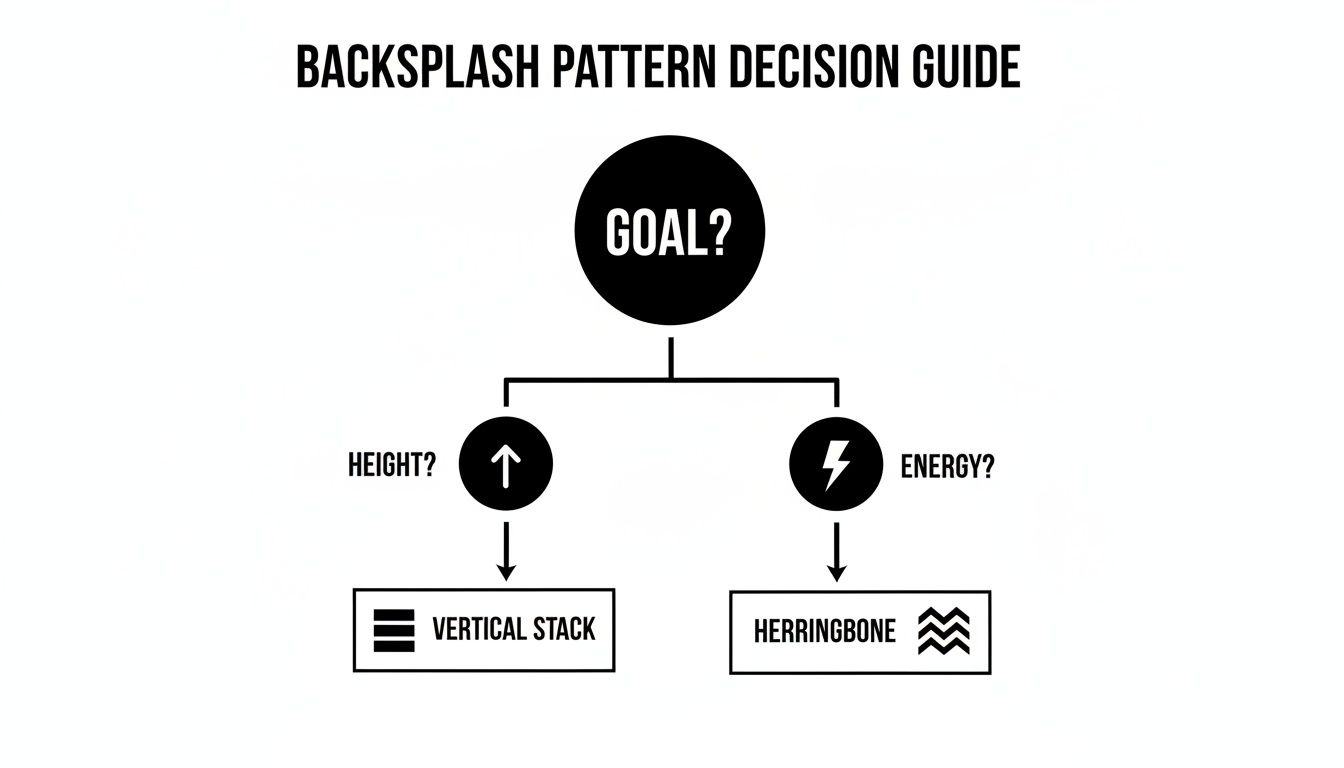
As you can see, if you want to add some perceived height, a vertical stack is your best bet. If you’re after more dynamic energy, a herringbone layout is the way to go. By using this kind of framework, you can select a backsplash that not only reflects your style but is built to handle the demands of your home for years to come.
Budgeting Your Project and Understanding Installation
Figuring out a backsplash project is about more than just falling in love with a tile. You need a rock-solid understanding of the full financial picture before you start. Let’s pull back the curtain on the real costs and what the installation process actually involves so you can plan effectively and move forward with confidence.
A smart budget goes way beyond the price-per-square-foot of the tile. It has to include every single component needed to transform that box of tiles into a stunning, long-lasting feature in your home.
Think about these costs:
- The Tile Itself: The star of the show, of course. Prices for backsplash ceramic tile can start at just a few dollars per square foot for simple, classic options and climb much higher for handcrafted, artisanal, or custom designs.
- Essential Materials: You can't just stick tiles to the wall. You'll need thin-set mortar (the adhesive that holds them up), grout to fill the gaps, and a quality sealant to keep that grout looking fresh and fighting off moisture.
- Tools and Supplies: If you're tackling this yourself, you’ll need to rent or buy a tile saw or cutter, trowels, spacers, a level, and sponges. These little things add up.
- Labor Costs: This is the big one. If you hire a pro, their fee will likely be the largest part of your budget right after the tile itself.
The Great Debate: DIY Versus Professional Installation
One of the biggest crossroads you'll reach is deciding whether to install the backsplash yourself or bring in an expert. There's no one-size-fits-all answer here—it really boils down to your skill level, your timeline, and your budget. An honest gut check is the best way to make a choice that protects both your home and your investment.
Going the DIY route can be incredibly rewarding. It saves a significant amount on labor costs, lets you work at your own pace, and gives you that amazing "I did that!" feeling. But it demands patience, a steady hand, and the right tools. Simple mistakes like uneven tiles or a messy grout job can be a nightmare to fix later on.
On the other hand, hiring a professional is like buying a guarantee for a perfect result. These installers have seen it all. They handle tricky cuts around outlets and windows with ease, ensure every tile adheres properly, and deliver a clean, durable finish that lasts. Plus, their efficiency often means the job is done in a fraction of the time, getting your kitchen back to normal much faster. You can get a sense of the detail involved by exploring our overview of installing ceramic tiles for a backsplash.
Choosing professional installation is an investment in peace of mind. A pro not only guarantees a beautiful outcome but also ensures the backsplash is properly sealed and protected, preventing potential water damage to your walls—a crucial benefit in a high-moisture area like a kitchen.
Why Expert Installation Matters
You just can't overstate the value of a true professional when it comes to tile. The global market for backsplash and wall tile services hit USD 3.5 billion and is expected to climb to USD 6.2 billion by 2034, which tells you that more and more people are recognizing the need for skilled installers.
For a company like Sinclair Cabinetry, which provides full remodeling services right alongside our premier custom cabinetry, this expertise is everything. It allows us to offer clients a seamless, headache-free experience where our meticulously crafted real wood cabinets are paired with a perfectly installed ceramic backsplash. It all comes together under professional warranties for lasting satisfaction. You can learn more about these market trends and the value of professional tile services.
Ultimately, whether you decide to DIY or hire a pro, knowing the full scope of the installation process is key. It helps you build an accurate budget and set realistic expectations, ensuring your new ceramic tile backsplash not only looks incredible but performs beautifully for years to come.
Pairing Your Backsplash with Sinclair Cabinetry
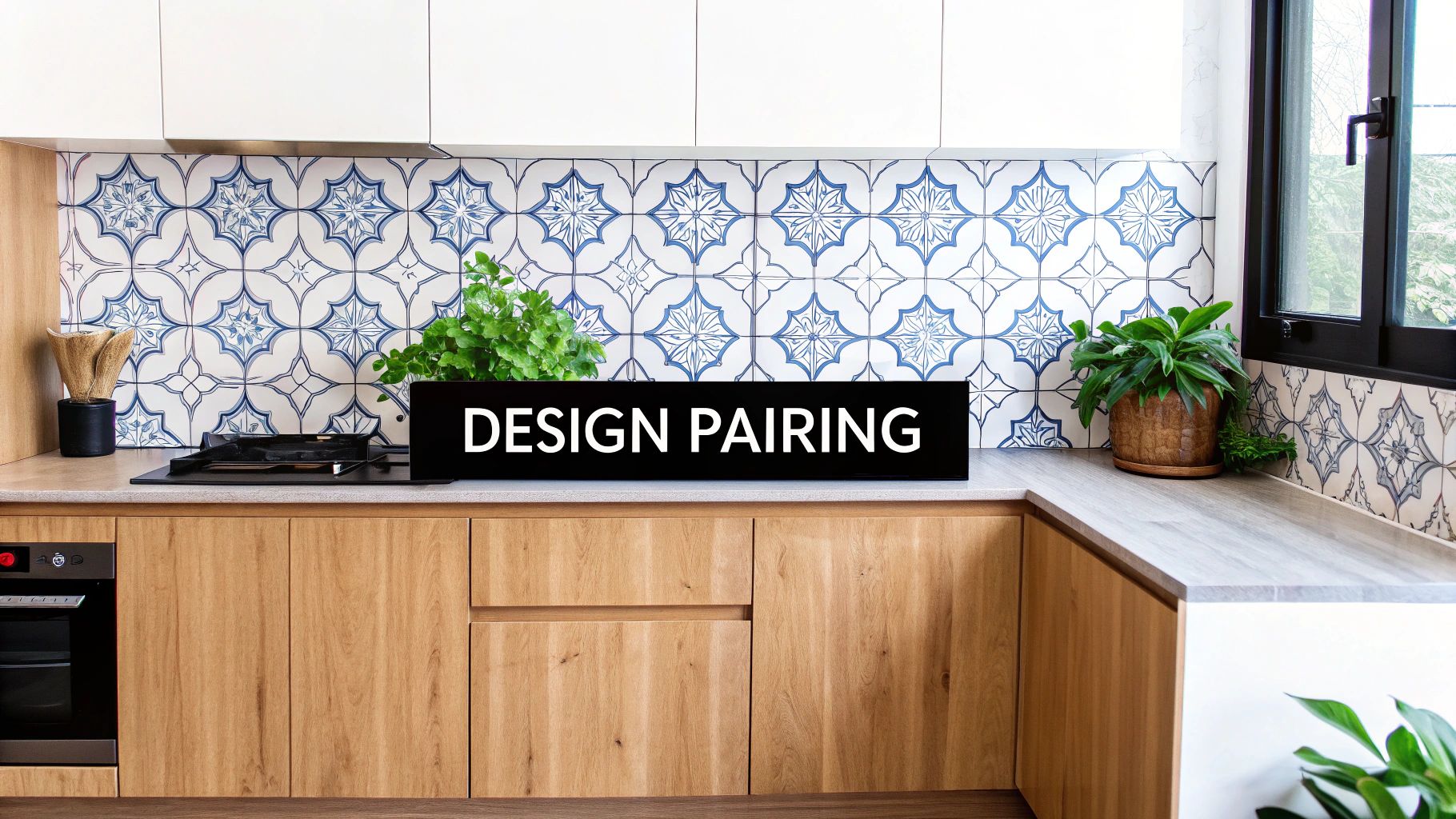
Choosing the perfect backsplash ceramic tile is a huge win, but the real magic happens when you pair it flawlessly with your cabinetry. Think of your Sinclair Cabinetry's custom wood finishes as the foundation and your backsplash as its perfect partner—together, they set the entire personality of your kitchen.
This relationship isn't about following strict rules. It's about creating a feeling. The interplay between cabinets and tile can dial up the drama, create a sense of calm, or nail that timeless elegance you're after. The goal is a cohesive design story where every piece supports the others, turning a collection of nice things into a truly unified space.
Creating Harmony Through Contrast and Complements
One of the most powerful tools in a designer's belt is contrast. Imagine the deep, rich tones of dark wood Sinclair cabinets set against a crisp, glossy white subway tile. This classic high-contrast look is both bold and sophisticated, letting the quality of both materials really shine.
On the other hand, a complementary approach creates a much softer, more integrated feel. Picture light, natural-toned wood cabinets paired with a ceramic tile in a warm, earthy hue. This low-contrast combo fosters a serene and inviting atmosphere—perfect for making your kitchen a calming retreat. The key is finding that common thread that ties it all together.
The secret to a successful pairing often lies in the undertones. A cabinet with cool, gray undertones will look stunning with a blue or green tile, while wood with warm, red undertones is a natural match for cream or terracotta-colored tiles.
Letting Your Backsplash Shine
What if you fall head-over-heels for a vibrant, patterned backsplash? Let it be the star of the show. Your cabinets can provide the perfect, quiet backdrop.
By pairing an intricate mosaic or a colorful geometric tile with clean, simple cabinetry in a neutral finish, you allow the backsplash to become the undeniable focal point. The understated elegance of the cabinets ensures the room feels balanced and exciting, not busy or overwhelming.
Ultimately, this process highlights Sinclair Cabinetry's role as more than just a cabinet maker—we're your design partner. By thoughtfully pairing these crucial elements, you create a beautiful, functional kitchen where every detail works in harmony to bring your vision to life.
Common Questions About Backsplash Ceramic Tile
Even the most buttoned-up renovation plan hits a few snags. When it comes to a new backsplash, questions always pop up, and that’s perfectly normal. We’ve pulled together some straightforward answers to the questions we hear most often from homeowners, so you can keep your project moving forward with confidence.
Think of this as your quick-reference guide for the practical details. Getting these things sorted out now means a smoother installation and a final result you'll be happy with for years.
How Do I Calculate How Much Ceramic Tile I Need for My Backsplash?
Figuring out how much tile to order is critical. Come up short, and your project grinds to a halt. Order way too much, and you've wasted money. Luckily, the math is pretty simple.
First, grab a tape measure and get the height and width of your backsplash area in inches. Multiply those two numbers to get the total area in square inches, then just divide that figure by 144 to convert it into square footage.
Here's the pro tip: always add an extra 10-15% to your final number. This overage is your safety net, covering you for cuts, accidental breaks, or any small mistakes during installation. It also leaves you with a few extra matching tiles for future repairs.
That little bit extra is a lifesaver. It means you won’t be desperately trying to find more tiles from the exact same dye lot later on, which can be next to impossible.
Can I Install a New Ceramic Tile Backsplash Over Existing Tile?
This is a shortcut that’s almost never a good idea. While it sounds tempting to just tile over what’s already there, it usually leads to bigger problems down the road.
For starters, adding a second layer of tile makes the wall noticeably thicker, which can create a real headache when it comes to fitting outlets, light switches, and trim pieces. But the bigger issue is stability. Your new tile is only as secure as the old tile underneath it. If the original installation is weak or has loose tiles, your new backsplash is destined to fail.
For a professional finish that will actually last, the best move is always to tear out the old backsplash, make sure the wall surface is clean and properly prepped, and then install your new ceramic tile.
Is Sealing Grout Really Necessary for a Kitchen Backsplash?
Yes, absolutely. Skipping this final step is a common mistake that can seriously undermine the look and lifespan of your brand-new backsplash. Grout is porous by nature, meaning it acts like a tiny sponge for kitchen grease, spaghetti sauce splatters, and moisture.
If you don't seal it, you’re inviting stubborn stains, ugly discoloration, and even mold or mildew to set up shop—especially in a busy area like a kitchen.
Sealing the grout creates an invisible shield that repels all that grime and water. It makes your backsplash so much easier to wipe clean and helps keep it looking fresh and hygienic. It’s a small, simple step that makes a huge difference.
Ready to create a kitchen where every detail is perfect? The expert designers at Sinclair Cabinetry inc can help you pair the ideal backsplash with our stunning, custom-built wood cabinets. Start designing your dream space today at https://sinclaircabinets.com.