
Picking the right paint color for your kitchen can feel like a huge, overwhelming decision, but it really doesn't have to be. The perfect shade is about more than just what’s trendy right now; it’s about crafting a space that truly feels like you and elevates your entire home. Think of it less as picking a color and more as creating a unique color story for the heart of your home.
Finding Your Kitchen's Perfect Color Palette
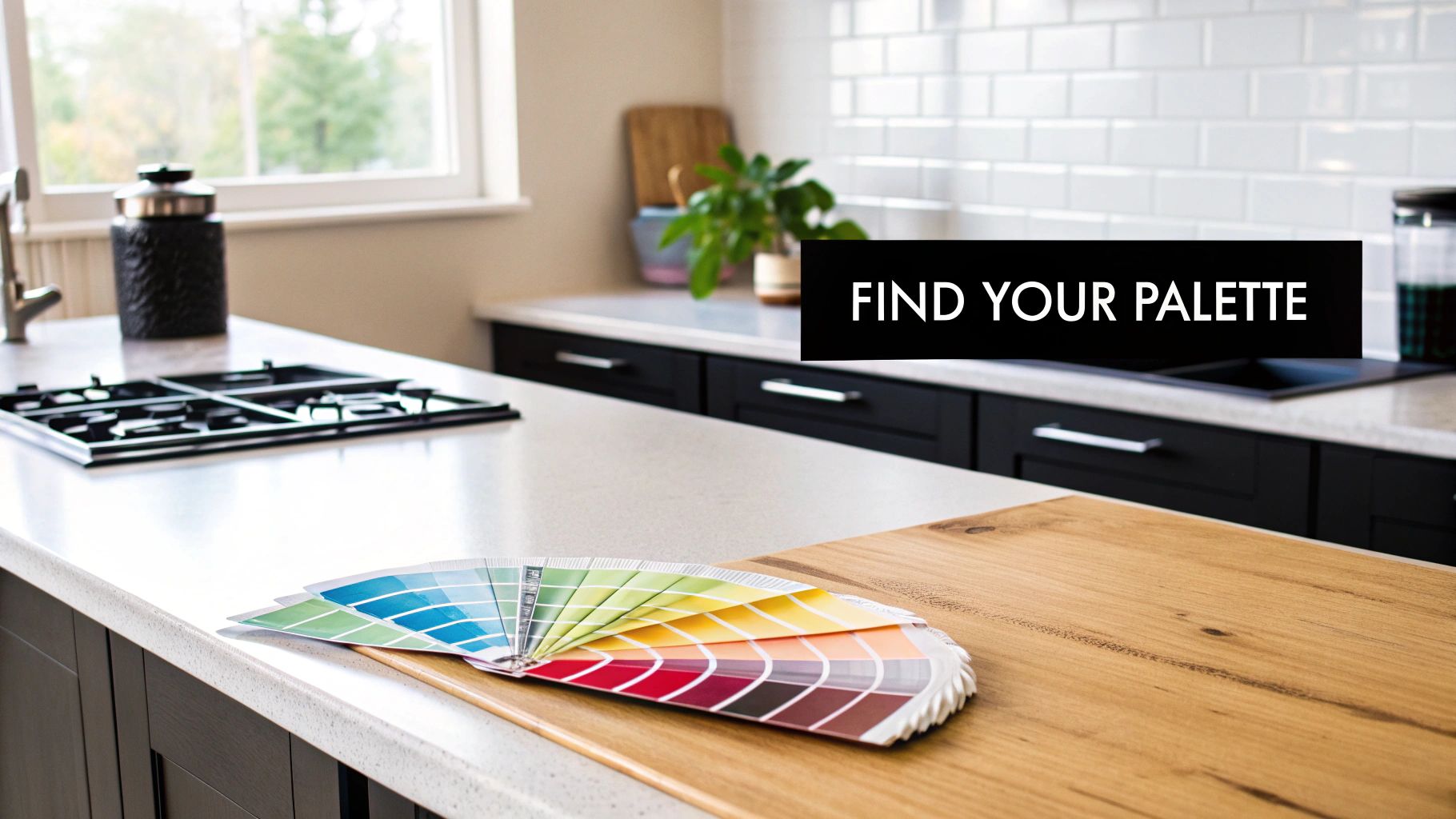
The journey to discovering the best colors for your kitchen doesn't start with a mountain of paint chips. It begins with simple observation. Before you get lost in hundreds of shades of greige, take a step back and really look at the room itself. The whole point is to choose a color that feels intentional and works in harmony with everything already there.
Color is so much more than just decoration—it's a powerful tool that can completely change the mood and perception of a space. A bright, sunny yellow can feel incredibly energizing and cheerful, which is perfect for that morning coffee routine. On the flip side, a deep, moody blue can create a sense of calm and sophistication, setting the stage for cozy evening gatherings.
The most successful kitchen palettes are born from a deep understanding of the space itself. It's about listening to what your home needs—from the way light hits the walls to the undertones in your countertops—before imposing your own tastes.
Building Your Color Story
Instead of just grabbing a color you like from the hardware store, let’s think about the overall feeling you want to create. This "color story" approach turns what could be a stressful choice into a thoughtful, fun design process. It just means looking at a few key things that all work together to create a cohesive look.
- Mood and Atmosphere: Do you want your kitchen to be the lively hub of the home, buzzing with social energy? Or would you prefer a serene, relaxing retreat? The answer will naturally point you toward either warm, energetic colors or cool, calming ones.
- Existing Elements: Your cabinets, countertops, flooring, and backsplash are the big, fixed features in the room. The best wall color will complement these pieces, not fight with them for attention.
- Architectural Style: A historic home with classic details might feel most at home with timeless, heritage colors, while a sleek, modern space can handle bold, contemporary hues without missing a beat.
If you're really aiming for a sense of harmony and balance, you might even want to explore the principles of Feng Shui in home decor to help guide your color choices. This ancient practice uses color and placement to cultivate specific energies within a room.
At the end of the day, your kitchen color should be a reflection of you. Don't be afraid to step outside of the "safe" neutrals if a bolder shade is calling your name. This guide is here to give you the framework to make that choice confidently, ensuring you create a kitchen you’ll absolutely love for years to come.
How Light and Space Dictate Your Color Choices
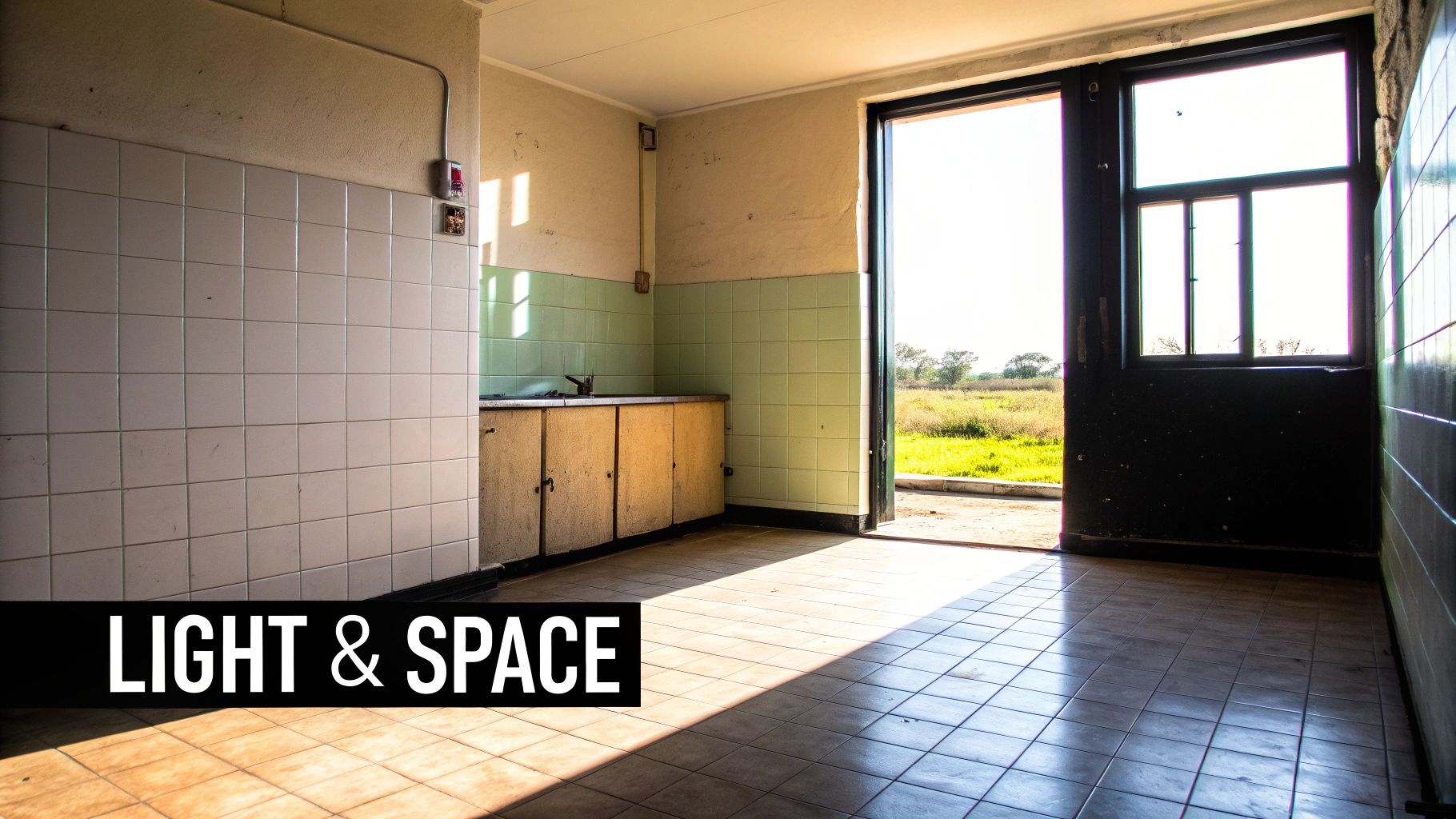
Before you fall head-over-heels for a paint chip under the buzzing fluorescent lights of the hardware store, you need to understand a fundamental truth of design: your kitchen’s own light and size are the real decision-makers. A color never exists in a vacuum. It’s in a constant conversation with its environment, shifting its mood and appearance from sunrise to sunset.
Think of your kitchen's natural light as a permanent filter. The direction your windows face will cast a specific color temperature over every single surface. This is one of the most common reasons a paint color looks perfect in the store but falls completely flat once it's on your walls.
This interaction is exactly why it’s so critical to know what colors to paint your kitchen based on its unique conditions. Let's break down how to "read" your room's light so you can pick a color that works with your space, not against it.
Reading Your Natural Light
The quality of light pouring into your kitchen is directly tied to which direction your windows face. Each one provides a distinct color temperature that will either flatter or fight with your paint choice.
- North-Facing Light: This is a cool, indirect light that casts a soft, almost bluish hue. A cool gray in a north-facing room can suddenly look sterile and nearly purple, while a warm, creamy white will feel more balanced and neutral.
- South-Facing Light: The designer's dream. You get bright, warm, and consistent light all day long. Colors appear true to the chip and can even feel more intense, so you might find a vibrant hue needs to be toned down just a touch.
- East-Facing Light: This light is bright and clear in the morning before shifting to a cooler, shadier tone in the afternoon. Your paint color needs to look good in both settings, which makes versatile neutrals like greige a fantastic choice.
- West-Facing Light: You’ll get softer light in the morning that becomes intensely warm and golden in the late afternoon. Warm colors can become overpowering here, but cool colors will beautifully balance that evening glow.
Decoding Light Reflectance Value (LRV)
Beyond the direction of the sun, there's a powerful little number printed on the back of most paint chips that can guide your decision: the Light Reflectance Value (LRV). This number, on a scale of 0 (absolute black) to 100 (pure white), tells you exactly how much light a color will reflect back into the room.
A higher LRV (typically 60 and above) means the color will bounce back a significant amount of light, making a space feel brighter and larger. A lower LRV (below 60) signals that the color will absorb more light, creating a cozier, more intimate atmosphere.
For a small or dim kitchen with few windows, choosing a paint with a high LRV is a game-changer. It’s a simple trick that maximizes every bit of available light, making a cramped space feel surprisingly expansive.
On the flip side, in a large, open-concept kitchen, a color with a mid-to-low LRV can add definition and warmth. It helps ground the space and keeps it from feeling too vast or impersonal.
Here is the rewritten section, crafted to sound completely human-written and natural, following the provided style guide.
The Lasting Appeal of Timeless Neutral Palettes
When you’re standing in front of that overwhelming wall of paint swatches, it’s no surprise so many of us instinctively reach for neutrals. There's a reason for that. A well-chosen palette of whites, grays, and beiges creates a sophisticated foundation that just works, providing a quiet, elegant backdrop for your life.
But let’s get one thing straight: "neutral" doesn't mean boring. The world of modern neutrals is surprisingly rich, filled with complex undertones that can completely change the feel of a room. We're not talking about sterile, flat whites or the generic beige of decades past. We're exploring a nuanced spectrum of colors that bring warmth, depth, and genuine character to your kitchen.
Embracing Complex Neutrals
Think of your kitchen walls as the canvas. A beautiful neutral color lets the real stars of the room—your stunning wood cabinets, the elegant veins in your countertops, or a favorite piece of art—truly shine. These colors don't fight for attention; they support and elevate everything else.
The trick is to find neutrals with interesting undertones.
- Warm Greiges: This is the perfect marriage of gray and beige. Greige has the modern feel of gray but is softened by the warmth of beige, so your kitchen never feels cold or stark.
- Creamy Off-Whites: Pure, bright white can be a bit jarring, especially in rooms with a lot of cool, natural light. A creamy off-white with subtle yellow or pink undertones casts a much softer, more inviting glow that feels both clean and cozy.
- Earthy Taupes: Deeper than beige but softer than a true brown, taupe brings a grounded, organic warmth to a space. It’s a color that feels connected to the natural world, creating an instantly calm and serene atmosphere.
This shift toward adaptable, calming palettes is more than a fleeting trend—it’s a major move in design thinking. In fact, the NKBA's 2026 Kitchen Trends Report found that a massive 96% of designers rank neutrals as their top choice for kitchen base colors. There's a psychological element, too; these hues can reduce stress by 15-20% in living spaces, making them perfect for the heart of the home. You can learn more about how these kitchen design trends are impacting home wellness.
Building Depth with a Layered Neutral Palette
The secret to a truly stunning neutral kitchen? Layering. If you just slap one neutral shade on everything, the room can feel a bit flat. To avoid that, designers use a technique called tonal layering, which means combining different shades, tints, and textures all from the same neutral family.
Picture this: creamy off-white walls paired with slightly darker greige cabinets. Add a textured, sand-colored backsplash and some warm wood open shelving. Each element is neutral, but together they create a rich, multi-layered design that’s full of visual interest. It’s a sophisticated depth that a single color just can’t achieve on its own.
A successful neutral kitchen isn't about the absence of color. It's about the masterful combination of subtle tones and varied textures to create a space that feels both cohesive and dynamic.
Neutrals as a Smart Long-Term Investment
Beyond just looking great, choosing a neutral palette is one of the smartest financial moves you can make when deciding what colors to paint your kitchen. These colors have incredibly broad appeal, which can seriously boost your home's resale value. Potential buyers can easily imagine their own furniture and style in a neutral space, making your house feel move-in ready.
A bold, highly personal color choice might be perfect for you, but it can be a deal-breaker for someone else. Timeless neutrals, on the other hand, create a clean, elegant slate that feels welcoming to just about everyone. This makes your kitchen—and your entire home—a more attractive and valuable asset for years to come.
Trending Kitchen Colors That Inspire Personality
While a classic neutral kitchen has a beautiful, timeless appeal, sometimes the heart of the home needs to beat a little louder. If you're ready to look beyond the endless sea of whites and greiges, there's a whole world of expressive, personality-packed color just waiting for you. These trending shades are more than just a flash in the pan; they represent a real shift toward creating kitchens that feel personal, curated, and connected to the world around us.
Don't worry, embracing a bolder color doesn't mean you have to go all-in on every wall. In fact, the most breathtaking designs often use these vibrant colors in strategic, high-impact ways. Think of them as the perfect accent to define a space, show off a beautiful architectural feature, or simply bring a little more joy to your morning coffee routine.
Let's dive into the colors that are currently shaping today's most inspiring kitchens.
Deep Greens and Sophisticated Blues
Colors pulled from the natural world have an incredible way of making us feel grounded, calm, and centered. Deep forest greens and sophisticated navy blues are leading this charge, turning kitchens into tranquil, stylish sanctuaries. A rich green, like a hunter or emerald shade, can instantly evoke the feeling of a lush, quiet forest, creating a space that feels both restorative and full of life.
In the same vein, a deep navy or moody indigo brings a classic, almost regal, sense of drama. These colors have a certain weight and history to them that feels both modern and completely timeless. They pair beautifully with almost anything, from the warmth of brass hardware and butcher block counters to the crisp, clean look of white marble and stainless steel.
Using a deep, saturated color is like adding a beautiful piece of velvet to your room. It absorbs light in a way that creates a soft, luxurious depth, making the space feel more intimate and enveloping.
One of the smartest ways to bring these hues into your kitchen without it feeling too dark is to paint just your lower cabinets or a central island. This popular "tuxedo kitchen" style keeps the upper half of the room feeling light and open while grounding the space with a rich, elegant base. It's the perfect way to get that pop of personality while keeping things bright. For more ideas on two-toned designs, check out our guide to the latest kitchen cabinet color trends.
Warm, Earthy Terracottas and Spiced Hues
Another powerful trend we're seeing is a return to warm, earthy tones that wrap the kitchen in a cozy, welcoming hug. Colors like terracotta, burnt orange, and spiced reds are gaining serious traction for their ability to create an atmosphere that feels both rustic and incredibly chic. These shades bring to mind sun-baked clay and desert landscapes, adding an organic, handcrafted vibe to your home.
These warm tones are surprisingly versatile. A soft terracotta can act as a "new neutral," offering far more character and warmth than a standard beige. They look incredible alongside natural wood tones, creamy whites, and matte black fixtures, creating a palette that feels both comforting and effortlessly stylish.
The Bright Future of Yellows
Looking ahead, designers are all pointing toward a major comeback for optimistic, sunny yellows. We’re not talking about the bright, crayon-box yellow of the past. Instead, think of a more sophisticated range of warmer, nuanced shades, from soft buttery creams to rich, earthy ochres.
Industry experts are definitely taking notice. A recent 2025 survey found that 42% of interior professionals chose warm yellows for north-facing kitchens, a massive 35% increase from 2022. Why the jump? A warm yellow can reflect up to 85% more light than many popular grays, which not only brightens up a dim space but can even help trim energy costs by 10-12%. You can discover more insights about 2026 kitchen paint color trends on housebeautiful.com.
To help you visualize how these color families translate into a specific feeling or atmosphere, we've put together a quick guide.
Popular Kitchen Color Palettes and Their Psychological Impact
This table matches some of today's most popular color families with the mood they tend to create, helping you choose a palette that truly aligns with the atmosphere you want for your kitchen.
| Color Family | Mood & Atmosphere | Best For | Pairs Well With |
|---|---|---|---|
| Deep Greens & Blues | Calming, Grounding, Sophisticated, Natural | Creating a tranquil retreat; kitchens that open to outdoor spaces. | Brass, wood tones, crisp white, marble, soapstone. |
| Warm Earthy Tones | Cozy, Welcoming, Rustic, Artisanal | Making large kitchens feel more intimate; adding warmth and character. | Creamy whites, matte black, natural wood, concrete. |
| Soft & Sunny Yellows | Optimistic, Cheerful, Energizing, Bright | North-facing or low-light kitchens; spaces needing a boost of energy. | Cool grays, bright whites, light wood tones, navy blue. |
| Modern Black & Charcoal | Dramatic, Elegant, Modern, Grounding | Creating a bold focal point; contemporary or industrial-style kitchens. | Rich woods, metallics (gold, copper), bright white, stone. |
| Warm Whites & Greiges | Timeless, Airy, Clean, Versatile | Small kitchens; homeowners wanting a flexible, long-lasting backdrop. | Virtually everything; provides a neutral canvas. |
Choosing a color is about more than just aesthetics; it's about curating the feeling you want to have every time you walk into the room.
Whether you're drawn to an earthy terracotta accent wall or a deep green island, these strategies give you the confidence to explore what colors to paint your kitchen. They provide a clear path to creating a space that’s not just on-trend, but more importantly, a true reflection of you.
How to Match Paint with Cabinets and Countertops
This is the moment where your entire kitchen vision really starts to click. Let’s be honest: choosing a wall color on its own, without considering your biggest investments, is a recipe for design regret. The secret is to think of your paint as the final thread that ties your cabinets and countertops together into one seamless look.
You have to let these big, fixed features lead the way. A gallon of paint is simple and inexpensive to change. A full set of custom maple cabinets or a slab of granite? Not so much. When you treat your cabinetry and countertops as the anchors of your color scheme, picking the right wall color becomes a much more intuitive, guided process.
The relationship between these three surfaces sets the entire mood for the room. Get it right, and your kitchen will have that polished, designer feel. Get it wrong, and the space can feel chaotic and disconnected, no matter how beautiful each part is on its own.
Creating a Cohesive Palette with Wood Cabinets
Natural wood cabinets bring so much warmth and texture into a kitchen, but every wood species has its own distinct undertones that you just can’t ignore. From the light, sunny tones of birch to the deep, moody richness of walnut, your wall color has to play nice with these built-in characteristics.
A common mistake we see is picking a paint color that actively fights the wood's undertone. For instance, pairing warm, honey-toned oak cabinets with a cool, blue-based gray on the walls can create a visual clash that makes both elements look a little "off."
Here’s a quick guide to matching paint with some of the most popular wood tones:
- For Light Woods (Oak, Maple, Birch): These woods lean yellow or have subtle pink undertones. To create a balanced, airy feel, pair them with soft sage greens, warm off-whites, or creamy greiges.
- For Medium Woods (Cherry, Hickory): Cherry wood has powerful red undertones that look absolutely stunning next to deep greens or a sophisticated navy blue. If you want something more neutral, a warm gray can beautifully calm the red without clashing.
- For Dark Woods (Walnut, Mahogany): These dramatic woods make a bold statement. Pair them with a crisp, clean white for a high-contrast look that really pops. Or, for a more luxurious vibe, a deep charcoal or a muted jewel tone can create an incredibly cozy, enveloping atmosphere.
Once you've landed on the perfect wall color, you'll want your cabinets to look their best. If you're thinking about a full refresh, this complete DIY guide to covering kitchen cabinets is a great resource for updating their finish.
Coordinating with Painted Cabinets
When you have painted cabinets, the name of the game is creating either a subtle, layered effect or an intentional, high-impact contrast. The one thing you want to avoid is having your wall and cabinet colors be almost the same but not quite. That can look like you tried to match them and missed.
If you have classic white cabinets, the world is your oyster. You can go for a clean, monochromatic look with a slightly different shade of white on the walls, or you can create some drama with just about any color you can imagine, from a soft pastel to a deep, moody hue.
A good rule of thumb for pairing colors: Make sure there is enough visual difference between them. For gray cabinets, for instance, choose a wall color that is either noticeably lighter or significantly darker. This creates clear separation and adds real depth to the room.
For bolder cabinet colors like navy blue or forest green, a soft, warm neutral on the walls is often the perfect move. It acts as a quiet backdrop that lets your beautiful cabinets be the star of the show, just as they should be.
To help you zero in on the kind of kitchen personality you’re building, this decision tree is a great tool for guiding you toward a style that feels both bold and cohesive.
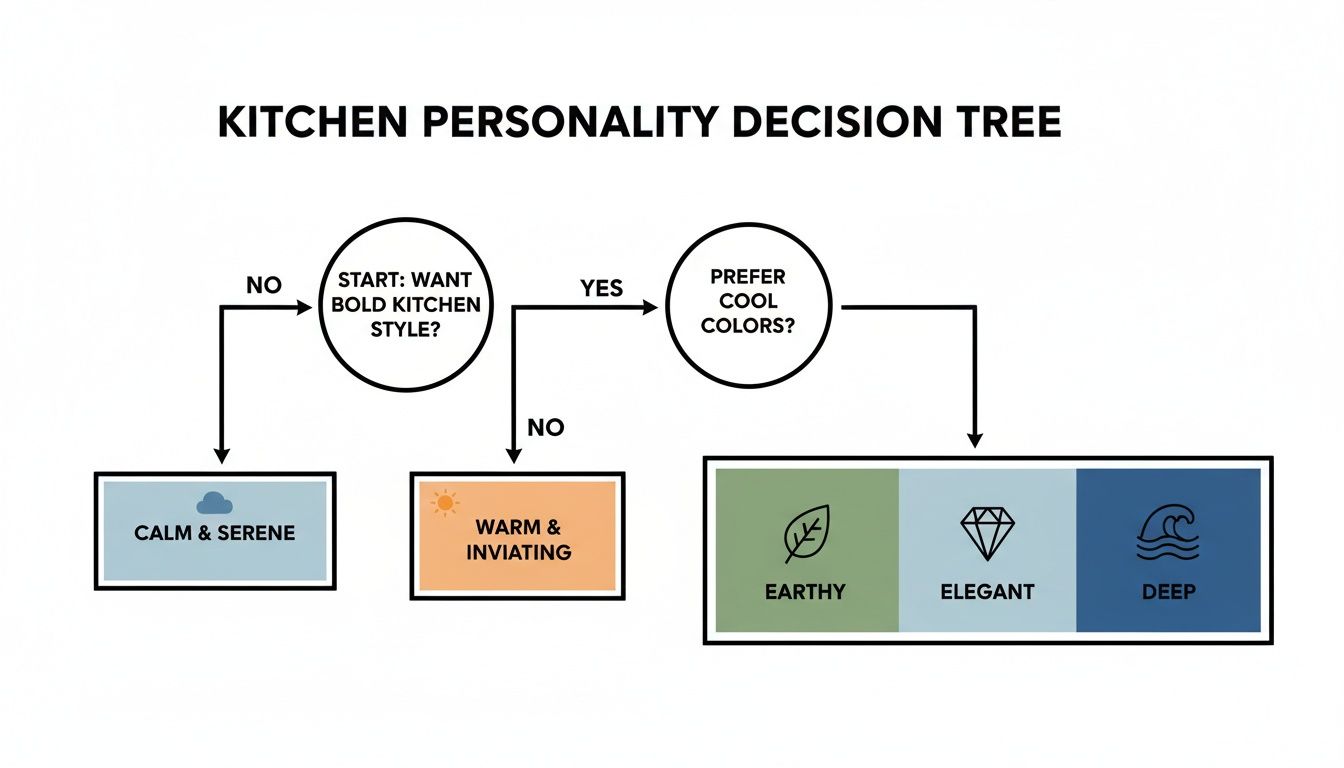
This handy visual guide makes it easy to decide if you’re leaning toward an earthy, elegant, or deep color scheme to make a real statement.
The Designer’s Trick for Countertop Harmony
Want to know one of the best-kept secrets for picking the perfect wall color? Look at your countertops. Seriously. Whether it’s granite, quartz, or marble, that surface is packed with a complex palette of secondary colors hidden in its veins, flecks, and patterns.
Get up close and really examine your countertop. Do you see a subtle fleck of gray? A soft, creamy vein of beige? Maybe a hint of warm gold? Pulling one of those less obvious colors out of the countertop and putting it on your walls is a nearly foolproof method for guaranteeing a cohesive design.
This technique is so effective because it creates a subtle visual echo, tying the horizontal plane of your counters to the vertical plane of your walls. It’s a sophisticated designer’s trick that makes your wall color feel deliberate and perfectly integrated, not just like a random choice.
If you’re still trying to land on the perfect material, our guide on how to choose kitchen countertops offers deeper insights. This simple strategy is one of the best ways to figure out what colors to paint your kitchen for a truly seamless result.
To make things even easier, here are some tried-and-true pairings to get you started.
Paint Color Pairings for Common Cabinet Finishes
| Cabinet Finish (Wood/Color) | Recommended Wall Paint Colors | Design Style Achieved |
|---|---|---|
| Light Oak | Soft Sage Green, Creamy White, Warm Greige | Modern Farmhouse, Scandinavian |
| Honey Maple | Earthy Terracotta, Muted Blue-Gray, Off-White | Transitional, Warm & Inviting |
| Cherry | Deep Forest Green, Slate Blue, Warm Taupe | Traditional, Rich & Elegant |
| Dark Walnut | Crisp White, Charcoal Gray, Deep Teal | Contemporary, Luxurious, High-Contrast |
| Classic White (Painted) | Light Gray, Navy Blue, Soft Pastel Pink/Blue | Coastal, Classic, Modern |
| Gray (Painted) | Bright White (for contrast), Deeper Charcoal | Modern, Sophisticated |
| Navy Blue (Painted) | Warm White, Light Greige, Soft Gold/Brass | Bold, Nautical, Chic |
These combinations are a fantastic starting point, but remember to always test samples in your own kitchen to see how they look with your specific lighting.
Choosing a Paint Finish for Lasting Durability
So you've finally nailed down the perfect color. Great! But you're only halfway home. The paint finish—or sheen—you choose is just as critical as the hue itself. A kitchen isn't some quiet, low-traffic bedroom; it’s a whirlwind of steam, grease, splatters, and constant cleaning.
Think of the paint finish as the armor for your color. A gorgeous shade in the wrong finish will quickly turn into a scuffed, stained mess that you’ll regret. Getting a handle on the different sheens is the secret to making sure all your hard work pays off with a durable, beautiful look that lasts for years.
Understanding the Paint Sheen Spectrum
Paint finishes are all about how much light they reflect. A finish with almost no shine is called "flat" or "matte," while one that's super reflective is called "glossy." Here’s the key takeaway: the amount of shine is directly tied to the paint's durability and how easy it is to clean. The glossier it is, the tougher it is.
This trade-off is everything in a kitchen. A flat finish is a master at hiding small bumps and imperfections on a wall, but it’s also the first to give up a fight against stains and scrubbing. A semi-gloss finish, on the other hand, can be wiped clean in a second but will unapologetically highlight every tiny flaw on the surface.
The perfect kitchen paint finish strikes that delicate balance between looking good and performing under pressure. You need a sheen that’s forgiving enough to hide minor flaws but tough enough to handle the reality of daily cooking.
Best Finishes for Kitchen Walls and Ceilings
For most kitchen walls, a satin or eggshell finish is the undisputed champion. These sheens have a soft, subtle luster that gives you way more durability than a flat finish without being overly shiny. They’re scrubbable enough to handle a splatter from a simmering pot of marinara or a stray splash of coffee, making them perfect for the main wall areas.
- Satin Finish: This is the go-to for a reason. It has a smooth, almost velvety look and stands up incredibly well to moisture and stains. Because it's so easy to wipe down, it’s ideal for walls and backsplashes, especially in those high-impact zones near your stove and sink.
- Eggshell Finish: With just a little less shine than satin, eggshell offers a very similar level of durability. It's a fantastic alternative if you want a slightly more muted look but still need solid washability for everyday kitchen life.
- Matte or Flat Finish: Save this one for the ceiling. A matte surface absorbs light instead of reflecting it, which does an amazing job of hiding imperfections and creating a smooth, uniform look overhead. Up there, durability just isn’t a big concern.
Choosing the Right Finish for Trim and Cabinets
Your trim, doors, and cabinets are the surfaces that take the most abuse. They need a finish that can handle knocks, scuffs, and fingerprints day in and day out. A semi-gloss finish has long been the top choice for these hardworking elements. Its noticeable shine makes it incredibly durable and a breeze to clean, giving your trim work a crisp, defined look.
When it comes to your cabinets, the finish is a make-or-break decision that affects both their appearance and how long they'll last. We've gone deep on this very topic, and for expert advice on getting that factory-quality look, check out our detailed guide on the best finish for kitchen cabinets. Getting this right is a vital step in choosing what colors to paint your kitchen for a design that’s both cohesive and built to last.
Answering Your Top Questions About Kitchen Paint Colors
Choosing the right paint color can feel like the final, high-stakes decision in a kitchen project. It’s the element that ties everything together, so it's natural to have a few questions. We hear them all the time.
Let's clear up some of the most common questions homeowners ask when they're standing in front of a wall of paint chips, trying to find that perfect shade.
What Is the Most Popular Color for a Kitchen?
Year after year, shades of white and off-white are the undisputed champions of kitchen colors. It’s easy to see why—they make any space feel clean, bright, and bigger, which is a combination that simply never goes out of style.
But we're seeing a huge surge in what I'd call "complex neutrals." Think warm grays (or "greige"), deep, moody blues, and earthy sage greens. These are fantastic options for anyone who wants a bit more personality than white can offer, but isn't ready to commit to a really loud, bold color. They strike a perfect balance.
Should My Kitchen Walls Be Lighter or Darker Than My Cabinets?
This is a classic design dilemma, and the truth is, there’s no single right answer. It all comes down to the vibe you’re trying to create.
- Lighter Walls: Going lighter on the walls is a time-tested, foolproof approach for an airy and open kitchen. It pushes the cabinets forward, making them the star of the show, and it’s a great trick for making a smaller kitchen feel much more spacious.
- Darker Walls: If you’re chasing a more dramatic, cozy, or modern look, then darker walls are the way to go. This creates a bold contrast that makes light or white cabinets seriously pop. It gives the room a sophisticated, almost cocoon-like feeling.
The real secret here is contrast. You want a clear difference between the two tones. If the wall color is just a shade off from the cabinets, it can end up looking like you tried to match them and missed.
How Do I Actually Test Paint Colors in My Kitchen?
Please, whatever you do, do not make your final decision based on a tiny paint chip under the harsh fluorescent lights of a hardware store. I promise you, the color will look completely different once you get it home.
The only reliable way to test paint is to buy a sample pot and paint a big swatch—at least 12×12 inches—right on the wall. Better yet, paint a few swatches on different walls, since the light will hit each one differently. Then, just live with them for a few days. Watch how they look in the bright morning sun, in the afternoon shade, and under your kitchen lights at night. It’s the only way to truly know how a color will behave in your space before you commit.
Finalizing your color palette is one of the most exciting parts of a kitchen remodel. If you're ready to find the perfect custom cabinets to go with your new wall color, the team at Sinclair Cabinetry inc is here to help you create a beautiful, cohesive space. See what's possible by exploring our custom cabinet solutions.