

So, you’ve picked out your white cabinets—a brilliant choice. They’re the ultimate blank canvas in the kitchen design world, a quiet and dependable foundation just waiting for you to make your mark. But what’s next? The backsplash. This is where the real fun begins.
Think of your backsplash as the statement piece that ties the whole look together. It’s the pop of personality, the splash of color, the touch of texture that turns a perfectly nice kitchen into your kitchen. It’s what keeps the space from feeling sterile and transforms it into a room with a story.
This guide is here to walk you through that exciting decision. We're going to skip the fleeting trends and dive deep into the materials, colors, and patterns that will not only look incredible on day one but will also stand up to your real, everyday life.
Your backsplash is much more than just a wall protector. It's the visual glue that holds your cabinets, countertops, and hardware together, creating a design that feels intentional and beautifully cohesive.
The sheer number of options can feel a bit much, I get it. To cut through the noise, we'll start by looking at the most popular and time-tested pairings for white cabinets. This will give you a clear sense of what’s possible and set the stage for finding a look you’ll love for years.
Top Backsplash Choices for White Cabinets at a Glance
Before we get into the nitty-gritty of grout lines and material quirks, let's start with a quick overview. This table breaks down some of the go-to backsplash options, highlighting what they do best and the kind of kitchen styles they feel most at home in. Use it to quickly spot a few directions that feel right for your project.
| Backsplash Material | Key Benefit | Best For Kitchen Style |
|---|---|---|
| Ceramic Subway Tile | Timeless versatility and affordability | Modern, Farmhouse, Traditional |
| Marble Slab | Luxurious, seamless, and elegant | Modern, Luxury, Transitional |
| Patterned Mosaic | Adds a bold, artistic focal point | Eclectic, Bohemian, Modern |
| Glass Tile | Brightens and reflects light | Contemporary, Coastal, Small Kitchens |
| Zellige Tile | Rich texture and handcrafted charm | Mediterranean, Rustic, Organic Modern |
Think of this as your starting point. Now, let's explore what makes each of these options—and a few others—tick, so you can make a choice that’s not just beautiful, but perfectly suited to you.
Choosing the Right Backsplash Material
Think of picking a backsplash material as casting the main character in your kitchen's story. It's the decision that sets the tone for the room's entire personality and dictates how it will handle the rigors of daily life. With white cabinets, you've got the perfect neutral backdrop, which means your material choice gets to be the star of the show, whether you go for something timeless or a little more daring.
The most popular and versatile options, by far, are ceramic and porcelain tiles. I like to call these the reliable workhorses of the design world. They come in an almost dizzying array of colors, patterns, and price points, making them a fantastic fit for nearly any kitchen style, from sleek and modern to a cozy farmhouse vibe. To really get a feel for what's out there, you can dive into the vast world of tile in our detailed guide on different types of tile for your backsplash.
Classic vs. Contemporary Materials
When you're weighing your options, you're really balancing two things: visual impact and practical demands. Each material brings its own distinct feel to the room.
- Natural Stone (Marble, Quartzite, Travertine): These materials are all about organic luxury and one-of-a-kind beauty. Every single slab or tile has its own unique veining and character, so no two kitchens will ever be exactly alike. The trade-off? They're porous and need to be sealed regularly to keep stains at bay, making them a higher-maintenance relationship.
- Glass Tiles: If your kitchen is on the smaller or darker side, glass tiles are your best friend. They are absolute champions of light, bouncing it all around the room with their reflective surface. This creates a wonderful illusion of more space and adds a bright, contemporary sparkle.
- Metal Tiles (Stainless Steel, Copper): For that cool, industrial, or professional-grade kitchen look, nothing beats the unique sheen and texture of metal. They are incredibly durable and a breeze to clean, though you might find yourself wiping away fingerprints and water spots more often.
This little decision tree can help you visualize which material might click with the overarching style you're aiming for.
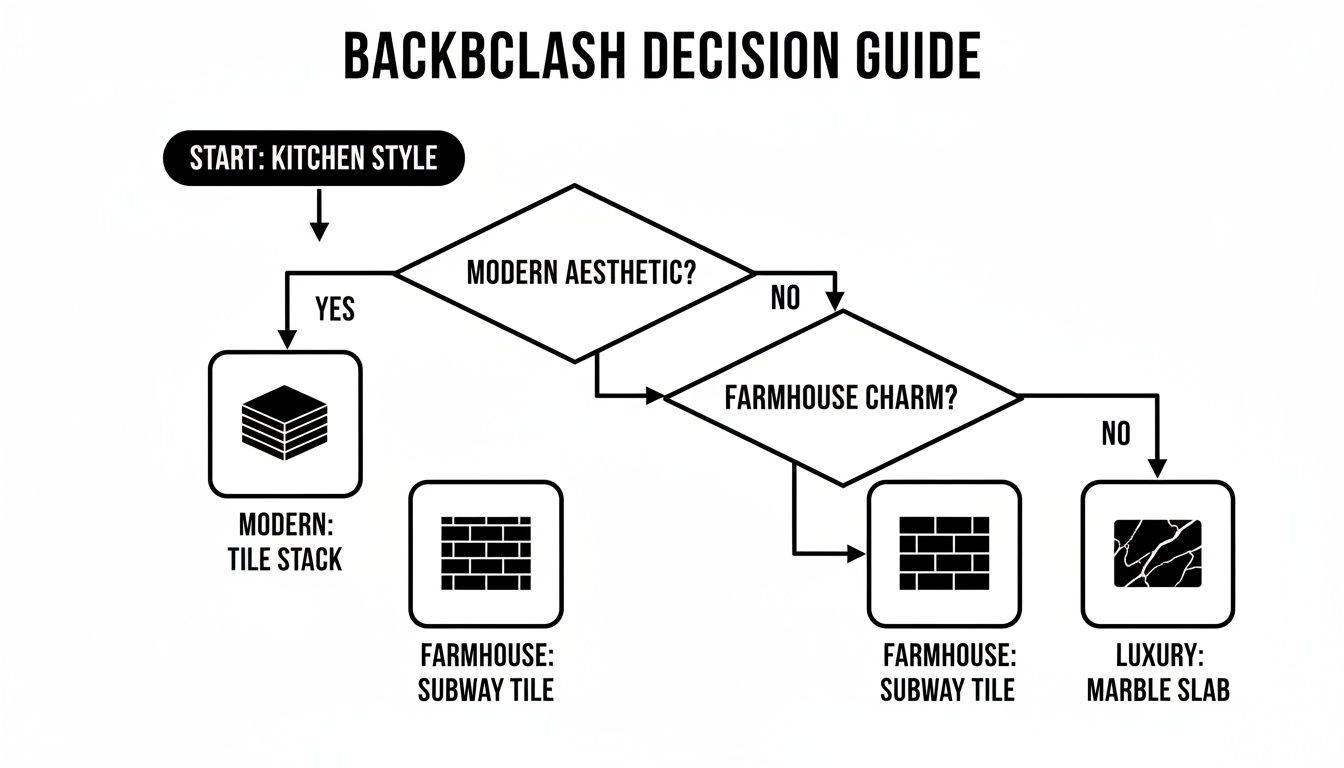
As the flowchart shows, your kitchen's core style—be it Modern, Farmhouse, or Luxury—can really help narrow down the field and make those initial choices a whole lot simpler.
The Rise of Slab Backsplashes
While tiles will always be a timeless classic, there’s a major shift happening in kitchen design right now. More and more homeowners are ditching grout lines in favor of a seamless, sophisticated look.
A single slab backsplash creates an uninterrupted visual flow from the countertop to the upper cabinets. This minimalist approach not only looks incredibly sleek but is also exceptionally easy to clean without the hassle of scrubbing grout lines.
This isn't just a hunch; the industry data backs it up. The 2024 NKBA Kitchen Trends Report found that a whopping 75% of designers are now choosing slab or solid surface backsplashes over tile. Natural quartzite is the clear front-runner, with a 61% popularity rating. It's prized for giving you the dramatic, sweeping veining of marble but with far greater durability and resistance to stains.
At the end of the day, the best backsplash for your white cabinets is the one that strikes the perfect balance between your design dreams and your actual lifestyle. Whether you fall for the handcrafted charm of ceramic tile or the bold statement of a quartzite slab, the right material will feel like the missing piece that completes your kitchen for years to come.
Mastering Color and Grout for a Cohesive Look
Picking out your backsplash material is a huge step, but the real magic happens in the details—specifically, the color and grout. Think of the tile color as setting the mood for your entire kitchen and the grout as the finishing touch that pulls it all together. With white cabinets serving as your clean, simple foundation, you have the freedom to steer your design in a few powerful directions.
Each approach gives your kitchen a distinct personality, allowing you to create a look that feels uniquely you.
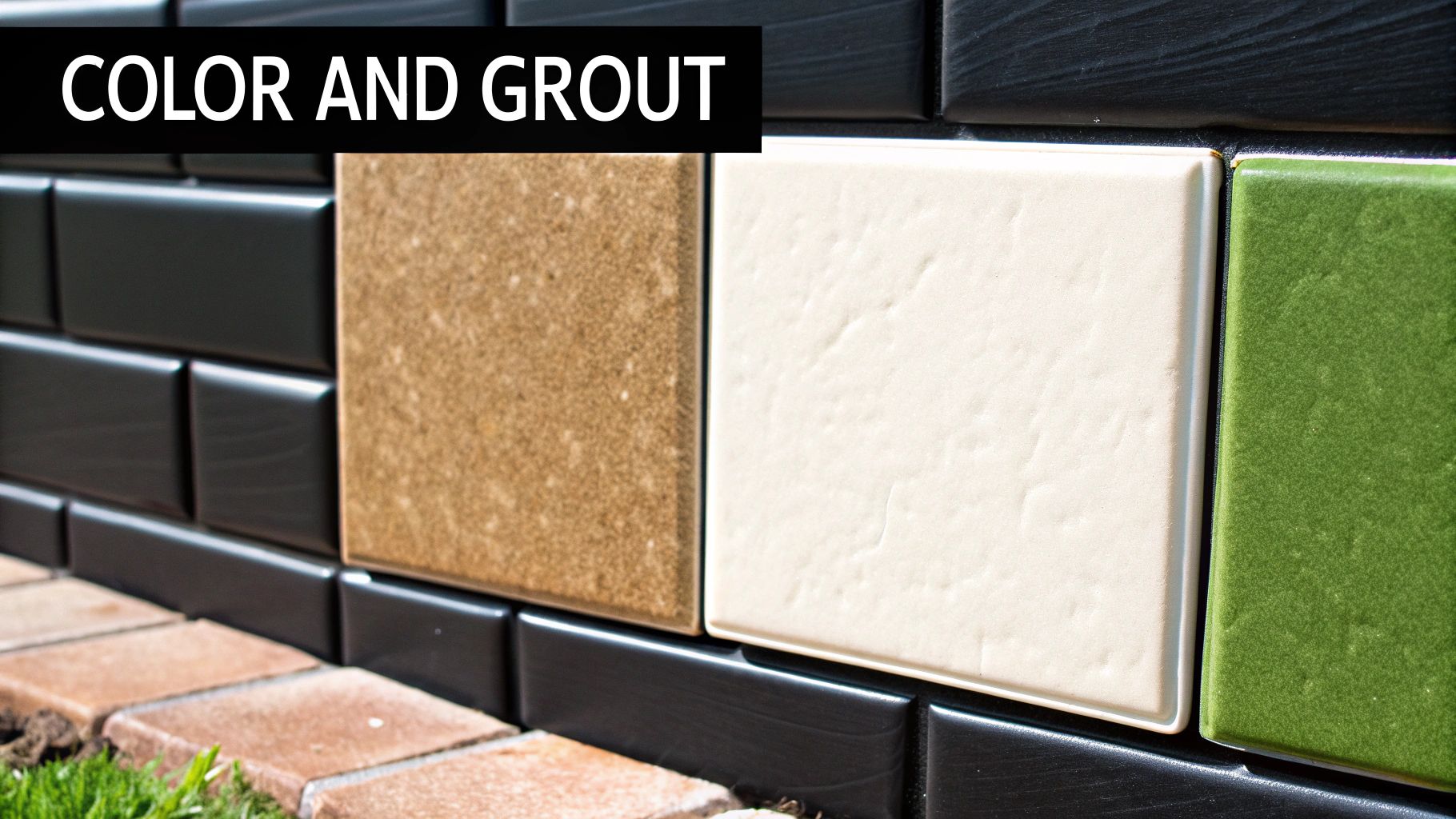
One popular strategy is the seamless, white-on-white look. Pairing white cabinets with a white backsplash—like a classic subway tile or a luxe Calacatta marble—creates an airy, expansive feel. This monochromatic choice is perfect for making smaller kitchens feel much larger and achieving a timeless, bright aesthetic that never goes out of style.
Introducing Contrast: From Subtle to Bold
If an all-white kitchen feels a bit too sterile for your taste, your next move is to introduce some contrast. You can go about this in two ways: with a soft touch or with high drama.
- Subtle Contrast: This is all about using soft, muted colors that add depth without screaming for attention. Think of gentle grays, warm beiges like Sherwin Williams Accessible Beige, or soft sage greens. These colors provide just enough variation to create visual interest while keeping the atmosphere serene and sophisticated.
- Bold Contrast: Ready to make a statement? A dark or vibrant backsplash is the way to go. A glossy black subway tile, a deep navy blue mosaic, or even a rich emerald green can create a stunning focal point. This high-contrast look is confident and modern, turning your backsplash into a true piece of art.
Remember, the color you choose will directly influence the energy of your kitchen. Lighter, neutral tones create a calm and inviting space, while darker, saturated hues inject energy and personality.
The Critical Role of Grout Selection
Grout is so often an afterthought, but it’s just as important as the tile itself. It’s the framework that defines your pattern and can completely change the final look of your backsplash. Don't skip this step!
There are two main ways to think about choosing a grout color:
- Matching Grout: Selecting a grout color that closely matches your tile creates a smooth, monolithic surface. This technique makes individual tiles and grout lines blend together, resulting in a clean, seamless finish that’s perfect for modern and minimalist designs.
- Contrasting Grout: Using a grout color that contrasts with your tile—like the classic dark gray grout with white subway tiles—makes each tile pop. This adds a distinct graphic quality, emphasizing the shape of the tile and the pattern of the layout, whether it's herringbone or basketweave. It’s a choice that adds texture and a layer of intentional design detail.
How to Match Backsplash Patterns to Your Kitchen Style
The pattern of your backsplash does more than just shield your walls from spaghetti sauce splatters; it’s a massive piece of your kitchen’s design story. Just like the right tie can pull an entire suit together, the right backsplash pattern reinforces your home's aesthetic, making your kitchen feel intentional and cohesive. And with white cabinets as your versatile backdrop, the pattern you choose gets to be the star of the show.
Think about it: a single, seamless slab of polished quartz gives off a completely different vibe than a wall of intricate, handmade Zellige tiles. Each choice broadcasts a specific style. The real trick is picking a pattern that not only looks great on its own but also vibes perfectly with the overall feeling you're trying to create.
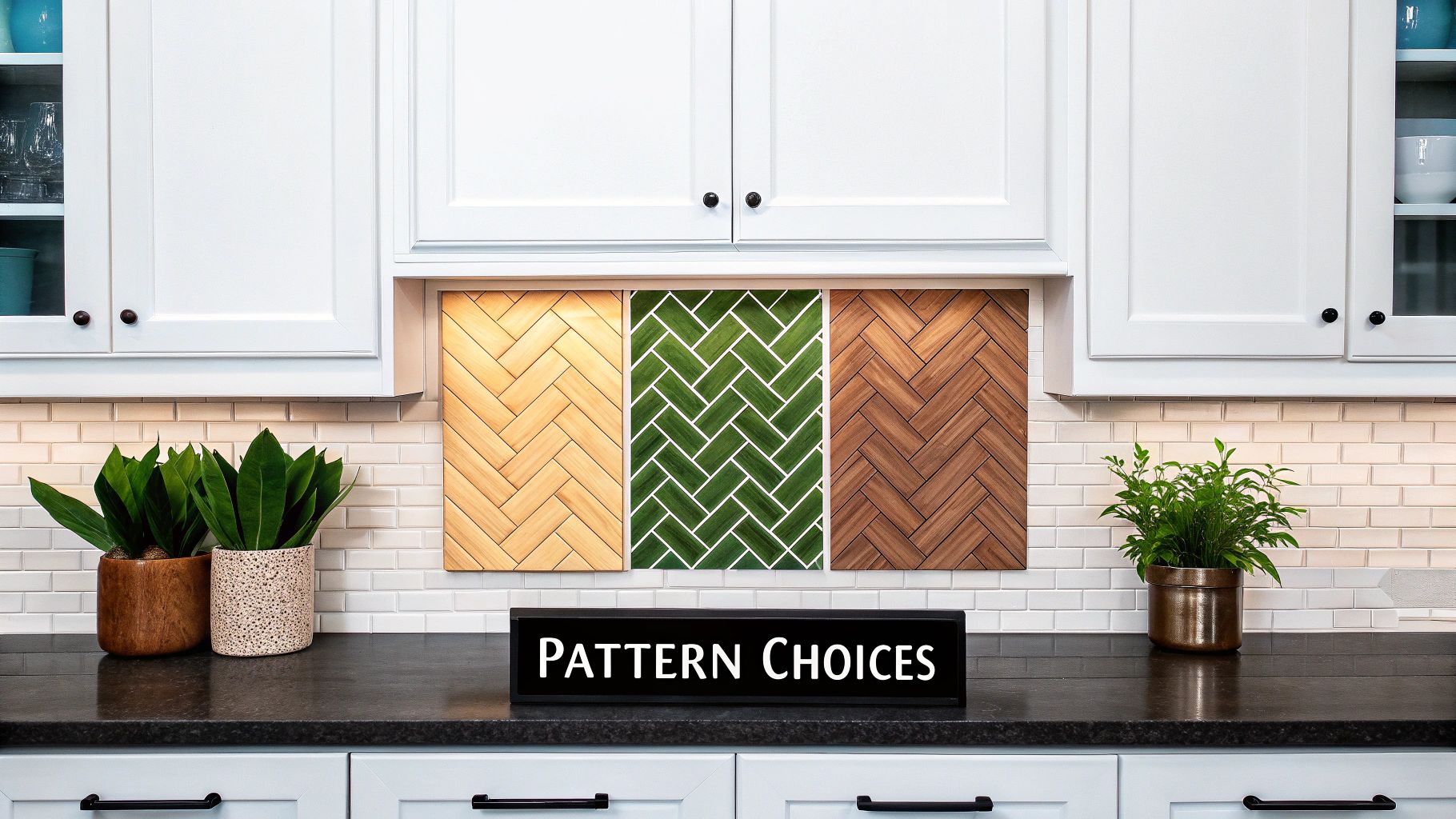
Getting this alignment right is the secret to achieving that professionally curated look. Let's break down which patterns really sing with some of today's most popular kitchen styles.
Modern and Contemporary Kitchens
For a sleek, modern kitchen, it's all about clean lines and geometric simplicity. The whole point is to create a look that feels uncluttered and seriously sophisticated. Stacked rectangular or square tiles are a fantastic choice here. Unlike a traditional running bond pattern, stacking them vertically or horizontally creates a crisp, grid-like effect that feels distinctly contemporary.
Another killer option for modern spaces is a single, uninterrupted slab backsplash. This completely does away with grout lines, offering a minimalist aesthetic that’s both luxurious and unbelievably easy to clean. Materials like quartz, porcelain, or even a dramatic, moody natural stone work beautifully for this kind of application.
Farmhouse and Traditional Styles
If you're chasing that timeless traditional or cozy farmhouse feeling, classic patterns are your best friends. These styles absolutely thrive on warmth, texture, and a sense of history.
- Classic Subway Tile: The offset or running bond pattern is the undisputed champ for these kitchens. It’s a design that has stood the test of time for a reason—it just feels familiar and welcoming.
- Elegant Herringbone: Want a little more visual punch without straying from classic roots? A herringbone layout is perfect. This dynamic pattern adds a sense of movement and refined detail that instantly elevates the entire space.
- Beadboard Panels: While not technically tile, beadboard delivers authentic cottage or farmhouse charm in spades. It creates a textured, linear look that feels both humble and incredibly stylish.
Choosing a pattern that feels authentic to your chosen style is the secret to a design that feels both personal and enduring. A herringbone layout in a farmhouse kitchen, for instance, adds a layer of subtle sophistication that complements the rustic elements.
Transitional and Eclectic Designs
Transitional kitchens, which are all about artfully blending the old with the new, give you the most creative freedom. These spaces truly come alive with unique geometric mosaics or sophisticated arabesque and lantern-shaped tiles.
These patterns introduce curves and intricate details that can bridge the gap between classic cabinetry and modern appliances. The result is a beautifully balanced and personalized kitchen that feels like it was collected over time.
Creating Harmony with Countertops and Hardware
A kitchen that feels professionally designed is one where every single piece works together in concert. Your backsplash doesn't exist in a vacuum; it’s the critical bridge connecting your countertops, hardware, and even your lighting. Nailing this balance is the secret to a cohesive and truly stunning final look.
Think of your countertops and backsplash as partners in design. If one is the star of the show, the other should play the supporting role.
Let's say you've fallen for a dramatic quartz countertop with bold, sweeping veins. The perfect move is to pair it with a simple, solid-color backsplash. This lets the countertop’s natural beauty shine without creating a space that feels visually cluttered or competitive. A busy backsplash on top of an equally busy countertop can quickly overwhelm the eye.
Aligning Finishes with Hardware
Beyond the countertop, your cabinet hardware—the pulls, knobs, and faucets—plays a massive role in the room's overall feel. The finish you choose for your hardware should echo tones found elsewhere in the kitchen, creating a subtle but powerful connection that ties everything together.
- Warm Metals: Brass or gold hardware is a beautiful complement to backsplashes with warm undertones, like beige travertine or certain tiles with subtle gold flecks.
- Cool Metals: On the other hand, chrome, nickel, or black hardware pairs perfectly with cooler tones, such as a gray marble backsplash or crisp, bright white tiles.
This coordination should extend to your faucet and even your light fixtures. By repeating a metal finish across these different elements, you create a visual rhythm that makes the entire design feel unified and intentional. For more inspiration, you can explore a complete guide to cabinet hardware finishes to see how different metals can influence your kitchen's style.
The secret to a high-end look is consistency. When your faucet, cabinet pulls, and lighting all share a similar finish, it creates a polished and thoughtfully curated aesthetic that ties the entire room together.
Finally, never underestimate the transformative power of lighting. Under-cabinet lighting is especially important here, as it directly illuminates your backsplash. A textured tile, like a Zellige or a split-face stone, can absolutely come alive under direct light, creating beautiful shadows and depth that might otherwise be missed. This simple addition can completely change the character of your backsplash, highlighting its unique texture and turning it into a dynamic focal point long after the sun goes down.
By considering these three elements—countertops, hardware, and lighting—you're not just choosing a backsplash; you're orchestrating a harmonious kitchen design from top to bottom.
Planning Your Budget and Installation
Okay, you've got a vision for your backsplash. Now it's time to bring that beautiful idea into the real world, and that takes a solid, practical plan. Let's be honest: the sticker price on a box of tile is only the opening act. A successful project hinges on seeing the full picture of costs and installation details so there are no frustrating surprises down the line.
Your total investment is much more than just the material. You’ve got to account for labor (if you’re hiring out), grout, sealant, tile adhesive, and any prep work the wall might need. These "little" costs can add up quickly, so it's smart to get them on your radar from the very beginning.
Breaking Down Your Backsplash Costs
Getting a clear financial picture is the first step toward making smarter decisions. When you’re mapping out the funds, you'll need to consider each piece of the puzzle, and the costs can swing wildly depending on what you choose.
- Materials: This is where you’ll see the biggest price range. A simple porcelain tile can be as affordable as $5 per square foot, while a stunning, custom marble slab can soar past $150 per square foot.
- Labor: If you're hiring a pro, expect to pay anywhere from $40 to $60 per hour, or sometimes a flat rate per square foot. Going the DIY route saves that money but costs you time, tools, and a bit of skill.
- Supplies: Things like grout, mortar, and sealant might seem like small-ticket items, but they are absolutely essential for a durable, professional-looking finish that lasts.
Here's a common mistake I see people make: they focus only on the tile price. Do yourself a favor and budget an extra 15-20% of your material cost for installation supplies and potential overages. This little cushion keeps the project on track without any last-minute financial stress.
To get a better sense of how these numbers fit into a bigger kitchen renovation, a good calculator can be a huge help. You can get a detailed breakdown and estimate your expenses with a kitchen remodel cost calculator to see exactly where your backsplash investment fits in.
Smart Installation Tips for a Flawless Finish
Whether you hire a professional or tackle the job yourself, a few key tips can ensure your backsplash looks absolutely perfect.
For instance, if you fell in love with a porous natural stone like marble or travertine, sealing it is non-negotiable. You’ll need to seal it before and after grouting to prevent stains from setting in. It’s a simple step that preserves the stone's natural beauty for years.
Ultimately, a flawless finish is all in the details. It comes from careful planning, making precise cuts, and keeping those grout lines clean and consistent. With a clear budget in hand and a focus on quality installation, you can move forward with your project confidently.
Your Top Questions, Answered
Choosing the perfect backsplash to go with your white cabinets can feel like the final, crucial piece of the puzzle. It's normal to have a few last-minute questions. Let's clear those up so you can move forward with total confidence.
What Is the Most Timeless Backsplash for White Cabinets?
Hands down, the classic white subway tile in a traditional offset pattern is the most enduring choice you can make. It's the little black dress of kitchen design—its clean lines and simple elegance work with virtually any style, from a cozy farmhouse look to a sleek, modern kitchen. You can rest assured it won't look dated in a few years, and it provides a beautiful, neutral canvas that lets your countertops and hardware really shine.
Want a subtle twist on this timeless look? A beveled edge tile can add a touch of dimension, while a handmade-look ceramic tile introduces a gentle, organic texture that feels custom and warm.
Should My Backsplash Be Lighter or Darker Than My Countertops?
There's no hard-and-fast rule here, but it’s all about creating visual balance. Think of it this way: if you have dark, dramatic countertops like black granite, a lighter backsplash is a great way to keep the space from feeling too heavy and will brighten up your prep areas. On the flip side, if you have light countertops, a darker or more colorful backsplash can create a stunning focal point and add some much-needed depth and personality to the room.
How Do I Choose a Backsplash That Is Easy to Clean?
For a truly low-maintenance kitchen, you'll want to pick a non-porous material with as few grout lines as possible. Smooth, seamless surfaces are your best friend here. Some excellent choices include:
- Large-format porcelain or ceramic tiles (fewer grout lines to scrub!)
- Solid slabs of materials like quartzite or quartz
- Sheets of back-painted glass for a super sleek, modern look
These surfaces can be wiped clean in a flash, without any worries about stubborn stains setting in. And if you do fall in love with a tile design, using a high-performance epoxy or stain-resistant grout will make cleanup a breeze.
Ready to transform your kitchen with cabinetry that perfectly complements your new backsplash? The experts at Sinclair Cabinetry inc have over 35 years of experience crafting bespoke solutions. Explore our custom cabinet designs and start your project today!