

Before you start looking at a single cabinet door or countertop sample, let’s talk about the real first step. The success of your Cape Coral kitchen remodel hinges entirely on how clear your vision is from the get-go. A solid, well-thought-out plan is what keeps costs from spiraling, makes sure everyone is on the same page, and guarantees the kitchen you end up with is one you'll actually love using every day.
This is the strategy phase—turning those daydreams into a real, workable blueprint.
What Do You Really Want in a Cape Coral Kitchen?
It's easy to get swept up in the excitement and jump straight to picking out finishes. That's a classic mistake. The most successful remodels start with a little honest reflection on how your current kitchen actually functions (or doesn't). Before you commit to that gorgeous quartz you saw online, take a hard look at how you cook, live, and entertain. This groundwork is what turns a pretty kitchen into a phenomenal one.
Your first task is a quick "kitchen audit." It sounds formal, but it's really just about paying attention to what works and what absolutely drives you nuts.
- Pinpoint the Frustrations: Are you constantly running out of counter space right where you need it most? Is the path between your fridge, stove, and sink—the classic "kitchen triangle"—a logistical nightmare? Do you have to get on your hands and knees to find anything in that one deep corner cabinet?
- Watch the Flow of Traffic: When you have people over, does the kitchen turn into a major bottleneck? Is that island a godsend for prep or just a big obstacle everyone has to walk around? Pay attention to how your family moves through the space on a normal day.
- Get Real About Storage: Do a quick inventory of everything you own. Pots, pans, small appliances, that giant box of cereal—all of it. The storage that worked fine ten years ago might be completely overwhelmed now.
Must-Haves vs. Nice-to-Haves
Okay, now that you've got a list of problems, it’s time for the fun part: dreaming up the solutions. This is where you need to be honest with yourself and separate what you absolutely need from what would be really cool to have. This one exercise is the key to keeping your project on budget later.
Your "must-have" list is all about fixing those big pain points. If your number one complaint is a cramped prep area, then "more usable countertop surface" is a non-negotiable. If the dim lighting makes chopping vegetables a hazard, then "better task and ambient lighting" is a must-have.
The "nice-to-have" list is for the upgrades—a built-in wine fridge, a pot-filler faucet over the stove, or those slick custom pull-out spice racks. They’re fantastic if the budget allows, but they aren't critical to making the kitchen work.
A well-planned kitchen remodel is 80% strategy and 20% execution. Spending adequate time defining your vision upfront saves you from making expensive, emotional decisions under pressure during the construction phase.
Nailing Down Your Cape Coral Style
With the functional stuff sorted, you can finally think about aesthetics. You want a kitchen that feels like it belongs in your home and fits the relaxed, coastal lifestyle of Cape Coral. Do you picture a bright, airy coastal modern space with white shaker cabinets and pops of sea-blue? Or is a more traditional look with warm wood tones and classic hardware more your speed?
Start gathering inspiration. Flip through magazines, scroll through social media, and browse design sites. To really bring your ideas to life, playing around with the best kitchen design software can be a huge help in visualizing different layouts and finishes in your own space. It’s also incredibly helpful for showing your designer or contractor exactly what you're imagining.
If you want to get a better handle on why certain designs just work, it pays to understand the fundamentals. Exploring some core kitchen design principles will give you a ton of insight into creating a space that feels balanced and beautiful. This level of planning ensures every single choice—from the cabinet pulls to the backsplash tile—comes together to create the exact kitchen you've been dreaming of.
Setting a Realistic Budget for Your Cape Coral Remodel
Let's talk about the most crucial part of any remodel: the budget. Getting this right from the start is the difference between a successful project you love and a major source of stress. Forget those vague national averages you see online; they don't factor in our local Cape Coral labor rates, material costs, or the realities of building along the coast.
A solid financial plan is your project's North Star. It guides every single decision, from the cabinet finish you choose to the type of backsplash tile you install. The final number will really depend on three things: how big of a project this is, the quality of materials you pick, and your home's overall value. A simple cosmetic refresh is one thing; a full gut job where we're moving walls and plumbing is a completely different ballgame.
Understanding Local Costs and Allocations
So, what should you actually expect to spend around here? For a mid-range kitchen remodel in Cape Coral, you're typically looking at a range between $16,000 and $24,000. More specific local estimates often put that number between $16,306–$22,328, which is a smart investment in your home.
The biggest slice of that pie? Your cabinets. Expect cabinets and their installation to eat up about 30–35% of the budget. On a $23,000 project, that's roughly $8,050. Labor is the next big chunk, accounting for another 15–30%, or around $5,750.
Knowing these percentages helps you map out where your money is going. If you're working with a tighter budget, there are always smart ways to save. You can find some great tips on how to renovate your kitchen cheaply without sacrificing the look you want.
To give you a clearer starting point, we put together this sample breakdown.
Sample Mid-Range Cape Coral Kitchen Remodel Budget Breakdown ($23,000 Project)
This table provides a typical percentage-based breakdown to help you see how a budget is allocated across different parts of a remodel in our area.
| Expense Category | Percentage of Budget | Estimated Cost |
|---|---|---|
| Cabinetry & Installation | 35% | $8,050 |
| Labor & Installation | 25% | $5,750 |
| Countertops | 12% | $2,760 |
| Appliances | 10% | $2,300 |
| Flooring | 6% | $1,380 |
| Backsplash | 4% | $920 |
| Plumbing & Electrical | 4% | $920 |
| Lighting & Fixtures | 4% | $920 |
Keep in mind that these are just estimates. Your final costs will depend on the specific materials and professionals you choose. To get a more tailored figure, try plugging your numbers into our kitchen remodel cost calculator.
Uncovering the Hidden Costs
It’s almost never the big-ticket items that blow a budget. It’s the little surprises that pop up along the way. Planning for these "hidden" costs from day one is absolutely essential.
Here are a few common ones we see all the time:
- Permit Fees: If you're touching anything structural, electrical, or plumbing-related, you'll need permits from the City of Cape Coral. Those come with fees.
- Debris Removal: Tearing out an entire kitchen creates a mountain of trash. You have to pay to haul it away and dispose of it properly.
- Surprise Repairs: This is the big one. Once the drywall comes down, we might find old wiring that's not up to code, a slow leak that caused water damage, or outdated plumbing. Those things have to be fixed before we can move forward.
- Your Temporary Kitchen: For a few weeks, your kitchen will be out of commission. That means more money spent on takeout or the cost of setting up a mini-kitchen elsewhere in the house.
This is why having a clear plan is so important. When you know what's a "must-have" versus a "nice-to-have," you build in the flexibility to handle these curveballs.

By sorting out your priorities early, you can absorb unexpected costs without having to sacrifice your vision for the project.
The Non-Negotiable Contingency Fund
This brings me to my most important piece of advice: have a contingency fund. This is a separate stash of cash—usually 15-20% of your total project cost—set aside only for those unforeseen issues. So, if your remodel is estimated at $25,000, you should have another $3,750 to $5,000 ready to go.
Think of your contingency fund as project insurance. You hope you never have to use it, but if something goes wrong, you'll be incredibly relieved it's there. It's the key to navigating surprises with confidence instead of panic.
And hey, if the remodel goes smoothly and you don't touch the fund? Perfect. Now you have extra cash to splurge on an upgrade you cut from your "nice-to-have" list, like that high-end faucet or premium under-cabinet lighting. A methodical budget with a safety net gives you control and makes the entire process a rewarding one.
Dealing with Local Building Permits and Codes
Let's talk about the least glamorous part of any remodel: the paperwork. In Cape Coral, navigating building permits and local codes is a step you absolutely cannot afford to skip. Getting the right permits isn't just about following the rules; it’s about making sure your Cape Coral kitchen remodel is safe, structurally sound, and won't turn into a massive headache later on.
Think of it this way: a building permit is your project's official seal of approval. The City of Cape Coral's building department looks over your contractor's plans to make sure every detail—from the wiring to the plumbing—meets strict safety standards. This isn't red tape for the sake of it; it's a system designed to protect you, your family, and the long-term value of your home.
So, When Do You Actually Need a Building Permit?
Not every little kitchen update requires you to head down to City Hall. If you’re doing a simple cosmetic refresh, like painting your existing cabinets or swapping out a faucet with a similar one, you're usually in the clear.
But the minute your project gets more involved, you’ll need to go through the official channels. A permit is almost always required for:
- Moving Walls: Taking out a wall to get that wide-open layout you've been dreaming of? Even if it's not load-bearing, it's a structural change that needs a permit.
- Changing Plumbing: Relocating the sink to your new island or adding a pot filler above the stove means you're rerouting pipes. That definitely requires a permit.
- Touching the Electrical: Adding new outlets for an appliance garage, running a new circuit for a high-powered induction cooktop, or even moving existing wiring all fall into this category.
- Working with Gas Lines: Any project that involves a gas stove or other gas appliances is a serious safety matter. This work absolutely requires a permit and a professional inspection.
One of the biggest mistakes homeowners make is thinking they can get away with minor plumbing or electrical tweaks. Don't do it. If you're caught without the right permits, you could face hefty fines, be forced to tear out finished work, and run into major roadblocks when you eventually try to sell your house.
This is where a good contractor earns their keep. A licensed, insured professional who knows Cape Coral will handle the entire permitting process for you. They’ll know exactly which plans and forms are needed and can navigate the system efficiently, saving you a ton of time and stress.
A Few Key Florida Building Codes to Know
Your contractor is the expert here, but it helps to have a basic understanding of the rules that will shape your kitchen's design. The Florida Building Code is all about safety and functionality.
GFCI Protection Is Non-Negotiable
This is a big one for electrical safety. Ground Fault Circuit Interrupter (GFCI) outlets are life-savers. They're designed to shut off the power in a split second if they detect an electrical imbalance, which can prevent a serious shock.
In your kitchen, GFCIs are mandatory for:
- All outlets serving countertops. Every single one.
- Any outlet within six feet of a sink. This applies even if it’s not directly on the counter.
- The dishwasher outlet. The circuit that powers your dishwasher needs to be protected, too.
Ventilation and Clearances Around Appliances
Proper ventilation isn't just for getting rid of cooking smells—it's a code requirement. If you’re installing a new range or cooktop, your range hood must vent directly to the outside to properly remove smoke, grease, and moisture.
The code also gets very specific about the minimum clearance required between your cooktop and any combustible materials, like your beautiful new upper cabinets. Getting this right from the start ensures your layout is both functional and fire-safe, so you can sail through your final inspection without any costly surprises.
Choosing Materials Built for the Florida Climate
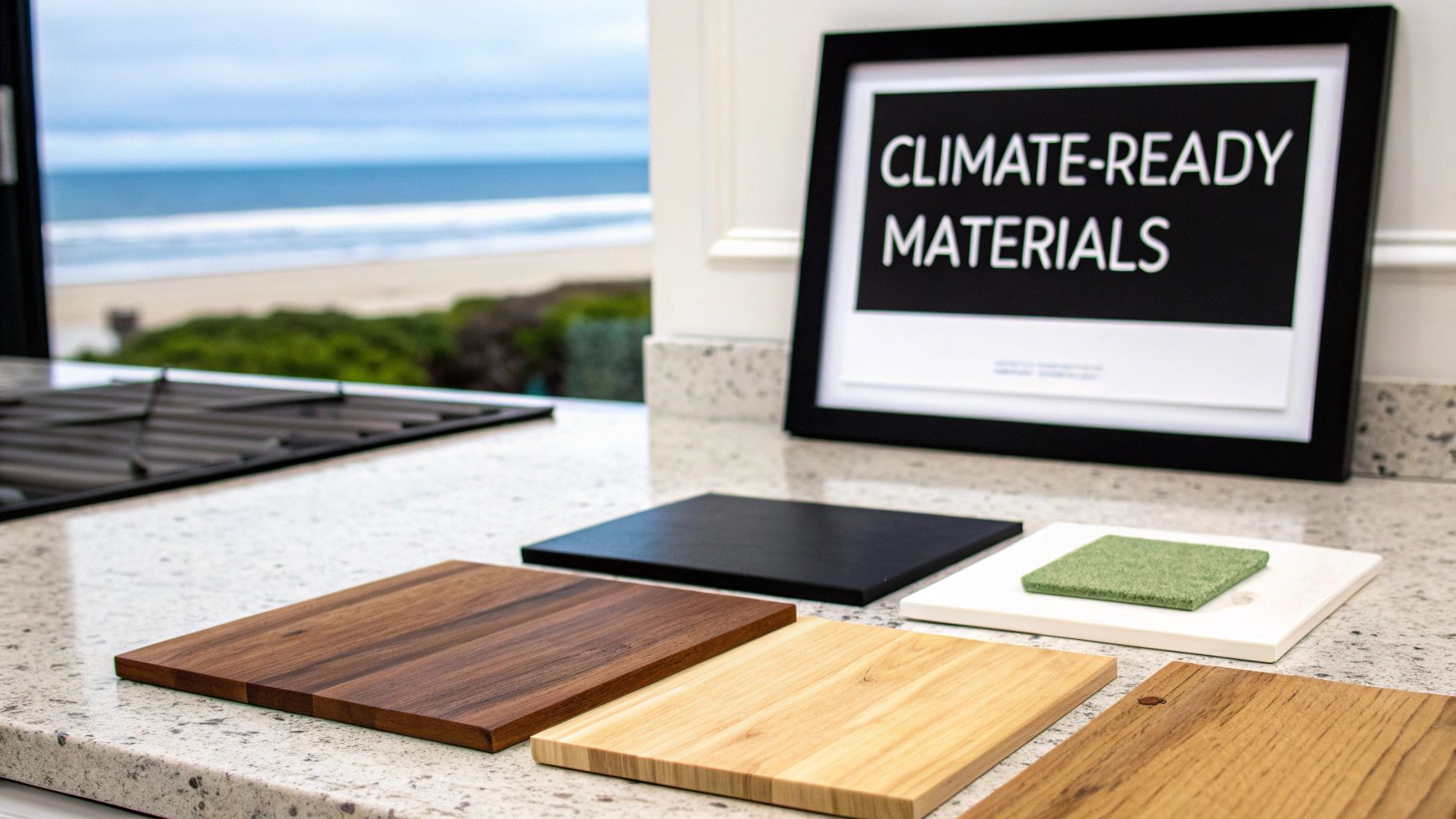
Here in Cape Coral, our beautiful coastal environment is both a blessing and a challenge. We get to live in paradise, but that constant humidity, salty air, and intense sun can be incredibly harsh on home materials—especially in a kitchen.
Choosing the right materials isn't just about getting the look you want; it's about making a smart, long-term investment that stands up to the unique demands of Southwest Florida living. If you make climate-conscious decisions from the start, your stunning new kitchen will stay that way for years, helping you avoid common issues like warping, fading, and corrosion.
Let's break down the best options for your Cape Coral kitchen remodel.
Cabinets That Beat the Humidity
Your kitchen cabinets are the foundation of its design and function, but they’re also the most vulnerable to moisture. The humidity in our air can cause wood to swell and warp, and lower-quality materials like standard-grade MDF can delaminate or bubble over time. It happens.
For our climate, you absolutely have to select materials that offer superior moisture resistance.
- High-Grade Plywood: This is my go-to recommendation for cabinet boxes. Unlike particleboard, plywood is constructed from layers of wood veneer glued together, making it structurally stronger and far more resistant to moisture damage.
- Solid Wood Doors: For cabinet doors, solid wood is still a premium choice. The key is to choose stable wood species and ensure they are perfectly sealed and finished to lock humidity out.
- Engineered Wood Alternatives: High-quality, furniture-grade MDF can be a great option for door panels since it provides a super smooth surface for painting and is less prone to cracking than solid wood. Just make sure it's paired with sturdy plywood boxes for durability.
A key takeaway for any coastal remodel: the construction of the cabinet is just as important as the material itself. Well-sealed joints, a high-quality finish, and professional installation are your best defenses against the humid Florida air.
Countertops Resilient to Heat and Stains
Countertops are the real workhorses of the kitchen. Here in Florida, they need to handle the heat, potential sun exposure from big windows, and the occasional spilled drink without staining or degrading.
Quartz has become a dominant choice for good reason. It’s an engineered stone that is non-porous, which means it resists staining from wine, coffee, and oils without ever needing to be sealed. It's also incredibly durable and comes in a huge array of colors and patterns that perfectly suit the airy, coastal vibe popular in Cape Coral.
Another fantastic option is Quartzite. This is a natural stone that gives you the beautiful, unique veining of marble but is significantly harder and more durable. It stands up well to heat and, once it’s properly sealed, is highly resistant to scratches and stains. It’s a beautiful and practical choice for any high-use kitchen.
Flooring That Handles Sandy Feet
Your kitchen floor needs to put up with everything from tracked-in sand after a beach day to the constant moisture in the air. The right flooring combines serious durability with a style that complements your coastal home.
- Luxury Vinyl Plank (LVP): This is a top contender for Florida kitchens, period. It's 100% waterproof, scratch-resistant, and comfortable underfoot. LVP also comes in incredibly realistic wood and stone looks, giving you the aesthetic you want without any of the maintenance headaches.
- Porcelain Tile: Another champion of durability. Porcelain tile is impervious to water and extremely difficult to scratch or chip. With modern options that mimic everything from wood to stone and concrete, it offers endless design possibilities.
Choosing these climate-appropriate materials isn't just about durability; it's also about your return on investment. Industry reports show that kitchens yield significant cost recovery, with minor remodels involving new cabinets and countertops reaching 70–80%.
Locally, trends confirm that 91% of homeowners update their countertops, often pairing them with a fresh backsplash. Florida design really favors quartz surfaces, airy color palettes, and multifunctional islands—all elements that enhance value. You can dive deeper into what these trends mean for the market by reading the latest homeowner remodeling reports.
Finding and Vetting the Right Local Professionals

You’ve got a vision and a budget. Now comes the most important decision you’ll make for your Cape Coral kitchen remodel: picking the crew to actually build it.
Let's be honest—the quality of your contractor is everything. It dictates whether you stick to your timeline, the final fit and finish of every last detail, and frankly, your sanity throughout the process. Your project’s success truly hinges on finding a team that is skilled, trustworthy, and easy to communicate with.
Finding the right pros in Cape Coral isn’t just about getting a good price. You’re looking for a partner, someone with a proven track record of excellent work right here in our unique Southwest Florida environment.
Starting Your Search for Cape Coral Contractors
Word-of-mouth is still king for a reason. Start by asking friends, neighbors, or colleagues who’ve recently gone through a remodel for their honest recommendations. Local Cape Coral community groups and neighborhood forums can also be goldmines for finding contractors with a solid local reputation.
Beyond personal referrals, check out professional organizations. Look for members of local chapters of the National Association of the Remodeling Industry (NARI) or the National Kitchen & Bath Association (NKBA). Membership is a good sign that a contractor is committed to professional standards and staying current.
The Non-Negotiables: Verification and Insurance
Before you even think about inviting a contractor into your home for a quote, you absolutely must verify their credentials. This isn’t optional—it’s how you protect yourself from massive financial and legal headaches down the road.
- State Licensing: Make sure their contractor license is active and in good standing. You can check this with the Florida Department of Business and Professional Regulation (DBPR).
- Liability Insurance: Ask to see their certificate of insurance. This shows they carry general liability coverage, which protects your property from damage during the renovation.
- Workers' Compensation: Verify they have workers' compensation insurance. This is critical. It covers their employees if they get hurt on your property, protecting you from being held liable.
Any true professional will have this documentation ready to go and will be happy to share it. If you get any hesitation or excuses, consider it a major red flag and move on.
Digging Deeper with Interviews and Portfolios
Once you have a shortlist of licensed and insured contractors, it’s time to interview them. This is your chance to see if their expertise, communication style, and personality are a good fit. Don't just focus on the lowest number; a suspiciously low bid often means cut corners and future problems.
Take a hard look at their portfolio, paying close attention to projects they’ve done in Cape Coral or other coastal areas. Do they have experience with the salt-air-resistant materials and designs you want? Ask if you can speak with a few recent clients to get a real, unfiltered account of their experience.
When you get bids back, make sure you're doing a true apples-to-apples comparison. A detailed, line-item proposal is the mark of a thorough professional. A vague, one-page estimate can be a warning sign of hidden upcharges and material substitutions later.
During the interview, ask questions that get past the price tag:
- How do you handle surprises, like finding hidden water damage behind a wall?
- What does your communication look like? Will I have one main person to talk to?
- How do you manage the project schedule and make sure things stay on track?
- Can you walk me through your payment schedule and what each milestone covers?
Their answers will tell you a lot about their process and professionalism. If you need more pointers on what to look for, our detailed guide offers more advice on how to choose a kitchen remodeling contractor. Building a team you can confidently partner with is the ultimate key to a smooth and successful renovation.
Your Cape Coral Kitchen Remodel Questions Answered
When you’re staring down the barrel of a major kitchen remodel, the big picture—gleaming countertops, brand-new cabinets—is exciting. But it’s the nitty-gritty questions that often keep homeowners up at night. The practical side of the renovation process can feel overwhelming, but getting clear, honest answers right from the start makes all the difference.
Let's tackle some of the most common concerns we hear from homeowners right here in Cape Coral. We’ll cover everything from timelines to how you'll manage your morning coffee routine while your kitchen is a construction zone.
How Long Will My Kitchen Remodel Actually Take?
This is always the first question, and the honest-to-goodness answer is: it really depends. If you're just swapping out countertops and adding a new backsplash, you might be looking at a quick week or two. But for a full-gut renovation, you need to settle in for a bit longer.
For a comprehensive remodel—we’re talking custom cabinetry, new flooring, and moving plumbing or electrical—a realistic timeline is somewhere between six to twelve weeks. That window covers everything from the dusty demolition phase to the final, satisfying installation of every last fixture.
Several local factors can stretch that timeline out:
- Permit Approvals: Getting the green light from the City of Cape Coral can sometimes take a few weeks before a single hammer is swung.
- Material Lead Times: Those perfect custom cabinets or that one-of-a-kind tile don't just appear overnight. They can have lead times of several weeks, so ordering early is absolutely crucial.
- Inspection Schedules: Your project will hit pause at key milestones to wait for city inspections on plumbing, electrical, and structural work. It’s a necessary step, but it takes time.
- The "Uh-Oh" Factor: It’s an older home—what did you expect? Sometimes, when we open up the walls, we find old leaks or funky wiring that has to be brought up to code. It's an unplanned detour, but one that ensures your home is safe.
A good contractor won't just give you a vague estimate; they'll hand you a detailed project schedule. Think of it as your roadmap, showing you what to expect and when.
How Do I Survive Without a Kitchen?
Living through a remodel is definitely an adjustment, but it’s more manageable than you might think. A little bit of planning goes a long way. The trick is to create a makeshift kitchen somewhere else in your house—the garage, the laundry room, or even a corner of the dining room can work wonders.
This temporary setup doesn't have to be pretty, just functional.
Your temporary kitchen should have a few key players: a microwave, a coffee maker, a toaster oven or a hot plate, and your old fridge if you can swing it. Stock up on disposable plates and cutlery to avoid washing dishes in the bathroom sink. It sounds simple, but this little setup makes a huge difference in keeping life feeling somewhat normal.
This is also the perfect excuse to fire up the grill more often! Many families turn their renovation into a months-long cookout season. Plan for simple meals and budget for a little more takeout than usual. Just remember, it’s a short-term inconvenience for a huge long-term reward.
Can I Stay in My Home During the Remodel?
For the vast majority of kitchen remodels, yes, you can absolutely stay in your home. We're pros at keeping a worksite contained and as clean as possible. We’ll seal off the kitchen with plastic sheeting to keep the dust from staging a hostile takeover of your living room.
That said, be prepared for some disruption. There's going to be noise and some dust, especially during the first few days of demolition. Our crew usually gets an early start, and you'll have a steady flow of tradespeople coming and going.
If you have very young children, pets, or family members with respiratory sensitivities, you might consider staying with family or a friend for the first few days of demolition when things are the most intense. But for the most part, homeowners find they can live at home just fine by setting clear boundaries with the crew. A quick chat about work hours and daily cleanup expectations makes the whole experience much more comfortable for everyone.
Ready to stop asking questions and start building your dream kitchen? The expert team at Sinclair Cabinetry inc has over 35 years of experience crafting beautiful, durable, and climate-ready kitchens for Cape Coral homes. Let us guide you through every step of the process with confidence and unmatched craftsmanship.