
Before you get lost in the world of finishes and hardware, let's take a step back. The most critical first move is to define your island's true purpose. What job do you need it to do? Will it be your meal prep command center, a casual spot for family breakfast, or a storage powerhouse designed to hide away clutter?
Getting this right from the start ensures your island custom cabinetry isn't just a pretty face—it becomes an essential part of your daily life.
Defining Your Kitchen Island's Purpose
The journey to the perfect custom island doesn't start with a design sketch. It starts with a lifestyle audit. I’ve seen it time and time again: the most successful kitchen islands are the ones designed with a clear, primary function in mind. Without that focus, you risk creating a beautiful obstacle instead of a functional centerpiece.
Think about your daily routines. A passionate home chef is going to want a huge, uninterrupted countertop for rolling out dough. A family with young kids, on the other hand, might need durable surfaces and built-in seating for homework sessions.
Pinpointing Your Island's Main Role
Let’s get specific. Which one of these sounds most like your household?
- The Workhorse: This island is all about food preparation. It might feature a second sink, maybe a butcher block insert, and specialized storage for knives, cutting boards, and mixing bowls. Everything is within arm's reach.
- The Social Hub: This is the island designed for gathering. It almost always includes an overhang for comfortable seating, a beverage fridge, and plenty of outlets for charging devices. It's the go-to spot for entertaining guests or just catching up over coffee.
- The Storage Maximizer: For kitchens tight on space, this island becomes an extension of your primary cabinets. We'd fill it with deep drawers for pots and pans, pull-out trash and recycling bins, and maybe even a microwave drawer to free up counter space elsewhere.
A common mistake I see is clients trying to make an island do everything at once. Prioritizing one or two key functions will always lead to a more effective and satisfying design than one that tries to be a jack-of-all-trades and masters none.
Budgeting for Quality and Craftsmanship
Now, let's talk budget. Setting a realistic one is foundational to the whole process. Remember that with custom work, you're investing in more than just materials; you're paying for expert craftsmanship, a precise installation, and a design process that’s all about you.
The demand for these personalized home features has been growing like crazy. In fact, the mid-to-high-end custom cabinetry market was recently valued at around $15 billion, and that's largely driven by homeowners who want tailored, high-quality kitchen designs. If you want to dig deeper, you can read more about the custom cabinetry market growth and trends.
This is an investment that ensures your custom island cabinetry not only fits your space perfectly but also enhances your home’s long-term value and functionality.
Designing for an Efficient Kitchen Workflow
A beautiful kitchen island is a great addition, but a truly functional one? That's a life-changer. We've seen it time and again: great design goes way beyond looks. It’s all about creating a space that just works with how you move and live.
Let's move past the old-school "kitchen triangle" for a moment and think instead about creating intuitive work zones. When you do this, your island becomes the undisputed heart of your kitchen's workflow.
For instance, a dedicated prep zone can completely transform how you make meals. Picture your island custom cabinetry with a small prep sink for rinsing veggies, a pull-out bin for compost scraps, and a drawer with custom dividers for every knife and cutting board you own. Everything you need is right there, contained in one smart, efficient spot.
Creating Dedicated Kitchen Zones
Thinking in "zones" is the best way to clarify the island's true purpose in your kitchen. This approach separates different activities, which is a massive help in reducing kitchen traffic jams and makes multitasking a breeze—especially when more than one cook is in the kitchen.
Here are a few zone concepts we often build into our island designs:
- The Prep Zone: This is your main station for chopping, mixing, and assembling. Ideally, you want it located between the refrigerator and your main sink or cooktop. Trust me, integrating a small sink and a trash pull-out here is an absolute game-changer.
- The Cooking Zone: If your island is going to house a cooktop, this area is non-negotiable. It needs heat-resistant countertops and deep drawers close by for all your pots and pans. A built-in spice rack or a utensil pull-out also keeps your essential tools right where you need them.
- The Cleaning Zone: This zone is all about the main sink and dishwasher. The island can act as the perfect landing space for dirty dishes before they head into the dishwasher, which keeps your main counters from getting cluttered.
- The Social Zone: This is where family and guests will gather, usually defined by a countertop overhang for seating. A brilliant move we love is adding an under-counter beverage fridge here. It lets guests grab a drink without ever getting in the way of your primary work area.
Beyond the Classic Kitchen Triangle
The traditional kitchen work triangle—the path between the sink, refrigerator, and stove—is a solid starting point, but today's larger, more open kitchens demand a more flexible approach. The island is the key to evolving this concept into a more dynamic system of work zones that fits modern life.
A thoughtfully placed island doesn't just add counter space; it directs traffic. It creates clear pathways that prevent collisions and ensure the cook has an uninterrupted work area, even when the kitchen is bustling with activity.
Smart Storage for an Uncluttered Workflow
Finally, none of this efficiency is possible without smart storage. Clutter is the number one enemy of a smooth workflow. Custom cabinetry gives you the power to design storage solutions built specifically for you, ensuring everything has a home and is always easy to find.
Consider integrating some of these ideas into your island:
- Deep Pot and Pan Drawers: They are so much more practical than deep cabinets. You can see and access everything inside without having to dig around in the back.
- Hidden Appliance Garage: A slick lift-up cabinet can hide those bulky stand mixers or blenders, keeping your beautiful countertops clear and ready for action.
- Vertical Dividers: These are perfect for organizing baking sheets, large platters, and cutting boards so they're always upright and easy to grab.
By planning for zones and building in intelligent storage, your custom island becomes much more than a piece of furniture—it becomes an active partner in making your kitchen more efficient and enjoyable every single day.
Choosing Materials That Balance Style and Durability
The materials you select for your custom island do more than just set a visual tone; they define its entire character and dictate how well it will stand up to daily life. Getting the right mix of wood for the base and a resilient surface for the countertop is one of the most important decisions you'll make, balancing looks, functionality, and your budget.
Cabinetry: The Foundation of Your Island
When it comes to the island's base, the conversation usually circles back to solid hardwoods versus high-quality engineered options. There’s a good reason for that.
Solid woods like maple and oak are timeless for a reason. They offer incredible durability and a natural warmth that just can’t be faked. The unique grain in each piece brings a texture and richness to the space, which is why they’re a go-to in the custom cabinetry world.
On the other hand, engineered woods—specifically premium-grade plywood—are a seriously compelling alternative. They bring exceptional stability to the table, resisting the warping that can sometimes plague solid wood in humid climates like ours here in Florida. This makes plywood an incredibly durable core for cabinets that you plan on painting or finishing with a veneer.
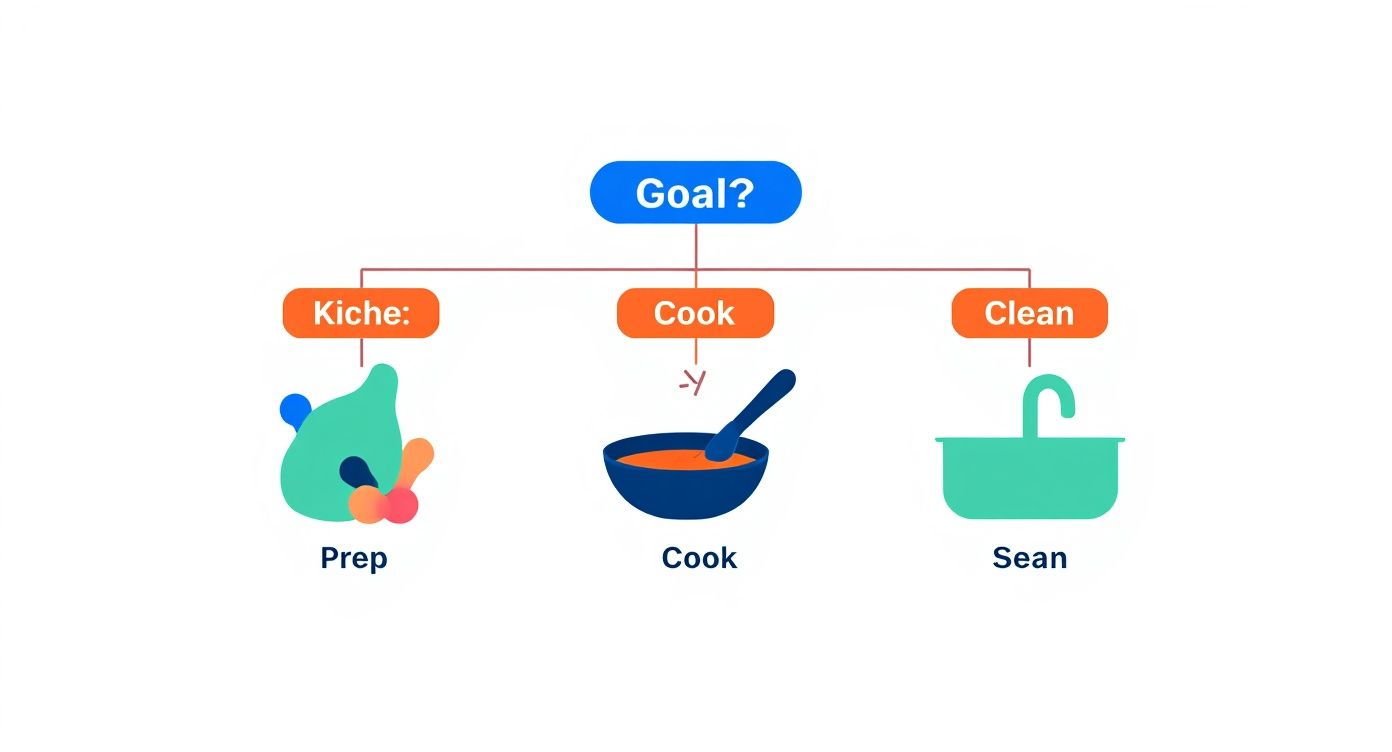
As you can see, an island built for serious prep work might call for different materials and a different layout than one designed as the central hub for cooking or entertaining.
Selecting the Perfect Countertop
The countertop is the real workhorse of your island. It’s the surface that gets the most attention—and the most wear and tear. Your choice here will have a huge impact on both the island's style and how much time you spend maintaining it.
A few of the most popular choices we see are:
- Quartz: This material is an absolute powerhouse. As an engineered stone, it’s non-porous, which means it shrugs off stains from coffee, wine, or oil. It’s available in a massive range of colors and patterns, including many that beautifully mimic natural marble without all the fussy maintenance.
- Granite: Every single slab of granite is unique, giving you a truly one-of-a-kind piece of natural art. It’s also highly resistant to heat, making it a fantastic choice if your cooktop is built into the island. It just needs to be sealed periodically to keep it protected from stains.
- Butcher Block: Nothing beats the warmth and rustic charm of a wood countertop. Butcher block is ideal for a prep-focused island since you can chop right on it. It does require regular oiling to keep it from drying out and is more prone to scratches and stains than stone.
The best material is always the one that fits your life. A busy family with kids might find the nearly indestructible nature of quartz to be a lifesaver. A passionate baker, however, might fall in love with the classic feel and function of a traditional butcher block surface.
To help you weigh your options, this table breaks down some of the most common materials side-by-side.
Cabinet and Countertop Material Comparison
| Material | Type | Pros | Cons | Best For |
|---|---|---|---|---|
| Solid Wood | Cabinetry | Timeless beauty, very durable, can be refinished | Can be prone to warping in high humidity | Traditional or classic kitchen styles |
| Plywood | Cabinetry | Excellent stability, resists warping, great for painted finishes | Edges need to be finished properly | Humid climates and painted cabinet projects |
| Quartz | Countertop | Non-porous, stain-resistant, low maintenance, wide color selection | Not as heat-resistant as granite, can be pricey | Busy families and modern, clean aesthetics |
| Granite | Countertop | Heat-resistant, each slab is unique, very durable | Porous and requires sealing, limited color patterns | Kitchens with heavy cooking use near the island |
| Butcher Block | Countertop | Warm aesthetic, can be used as a cutting surface, repairable | Requires regular oiling, susceptible to scratches and stains | Prep-focused islands and rustic or farmhouse styles |
Making the right choice comes down to knowing your priorities—whether that's low maintenance, natural beauty, or rugged durability.
For more detailed information, this comprehensive guide on choosing kitchen cabinets is a great resource that covers different styles and budgeting. To explore high-end options, you can also check out our own guide on the best materials for luxurious kitchen cabinets. By carefully considering these factors, you can land on a combination of materials that not only looks incredible but performs beautifully for years.
Adding Personality with Finishes and Hardware
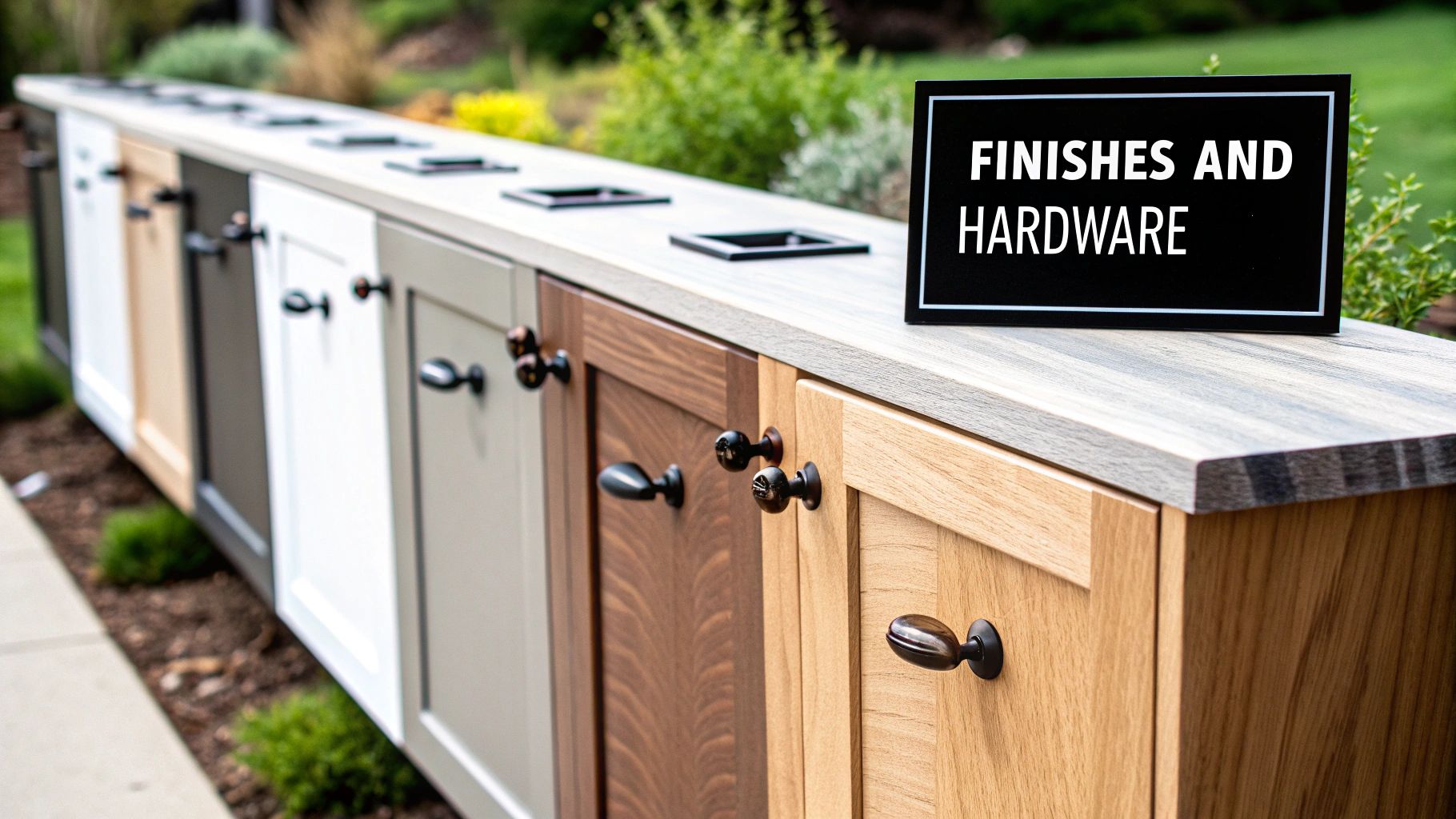
This is where the magic really happens. Once you’ve landed on the perfect layout and materials for your custom island cabinetry, the finishes and hardware are what bring its personality to life. These final touches are so much more than decorative afterthoughts—they have a huge impact on your island's day-to-day feel and the overall harmony of your kitchen.
A classic painted finish gives you that clean, crisp look and can be customized to any color you can dream of. On the other hand, a rich wood stain lets the natural beauty of the grain shine through, adding warmth and an organic texture to your space. The path you choose here really sets the entire mood for your island centerpiece.
Choosing the Right Sheen and Texture
Beyond the color, the sheen level of your finish plays a massive role in both its look and how easy it is to maintain. Think of it like the difference between a matte car and a high-gloss one—each sends a completely different style message.
- Matte Finish: This gives you a sophisticated, modern feel with very little reflection. It's fantastic at hiding small imperfections but can be a bit tougher to clean since smudges tend to cling to it more than glossier options.
- Satin or Eggshell Finish: There's a reason this is the most popular choice. It offers a soft, subtle luster that’s both elegant and incredibly durable, making it easy to wipe down without being overly shiny.
- Semi-Gloss or Gloss Finish: These finishes reflect a ton of light, which is perfect for creating a bright, polished look. They’re the easiest to clean by far, but they will also show off every single fingerprint and smudge.
The right sheen can subtly elevate the entire design of your island. It’s always a good idea to look at samples in your kitchen’s actual lighting before you make that final call.
Remember, the finish isn't just about color; it's a protective layer. A high-quality, professionally applied finish will shield your cabinetry from moisture, grease, and the inevitable bumps and scrapes of a busy kitchen, ensuring it looks beautiful for years.
Selecting Hardware: The Jewelry of Your Cabinetry
Hardware is often called the "jewelry" of the kitchen, and it's a perfect comparison. The pulls, knobs, and hinges you pick are the final styling pieces that complete the puzzle. They can instantly shift an island's vibe from modern to traditional or from farmhouse to industrial with a simple swap.
For a truly polished aesthetic, even the parts you don't always see matter. Think about options like concealed hinges for sleek cabinetry to keep those clean, uninterrupted lines.
A long, linear bar pull in brushed nickel reinforces a contemporary style, while an ornate brass knob can add a touch of timeless elegance. The real key is to choose hardware that not only looks great with the cabinet finish but also feels good in your hand. This is something you'll be touching and using every single day.
If you want to dive deeper into all the different materials and styles out there, our complete guide to cabinet hardware and finishes is packed with information to help you sort through the options. Finding that perfect balance between looks and practicality will ensure your hardware is the perfect finishing touch for your island's design.
Collaborating with a Custom Cabinet Maker
Bringing your vision for a custom island from a Pinterest board to a beautiful, tangible centerpiece really comes down to finding the right creative partner. This isn't just about hiring a contractor; it's about building a relationship with a skilled artisan. A true craftsman will do more than just follow your instructions—they’ll bring their own experience to the table, offering insights that will sharpen your ideas and elevate the final product.
First things first, dive into their portfolio. A solid body of work should show off a range of styles, finishes, and clever functional solutions. Look past the glossy photos and zoom in on the details that signal real craftsmanship: tight joints, perfectly consistent finishes, and thoughtful design elements that solve everyday kitchen problems.
Your First Meeting and Critical Questions
Once you’ve shortlisted a few makers, that initial consultation is your moment to really get a feel for their expertise and communication style. Think of it as a two-way interview. You should come prepared with your inspiration photos, some rough dimensions, and a clear idea of how you plan to use your island every day.
This is your chance to ask some pointed questions that get to the heart of their process and passion. A great cabinet maker will be just as curious about how you cook and live as they are about your aesthetic preferences.
Here are a few essential questions I always recommend asking:
- What’s your design process look like, from the first sketch to the final drawings?
- Where do you source your materials? What are your go-to wood species and finishes?
- Can you give me a realistic project timeline, from the day I put down a deposit to installation day?
- How do you typically handle unexpected challenges or changes that pop up mid-project?
Their answers will tell you a lot about their professionalism and whether their working style is a good match for you.
A key sign of a true artisan is their curiosity. If they ask thoughtful questions about your workflow, storage needs, and family dynamics, it shows they’re focused on creating a piece that’s not just beautiful but perfectly suited to your life.
Understanding the Project Timeline
Knowing what to expect from the process can make the whole experience feel much more manageable and less overwhelming. While every project has its own unique quirks, the journey of creating your island custom cabinetry typically follows a predictable path.
1. Design and Approval
This is the initial creative phase full of detailed discussions, sketches, and often 3D renderings. Your cabinet maker will tweak and refine the design based on your feedback until every single detail feels just right.
2. Material Selection
With the design locked in, it's time to make the final calls on all your materials. This includes everything from the wood species and countertop slab to the specific cabinet pulls and finish.
3. Fabrication
This is where the real magic happens back in the workshop. Your cabinet maker will meticulously craft, assemble, and finish each component of your island.
4. Installation
The final step is seeing it all come together. Professional installers will assemble the pieces in your home, making sure everything is perfectly level, secured, and ready to go.
This structured, collaborative process is a huge reason why so many homeowners are opting for custom solutions. Even with market ups and downs, the demand for custom cabinetry has remained incredibly strong. This trend really underscores how much people value tailored, high-quality pieces over standard, off-the-shelf options. You can discover more insights about cabinet market trends to see just how this preference is shaping the industry.
Ultimately, building a strong, communicative relationship with your cabinet maker is the single most important factor in ensuring your investment turns into the kitchen centerpiece you’ve always envisioned.
Your Top Questions About Custom Kitchen Islands, Answered
Taking the leap on a custom island is exciting, but it’s natural to have a few questions pop up. From figuring out the budget to making sure it actually fits your space, getting clear answers upfront makes the whole process smoother. We hear these questions all the time, so let's dive right in.
What Does Island Custom Cabinetry Actually Cost?
This is the big one, and the honest answer is: it depends entirely on your vision. There’s really no one-size-fits-all price tag.
A smaller, more straightforward island without any fancy bells and whistles might start in the low thousands. But once you start talking about a large island with a premium stone countertop, an integrated sink, and complex custom storage, the cost can easily climb past $10,000.
What drives that number? A few key things:
- Materials: Solid hardwoods like oak will naturally cost more than high-quality plywood. The same goes for countertops—a beautiful slab of quartz will be a bigger investment than butcher block.
- Features: Every time you add something that needs a trade, the price goes up. A prep sink requires a plumber, outlets need an electrician, and an under-counter wine fridge needs both.
- Complexity: Simple, clean lines are less labor-intensive than intricate designs with detailed paneling, specialized pull-outs, and high-end hardware.
My best advice is to get detailed, itemized quotes from a few different professionals. It's the only way to truly compare apples to apples.
How Much Clearance Do I Need Around My Island?
This isn’t just a design guideline—it’s a non-negotiable for a kitchen that actually works. The goal is to create pathways that feel comfortable and efficient, preventing those frustrating traffic jams when the whole family is in the kitchen.
Here's a pro tip I always share with clients: use painter's tape to mark out the island's footprint on your floor. Live with that outline for a day or two. See how it feels to walk around it, open the dishwasher, and grab something from the fridge. This simple test can save you from a very costly mistake.
As a rule of thumb, you want a minimum of 36 to 42 inches of walkway space on all sides. For the main work aisle—that critical zone between your island and the main counter run with your stove or sink—it’s even better to have 42 to 48 inches. That extra breathing room means someone can still squeeze by even when the oven or dishwasher door is wide open.
Can I Add a Custom Island to My Existing Kitchen?
Absolutely! In fact, adding a custom island is one of the most impactful ways to upgrade an existing kitchen without tearing everything out. It’s a fantastic way to instantly gain more counter space, storage, and a new functional hub.
A skilled cabinet maker can go one of two ways. We can meticulously match the style, wood, and finish of your current cabinets for a seamless look that feels like it was always there. Or, we can go the other direction and design a contrasting piece that becomes an intentional focal point. Imagine a rich, dark-stained island in a bright white kitchen—it adds incredible depth and character.
The only real hurdles are ensuring you have enough space for that all-important clearance and planning for any new plumbing or electrical lines if you're adding a sink or outlets.
Ready to transform your kitchen with the perfect custom island? The expert craftsmen at Sinclair Cabinetry inc have over 35 years of experience turning visions into reality. Explore our custom kitchen solutions and schedule your design consultation today!