

Ever heard of the kitchen work triangle? It's one of those classic design rules that has stuck around for a good reason. At its core, it's a simple idea for creating a super-efficient layout between the three busiest spots in any kitchen: the refrigerator (for food storage), the sink (for cleaning and prep), and the stove (for cooking).
Think of it as creating a natural, easy-to-follow path that cuts down on wasted steps and makes preparing a meal feel seamless.
What Is the Kitchen Work Triangle?

Imagine a pilot's cockpit, where every essential control is just an arm's length away. The kitchen work triangle brings that exact same logic into your home. It’s all about transforming a potentially chaotic room into a finely tuned hub for cooking, saving you steps, time, and a whole lot of frustration.
This isn't some new-fangled trend. The concept has been around since the early 20th century, developed to make kitchens work smarter, not harder. It was pioneered back in the 1920s by an industrial psychologist and engineer named Lillian Moller Gilbreth, who first introduced the idea of 'circular routing' to slash unnecessary movement. You can learn more about the triangle's fascinating history and why it’s still so relevant in modern design.
The three points that anchor this layout are the core workstations every cook depends on.
Let's break down each point of the triangle and its role in a functional kitchen.
The Three Points of the Kitchen Work Triangle
| Workstation | Primary Function | Placement Goal |
|---|---|---|
| Food Storage | Refrigerator and pantry | The starting point for grabbing ingredients. |
| Cleaning & Prep | Sink and main countertop area | The central zone for washing, chopping, and mixing. |
| Cooking Zone | Stove, oven, or cooktop | The final destination where the meal comes together. |
These three areas form a natural sequence for almost any recipe you can think of: grab ingredients, prep them, and then cook them.
By drawing imaginary lines between these three points, you create an ergonomic triangle. This layout keeps your workflow intuitive and your movements to a minimum, so you aren't constantly crisscrossing the kitchen. The result is a smoother, more enjoyable cooking process.
The Rules and Measurements for a Perfect Layout
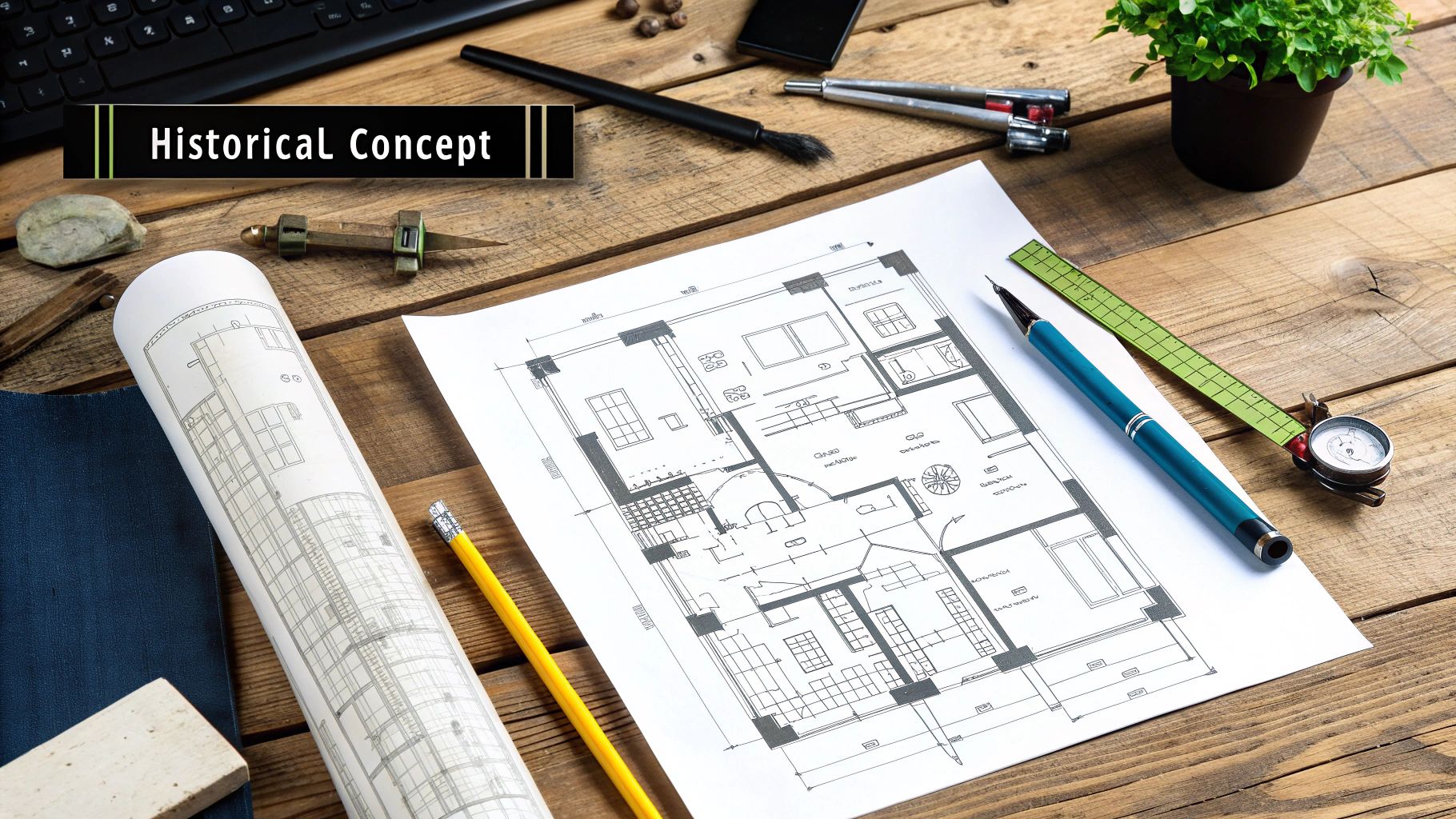
So, how do you take the kitchen work triangle from a neat idea on paper to a powerhouse design tool in your own home? It all comes down to a few key guidelines. These aren't just random numbers; they’re the result of decades of research into how people actually move and work in their kitchens. Think of them as a time-tested recipe for an ergonomic and efficient layout.
The main rule is all about the distance between your three key points: the sink, the stove, and the refrigerator. Each leg of that imaginary triangle should be between 4 and 9 feet long. This range is the sweet spot. Anything less than four feet, and you’ll feel totally cramped, maybe even banging appliance doors into each other. More than nine feet, and you're practically running a marathon just to make dinner.
The Total Triangle Perimeter
It's not just about the individual legs, though. You also need to look at the total distance of all three sides added together. This perimeter should land somewhere between 13 and 26 feet. This simple rule keeps the whole layout in balance—not too tight, but not too spread out.
This range is what prevents a funky, lopsided triangle where one leg is super long and the others are short, which would defeat the whole purpose. A well-proportioned triangle keeps everything you need within a few comfortable steps, making the entire cooking process feel smoother and less like a chore.
If there's one rule to never break, it's this: keep the path clear. Your direct line of travel between the sink, stove, and refrigerator should be completely free of major roadblocks like a kitchen island, a table, or even a trash can that forces you to take a detour.
Keep Traffic Out of the Triangle
Finally, you want to make sure your work triangle isn't doubling as a family highway. When people are constantly cutting through your main work zone to get to the back door or another room, it’s not just annoying—it can be a real safety hazard. The best kitchen layouts are designed to route foot traffic around the core cooking area, not straight through it.
Nailing these guidelines is a huge part of learning how to lay out a functional kitchen. By respecting these measurements and keeping your pathways clear, you can design a space that truly supports your workflow, boosts safety, and makes cooking a genuine pleasure again.
Applying the Triangle to Your Kitchen Layout
This is where the theory hits the tile, so to speak. Understanding the kitchen work triangle is one thing, but applying it to your actual kitchen is what brings the design to life. The great news is this concept isn't rigid; it’s incredibly flexible and works beautifully with just about any common kitchen shape you can think of.
Whether you're dealing with a compact galley kitchen or have the luxury of a sprawling U-shaped space, the core goal never changes: create a natural, easy workflow.
Tailoring the Triangle to Your Space
Think of the triangle less as a strict geometric rule and more as a guide for creating logical, clear paths between your three main work zones—the sink, the stove, and the refrigerator. The layout should just feel right, cutting down on the wasted steps and effort it takes to whip up a meal.
For a deeper look at getting the most out of your specific room, you can explore our guide on achieving ultimate kitchen efficiency with your layout.
The best kitchen designs use the work triangle as a starting point, not a non-negotiable blueprint. The real magic happens when the layout supports your personal cooking style, no matter the shape of the room.
This visual breaks down the ideal distances for each leg of the triangle, giving you a clear benchmark for your own kitchen plan.
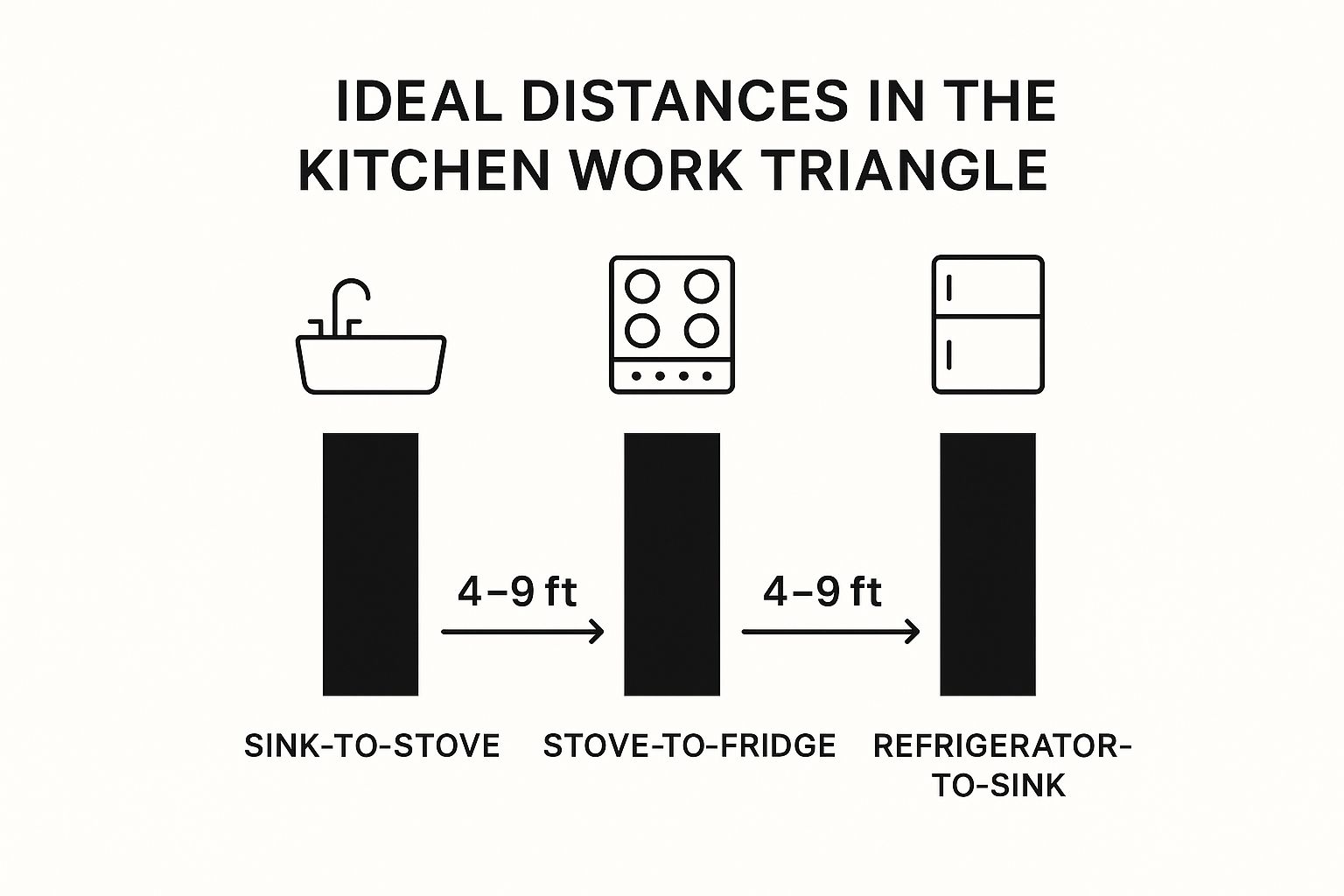
As you can see, the sweet spot is keeping each leg of the triangle between 4 and 9 feet. This simple rule of thumb prevents the layout from feeling too tight or, on the flip side, too spread out.
Work Triangle Application by Kitchen Layout
Every kitchen layout offers a unique canvas for applying the work triangle principles. While a perfect equilateral triangle isn't always possible (or necessary), the goal is to create a configuration that makes sense for the space. Here’s a quick breakdown of how the triangle works in common layouts:
| Kitchen Layout | Triangle Configuration | Key Benefit |
|---|---|---|
| L-Shaped | Uses two adjacent walls, forming a natural and open triangle away from traffic. | Keeps the main work area compact and prevents guests from cutting through the cooking zone. |
| U-Shaped | The "classic" triangle, with each of the three stations on its own wall. | Offers maximum efficiency with minimal steps between stations and ample counter space. |
| Galley | Creates a lean work aisle with stations on opposite parallel walls. | Extremely efficient for one or two cooks, keeping everything just a pivot away. |
| Island | Places one work station (often the sink or cooktop) in the island. | Forms a highly effective triangle that centers the workflow and frees up perimeter counters. |
| Single-Wall | A linear layout, so it’s less of a triangle and more of a "work line." | Efficiency comes from placing the three stations in a logical sequence (e.g., fridge -> sink -> stove). |
Ultimately, each layout can be highly functional. It all comes down to thoughtful placement that supports an intuitive path from one task to the next.
The Everyday Benefits of an Efficient Kitchen
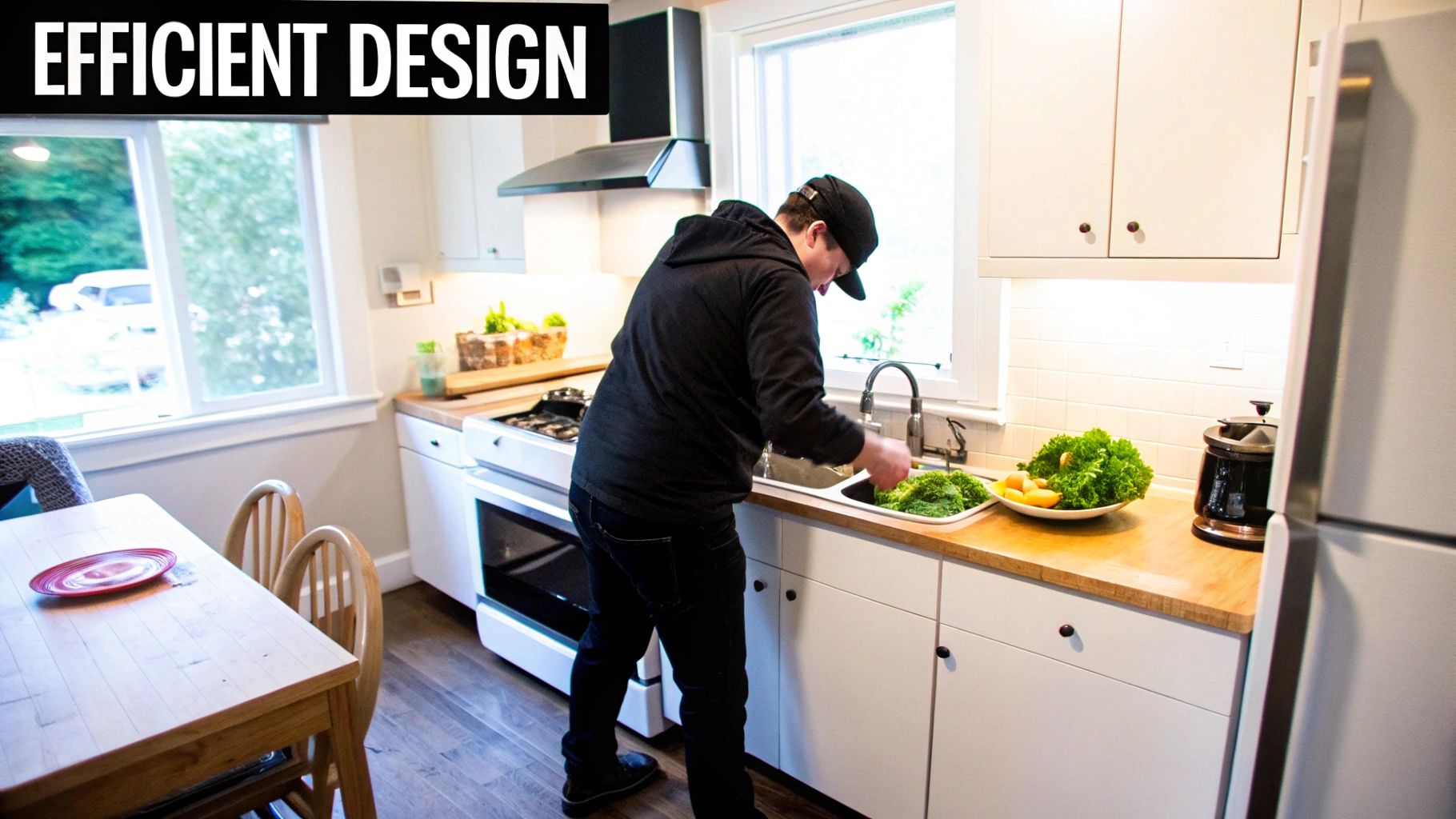
So, why should you really care about the kitchen work triangle? It's more than just a dusty design rule—it’s about how your kitchen feels and functions every single day. The real magic happens when you move past the theory and start experiencing the tangible benefits that make life in the kitchen easier, safer, and just plain better.
A smart layout dramatically cuts down on the physical effort of cooking. Forget wearing a path in your floor walking back and forth. No more awkward stretching or bending to grab what you need. An efficient work triangle puts your essentials just a few steps away, turning meal prep from a chore into a creative joy.
A Safer and Calmer Environment
It's not just about convenience, either. A well-planned layout is a safer layout. By design, it creates a protected zone for the cook, which naturally guides foot traffic around your main work area instead of right through it. This is a game-changer for families with kids, reducing the risk of someone bumping into you while you’re carrying a hot pan or using a sharp knife.
All this efficiency saves you something priceless: time. When your workflow is logical, cooking and cleanup are faster. This creates a calmer, more organized atmosphere where you can spend less time scrambling and more time connecting with your family over a meal you actually enjoyed making.
An efficient kitchen isn't just about saving steps; it's about creating a space that supports a less stressful, more harmonious daily routine. It's one of the key benefits of a kitchen remodel that you'll appreciate for years to come.
Ultimately, when you get the work triangle right, your kitchen transforms from a simple utility room into the true heart of your home—a place built for comfort, connection, and making memories.
Adapting the Triangle for Modern Lifestyles
Let's be honest, the classic kitchen work triangle was born in a totally different era. It was designed for a single cook working away in a room closed off from the rest of the house. Today, our kitchens are the complete opposite—they’re the bustling command center for family life, entertaining, and sometimes even a makeshift office. This big shift means the old, rigid triangle idea needs to evolve, too.
Modern kitchens are often wide-open spaces, with more than one person trying to cook at the same time. We've also got way more than just three core appliances. But this doesn't make the triangle obsolete; it just means we have to think about it more flexibly. The core idea of efficiency—keeping related tasks and tools close together—is actually more important than ever.
From a Single Triangle to Multiple Work Zones
Instead of getting stuck on one single triangle, the best modern kitchen designs use work zones. You can think of these as smaller, task-specific mini-triangles or stations. They’re designed to streamline a particular activity without messing up the main cooking flow. It's the perfect way to keep the kitchen organized and functional, even when it’s crowded.
Some common work zones you might want to consider are:
- A Baking Zone: Grouping your stand mixer, baking sheets, and flour bins near a dedicated stretch of countertop. No more running around for supplies.
- A Coffee Station: All your essentials—the coffee maker, grinder, mugs, and sugar—tucked into one convenient corner.
- A Homework or Prep Zone: An area on an island with seating is perfect for letting kids work or help with simple meal prep, keeping them safely away from the hot stove.
- A Wet Bar: A separate space with a small sink, glassware, and a beverage fridge makes entertaining a breeze.
The goal is to apply the logic of the work triangle on a smaller scale. By creating dedicated zones, you prevent workflow collisions and ensure every activity has its own efficient, designated space.
This zonal approach is what allows a kitchen to support multiple people at once. One person can be in the main triangle getting dinner ready, while someone else makes a fresh pot of coffee and a guest grabs a drink from the bar—all without bumping into each other. It’s the perfect blend of timeless design wisdom and the real needs of today's homes, making sure your kitchen truly works for the way you live now.
Common Questions About the Kitchen Work Triangle
Even after getting the basics down, a few questions always seem to come up when you're actually trying to map out a kitchen work triangle. Let's clear up some of the most common ones so you can plan your new layout like a pro.
Does My Kitchen Island Break the Work Triangle?
This is a big one, and the short answer is: it depends. An island only becomes a roadblock if it forces you to take the long way around to get from the sink to the fridge, or the stove to the sink.
But a well-placed island can actually improve your triangle. Think about it: if you put your primary sink or cooktop in the island, it instantly becomes one of your three key points. This can create an incredibly efficient, central hub for all your kitchen tasks. The main thing is to keep the path between your three points direct and clear.
Is the Work Triangle an Outdated Concept?
Not at all. While the original, strict rules were thought up decades ago, the core idea—making your kitchen work for you—is timeless. The concept hasn't vanished; it's just evolved. Today, designers often talk about "work zones" instead of a single, rigid triangle.
You might have your main cooking triangle for prepping and cooking dinner, plus a separate, smaller zone for your coffee bar or a dedicated baking station. The goal is the same as it's always been: group related tasks and tools together to make your time in the kitchen easier and more intuitive.
What if My Kitchen Is Too Small for the Ideal Measurements?
Don't sweat it. Those recommended measurements are guidelines, not unbreakable laws. In a compact kitchen, the priority isn’t about hitting a specific number of feet; it’s about making sure the space is usable, not frustrating.
Your triangle will naturally be smaller, but the real focus should be on the practical details.
- Make sure your oven, fridge, and dishwasher doors can all open fully without banging into each other or blocking a walkway.
- Prioritize having at least a little bit of "landing zone" counter space next to your sink, stove, and fridge.
Even in a small space, applying the principles of the kitchen work triangle can help you create a layout that feels surprisingly efficient and a real joy to use.
Ready to create a kitchen that perfectly blends timeless efficiency with modern style? The experts at Sinclair Cabinetry inc can help you design a custom layout with beautiful, high-quality cabinets that bring your vision to life. Learn more on our website.