

Embarking on a home renovation, whether it's a full kitchen remodel or installing custom cabinetry, is a significant investment of time and money. The single most important factor determining your project's success is the contractor you hire. A great contractor brings your vision to life seamlessly, while the wrong one can lead to budget overruns, endless delays, and immense stress. To protect your investment and ensure a smooth process, you need to go beyond a simple price quote. The vetting process is where you can proactively identify red flags and confirm a professional's credibility before any work begins.
This guide provides the essential questions to ask contractors, turning your interview process into a powerful tool for vetting professionals. By asking targeted questions about licensing, timelines, and problem-solving, you can confidently identify an experienced, reliable, and trustworthy partner. These inquiries are designed to give you a comprehensive understanding of a contractor's business practices, communication style, and commitment to quality. Moving forward with this knowledge empowers you to make an informed hiring decision, ensuring your project is completed to your satisfaction. Let's dive into the key inquiries that separate the best from the rest and help you secure a successful outcome for your home.
1. Are you licensed, bonded, and insured?
This is the non-negotiable first question to ask any contractor you consider hiring. A "yes" isn't enough; you need to understand what each component means and verify the details. These three credentials form a protective shield for you, your home, and your finances. They separate professional, legitimate businesses from risky, unqualified operators.

Why This Question is Essential
Each of these three elements provides a different layer of security. Ignoring them can expose you to significant legal and financial liability if something goes wrong.
- Licensed: A license proves the contractor has met your state or local government's requirements to perform the work. This often includes passing exams, proving experience, and having a registered business. It ensures a baseline level of competency and accountability.
- Insured: Insurance protects you from costs related to accidents or damage. General liability insurance covers property damage (e.g., a dropped tool cracking your new quartz countertop), while workers' compensation covers injuries to the contractor's employees on your property. Without it, you could be held responsible.
- Bonded: A surety bond is financial protection for you if the contractor fails to complete the job, doesn't pay subcontractors, or performs substandard work. If they default on their obligations, you can file a claim against the bond to recover your losses.
Actionable Verification Steps
Verbal confirmation is just the starting point. Diligent verification is crucial.
- Request Physical Documents: Ask for copies of the contractor's state license, certificate of insurance, and surety bond. A professional will have these ready to share.
- Verify Independently: Use your state's contractor licensing board website to look up their license number and check for its status and any disciplinary actions.
- Contact the Insurer: Call the insurance company listed on the certificate to confirm the policy is active and the coverage amounts are sufficient for your project’s scope.
- Review Your Contract: Ensure your contract explicitly states that the contractor is licensed, bonded, and insured, and that they will maintain this status for the duration of your project.
For a comprehensive overview of what to look for, our detailed guide can help you understand the essential credentials. Explore our contractor hiring checklist for more information.
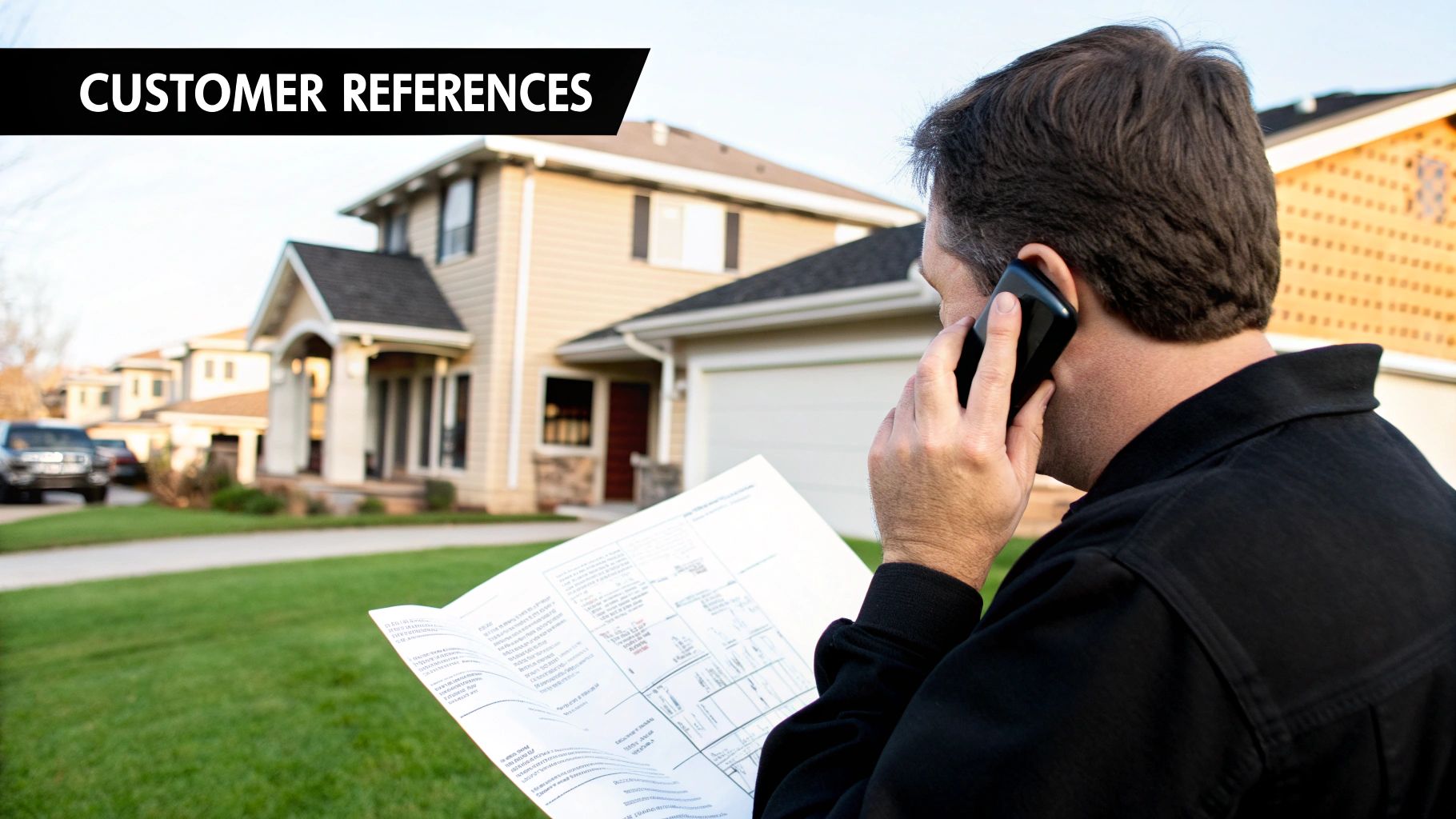
2. Can you provide references from recent projects?
While a contractor’s portfolio shows you the final product, references reveal the entire journey. This question offers a transparent look into their process, reliability, and client relationships from the perspective of people who have been in your exact shoes. A confident contractor will readily provide a list of recent clients, as their work and professionalism speak for themselves.
Why This Question is Essential
Speaking with past customers gives you unfiltered insight that no marketing material can offer. It helps you gauge crucial aspects of the contractor's performance beyond just the quality of their work.
- Communication: You can learn how the contractor communicates updates, handles questions, and keeps the homeowner informed throughout the project. Was the project manager responsive and accessible?
- Professionalism & Reliability: References can speak to the contractor’s punctuality, the cleanliness of the job site, and the conduct of their crew and subcontractors. Did they show up on time and respect the client's home?
- Problem-Solving: Remodeling projects rarely go exactly as planned. This is your chance to ask how the contractor managed unexpected challenges, delays, or issues that arose during the work.
- Budget & Timeline: Inquire if the final project cost and completion date aligned with the initial contract. This is a critical indicator of the contractor’s planning and management skills.
Actionable Verification Steps
Simply getting a list of names is not enough. You need to conduct a thoughtful follow-up to get the information you need to make a confident decision.
- Request Relevant References: Ask for contact information for at least three clients with projects completed in the last year that are similar in scope and scale to yours.
- Prepare Specific Questions: Go into the call with a prepared list. Ask about their overall satisfaction, communication style, budget adherence, and how unforeseen issues were handled. A key question is always: "Would you hire them again?"
- Inquire About the Crew: Ask about the professionalism and skill of the on-site team and any subcontractors. Were they respectful of the property and schedule?
- Ask to See the Work: If the reference is local and willing, ask if you can see the finished project. A visual inspection provides a level of confirmation that photos cannot match.
3. What is your timeline for starting and completing the project?
A project’s timeline is more than just a start and end date; it’s a roadmap that reveals a contractor’s project management skills, current workload, and commitment to transparency. Discussing the timeline in detail helps set realistic expectations, allows you to plan your life around the disruption, and identifies contractors who might be overextended or disorganized. A clear, well-defined schedule is a hallmark of a professional operation.
Why This Question is Essential
Understanding the project schedule from the outset prevents one of the biggest sources of homeowner frustration: unexpected and lengthy delays. A detailed conversation about timing provides critical insights.
- Availability: An immediate start isn't always a good sign. Reputable contractors are often booked weeks or months in advance. A long wait time can indicate high demand and quality work.
- Project Management: A contractor who can break down a project into phases (e.g., demolition, rough-in, drywall, cabinet installation, finishing) demonstrates strong organizational skills. This is a good indicator they can manage subcontractors and material deliveries effectively.
- Realistic Expectations: The timeline provides a benchmark for progress. It helps you understand if the project is on track and gives you a clear basis for communication if things start to fall behind schedule.
Actionable Verification Steps
Don't accept vague answers like "a few weeks." Press for specific details to ensure everyone is on the same page before any work begins.
- Request a Phased Schedule: Ask for a written timeline that outlines key milestones and their expected completion dates. For a kitchen remodel, this would include dates for demolition, plumbing, electrical, cabinet delivery, and countertop installation.
- Discuss Potential Delays: Inquire about common causes of delays for your type of project (e.g., weather for roofing, custom material lead times for kitchens) and ask what contingency plans they have in place.
- Confirm in the Contract: Ensure the agreed-upon start date, major milestones, and projected completion date are all explicitly written into the final contract. This makes the timeline a binding part of your agreement.
- Understand Change Orders: Ask how unforeseen changes or homeowner-requested additions will impact the schedule and how those adjustments will be documented and communicated.
Gaining a deep understanding of scheduling is crucial, especially for complex jobs. For a detailed breakdown, explore our complete kitchen remodel timeline to see what to expect.
4. Can you provide a detailed written estimate breaking down materials and labor?
A vague, one-line quote is a major red flag. A professional, detailed estimate is a foundational document that prevents misunderstandings, manages expectations, and protects you from unexpected costs. This document should offer a transparent breakdown of every cost component, from raw materials and specific product model numbers to the labor hours required for each phase of the project.
Why This Question is Essential
This question goes beyond just getting a price; it’s about understanding exactly what you are paying for. A detailed estimate is a crucial tool for comparing bids and ensuring the final contract accurately reflects the project scope.
- Transparency and Clarity: An itemized list demystifies the total cost. You can see precisely where your money is going, such as the cost for specific cabinet hardware, the brand of paint, or the man-hours allocated for demolition.
- Accurate Comparisons: When you receive multiple itemized estimates, you can compare them on an "apples-to-apples" basis. This helps you identify if one contractor is using inferior materials or underestimating labor, which could lead to problems later.
- Foundation for the Contract: The detailed estimate serves as the blueprint for your final contract. It minimizes the risk of scope creep and provides a clear reference point to resolve any disputes over billing or work performed.
Actionable Verification Steps
Don't just accept the first document you receive. Scrutinize the details to ensure it aligns with your project goals and budget.
- Request Identical Formats: Ask all potential contractors to provide their bids in a similar, itemized format. This makes direct comparison much easier and more effective.
- Question Allowances: Look for "allowances," which are placeholder amounts for items you haven't selected yet (like faucets or light fixtures). Ask what happens if your choices cost more or less than the allowance amount.
- Confirm All-Inclusive Pricing: Verify that the estimate includes all associated costs, such as permits, trash disposal, site protection, and post-project cleanup. Hidden fees can quickly inflate your budget.
- Understand Bids vs. Estimates: Clarify if you are receiving a fixed-price bid (quote) or a flexible estimate. An estimate can change, whereas a bid is a firm offer to complete the work for a set price.
For more on building a budget and understanding costs, see our guide on how much kitchen cabinets cost to prepare for your estimate reviews.
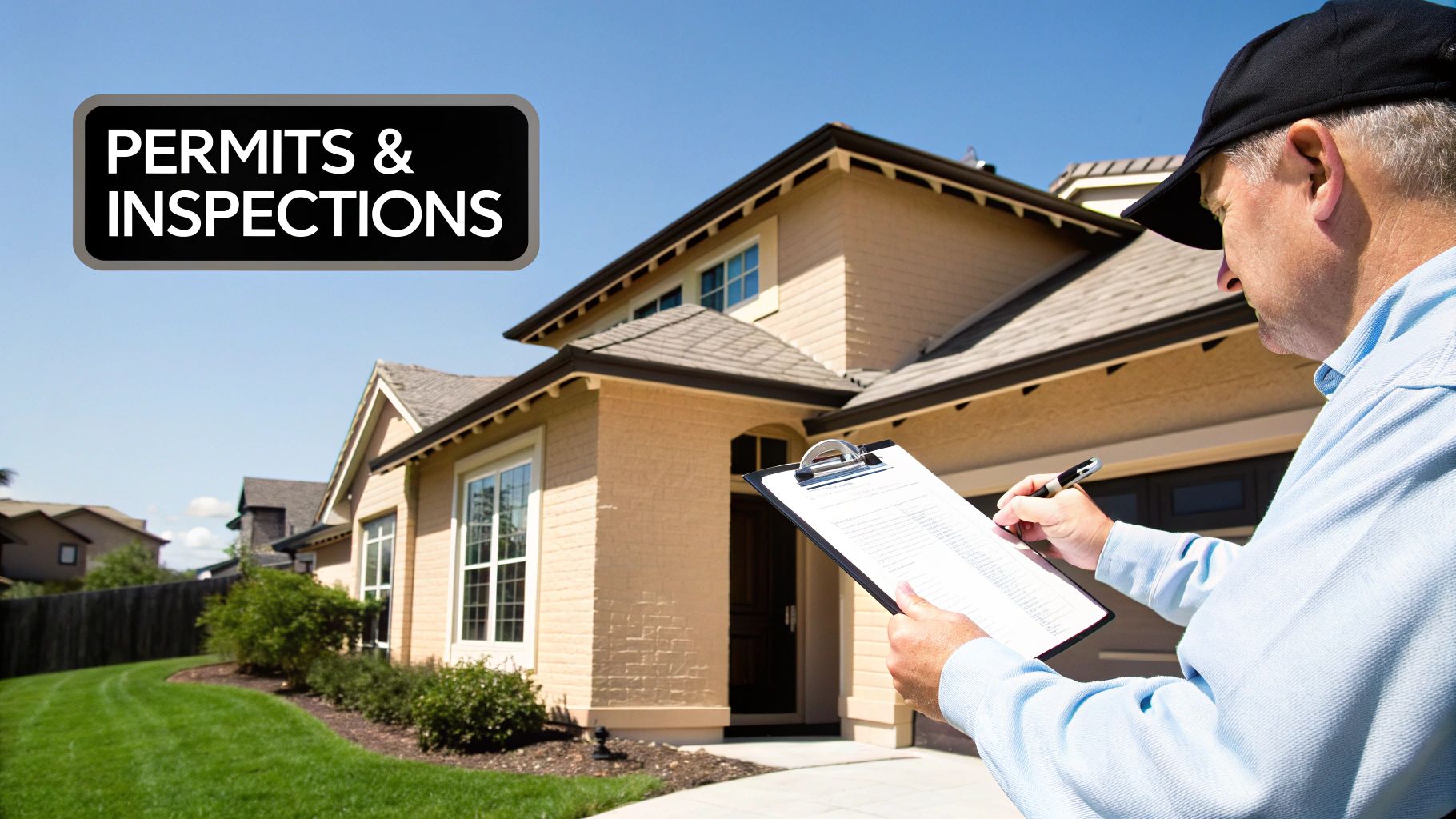
5. How do you handle permits and inspections?
A contractor's approach to permits and inspections is a direct reflection of their professionalism and commitment to legal, safe construction. This process, often seen as a bureaucratic hurdle, is actually a crucial quality control measure. It ensures your project adheres to local building codes, which are in place to guarantee structural integrity, safety, and functionality. A contractor who tries to bypass this system is cutting corners that could have serious consequences.
Why This Question is Essential
Navigating the permitting process reveals a contractor’s experience with local regulations and their established relationships with building departments. Mishandling this step can lead to costly delays, forced tear-downs of completed work, and significant problems when you sell your home.
- Legal Compliance: Most significant remodeling projects, like moving walls, altering plumbing, or updating electrical systems, legally require permits. Unpermitted work can result in fines and legal trouble.
- Safety Assurance: Inspections are conducted by impartial city or county officials to verify that the work meets minimum safety standards. This protects your family from potential hazards like faulty wiring or unstable structures.
- Property Value: Proper permits and final inspection sign-offs are a matter of public record. They provide future buyers with confidence in the quality of the work and are often necessary to close a sale.
Actionable Verification Steps
Don't just assume the contractor has it covered. Proactively discuss and confirm the entire process before signing a contract.
- Clarify Responsibility: Your contract should explicitly state who is responsible for securing and paying for all necessary permits. Typically, the general contractor handles this.
- Discuss Their Experience: Ask about their familiarity with your local building department. An experienced local contractor will understand the specific requirements and inspection sequences, preventing unnecessary delays.
- Outline the Process: Have them walk you through the expected inspection schedule. For example, a kitchen remodel will likely have separate inspections for framing, plumbing, electrical, and a final sign-off.
- Plan for Contingencies: Ask what their process is if an inspection fails. A professional contractor will have a clear plan to correct the issue promptly and schedule a re-inspection.
Properly managing this stage is a key part of any successful renovation. For a deeper look into the preliminary steps of a major project, our guide to kitchen renovation planning can provide valuable insights.
6. What type of warranty do you offer on your work?
A warranty is more than just a piece of paper; it’s a contractor's pledge of quality and a testament to their confidence in their craftsmanship and materials. This question is critical because it reveals how a contractor stands behind their work after the final payment is made. A strong warranty provides you with long-term peace of mind and protection against potential defects or failures down the road.
Why This Question is Essential
The warranty defines your recourse if something goes wrong post-completion. It separates contractors who build for the long haul from those who might disappear once the project is finished. Understanding the specifics is vital for evaluating the true value of their service.
- Workmanship Warranty: This is the contractor's direct guarantee on their own labor. It covers issues arising from improper installation or assembly. For example, a cabinet door that comes loose due to incorrect hinge placement would be covered here.
- Manufacturer Warranty: This applies to the products and materials used, such as the cabinetry, countertops, or hardware. A defect in the finish of a cabinet door, for instance, would fall under the manufacturer's warranty, though the contractor should facilitate the claim.
- Accountability: A clear warranty process shows the contractor has an established system for handling post-project issues. This demonstrates professionalism and a commitment to customer satisfaction beyond the project timeline.
Actionable Verification Steps
Don't settle for a verbal promise of a "good warranty." You need to understand the terms and have them documented before signing a contract.
- Request Written Terms: Ask for a document detailing the warranty. It should clearly state what is covered, the duration of coverage for both labor and materials, and any exclusions.
- Clarify the Claims Process: Ask, "If I have an issue, what is the exact process for filing a claim? Who do I contact, and what is the expected response time?" A professional contractor will have a straightforward answer.
- Differentiate Warranties: Ensure you understand the difference between the contractor's workmanship warranty and the manufacturers' warranties on products. Know who is responsible for what.
- Verify Transferability: If you might sell your home in the future, ask if the warranty is transferable to the new owners. This can be a valuable selling point.
7. Who will be doing the actual work and what are their qualifications?
It's a common scenario: you hire a contractor based on their impressive portfolio and experience, only to find a different, less experienced crew showing up on day one. This question cuts through that uncertainty. It clarifies exactly who will be in your home and ensures their skills align with the quality and craftsmanship you expect for your project.
Why This Question is Essential
Knowing the project team’s structure is crucial for quality control, communication, and accountability. The person you interview might be the owner or project manager, not the lead carpenter or installer. Understanding the chain of command and the qualifications of the hands-on crew prevents surprises and ensures the work meets professional standards.
- In-House Crew vs. Subcontractors: Does the contractor use their own employees, or do they rely on a network of subcontractors? Both models can be successful, but it's important to know which you're getting. An in-house team often means more consistent training and communication.
- Specialized Trades: For jobs like electrical, plumbing, or HVAC, the individuals performing the work must be licensed in their specific trade. Confirming this protects your home's safety and ensures the work will pass inspections.
- Experience and Supervision: The qualifications of the on-site supervisor or lead installer are just as important as the contractor's. Their experience directly impacts the day-to-day execution and final quality of your project.
Actionable Verification Steps
Don’t just take their word for it. A reputable contractor will be transparent about their team.
- Ask for Team Structure: Inquire about the project manager, the on-site lead or foreman, and the key tradespeople. Who is your primary point of contact for daily questions?
- Verify Subcontractor Credentials: If subcontractors are used, ask if they carry their own liability and workers' compensation insurance. Request copies of their licenses for specialized trades like plumbing and electrical.
- Inquire About Team Longevity: Ask how long the lead installers or key crew members have been with the company. A long-standing team often indicates a stable, reliable business and better collaboration.
- Clarify Roles in the Contract: Your contract should specify that all work will be performed by qualified, and where necessary, licensed professionals. It should also outline the use of any major subcontractors.
8. How do you handle unexpected problems or changes during the project?
No remodeling project is immune to surprises. From finding outdated plumbing behind a wall to encountering unexpected structural issues, unforeseen challenges are part of the process. This question is critical because it reveals a contractor's problem-solving skills, communication protocol, and professionalism when faced with the unexpected. A well-defined process separates experienced contractors from those who might let a small issue derail your entire project.
Why This Question is Essential
How a contractor manages change directly impacts your budget, timeline, and stress level. A chaotic approach can lead to costly delays and disputes, while a structured process ensures transparency and control. You need to know that your contractor can navigate these issues calmly and efficiently.
- Financial Control: A formal change order process prevents "scope creep" and ensures you approve all additional costs before any work is done. This protects you from surprise bills at the end of the project.
- Clear Communication: Understanding their protocol for reporting issues ensures you are kept in the loop. Will they call you immediately? Will they present a formal document with options? This clarity is key to a good working relationship.
- Problem-Solving Prowess: Their answer demonstrates their experience. A seasoned contractor will have a ready plan and can provide examples of past challenges they successfully resolved, giving you confidence in their ability to handle whatever comes up.
Actionable Verification Steps
A verbal promise to "handle it" is not sufficient. You need to see evidence of a formal system for managing changes and problems.
- Request a Sample Change Order: Ask the contractor to provide a blank or redacted sample of their change order form. This document should clearly outline the issue, the proposed solution, the cost, and the impact on the timeline.
- Discuss Past Scenarios: Ask for a specific example of an unexpected problem on a previous job. How did they identify it, what solutions did they propose to the homeowner, and what was the final outcome?
- Establish Communication Protocols: Agree on how and when you will be notified of issues. Will it be a phone call for urgent matters followed by an email? Who is the designated point of contact?
- Review the Contract Language: Ensure the contract has a dedicated clause for "Change Orders" or "Contingencies." This section must require a written, signed document from you before any additional work that affects the cost or schedule can begin.
Key Contractor Questions: 8-Point Comparison
| Item | Implementation Complexity 🔄 | Resource Requirements ⚡ | Expected Outcomes 📊 | Ideal Use Cases 💡 | Key Advantages ⭐ |
|---|---|---|---|---|---|
| Are you licensed, bonded, and insured? | Moderate – requires verification of documents | Low to moderate – involves verifying licenses and insurance | Legal protection, financial coverage, professional legitimacy | Any construction or trade requiring compliance | Strong legal and financial protection |
| Can you provide references from recent projects? | Low – involves contacting and reviewing references | Low – requires time to contact past clients | Insight into work quality, reliability, and communication | Evaluating contractor reliability and quality | Unbiased feedback and real-world performance insights |
| What is your timeline for starting and completing? | Moderate – requires project planning and scheduling | Moderate – tracking schedule and coordinating phases | Realistic scheduling, better planning, identification of delays | Projects needing strict scheduling | Improved project coordination and planning |
| Can you provide a detailed written estimate? | High – requires itemized cost and scope breakdown | Moderate to high – detailed cost analysis | Accurate budgeting, scope clarity, legal documentation | Budget-sensitive projects needing formal quotes | Prevents cost overruns and scope creep |
| How do you handle permits and inspections? | Moderate – requires code knowledge and liaison | Moderate – involves permit fees and scheduling inspections | Legal compliance, safety assurance, avoided fines | Projects with regulatory requirements | Ensures code compliance and smooth approvals |
| What type of warranty do you offer on your work? | Low to moderate – depends on warranty terms | Low – documentation of coverage and claims process | Long-term protection, peace of mind | Projects needing post-completion assurance | Provides recourse for defects and workmanship issues |
| Who will be doing the actual work and qualifications? | Moderate – involves team verification and communication | Low to moderate – verifying credentials and supervision | Clear expectations for workmanship and accountability | Projects requiring specialized skills | Ensures qualified professionals and quality control |
| How do you handle unexpected problems or changes? | High – requires established change management processes | Moderate – involves communication and documentation | Minimized delays and disputes, controlled costs | Complex projects prone to issues | Framework for managing challenges and changes |
Building Confidence in Your Choice of Contractor
Selecting the right contractor is the single most critical decision you'll make in any home renovation project. It's not just about finding someone who can execute a plan; it's about forging a professional partnership built on trust, transparency, and shared vision. The detailed list of questions to ask contractors provided in this guide is your blueprint for building that partnership and navigating the selection process with confidence.
Moving beyond surface-level inquiries allows you to uncover the true character and capability of a potential partner. You're not just asking about a license; you're verifying their commitment to professional standards. You're not just checking a timeline; you're assessing their project management skills and respect for your schedule. Each question serves a distinct purpose, moving you closer to a decision grounded in solid facts rather than just a gut feeling or a low bid.
From Questions to Clarity: Your Key Takeaways
Remember, a contractor's reaction to your thorough questioning is as revealing as their answers. A true professional will welcome your diligence. They will see it as a sign of a serious and engaged client and will be eager to demonstrate their expertise and processes.
Key takeaways from your interviews should include:
- A Clear Financial Picture: You should understand not just the total cost but how it's broken down. A detailed estimate protects you from unexpected expenses and demonstrates the contractor's transparency.
- A Solid Timeline: A well-defined start and end date, along with key milestones, shows that the contractor has a realistic plan for execution and values your time.
- Confidence in the Crew: Knowing who will be in your home and that they are qualified provides essential peace of mind. This is about ensuring quality craftsmanship from start to finish.
- A Plan for the Unexpected: The best contractors don't pretend problems won't arise; they have established protocols for handling change orders and unforeseen issues, ensuring the project stays on track.
Taking the Next Step with Confidence
You are now equipped with the tools to transform a potentially overwhelming process into a structured, insightful investigation. By systematically asking these questions, you filter out unqualified candidates and identify the professionals who are truly prepared to bring your vision to life. This diligence is your best insurance policy against project delays, budget overruns, and disappointing results.
The ultimate goal is to move forward with a partner who not only has the skills to do the job but also the integrity to do it right. This foundation of trust and clear communication is what turns a construction project into a collaborative and rewarding experience, resulting in a space you will love for years to come. Your home is one of your greatest assets; investing the time to choose the right steward for its transformation is a decision that will pay dividends long after the last nail is hammered.
Ready to partner with a contractor who welcomes detailed questions and delivers exceptional results? For homeowners in Cape Coral, Florida, and beyond, Sinclair Cabinetry inc exemplifies the professionalism and craftsmanship you're looking for. Visit our website at Sinclair Cabinetry inc to see our portfolio and schedule a consultation where we’ll be happy to answer all these questions and more.