
So, what's the real story on custom bathroom vanity costs?
Think of it like buying a car. You can grab a standard model off the lot for a set price, and it'll get the job done. Or, you can build one from the ground up, choosing the engine, the leather, the sound system—everything. That's the difference between a stock vanity from a big-box store and a custom one.
A custom piece is built to your exact specifications. The final number is a direct reflection of every choice you make, from the wood species to the drawer pulls. This is why the price can swing from a few thousand dollars to well into five figures.
On average, you can expect a custom bathroom vanity to land somewhere between $2,000 and $10,000 before you factor in installation. A straightforward design using common materials will keep you on the lower end of that spectrum. But if you’re dreaming of a sprawling, intricate unit with premium hardwoods and a show-stopping stone top, it's easy to see how costs can climb.
Breaking Down the Budget Tiers
To get a better handle on the numbers, it helps to break things down into budget tiers. Each level opens up a new world of materials, hardware, and design complexity. A basic custom vanity might run you $2,000 to $4,000. Mid-range projects typically fall between $4,000 and $7,000, while a high-end build with all the bells and whistles can easily push past $10,000. The experts at Nelson Cabinetry have some great insights on how these factors influence pricing.
Here’s a quick peek at what your money gets you at each level:
-
Budget-Friendly: This tier is all about maximizing function and getting a perfect fit without breaking the bank. You’re looking at durable, cost-effective materials like high-quality MDF or standard plywood, likely paired with a simple laminate or cultured marble countertop.
-
Mid-Range: Here, you step up to better materials and more design freedom. Think solid wood frames, furniture-grade plywood, and beautiful quartz or granite countertops. You'll also see upgrades like soft-close drawers and more intricate door styles.
-
Luxury: This is where you go for the wow factor. We’re talking premium solid hardwoods like walnut or rift-sawn oak, topped with natural stone slabs like marble or quartzite. Expect intricate details, custom interior storage solutions, and flawless, high-end finishes.
Custom Vanity Cost Tiers at a Glance
To make it even simpler, this table gives you a clear snapshot of what to expect within each budget category. It's a great tool for aligning your vision with a realistic financial plan.
| Tier | Estimated Cost Range (Vanity Only) | Common Materials | Best For |
|---|---|---|---|
| Budget-Friendly | $2,000 – $4,000 | MDF, Plywood, Laminate Top | Maximizing function and fit on a tight budget. |
| Mid-Range | $4,000 – $7,000 | Solid Wood Frames, Quartz Top | A balance of quality, durability, and style. |
| Luxury | $7,000+ | Solid Hardwoods, Marble/Quartzite | Creating a high-end, statement piece with no compromises. |
Ultimately, knowing these tiers helps you have a more productive conversation with your cabinet maker and ensures you can focus your budget on the elements that matter most to you.
How Materials Shape Your Vanity's Final Price
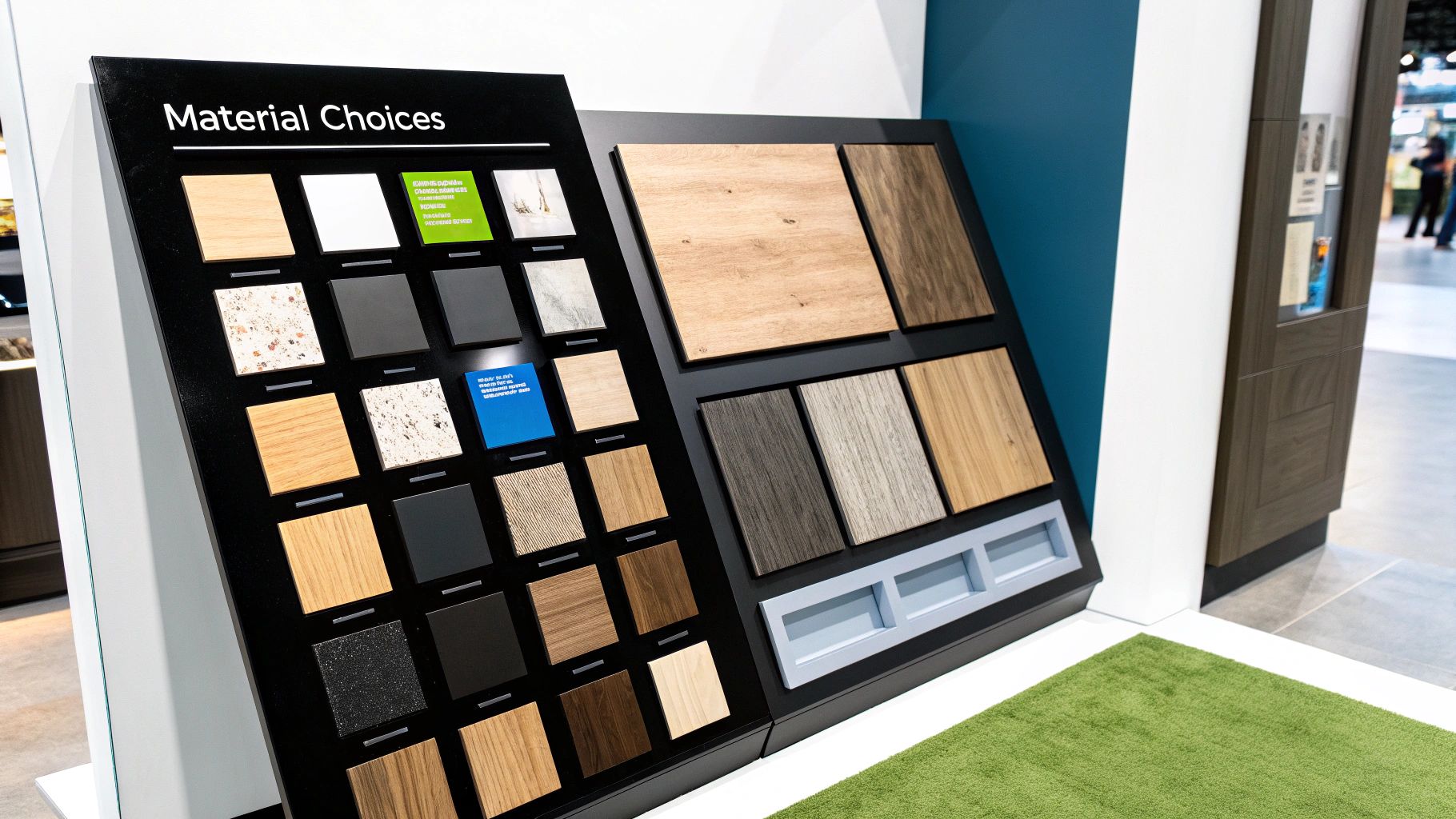
When you’re piecing together the cost of a custom vanity, the materials you choose are, without a doubt, the biggest driver of the final price tag. It’s a lot like picking an engine for a car. You can go with a reliable, standard engine that gets the job done affordably, or you can opt for a high-performance, handcrafted one that delivers a completely different experience—with a price to match.
The exact same principle applies here. The wood for the cabinet base and the stone for the countertop are the heart and soul of your custom bathroom vanity cost. They don’t just define the look; they determine how well your vanity will stand up to daily use for years to come.
Choosing Your Cabinet Material
The cabinet base is the foundation of your entire vanity. The big decision here is finding the sweet spot between looks, moisture resistance, and your budget. The options run the gamut from budget-friendly engineered woods to gorgeous solid hardwoods, and each comes with its own set of trade-offs.
-
MDF (Medium-Density Fiberboard): This is your most budget-friendly starting point. Made from compressed wood fibers, MDF gives you a perfectly smooth surface for painting. Its weakness? Water. If it isn't sealed flawlessly, it can swell, making it a risky choice for a steamy bathroom environment without meticulous care.
-
Plywood: A solid step up from MDF, furniture-grade plywood is constructed from thin layers of wood veneer glued together. This cross-grained structure makes it far more stable and water-resistant than MDF, offering a fantastic balance of durability and cost. It’s a go-to choice for a reason.
-
Solid Wood: This is the top-tier option, bringing unmatched natural beauty and toughness. Woods like oak, maple, cherry, and walnut each have their own unique character. While solid wood commands the highest price, its biggest advantage is its incredible lifespan—it can be sanded and refinished decades down the road.
Key Takeaway: The cabinet material you select sets the stage for your vanity's cost and durability. While MDF is the cheapest, furniture-grade plywood delivers a much better mix of price and moisture resistance, making it an ideal choice for most bathrooms.
Getting a handle on these differences is key. To go a bit deeper, checking out a guide on the best material for bathroom cabinets can give you a clearer picture of how each one performs in the real world. This helps you choose not just for today's style, but for tomorrow's reality.
Selecting the Perfect Countertop
Just like the cabinet base, your countertop choice will have a huge impact on the final custom bathroom vanity cost. This surface has to handle everything—water, soap, cosmetics, and daily wear—while tying your whole design together.
The price range for countertops is massive. In fact, some high-end natural stones can cost more per square foot than the entire cabinet base. It's a critical decision where you have to balance everyday practicality with pure aesthetics.
Here’s how the common options stack up, from most affordable to most luxurious:
-
Laminate: Forget the laminate of the past. Today's options are surprisingly stylish, with tons of colors and patterns that do a great job of mimicking real stone and wood. It’s the most budget-friendly choice by a long shot, but it is susceptible to scratches and heat damage.
-
Cultured Marble: This is an engineered product made from marble dust and resin. The result is a seamless, non-porous surface that often comes with the sink basin already integrated. It’s a durable, easy-to-clean choice that sits comfortably in the mid-range.
-
Quartz: A true homeowner favorite. Quartz is an engineered stone made from crushed quartz crystals and resin, making it incredibly tough. It’s non-porous, so it resists stains and scratches without needing to be sealed. Plus, it comes in a dizzying array of styles, from clean solid colors to complex marble-like designs.
-
Granite & Marble: These natural stones are at the peak of luxury. Each slab is completely unique, a true one-of-a-kind piece of art from the earth. Granite is exceptionally durable and heat-resistant, while Marble is cherished for its classic, elegant veining. Both are stunning but require regular sealing to prevent stains and sit at the top of the price ladder.
How Size and Design Complexity Add to the Cost
Beyond the raw materials, the actual size and design details of your vanity are where the custom bathroom vanity cost can really start to move. Think of it like getting a suit tailored. An off-the-rack size is one price, but as soon as you start adjusting measurements, adding unique lapels, or putting in functional interior pockets, both the material and labor costs begin to climb. That same logic applies directly to your vanity.
The most obvious factor is size. A bigger vanity simply needs more wood, a larger countertop slab, and more hours to build and finish. Jumping from a compact 36-inch single vanity to a sprawling 72-inch double vanity doesn't just double the price—it can sometimes more than double it because of the added structural support and the pure logistics of handling a larger piece.
The Impact of Scale on Your Budget
The relationship between a vanity's size and its cost is pretty straightforward. For custom wooden vanities with countertops, a small unit (24-30 inches) with a simple design might land somewhere between $1,500 and $3,500.
If you step up to a mid-sized vanity (36-48 inches), you're typically looking at the $3,500 to $6,000 range. For those large, double-sink vanities (60-72 inches), costs often start around $6,000 and can easily sail past $10,000, sometimes even hitting $15,000 for high-end models loaded with premium features.
Getting the scale right for your bathroom is key to balancing looks, function, and your budget. For a detailed breakdown on choosing the right measurements, check out our complete guide to bathroom vanity cabinet dimensions to make sure your design is a perfect fit.
When Details Drive Up the Price
While size sets the baseline price, it’s the design details—those small but mighty features—that truly define a custom piece and its final cost. This is where real craftsmanship shines, and it’s also where labor costs can add up fast. Every cut, joint, and feature requires a skilled artisan's time and precision.
Here are a few common design choices that will bump up the final price:
- Drawers vs. Doors: A vanity with a bank of drawers will always cost more than one with simple cabinet doors. Drawers demand more material, more complex construction for the boxes themselves, and the installation of slides.
- Soft-Close Hardware: Upgrading to soft-close hinges and drawer slides is a popular touch of luxury. This premium hardware adds to the material cost and requires very precise installation to work correctly.
- Interior Organizers: Custom pull-out shelves, built-in drawer dividers, or integrated laundry hampers are amazing for organization, but they add a surprising amount of complexity and cost to the build.
- Decorative Elements: Intricate details like ornate legs, decorative molding, fluted columns, or custom door panel profiles require specialized tools and a high degree of skill, which directly translates to more labor hours.
A simple, clean-lined floating vanity with flat-panel doors will be significantly more affordable than a freestanding furniture-style piece of the same size with decorative legs, multiple drawers, and intricate trim. The difference isn't just in materials, but in the dozens of extra labor hours required.
The style itself plays a huge role. A minimalist, slab-door floating vanity is on the lower end of the complexity scale. A traditional freestanding vanity with turned legs and inset doors, on the other hand, is on the much higher end. The latter involves more intricate joinery, more precise cuts, and more finishing work—all of which shows up on the final invoice. To get a better sense of how these personal touches can impact the budget, it's worth reading a guide to bespoke furniture design. In the world of custom cabinetry, every single design choice has a real, tangible impact on the bottom line.
Budgeting for Labor and Installation Costs
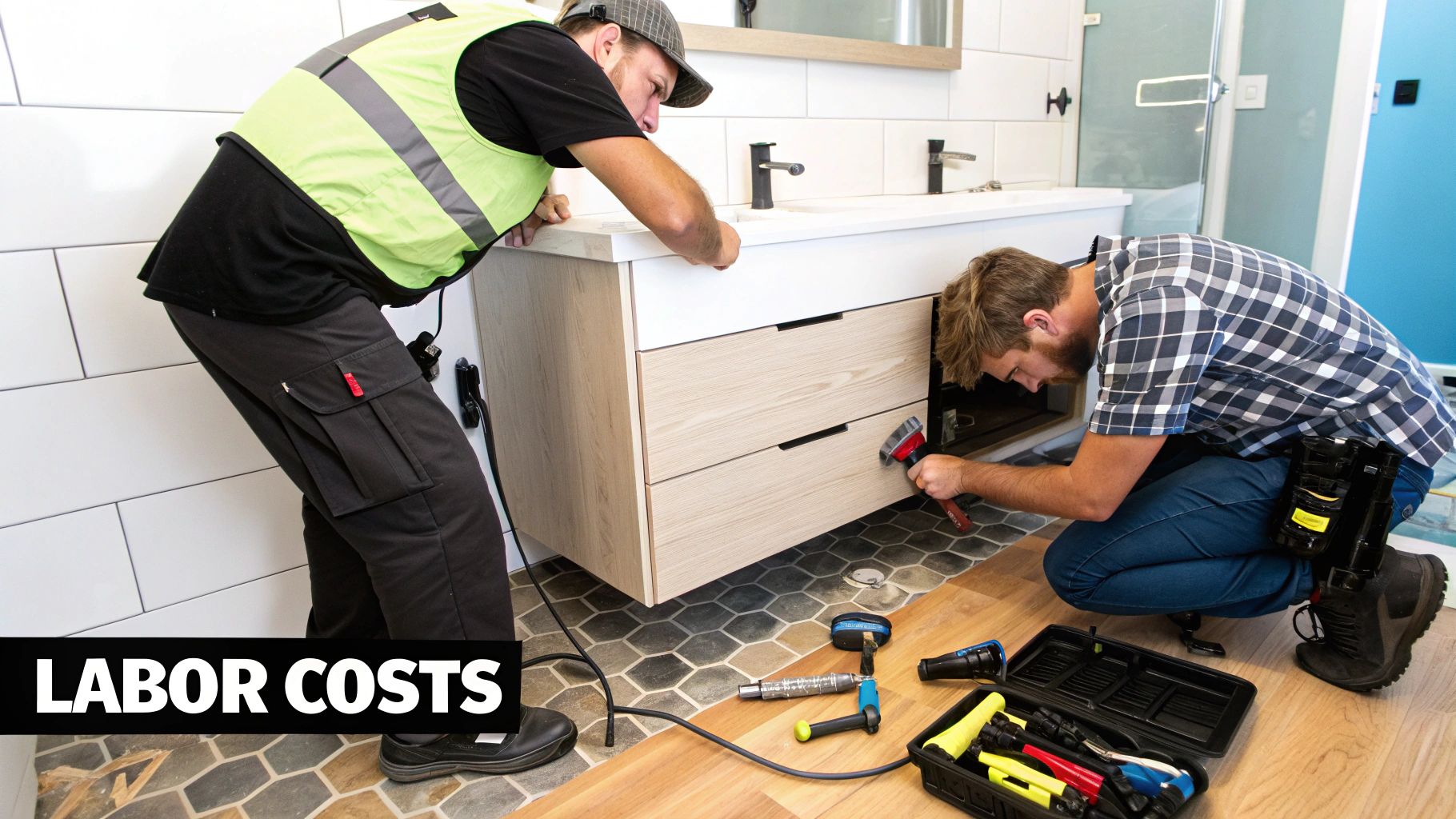
The journey to your perfect vanity doesn’t end when the cabinet maker applies the final coat of finish. A flawless piece of furniture can be completely let down by a clumsy installation. This is why budgeting for professional labor isn't just an extra line item; it's a critical part of the total custom bathroom vanity cost.
Think of it like getting a beautifully tailored suit. The final fitting is what makes it look perfect on you. In the same way, professional installation ensures your custom vanity fits seamlessly into your bathroom, works perfectly, and is securely mounted to last for decades. This stage often involves a team of specialists, and each one plays a crucial role.
The Team Behind the Installation
Unlike a simple off-the-shelf unit, installing a custom vanity isn't a one-person job. It often requires a coordinated effort from several skilled tradespeople, and their time adds to the final cost.
-
The Cabinet Maker/Installer: This is the pro who makes sure the vanity itself is perfectly level, securely fastened to the wall, and that every door and drawer aligns flawlessly. Their expertise is absolutely vital, especially for tricky designs like floating vanities that need serious wall reinforcement.
-
The Plumber: A licensed plumber is responsible for connecting the sink faucet and drain lines. Their work is essential for preventing leaks that could ruin your new cabinetry and the surrounding floor and walls. If your new design means moving water supply or drain lines, their role—and the cost—gets a lot bigger.
-
The Electrician: If your vanity design includes integrated lighting, outlets inside drawers for hair dryers, or a lighted mirror, you'll need an electrician. They make sure all the wiring is safe, up to code, and properly connected.
How Project Complexity Influences Labor Costs
The scope of your project is the single biggest factor that will drive your installation expenses. A simple swap—where a new vanity fits into the exact footprint of the old one with no plumbing or electrical changes—will be your most affordable option.
But the costs climb quickly with added complexity. For instance, installing a floating vanity takes a lot more than a few screws. The installer has to open up the wall to add structural blocking between the studs to carry the weight. That means drywall work, patching, and painting, all of which add significant labor hours.
Labor isn't a fixed item on an invoice; it's a direct reflection of the project's difficulty. Simple swaps might take a few hours, while complex installations involving plumbing reroutes, new electrical work, and wall modifications can easily stretch over several days.
Understanding these moving parts is key to setting a realistic budget. Installation is not the place to cut corners, as a poor job can lead to expensive repairs down the road. For a more detailed look, our article on installing a bathroom vanity breaks down the practical steps.
Geographic Location and Rate Variations
Where you live plays a surprisingly big role in your labor budget. The rates for skilled trades can vary dramatically between a major city and a more rural area. A plumber in San Francisco or New York City will command a much higher hourly rate than one in a smaller town, simply because of the differences in the cost of living and local demand.
This regional difference can affect every part of the installation. According to industry data, the total installation cost for a bathroom vanity can range anywhere from $400 to over $2,200 in major markets. This figure often includes specialized cabinetry work, which can add $200 to $600, on top of hourly rates for skilled pros that fall between $50 and $100.
Ultimately, your best bet is to get detailed, itemized quotes from a few qualified professionals in your area. This will give you a clear, all-in picture of your final custom bathroom vanity cost before any work gets started.
Custom vs. Premade Vanities: Which Is Right for You?
When you’re planning a bathroom remodel, one of the biggest forks in the road is the vanity. Should you go for a fully custom piece to get exactly what you want, or can a premade option get the job done just as well? The best way to think about it is like buying a suit.
A stock vanity from a big-box store is your off-the-rack suit. It comes in standard sizes and styles, offers great value, and you can take it home the same day. A semi-custom vanity is like getting that suit tailored; you start with a standard frame but get to pick your own door styles, finishes, and hardware for a much better fit. A fully custom vanity is the full bespoke experience—built from scratch to your exact measurements, material preferences, and design vision.
Each path offers a different mix of cost, design freedom, quality, and wait time. Nailing down these trade-offs is the key to figuring out where your money is best spent, so you end up with a piece that meets your needs without paying for features you don't care about.
The Trade-Off: Cost vs. Customization
The main thing that separates these options is the relationship between price and personalization. Stock vanities are mass-produced, which keeps their costs incredibly low, but you’re stuck with what's on the shelf. As you move toward semi-custom and fully custom, the price tag goes up right alongside your level of control over the final product.
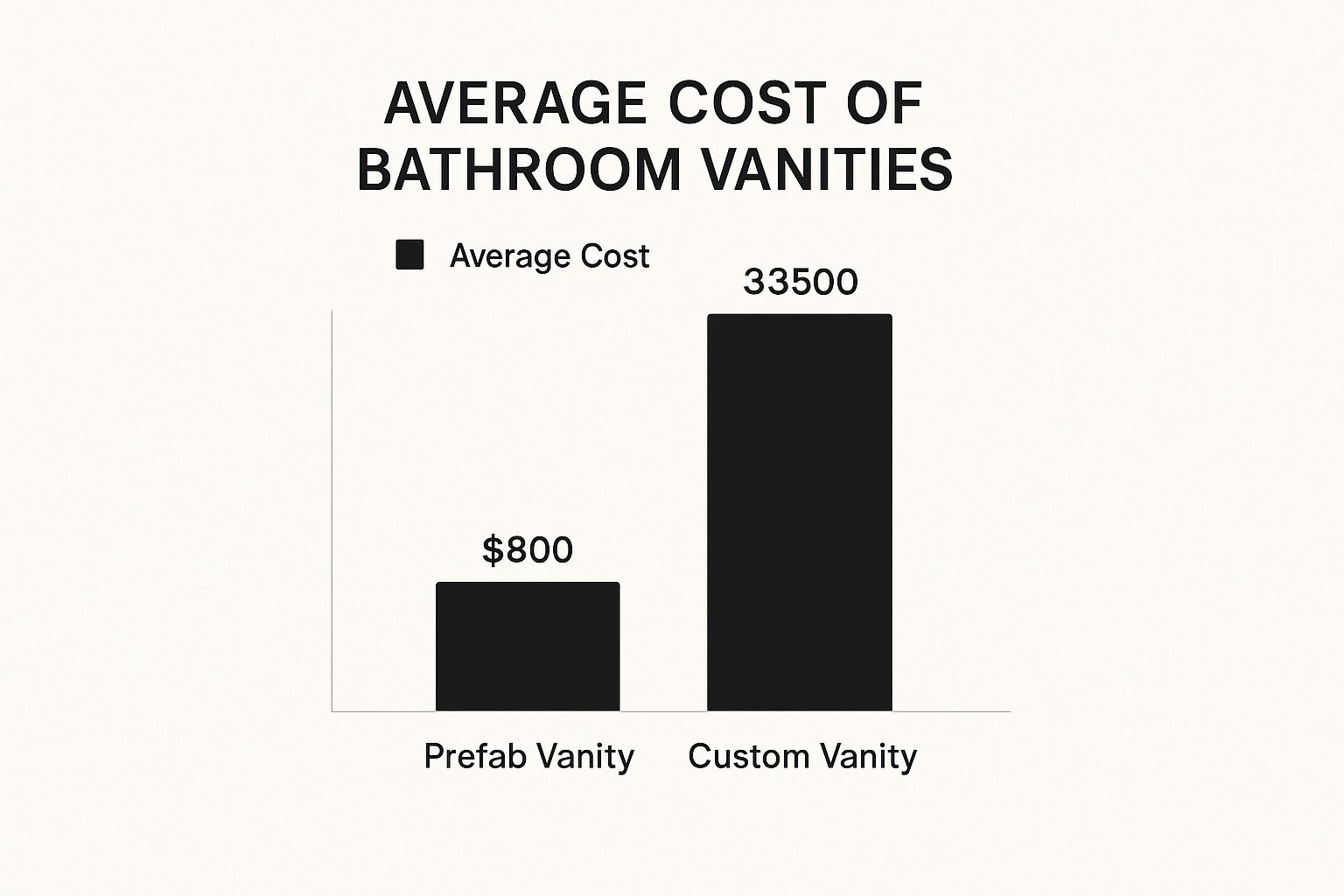
The difference in what a custom bathroom vanity costs can be huge. Custom work demands skilled labor, premium materials, and a one-of-a-kind design process—all things that are factored into the price. On the flip side, premade options benefit from economies of scale.
A Head-to-Head Comparison of Your Vanity Options
To make this decision a bit clearer, it helps to see how each option stacks up side-by-side. The right choice really comes down to what your project priorities are. Are you focused on budget? Do you have an awkward space that needs a perfect fit? Or is it all about achieving a very specific look?
Key Insight: Your choice isn't just about price. It’s about weighing the value of immediate availability and low cost (stock) against moderate personalization (semi-custom) and complete design freedom (fully custom).
Let's break down how these three vanity types compare on the factors that matter most.
Vanity Options Compared: Custom vs. Semi-Custom vs. Stock
Deciding on the right vanity can feel overwhelming, but looking at the options head-to-head simplifies things. This table compares the three main types to help you figure out which one best fits your project, budget, and timeline.
| Feature | Custom Vanity | Semi-Custom Vanity | Stock (Premade) Vanity |
|---|---|---|---|
| Cost | Highest | Moderate | Lowest |
| Design Freedom | Unlimited; any size, material, finish, or configuration. | Limited; choose from a set menu of sizes, finishes, and styles. | Very limited; what you see is what you get. |
| Quality | Excellent; typically uses high-end materials and craftsmanship. | Good to Very Good; better materials than stock but still standardized. | Varies; often uses lower-cost materials like MDF and particleboard. |
| Lead Time | Longest (6-12+ weeks); built to order from scratch. | Moderate (4-8 weeks); assembled from pre-made components. | Shortest (Immediate); available off-the-shelf. |
| Best For | Unique layouts, high-end designs, and maximizing every inch of space. | Achieving a personalized look without the full custom price tag. | Budget-conscious projects, standard bathroom layouts, and quick turnarounds. |
Ultimately, whether you go with a ready-made unit or a bespoke creation, the goal is the same: to find a vanity that works for your space and your wallet.
Making the Final Call
So, which one is for you? If your bathroom has an unconventional layout—like a sloped ceiling or a non-standard depth—a custom vanity is often the only way to get that perfect, gap-free fit. It's also the clear winner if you have a specific vision that just can't be found in a showroom, like a particular wood species or a unique furniture-style design.
But if you're working with a standard-sized space and a tight budget, a stock vanity is a practical and smart solution. For anyone who wants something in between—a bit more personal flair than a stock unit without the higher custom bathroom vanity cost—semi-custom offers a fantastic middle ground. It lets you put your own stamp on the design while keeping the project within a more moderate budget.
Smart Ways to Manage Your Custom Vanity Budget

Getting that high-end, custom look doesn't mean you have to completely blow your budget. With a few smart, strategic moves, you can keep your custom bathroom vanity cost in check without sacrificing the style or quality you're dreaming of. It's all about knowing where to invest and where you can save.
Think of it like you're cooking a fantastic meal. You might splurge on the perfect cut of steak, but you pair it with simple, fresh vegetables that complement it without breaking the bank. In the same way, you can balance the more expensive elements of your vanity with savvy, affordable choices to create a stunning piece that still fits your budget.
Prioritize Smart Material Choices
Honestly, your biggest opportunity for savings usually comes down to the materials you choose. You can achieve a seriously luxurious look for less by focusing on the finish of the vanity rather than the raw material itself.
For example, a less expensive wood like poplar or maple can look just as incredible as a pricey hardwood once it's treated with a high-quality paint or a deep, rich stain. This simple trick gives you the aesthetic you want while freeing up a huge chunk of your budget for other features.
Another pro tip is to stick with standard cabinet depths and heights where you can. While the width can be completely custom to fit your space, using standard dimensions for the other measurements reduces fabrication time and material waste—and those savings get passed directly on to you.
Invest in Hardware and Get Multiple Quotes
This might sound a little backward, but sometimes spending a bit more on certain parts can save you a ton of headaches and money down the road. Quality hardware is the perfect example.
Investing in durable, high-quality drawer slides and hinges is one of the wisest decisions you can make. Cheap hardware is often the first thing to fail, leading to frustrating repairs and replacements down the road. Quality components ensure your vanity functions smoothly for decades.
Finally, the single most important thing you can do to manage your budget is to get multiple, detailed quotes from different builders. Please, don't just take the first price you're given!
- Request Itemized Breakdowns: Ask every cabinet maker for a line-by-line quote that separates the costs for materials, labor, hardware, and finishing.
- Compare Apples to Apples: An itemized quote lets you see exactly what you're paying for. It helps you understand why one builder’s price might be higher than another’s and what's included.
- Identify Areas for Adjustment: With a clear breakdown in hand, you can have a real conversation with your builder about where you might be able to make changes to hit your budget.
When you're proactive and informed, you can navigate this process with confidence. You'll be able to make smart choices that strike the perfect balance between your dream design and your financial goals, all without compromising on the craftsmanship that makes a custom piece worth it in the first place.
Answering Your Top Questions About Custom Vanity Costs
Once you start digging into the details of a custom vanity project, a few key questions always seem to pop up. Let's tackle some of the most common ones homeowners ask as they get closer to making a final decision.
How Long Does a Custom Vanity Take to Build?
This is a big one, and the honest answer is: it depends. A custom piece isn’t something you can pick up tomorrow. The timeline hinges on a few moving parts, like your cabinet maker's schedule, how complex your design is, and whether the materials you've chosen are readily available.
As a general rule of thumb, you should plan for a total timeframe of 6 to 12 weeks from your very first conversation to the day it's installed in your bathroom. Here’s a rough breakdown of how that time is spent:
- Design & Approval (1–3 weeks): This is the creative part where we lock in the design, you select all your materials, and we get your final sign-off on the plans.
- Fabrication (4–8 weeks): This is where the magic happens and it's the longest part of the process. Your cabinet maker is in the workshop, carefully crafting, assembling, and finishing your one-of-a-kind vanity.
- Installation (1–2 days): The actual installation is pretty quick. Just keep in mind this doesn't include any major plumbing or electrical work that your other contractors might need to handle.
Is a Custom Vanity a Good Investment for Resale Value?
Without a doubt. A high-quality, thoughtfully designed custom vanity can be a fantastic move for your home's overall value. Bathrooms are one of the key rooms potential buyers scrutinize, and a space that feels custom and well-planned really makes an impression.
A custom vanity that fits the room like a glove, maximizes every inch of storage, and is built from beautiful, durable materials just elevates the entire bathroom. It sends a clear signal of quality and care to buyers, boosting the perceived value of your home way beyond what a standard, off-the-shelf unit ever could.
While you might not get back every single dollar you spend, a stunning custom piece absolutely contributes to a quicker sale and stronger offers.
Can I Supply My Own Hardware or Faucet?
Yes, most of the time you can. Sourcing your own hardware and faucet is actually a pretty popular way for homeowners to get a specific look or to manage that part of the custom bathroom vanity cost themselves.
The key here is communication. You absolutely have to let your cabinet maker know your plan right from the start. They'll need the exact specs for the drawer pulls, knobs, and faucet you've picked out to make sure every hole is drilled in the right spot and everything fits together seamlessly on installation day. Just be sure to confirm they're on board with this arrangement before you buy anything.
Ready to transform your bathroom with a piece that’s built just for you? The experts at Sinclair Cabinetry inc have over 35 years of experience crafting beautiful, durable custom vanities. Explore our gallery and schedule your design consultation today!