

Let's get one thing straight right away: can you really fit a walk-in shower in a standard 5'x8' bathroom? The answer is a resounding yes. A 5×8 bathroom with walk in shower layout isn't just a fantasy—it’s a popular and surprisingly practical way to create a modern, functional space. With a bit of smart planning, that standard 40-square-foot room can feel open, stylish, and anything but cramped.
Why a Walk In Shower Is Perfect for a 5×8 Bathroom
The classic 5' x 8' bathroom is a staple in many homes, but let's be honest, it can feel pretty limiting. Swapping a bulky tub for a sleek walk-in shower is a game-changing move that completely transforms the room's entire feel. This isn't just about following a trend; it's a practical solution that reflects how people actually live their lives today.
Homeowner preferences back this up. More and more people are choosing walk-in showers for their clean look and easy maintenance. A 2021 study even found that 59% of homeowners would pick a walk-in shower over a tub in a smaller bathroom, proving that modern style and functionality are what really matter. You can dig into more of these homeowner trends over at Badeloft USA.
The Real-World Benefits of This Layout
Opting for a walk-in shower in your 5×8 bathroom brings some serious advantages to the table:
- It Magically Creates Space: Getting rid of the high walls of a bathtub instantly makes the room feel larger and more open. If you go with a glass enclosure—or no door at all—that airy effect gets amplified even more.
- Accessibility Gets a Huge Upgrade: A curbless or low-curb shower is simply safer and easier for everyone to use, from kids to older adults with mobility concerns. It’s a forward-thinking design choice that adds real, long-term value to your home.
- It Screams Modern Style: Let's face it, walk-in showers are a cornerstone of contemporary bathroom design. They deliver that clean, uncluttered aesthetic that can elevate the entire look of your space.
By focusing on an efficient design, you can make a small bathroom feel surprisingly luxurious and spacious. The key is to maximize every square inch without sacrificing style or function.
To pull off a 5×8 bathroom with walk in shower layout that actually works, you need to nail the floor plan. We’ll be looking at three of the most effective strategies: the linear layout, the split layout, and the full wet room concept. Each one offers different advantages depending on your existing plumbing, budget, and what you’re hoping to achieve.
You can also explore a variety of other bathroom layout ideas to see how these principles apply in different contexts. This guide will give you the clarity you need to pick the perfect foundation for your remodel.
Choosing the Right Floor Plan for Your Space
Nailing the floor plan is hands-down the most important decision you'll make when designing a 5×8 bathroom with a walk-in shower layout. This single choice sets the stage for everything else—where the plumbing goes, how you move around the room, and the overall vibe of the space. It's easy to look at a 40-square-foot room and feel boxed in, but you actually have some powerful options that can make the bathroom feel surprisingly open and work like a charm.
The goal isn't just to cram fixtures in; it's to pick a layout that matches how you live. Do you need a ton of vanity storage for products and linens? Is making the space accessible for the long haul a major concern? Answering these questions upfront will point you toward the perfect foundation. Any time you're taking on a big home project like this, it helps to zoom out and think about the fundamentals. For a great rundown, check out these essential things to consider when building a house.
This decision tree gives you a bird's-eye view of the core layout choices for a 5×8 bathroom, helping you find the best path forward.

As you can see, your first big move is deciding between three tried-and-true strategies: the linear layout, the split layout, or the wet room. Each one has its own distinct personality and benefits.
The Classic Linear Layout
The linear layout is the go-to for a reason. It's often the most straightforward and budget-friendly way to arrange a small bathroom. All three key fixtures—the walk-in shower, toilet, and vanity—are lined up along one of the long, 8-foot walls.
This setup is a plumber’s dream. It keeps all the supply and drain lines tucked into a single "wet wall," which can seriously cut down on labor costs and construction headaches. It also carves out a clean, straight path through the room, making the flow feel natural and efficient.
Pros of a Linear Layout:
- Cost-Effective: Grouping all the plumbing on one wall almost always saves money on labor and materials.
- Efficient Use of Space: You get a clear, unobstructed walkway, which stops the room from feeling cramped.
- Maximizes Vanity Size: This layout usually lets you squeeze in the longest possible vanity, giving you more counter space and storage.
Cons of a Linear Layout:
- Can Feel Narrow: If you're not careful, putting everything in a row can create a "bowling alley" effect.
- Less Visual Separation: All the fixtures are on display at once, offering little in the way of privacy or distinct zones.
The Dynamic Split Layout
A split layout, sometimes called an opposite-wall layout, places fixtures on opposing walls to create more defined zones. A popular version puts the walk-in shower against one of the 5-foot end walls, with the toilet and vanity facing each other across the 8-foot length of the room.
This arrangement does a great job of breaking up that long, skinny feeling and giving the room a better sense of balance. You get a more open area in the middle, which can make it feel easier to move around. It's an especially smart choice if your entry door is on one of the short walls.
By pulling the shower away from the vanity and toilet, the split layout creates a dedicated "wet zone" and "dry zone." This is a huge win for functionality, especially if two people are trying to use the bathroom at once.
The Open-Concept Wet Room
If you're after the ultimate feeling of spaciousness and accessibility, a wet room is an incredible option. This design involves waterproofing the entire bathroom floor (and often part of the walls), which means you don't need a separate shower curb or enclosure. The whole floor just gently slopes toward a drain.
A wet room makes a 5×8 bathroom with a walk-in shower layout feel unbelievably open. It's also a game-changer for universal design, since there are zero barriers to step over. The look is sleek, minimalist, and incredibly practical.
Key Considerations for a Wet Room:
- Waterproofing is everything. This isn't a DIY job. It requires a pro to install a continuous waterproof membrane across the floor and up the walls to guarantee you won't have leaks.
- Proper drainage is crucial. The floor has to be sloped just right, so water heads straight for the drain instead of pooling in corners.
- Ventilation is non-negotiable. With all that open steam, you'll need a high-powered exhaust fan to manage humidity and keep mold at bay.
While a wet room does require more specialized labor and a bigger upfront investment, it delivers a sense of luxury and openness that's hard to beat in such a tight space. It’s the perfect solution for anyone who wants a barrier-free, modern design.
Selecting Space-Saving Fixtures That Perform
Once you've nailed down the floor plan, it’s time to pick the fixtures that will make your 5×8 bathroom with walk-in shower layout work smarter, not harder. In a compact space like this, every single choice matters. The right fixtures can open up the room and make it feel truly functional, while the wrong ones will make it feel cramped before you even hang a towel.
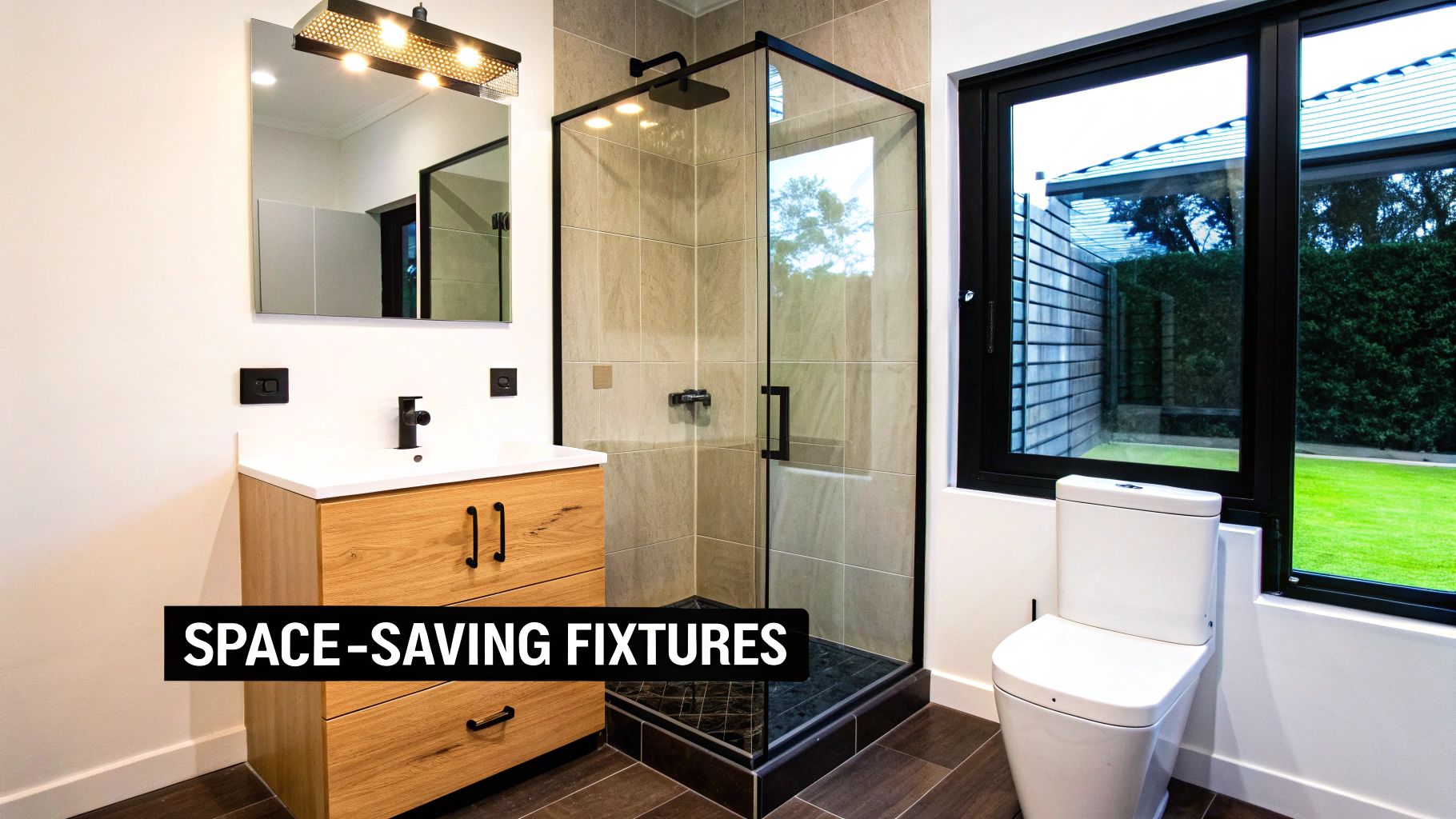
This is where you have to balance the look you want with pure, simple practicality. Your goal is to find pieces properly scaled for a 40-square-foot room—fixtures that do their job without hogging all the space.
Smart Shower and Glass Choices
The walk-in shower is the star of this show, and its design has a huge impact on how big the room feels. A curbless entry, where the shower floor is totally flush with the rest of the bathroom floor, is the ultimate space-enhancer. It creates one clean, unbroken line that tricks the eye into seeing a much larger, more cohesive room.
If a true curbless design isn't in the cards because of plumbing realities or your budget, a low-profile curb is a fantastic second choice. At just 2-4 inches high, it still feels way more open than a traditional tub combo.
Now, let's talk about the glass enclosure. This part is non-negotiable for making the space feel big.
- Frameless Glass Panels: These are a must. Getting rid of bulky metal frames makes the glass practically disappear, preventing the shower from feeling like a cramped, separate box.
- Fixed Panel: A single, stationary glass panel is often all you need to keep water contained, especially in a shower that's 32-36 inches deep. This minimalist approach is your best friend for maximizing that open feeling.
Vanities That Create an Illusion of Space
The vanity is usually the biggest piece of furniture in the bathroom, so choosing the right one is critical. A floating or wall-mounted vanity is my top recommendation for small bathrooms. By lifting the cabinet off the ground, you show more of the floor, which is a classic designer trick for making a room feel bigger and airier. Plus, cleaning underneath is a snap.
A common mistake I see is homeowners trying to cram a standard-depth vanity into a small bathroom. Opting for a narrow-depth model—around 18 inches instead of the standard 21—can give you back precious inches of walkway without sacrificing too much storage.
For those who absolutely need every bit of storage they can get, it pays to know all your options. Our guide on bathroom vanity cabinet dimensions and tips is a great resource. It will walk you through balancing your storage needs with the real-world constraints of a 5×8 layout.
Compact Toilets That Save Inches
You might not think a few inches matter that much, but with a toilet, they absolutely do. A standard elongated toilet can stick out as much as 31 inches from the wall. A round-front toilet, on the other hand, only projects about 28 inches. That 3-inch difference can be the deciding factor between passing building code and having a comfortable space.
If you want the ultimate space-saver, look into a wall-mounted toilet. The tank is hidden inside the wall, so only the bowl is visible, "floating" above the floor. This move can free up as much as 9 inches of floor space compared to a standard model—a massive gain in a 5×8 bathroom.
Design Tricks to Make Your Bathroom Feel Bigger
Once you’ve nailed down a smart layout and picked your space-saving fixtures, it's time to focus on the design details that can trick the eye. This is where designers work their magic, turning a functional 5×8 bathroom with a walk-in shower layout into a space that feels bright, open, and genuinely luxurious. It really all comes down to creating visual continuity and maximizing every bit of light.
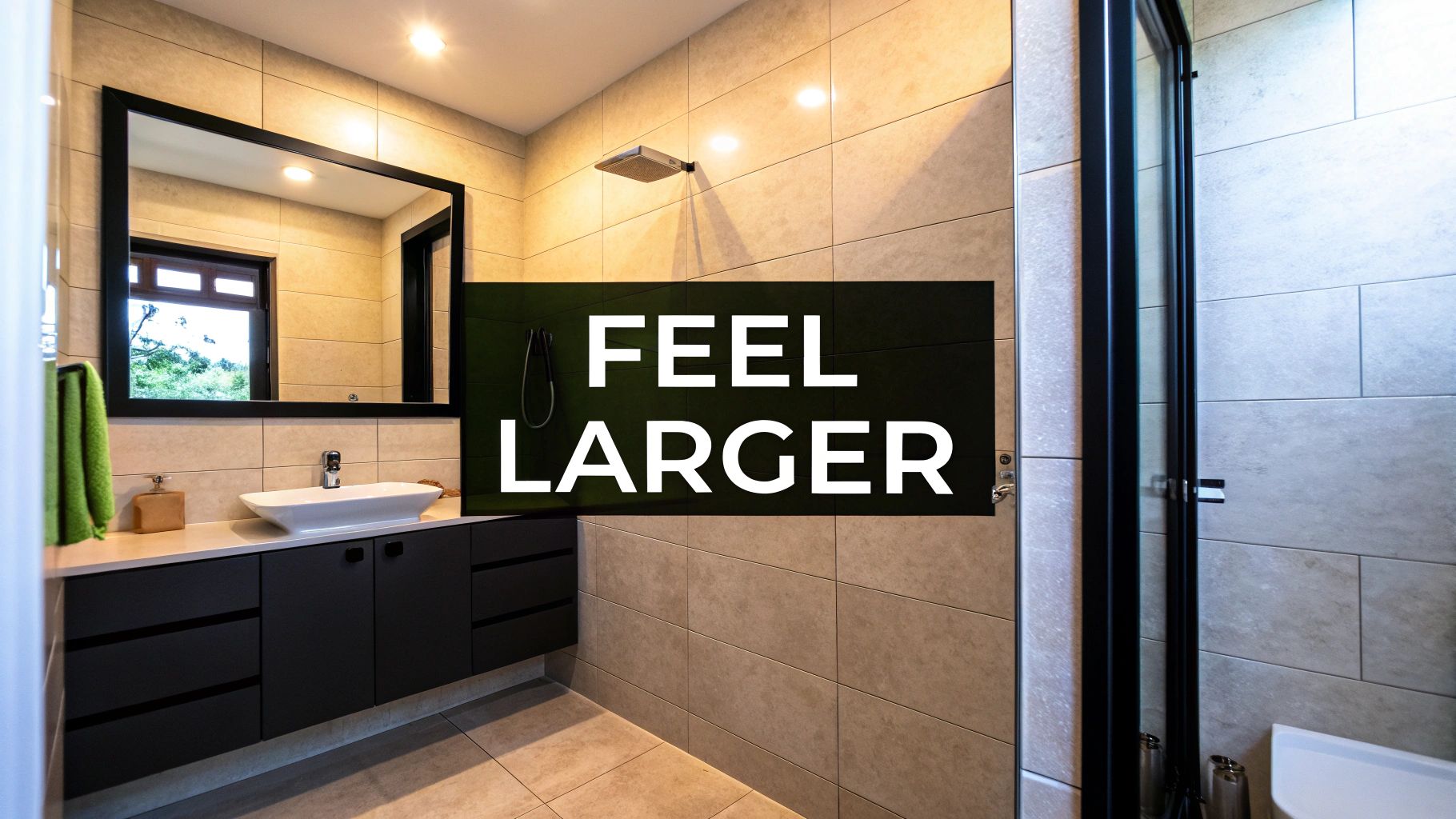
One of the most effective tricks in the book is using large-format tiles. I'm talking about 12×24 inch tiles or even bigger for both the floor and the shower walls. Fewer grout lines mean less visual clutter, creating a clean, seamless look that makes the whole room feel more cohesive and expansive.
Amplify Light and Space
Mirrors are your absolute best friend in a small bathroom. Instead of just hanging a small, framed mirror over the vanity, think about installing a wall-to-wall mirror. This one move can visually double the size of your room, reflecting light everywhere and creating an incredible sense of depth. It bounces light from every fixture around the space, making even a windowless bathroom feel significantly brighter.
Of course, lighting itself is another game-changer. A single overhead light just isn’t going to cut it.
- Layer Your Lighting: You'll want to combine ambient lighting (like simple recessed ceiling lights) with dedicated task lighting.
- Use Vertical Sconces: Placing sconces on either side of the mirror is a classic designer move. It draws the eye upward, creates an illusion of height, and adds a touch of elegance.
- Light Up the Shower: Don’t forget a dedicated, waterproof light inside the shower. A well-lit shower not only feels safer but much more spacious.
A common pitfall I see is underestimating the power of a cohesive color palette. A light, monochromatic scheme—using varying shades of white, soft gray, or even a warm beige—creates a serene and expansive atmosphere because it helps blur the room's boundaries.
This approach doesn't mean the room has to be boring. You can introduce plenty of texture through different materials, like a wood-look tile on the floor or a vanity with a subtle grain. This adds warmth and interest without breaking that calming, space-enhancing effect of a single-color family. By being strategic with your materials and lighting, your compact bathroom will feel less like a closet and more like an open, airy retreat.
How to Budget for Your 5×8 Bathroom Remodel
https://www.youtube.com/embed/1Juki56FX44
Let's talk numbers. A stunning design for your 5×8 bathroom with a walk-in shower layout is fantastic, but a realistic budget is what actually brings it to life. Getting a handle on your finances upfront is the single most important thing you can do to keep your project running smoothly and avoid those gut-wrenching, stressful surprises down the road.
Knowing where your money is going isn't just about paying bills; it's about making smart investments to get that high-end look you’re dreaming of.
So, what's the bottom line? The total cost can swing wildly depending on where you live, the materials you fall in love with, and how much of the work you're willing to tackle yourself. Generally, you can expect a full remodel to land anywhere from $5,000 to $15,000. The walk-in shower alone will typically run between $700 and $1,500 for a solid prefabricated unit, but a custom tile shower will push you toward the higher end of that range.
Breaking Down the Major Costs
Your budget will essentially get sliced into two big pieces: materials and labor. It's easy to get caught up in picking out gorgeous tiles and fixtures, but remember this: professional labor often eats up 40-60% of the entire project cost. That's a huge chunk.
Here’s a rough idea of where your money will likely go:
- Labor (Plumbing, Electrical, Tiling): This is almost always the biggest ticket item. If you plan on moving the toilet or shower drain, expect this cost to jump significantly compared to just sticking with the current layout.
- Fixtures (Shower, Vanity, Toilet): The price range here is massive. You can find budget-friendly options at big box stores or go all-in on high-end designer pieces.
- Tile and Surfaces: This covers your floor tile, shower wall tile, and any countertop materials. The cost per square foot can add up faster than you think, so measure carefully.
- Finishing Touches: Don't overlook the small stuff! Lighting, mirrors, faucets, and hardware make a huge difference in the final look and can definitely impact your budget.
Here's a pro tip I share with every client: Plan for the unexpected. I always recommend setting aside a contingency fund of at least 10-15% of your total budget. This is your safety net for those "uh-oh" moments, like finding rotten subflooring once the old tub is out or discovering you need to upgrade some ancient plumbing to meet modern building codes.
Sample Mid-Range Remodel Budget Breakdown
To give you a clearer picture, here’s an estimated cost allocation for a typical 5×8 bathroom remodel. This can help you see where the bulk of your funds will go and assist in prioritizing your spending.
| Expense Category | Estimated Cost Range | Percentage of Total Budget |
|---|---|---|
| Labor | $4,000 – $7,000 | 40-50% |
| Fixtures & Vanity | $1,500 – $3,500 | 15-25% |
| Tile & Materials | $1,000 – $2,500 | 10-20% |
| Plumbing & Electrical | $1,000 – $2,000 | 10-15% |
| Finishes & Accessories | $500 – $1,000 | 5-10% |
| Contingency Fund | $1,000 – $2,000 | 10-15% |
| Estimated Total | $9,000 – $18,000+ | 100% |
Keep in mind these are just estimates. High-end materials or complex labor will shift these numbers, but it's a great starting point for your financial planning.
Smart Ways to Save Without Sacrificing Style
Working with a tight budget doesn't mean you're doomed to a boring bathroom. You just have to be strategic about where you spend versus where you save.
For example, are you comfortable with a little sweat equity? Handling the demolition yourself can easily save you hundreds of dollars in labor. When you're trying to get a feel for the bigger picture, it helps to understand overall bathroom renovation costs for different kinds of projects.
Another one of my favorite strategies is to mix high-end and budget-friendly materials. Go ahead and splurge on that stunning mosaic tile for a small shower niche, but then pair it with a classic, affordable subway tile for the main shower walls. The result is a high-impact design that doesn't break the bank.
To get a more personalized look at what your project might cost, our bathroom remodel cost estimator is a fantastic tool for building out a preliminary budget and seeing where you stand.
Common Questions We Hear All the Time
Planning a remodel for a 5×8 bathroom with a walk-in shower always brings up a few key questions. Let's tackle the ones that are probably on your mind right now, so you can move forward with your project feeling confident.
Will I Regret Removing My Only Tub?
This is a big one, and it's a valid concern. The old wisdom said you had to have a tub for resale, especially for families with young kids. But times have changed.
Honestly, if it's the only bathtub in the house, you might give some buyers pause. However, if you have another full bath with a tub elsewhere, swapping the old tub/shower combo for a sleek, modern walk-in shower is almost always a huge win. It's a massive upgrade that appeals to everyone from young professionals to homeowners looking to age in place gracefully. We're seeing it boost home value and marketability time and time again.
What's a Realistic Minimum Size for a Walk-in Shower?
Sure, the building code might say you can squeeze in a 30×30 inch shower, but let's be real—that's not going to be comfortable. For an experience that doesn't involve bumping your elbows, you really want to aim for a minimum of 36×36 inches.
A fantastic strategy we use all the time in 5×8 layouts is to take advantage of the room's full 5-foot (60-inch) width for the shower's length. Match that with a depth of 32 to 36 inches, and you’ve created a shower that feels incredibly spacious without eating up the whole bathroom.
The real secret to making a small bathroom feel huge? Pair that generously sized shower with a curbless or low-profile entry. It erases the visual and physical barrier, making the whole floor plan feel more open and connected.
How Can I Possibly Fit Enough Storage in Here?
In a compact bathroom, every inch counts. You can't just throw in a bulky vanity and call it a day; you have to get clever and think vertically. Smart storage is what keeps a small space from feeling cluttered and chaotic.
Here are a few go-to solutions that always work:
- Recessed Medicine Cabinet: Go for a mirrored one that’s recessed into the wall. You get all that hidden storage without it jutting out into your space.
- Over-the-Toilet Storage: That vertical real estate above the toilet is gold. Use it for some nice open shelving or a shallow, wall-mounted cabinet.
- Built-in Shower Niche: This isn't just a nice-to-have; it's a must. A built-in niche keeps your shampoo and soap organized and off the floor, which instantly makes the shower feel cleaner and larger.
- Floating Vanity: Mounting the vanity to the wall so you can see the flooring underneath is a classic designer trick. It creates the illusion of more space while still giving you drawers and cabinet storage.
At Sinclair Cabinetry inc, we live for these kinds of design challenges. We craft custom storage that makes even the tightest bathroom layouts feel surprisingly spacious and incredibly functional. Explore our custom bathroom cabinetry to see how we can make your project a reality.