

Wooden kitchen cabinets are the undisputed anchor of kitchen design. They bring a unique blend of natural beauty, real-deal durability, and a versatility that other materials just can't touch. In a world of fleeting trends, wood remains a steadfast choice for homeowners looking to create a warm, inviting, and truly functional heart for their home.
Why Wood Cabinets Are a Timeless Choice
Think of your kitchen's design as a story. While countertops, backsplashes, and paint colors are the exciting plot points that can change over time, your wooden cabinets are the foundational theme—the core narrative that gives the space its character and soul.
Trends come and go, but the inherent warmth and texture of real wood never fall out of fashion. It’s a material that connects us to nature, creating an atmosphere that feels both grounded and authentic. This timeless appeal is rooted in its incredible versatility. A set of oak cabinets can feel perfectly at home in a rustic farmhouse, while the same wood with a different finish could just as easily anchor a sleek, modern design.
The Foundation of Enduring Style
Unlike manufactured materials that can look dated after just a few years, wood has the unique ability to age gracefully. The minor dings and imperfections that develop over time often add to its character rather than take away from it. This quality is a huge part of why wood remains a premium choice in home renovation.
Wooden kitchen cabinets are more than just storage; they are a long-term investment in your home's value and aesthetic. Their ability to be sanded, stained, or painted means they can evolve with your style for decades to come.
This adaptability offers incredible long-term value. You aren't locked into one look forever. A simple change of hardware or a fresh coat of paint can completely transform your kitchen without the immense cost and hassle of a full replacement. This guide will walk you through the key factors that make wooden kitchen cabinets such a solid choice, helping you understand the materials, styles, and finishes that will bring your vision to life.
Choosing the Best Wood for Your Kitchen Cabinets
Picking the right wood for your kitchen cabinets is a lot like casting the lead in a movie—that single choice really sets the tone for the whole production. Every wood species brings its own personality to the table, defined by its grain, natural color, and how tough it is. The trick is to find that sweet spot between the look you love and what your daily life actually demands.
But this decision is about more than just looks. The long-term durability of your wooden kitchen cabinets is directly tied to the wood's hardness. A fantastic tool for this is the Janka hardness scale, which measures how well a wood species can resist dents and dings. Think of it as an "armor rating" for your kitchen; a higher Janka number means it can take the occasional bump from a dropped pot or a run-in with a toy truck.
This collection of cabinet door samples really brings to life the different textures and grain patterns you'll find in popular woods, giving you a great side-by-side comparison.
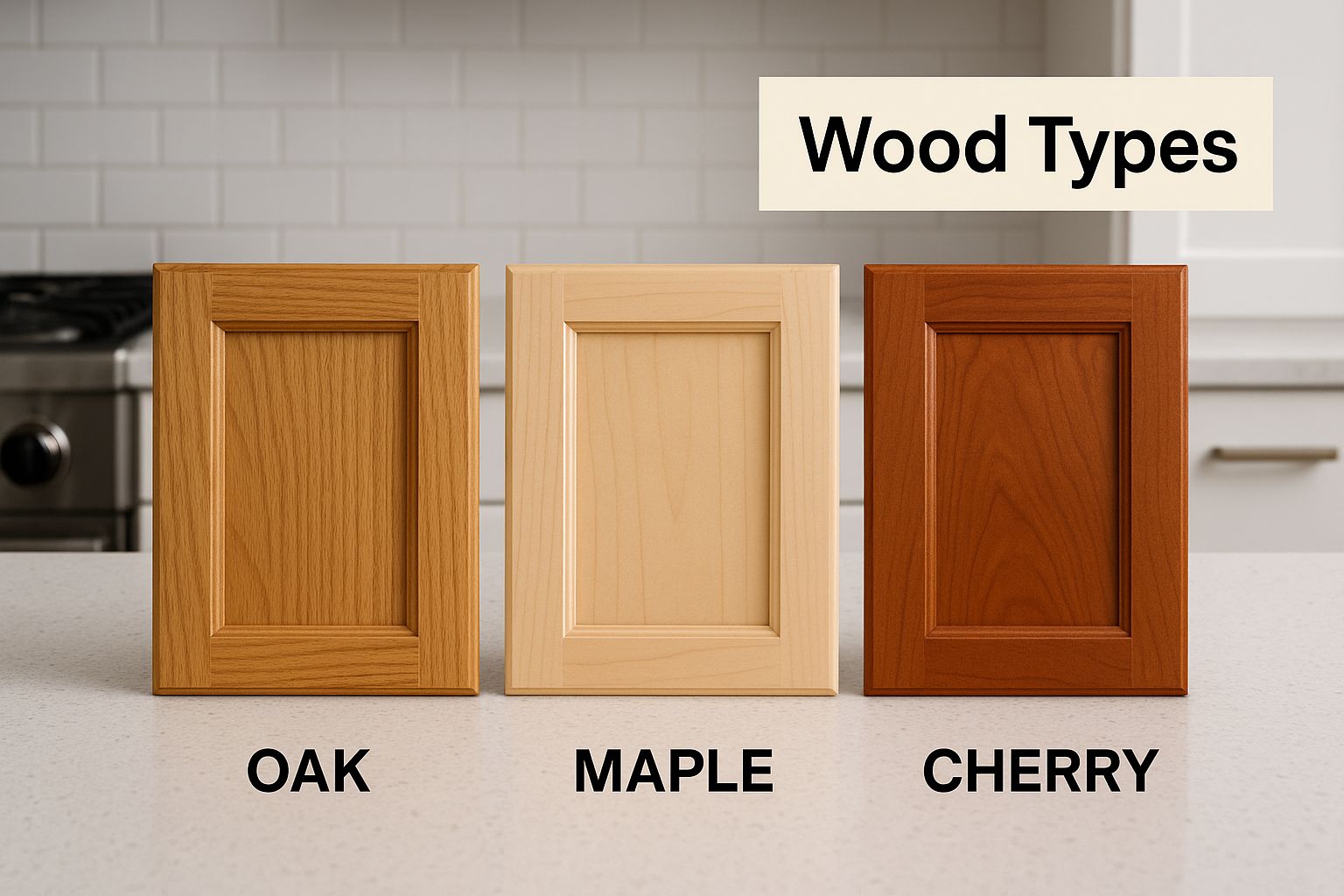
You can see the bold, cathedral-like grain of oak, the quiet smoothness of maple, and the deep, warm elegance of cherry. It's a perfect example of how each material can bring a completely different character into the room.
Exploring Hardwood Cabinet Options
When you think of wood cabinets, you're probably picturing hardwoods. They’re the go-to choice for a reason: they're strong, beautiful, and come from deciduous trees (the ones that lose their leaves). They offer a huge range of styles and performance.
-
Oak (Red and White): A true classic. Oak is famously durable and known for its strong, often dramatic grain patterns. Red oak has a warmer, reddish tint, while white oak leans more muted and gray-brown. With a Janka rating around 1290-1360, it’s more than tough enough for even the most chaotic family kitchens.
-
Maple: If you're after a clean, contemporary look, maple is your wood. It's valued for its super smooth, fine grain and creamy white color that creates a uniform backdrop. It’s also incredibly hard—one of the most durable choices out there with a Janka rating of 1450.
-
Cherry: Known for its rich, reddish-brown color that gets even more beautiful as it ages, cherry brings a certain formal elegance to a kitchen. Its grain is smooth and subtle. It's a bit softer than oak or maple with a Janka score around 950, but it’s still plenty durable for most homes.
-
Hickory: Looking for the toughest of the tough? Hickory is a serious contender. With a Janka rating of 1820, it's one of the hardest domestic woods you can find. It has a very rustic look, with dramatic color variations and a bold grain that’s perfect for farmhouse or cabin-style kitchens.
Comparing Popular Woods for Kitchen Cabinets
To make things a little easier, here's a quick-reference table that breaks down the key characteristics of these popular woods. It's a simple way to compare their hardness, grain, cost, and the kitchen styles they fit best.
| Wood Type | Hardness (Janka Scale) | Grain Pattern | Typical Cost | Best For |
|---|---|---|---|---|
| Oak | 1290-1360 | Pronounced, open grain | $$ | Traditional, Farmhouse |
| Maple | 1450 | Fine, smooth, closed grain | $$$ | Modern, Contemporary |
| Cherry | 950 | Subtle, smooth, closed grain | $$$$ | Transitional, Formal |
| Hickory | 1820 | Bold, rustic, open grain | $$$ | Rustic, Industrial |
| Birch | 1260 | Fine, smooth, closed grain | $$ | Budget-conscious modern |
| Alder | 590 | Fine, straight, closed grain | $$ | Rustic with a refined look |
This table should give you a solid starting point, helping you narrow down the options that align with both your budget and your design goals.
Considering Softwood and Other Varieties
While you don't see them as often for full cabinet construction, softwoods have their place, especially if you're going for a specific vibe.
Softwoods like pine or fir are much more likely to get dented or scratched than hardwoods. That's why they are often chosen specifically for a rustic or distressed look, where those little imperfections actually add to the cabinet's charm over time.
Pine, for instance, has a Janka rating of only 380-420. Its tendency to dent is exactly why people love it for achieving that cozy, "lived-in" aesthetic. Other woods like birch and alder offer a nice middle ground—they have the durability of a hardwood and a fine grain similar to more expensive species, but at a friendlier price point. You can dig even deeper into finding the best wood for kitchen cabinets in our detailed guide, which covers even more options.
How Grain Pattern Affects Your Design
The grain pattern is like the wood’s unique fingerprint, and it has a massive impact on the final look of your kitchen. It really helps to know the difference between open and closed grain woods.
-
Open Grain Woods: Species like oak and hickory have larger pores, which creates a more textured, almost coarse feel. When you stain them, the stain sinks into those pores, highlighting the natural patterns and giving you a rustic or traditional feel.
-
Closed Grain Woods: On the other hand, woods like maple and cherry have tiny, barely-visible pores. This gives them a smooth, uniform surface that's perfect for sleek paint jobs or subtle stains. This quality makes them a natural fit for modern and transitional kitchen designs.
In the end, the best wood for your cabinets is the one that feels right for your home’s style, brings your design vision to life, and can handle the realities of your lifestyle. By thinking through the hardness, color, and grain of each option, you can confidently choose a material that will be a beautiful, lasting foundation for the heart of your home.
Matching Cabinet Styles and Finishes to Your Home
Alright, you’ve picked out the perfect wood for your kitchen cabinets. Now for the fun part: bringing its personality to life with the right style and finish.
Think of it this way: the wood is your canvas, the cabinet door style is the initial sketch, and the finish is the rich color that completes the masterpiece. These two elements work in tandem to define your kitchen’s entire vibe, turning a purely functional space into something that truly reflects your personal style.
The style of your cabinet doors is what sets the architectural tone. It’s the visual cue that tells you whether a kitchen is modern, traditional, or somewhere comfortably in between. From the clean, simple lines of a flat-panel door to the intricate, detailed contours of a raised panel, each style has a huge impact on the room's overall feel.
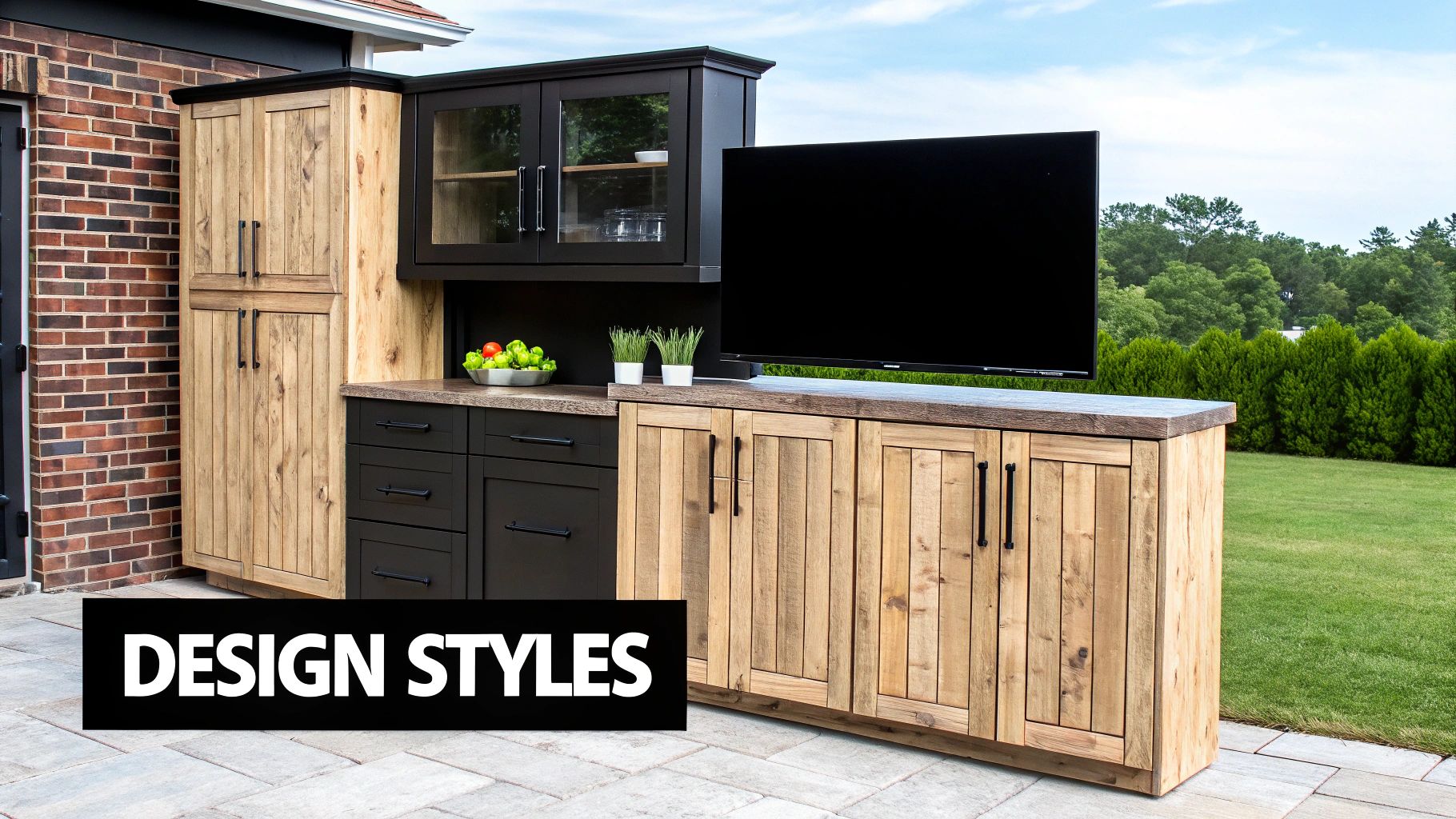
This is all about creating a cohesive look that flows naturally with the rest of your home. A super ornate, traditional cabinet would feel jarring in a minimalist house, just like a stark, flat door might clash with a classic Victorian interior.
Finding Your Cabinet Door Style
Diving into the world of cabinet door styles can feel like a lot at first, but thankfully, most designs fall into a few key categories. Once you understand their defining features, you’ll be able to zero in on the perfect match for your home.
-
Shaker Style: This one is the undisputed champion of versatility. Shaker doors have a simple, clean look with a flat recessed center panel framed by four straight pieces. It’s a timeless design that perfectly bridges the gap between traditional and contemporary, making it a safe bet for almost any kitchen.
-
Flat-Panel (or Slab): The go-to choice for modern and minimalist kitchens. Just like the name implies, these doors are a single, solid slab of wood with no frills or ornamentation. Their beautiful simplicity creates a sleek, uncluttered aesthetic that really lets the wood's grain and the cabinet hardware shine.
-
Raised-Panel: This is the hallmark of traditional design. These doors feature a raised center panel, often with a grooved or decorative profile around the edge. That added dimension creates depth and shadow, lending a more formal, elegant feel to the space.
-
Beadboard: If you’re after a cozy, cottage or farmhouse charm, this is your style. Beadboard panels have decorative vertical grooves that add texture and a sense of handcrafted detail. They’re perfect for creating a warm, inviting atmosphere.
The Finishing Touch: Stains vs. Paints
After you’ve landed on a style, the finish is what determines how your wooden kitchen cabinets will play with the light, color, and texture in the room. This final layer doesn't just protect the wood—it completes its entire look. The choice usually boils down to two main options: stain or paint.
A finish is so much more than just protection; it's a strategic design choice. Stains are all about celebrating the wood's natural character, while paints introduce a bold, personalized color statement.
Stains are transparent or semi-transparent, specifically designed to enhance the wood’s natural beauty. They soak right into the fibers, highlighting the unique grain patterns and color variations of the wood species you chose. A light stain on maple, for instance, can create a bright, airy feel, while a dark stain on cherry adds a real sense of drama and sophistication.
Paint, on the other hand, gives you an opaque, uniform color. It’s a fantastic choice for creating a clean, contemporary look or for weaving a specific color into your design scheme. While paint does cover up the wood grain, it opens up limitless color possibilities, from timeless whites and grays to bold blues and greens. Painting cabinets is a popular DIY project, but getting that durable, professional look requires meticulous prep work. For a deeper dive, our guide covering the best kitchen cabinet finishes explores all these options in greater detail.
Ultimately, matching styles and finishes is about creating harmony. A rustic hickory cabinet with a simple Shaker door and a clear stain feels authentic and grounded. A smooth maple cabinet with a flat-panel door and a crisp white paint finish feels clean and modern. By thoughtfully pairing these elements, you ensure your kitchen isn't just another room, but a cohesive and beautifully realized space.
A Realistic Look at Cabinet Costs and Value
Let's talk about the elephant in the room: the budget. When you're planning a kitchen renovation, the cost of wooden kitchen cabinets can feel like a total mystery. The final price tag isn't just one number; it's a reflection of all the little decisions you'll make, from the wood you choose to the knobs you pick out.
Getting a handle on these factors is the best way to make a smart investment. The biggest choice you'll make, and the one that really sets the stage for your budget, is the construction method. Think of it as choosing between off-the-rack, tailored, or completely bespoke.
Stock vs. Semi-Custom vs. Fully Custom
Figuring out which of these tiers fits your project is key. Each one strikes a different balance between cost, flexibility, and how quickly you can get them.
-
Stock Cabinets: These are your most budget-friendly friends. They're mass-produced in standard sizes and a limited range of styles. You won't get a ton of personalization, but their low cost and quick availability make them a solid pick for straightforward projects or rental properties.
-
Semi-Custom Cabinets: This is the happy medium. You start with standard cabinet sizes, but you get to make modifications. You’ll find a much wider world of finishes, door styles, and clever storage features, giving you more design freedom without jumping to a full custom price.
-
Fully Custom Cabinets: This is where your dream kitchen becomes a reality, no compromises. Custom cabinets are built from scratch to your exact measurements. They can fit any nook, cranny, or awkward corner perfectly and offer limitless design possibilities. Naturally, this level of handcrafted detail comes with the highest price tag.
Your cabinet budget is a direct reflection of your choices. While stock cabinets offer immediate savings, investing in semi-custom or custom options often translates to better long-term value through superior construction and a perfect fit for your lifestyle.
The importance of quality cabinetry isn't just a local trend; it's a global one. The kitchen cabinet market was valued at around $160 billion in 2023 and is only expected to keep growing. This just goes to show how many homeowners worldwide are choosing to invest in kitchens that are built to last. You can dive deeper into the global kitchen cabinet market trends on dataintelo.com.
Key Factors That Influence Your Final Price
Beyond the stock-to-custom decision, a few other elements will shape the final cost. Every choice is an opportunity to either upgrade for premium features or find some clever savings.
Wood Species and Grade
The type of wood you pick makes a big difference. Common choices like oak or birch are generally easier on the wallet than premium hardwoods like cherry, maple, or walnut. The wood's grade—which is just a way of describing how many knots or natural blemishes it has—also affects the price. A clearer, more uniform grade will cost you more.
Door Style and Finish
It makes sense that the more complex a design is, the more it costs. A simple, flat-panel door is less expensive to produce than an intricate raised-panel or beadboard style. The same goes for the finish. A standard stain is usually the most cost-effective route, while a multi-step glazed finish or a high-quality paint job requires more labor and materials, bumping up the price.
Hardware and Accessories
Don't forget the finishing touches! The pulls, knobs, and hinges you select can range from a few bucks apiece to high-end designer hardware that makes a real statement. Inside the cabinets, accessories like pull-out pantry shelves, lazy Susans, and custom drawer organizers will also add to the final bill—but they can completely transform how your kitchen functions.
By carefully balancing these elements, you can build a kitchen that not only looks great but also feels right for your budget.
How to Care for Your Wooden Cabinets
Your beautiful new wooden kitchen cabinets are a serious investment. The good news? With just a little bit of care, they can stay looking incredible for decades. Keeping them in top shape isn't about complicated chores; it’s all about creating a few simple, consistent habits to protect the wood from the daily wear and tear of a busy kitchen.
Think of your cabinet's finish as a shield. The whole point of regular cleaning is to get rid of the grease, grime, and food splatters before they can work their way through that shield and damage the wood underneath. Trust me, being proactive is always easier than dealing with repairs down the line.
Simple Daily and Weekly Cleaning Routines
The best defense is a gentle one. On a daily basis, all you need to do is wipe up spills, splatters, and water spots right when they happen. Just use a soft, lint-free cloth. This simple step prevents moisture from seeping into the wood grain, which is what leads to nasty surprises like warping or staining.
Once a week, give them a more thorough wipe-down. Mix up a mild solution of a few drops of dish soap in warm water. Get a soft cloth damp with the soapy water, wring it out until it's almost dry, and gently clean all the cabinet surfaces. Right after, grab a separate dry cloth and wipe everything down again to make sure no moisture is left behind.
Crucial Tip: Stay far away from harsh, abrasive cleaners, scouring pads, or any all-purpose cleaners that contain ammonia, bleach, or silicone. These ingredients are notorious for stripping away the protective finish, leaving the wood exposed and dulling its natural glow.
Addressing Common Kitchen Cabinet Issues
Even if you’re careful, little things can pop up. Knowing how to handle them quickly will keep your kitchen looking its best. Here are a few common problems and how to fix them:
- Grease Buildup: For that stubborn, sticky film of grease, a 50/50 mix of white vinegar and warm water works wonders. Apply it with a soft cloth, wipe the grease away, and then dry the area completely.
- Minor Scratches: You'd be surprised what a touch-up marker or a wax repair stick in a matching color can do. For small surface scratches, these can often make them vanish completely.
- Water Marks: Found a white ring from a wet glass? Gently rub the spot with a bit of non-gel toothpaste on a soft cloth, then wipe it clean.
For a complete playbook on cleaning, including how to handle different types of stains and grime, check out our detailed guide on how to clean wood cabinets for step-by-step instructions. A little maintenance goes a long way in making sure your wooden kitchen cabinets remain a beautiful and functional centerpiece in your home for years to come.
Got Questions About Wood Cabinets? We've Got Answers.
When you're digging into a kitchen remodel, it's totally normal for questions to bubble up. You're making a big investment, and you want to get it right! To help you feel completely confident, we’ve tackled some of the most common questions homeowners ask about wood cabinets.
Think of this as the final piece of the puzzle, clearing up any last-minute uncertainties so you can move forward with your project. Let's get into what everyone's wondering.
Are Wooden Kitchen Cabinets Outdated?
Not a chance. Wood cabinets are a timeless classic for a reason—they outlast just about every fleeting design trend that comes and goes. The natural warmth and authentic texture of real wood give a kitchen a solid, grounded feel that works with any style, whether you’re aiming for a cozy farmhouse vibe or a clean, modern look.
Sure, certain stains or door styles might have their moment in the spotlight, but the character of wood itself never goes out of style. It’s the perfect backdrop that you can easily refresh years down the line with new hardware, countertops, or even a fresh coat of paint.
What Is the Most Durable Wood for Kitchen Cabinets?
When you need pure, brute strength, hardwoods are the undisputed champs. If you're looking for the toughest of the tough, Hickory is your top contender. It's incredibly hard and resilient, making it a fantastic pick for busy kitchens that see a lot of daily action. With a Janka hardness rating of 1820, it laughs off most bumps and bangs.
Maple and Oak are right up there, too, offering fantastic durability and resistance to dings and dents.
But here’s something to keep in mind: true durability isn't just about how hard the wood is. The quality of the cabinet's construction and its protective finish are just as important. A well-built maple cabinet with a top-notch finish will easily outlive a poorly made hickory one.
How Can I Fix Minor Scratches on My Cabinets?
This is one of the best things about solid wood—it’s forgiving! Unlike other materials, you can actually repair minor cosmetic issues, which is a huge plus for keeping your kitchen looking great over the long haul.
For those little surface scratches, you've got a few easy tricks up your sleeve:
- Touch-Up Markers: For a quick fix, a simple touch-up marker or wax repair stick in a matching color can make a scratch vanish.
- Wood Filler Putty: Got a slightly deeper nick? A dab of wood filler putty will do the trick. Once it dries, sand it smooth and touch it up with a matching stain or paint.
- The Walnut Trick: Here’s a clever old-school fix for stained cabinets. Try rubbing a raw walnut over a tiny scratch. The natural oils can sometimes be just enough to blend it away.
Just a pro tip: always test any repair product on a hidden spot first (like the inside of a door) to make sure the color is a perfect match.
Is It Possible to Paint Over Stained Wood Cabinets?
Absolutely! Painting over stained wood cabinets is a game-changer and can completely transform your kitchen. The secret to getting a smooth, professional-looking finish that lasts is all in the prep work. This is the one step you absolutely cannot rush.
It’s a multi-step process, but it’s worth it. First, you need to give every surface a serious cleaning to get rid of any grease or grime. Then, you'll lightly sand everything to scuff up the old finish; this gives the new primer something to grab onto.
After wiping off all the sanding dust, apply a high-quality bonding primer. Let it cure completely (check the can for instructions!), and then you're ready for two or more coats of a durable, cabinet-grade paint. It's definitely a labor of love, but the payoff is huge.
Ready to bring the timeless beauty of custom wooden kitchen cabinets into your home? The experts at Sinclair Cabinetry inc have over 35 years of experience crafting bespoke solutions that perfectly match your vision. Start designing your dream kitchen today.