

The soul of any kitchen, bathroom, or custom built-in lies in its cabinetry. While finishes and hardware often steal the spotlight, the foundational choice of wood is what truly determines longevity, style, and enduring character. Selecting the right material from the vast array of wood types for cabinets can feel overwhelming, but it is the single most important decision for ensuring your investment lasts. This guide simplifies the process, breaking down the top 8 most popular and effective woods used by master craftsmen and high-end manufacturers today.
We will explore the unique personality of each species, from the rugged durability of Hickory to the refined elegance of Cherry. This breakdown will equip you with the specific knowledge needed to make an informed choice that aligns perfectly with your home's aesthetic, your lifestyle demands, and your budget. Whether you're planning a full renovation or a smaller project, understanding the distinct grain patterns, hardness, and finishing qualities of each option is the first step. This guide provides actionable insights to help you create spaces that are not only beautiful on day one but are built to last a lifetime.
1. Cherry
Cherry wood is a premium hardwood celebrated for its unparalleled beauty and graceful aging process, making it one of the most coveted wood types for cabinets. Sourced primarily from the American Black Cherry tree, its hallmark is a fine, straight grain with a satiny smooth texture. Initially, cherry presents with a light pinkish-brown hue, but over time and with exposure to light, it develops a deep, lustrous reddish-brown patina that adds immense character and warmth to any space. This elegant transformation is a key reason homeowners and designers choose it for high-end applications.
Key Characteristics & Best Uses
Cherry is prized not just for its color but also for its workability. It's relatively easy to cut, shape, and sand, which allows for intricate details and clean lines, a favorite among craftsmen.
- Grain & Texture: Features a fine, straight, and close grain with a smooth, uniform texture. It may occasionally include small dark gum pockets or "pitch pockets," which are considered natural characteristics.
- Color Evolution: Begins as a light, warm tone and darkens significantly to a rich, reddish-brown. This aging process is a distinctive benefit.
- Ideal For: Cherry is perfect for traditional, transitional, and formal designs. It excels in applications like high-end kitchen cabinets, built-in library shelving, and custom furniture pieces where its elegance can be the centerpiece.
The following bar chart visualizes key performance metrics for cherry wood, including its hardness, durability, and sustainability scores.
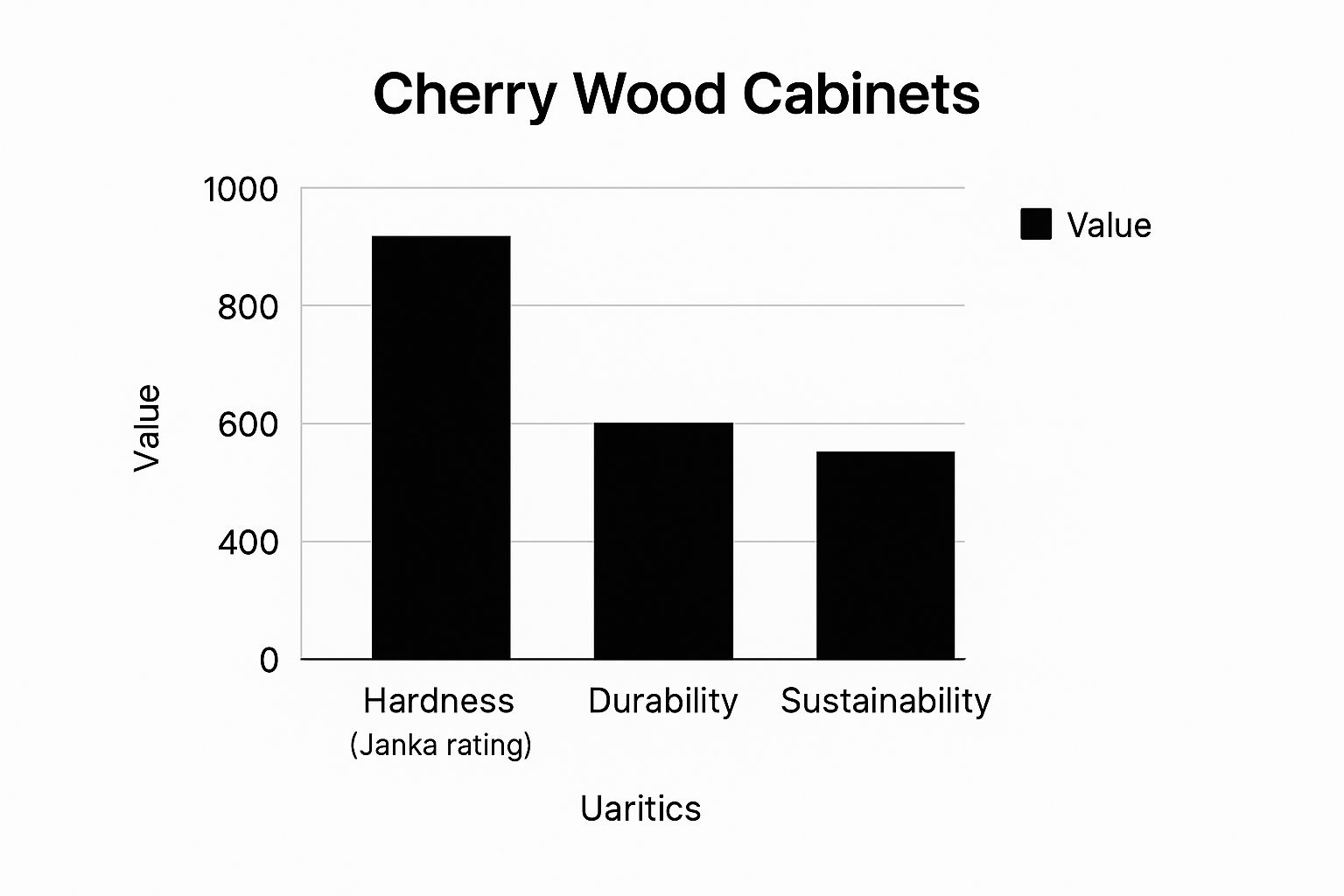
As the chart illustrates, cherry achieves a perfect score for durability and a high rating for sustainability, though its Janka hardness rating of 950 makes it softer than woods like oak or hickory.
Considerations & Pro Tips
While beautiful, cherry requires some specific considerations. Its softness (Janka rating of 950) means it can be more susceptible to dents and scratches than harder woods, making it better suited for homes without young children or high-traffic kitchens.
Expert Insight: For a consistent finish, always use a pre-stain wood conditioner before applying stain. Cherry's fine grain can sometimes absorb stain unevenly, leading to a blotchy appearance. A conditioner ensures a deep, uniform color that highlights the wood's natural beauty.
2. Maple
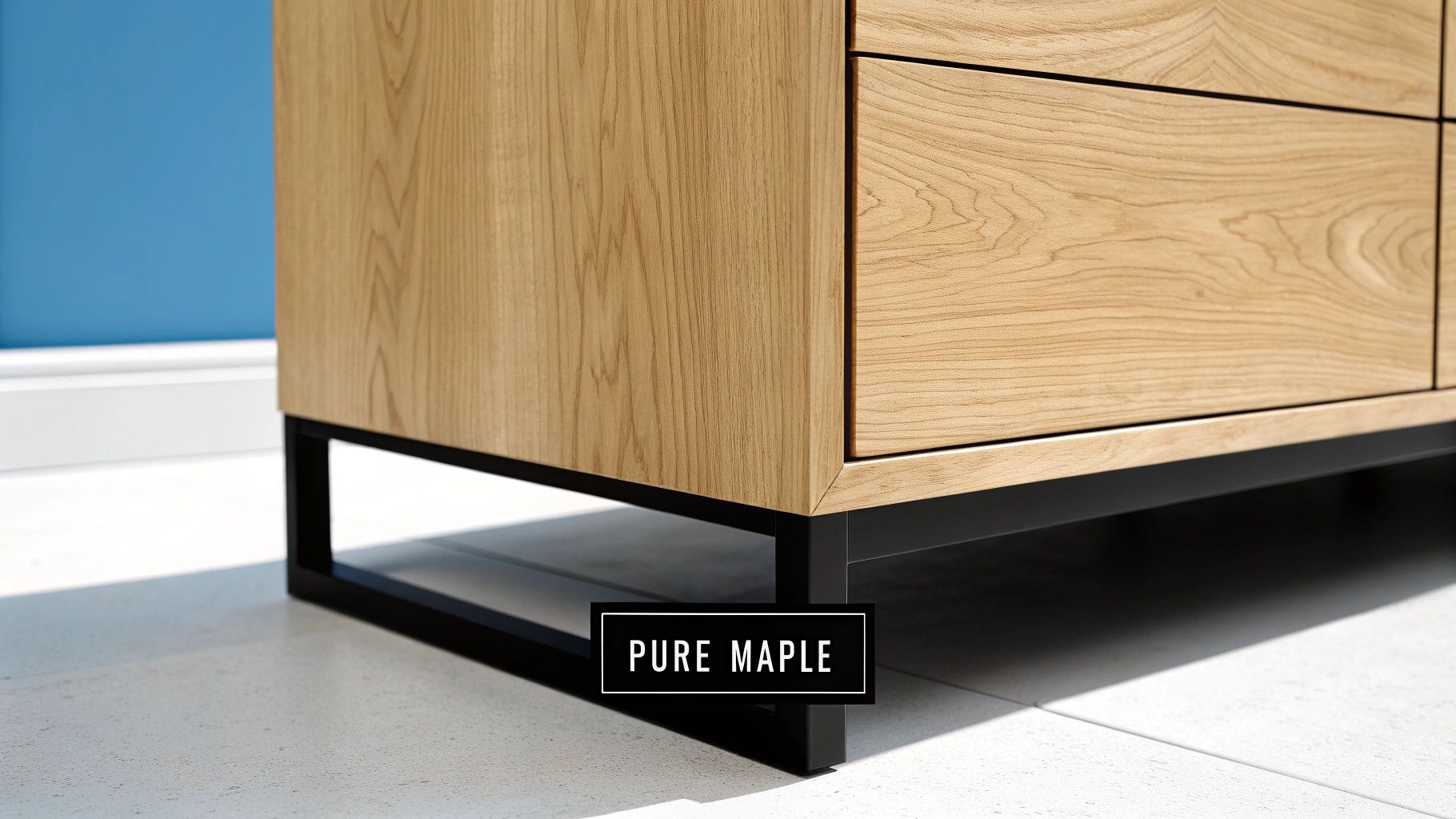
Maple is a highly popular and versatile hardwood, favored for its exceptional durability and clean, uniform appearance. Sourced primarily from the Hard Maple (or Sugar Maple) tree, it stands as one of the most reliable wood types for cabinets. Its defining characteristic is a fine, consistent grain and a creamy white to light golden hue, which provides a bright, neutral canvas. This makes maple an incredibly adaptable choice, fitting seamlessly into various design aesthetics, from sleek modern spaces to classic traditional kitchens.
Key Characteristics & Best Uses
Maple's impressive hardness and smooth surface make it a practical and beautiful option. It’s significantly harder than cherry or oak, offering superior resistance to dents and daily wear.
- Grain & Texture: Features a subtle, fine, and generally straight grain. Some pieces may display unique figuring like bird's-eye, curly, or quilted patterns, which are prized for decorative applications.
- Color & Finish: Naturally light in color, it accepts stains well, though it excels when painted due to its smooth, non-porous surface. It can be finished to look like more expensive woods, like cherry.
- Ideal For: Maple is a workhorse wood perfect for high-traffic areas. It's an excellent choice for painted kitchen cabinets, durable bathroom vanities, and minimalist or Shaker-style designs where its clean look can shine.
Considerations & Pro Tips
With a Janka hardness rating of 1,450, maple is exceptionally durable and resists dings and scratches effectively. However, its dense grain can make staining tricky without the right preparation.
Expert Insight: To avoid a blotchy or uneven finish when staining maple, always use a gel stain or apply a pre-stain wood conditioner. The conditioner partially seals the wood, allowing the stain pigment to be absorbed more uniformly for a professional, even-toned result.
3. Oak
Oak has been the cornerstone of cabinet making for centuries, renowned for its exceptional strength, distinctive grain patterns, and time-tested durability. As one of the most classic wood types for cabinets, it is available in two main varieties: Red Oak and White Oak. Red Oak is known for its prominent, often wavy grain and warm, slightly reddish undertones, making it a staple in traditional American kitchens. White Oak, conversely, features a finer, straighter grain and a golden-brown hue, and its closed cellular structure makes it highly resistant to moisture and rot.
The enduring appeal of oak, popularized by figures like Gustav Stickley in the Arts and Crafts movement, lies in its versatility and strength. Its pronounced grain is a defining feature that adds texture and character to cabinetry, celebrated in styles from Mission to modern farmhouse.
Key Characteristics & Best Uses
Oak is a heavy, hard, and strong hardwood that holds up well against daily wear and tear. Its prominent grain pattern is its most recognizable feature, which can be further enhanced with different sawing techniques like quartersawing to produce dramatic ray flecks.
- Grain & Texture: Features a very pronounced and open grain pattern, ranging from straight lines to dramatic arches and waves. The texture is coarse and requires a filler for a completely smooth finish.
- Color & Varieties: Red Oak has pinkish or reddish undertones, while White Oak presents with light to medium brown colors with olive or yellow undertones.
- Ideal For: Oak is incredibly versatile. It is perfect for traditional American cabinetry, durable kitchen cabinets in high-traffic homes, and Arts and Crafts or Mission-style built-ins. White Oak is an excellent choice for moisture-prone areas like bathrooms and laundry rooms. You can learn more about oak cabinet wood types and costs to see if it's right for your project.
Considerations & Pro Tips
While incredibly durable, oak's open grain can be a challenge. It readily absorbs stain, but the texture can show through if not properly prepared. Its Janka hardness ratings (1360 for Red Oak, 1290 for White Oak) make it highly resistant to dents and scratches.
Expert Insight: To achieve a professional, glass-smooth finish on oak cabinets, always use a grain filler before staining or painting. Apply the filler, sand it smooth, and then apply your finish. This prevents the deep pores from telegraphing through the final coat, giving you a refined look that still honors the wood's underlying character.
4. Walnut
Walnut, particularly American Black Walnut, stands as a premier American hardwood, revered for its dramatic and luxurious appearance. It is one of the most distinguished wood types for cabinets, characterized by its rich, dark heartwood. The stunning contrast between its deep chocolate-brown heartwood and the creamy, pale sapwood creates a natural visual interest that is both bold and sophisticated, making it a top choice for high-end cabinetry and fine furniture.
Key Characteristics & Best Uses
Walnut's reputation is built on its exceptional workability, inherent stability, and undeniably upscale look. Master craftsmen have favored it for centuries, and it continues to be a symbol of quality in modern design.
- Grain & Texture: Walnut typically features a straight grain, though it can sometimes be wavy or curly, adding to its unique character. It has a medium texture and a moderate natural luster.
- Color Variation: The wood presents a striking spectrum, from the nearly black, deep chocolate brown of the heartwood to the pale, yellowish-gray of the sapwood. This variation is often celebrated in the final design.
- Ideal For: Walnut is perfectly suited for creating a statement. It excels in applications like high-end kitchen cabinetry, executive office built-ins, and is a cornerstone of mid-century modern design. It's also popular for contemporary floating vanities and media centers.
Considerations & Pro Tips
Walnut is a mid-range hardwood in terms of density (Janka rating of 1010), offering a good balance of durability and workability. While strong, it is softer than oak or hickory and can be susceptible to dents in very high-traffic areas. Proper care is essential to maintain its stunning appearance, which is why understanding how to clean your wood cabinets properly is crucial for longevity.
Expert Insight: Embrace the natural color variation. Instead of staining it to uniformity, use a clear, satin finish to let the wood's natural beauty shine. For a dramatic, high-end look, ask your cabinet maker about book-matching panels, which creates a stunning symmetrical grain pattern.
5. Hickory
Hickory is one of America's hardest and strongest native wood species, prized for its exceptional durability and bold, rustic character. Sourced from the hickory tree, which is part of the walnut family, this wood type is defined by its dramatic and unpredictable grain patterns and color variations. Cabinets made from hickory often feature a striking contrast between the creamy white sapwood and the darker, reddish-brown heartwood, creating a vibrant, calico-like appearance. This distinct look makes hickory a standout choice for designs that aim to highlight natural, untamed beauty.
Key Characteristics & Best Uses
Beyond its rugged appearance, hickory's primary asset is its incredible strength, making it a workhorse material for high-traffic environments. While its hardness presents challenges for craftsmen, the resulting product is built to last for generations.
- Grain & Texture: Features a prominent, often wavy or irregular grain with a medium to coarse texture. The dramatic color variation between sapwood and heartwood is its most defining characteristic.
- Color Evolution: Hickory’s color is generally stable and does not darken as significantly as cherry. Its appeal lies in the natural contrast present from the start.
- Ideal For: Hickory is the perfect wood type for cabinets in rustic, farmhouse, and lodge-style designs. Its unparalleled durability also makes it an excellent choice for high-use family kitchens, commercial applications, and any space where strength is as important as style.
This video provides a closer look at the unique properties and visual appeal of hickory wood.
As demonstrated, its rugged nature is a core part of its charm, offering a look that cannot be replicated by more uniform woods.
Considerations & Pro Tips
Hickory’s density (Janka rating of 1820) makes it extremely resistant to dents and wear, but it also makes it difficult to work with. The wood is prone to splitting, so careful handling during installation is crucial.
Expert Insight: When working with hickory, always pre-drill screw holes to prevent the wood from splitting. Its hardness can be tough on tools, so use sharp, high-quality carbide-tipped blades for clean cuts. Embracing the natural color variation is key; attempting to achieve a uniform stain is difficult and detracts from hickory's unique character.
6. Alder
Alder has become a highly popular choice among wood types for cabinets, especially on the West Coast, valued for its blend of affordability and versatility. Sourced from the Pacific Northwest, this hardwood is often compared to cherry but comes at a more accessible price point. Its defining feature is a light tan to reddish-brown color with a fine, straight, and even-textured grain, which provides a smooth, uniform surface perfect for various finishes.
Key Characteristics & Best Uses
Alder's reputation stems from its exceptional workability and finishing qualities. It is relatively soft, making it easy for craftsmen to cut and sand, yet it's durable enough for most cabinetry applications, particularly when handled with care.
- Grain & Texture: Features a very fine, straight grain with a consistent, uniform texture. It has minimal grain distinction, making it an excellent canvas for paints and stains.
- Color & Finish: Naturally light in color, it accepts stains beautifully and can be finished to mimic more expensive woods like cherry or walnut. It is also one of the best woods for painted finishes due to its smooth surface.
- Ideal For: Alder is perfect for achieving a high-end look on a moderate budget. It excels in applications like painted kitchen cabinetry, children's bedroom built-ins, and budget-friendly cabinet installations in utility or laundry rooms. Its adaptability makes it suitable for various design styles, from rustic to contemporary.
Alder is a fantastic choice for homeowners who want customized solutions without the premium cost of other hardwoods. For those exploring unique cabinetry options, you can discover more about high-end custom cabinetry solutions on sinclaircabinets.com.
Considerations & Pro Tips
Alder’s main consideration is its relative softness. With a Janka hardness rating of only 590, it is more prone to dents and dings than hardwoods like oak or maple. This makes it less ideal for high-impact areas unless the homeowners are mindful of its delicate nature.
Expert Insight: When staining alder, use a gel stain for a more even and less blotchy result. If you're painting, sand the wood progressively to a very fine grit and apply a high-quality primer. This preparation is key to achieving a flawless, professional-grade painted finish that elevates the cabinetry.
7. Birch
Birch is a versatile and durable hardwood that has become a go-to choice among wood types for cabinets, prized for its strength and affordability. Sourced from various species like Yellow Birch and Paper Birch, it offers a fine, uniform grain and a light, creamy-white to pale yellow color that brightens any space. Often compared to maple for its similar hardness and smooth texture, birch provides a cost-effective alternative without sacrificing performance, making it a favorite for a wide range of cabinet styles, from modern to traditional.
Key Characteristics & Best Uses
Birch is known for its excellent workability and ability to hold finishes well, allowing for a smooth, consistent look. Its inherent strength makes it a reliable material for cabinetry that needs to withstand daily use.
- Grain & Texture: Typically features a straight, fine, and even grain with a smooth, uniform texture. Some birch may exhibit a subtle wavy or curly figure, adding unique visual interest.
- Color & Consistency: Presents a light, natural color ranging from creamy white to pale yellow. Its consistent appearance makes it ideal for achieving a clean, uniform finish.
- Ideal For: Birch is extremely versatile, perfect for mid-range kitchen cabinets, bathroom vanities, and institutional or commercial cabinetry. Its durability and smooth surface also make it an excellent choice for painted finishes and European-style frameless cabinets.
Considerations & Pro Tips
While strong and adaptable, birch can sometimes absorb stain unevenly, similar to cherry or maple. Its Janka hardness rating (around 1260 for Yellow Birch) places it firmly in the durable category, capable of resisting dents and wear in busy households.
Expert Insight: When staining birch, always test your stain on a sample piece first. Due to slight variations in density, some areas may absorb more stain than others. Applying a pre-stain wood conditioner is highly recommended to prevent blotchiness and ensure a rich, even color that enhances the wood's subtle grain.
8. Poplar
Poplar is the unsung hero and workhorse of the cabinetry world, prized for its outstanding utility and affordability, especially for painted finishes. Sourced from the fast-growing Tulip Poplar tree, this hardwood is not chosen for its natural beauty, as its appearance can be inconsistent with green, gray, and even purplish streaks. Instead, its true value lies in its exceptional performance as a paint-grade material, making it one of the most practical and widely used wood types for cabinets where a flawless, opaque color is the goal.
Key Characteristics & Best Uses
Poplar is renowned among cabinet makers for its cooperative nature and smooth surface, which provides a perfect canvas for paint. It’s dimensionally stable, meaning it resists warping and shrinking with changes in humidity, a critical trait for durable cabinetry.
- Grain & Texture: Features a straight, uniform grain and a fine texture that sands to an incredibly smooth finish. This lack of a heavy grain pattern prevents texture from showing through painted surfaces.
- Color Evolution: The heartwood is typically a light cream to yellowish-brown, but it often includes dramatic streaks of green or gray that will fade with light exposure. This variation makes it unsuitable for staining.
- Ideal For: Poplar is the go-to choice for painted kitchen cabinetry in any style, from modern farmhouse to sleek contemporary. It’s also perfect for utility room cabinets, built-in closet systems, and as face frames or internal components in projects using more expensive woods for visible areas.
Considerations & Pro Tips
While poplar is an excellent choice for painted projects, it is a relatively soft wood with a Janka hardness rating of 540. This softness makes it more prone to dents and dings than hardwoods like maple or oak, so it’s best used in applications that won't see heavy abuse.
Expert Insight: To achieve a professional, uniform paint job, always start with a high-quality, stain-blocking primer. This essential step prevents poplar's natural color variations, especially the green mineral streaks, from bleeding through and discoloring the final paint coats over time.
Wood Types Comparison for Cabinets
| Wood Type | Implementation Complexity 🔄 | Resource Requirements ⚡ | Expected Outcomes 📊 | Ideal Use Cases 💡 | Key Advantages ⭐ |
|---|---|---|---|---|---|
| Cherry | Moderate – easy to machine and finish; some care with color variation | Moderate – premium pricing, sustainable North American sources | High-end luxury appearance with rich patina development | Luxury kitchens, traditional & Craftsman cabinetry, built-ins | Prestigious look, excellent workability, stable, ages beautifully |
| Maple | Moderate – very hard wood may challenge hand tools; excellent machining | Moderate – readily available, affordable, fast-growing | Durable, smooth finish ideal for paint or stain | Modern and traditional kitchens, commercial, bathrooms | Very hard, durable, consistent grain, great for painted finishes |
| Oak | Moderate to High – requires grain filling for smooth finish | Moderate – widely available, reasonable cost | Strong, durable with pronounced grain character | Traditional, Arts & Crafts, Mission style, historic restorations | Exceptional strength, distinctive grain, moisture resistant (White Oak) |
| Walnut | Moderate – easy to work with, but limited availability | High – premium pricing, moderate sustainability | Luxurious rich color, excellent stability | High-end kitchens, offices, mid-century, contemporary vanities | Stunning appearance, great stability, natural decay resistance |
| Hickory | High – extreme hardness requires specialized tools; challenging machining | Moderate – readily available, sustainable | Outstanding durability and rustic look | Rustic, lodge, country-style kitchens, commercial durability needs | Hardest North American wood, extreme strength, unique rustic character |
| Alder | Low – very easy to machine and finish | Low – affordable and readily available | Good for painted finishes, mimics expensive woods | Budget-friendly painted cabinetry, coastal, utility rooms | Excellent paintability, affordable, easy working, good stability |
| Birch | Moderate – prone to tear-out without care | Moderate – good availability, affordable | Durable with fine grain and good stain acceptance | Mid-range kitchens, commercial, European frameless cabinetry | Affordable alternative to maple, versatile for paint and stain |
| Poplar | Low – very easy to machine and sand | Low – most affordable, fast-growing species | Best for painted finishes, not suitable for staining | Paint-grade cabinetry, internal components, utility rooms | Excellent paint adhesion, affordable, easy to work, renewable source |
From Wood Selection to Wow-Factor: Partnering with a Pro
Navigating the diverse world of wood types for cabinets can feel like an overwhelming task. We’ve journeyed through the rich, darkening patina of Cherry, the clean, modern appeal of Maple, and the rugged, time-honored strength of Oak. You now understand how the dramatic grain of Hickory can create a rustic masterpiece, while the softer, consistent look of Alder offers a versatile canvas for various stains and paints.
Each wood species brings its unique personality to a space. Walnut conveys undeniable luxury and sophistication, Birch provides a durable and budget-conscious alternative to Maple, and Poplar stands as a painter’s dream, ready to accept any color you can imagine. Your choice is more than just a material selection; it's a foundational decision that dictates the mood, durability, and long-term value of your kitchen, bathroom, or custom built-ins.
Translating Knowledge into a Flawless Finish
The real magic happens when this newfound knowledge is combined with professional expertise. Understanding the difference between Red Oak and White Oak is one thing; knowing how each will react to the specific humidity levels in your home and which finish will best protect it for decades is another. This is where the partnership with a seasoned cabinet maker becomes invaluable.
A professional’s guidance ensures your vision is executed flawlessly, avoiding common pitfalls that can turn a dream project into a costly mistake. They can help you make critical decisions beyond just the wood species itself, such as:
- Door Style and Construction: How will a Shaker-style door in Maple compare to a raised-panel door in Cherry? An expert can illustrate the visual and structural differences.
- Finish and Durability: Which clear coat will best highlight Walnut’s natural grain without yellowing over time? What’s the most resilient painted finish for Poplar cabinets in a high-traffic kitchen?
- Sourcing and Quality: A reputable manufacturer has access to higher-grade lumber, ensuring fewer knots, more consistent color, and superior overall quality for your chosen wood types for cabinets.
The Final Step: From Blueprint to Breathtaking Reality
Ultimately, choosing the right wood is the first step on a journey to creating a space that is both beautiful and highly functional. The success of your project hinges on transforming that raw material into a perfectly crafted and installed final product. By collaborating with a professional, you are not just buying cabinets; you are investing in a seamless process, expert craftsmanship, and the peace of mind that comes from knowing every detail has been considered. This partnership ensures your new cabinetry will not only meet your expectations but will become a stunning, enduring feature of your home for years to come.
Ready to transform your home with custom cabinetry that perfectly reflects your style and needs? The experts at Sinclair Cabinetry inc have over 35 years of experience guiding homeowners through the selection of premium wood types for cabinets and crafting bespoke solutions. Visit Sinclair Cabinetry inc to schedule a consultation and take the first step toward the custom kitchen or bathroom of your dreams.