

Think of a classic, sturdy piece of wooden furniture. Chances are, it was built with a face frame. In the world of cabinetry, this traditional style is like a picture frame for your cabinet doors—a solid wood frame is attached right to the front of the cabinet box, giving the doors and drawers a strong, reliable anchor.
It’s this simple "picture frame" design that gives face frame cabinets their timeless, durable appeal.
Understanding the Classic Face Frame Design
At its heart, a face frame cabinet is all about a simple, incredibly strong construction method. You have the main cabinet box, which is the basic structure. On its own, the box is just functional, with raw plywood edges showing. The face frame is a separate, solid wood frame built specifically to cover up those edges.
This does two things: it creates a clean, finished look and, more importantly, adds a ton of structural strength.
The frame itself is made of two parts:
- Stiles: The vertical pieces of the frame.
- Rails: The horizontal pieces that connect the stiles.
These stiles and rails form a grid that gets attached to the front of the cabinet box. This creates the signature look of face frame cabinetry and provides a super sturdy surface for mounting door hinges and drawer slides.
Why Is This Design So Popular?
The long-standing popularity of face frame cabinets isn't just about looks; it's rooted in good old-fashioned strength. This construction has been the go-to in North American homes for decades because the frame reinforces the entire cabinet box, making it far more rigid and tough.
In fact, it's been the dominant style in the United States since the early 20th century. Even as recently as the 2010s, industry data showed face frame cabinets made up around 60–70% of cabinetry installed in U.S. homes. That's a serious testament to their staying power. This extra strength also makes for a more forgiving installation—the sturdy frame can help true up a cabinet against slightly uneven walls, which is a common headache in many homes.
Key Takeaway: The face frame isn’t just decorative trim. It’s a structural workhorse that adds strength, rigidity, and a classic aesthetic, making it a reliable and time-tested choice for any kitchen or bathroom.
When you really get down to it, the design's strength is what allows it to integrate so well into a modern home. For example, that solid wood frame provides the perfect mounting point for accessories like specialized kitchen under-cabinet TV mounts, which need a really secure anchor to be safe. It’s this blend of classic craftsmanship and everyday utility that keeps this traditional style a practical and popular option.
Deconstructing the Face Frame Cabinet Build
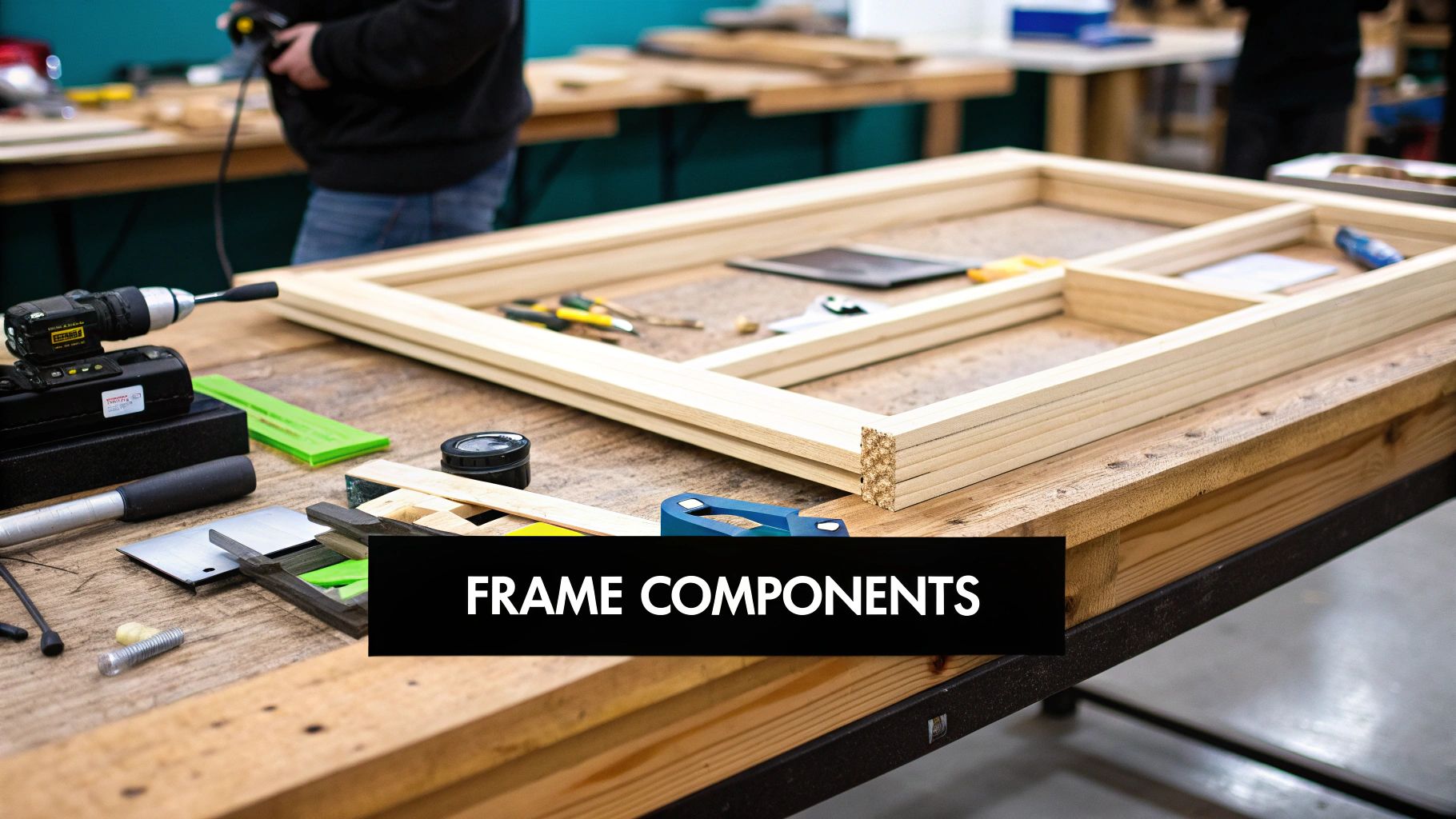
To really get what makes a face frame cabinet so tough, you have to look past the pretty exterior and see the bones. Think of it as the sturdy skeleton for your kitchen—the whole process is about building a rigid, long-lasting structure before a single door gets hung.
It all starts with picking the right materials. This isn't a minor detail; the choices made here dictate the cabinet's durability, look, and how many years it will last. It's the foundation for everything else.
Choosing the Right Materials
The heart and soul of a face frame cabinet is its wood. Skilled cabinet makers are very deliberate here, using different woods for different parts to strike the perfect balance between cost, strength, and looks.
- For the Face Frame: The star of the show, the frame itself, is almost always built from solid hardwood. You'll often see woods like oak, maple, cherry, or alder because they're dense, strong, and can handle the daily grind of doors opening and closing for years.
- For the Cabinet Box: The box, sometimes called the "carcass," is usually made from high-quality plywood or furniture-grade particleboard. Plywood is a fantastic and common choice because it’s stable and resists warping over time.
This combination gives you the best of both worlds. The parts you see and touch every day are beautiful, resilient solid wood, while the structural box is strong and stable without breaking the bank.
The Art of Joinery: The Secret to a Strong Frame
Once the wood is cut to size, the real magic begins with the joinery. This is how the vertical pieces (stiles) and horizontal pieces (rails) of the face frame are connected. A well-made joint is what separates a cabinet that lasts a few years from one that becomes a family heirloom.
A face frame isn't just tacked onto the front of a cabinet box. It's a precisely engineered component, and its strength comes from how the individual pieces are locked together. This structural integrity is what makes the entire cabinet so durable.
There are two go-to methods for creating these bulletproof connections:
- Pocket Screws: This is a modern, fast, and incredibly strong technique. A special tool called a pocket-hole jig drills a hole at a shallow angle. A screw is then driven through this "pocket," pulling two pieces of wood together for a tight, secure joint that stays hidden from sight.
- Mortise and Tenon Joints: This is old-school, time-tested woodworking at its finest. A slot (the mortise) is cut into one piece of wood, and the connecting piece is shaped with a matching tab (the tenon). The tenon fits snugly into the mortise, and with a bit of glue, it creates a rock-solid bond that’s built to last.
No matter the method, the goal is always the same: create a single, rigid frame that won’t twist, sag, or pull apart, even after decades of use.
Assembling the Final Structure
With the frame built, the last step is attaching it to the front of the cabinet box. This is a critical moment where two separate components become one unified, robust unit.
The frame is carefully lined up with the front edges of the cabinet box. Cabinet makers use a combination of strong wood glue and fasteners like nails or screws to lock it in place permanently. The glue forms a powerful chemical bond between the wood surfaces, while the fasteners provide instant mechanical strength, holding everything tight while the glue cures.
This unified construction is what gives the face frame cabinet its legendary strength. It makes installation more forgiving on walls that aren't perfectly flat and provides a solid foundation for mounting doors and hardware. If you're curious about how this compares to other methods, you can dive deeper into the various cabinet construction types out there. Knowing how your cabinets are built makes you a smarter buyer, able to truly appreciate the quality hiding behind that beautiful finish.
Face Frame vs. Frameless: A Practical Comparison
When you're choosing cabinets, it often comes down to two major players: the classic face frame and the sleek frameless design. At first glance, they might seem pretty similar, but how they're built makes a world of difference in how they look, how much they hold, and even how they’re installed. Getting to know these differences is the key to picking the right foundation for your kitchen or bathroom.
A face frame cabinet is what most people picture when they think of traditional American-style cabinetry. It’s built with a solid wood frame attached to the front of the cabinet box, like a picture frame. On the other hand, frameless cabinets—often called “European-style”—do away with that front frame altogether. The doors and drawers mount directly onto the sides of a thicker cabinet box, giving you that clean, seamless look.
Structural Integrity and Durability
The biggest contrast between these two styles is in their core construction. That face frame isn't just for show; it acts like a reinforcing skeleton for the cabinet box, adding a ton of rigidity and strength. This extra support helps the cabinet resist "racking"—that annoying tendency to twist out of square over time—and makes for a seriously sturdy structure.
Frameless cabinets make up for the lack of a frame by using thicker materials for the box itself, usually ¾-inch plywood or particleboard. This is a step up from the ½-inch material you often find in framed cabinet boxes. While a well-made frameless cabinet is plenty durable, the face frame design is inherently more forgiving and traditionally beefier, which really helps during shipping and installation.
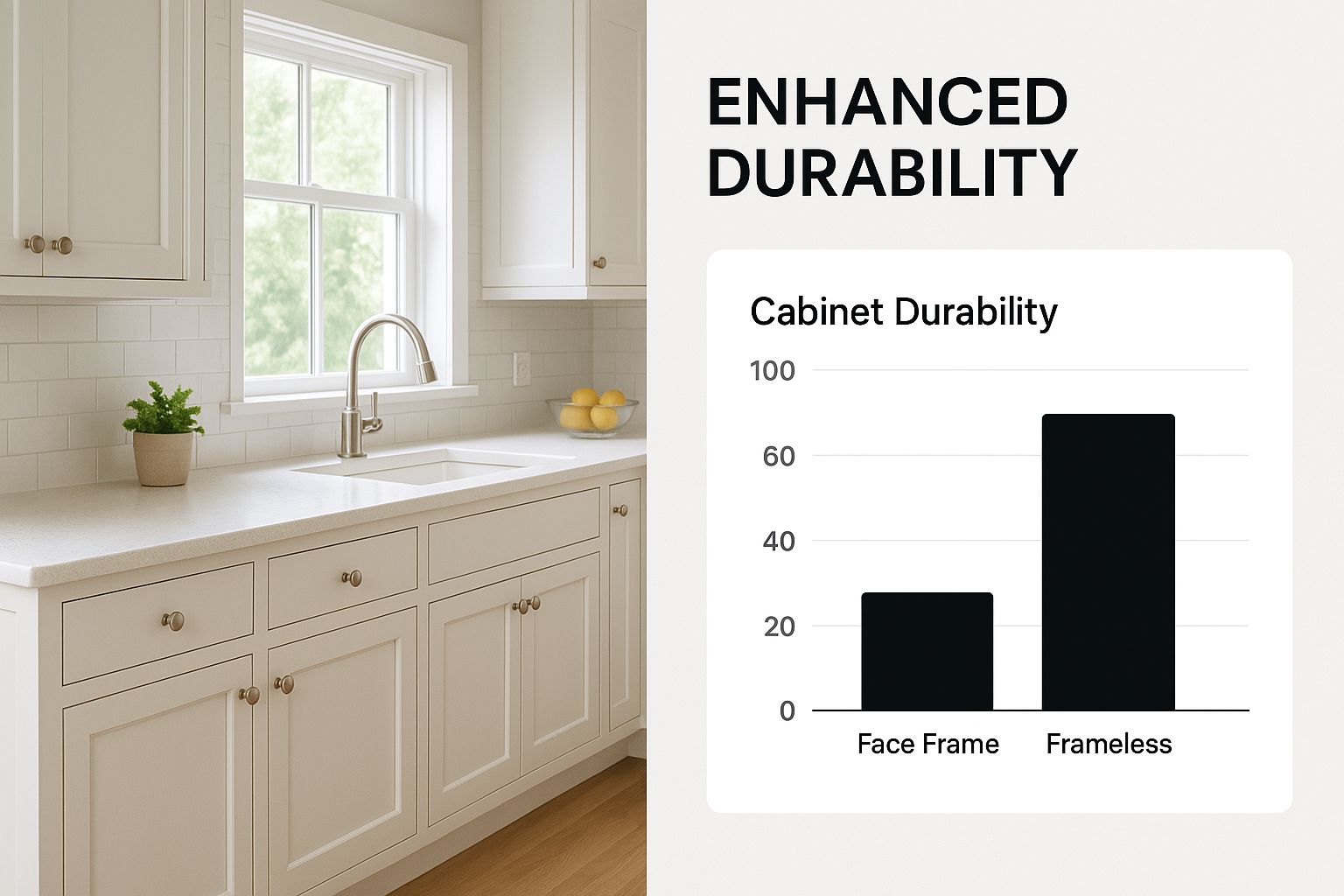
As you can see, that solid wood frame provides a robust foundation that really contributes to the long-term stability and resilience of your cabinetry.
Storage Access and Usable Space
This is where frameless cabinets really shine. Since there’s no face frame creating a "lip" around the cabinet opening, you get complete, unobstructed access to everything inside. It’s a small detail that makes a big difference in daily use.
- Wider Drawers: In a frameless cabinet, drawers can be built to the full width of the cabinet box. With a face frame, the drawer has to be a bit narrower to fit through the opening.
- Easier Access: Sliding bulky items like a stand mixer or a big stack of plates into a frameless cabinet is a breeze. No frame to navigate around.
- More Efficient Pull-Outs: Accessories like pull-out spice racks or trash bins can be designed wider, making better use of the interior space in a frameless setup.
For smaller kitchens where you need to squeeze every last inch of storage out of your layout, the full-access design of frameless cabinets is a huge plus.
The Installation Process
Installing these two styles can be a totally different ballgame, especially in older homes where perfectly square walls and level floors are a rare find.
Face frame cabinets are much more forgiving to install. The frame itself gives you something to work with—you can shim and tweak it to get the cabinet doors aligned and create a straight, clean line, even if the wall behind it is a little wonky. The way the doors overlay the frame also helps hide any minor gaps or imperfections.
Frameless cabinets, however, demand precision. Because the doors sit edge-to-edge with tiny, consistent gaps, any dip in the wall or slope in the floor will be immediately obvious. Getting that clean, seamless look requires a perfectly plumb and level installation, making it a job best left to seasoned pros.
To make it even clearer, here's a quick side-by-side look at the key differences between the two.
Face Frame vs Frameless Cabinets Key Differences
| Feature | Face Frame Cabinets | Frameless Cabinets |
|---|---|---|
| Construction | Cabinet box with a 1 ½” solid wood frame attached to the front. | A simple cabinet box with no front frame; uses thicker side panels. |
| Appearance | Traditional, classic look with visible frame between doors/drawers. | Modern, sleek, seamless look with minimal gaps between doors/drawers. |
| Accessibility | Slightly restricted opening due to the frame "lip." | Full, unobstructed access to the entire interior. |
| Storage Space | Drawers and pull-outs are slightly narrower than the cabinet box. | Drawers and accessories can utilize the full width of the cabinet. |
| Installation | More forgiving on uneven walls; easier to align and adjust. | Requires perfectly plumb and level surfaces for a clean look. |
| Hardware | Supports a wide variety of hinge types (concealed or exposed). | Almost exclusively uses concealed hinges for a minimalist aesthetic. |
| Cost | Can be more affordable, depending on materials and door style. | Often slightly more expensive due to thicker box construction and precision hardware. |
Ultimately, there’s no single "better" option—it all comes down to what works for your space, your style, and your priorities.
Hardware and Aesthetic Flexibility
Your choice here will also guide your hardware options and the overall feel of your design.
Face Frame Cabinets Offer Versatility:
- Hinges: You get to choose. Go with concealed European-style hinges for a clean look, or opt for traditional, visible hinges to lean into a classic or rustic vibe.
- Door Styles: These cabinets can handle it all—inset, partial overlay, and full overlay doors. This opens up a huge range of design possibilities, from vintage to contemporary.
Frameless Cabinets Are Sleek and Modern:
- Hinges: It's almost always concealed hinges that attach to the inside of the cabinet box, which reinforces that minimalist, clean-lined appearance.
- Door Styles: They are built for full overlay doors, creating those tight, consistent gaps between every door and drawer front for a uniform, monolithic look.
So, the choice between face frame and frameless isn’t about which one is superior, but which one is the superior choice for your project. Face frame cabinets bring timeless durability and design flexibility to the table, while frameless cabinets deliver maximum storage and a clean, contemporary aesthetic. By weighing these practical differences, you can confidently pick the style that best fits your home, budget, and lifestyle.
Exploring Door Styles for Face Frame Cabinets
If the face frame is the sturdy canvas of your cabinetry, then the doors are the art that defines its entire character. The true versatility of a face frame cabinet comes to life when you choose how your doors will sit on or within that frame.
This decision dramatically impacts the final look, creating styles that can range from timeless and traditional to sleek and modern.
There are three main ways to mount your cabinet doors, and each one offers a distinct aesthetic and requires specific hardware. Getting to know these options is the key to bringing your design vision to life.
The High-End Look of Inset Doors
Imagine a perfectly fitted puzzle piece. That’s the essence of an inset door. This high-end, custom style features a door that sits completely inside the cabinet’s face frame, making the door front perfectly flush with the frame's surface.
This technique requires incredible precision from the cabinet maker, as the gaps around the door must be perfectly even and minimal. The result is a clean, classic, and sophisticated appearance often found in luxury kitchens, period-style homes, and fine furniture.
- Aesthetic: Timeless, elegant, and showcases superior craftsmanship.
- Hardware: Inset doors can use either visible barrel hinges for a vintage look or concealed European-style hinges for a cleaner finish.
- Consideration: Because of the precision required for a flawless fit, inset doors are typically the most expensive option.
The Popular Partial Overlay Style
Partial overlay, often called standard or traditional overlay, is one of the most common and budget-friendly styles you'll find. With this design, the cabinet door is slightly larger than the opening and sits on top of the face frame, covering a portion of it.
When the doors are closed, you'll still see a section of the face frame exposed—usually about an inch on all sides. This creates a classic look with depth and dimension that has been a staple in American kitchens for decades.
This style is incredibly forgiving. Because the door covers part of the frame, minor inconsistencies in alignment are much less noticeable, making it a practical and cost-effective choice for many homeowners.
The partial overlay is a highly versatile option that complements a wide range of designs, from farmhouse to transitional. It provides a balanced look that feels both sturdy and inviting.
The Modern Full Overlay Design
For those who love the clean lines of European cabinetry but want the robust structure of a face frame, the full overlay style is the perfect solution. In this design, the cabinet door is made large enough to cover nearly the entire face frame.
This leaves only a sliver of the frame visible between doors and drawers, typically around a quarter-inch. The result is a seamless, modern aesthetic that closely mimics the look of frameless cabinets while retaining the inherent strength of a face frame build.
- Aesthetic: Sleek, contemporary, and minimalist.
- Hardware: Full overlay doors almost exclusively use concealed European hinges to maintain their clean, uninterrupted look.
- Benefit: This style maximizes the visual impact of the doors themselves, making it a great choice for showcasing beautiful wood grains or bold paint colors.
Ultimately, the door style you select is a crucial decision that shapes the personality of your entire space. To see how these different looks can transform a room, you can explore different cabinet door styles and find inspiration for your own project. Each option—inset, partial, and full overlay—offers a unique way to express your personal taste while taking full advantage of face frame construction.
The Pros and Cons of Face Frame Construction
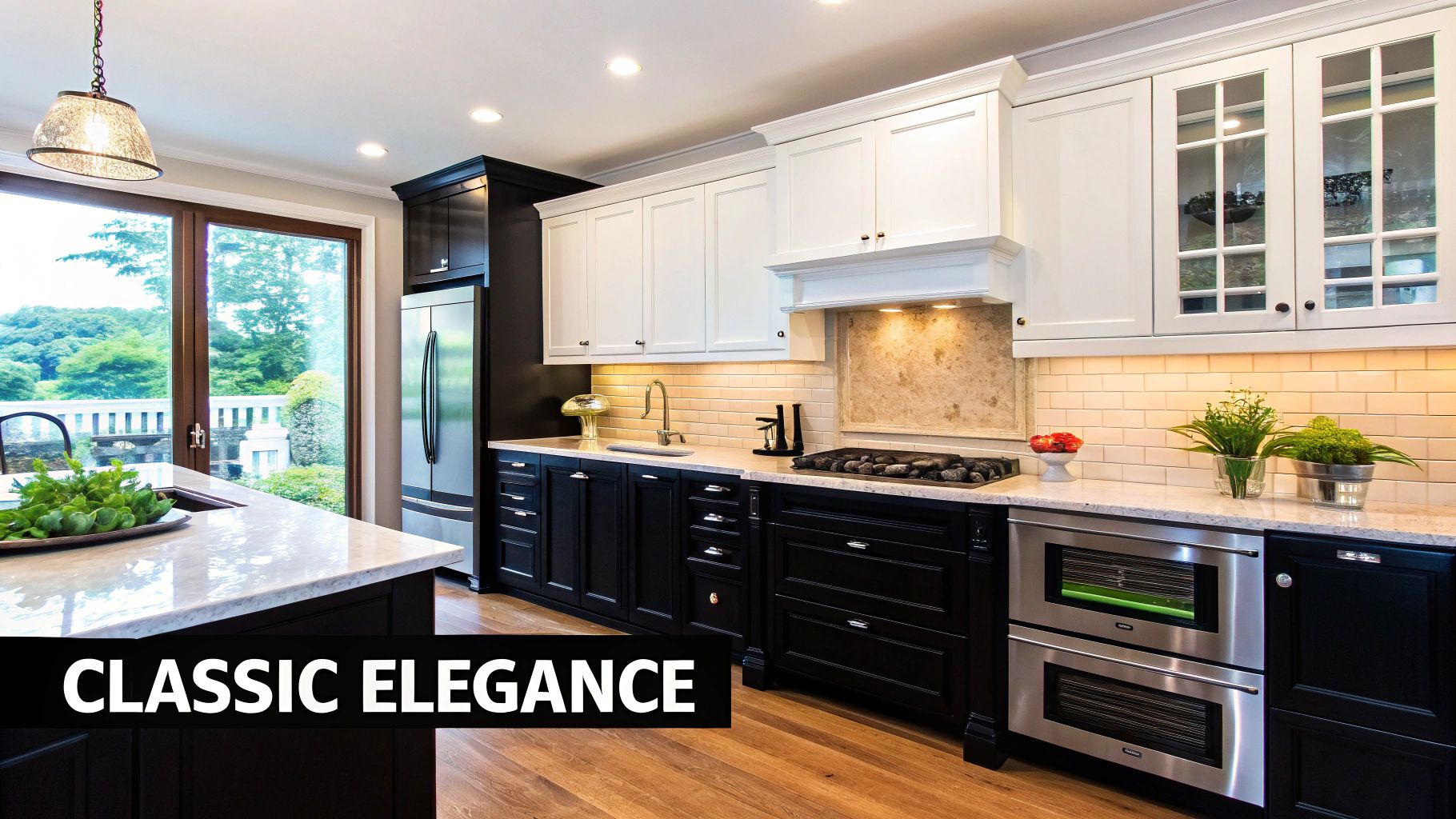
When you're picking a cabinet style, you're really just weighing the trade-offs of each design. Face frame cabinets bring some serious advantages to the table, but it's just as important to understand where they fall short. Getting the full picture helps you choose a style that truly fits your kitchen's needs and your personal taste.
The Advantages of Face Frame Cabinets
Right off the bat, the biggest win for this traditional build is its incredible strength. That solid wood frame isn't just for show; it acts like a rigid skeleton for the cabinet box, keeping it from twisting or racking out of shape. This built-in sturdiness is a huge plus, making the cabinets tougher during shipping and installation and adding to their overall lifespan.
This extra rigidity also makes for a much more forgiving installation. If you've ever worked on an older home, you know walls are rarely perfectly plumb. The frame gives installers a solid, straight plane to work from, making it easier to shim and adjust for a flawless look, even when the wall behind it isn't playing fair.
On top of that, face frame cabinets offer amazing design flexibility. They’re the only construction type that can handle all three main door styles:
- Inset: Perfect for that high-end, custom furniture look.
- Partial Overlay: A classic, cost-effective choice.
- Full Overlay: Gives you a modern vibe that's similar to frameless styles.
This versatility means you can nail just about any aesthetic you're going for, from a cozy farmhouse kitchen to a clean, transitional design, all while having that robust structure underneath.
The Disadvantages of Face Frame Cabinets
For all their strength and style, face frame cabinets do come with a few practical drawbacks. The most common complaint? A slight loss of accessible storage space. The frame itself creates a small "lip" around the inside of the cabinet opening, which means your drawers and any pull-out accessories have to be a little bit narrower to fit.
Typically, you lose about 1.5 inches of usable width compared to a frameless cabinet of the same dimensions. That might not sound like a lot, but in a small kitchen where every inch counts, it can make a real difference. It can also be a bit trickier to get bulky items, like your stand mixer, in and out of the cabinet.
From a pure design perspective, the visible frame doesn't work for every style. If you’re chasing that ultra-minimalist, sleek European look with razor-thin gaps between every door and drawer, the seams of a face frame can break up that clean visual line.
The style's deep historical roots are a big part of its charm and why it's still so popular. It all started with traditional woodworking that put structural integrity first, and by the mid-20th century, face frame cabinetry was the go-to choice in North America. Its lasting power is clear when you see modern companies like American Woodmark Corporation investing USD 65 million between 2022 and 2024 just to expand their face frame production. You can find more details on the evolution of the kitchen cabinet market on TechSci Research.
At the end of the day, it's all about your priorities. If you value durability, classic style, and an easier installation, the benefits of cabinet face frame construction are tough to argue with. But if your design calls for maximum storage access and a strictly minimalist look, these are definitely points to consider.
Your Top Questions About Face Frame Cabinets
Even after you've explored the styles and construction, a few practical questions always pop up right before you're ready to make a decision. Getting clear, straightforward answers helps you move forward with confidence and ensures you end up with the perfect cabinets for your home.
Let's tackle some of the most common questions homeowners have about face frame cabinets, from cost and durability to customization and hardware.
Are Face Frame Cabinets More Expensive?
It's a common myth that the traditional build of face frame cabinets automatically makes them the pricier option. The reality is a lot more nuanced and really comes down to the details you choose. Sure, a high-end inset door requires meticulous craftsmanship that can drive up the price, but standard face frame cabinets are often incredibly competitive.
For example, a partial overlay face frame cabinet is frequently one of the most budget-friendly options you can find. On the flip side, frameless cabinets might seem simpler, but they have to be built with thicker, more robust box materials (usually ¾-inch plywood) to stay rigid without a frame. That need for heavy-duty construction often balances out the costs, making the final price tag more about the wood, finish, and hardware than the construction style itself.
The Bottom Line: Don't assume face frame is always the premium choice. A standard overlay can be a very wallet-friendly option, while costs for both styles climb with premium materials and custom features.
Can I Update My Face Frame Cabinets Later?
Absolutely! This is one of their biggest long-term advantages. That solid wood face frame provides a sturdy, forgiving foundation for future updates, letting you refresh your kitchen's look without the massive expense and mess of a complete tear-out.
You’ve got a couple of great options for updates down the road:
- Painting: The solid wood frame is perfect for a makeover. It can be easily sanded, primed, and painted to completely transform the feel of your space for a relatively low cost.
- Refacing: For a more dramatic change, you can reface the cabinets. This involves applying a new wood veneer over the existing face frames and then installing brand-new doors and drawer fronts. You get the look of brand-new cabinets for a fraction of the price.
This built-in adaptability makes face frame cabinets a smart investment that can evolve with your style for years to come.
How Much Storage Space Do I Really Lose?
This is a great question, especially if you're working with a smaller kitchen. The face frame does create an interior "lip" that slightly reduces the cabinet's accessible opening. That means drawers and any pull-out organizers have to be built just a bit narrower to fit inside.
Typically, you're looking at a reduction in the opening width of about 1.5 inches compared to a frameless cabinet of the same size. While that might not sound like much, it can be a factor in tight spots, like a narrow 12-inch spice pull-out where every inch counts. For most standard-sized cabinets, however, homeowners find the small trade-off in space is well worth the added durability and strength the frame provides.
What Kind of Hinges Do They Use?
The type of hinge on a face frame cabinet is tied directly to your door style, which actually gives you a surprising amount of control over the final look. This flexibility lets you match the hardware to the exact aesthetic you're going for, from classic to contemporary.
Here’s a quick breakdown of how it works:
- Partial Overlay Doors: These often use traditional, visible barrel hinges mounted right on the face frame, which is perfect for a classic or farmhouse vibe. You can also opt for concealed hinges if you prefer a cleaner look.
- Full Overlay & Inset Doors: To get that modern, seamless appearance, these styles almost always use concealed European-style hinges. They mount to the inside of the face frame and are completely hidden when the door is closed. These often come with great features like soft-close mechanisms and six-way adjustability for perfect door alignment.
The key is to make sure your chosen hinge works with both the face frame construction and your specific door overlay to guarantee everything functions flawlessly.
Ready to bring the timeless strength and beauty of custom face frame cabinets into your home? At Sinclair Cabinetry inc, we have over 35 years of experience crafting bespoke, real wood cabinetry that stands the test of time. Let our experts help you design the perfect solution for your kitchen, bathroom, or any room in your home.
Explore our custom cabinet options and start your project today at https://sinclaircabinets.com.