

So, what exactly is a face frame cabinet? The easiest way to think about it is a sturdy cabinet box with a classic picture frame attached right to the front.
This solid wood frame is the defining feature. It adds a ton of strength, creates that timeless look we all love, and provides a rock-solid foundation for mounting doors and hinges. It’s truly the traditional backbone of American-style cabinetry.
Breaking Down the Basics of Face Frame Construction
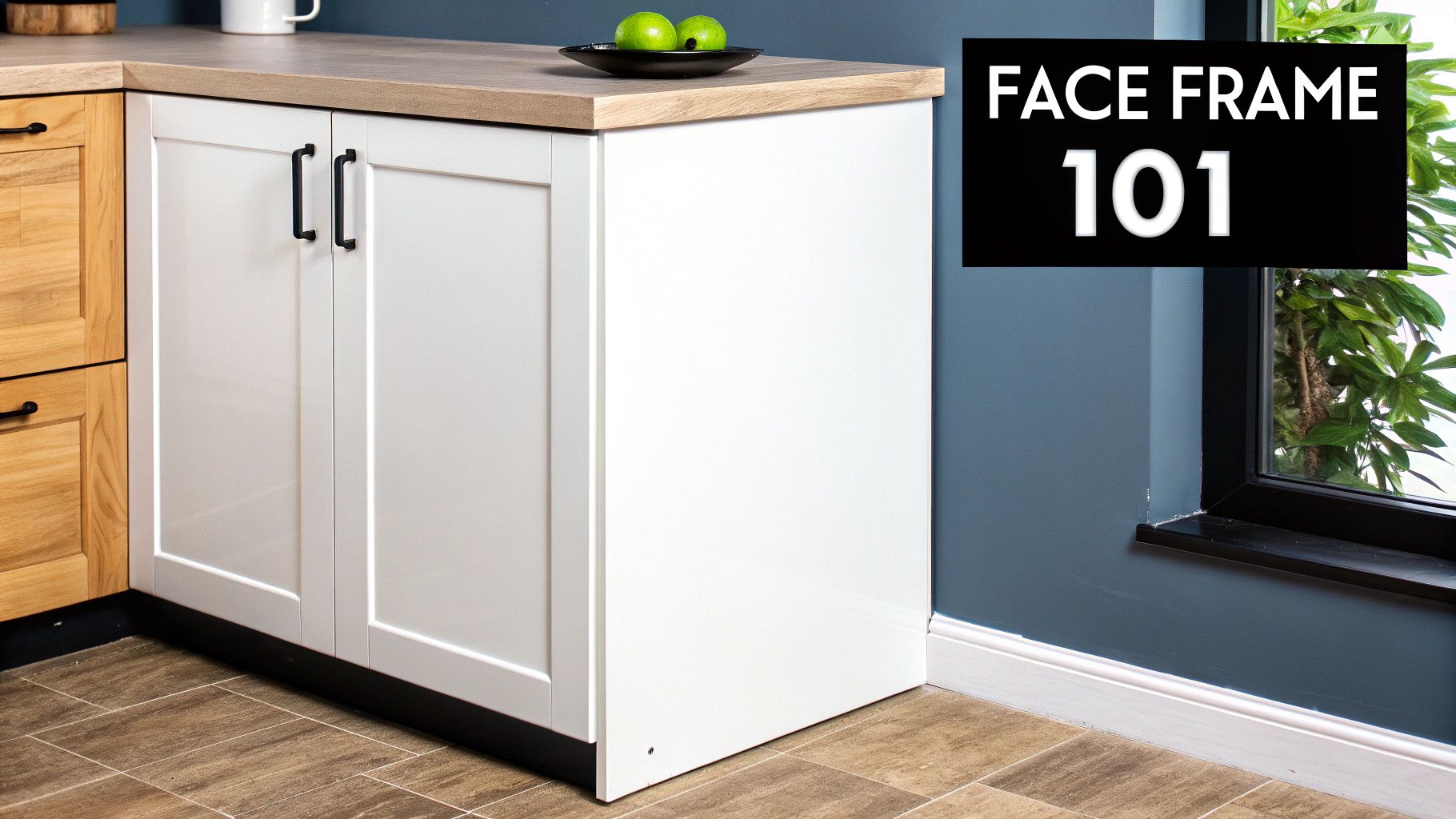
That "face frame" is much more than just a decorative touch; it’s a structural powerhouse. The frame itself is built from solid hardwood strips, usually around 1.5 inches wide, which are joined together and then fixed to the front edges of the cabinet box. This method has been a hallmark of quality craftsmanship for generations, prized for its durability and classic feel.
Even with all the modern alternatives out there, this traditional style is still a dominant force in the market. A survey from the Kitchen and Bath Industry Show (KBIS) revealed that face frame cabinets hold about 44% of the market share—a testament to their lasting appeal. If you're curious, you can explore more cabinet face frame construction insights on our blog. That kind of enduring popularity really speaks volumes about its reliability and design flexibility.
To give you a quick snapshot, here’s a simple breakdown of what makes a face frame cabinet tick.
Face Frame Cabinets at a Glance
| Characteristic | Description |
|---|---|
| Construction | A cabinet box with a solid wood frame attached to the front face. |
| Frame Width | Typically 1.5 inches, providing a sturdy mounting surface. |
| Door Styles | Accommodates inset, partial overlay, and full overlay doors. |
| Appearance | Features a visible frame creating a border around cabinet openings. |
| Strength | The frame adds significant rigidity and prevents the box from twisting. |
| Common Use | A staple in traditional, transitional, and modern farmhouse kitchen designs. |
This table captures the essence of face frame construction, highlighting the core features that define this popular and time-tested cabinet style.
Key Characteristics
Unlike their sleek, European-style cousins (frameless cabinets), face frame cabinets have a look and feel all their own. The frame creates a small reveal or "lip" around the cabinet openings, which is an immediate visual giveaway. But this design offers some real, tangible benefits that homeowners have appreciated for decades.
Here’s what sets them apart:
- Enhanced Structural Integrity: That frame adds serious rigidity and strength to the cabinet box. It keeps it from racking or twisting out of shape over the years, even with heavy use.
- Versatile Door Mounting: It gives you a solid surface for mounting all kinds of hinges and allows for different door styles, whether you love the look of inset, partial overlay, or full overlay doors.
- Classic Aesthetic: The visible frame is a key ingredient in traditional, transitional, and modern farmhouse designs, adding a sense of depth and authentic craftsmanship to the space.
The simplest way to understand the difference is to just visualize it: a face frame cabinet has a built-in border, while a frameless cabinet presents a completely seamless, flat front. This one distinction influences everything that follows, from your hardware choices to the overall style of your kitchen.
The Anatomy of a Face Frame Cabinet
To really get what a face frame cabinet is all about, you have to look past the pretty exterior and see how it's built. Think of it like a solid, handcrafted piece of furniture—every part has a job, and they all work together to create something strong and beautiful. The face frame is the undisputed star of the show, acting as the sturdy skeleton for the entire cabinet.
This frame is built from solid hardwood. The vertical pieces are called stiles, and the horizontal ones are known as rails. We join them together using methods like pocket screws, dowels, or traditional mortise and tenon joints. The result is a rigid, perfectly square frame that gets attached to the very front of the cabinet box.
The Core Components
This construction isn't just for that classic, built-in look; it adds a ton of structural integrity. The frame reinforces the cabinet box, keeping it from twisting or "racking" out of square over the years. This is a huge deal for bigger cabinets, like a pantry or a large base cabinet, that have to hold a lot of weight.
Here’s a quick rundown of the key players:
- Face Frame: This is the 1.5-inch to 2-inch wide hardwood frame (made of stiles and rails) fixed to the front of the cabinet box. It's the main mounting point for your doors and drawers.
- Cabinet Box (Carcass): The body of the cabinet itself, usually built from quality plywood or furniture-grade particleboard. This is what creates the enclosure and holds the shelves.
- Doors and Drawer Fronts: These are the parts you see every day. They attach directly to the face frame and are what truly define the cabinet's style.
- Hinges and Hardware: The hardware is what connects the doors to the face frame. The hinge type is critical here, as it’s tied directly to the door overlay style you end up choosing.
You can think of the face frame as a built-in anchor. It gives you a solid wood surface to mount the hinges, which means your doors will stay perfectly aligned for years. This helps you avoid the dreaded sag and misalignment that can happen with less sturdy cabinet designs.
Door Overlays: The Key to Style
Once that solid frame is in place, the next big decision is how the doors will sit on it. We call this the door overlay, and it makes a massive difference in the final look of your cabinetry. Each style gives off a completely different vibe, from traditional and timeless to clean and modern.
For a deeper look at these options, our guide to cabinet face frame construction breaks it all down.
There are three main overlay types for a face frame cabinet:
- Inset Doors: The door sits perfectly flush inside the face frame opening. This creates a clean, high-end look that really showcases the craftsmanship of the cabinet. You'll often see this in custom, traditional-style kitchens.
- Partial Overlay Doors: The door sits on top of the frame, but it only covers part of it. This leaves a bit of the frame visible all the way around the door, usually about 1/2 inch to 1 inch. It's a very common, budget-friendly style that still lets the character of the frame show through.
- Full Overlay Doors: With this style, the door covers almost the entire face frame, leaving just a tiny sliver of space, or "reveal," between doors and drawers. This gives you a more contemporary, seamless look that's similar to frameless cabinets but with all the structural upsides of a face frame.
Face Frame vs. Frameless Cabinets Explained
Picking between face frame and frameless cabinets is one of the biggest calls you’ll make when remodeling a kitchen or bathroom. It’s the classic showdown: the traditional, rock-solid American style versus the sleek, modern European approach. The visual difference is what you notice first, but the real story is in how they’re built, how you access your storage, and how they get installed.
As we covered, a face frame cabinet has a solid wood frame attached to the front of the cabinet box. A frameless cabinet, on the other hand, is pretty much just the box itself. The edges get finished with a thin banding, and the doors mount directly to the sides of the cabinet box, creating that seamless, minimalist look everyone is after.
This diagram really helps break down the core parts that set these two styles apart.
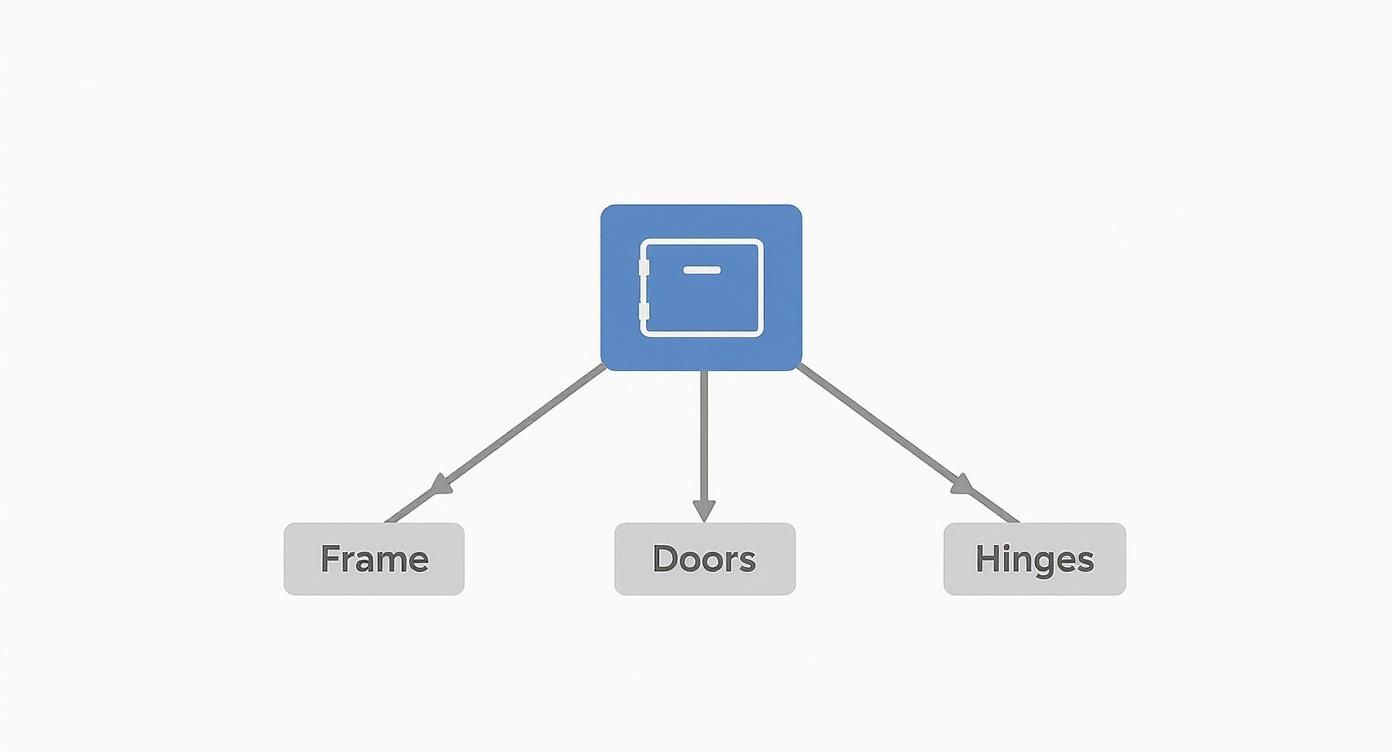
You can see how the frame acts as the main anchor for the doors and hinges in one style. Take that frame away, and you need a totally different construction method for the other.
Key Functional Differences
The main trade-off here boils down to strength versus accessibility. That face frame adds a ton of rigidity to the cabinet, which makes it more forgiving to install on walls that aren't perfectly straight and tougher over the long haul. Frameless cabinets don't have that front frame, so they rely on thicker box materials to get similar stability.
But here’s the flip side: because there’s no frame, frameless cabinets give you a bit more interior storage space and much easier access. You won’t have to work around a center stile or frame lip when you’re trying to stash big pots or slide in pantry items. For a really deep dive, check out our complete guide on what are frameless cabinets.
The choice really comes down to your priorities. If maximum strength and lots of flexibility with door styles are what you're after, face frame is the clear winner. If you're all about that sleek, modern vibe with wide-open interior access, frameless is the way to go.
Even with the rise of modern design, traditional construction is holding its ground. Market data shows that face frame cabinets are still the top choice, making up roughly 67% of professionally installed kitchen cabinets. That continued popularity speaks volumes about the trust people have in their sturdy build and timeless look.
Comparison Face Frame vs Frameless Cabinets
To make this decision even easier, let's put these two styles head-to-head. Each one has its own set of pros and cons depending on your project's needs, from your budget to the final look you're going for.
| Feature | Face Frame Cabinets | Frameless Cabinets |
|---|---|---|
| Construction | Cabinet box with a solid 1.5-inch wood frame attached to the front. | Just a simple box with finished edges; no front frame at all. |
| Strength | Super strong and rigid. They do a great job preventing the box from racking or twisting over time. | Relies on thicker side panels for stability, which can be less forgiving on uneven surfaces. |
| Accessibility | The opening is slightly smaller because of the frame and potential center stiles. | You get full, unobstructed access to everything inside the cabinet. No barriers. |
| Door Styles | Highly versatile. You can go with inset, partial overlay, or full overlay doors. | Pretty much limited to full overlay doors to get that seamless, modern aesthetic. |
| Installation | Easier to install on imperfect walls since the frame can hide small gaps. | Demands a precise, perfectly level installation to make sure all the doors align flawlessly. |
| Aesthetic | Gives you a classic, traditional, or transitional look with more visible depth and character. | Modern, minimalist, and sleek with clean, unbroken lines from one cabinet to the next. |
At the end of the day, both styles are excellent solutions. By understanding these key differences, you can confidently pick the cabinet construction that fits your home's style, your storage needs, and what you expect in terms of durability and performance down the road.
Choosing Your Cabinet Materials and Style
Alright, you’ve decided on the solid, time-tested foundation of face frame construction. Now for the fun part—making them look incredible. The materials and finishes you pick are what will really define the character of your space, turning a simple cabinet box into a genuine design statement. Think of that solid wood face frame as the perfect canvas.
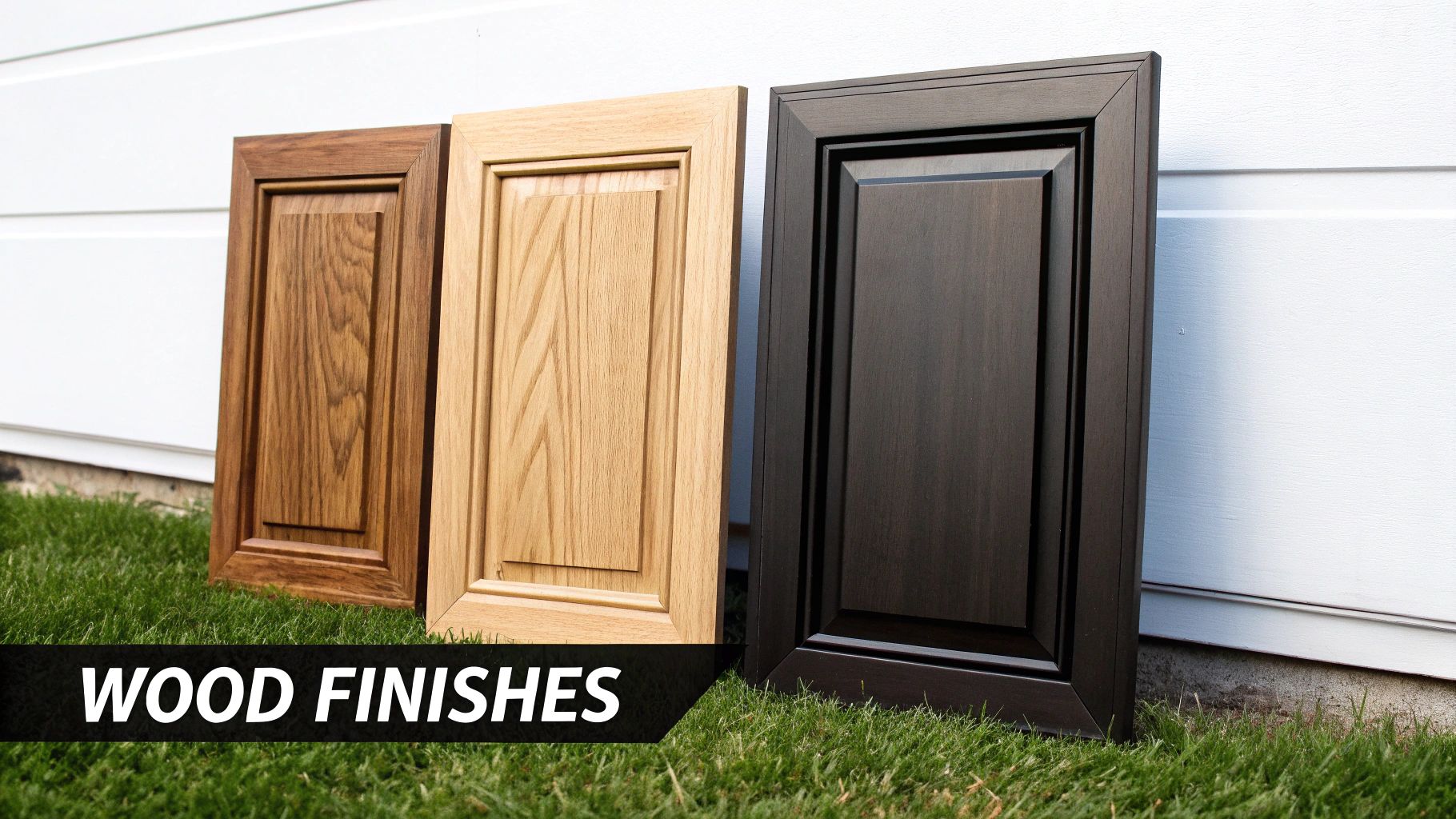
Your first big decision is choosing the right wood for the frame and doors. Every species of wood has its own personality, which affects not just the look but also how well your cabinets will hold up over the years.
Popular Wood Choices for Face Frames
Different woods bring completely different grain patterns, colors, and levels of hardness to the table. Here are a few of the most popular choices we see for face frame cabinets:
- Maple: Known for its super-fine, smooth grain and creamy white color, maple is a true chameleon. It creates a flawless surface for paint and takes stain beautifully for a clean, consistent finish.
- Cherry: Cherry is prized for that rich, reddish-brown hue that gets even deeper and more beautiful with age. Its smooth, uniform texture gives cabinets a warm, almost luxurious feel.
- Oak: Whether you go with red or white oak, you're getting a classic. Celebrated for its prominent grain patterns and serious durability, it’s a go-to choice that brings texture and strength to any kitchen.
Digging into the best materials for kitchen cabinets is a huge step, and our expert guide can walk you through how these options stack up.
The wood you choose is more than just a material; it's the foundation of your design's story. A knotty oak tells a rustic tale, while a smooth, painted maple speaks of modern elegance.
Finishes That Define Your Look
Once you've landed on the wood, the finish is what seals the deal. You can go one of two ways: either play up the natural beauty of the wood or introduce a bold splash of color.
Stains are perfect for letting the wood's inherent grain be the star of the show. A light stain can make the dramatic patterns in oak pop, while a dark stain on cherry can create a feeling of formal sophistication. If you're looking for a budget-friendly DIY update, checking out the best vinyl wrap for kitchen cabinets can also give them a whole new look without a full replacement.
Painted finishes, on the other hand, open up a world of possibilities. From crisp whites and soft grays to deep navy blues, paint lets you tie your cabinets into absolutely any color scheme you can dream up. The solid structure of a face frame cabinet gives you an ideal surface for a smooth, durable painted finish that lasts.
Matching Styles to Your Home
The great thing about face frame cabinets is how easily they adapt to different design aesthetics. They're true chameleons.
- Modern Farmhouse: Pair a clean white painted finish with inset or partial overlay doors for that cozy, welcoming vibe.
- Traditional: Go for rich cherry wood with a dark stain and detailed, raised-panel doors to create a timeless, elegant space.
- Transitional: A painted shaker-style door on a face frame cabinet is the perfect way to bridge the gap between classic and contemporary design.
Budgeting and Customizing Your Cabinet Project
Alright, we’ve covered the materials and styles, so now it’s time to talk dollars and sense. Nailing down a budget is one of the most important parts of any project, and understanding what actually drives the cost of face frame cabinets will help you make smart choices for your home. The final number really comes down to a mix of the materials you pick, the finishes you love, and just how custom you want to go.
A few key things will move the needle on your total investment. The type of wood you choose is a big one—it’s no surprise that premium hardwoods like cherry will cost more than a workhorse like oak. In the same way, a complex, multi-step glazed finish is going to be a bigger line item than a standard coat of paint or a simple stain. Even intricate door styles can add to the final cost.
Stock, Semi-Custom, and Custom Options
One of the biggest factors in your budget is deciding between stock, semi-custom, or fully custom cabinets. Each level gives you a different blend of price, flexibility, and personalization.
- Stock Cabinets: These are your off-the-shelf, mass-produced options. They come in standard sizes and offer the most budget-friendly path. Your design and finish choices will be limited, but for a quick and cost-effective project, they’re a great fit.
- Semi-Custom Cabinets: This is the happy medium. You start with a standard cabinet size and then get to make modifications to the dimensions, style, and finish. It’s a fantastic way to get a more personalized look without breaking the bank.
- Custom Cabinets: If you want a kitchen that’s truly one-of-a-kind, this is the way to go. Custom cabinets are built from the ground up to your exact specs. When you start to explore custom furniture options, you’ll see how tailored solutions can perfectly bring your vision to life.
The solid structure of a face frame cabinet makes it the perfect canvas for customization. That sturdy frame can easily support detailed moldings, integrated lighting, and cool storage solutions like pull-out spice racks or appliance garages, letting you create a truly bespoke design.
Planning for the Long Term
Choosing quality cabinets is a big decision, and it’s one that reflects a growing trend in home renovation. The global kitchen cabinets market, where face frame designs are a major player, was valued at USD 100.79 billion and is expected to keep growing. What’s driving this? Homeowners who appreciate the long-lasting durability and timeless appeal of traditional cabinetry. You can find more details about the kitchen cabinets market on fortunebusinessinsights.com.
Working with an expert partner like Sinclair Cabinetry means you don’t have to figure all this out alone. We’re here to help you find that sweet spot between your budget and your design dreams, making sure the final result isn’t just beautiful but built to last. From getting the measurements just right to picking out the perfect hardware, we’ll guide you every step of the way to create a space that’s uniquely yours.
Installation and Long Term Care for Your Cabinets
Getting your new cabinets to look great and last a lifetime really starts with a perfect installation. We always recommend bringing in a professional to get the best results, but it’s still good to know what goes into the process so you can appreciate the work.
One of the great things about a face frame cabinet is that the frame itself gives installers a solid, more forgiving surface to work with. It makes attaching the cabinets much easier and can even help hide any small bumps or imperfections in a wall.
Professional installers have a tried-and-true method. They start by finding the highest point on the floor to set a perfectly level line for the base cabinets. Then, they install the upper cabinets first, making sure to secure them directly into the wall studs. This careful approach ensures everything is plumb and level, which is what prevents those annoying misaligned doors down the road.
Simple Steps for Lasting Beauty
Once your cabinets are in, keeping them looking brand new for decades doesn't have to be a chore. A little routine care goes a long way. It's not complicated, but consistency is definitely the key to preventing grime buildup and protecting the finish.
For everyday cleaning, all you need is a soft, lint-free cloth dampened with a bit of mild soap and water. Always wipe in the same direction as the wood grain, then dry the surface right away with another cloth. Steer clear of harsh chemicals, ammonia-based cleaners, or any abrasive pads—they can strip the finish and dull the wood’s natural warmth.
A great rule of thumb is to treat your cabinet finish like fine furniture. Regular, gentle dusting and immediate cleanup of spills will do more to preserve their look than occasional deep cleaning.
Performing Minor Adjustments and Touch Ups
Over time, you might notice a cabinet door isn't hanging quite right. Daily use can sometimes cause hinges to loosen slightly, but don't worry—it’s an easy fix.
Most modern hinges on face frame cabinets are designed to be adjusted with just a screwdriver. A few simple turns can move a door up, down, left, or right, restoring its perfect alignment in minutes.
If you ever get minor nicks or scratches, a touch-up kit from the manufacturer is your best friend. Just apply a tiny amount of the matching stain or paint with a fine artist's brush, and you can make small blemishes disappear. It's a simple way to keep your investment looking pristine.
Common Questions About Face Frame Cabinets
Even after digging into all the details, a few questions still tend to pop up. Homeowners want to be sure they’re making the right call, and getting clear, straightforward answers is the best way to feel confident about your plans.
Let's tackle some of the most common ones we hear.
Are Face Frame Cabinets Considered Outdated?
Not in the slightest. While frameless cabinets have a reputation for being modern, face frame construction is a timeless foundation for many of today's most popular kitchen styles. It’s actually the go-to choice for creating an authentic modern farmhouse, classic traditional, or elegant transitional look.
Their popularity has held strong because they're so versatile and solidly built. The structure itself gives off a sense of craftsmanship that just doesn't go out of style, making them a relevant and sought-after option for the long haul.
It’s important not to confuse "traditional" with "outdated." Face frame cabinets offer a classic construction method that can be styled to look perfectly modern or traditionally elegant—it all comes down to your choice of doors, finishes, and hardware.
Do You Lose a Lot of Space with Face Frame Cabinets?
It's true that the frame makes the cabinet opening a little bit smaller compared to a frameless box. This can mean a bit less clearance when you're trying to slide in a wide pot or a bulky stand mixer. For most day-to-day items, though, the difference is so small you'd probably never notice.
And when it comes to drawers, the interior storage space is practically identical between both styles. Most people find that the extra structural strength and classic look of a face frame is a great trade-off for a tiny reduction in access space.
Can I Put Modern Doors on Face Frame Cabinets?
Absolutely! This is one of the best-kept secrets for getting a sleek, contemporary look. All you have to do is choose a full overlay door style. A full overlay door is designed to cover almost the entire face frame, leaving just a very thin sliver of space between doors and drawers.
This creates that seamless, flat-front appearance that mimics the high-end look of frameless cabinetry. You really get the best of both worlds: the clean, modern aesthetic you’re after, combined with the superior strength and durability you can only get from traditional face frame construction.
Ready to bring the timeless strength and beauty of custom face frame cabinets into your home? The experts at Sinclair Cabinetry have over 35 years of experience crafting bespoke solutions that perfectly match your vision. Explore your custom cabinet options today!