

Let's clear up a common misconception right away—what exactly are thermofoil cabinets? Despite the name, you won't find any metal foil here. Instead, think of a super durable, vinyl finish that's been perfectly molded over an engineered wood door. The result is a seamless, smooth, and incredibly easy-to-clean surface.
Your First Look at Thermofoil Cabinets
Imagine shrink-wrapping a gift with absolute precision, where the wrapping clings to every single curve and corner without a seam in sight. That’s the basic idea behind thermofoil.
The process starts with a core of Medium-Density Fiberboard (MDF), which gets milled and shaped into all sorts of popular door styles, from the classic Shaker to a clean, modern slab front.
Once the door is ready, it’s placed into a high-tech vacuum press along with a sheet of flexible vinyl. Using intense heat and pressure, the vinyl is literally fused onto the MDF, molding itself into every last detail. This is what creates that flawless, non-porous finish that gives thermofoil its sleek, contemporary vibe.
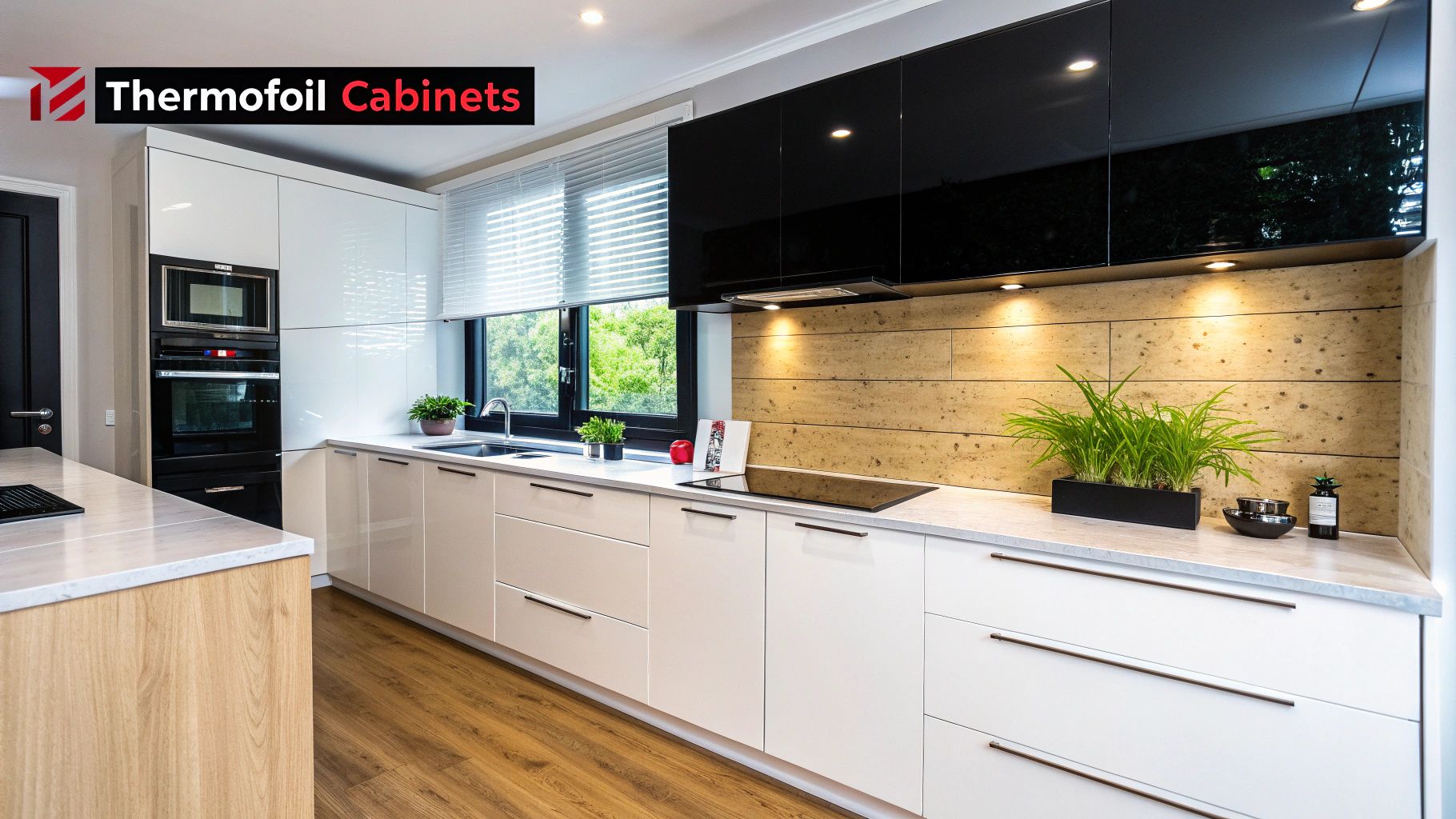
To get a better handle on the basics, here’s a quick breakdown of what makes a thermofoil cabinet.
Thermofoil Cabinet Fundamentals
| Component | Description |
|---|---|
| Core Material | Typically Medium-Density Fiberboard (MDF) due to its smooth, stable surface. |
| Surface Finish | A thin layer of Polyvinyl Chloride (PVC) or similar vinyl material. |
| Manufacturing | The vinyl is applied using heat and vacuum pressure, creating a seamless bond. |
| Appearance | Known for a smooth, uniform look, often in solid colors or wood-grain patterns. |
This unique construction process gives thermofoil some key advantages that many homeowners are looking for.
Key Characteristics of Thermofoil
This unique manufacturing process gives thermofoil cabinets several distinct qualities that set them apart from traditional wood or laminate options. Homeowners are often drawn to them for these specific reasons:
- Smooth, Seamless Surface: Because the vinyl is heat-fused, you get a uniform finish without any visible seams on the front or edges. It's a fantastic choice for a clean, minimalist kitchen design.
- Easy Maintenance: That non-porous vinyl is a champ when it comes to resisting moisture and stains. A quick wipe-down with mild soap and water is usually all it takes to keep them looking brand new.
- Design Versatility: Thermofoil comes in a massive array of solid colors and surprisingly realistic wood grains, giving you a ton of design flexibility. For a deeper dive into how materials like this can transform a kitchen, check out this guide to vinyl wraps for kitchen makeovers.
This blend of affordability, style, and durability has made thermofoil a major force in the global kitchen cabinet market, which was valued at around USD 160 billion in 2023. As more homeowners look for smart, cost-effective ways to renovate, materials like thermofoil are a huge part of that market's growth.
How Thermofoil Cabinets Are Built
You might think building a cabinet always involves sawdust and wood glue, but creating a thermofoil cabinet is a whole different ballgame. It's a high-tech process that feels more like advanced shrink-wrapping than traditional woodworking. The goal isn't just to build a door; it's to create a flawless, seamless, and incredibly consistent finish.
This sophisticated method is what gives thermofoil its signature smooth look, and it all starts with the right foundation.
Step One: Crafting the Core
Every thermofoil cabinet door begins its life as a slab of Medium-Density Fiberboard (MDF). We don't use natural wood here for a good reason. MDF is an engineered product known for being exceptionally smooth and stable—perfect qualities for a vinyl layer to bond to without any imperfections telegraphing through.
First, the MDF board is cut to the exact size needed. Then, it heads to a CNC (Computer Numerical Control) router to get its personality. This machine carves out the design with absolute precision, whether it's a sleek, flat door for a modern kitchen or a classic Shaker-style door with a recessed panel. The CNC ensures every door is a perfect match.
Once it's shaped, the door is carefully sanded and cleaned. This step is critical. Even a single speck of dust left behind can create a tiny bump under the vinyl, ruining that perfectly smooth finish we're after.
Step Two: Applying the Vinyl Layer
With a pristine MDF core ready to go, it’s time for the "thermofoil" part. This is a thin, flexible sheet of Polyvinyl Chloride (PVC), a tough type of plastic. This vinyl is the key to thermofoil's versatility, coming in a huge range of solid colors and surprisingly realistic wood-grain patterns.
The shaped MDF door is laid on a tray, and a sheet of the PVC vinyl is draped over its top and sides. Now, it's ready for the real magic, which happens inside some very specialized machinery.
The core principle of thermofoil manufacturing is thermofusion—using heat to create a permanent, molecular-level bond between the vinyl and the MDF substrate, resulting in a single, inseparable component.
This infographic breaks down the key stages of the process from start to finish.
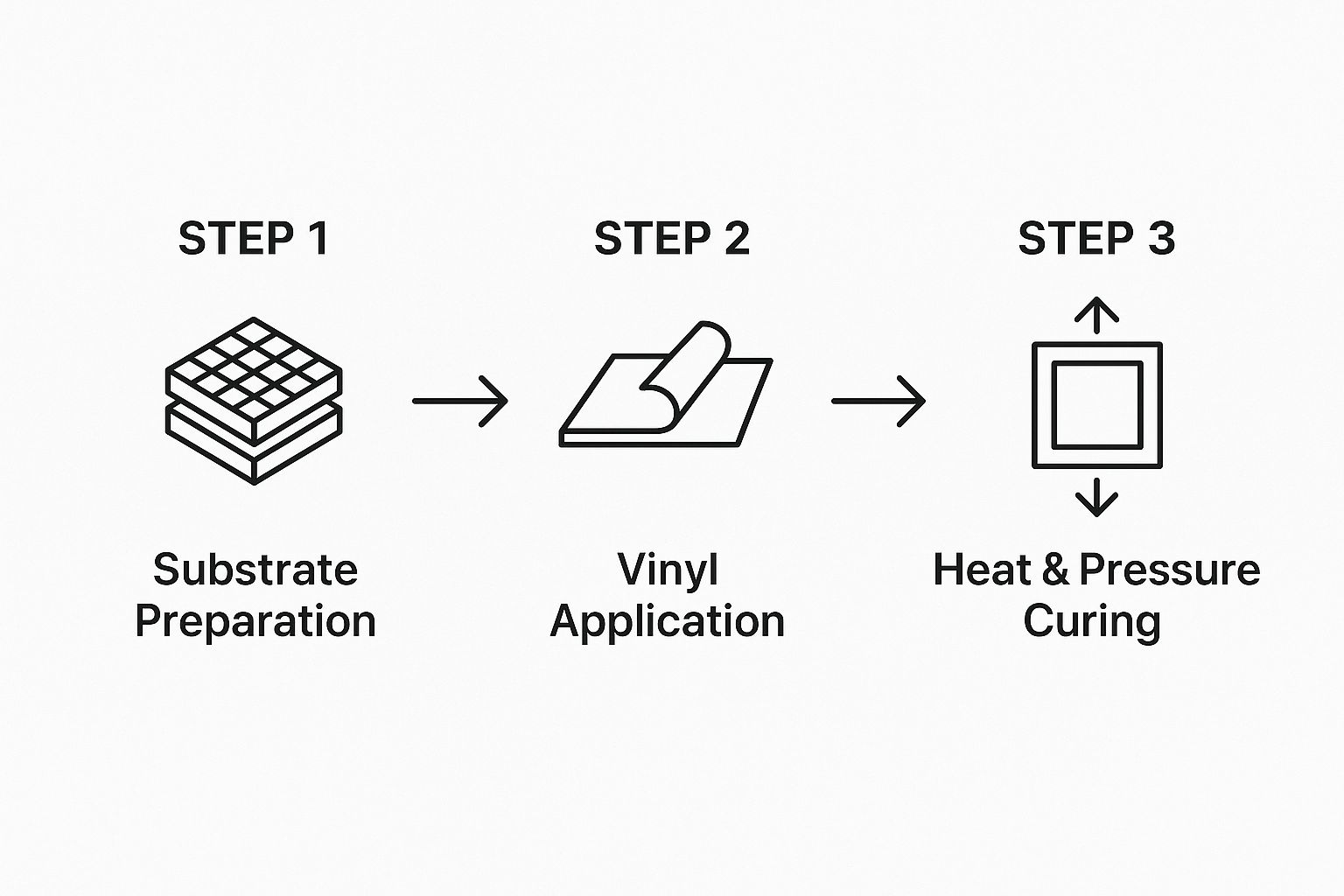
As you can see, the journey from a precisely shaped core to a finished product all hinges on that critical application of heat and pressure.
Step Three: Fusing with Heat and Pressure
The tray carrying the MDF core and vinyl sheet slides into a large vacuum press. Once the door is sealed inside, two things happen at once:
- Heat Activation: The chamber heats up, which makes the PVC vinyl soft and pliable. It also activates a heat-sensitive adhesive on the underside of the vinyl.
- Vacuum Pressure: A powerful vacuum pump kicks on, sucking every bit of air out of the chamber. This creates intense atmospheric pressure that forces the softened vinyl down onto the MDF board.
The pressure is so uniform and powerful that the vinyl perfectly molds itself into every curve, corner, and detail carved into the MDF. It wraps around the edges seamlessly, leaving no gaps or joints. The combination of heat and pressure creates a bond that's essentially irreversible.
After a short time to cool and cure, the door comes out as one solid piece with a tough, beautiful, and easy-to-clean finish. To see how this technique stacks up against others, you can learn more about different cabinet construction methods. This unique process is what ensures every single thermofoil door is identical, durable, and ready to be installed in your home.
Weighing The Pros And Cons Of Thermofoil
Like any material you're considering for your home, thermofoil has its own unique set of strengths and weaknesses. It’s not a one-size-fits-all solution, so understanding the trade-offs is crucial to figuring out if it’s the right fit for you.
Let's break down where thermofoil really shines and, just as importantly, where it falls short. This will give you a clear picture to help you make a smart, informed decision that works for your budget, your family’s lifestyle, and the look you’re going for.
The Advantages Of Choosing Thermofoil
One of the biggest reasons homeowners are drawn to thermofoil is its incredible value. You get a sleek, high-end look for a fraction of what you’d pay for solid wood cabinets, which makes it a real powerhouse for anyone planning a budget-friendly kitchen or bathroom remodel.
But it’s not just about the price tag. Thermofoil brings some serious practical perks to the table:
- Effortless Maintenance: The smooth, non-porous vinyl surface is an absolute dream to clean. Forget about scrubbing stubborn stains—most spills, splatters, and fingerprints just wipe away with a soft cloth and a little mild cleaner.
- Moisture Resistance: During the manufacturing process, that vinyl layer is fused over the MDF core as one seamless piece. This creates a fantastic barrier against moisture, making thermofoil an excellent choice for humid spaces like bathrooms and laundry rooms where solid wood might warp over time.
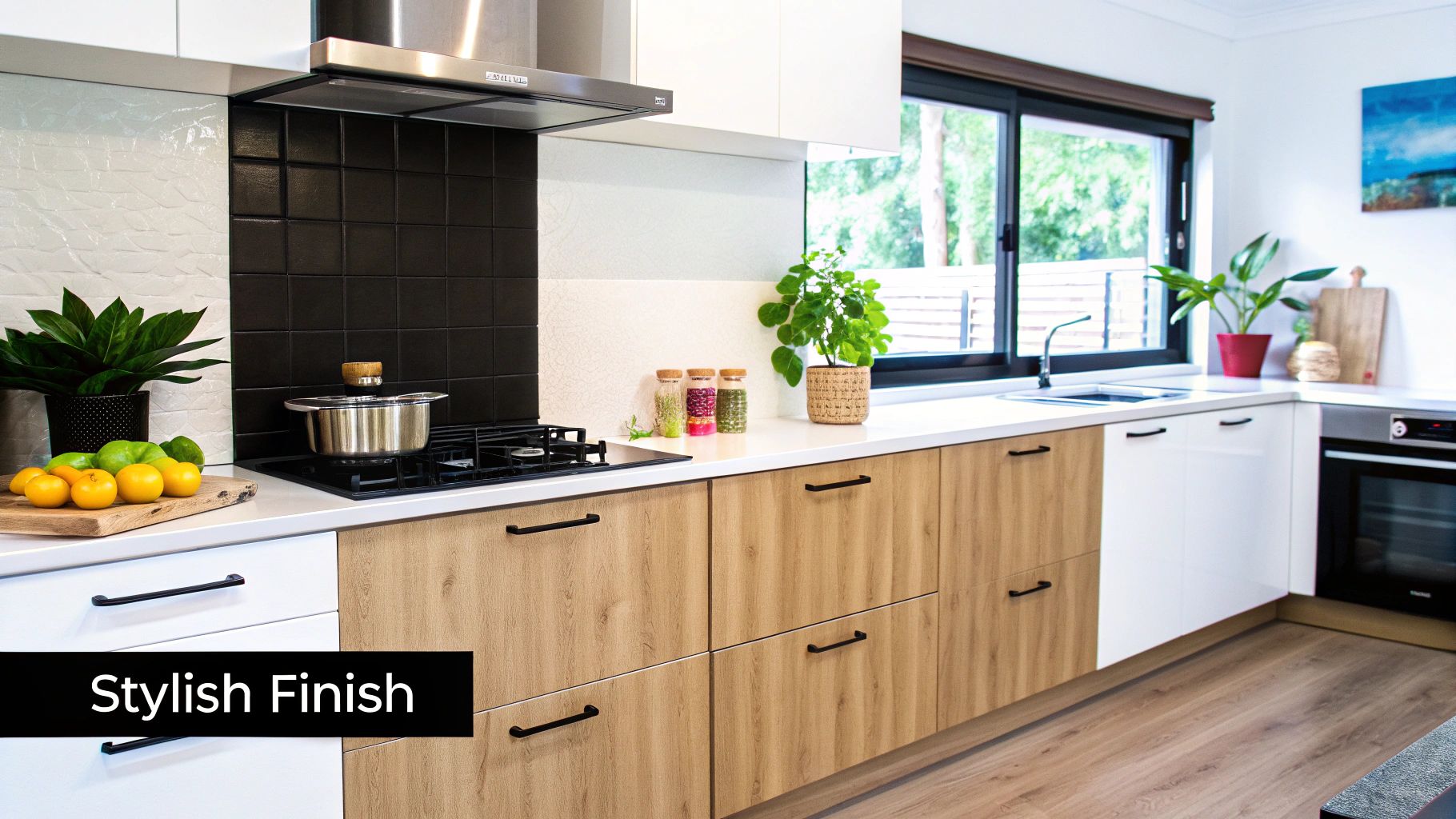
- Design Flexibility: The sheer variety of finishes is staggering. You can go with a huge spectrum of solid colors—from crisp, clean whites and cool grays to bold, dramatic hues. Or, you can opt for some surprisingly realistic wood grain patterns that mimic everything from oak to walnut.
This blend of affordability and design freedom lets you achieve a truly custom look without having to pay a custom price.
Potential Drawbacks To Consider
For all its great qualities, thermofoil has one well-known Achilles' heel: high heat. The vinyl layer just doesn't stand up well to prolonged exposure to extreme temperatures.
This is obviously a major concern in a kitchen. If you place heat-generating appliances like toasters, coffee makers, or air fryers directly under your thermofoil upper cabinets, you run the risk of the vinyl bubbling, warping, or even peeling away from the MDF core.
A common solution is to install heat shields. These are just thin metal strips you can stick to the bottom of the cabinets next to an oven or stove to deflect rising heat and protect the finish.
Another thing to keep in mind is that while thermofoil is durable enough for everyday life, it’s not the easiest material to repair if something does go wrong.
- Difficult Repairs: Unlike solid wood, which you can sand and refinish, major damage to a thermofoil door is pretty much permanent. Deep scratches or spots where the vinyl has peeled off are nearly impossible to fix without it being obvious.
- Replacement Is Often The Only Fix: In most cases of significant damage, the only real solution is to replace the entire cabinet door or drawer front. While individual doors are often affordable, it's definitely more of a hassle than a quick touch-up on a wood cabinet.
These limitations are important to weigh against the material's benefits. To help you see where thermofoil fits in the bigger picture, here's a quick comparison against other common cabinet materials.
Thermofoil Vs Common Cabinet Materials
| Feature | Thermofoil | Solid Wood | Laminate |
|---|---|---|---|
| Cost | Low to Mid | High | Low to Mid |
| Maintenance | Very Easy | Moderate (requires sealing) | Easy |
| Moisture Resistance | Excellent (if edges are sealed) | Poor (can warp or swell) | Good |
| Heat Resistance | Poor | Excellent | Moderate |
| Repairability | Difficult to Impossible | Easy (can be sanded, refinished) | Difficult |
| Design Options | Wide range of colors and patterns | Natural wood grains, can be painted/stained | Wide range of colors and patterns |
Ultimately, choosing the right material comes down to your specific needs and priorities. For a much deeper dive into how different options stack up, check out this expert guide on the best materials for kitchen cabinets. By understanding the good and the bad, you can confidently decide if thermofoil is the perfect choice for your project.
Designing Your Dream Kitchen with Thermofoil
Think a budget-friendly renovation means you have to settle for a bland, cookie-cutter design? Not a chance. One of the best things about thermofoil cabinets is their incredible design flexibility. You can create a high-impact space that feels completely custom, all without that premium price tag. The secret is learning how to pair these versatile cabinets with the right design elements to make them shine.
Before you even think about finishes and colors, though, you need a solid layout. It's always a good idea to understand what is space planning to make sure your kitchen isn't just beautiful but actually works for you day-to-day. Getting this foundation right will help you make the most of whatever cabinets you choose.
Choosing Your Core Style
The style of your cabinet doors really sets the tone for the entire kitchen. With thermofoil, you've got a whole spectrum of options, whether you're going for something ultra-modern or comfortably classic.
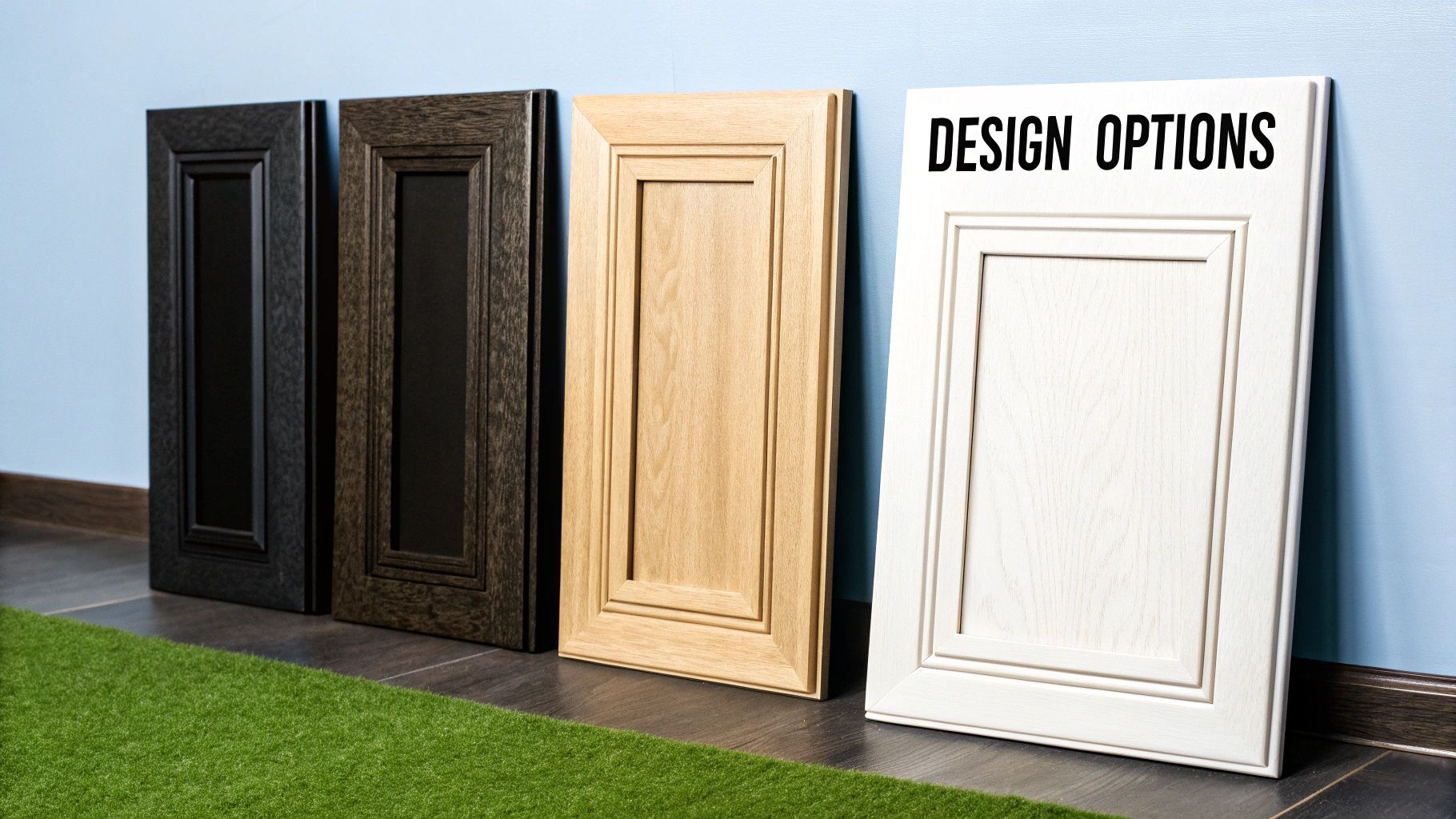
- Sleek and Modern: If you’re chasing a minimalist or contemporary vibe, high-gloss, flat-panel (or slab) doors are your best friend. A crisp, bright white or even a dramatic charcoal thermofoil can create that striking, clean-lined space that feels open and uncluttered.
- Transitional and Timeless: Want something that blends modern and traditional? You can't go wrong with Shaker-style doors. A matte gray or a sophisticated navy blue thermofoil finish on a Shaker door gives you a look that has serious staying power.
Mastering Color and Texture
Beyond the door style, the color and finish of your thermofoil cabinets play a huge part in the final look. And you've got way more options than just plain white, which opens the door to some really rich, layered designs.
Why not try a trendy two-tone effect? Pair a bold color, like a deep forest green, on your lower cabinets with a neutral light gray or classic white on the uppers. You can also explore the surprisingly realistic wood grain finishes. A light oak thermofoil, for instance, can bring a ton of warmth and an organic feel to the space, mimicking the look of real wood without the upkeep or cost.
The right combination of color, texture, and hardware can elevate thermofoil cabinets from a budget-friendly option to a stunning design centerpiece. Don't be afraid to mix and match to reflect your personal style.
This versatility is a big reason thermofoil is a growing slice of the global kitchen cabinet market, which was valued at around USD 19.22 billion in 2024. Its ability to deliver a sleek, modern look at an affordable price makes it a go-to for new builds and renovations alike.
Tying It All Together with Details
The final touches are what pull a design together and make it feel polished and complete. When you're working with thermofoil, pay close attention to these key elements:
- Hardware: Think of handles and knobs as the jewelry for your cabinets. Matte black hardware looks incredible against white thermofoil, creating a bold contrast. Brushed brass or gold, on the other hand, adds a touch of warmth and luxury to gray or blue cabinets.
- Countertops: Make sure your countertop complements your cabinet style. A quartz countertop with subtle veining is a perfect match for solid-color thermofoil. If you have a beautiful wood-grain thermofoil, let it be the star by pairing it with a simple, solid-surface counter.
- Backsplash: This is your chance to add some personality! A classic subway tile will keep things timeless and clean. But if you want to inject some fun and energy into the kitchen, a colorful mosaic or patterned tile can do just that.
Keeping Your Thermofoil Cabinets Looking New
One of the big draws of thermofoil cabinets is how easy they are to care for. They're celebrated for being low-maintenance, but that doesn't quite mean they're no-maintenance. A little bit of routine care and some proactive protection will go a long way in keeping that sleek finish looking factory-fresh for years.
The good news is, daily upkeep is a breeze. Most of the time, a soft, damp microfiber cloth is all you’ll need to wipe away fingerprints and light smudges. For anything a bit stickier, a mild solution of dish soap and warm water will do the trick.
Gentle Cleaning Is Key
When cleaning your cabinets, the goal is to be effective without being harsh. That vinyl finish is tough, but abrasive cleaners or scouring pads can leave behind micro-scratches that dull the surface over time.
- Avoid Harsh Chemicals: Stay away from cleaners that contain ammonia, bleach, or acidic ingredients. These can seriously damage or discolor the vinyl finish.
- Skip Abrasive Tools: Never use steel wool, gritty scrubbing sponges, or powdered cleansers. Just stick to soft cloths to maintain that smooth, pristine look.
- Dry Thoroughly: After wiping everything down with a damp cloth, always follow up with a dry one. This simple step prevents water spots and stops moisture from seeping into any seams, especially around the sink.
For a complete rundown of what to use and what to avoid, check out our guide to the most easy to clean kitchen cabinets—it's packed with more great tips.
Proactive Protection from Heat and Moisture
It's always easier to prevent damage than to repair it. Since high heat is thermofoil's main weakness, a little strategic thinking in the kitchen can make a huge difference in how long your cabinets last.
The single most effective way to protect thermofoil is by managing its environment. Simple habits and inexpensive additions can prevent the most common forms of damage, like peeling and warping.
Think about adding these preventative measures to shield your cabinets from potential harm:
- Install Heat Shields: These are just thin strips of metal that you can apply to the underside of cabinets right next to your oven or stove. They're designed to deflect the intense, direct heat that rises when you're cooking.
- Mind Your Appliances: Pay attention to where you place small, heat-generating appliances like toasters, air fryers, and coffee makers. Try not to run them directly underneath your upper cabinets for long periods. A good habit is to pull them forward, away from the cabinet bottoms, while they're in use.
- Manage Steam and Moisture: Make sure you use the exhaust fan over your stove when you're boiling water. Similarly, wipe up any big water spills around the sink area right away to protect the integrity of the cabinet seals over time.
So, is Thermofoil the Right Fit for Your Lifestyle?
After digging into the manufacturing process, design possibilities, and upkeep, the big question is a personal one: Do thermofoil cabinets actually work for your daily life? The answer really comes down to balancing your budget, what you want your space to look like, and how you plan to use it.
There are definitely times when thermofoil is the perfect choice. If you're renovating on a tight budget, it’s a fantastic way to get a high-end, seamless look without the hefty price tag. Its moisture resistance also makes it a no-brainer for bathrooms, laundry rooms, or even rental properties where you need something durable and easy to wipe down.
This affordability is a huge part of its appeal, especially as the cabinet resurfacing market—valued at USD 9.2 billion in 2024—keeps growing. Homeowners are looking for smart, cost-effective ways to update their spaces. You can learn more about these global cabinet market trends and see how thermofoil is making its mark.
Making the Final Call
To help you decide, think about which of these two paths sounds more like you.
Thermofoil is ideal for those who want a modern, low-maintenance look and need to stick to a budget. It delivers a flawless finish that’s perfect for busy families or stylish secondary spaces that don’t see heavy, high-heat use.
On the other hand, if you're a serious home chef who loves cooking with high heat, that vulnerability might be a deal-breaker. The same goes if you're someone who loves to repaint and refresh your space every few years. The permanent nature of a thermofoil finish means you can't just sand it down for a new look, which might push you toward solid wood instead.
At the end of the day, understanding these trade-offs is what lets you choose a material that not only looks great right now but will also serve your lifestyle well for years to come.
Common Questions About Thermofoil Cabinets
Even after getting the full rundown, you might still have a few questions rattling around about thermofoil cabinets. It's totally normal. Let's tackle some of the most common ones homeowners ask so you can feel confident about your decision.
Do White Thermofoil Cabinets Turn Yellow?
This is a big one. The short answer is yes, they can, but it's not a foregone conclusion. Yellowing is almost always caused by things we can control.
The main culprits are constant, direct sunlight and grease buildup from cooking. Harsh chemical cleaners can also break down the finish over time. With a little care—like consistent, gentle cleaning and using blinds during the brightest parts of the day—you can keep them looking crisp and white for years.
How Do You Keep Thermofoil From Peeling?
Preventing peeling really comes down to managing two things: heat and moisture. The vinyl layer is a champ under normal conditions, but it's most vulnerable near appliances that get hot and steamy, like your oven, toaster, or coffee maker.
Here are a few pro-tips to keep everything intact:
- Install Heat Shields: These are thin, simple metal strips you can place on the underside of cabinets right next to your stove. They do an amazing job of deflecting the worst of the rising heat.
- Be Smart with Small Appliances: Don't run your coffee maker, toaster, or pressure cooker directly under your upper cabinets for long periods. Just pull them forward a few inches while they're running.
- Control Moisture: Always flip on your range hood when you're boiling water. And if you have a spill near a seam or edge, just wipe it up quickly.
Can You Paint Thermofoil Cabinets?
Technically, yes, but it’s rarely a good idea. Painting thermofoil is a tricky project that's not for the faint of heart.
The problem is that slick, non-porous vinyl surface. It just doesn't want to hold onto paint. You need very specific, specialized primers to even get a chance at a good bond, and even then, the finish is never as tough as the original factory one.
While you can paint them, most experts agree that refacing or replacing thermofoil doors is a much better long-term solution. And if the vinyl is already peeling, painting is definitely off the table—it just won't work.
Hopefully, clearing up these points helps you see if thermofoil is the right choice for your home.
Ready to transform your space with expertly crafted cabinetry? The team at Sinclair Cabinetry inc has over 35 years of experience building beautiful, durable solutions for kitchens, bathrooms, and beyond. Explore our custom options and start your renovation journey today at https://sinclaircabinets.com.