

When you hear the term “sustainable kitchen cabinets,” it’s easy to think it’s just about using a certain type of wood. But it’s so much more than a simple label. Real sustainability in cabinetry means that every stage of its life—from how the raw materials are sourced and manufactured to how long it lasts in your home and what happens to it afterward—has been thoughtfully planned to be gentle on our planet.
The truth is, genuine sustainability is about the entire journey of the cabinet, not just one feature.
What Makes Kitchen Cabinets Sustainable
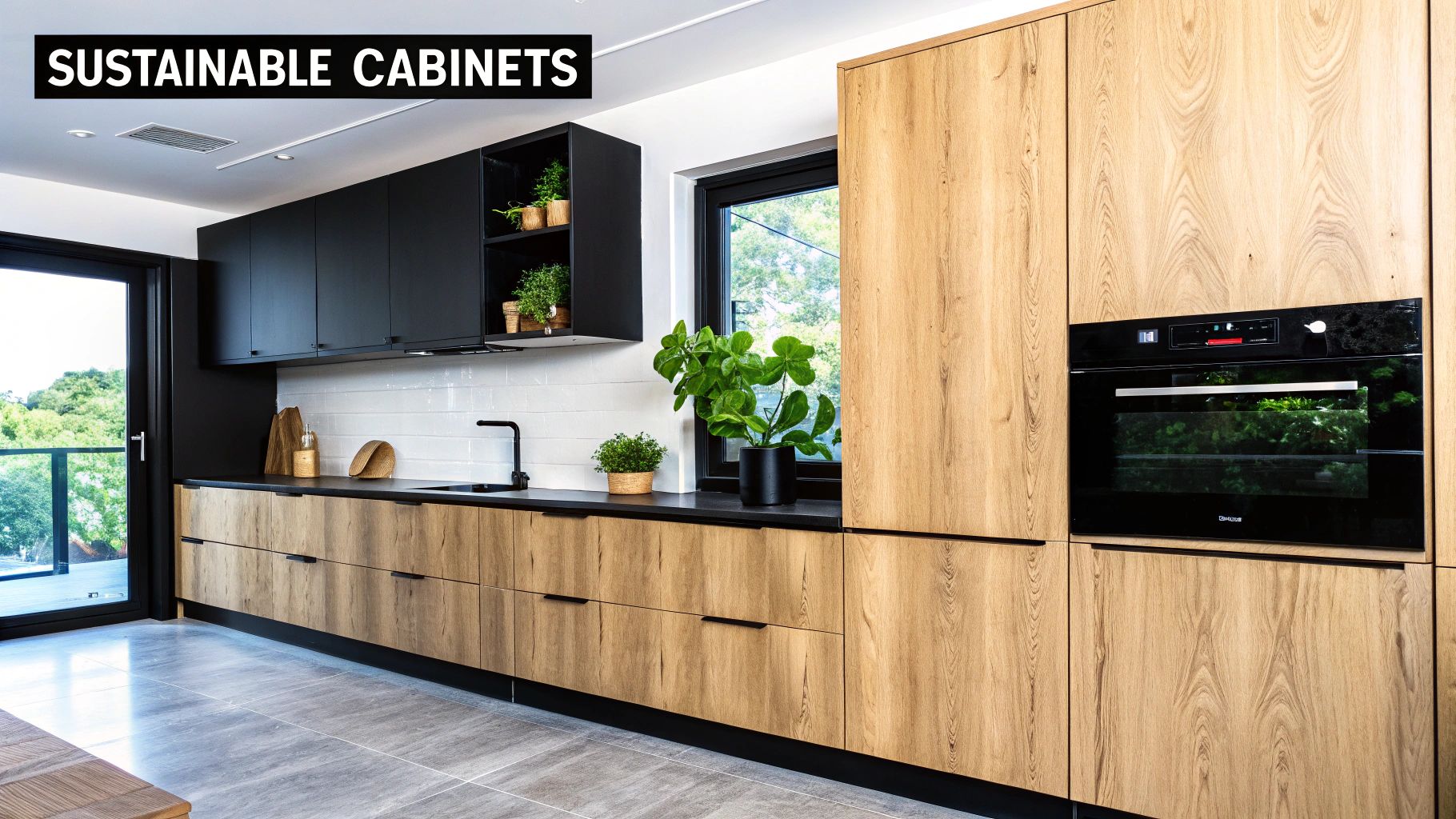
When you’re picking out new cabinets, it’s natural to focus on the material first. But truly sustainable kitchen cabinets are defined by a much bigger, more holistic picture. Think of it like a fantastic "farm-to-table" meal. The final dish isn’t just delicious; its quality comes from the integrity of every ingredient and every step of its preparation. In the same way, a cabinet’s green credentials depend on its complete lifecycle.
This “full-circle” view looks at the environmental impact at every single point, making sure the cabinets you bring into your home are truly eco-conscious. It’s a system that beautifully balances aesthetics, everyday function, and the health of our planet.
The Full Lifecycle Approach
To really get what makes a cabinet sustainable, we have to look beyond the surface. A genuinely green choice comes down to a few key factors that all work together to shrink its overall footprint.
Here’s what really matters:
- Responsible Sourcing: Where did the materials come from? This means looking for wood harvested from properly managed forests or choosing materials that grow back quickly, like bamboo. It's all about protecting our ecosystems.
- Low-Impact Manufacturing: How were the cabinets made? The best manufacturers work hard to cut down on waste, pollution, and energy use. This also means using non-toxic glues and finishes.
- Health and Air Quality: What are these cabinets bringing into my home? Sustainable options won't off-gas harmful chemicals like formaldehyde or other VOCs (Volatile Organic Compounds) that pollute your indoor air.
- Durability and Longevity: Are these cabinets built to last? A cabinet that stands the test of time and won't need to be replaced in a few years is inherently sustainable. It’s simple: less consumption means less waste.
- End-of-Life Options: What happens when it's time for a change? The cycle completes when the materials can be recycled, repurposed, or can biodegrade safely without harming the environment.
A genuinely sustainable cabinet isn't just made from "green" material; it's a product of a green system. The manufacturer’s commitment to carbon-neutral operations, waste reduction, and ethical practices is just as important as the wood it’s made from.
More Than Just a Buzzword
At the end of the day, "sustainability" isn't some fuzzy marketing term—it's a real, measurable commitment. It means we start asking tougher questions: Where did this wood really come from? What kind of glue is holding it all together? How was it finished?
Choosing sustainable kitchen cabinets is an investment—in your family’s health, your home's long-term value, and the well-being of the environment. By understanding this full-circle perspective, you can confidently pick out products that are as responsible as they are beautiful.
Exploring Top Eco-Friendly Cabinet Materials
The heart and soul of any sustainable kitchen cabinet is the material it's made from. Sure, the overall lifecycle matters, but the raw material itself tells a powerful story about its environmental impact. Choosing wisely means looking past the surface—the color and style—to really understand where the material comes from and what makes it a green choice.
We're talking about a world of options, from wood with a rich past to fast-growing grasses and innovative recycled composites. Each brings a unique blend of beauty, toughness, and a lighter footprint on our planet, letting you build a kitchen that truly reflects your values.
Reclaimed Wood: A Story in Every Grain
Reclaimed wood is the ultimate form of recycling. This isn't just wood; it's a piece of history, salvaged from old buildings, barns, warehouses, and even retired ships. Instead of ending up in a landfill, it gets a remarkable new life in your kitchen. Every knot, nail hole, and color variation tells a story, lending your space an unmatched character and depth.
Because this timber is often old-growth lumber, it's typically denser and more stable than anything you can get new. This natural aging process results in a material that's not only gorgeous but also incredibly durable and resistant to warping.
By choosing reclaimed wood, you are not just getting beautiful cabinets; you are preserving a piece of history. This choice directly reduces the demand for new logging, helps protect standing forests, and minimizes the waste and carbon emissions associated with new material production.
FSC-Certified Wood: The Gold Standard for Forests
Love the classic, timeless appeal of new wood? You still have a fantastic sustainable option. The Forest Stewardship Council (FSC) certification is your most important guide. This label isn't just a sticker; it's a guarantee that the wood was harvested from forests that are managed responsibly.
An FSC certification ensures that forestry practices protect biodiversity, respect the rights of Indigenous peoples, and maintain the ecological health of the forest. It means you can have the beauty of solid wood cabinets without contributing to deforestation or unethical practices.
Bamboo: The Fast-Growing Powerhouse
Here’s a fun fact: bamboo is technically a grass, not a wood. This makes it one of the most rapidly renewable resources on the planet. Some species can shoot up several feet in a single day and reach full maturity in just three to five years. Compare that to the decades or even centuries required for traditional hardwoods, and you can see why it's a superstar of sustainability.
When it's manufactured into cabinetry, bamboo is surprisingly strong and durable. Strand-woven bamboo, in particular, is harder than many popular hardwoods like oak and maple, making it an excellent choice for the wear and tear of a busy kitchen. Just make sure you're getting a quality product—look for bamboo made with formaldehyde-free adhesives and sourced from well-managed farms.
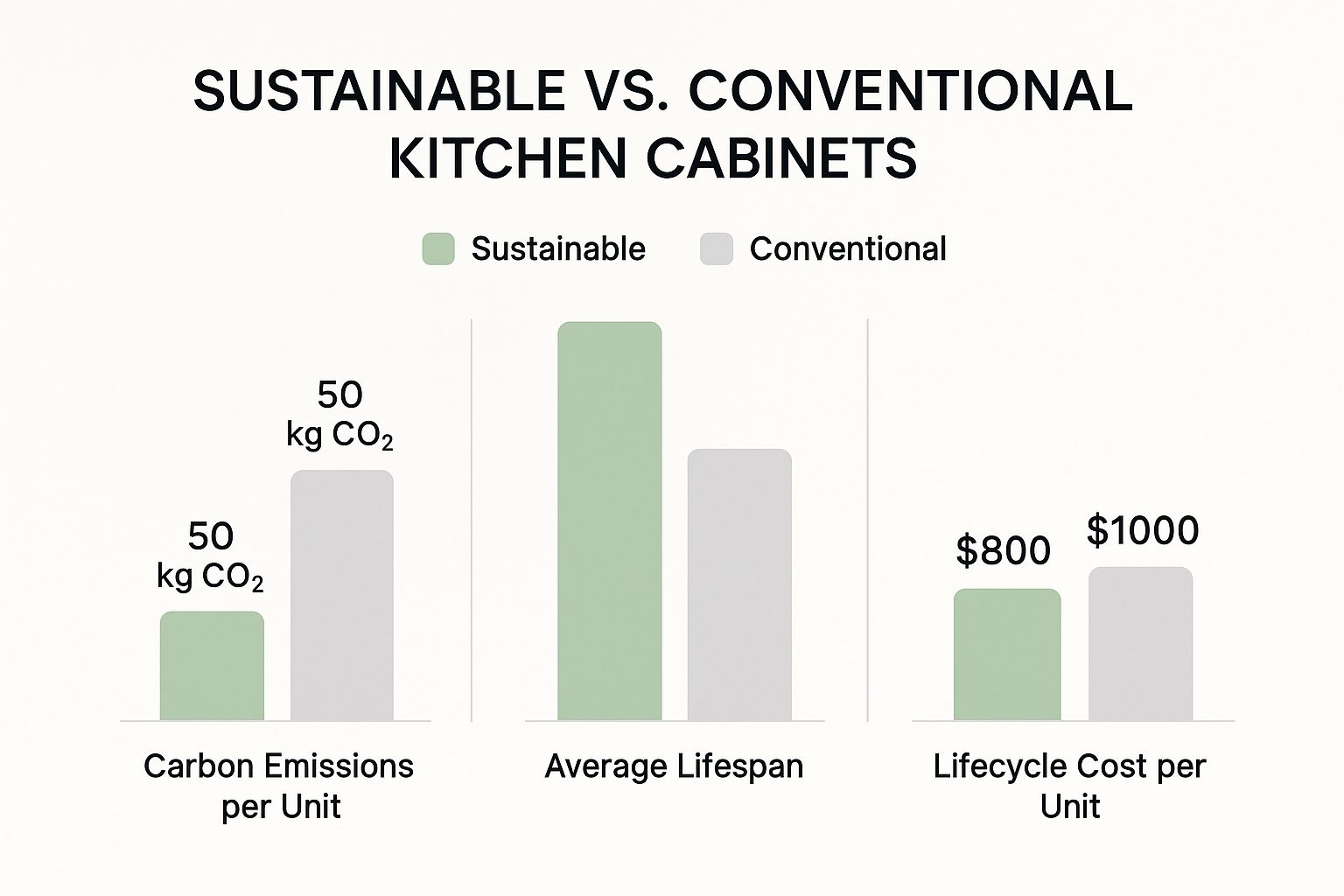
As this shows, sustainable options don't just feel good; they perform better over the long haul. With a significantly lower environmental impact and a longer lifespan, they represent a smarter investment for your home and the planet.
Innovative and Composite Materials
The search for sustainable materials has sparked some incredible innovation, leading to new options made from agricultural byproducts and recycled content. These alternatives offer unique aesthetics while cleverly diverting waste from landfills.
Here are a few of the most promising composite materials out there:
- Wheatboard and Strawboard: Made from compressed agricultural waste like wheat or sorghum stalks, these materials provide a sturdy, formaldehyde-free alternative to traditional particleboard.
- Recycled Paper Composites: Products like PaperStone are created by compressing post-consumer recycled paper with a non-petroleum resin. The result is a dense, durable, and non-porous material with a sleek, modern look.
- Recycled HDPE: This is a fantastic one. High-Density Polyethylene is made from recycled plastic milk jugs and other containers. It's completely waterproof and low-maintenance, perfect for modern cabinetry, especially in high-moisture areas.
To help you sort through these fantastic options, we've put together a quick comparison.
Comparing Sustainable Cabinet Materials
This table compares the key characteristics of popular eco-friendly cabinet materials to help you make an informed choice based on sustainability, durability, and aesthetics.
| Material | Key Benefit | Durability | Typical Cost |
|---|---|---|---|
| Reclaimed Wood | Preserves history; diverts from landfill | Very High | High |
| FSC-Certified Wood | Responsibly managed forests | High | Moderate to High |
| Bamboo | Rapidly renewable resource | Very High | Moderate |
| Composite Materials | Uses recycled content; reduces waste | Moderate to High | Low to Moderate |
Ultimately, choosing the right material is a personal decision that balances your style, budget, and environmental priorities. For a deeper dive into how these materials stack up and fit different kitchen designs, check out our guide on the best kitchen cabinet materials.
Why Finishes and Adhesives Matter
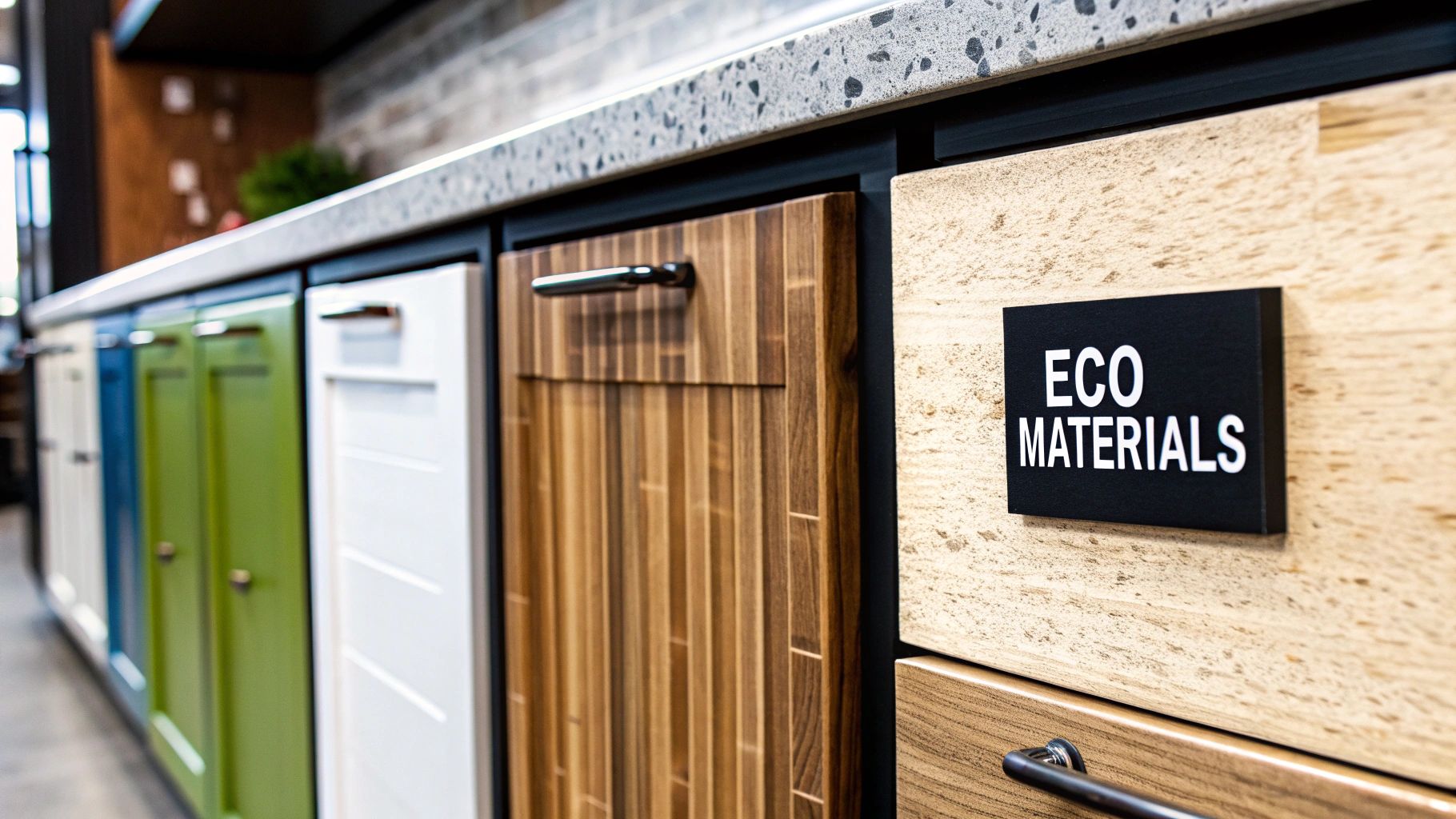
The journey toward truly sustainable kitchen cabinets goes much deeper than just the wood. While the core material is a huge piece of the puzzle, the finishes that protect it and the glues that hold it all together play a massive role in your home's health and environmental footprint.
You know that distinct "new car smell"? While some people love it, what you're actually smelling is chemicals off-gassing into the air. The same thing can happen with conventional cabinet paints, stains, and glues, which can release Volatile Organic Compounds (VOCs) into your home for weeks—or even months—after they're installed.
Decoding VOCs and Choosing Healthier Finishes
So what are VOCs? They're chemicals found in a lot of traditional, solvent-based paints, varnishes, and glues. As they evaporate at room temperature, they can impact your indoor air quality and may cause issues for people with allergies or respiratory sensitivities.
Luckily, there's been a major shift in the industry as homeowners prioritize health and environmental responsibility. This demand is pushing manufacturers toward low-VOC finishes and making it easier than ever to find eco-friendly options without giving up on quality.
Here are the top choices for your sustainable kitchen cabinets:
- Low-VOC and Zero-VOC Paints: These water-based formulas perform just as well as their old-school, oil-based counterparts. They offer fantastic durability and color without the toxic fumes.
- Natural Oil Finishes: Options like tung or linseed oil soak into the wood, creating a beautiful, hand-rubbed look. They're completely non-toxic and simple to touch up, though they might need a bit more love and care over time.
- Water-Based Stains and Lacquers: Modern water-based products have come a long way. They dry fast, have very little odor, and give a durable protective coat that lets the wood's natural grain shine through.
Key Takeaway: Always keep an eye out for finishes with certifications like GREENGUARD Gold. This is a third-party label that guarantees the product has met some of the toughest standards for low chemical emissions, meaning cleaner, healthier air for your family.
The Hidden Impact of Adhesives
Just as important are the glues used to build your cabinets. A lot of standard composite woods like particleboard and plywood are made with adhesives containing formaldehyde, a known respiratory irritant and carcinogen.
To make sure your cabinets are healthy inside and out, look for products made with formaldehyde-free adhesives. This is especially critical if you're choosing cabinets made from engineered woods. Certifications like NAF (No Added Formaldehyde) or CARB Phase 2 compliance are what you want to see, as they set strict limits on formaldehyde emissions.
Don't Forget the Hardware
Even the little details, like your cabinet handles and hinges, add to the story. Choosing hardware made from recycled materials, like recycled steel or aluminum, helps cut down on the need for new mining and manufacturing.
Plus, when you invest in high-quality, durable hardware, you won’t have to replace it down the road, which is a simple way to minimize waste. For a closer look at the options, you can explore our complete guide to cabinet hardware finishes at https://sinclaircabinets.com/complete-guide-cabinet-hardware-finishes/ to find styles that are both beautiful and built to last.
How to Read Eco-Labels and Certifications
When you start shopping for sustainable kitchen cabinets, you’ll run into a whole world of eco-labels and certifications. It can feel like you’re trying to decipher a secret code, with a confusing alphabet of acronyms staring back at you. But trust me, these labels are your best tool for cutting through the marketing fluff and making a truly informed decision.
Think of these certifications as a stamp of approval from a trusted third party. Instead of just taking a company's word that their products are "green," an independent organization has come in and verified their claims. Understanding what the most important labels guarantee is the key to separating genuinely sustainable products from "greenwashing"—those vague marketing claims that sound great but have no real substance.
Decoding Key Cabinet Certifications
Here's the thing: not all labels are created equal. Some are laser-focused on where the wood comes from, while others are all about the air you breathe in your home. Knowing the difference helps you pick a product that aligns with what matters most to you.
These are the heavy hitters you should be on the lookout for:
-
Forest Stewardship Council (FSC): This is the gold standard for any wood product, period. An FSC logo is your guarantee that the wood was sourced from forests managed responsibly. It means protecting biodiversity, preventing deforestation, and respecting the rights of workers and Indigenous communities. It’s the best assurance you can get that your beautiful new cabinets didn't come at the expense of our planet's forests.
-
GREENGUARD Certification: This one is all about your health. A product with this label has met some of the world's toughest standards for low emissions of Volatile Organic Compounds (VOCs). Choosing GREENGUARD Gold certified cabinets is a direct investment in cleaner, healthier indoor air for you and your family.
Honestly, if you just focus on those two, you're covering the biggest bases for cabinet sustainability: responsible materials and healthy indoor air.
Verifying Claims and Spotting Red Flags
Real transparency is the mark of a truly sustainable brand. If a company says its products are eco-friendly, they should be able to prove it with an official, third-party certification.
Be wary of vague, self-made terms like "eco-friendly," "green," or "natural" if there’s no official certification to back them up. These buzzwords are often a dead giveaway for greenwashing. A reputable manufacturer will be proud to show you their FSC or GREENGUARD certificates.
When you’re talking to a cabinet maker or designer, don’t be afraid to ask for the paperwork. A confident, sustainable company will welcome your questions and have the documentation ready to go. This simple step empowers you to look past the marketing and invest in products that truly line up with your values.
Beyond those main two, here are a couple of other great indicators of a sustainable product:
- NAF (No Added Formaldehyde): This is a huge one for composite wood products like plywood or particleboard. It guarantees that no formaldehyde-based glues, a common source of nasty VOCs, were used in manufacturing.
- CARB Phase 2 Compliant: This is another important standard from the California Air Resources Board that strictly limits formaldehyde emissions from composite wood.
By getting familiar with these labels, you become a much smarter consumer. You can confidently navigate your options, ensuring the beautiful new cabinets you bring into your home are as good for the planet as they are for your family.
The Real Payoff: Why Sustainable Cabinets Are Worth It
Choosing sustainable kitchen cabinets isn't just about making an eco-friendly statement. It's a smart decision that pays real dividends in your home and for your family's well-being. When you opt for cabinets built with responsibly sourced materials and non-toxic parts, you're making a direct investment in a healthier, longer-lasting, and more valuable kitchen.
This isn't just a niche trend; it's reshaping the entire market. Homeowner demand for healthier products is driving some serious growth in sustainable kitchen design. The market, which sits at around $15 billion today, is expected to grow at an impressive 12% CAGR over the next ten years. This boom is fueled by people like you who are actively seeking out non-toxic materials like reclaimed wood and bamboo. You can dig deeper into these numbers by checking out the full analysis of sustainable kitchen product trends.
It all points to a simple truth homeowners are catching onto: what’s good for the planet is often even better for the family living inside the home.
Create a Healthier Home Environment
One of the first and most personal benefits you'll notice is a big improvement in your home's air quality. Standard cabinets are often made with particleboard, which is held together with glues containing formaldehyde. Then they're coated in finishes loaded with Volatile Organic Compounds (VOCs). These nasty chemicals can "off-gas" into your home for years, polluting the air you and your family breathe every single day.
Sustainable kitchen cabinets are built to sidestep this problem entirely. They use formaldehyde-free adhesives and are finished with low-VOC or even zero-VOC water-based paints and natural oils.
When you choose cabinets with a trusted certification like GREENGUARD Gold, you're consciously cutting down on the airborne toxins in your kitchen—the very heart of your home. It’s a move that creates a much safer space for everyone, especially for kids or anyone with allergies or breathing sensitivities.
Get Long-Term Value and Durability
There’s a common misconception that "eco-friendly" is another word for fragile. With high-quality sustainable cabinets, nothing could be further from the truth. Materials like solid FSC-certified wood, dense old-growth reclaimed timber, and strand-woven bamboo are incredibly tough. They’re built to handle the daily grind of a busy kitchen for decades.
This kind of durability brings huge long-term value. A well-made, timeless set of cabinets won't need to be ripped out and replaced in ten years, which saves you a lot of money and keeps perfectly good materials out of the landfill. This staying power is also a major selling point that can boost your home's resale value. Potential buyers know quality when they see it and appreciate that you invested in a healthy, durable kitchen.
Ultimately, choosing sustainable isn't just an ethical decision; it's a practical and financially savvy one that pays you back with lasting quality and stronger property appeal.
A Practical Guide to Buying Sustainable Cabinets
Alright, you've done the homework. You know the lingo around materials, finishes, and those all-important certifications. But turning that knowledge into an actual purchase can feel like the final boss battle of your kitchen renovation.
This guide is your roadmap to help you ask the right questions and make confident choices. Let's make sure you end up with cabinets that are beautiful, built-to-last, and genuinely sustainable.
Your Essential Pre-Purchase Checklist
Walking into a showroom or talking to a cabinet maker armed with a list of smart questions is your biggest advantage. It immediately shows you’re a serious, informed buyer and helps you filter out anyone who can't back up their claims. Don’t be afraid to get specific; a truly sustainable company will be eager to share the details.
Here are the key questions you need to ask:
- Material Origins: Where does your wood come from? Can you show me the FSC certification for your solid wood and plywood? If it's reclaimed wood, what’s its story?
- Composite Materials: What are your composite boards made of? Do you use formaldehyde-free adhesives? Are they NAF or CARB Phase 2 compliant?
- Finishes and Coatings: What kind of paints, stains, and topcoats are you using? Are they low-VOC or zero-VOC? Do you have documentation, like a GREENGUARD Gold certification, to back that up?
- Manufacturing Process: What does your shop do to minimize waste and cut down on energy use? Are you a carbon-neutral operation?
These questions help you slice through the fluffy marketing language to find manufacturers who are truly walking the walk.
A reputable cabinet maker should be able to answer these questions without even blinking. If they get defensive or can’t provide clear documentation for their green claims, consider it a major red flag.
Aligning Sustainability with Your Budget
It’s a common myth that going green with your cabinets means you have to blow your budget. While a custom set of reclaimed wood cabinets can certainly be a premium investment, there are plenty of ways to create an eco-friendly kitchen that respects your bottom line. The secret is to think creatively and decide what aspects are most important to you.
For instance, are your existing cabinet boxes structurally sound? If so, cabinet refacing—which involves replacing only the doors and drawer fronts—is a brilliant, budget-friendly move. It delivers a stunning visual transformation while drastically cutting down on waste and cost.
Smart Strategies for an Eco-Friendly Budget
Here are a few practical tips to make your sustainable kitchen more affordable:
- Prioritize Local Artisans: Sourcing from a local cabinet maker is a huge win-win. You support your community’s economy and slash the carbon footprint that comes from shipping heavy materials across the country.
- Explore Different Materials: Don't get stuck on solid wood as the only "good" option. High-quality, formaldehyde-free bamboo or innovative composite materials can be more cost-effective while offering incredible style and durability.
- Mix and Match: Think about using a premium material, like reclaimed wood, for a show-stopping kitchen island. Then, use a more budget-friendly sustainable option for the surrounding cabinets.
- Invest in Durability: Remember, real value is about how long something lasts. Spending a bit more today on well-built cabinets that will hold up for 30 years is far more economical than replacing cheap ones every decade.
Ultimately, making these decisions is a balancing act between your dream kitchen and your real-world resources. For a deeper dive into weighing all the factors, from style to cost, check out our comprehensive article on how to choose kitchen cabinets. With careful planning and the right questions, you can confidently create a kitchen that’s as kind to the planet as it is to your wallet.
Frequently Asked Questions About Sustainable Cabinets
Diving into the world of sustainable cabinets can definitely bring up a few last-minute questions. Getting clear, straightforward answers is what helps you move forward confidently, making sure the cabinets you pick are the right fit for your home, your values, and your wallet.
Let's clear up some of the most common things people wonder about when making this big decision. Getting these points squared away helps you feel good about your choice—knowing you’re not just buying cabinets, but making a smart investment in your home.
Are Sustainable Kitchen Cabinets More Expensive?
This is probably the number one question we hear, and the answer is refreshingly simple: not necessarily. Of course, a set of custom cabinets built from rare, old-growth reclaimed wood is going to be a premium purchase. But many fantastic sustainable options are priced very competitively with conventional cabinetry.
For instance, cabinets made from FSC-certified woods or fast-growing bamboo often land in a mid-range price bracket, right alongside standard solid wood choices. Plus, smart strategies like refacing your existing cabinet boxes or opting for innovative composite materials can be surprisingly friendly to your budget.
It's also smart to think about the total cost of ownership. High-quality sustainable cabinets are built to last, which means you won't be tearing them out and replacing them in a decade. This long-term value, combined with the peace of mind that comes from a non-toxic home environment, often makes them the more economical choice over their lifetime.
How Can I Verify a Company's Sustainability Claims?
In a market flooded with "green" buzzwords, you have to be a savvy consumer. The best way to cut through the marketing fluff is to look for legitimate, third-party certifications. Think of these labels as your proof that a company's claims have been independently checked and verified.
Here’s what you should be looking for:
- For Wood Sourcing: Always ask to see the FSC (Forest Stewardship Council) certification. This is the gold standard for responsible forestry practices worldwide.
- For Indoor Air Quality: Look for the GREENGUARD Gold certification. This seal of approval guarantees the products have met strict limits for chemical emissions, especially VOCs.
- For Composite Materials: Make sure they are NAF (No Added Formaldehyde) or CARB Phase 2 compliant. This tells you the adhesives used are non-toxic.
Any reputable manufacturer will be proud to share this documentation. If a company just throws around vague terms like "eco-friendly" without any proof to back it up, consider it a major red flag.
What Is the Most Durable Sustainable Cabinet Material?
Durability is a huge part of sustainability—the longer something lasts, the better it is for the planet. Thankfully, you have plenty of tough, long-lasting options. There isn't one single "most durable" material because quality can vary, but a few materials consistently stand out from the pack.
High-quality solid woods from FSC-certified forests, like oak or maple, have a well-earned reputation for longevity. Strand-woven bamboo is another powerhouse; it often tests harder than many traditional hardwoods. And of course, old-growth reclaimed wood is incredibly dense and stable from decades of aging, making it exceptionally resistant to the daily grind.
Ready to create a kitchen that is both beautiful and built with integrity? The experts at Sinclair Cabinetry inc specialize in crafting high-quality, real wood cabinets designed to last a lifetime. Explore our custom cabinet solutions and start designing your dream kitchen today.