

Embarking on a kitchen, bathroom, or whole-home renovation is a significant investment of both time and money. The single most important decision you'll make is choosing the right contractor. A great partnership can lead to a stunning, high-quality result, while a poor choice can result in delays, budget overruns, and endless frustration. The key to differentiating a seasoned professional from a potential headache lies in asking the right questions upfront. This guide provides a curated list of essential questions to ask a contractor before hiring, empowering you to vet candidates thoroughly, compare them effectively, and hire with confidence.
By addressing these critical areas, from legal qualifications and communication protocols to daily logistics and payment structures, you build a solid foundation of trust. Understanding these details ensures your project runs smoothly and your vision is brought to life flawlessly. Similar to how you must understand the specifics of how to choose the right plumber for a specialized task, selecting a general contractor requires a detailed vetting process. Each question in this list is designed to reveal crucial information about a contractor's professionalism, reliability, and business practices, setting the stage for a successful and stress-free renovation.
1. Are you licensed, bonded, and insured?
This is the first and most critical of all the questions to ask a contractor before hiring. It's a non-negotiable baseline that separates legitimate professionals from risky amateurs. An affirmative answer to all three parts provides a trifecta of protection, ensuring the contractor is legally qualified, financially accountable, and prepared for unforeseen accidents.

Why This Triple-Check Matters
Hiring an individual who lacks any of these credentials exposes you to significant financial and legal risk. If an uninsured worker is injured on your property, you could be held liable for their medical bills. If a contractor performs shoddy work and disappears, a surety bond is your primary recourse for financial recovery. Let's break down each component:
- Licensed: A license proves the contractor has met the minimum competency and business requirements set by your state or local municipality. It confirms they have the necessary knowledge and training to perform the work legally and safely.
- Bonded: A surety bond protects you if the contractor fails to complete the job, doesn't pay for permits, or fails to meet other financial obligations. If they abandon your project, you can file a claim against the bond to recoup your losses.
- Insured: Insurance covers accidents. This includes General Liability, which protects your property from damage caused by the contractor, and Workers' Compensation, which covers medical costs for their employees if they are injured on your job site.
Actionable Steps for Verification
Don't just take their word for it. Due diligence is essential.
- Request Physical Copies: Ask for their license number and certificates of insurance and bonding. Do not accept photocopies; request the original documents or direct links to official verification sites.
- Verify Independently: Contact your state's licensing board to confirm their license is active and in good standing. Search for their business name or license number on the board's official website.
- Confirm Insurance Coverage: Call the insurance agency listed on their certificate. Confirm the policy is current, the coverage limits are sufficient for your project’s scale (a minimum of $1 million in liability is standard), and that it covers the specific type of work being done.
- Ask to Be "Additionally Insured": Request a certificate of insurance (COI) that names you as an "additional insured." This provides you with direct protection under their policy and ensures you are notified if the policy is canceled.
2. Can you provide local references from recent projects?
While a contractor’s portfolio showcases their best work, references reveal the reality of working with them day-to-day. Asking for and diligently checking recent, local references is one of the most insightful questions to ask a contractor before hiring. It provides an unfiltered look into their professionalism, communication, punctuality, and ability to manage a project from start to finish through the eyes of a former client.

Why This Unfiltered Feedback Matters
A beautiful end result can hide a nightmare process of budget overruns, missed deadlines, and poor communication. Speaking directly with past customers allows you to vet the entire client experience, not just the final photos. This step helps you gauge the contractor’s reliability and problem-solving skills, which are crucial for a smooth remodeling journey.
- Project Similarity: Request references for projects similar to yours in scope and style. If you're planning a high-end kitchen remodel, a reference from a simple bathroom vanity installation won't be as relevant.
- Recency: Ask for references from projects completed within the last 6-12 months. This ensures the feedback reflects the contractor's current crew, processes, and quality of work.
- Problem Resolution: No project is perfect. A key piece of information is how the contractor handled unexpected issues or mistakes. A great contractor shines when they resolve problems professionally and promptly.
Actionable Steps for Verification
A reputable contractor will be proud to share a list of satisfied clients. Be wary of any who hesitate or make excuses.
- Request 3-5 References: Ask for a list of at least three, preferably five, recent clients. Make sure to get their names, phone numbers, and a brief description of the project.
- Prepare Specific Questions: Don't just ask if they were "happy." Prepare a list of targeted questions, such as: "Did the project stay on budget?", "How was the communication from the project manager?", "Were the job site and your home kept clean?", and "Would you hire them again?"
- Inquire About the Crew: Ask about the professionalism and skill of the subcontractors and employees who were on-site daily. Were they respectful of the home and family?
- Ask to See the Work: For local references, politely ask if you could briefly see the completed work in person. Seeing the quality of craftsmanship firsthand is invaluable and can reveal details about durability and finish that photos might miss.
3. What is your timeline for completing this project?
Understanding the project schedule is one of the most vital questions to ask a contractor before hiring. A vague answer can signal disorganization, overbooking, or a lack of experience. A detailed, realistic timeline, however, indicates a professional who has thoroughly planned the logistics, understands the sequence of operations, and respects your time and the disruption to your home.

Why a Detailed Timeline Matters
A project timeline is more than just a start and end date; it’s a roadmap for the entire remodel. It helps you manage expectations, coordinate your personal schedule, and monitor progress effectively. Without a clear plan, projects can drag on for weeks or months past the anticipated finish, leading to immense frustration and potential budget overruns. A well-defined schedule sets a benchmark for accountability.
- Sets Clear Expectations: It outlines each phase, from demolition and structural work to cabinet installation and final finishes. This prevents misunderstandings about what should be happening and when.
- Aids in Planning: A timeline allows you to plan for periods of high disruption, arrange for alternative living arrangements if necessary, and schedule deliveries of appliances or other materials you are sourcing.
- Provides a Progress Metric: It serves as a tool to measure progress against the plan. If a phase is falling behind, you can address it with the contractor immediately rather than waiting until the final deadline is missed.
Actionable Steps for Verification
A verbal estimate of "a few weeks" is not sufficient. You need a documented plan.
- Request a Written Schedule: Ask for a detailed, phase-by-phase timeline in writing as part of the contract. This should include milestones for demolition, plumbing/electrical rough-ins, inspections, installation, and finishing touches.
- Discuss Potential Delays: A good contractor will be transparent about what could cause delays. Ask about their process for handling unforeseen issues, material backorders, or subcontractor scheduling conflicts.
- Clarify Their Workload: Inquire about how many other projects they will be managing concurrently. An overcommitted contractor may not be able to give your project the attention it needs to stay on schedule.
- Establish Communication Cadence: Agree on a regular check-in schedule, such as a brief meeting at the start or end of each week, to review progress against the timeline and discuss any upcoming steps. This proactive communication is key to a smooth project.
4. Can you provide a detailed written estimate with material and labor breakdown?
Vague, one-line quotes are a major red flag. A detailed, written estimate is the foundation of a transparent and successful project, serving as a clear roadmap that protects both you and the contractor. This document should meticulously outline every anticipated cost, preventing surprise charges and ensuring you can accurately compare bids from different professionals.
Why This Breakdown Matters
A proper estimate is more than just a final number; it's a testament to the contractor's thoroughness and professionalism. It helps you understand exactly where your money is going and prevents misunderstandings about the project's scope. A contractor who is unwilling to provide this level of detail may be hiding costs or may not have a solid plan for your renovation. A detailed estimate becomes the backbone of your final contract.
- Materials: The estimate should specify the type, brand, and model number of key materials, from cabinetry and countertops to fixtures and flooring. This ensures you get the quality you’re paying for.
- Labor: Labor costs should be clearly defined. Does it cover demolition, installation, plumbing, electrical work, and finishing? Knowing this prevents disputes over what is included in the base price.
- Other Costs: This category should include essential but often overlooked expenses like permit fees, debris disposal, and any allowances for items you will select later.
Actionable Steps for Verification
Don’t just accept the first document you're given. Use the estimate as a tool for deeper conversation.
- Compare Apples to Apples: Get itemized estimates from at least three different contractors. This allows you to compare not just the total price but also the quality of materials and the scope of work proposed.
- Question Allowances: Ask about any "allowances" in the estimate. Understand the budget allocated for items like lighting or faucets and clarify what happens if your choices exceed that amount.
- Specify Materials: Insist that major components like cabinets, appliances, and tile are listed with specific brand and model names. Vague terms like "builder-grade faucet" are not specific enough.
- Understand the Payment Schedule: The estimate should be accompanied by a clear payment schedule. Never pay for the entire project upfront. A typical structure involves a deposit, milestone payments, and a final payment upon completion. For a better sense of how these costs add up, you can explore a kitchen remodel cost calculator.
5. How do you handle changes or unexpected issues during the project?
Even the most meticulously planned renovation can encounter surprises. This makes understanding a contractor's process for managing changes one of the most practical questions to ask a contractor before hiring. A well-defined change order process is the hallmark of a professional who values transparency and communication, protecting both you and your project from budget overruns and timeline chaos.
Why This Process Matters
Unforeseen issues are common in remodeling. A wall might conceal outdated plumbing, demolition could uncover hidden structural damage, or you might simply decide to upgrade your countertops mid-project. A contractor without a formal procedure for these events can create confusion, leading to verbal agreements that are easily misremembered, surprise charges on your final invoice, and significant delays. A structured approach ensures every adjustment is formally documented, priced, and approved.
- Change Orders: This is the formal document that outlines any deviation from the original contract. It should detail the new scope of work, the associated costs (or savings), and the impact on the project schedule.
- Contingency Planning: A professional contractor will often recommend including a contingency fund in your overall budget (typically 10-15%) specifically to cover unexpected but necessary work, like asbestos remediation or foundation repairs.
- Clear Communication: The process dictates how and when you will be notified of an issue. It ensures you have the necessary information to make an informed decision before any additional work begins or new materials are ordered.
Actionable Steps for Verification
A verbal "we'll figure it out" is not a sufficient plan. Get clarity on their exact procedure before signing a contract.
- Request a Sample Change Order Form: Ask to see the document they use. It should have clear fields for a description of the change, material costs, labor costs, and signature lines for both you and the contractor.
- Discuss the Approval Process: Clarify who needs to approve a change order. Insist that no work outside the original scope proceeds without your written signature on a formal change order document.
- Talk Through Scenarios: Pose a hypothetical situation, such as "What happens if we find mold behind the drywall?" Their response will reveal how organized and communicative they are. A good answer involves immediate notification, a professional assessment, and a detailed change order for remediation.
- Clarify Timeline Adjustments: Confirm how changes will impact the overall project schedule. The change order should explicitly state any necessary extension to the completion date to keep expectations aligned. For a deeper dive into this topic, you can learn more about questions to ask contractors.
6. What warranty do you provide on your work?
A contractor’s commitment doesn't end when they pack up their tools; a strong warranty shows they stand behind their craftsmanship for the long haul. This is one of the most revealing questions to ask a contractor before hiring, as it reflects their confidence in the quality of their work and materials. A comprehensive warranty provides you with a crucial safety net, ensuring you have clear recourse if issues arise after the final payment is made.
Why This Post-Project Protection Matters
Think of a warranty as the contractor’s promise of quality. Without it, you could be left paying out-of-pocket for repairs to defects in workmanship or material failure shortly after your project is completed. A detailed warranty protects your investment and provides peace of mind. It’s important to understand the two main components often included:
- Workmanship/Labor Warranty: This covers the installation and labor performed by the contractor and their crew. For example, a cabinetry installer might offer a two-year warranty guaranteeing that all doors will remain properly aligned and that hardware will function correctly.
- Material/Product Warranty: This is provided by the manufacturer of the products used, such as cabinets, faucets, or flooring. A reputable contractor will use quality materials that come with their own manufacturer warranties and will facilitate claims on your behalf.
Actionable Steps for Verification
A verbal promise isn't enough. The warranty must be a formal part of your contractual agreement.
- Get It in Writing: Insist that all warranty terms, including duration, coverage details, and exclusions, are explicitly detailed in the final contract. Vague language should be a red flag.
- Clarify Coverage Specifics: Ask what is and isn't covered. Does the warranty cover cosmetic issues, or only functional failures? For example, a plumbing warranty might cover leaky pipe joints for five years but only cover the fixture finish for one year.
- Understand the Claims Process: Ask about their process for handling a warranty claim. What is their expected response time? Who is your point of contact for service calls?
- Inquire About Transferability: If you plan to sell your home in the near future, ask if the warranty is transferable to the new owner. This can be a valuable selling point.
7. What is your payment schedule?
A contractor's payment schedule is one of the most revealing questions to ask a contractor before hiring, as it reflects their financial stability and operational integrity. A fair and transparent schedule aligns payments with project progress, protecting your investment and ensuring the contractor has the necessary cash flow to keep the job moving smoothly. An unreasonable payment structure can be a major red flag for potential problems down the line.
Why This Triple-Check Matters
A well-structured payment plan protects both parties. It prevents you from overpaying for incomplete work and ensures the contractor is compensated fairly as they meet key milestones. A contractor demanding a huge upfront deposit (often more than 10-20%, and sometimes illegal depending on state laws) may be undercapitalized, using your money to pay off old debts, or planning to abandon the project altogether.
- Initial Deposit: A reasonable down payment, often 10% or a fixed amount set by state law, secures your spot on their schedule and covers initial material procurement. Be wary of anything higher.
- Milestone Payments: Payments should be tied directly to tangible, verifiable stages of completion. This could be the completion of demolition, passing a rough-in inspection, or the installation of cabinetry.
- Final Payment: The final payment, often a "holdback" of 5-15%, should only be released after you have completed a final walkthrough and all items on the "punch list" (a list of minor fixes) are resolved to your satisfaction.
Actionable Steps for Verification
Before signing any contract, ensure the payment schedule is clearly detailed and fair.
- Demand Milestone-Based Payments: Reject schedules based on dates. Insist that payments are tied to specific, completed phases of work. For example, a kitchen remodel schedule might look like this: 10% down, 25% at demolition completion, 40% at cabinet installation, and 25% at final punch list completion.
- Never Pay in Full Upfront: This is the golden rule of hiring contractors. Paying everything before the work is finished removes all leverage you have to ensure the job is completed correctly.
- Use Traceable Payment Methods: Avoid paying in cash. Use checks, credit cards (which offer an extra layer of buyer protection), or secure online payment platforms so you have a clear record of every transaction.
- Clarify Change Order Payments: Ask how payments for change orders (additions or modifications to the original plan) will be handled. These should be documented in writing and paid for separately, not lumped into the main schedule without clear agreement.
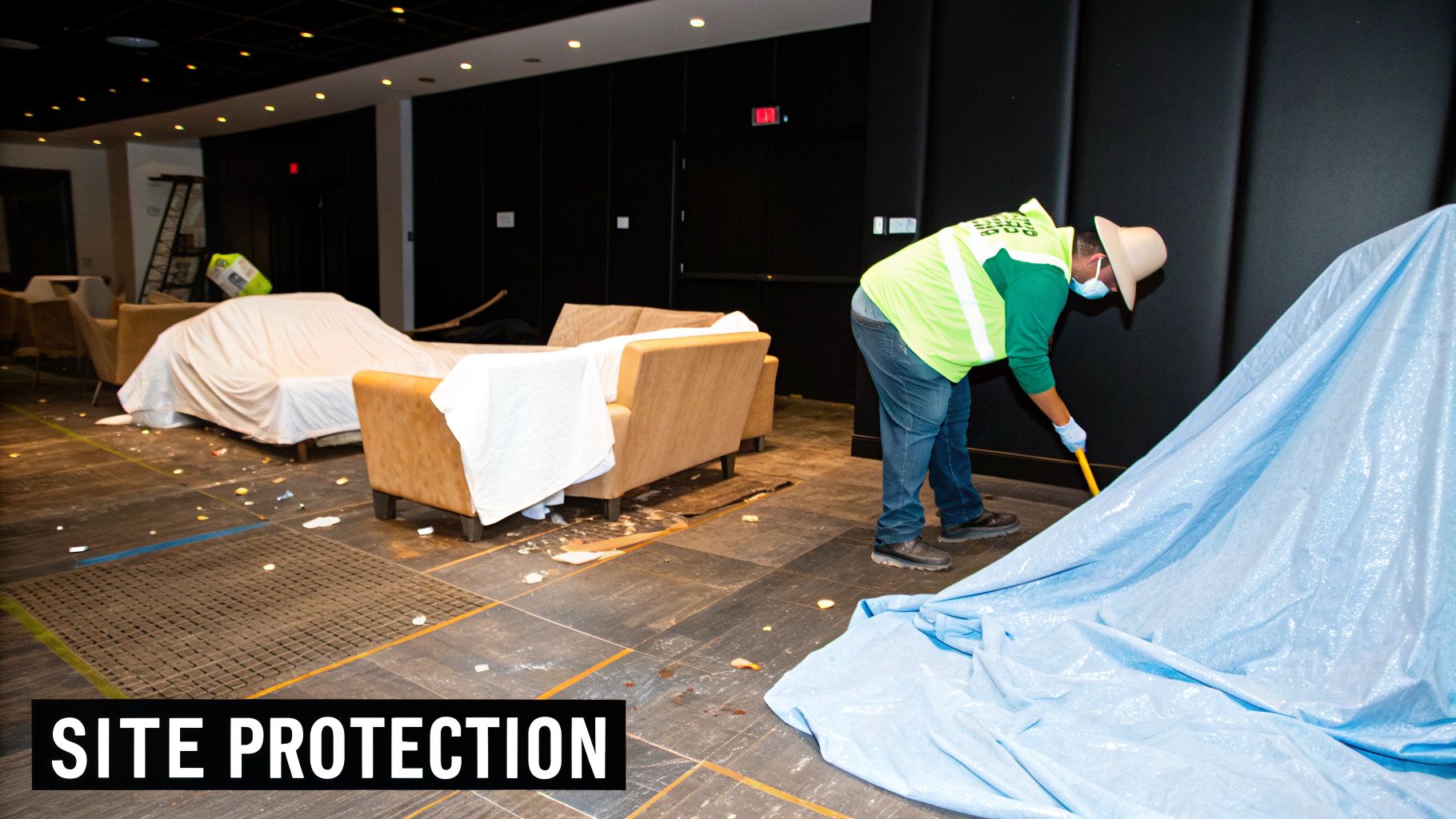
8. How will you protect my property and clean up daily?
A construction zone is disruptive by nature, but it shouldn't wreak havoc on the rest of your home. This question reveals a contractor's professionalism and respect for your living space. A detailed plan for property protection and daily cleanup shows they prioritize not just the final product, but also your comfort and safety throughout the process. It's a key indicator of a considerate and organized team.
Why This Triple-Check Matters
Without a clear agreement, you risk dust permeating every room, scratches on your hardwood floors, or damage to your furniture. A contractor who dismisses this question might be one who cuts corners elsewhere. A clean and protected site is a safe site, reducing the risk of accidents and making the renovation experience far more tolerable, especially if you're living in the home during the work.
- Property Protection: This involves proactive measures to shield your home from the unavoidable side effects of construction. This includes covering floors, furniture, and fixtures, as well as sealing off the work area to contain dust and debris.
- Dust Containment: Fine drywall or sanding dust can travel through HVAC systems and settle everywhere. Professional contractors use methods like plastic barriers, zip doors, and negative air machines to create a sealed work environment.
- Daily Cleanup: A commitment to daily cleanup means the crew leaves the workspace tidy, organized, and safe at the end of each day. This involves sweeping, vacuuming, and removing trash, preventing a hazardous buildup of materials.
Actionable Steps for Verification
A verbal promise isn't enough; get the specifics in writing before the project begins.
- Review Their Plan: Ask for their standard procedure. Do they use Ram Board on floors? Do they cover furniture with plastic? Will they create a sealed entryway to the work zone? A good contractor will have a ready and detailed answer.
- Discuss Dust Control: For interior remodels, ask specifically about their dust containment strategy. Inquire if they use HEPA-filter air scrubbers or negative air machines, especially if anyone in your home has allergies or respiratory issues.
- Define "Clean": Clarify what "broom-clean" means to them. Your contract should specify that the work area will be swept and vacuumed daily, and all project-related debris will be removed from your property regularly, not left in a pile in your yard.
- Specify Final Cleanup: The contract should also detail the scope of the final cleanup. Will they perform a deep "white glove" clean, or will that be your responsibility? Knowing this upfront prevents a common point of post-project friction.
Key Questions Comparison for Hiring Contractors
| Question / Topic | Implementation Complexity 🔄 | Resource Requirements ⚡ | Expected Outcomes 📊 | Ideal Use Cases 💡 | Key Advantages ⭐ |
|---|---|---|---|---|---|
| Are you licensed, bonded, and insured? | Moderate – requires verification of multiple documents | Medium – involves checking licenses, bonds, insurance | High – legal protection and financial security | Any hiring of professional contractors | Provides legal protection and professional credibility |
| Can you provide local references from recent projects? | Low – gathering client contacts and testimonials | Low – mainly communication and documentation | Medium – insight into quality and reliability | Evaluating contractor reputation | Direct customer feedback and proof of work quality |
| What is your timeline for completing this project? | Moderate – requires detailed scheduling and contingency plans | Medium – planning, coordination, and communication | High – clear expectations and project tracking | Planning and managing project timeframes | Enables accountability and personal planning |
| Can you provide a detailed written estimate with material and labor breakdown? | High – requires careful itemization and pricing | Medium to High – detailed cost analysis | High – transparency and cost control | Comparing contractor bids and budget planning | Prevents surprise costs and ensures clarity |
| How do you handle changes or unexpected issues during the project? | Moderate – needs a formal change management process | Medium – documentation, communication, approval | Medium – minimized disputes and surprises | Projects prone to changes or unknowns | Maintains project control and transparency |
| What warranty do you provide on your work? | Low to Moderate – documenting terms and coverage | Low – preparing warranty documentation | Medium – buyer protection and confidence | Long-term protection on workmanship | Demonstrates contractor confidence and offers recourse |
| What is your payment schedule? | Low to Moderate – defining milestones and amounts | Low – setting and communicating payment terms | High – protects cash flow and buyer interests | Budget management and financial planning | Ties payments to progress, reducing financial risk |
| How will you protect my property and clean up daily? | Moderate – requires protective measures and protocols | Medium – materials and labor for protection | Medium – property safety and cleanliness | Projects in occupied homes or sensitive environments | Reduces damage and maintains workspace cleanliness |
Building Confidence in Your Contractor Choice
Navigating the path to a home remodel, whether it's a gourmet kitchen, a spa-like bathroom, or a complete custom cabinetry overhaul, begins long before the first hammer swings. The foundation of a successful project isn't just built on wood and stone; it's built on trust, transparency, and clear communication. The list of questions to ask a contractor before hiring that we've explored isn't merely a checklist; it's a strategic framework for vetting potential partners and protecting your most valuable asset: your home.
From Questions to Clarity
By moving beyond a simple price quote, you transform your role from a passive client to an empowered homeowner. Asking about licensing and insurance protects you from liability. Requesting local references provides a real-world glimpse into their craftsmanship and professionalism. A detailed, itemized estimate prevents costly surprises, while understanding their process for change orders ensures flexibility when unexpected issues arise. Each question peels back a layer, revealing the contractor’s business practices, commitment to quality, and communication style. You are not just hiring a crew; you are entrusting your vision and investment to their care.
The Value of a Vetted Partner
The ultimate goal of this diligence is to find a partner who operates with integrity. This involves not only the technical skills to execute the project but also the business acumen to manage it smoothly. You want a contractor who respects your property, adheres to a clear payment schedule, stands behind their work with a solid warranty, and communicates proactively from start to finish. This comprehensive vetting process shares many parallels with other professional engagements. For businesses or individuals looking to understand the broader strategic considerations involved in selecting a service, explore these principles for choosing a commercial service provider, as the core tenets of verifying credentials and establishing clear expectations are universally critical.
Ultimately, mastering this inquisitive approach gives you control over your project's outcome. It empowers you to hire not the cheapest contractor, but the best value contractor, one who will deliver exceptional results, minimize stress, and turn your dream space into a tangible reality. Your home is a reflection of your life and aspirations, and choosing the right builder is the most important first step in honoring that vision.
Are you ready to partner with a team that welcomes your questions and provides clear, confident answers? For over 35 years, Sinclair Cabinetry inc has built a reputation on transparency, meticulous craftsmanship, and unwavering client satisfaction in Cape Coral and Southwest Florida. Visit Sinclair Cabinetry inc to see how our proven process and dedication to quality can bring your cabinetry and remodeling vision to life.