
Building an outdoor kitchen is about so much more than just adding a grill to your patio. It’s about creating the heart of your backyard, a place that becomes a natural extension of your home and the hub for making memories. In Southwest Florida, this isn't a luxury—it's the core of our lifestyle.
This guide is your roadmap to getting it right, from the first sketch to the final cookout.
Your Blueprint for the Fort Myers Outdoor Lifestyle
Imagine having friends over, the sun is setting, and everything you need for an amazing alfresco dinner is right there in your own backyard. That's the quintessential Fort Myers experience. Our incredible year-round climate makes an outdoor kitchen one of the most practical and valuable additions you can make to your home.
We're here to walk you through the whole process. We’ll cover how to blend smart design with durable, weather-proof materials and top-notch craftsmanship to build a space that truly lasts.
Embracing the Alfresco Culture
The desire for beautiful, functional outdoor living spaces isn't just a passing trend here; it's deeply woven into our local culture. In fact, Fort Myers has earned its stripes as a top-tier grilling destination, ranking 7th nationally for its love of grilling meat. This says a lot about our shared passion for outdoor entertaining and the value we place on having the right setup to do it well.
When you're ready to turn that vision into a reality, exploring comprehensive outdoor kitchen services is the perfect next step to get expert guidance and bring your ideas to life.
Before we dive deep into materials and appliances, let's look at the foundational planning stages. Getting these right from the start is the key to a successful project that you'll enjoy for years to come.
Key Planning Stages for Your Fort Myers Outdoor Kitchen
This table breaks down the crucial phases every homeowner should consider. Think of it as your project's command center, ensuring every detail is thoughtfully addressed for our unique coastal environment.
| Planning Phase | Key Considerations | Why It Matters in Fort Myers |
|---|---|---|
| Site Assessment | Sun exposure, prevailing winds, access to the main house, utility lines (gas, water, electric). | Proper placement avoids a sun-baked grill station or a kitchen that’s a long trek from your indoor fridge. |
| Material Selection | Resistance to humidity, salt air, UV rays, and heat. Look for marine-grade polymers and 304 stainless steel. | Our salt-laden, humid air will quickly destroy subpar materials. Choosing wisely prevents rust and degradation. |
| Layout & Flow | Creating distinct zones for prepping, cooking, cleaning, and entertaining. Think "kitchen triangle" for the outdoors. | A functional layout prevents bottlenecks when you have guests and makes the cooking process smooth and enjoyable. |
| Permits & Codes | Understanding local Lee County requirements for electrical, plumbing, gas, and structural additions. | Ensuring compliance from day one avoids costly delays and ensures your outdoor kitchen is safe and built to last. |
Taking the time to map out these elements is non-negotiable. It's the difference between an outdoor kitchen that looks great for a season and one that becomes a lasting centerpiece of your home.
Focusing on these core pillars isn't just about building an outdoor kitchen; it's about making a smart, lasting investment in your home and your lifestyle. A project built for the Fort Myers climate is a project built to last.
Designing for Durability in the Florida Climate
Building an outdoor kitchen in Fort Myers isn't just about grilling in the sunshine; it's a battle against the elements. We’re talking about intense sun, suffocating humidity, corrosive salt air, and those sudden tropical downpours that come out of nowhere. Picking the right materials is more than just an aesthetic choice—it's a critical investment in making sure your outdoor living space lasts.
Forget the generic advice. Let's get into the practical, battle-tested materials that actually survive and thrive in our coastal environment. This is how you ensure your kitchen looks fantastic for years, not just for a single season.
Non-Negotiable Materials for Cabinetry
The cabinetry is the backbone of your outdoor kitchen, and it’s where so many projects go wrong. Materials that work perfectly indoors will quickly warp, rot, or rust out here. It’s just a matter of time.
Your best defense against our moisture and salt-laden air is to choose materials that are inherently waterproof and corrosion-resistant from the get-go. This is why we almost exclusively recommend two powerhouse options for any outdoor kitchen in Fort Myers, FL:
- Marine-Grade Polymers: You might know it by brand names like StarBoard. This high-density polyethylene (HDPE) is completely impervious to water. It simply can't swell, delaminate, or rot. Plus, its color is solid all the way through, so a scratch won't reveal an ugly undercoat.
- 304-Grade Stainless Steel: This isn't just any stainless steel. The 304-grade has high levels of chromium and nickel, giving it superior resistance to rust and corrosion. It offers that sleek, professional look, but you have to insist on this specific grade. Lower-quality steel will start showing rust spots surprisingly fast, especially if you're close to the water.
Here's a critical mistake we see all the time: treating outdoor cabinets like indoor ones. Wood, even when it's heavily treated, will eventually give up the fight against our high humidity and voracious termites. Investing in polymer or stainless steel right from the start saves you from a very expensive replacement project down the road.
Planning an outdoor kitchen that can withstand our climate really boils down to a few core principles. This visual guide simplifies the key areas you need to focus on.
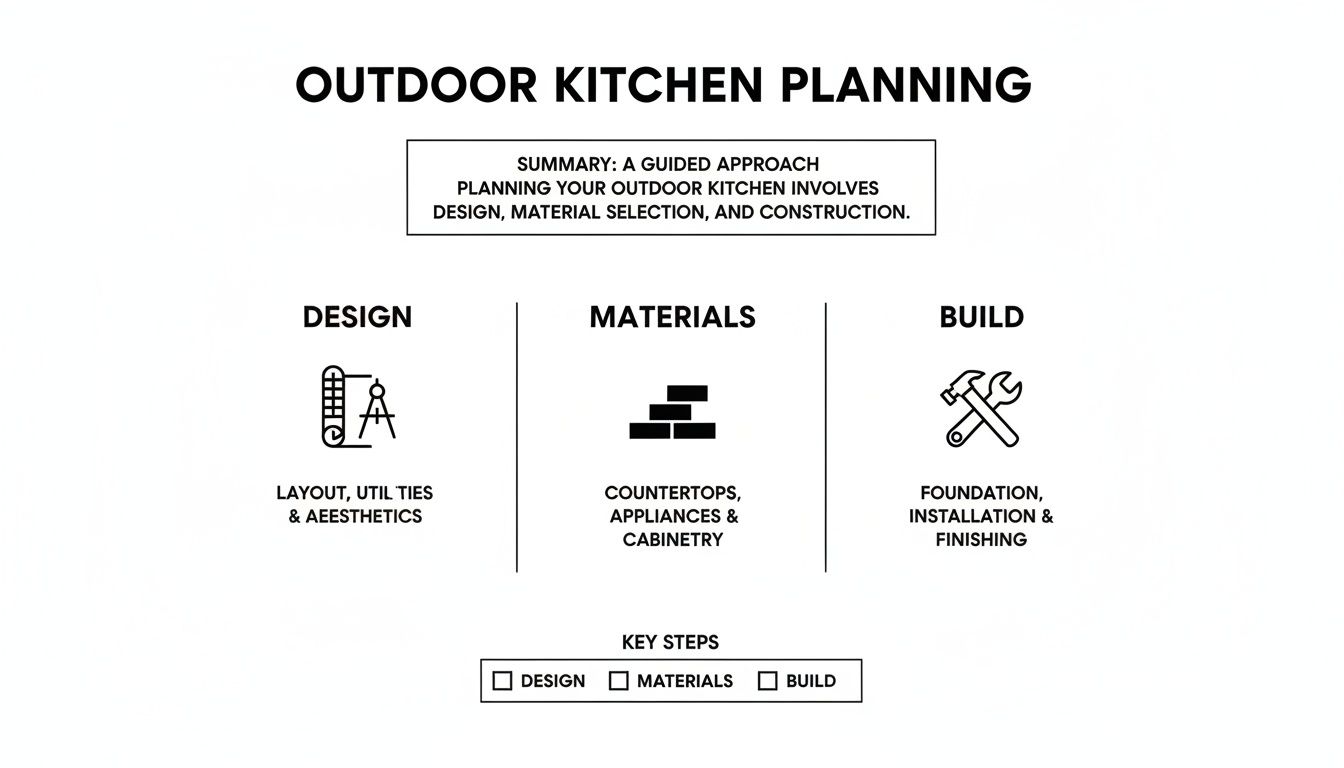
As the graphic shows, a successful project is a perfect balance of thoughtful design, truly resilient materials, and quality construction—three pillars that are absolutely essential for durability in Southwest Florida.
Selecting Countertops That Can Handle the Heat
Think of your countertops as the workhorses of the outdoor kitchen. They'll face everything from scorching sun and hot pans to red wine spills and torrential rain. UV stability is a huge deal here, because the intense Florida sun can fade and break down lesser materials in just a couple of seasons.
When it comes to cabinetry, you need materials that won't break down from constant exposure to moisture and salt. The table below breaks down the top contenders we recommend to our Fort Myers clients.
Comparing Outdoor Kitchen Cabinetry Materials
| Material | Pros | Cons | Best For |
|---|---|---|---|
| Marine-Grade Polymer (HDPE) | Completely waterproof, won't rot or delaminate, easy to clean, color is solid throughout. | Can be more expensive upfront, limited to a modern aesthetic. | Homeowners who want the ultimate in low-maintenance durability, especially near saltwater. |
| 304-Grade Stainless Steel | Highly resistant to rust and corrosion, sleek professional look, very durable. | Can get hot in direct sun, shows fingerprints, lower grades will rust. | Creating a modern, chef-style kitchen that is built to last. |
| Powder-Coated Aluminum | Lightweight, rust-proof, available in many colors and finishes. | The coating can chip or scratch, revealing the metal underneath. | Covered lanais or for those wanting a specific color palette not available in other materials. |
| Teak or Ipe Wood | Beautiful natural aesthetic, highly resistant to rot and insects due to natural oils. | Requires regular oiling to maintain its color, will turn a silvery-gray otherwise. | Homeowners seeking a natural, high-end look who are committed to annual maintenance. |
Ultimately, the best choice comes down to your priorities. For most people in our climate, the peace of mind offered by marine-grade polymer or 304-grade stainless steel is well worth the investment.
Here's how the top countertop contenders really stack up:
- Granite: This natural stone is a classic for a reason. It's highly resistant to heat and won't fade under UV exposure. Pro tip: Lighter colors will stay much cooler to the touch than darker slabs. It does require sealing every year or so to keep it from staining.
- Dekton: This ultra-compact surface is pretty much indestructible. It's completely non-porous (so it won't stain), and it's incredibly resistant to UV rays, scratches, and extreme heat. You can put a hot pan right on it without a second thought.
- Quartz: We love quartz for indoor kitchens because it's non-porous and tough. However, most types of quartz are not recommended for direct sun exposure. The resins used to bind the quartz particles can actually yellow and degrade over time, so it's only a safe bet for a fully covered lanai space.
For a look at how these materials come together in some stunning and practical builds, check out our gallery of outdoor kitchen ideas perfect for Florida living.
Smart Choices for Flooring and Finishes
Don't forget about what's under your feet. The flooring in your outdoor kitchen needs to be slip-resistant, comfortable to stand on, and able to handle a downpour without turning into a giant puddle.
Concrete or travertine pavers are fantastic choices. They stay relatively cool in the sun and provide excellent traction, even when wet. We're also seeing a lot more permeable pavers, which are designed to let rainwater drain right through them, preventing any standing water after a classic Florida summer storm.
Finally, let's talk details. All your hinges, handles, and drawer pulls must be stainless steel. If you cheap out here, you'll end up with ugly rust stains running down your beautiful new cabinets. These little things seem minor, but they make a massive difference in the long-term appearance and function of your outdoor kitchen.
Creating a Functional and Flowing Layout
A beautiful outdoor kitchen is more than just fancy appliances and weatherproof materials. The real magic is in the layout—creating a space that feels natural and works with you, not against you. A great design has an intuitive flow, making everything you need easy to find. It turns grilling from a task into a seamless part of the party.
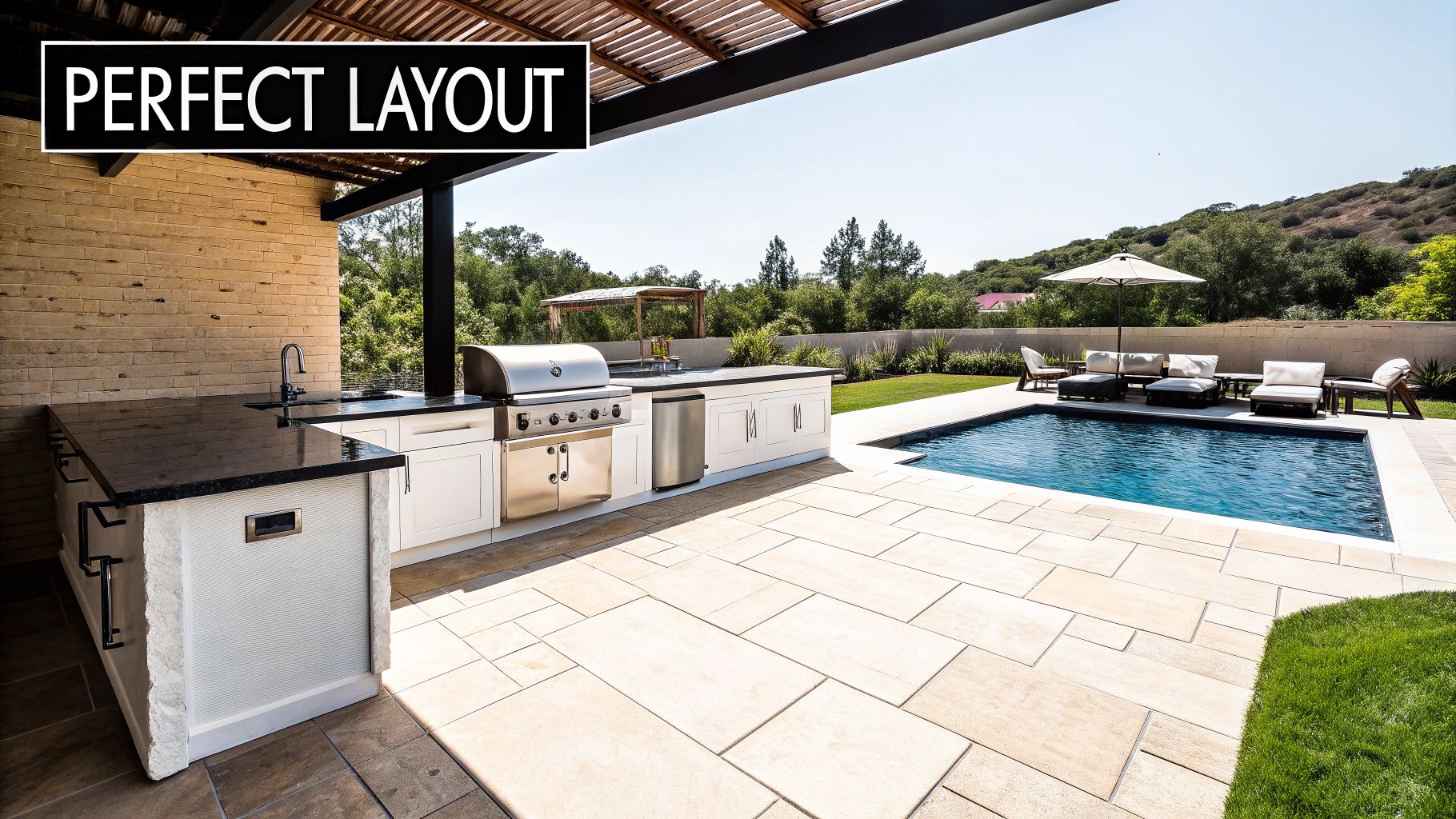
The secret is to think in zones. Just like your indoor kitchen, an outdoor one works best when it’s logically arranged. We take the classic "work triangle" concept and adapt it for the backyard, creating dedicated areas for every step of the process.
The Modern Outdoor Work Triangle
Forget a rigid triangle. A better way to think about it is a collection of interconnected zones that prevent traffic jams around the grill and just make cooking easier. Any well-planned Fort Myers outdoor kitchen will have these distinct areas working together.
- The Hot Zone: This is where the action is, centered around your grill. You absolutely need counter space on at least one side—ideally both—for platters of raw and cooked food. This zone might also include a side burner for simmering sauces or searing steaks.
- The Cold Zone: Home to your outdoor refrigerator and maybe an ice maker. We strategically place this zone so guests can grab a drink without having to walk through your main cooking area.
- The Wet Zone: Your prep and cleanup station, anchored by the sink. It should have plenty of counter space for chopping and mixing, with a pull-out trash bin tucked away nearby for easy disposal.
By defining these zones, you create a natural rhythm. You can move from the fridge to the prep counter to the grill without backtracking or bumping into anyone. It just works.
Choosing the Right Shape for Your Space
The footprint of your lanai or patio will largely dictate the shape of your outdoor kitchen. Each configuration offers different advantages for flow and function. This is where custom cabinetry really shines, allowing us to perfectly tailor any of these designs to your specific space.
Here’s a quick rundown of the most common layouts for outdoor kitchens in Fort Myers, FL:
| Layout Shape | Description | Ideal For |
|---|---|---|
| Linear (Straight) | A single wall of cabinetry and appliances. | Smaller patios, narrow lanais, or spaces where you want to maintain an open feel. |
| L-Shape | Uses two adjacent walls, creating a natural corner work area. | Defining a kitchen space while keeping it open to seating areas and the pool. |
| U-Shape | Utilizes three walls, offering maximum counter space and storage. | Larger lanais where you want to create a fully immersive, self-contained cooking environment. |
The L-shape tends to be the most popular choice around here. It strikes a great balance, giving you an efficient workspace while keeping things open and social.
A critical detail that often gets overlooked is "landing space." Always, always plan for at least 15-18 inches of clear counter space on each side of your grill and sink. This simple rule prevents that frustrating juggle of hot pans, cutting boards, and platters while you're in the middle of cooking.
Integrating with Your Backyard and Hardscape
Your outdoor kitchen shouldn't feel like an afterthought dropped onto your patio. It needs to blend seamlessly with your pool deck, seating areas, and overall landscape. When we design the layout, a key part of the conversation is understanding hardscape in outdoor design, since the kitchen structure, countertops, and patio are all hardscape elements.
This goes beyond just looking good; it's about practical things like drainage. More and more, we see Fort Myers homeowners treating their outdoor kitchens as part of a complete backyard system. They’re opting for permeable pavers and other features that help manage our heavy summer rains, which means fewer puddles and a safer area around the kitchen and pool.
By thinking about traffic flow, sightlines, and even how rainwater drains, we create a space that’s truly cohesive. The goal is a layout where moving from the pool to grab a drink, and then over to the seating area to chat, feels completely natural.
Selecting Your Appliances and Utilities
The appliances are the heart and soul of your outdoor kitchen. They're what turn a simple grill station into a genuine culinary hub. But choosing the right ones in Fort Myers isn't just about cool features—it’s about picking gear that can take a beating from our unique climate and keep on cooking.
Let's look beyond the grill and assemble a setup that’s built to last.
The Stainless Steel Standard
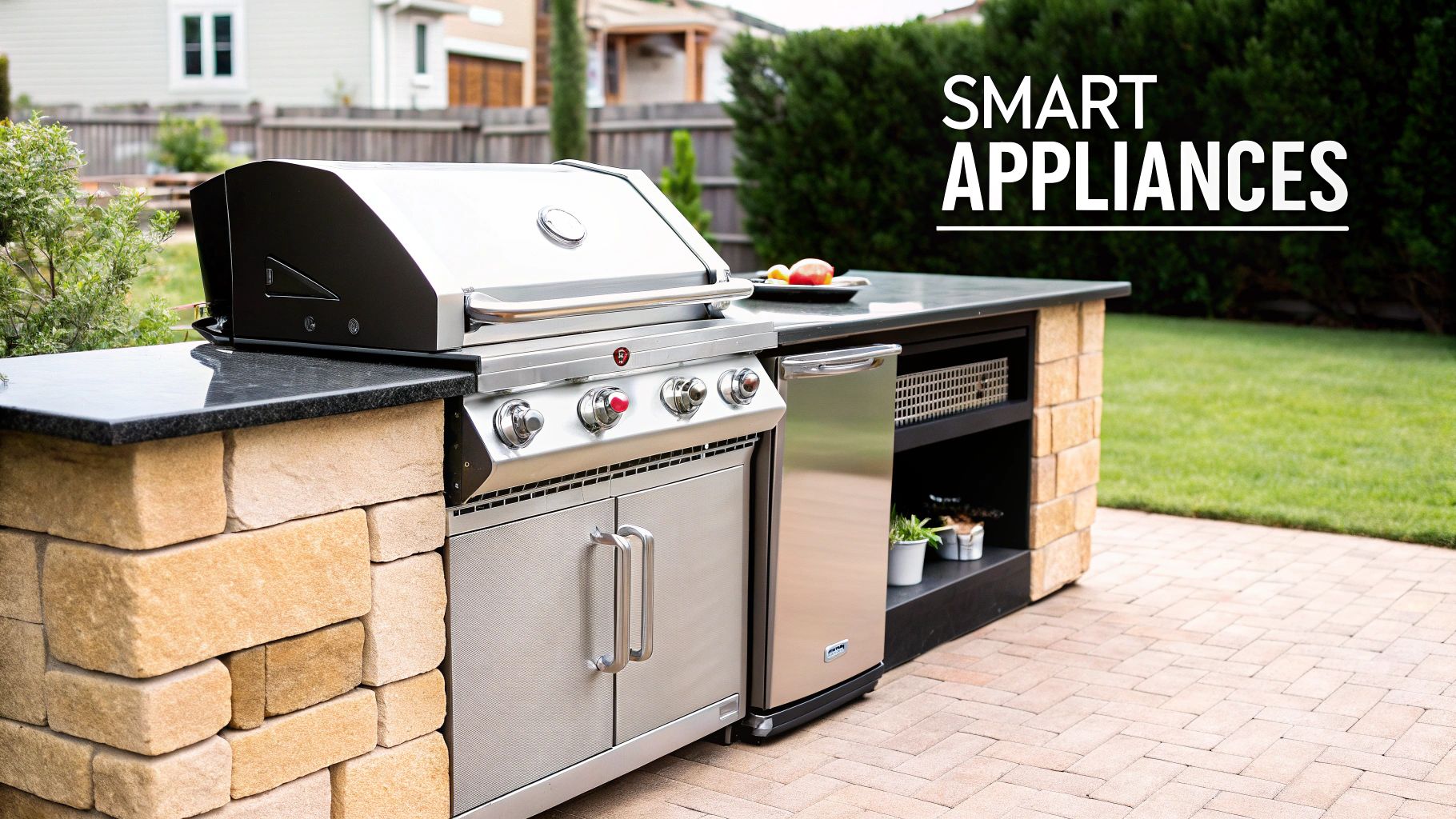
If you remember one thing about appliances for an outdoor kitchen in Fort Myers, FL, make it this: 304-grade stainless steel. This isn't just a suggestion; it's the only real choice for our area.
Why? The 304-grade has a higher amount of chromium and nickel, which gives it serious muscle against rust and corrosion. In our salty, humid air, anything less will start to pit and rust way faster than you’d think. Insisting on this grade for everything—your grill, access doors, fridge, side burners—is the single most important decision for protecting your investment.
Building a True Culinary Workstation
A truly functional outdoor kitchen should feel just as convenient as your indoor one. That means thinking through the whole cooking process, from prep and storage to the final sear.
Consider adding a few of these high-impact appliances to really elevate your space:
- Side Burners: Invaluable for simmering a sauce, boiling corn on the cob, or searing some scallops without running back inside. They let you cook an entire multi-course meal right on the lanai.
- Outdoor Refrigerators: Don't just drag an old garage fridge outside. You need a model specifically rated for outdoor use. They’re built with beefier compressors and superior insulation to handle the Florida heat and keep food at a safe temperature.
- Ice Makers: A dedicated outdoor ice maker is a game-changer for entertaining. No more guests tracking water through the house to refill their drinks—just an endless supply of fresh ice right where you need it.
- Sinks with Hot and Cold Water: This addition makes prep and cleanup a thousand times easier. It's a must-have for rinsing veggies, washing hands, and keeping your cooking area from becoming a sticky mess.
A quick but crucial note on ventilation: If your outdoor kitchen is under a covered lanai or any kind of roof, a quality range hood isn't optional—it's essential. It pulls smoke, grease, and heat away from the cooking area, saving your ceiling from ugly stains and keeping the space comfortable for you and your guests.
Don't Forget the Unseen Infrastructure
The world's best appliances are just shiny boxes without the proper infrastructure to power them. Planning for utilities is a critical step that has to happen early in the design phase, long before the first block is laid. This is absolutely not a DIY task; you need licensed professionals to ensure everything is safe and compliant with the Florida Building Code.
Your contractor will map out three core systems:
- Gas Lines: Whether you're tapping into a natural gas line or using propane, a licensed plumber is required to run the lines. This involves correctly sizing the pipes to fuel all your appliances and installing emergency shut-off valves for safety.
- Electrical Wiring: Your outdoor kitchen will need dedicated circuits for things like a refrigerator, rotisserie, outlets, and lighting. Every outdoor outlet must have Ground Fault Circuit Interrupter (GFCI) protection—a non-negotiable safety feature that prevents shocks in wet conditions.
- Plumbing and Drainage: For a sink or ice maker, you’ll need both hot and cold water lines run to the kitchen. Just as important is where the water goes. Your contractor needs to ensure drain lines are properly sloped and tied into your home’s main wastewater system to avoid clogs and nasty odors.
Your Essential Utility Checklist
Before you sign off on the final design, walk through this checklist with your contractor. It's the best way to make sure the hidden framework of your kitchen is as solid as the parts you can see.
| Utility | Key Questions for Your Contractor | Why It Matters |
|---|---|---|
| Gas | Is the gas line sized to support all appliances running at once? Where will the emergency shut-off valve be located? | An undersized line can lead to poor appliance performance. Easy shut-off access is a critical safety requirement. |
| Electric | Will the kitchen have its own dedicated GFCI circuits? Are there enough outlets planned for both appliances and convenience? | This prevents overloading your home's main panel and protects against electrical hazards in a wet environment. |
| Plumbing | Will the plumbing include both hot and cold water? How will the sink drain be connected to the main sewer line? | Having hot water greatly improves cleanup. Proper drainage prevents clogs and foul odors. |
Getting these utility needs sorted out upfront is the secret to a safe, functional, and code-compliant project. It’s all the behind-the-scenes work that lets your dream outdoor kitchen run perfectly for years to come.
Making It Official: Fort Myers Permits and Building Codes
Let's talk about the part of the project that isn’t nearly as fun as picking out a grill but is arguably the most important: permits and codes. I know, it sounds like a headache, but tackling this correctly is what ensures your beautiful new kitchen is safe, legal, and adds real value to your home. In Southwest Florida, this is a non-negotiable step for any permanent structure.
So, do you really need a permit? For a serious outdoor kitchen in Fort Myers or Lee County, the answer is almost always a resounding yes. If your project involves any of the big three—gas, electric, or plumbing—you're pulling a permit.
- New Gas Lines: Whether it's natural gas or propane, running a new line is a serious job. It requires a licensed pro and a permit to guarantee it's free of leaks and other hazards.
- Electrical Work: Any new wiring needs to be up to code. This includes those essential GFCI outlets for your fridge, rotisserie, and overhead lighting.
- Plumbing: Hooking up a sink, a dishwasher, or an ice maker means running water and drain lines, all of which fall under permit and inspection requirements.
- Permanent Structures: Is your kitchen built on a footer or attached to your house? That's a permanent structure, and it definitely requires a building permit.
Sticking to the Fort Myers Rulebook
Getting the permit is just the first step; the actual construction has to follow the Florida Building Code. While your contractor will be the expert here, it’s helpful for you to know the basics. These codes are in place for very good reasons, primarily your safety.
For instance, there are strict rules about setbacks, which dictate how far your kitchen must be from your property lines. You don’t want to build your dream grill station only to find out it’s a few feet into your neighbor's space.
Fire safety is another huge one. The code specifies the minimum clearance required between your grill and any combustible materials, like the vinyl siding on your house, a wood fence, or your lanai screen enclosure. Cutting corners here isn't just a code violation—it’s a massive fire risk. Properly planning for code compliance is just as critical here as it is for a major interior renovation, like those we cover in our guide to bathroom remodeling in Fort Myers FL.
This is exactly why a licensed, insured, and local contractor is your greatest asset. Someone who builds outdoor kitchens in the Fort Myers area day in and day out already knows the specific nuances of both the city and Lee County requirements.
They’re the ones who will handle the mountain of paperwork, coordinate all the necessary inspections, and make sure every single detail is compliant. By letting an expert navigate the red tape, you can get back to the fun stuff—like deciding what’s on the menu for your first big cookout.
Getting a Handle on Your Project Budget and Timeline
Alright, let's talk about the two biggest questions on everyone's mind: money and time. Getting a realistic handle on your budget and schedule right from the start is the secret to a smooth, stress-free build for your Fort Myers outdoor kitchen. Costs can swing wildly depending on the materials you choose, the appliances you can't live without, and the overall complexity of your design.
Knowing where your money is going is the first step. The total investment is so much more than just the grill—it’s a blend of several key pieces that all have to come together to create your dream outdoor space.
Breaking Down the Costs
To get a clear picture, we need to break the budget down into a few main categories. For nearly every project we build, the costs fall into these primary buckets:
- Cabinetry and Structure: This is the backbone of your kitchen and a major slice of the budget. Marine-grade polymer or sleek stainless steel will be a bigger investment up front compared to a simple masonry block structure.
- Countertops: You need something that can take the Florida sun and salt air. Durable materials like granite or ultra-compact Dekton come at a different price point than more basic options.
- Appliances: This is where the budget can really change. A professional-grade grill, an outdoor-rated refrigerator, and a power burner will cost significantly more than a simple, drop-in grill.
- Labor and Installation: This covers everything from our team's assembly and installation to the critical work of licensed plumbers, electricians, and gas fitters who ensure everything is safe and up to code.
We see a pretty consistent range for a well-built outdoor kitchen here in Southwest Florida. Most projects land somewhere between $15,000 for a more straightforward setup to over $50,000 for a high-end, appliance-loaded design. Your specific choices in each of these areas will ultimately determine where your project falls.
Mapping Out a Realistic Project Timeline
The other big question we always get is, "How long is this actually going to take?" While every job has its own quirks, a custom outdoor kitchen follows a fairly predictable path. Trust me when I say that trying to rush these steps almost always leads to costly mistakes and regrets.
Here’s a general idea of what you can expect from our first conversation to your first cookout:
- Design and Planning (2-4 weeks): This is the fun part. We'll have our initial consultations, nail down the layout, select all your materials and finishes, and finalize your appliance choices.
- Permitting (2-6 weeks): Once you've approved the design, we package everything up and submit the plans to the City of Fort Myers or Lee County. This timeline really just depends on how busy their permitting office is at the moment.
- Construction and Installation (3-5 weeks): This is when you see it all come to life. Our crew handles the site prep, coordinates the utility runs, and then meticulously fits the cabinets, countertops, and appliances.
Knowing this sequence helps manage expectations and keeps surprises to a minimum. If you want to dive deeper into how these stages work in the real world, check out this detailed overview of a typical remodel timeline. Having this financial and logistical roadmap is the best way to start planning your new outdoor kitchen with total confidence.
Your Top Questions About Fort Myers Outdoor Kitchens, Answered
As you get closer to bringing your dream backyard to life, a few final questions usually pop up. Getting straight answers is the best way to move forward with total confidence. Here, we're tackling the most common queries we get from Fort Myers homeowners, zeroing in on what really matters in our coastal environment.
Think of this as a quick guide to clear up any last-minute uncertainties before you even think about breaking ground.
What's the Best Cabinet Material for Our Climate?
For the humidity and salt air we deal with in Fort Myers, there are really only two front-runners: marine-grade polymers (like HDPE) and 304-grade stainless steel. These materials are completely waterproof and engineered from the ground up to fight off corrosion, rot, and insects.
While some specially treated woods can look great, they will always demand more upkeep in our environment. We always recommend materials that come with a solid warranty to withstand local conditions, giving you peace of mind for years to come.
Do I Actually Need a Permit to Build My Outdoor Kitchen?
Yes, it's almost a guarantee. The City of Fort Myers or Lee County will require a permit if your project involves running new gas lines, electrical wiring, or plumbing. Any structure that's permanently installed will need one, too.
This is exactly why working with a licensed and insured contractor is so important. They handle all the paperwork, make sure everything is up to code, and keep your project on the right side of the law. It’s a non-negotiable step for safety and for protecting your home's value.
How Much Value Will an Outdoor Kitchen Really Add to My Home?
A well-designed outdoor kitchen isn't just a luxury; it's a feature that buyers in Southwest Florida actively look for. It can provide a fantastic return on your investment, with many homeowners recouping 60% to 75% of the project's cost when they sell.
It does more than just add value—it expands your home's functional living space, which is a huge draw for potential buyers.
An outdoor kitchen is less of an expense and more of a strategic investment in your property. It elevates your backyard into a premium entertainment hub, which is a major selling point in the competitive Fort Myers real estate market.
How Can I Protect My Kitchen During a Hurricane?
The first line of defense is a solid build from the start—using durable materials and having your appliances professionally and securely installed. Making sure your cabinet doors have strong, reliable latches is also key. But when a storm is on the way, your prep work is what really counts.
Here's your pre-storm checklist:
- Clear everything off the countertops—grill tools, decor, you name it.
- Cover your appliances with heavy-duty, waterproof tarps and secure them tightly.
- Tie down or bring in any nearby patio furniture that could turn into a projectile in high winds.
- Shut off the gas and electrical lines to the kitchen area, following the guidance of emergency officials.
Taking these steps can make a huge difference in minimizing potential damage and keeping your outdoor oasis safe.
Ready to transform your backyard with a custom outdoor kitchen truly built for Florida life? The experts at Sinclair Cabinetry inc bring over 35 years of experience to the table, crafting bespoke cabinetry that stands up to anything our climate can throw at it. Start designing your perfect outdoor living space today.